

Open Container Law Las Vegas: Your 2025 Safe Guide
Understanding Florida’s Open Container Laws
Florida’s open container laws can be confusing, with rules that change depending on whether you’re walking in a tourist district or driving in a car. For visitors and residents alike, knowing the rules is key to avoiding fines and legal trouble.
Quick Answer:
- In certain tourist areas (e.g., Key West): You can often carry open alcohol containers in plastic or paper cups, but rules are specific to the city.
- In most other public areas: Open containers are generally illegal on public streets, sidewalks, and parks.
- In vehicles: Open containers are illegal for both drivers and passengers in the passenger area of the car, per state law.
- Penalties: Vehicle violations result in a traffic ticket and points on your license. Public violations can lead to fines under local ordinances.
Florida is famous for its sunny beaches, vibrant nightlife, and tourist-friendly atmosphere. Many visitors arrive expecting to enjoy a drink while strolling through popular areas. While some cities allow this, the rules are not the same everywhere. Misunderstanding them can lead to citations and put a damper on your vacation or daily life.
Many people assume that if public drinking is allowed in one Florida city, it’s allowed everywhere. That’s not the case. Key West has different rules than Orlando. Miami Beach has its own specific entertainment district ordinance. And no matter where you are, the moment you get into a car, Florida’s statewide open container law applies, carrying penalties that include fines and points on your license.
If you’re involved in an accident caused by a driver violating these laws, the consequences can be devastating. Medical bills, lost wages, and battles with insurance companies can be overwhelming. Understanding how an open container violation affects an accident claim is critical to securing the compensation you deserve.
I’m Thomas W. Carey, a board-certified civil trial lawyer who has handled tens of thousands of injury cases across Florida, including those involving drunk driving and open container violations that complicate accident claims. With over 35 years in practice, I’ve seen how a single detail can change a case’s outcome—and how the right legal guidance helps injury victims regain control.
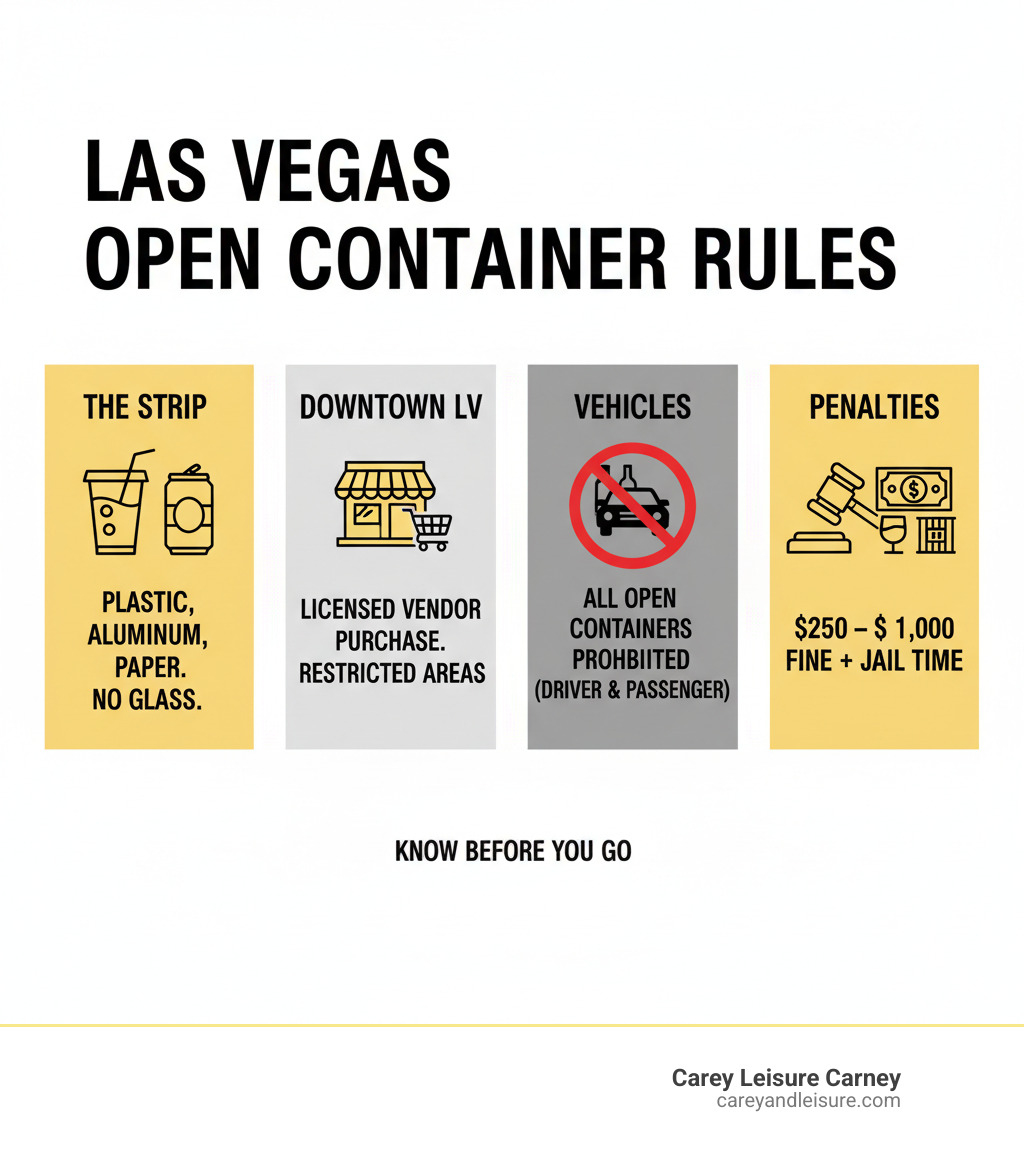
Can You Drink in Public in Florida?
Unlike some states, Florida does not have a single, statewide law that allows or prohibits drinking in public. Instead, the state leaves it up to individual cities and counties to set their own rules. This means the answer to whether you can walk down the street with a drink depends entirely on where you are.
As a general rule, most Florida cities and towns prohibit open containers of alcohol in public places like sidewalks, parks, and beaches. However, some tourist-heavy destinations have carved out exceptions to cater to their visitors.
Rules in Tourist Hotspots (e.g., Key West, Miami Beach)
Certain areas famous for their party atmosphere have more relaxed open container policies. The most well-known example is Duval Street in Key West, where pedestrians are generally permitted to carry alcoholic drinks in plastic or paper cups.
Similarly, the City of Miami Beach allows open containers in its Arts & Entertainment District, but only in plastic cups. These exceptions are designed for pedestrian-heavy entertainment zones.
A common rule in these areas is a ban on glass containers. This is a public safety measure to prevent injuries from broken glass. If you buy a drink in a glass bottle, you’ll need to pour it into a plastic cup before you can walk around with it.
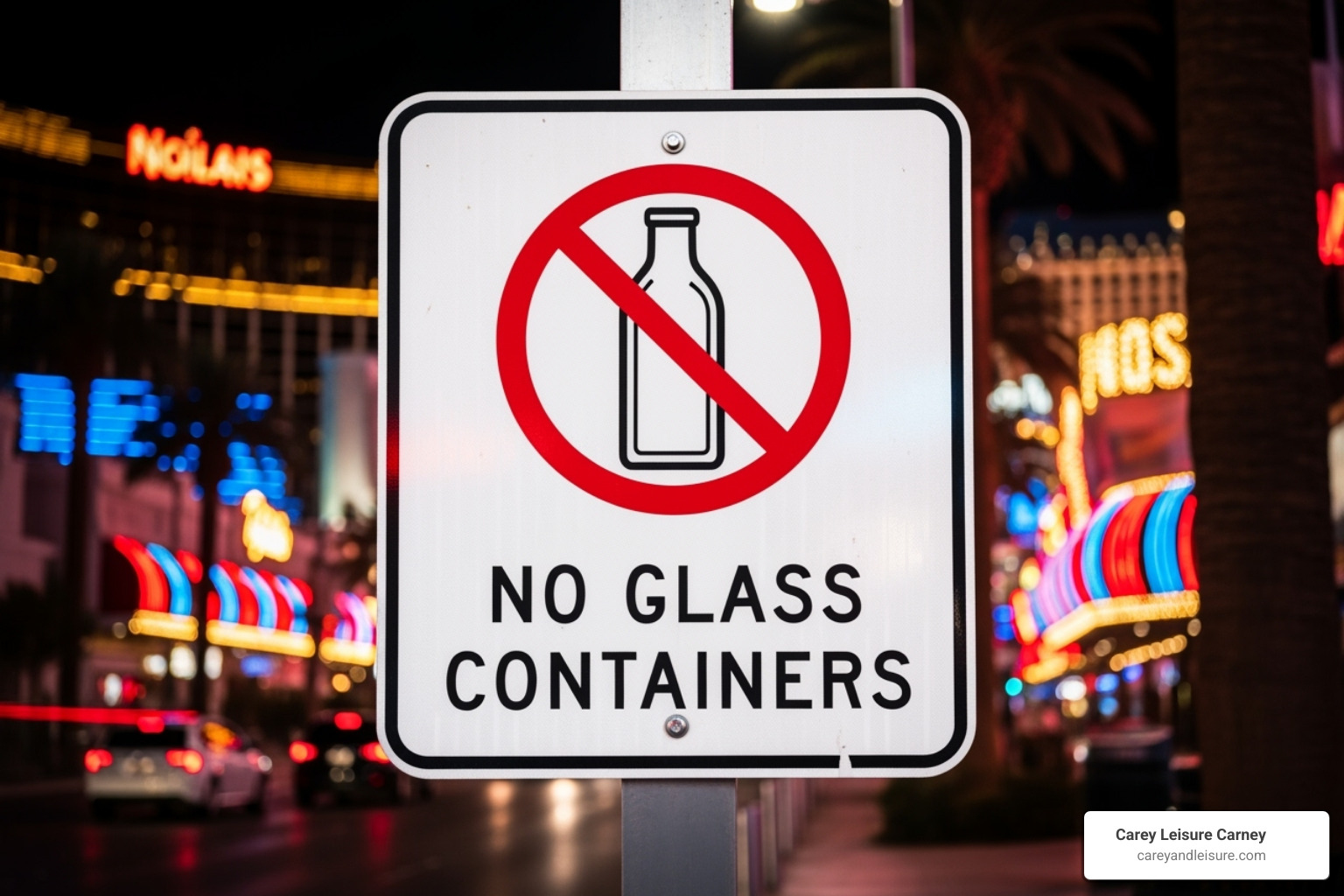
Rules in Most Other Florida Areas
Outside of these specific entertainment districts, the rules are much stricter. Most Florida municipalities, including Tampa, St. Petersburg, and Orlando, have ordinances that make it illegal to possess an open container of alcohol on public streets, sidewalks, or in parks. Violating these local laws can result in a citation and a fine.
Before you take your drink to-go, always assume it’s prohibited unless you are in an area explicitly known for allowing it. Look for posted signs or ask the staff at the establishment where you bought the drink.
Can You Bring Alcohol into Hotels?
While you can certainly drink alcohol in the privacy of your hotel room, common areas are a different story. Hotels are private property and can set their own rules regarding outside alcohol.
Many hotels and resorts, especially those with their own bars and restaurants, prohibit guests from bringing their own alcohol into lobbies, hallways, and particularly pool areas. They do this because they are licensed to sell alcohol and for liability reasons. Always check the hotel’s policy to avoid any issues. When in doubt, be discreet and respectful of their rules.
Florida’s Open Container Law for Vehicles
While the rules for walking with a drink vary by city, the law is uniform and strict once you are in a motor vehicle. The rules change completely inside a car, and they apply to everyone, not just the driver.

Florida Statute 316.1936 makes it illegal for both drivers and passengers to have an open container of alcohol in the “passenger area” of a motor vehicle. This law applies whether the car is moving or parked on a public road. The simple presence of an open container is enough to violate the law, even if no one is drinking from it and the driver is completely sober.
This law exists to prevent drunk driving by removing the temptation. What might be legal on a Key West sidewalk becomes a traffic violation the moment you step into your car with it.
What is an “Open Container” in Florida?
Under Florida law, an “open container” is any alcoholic beverage container that has had its seal broken or has been opened. It doesn’t matter if the container is full or nearly empty.
This includes:
- An opened can of beer or seltzer
- A bottle of wine that has been uncorked
- A flask containing liquor
- A cup, whether from a bar or a fast-food restaurant, containing an alcoholic beverage
If the original manufacturer’s seal is broken, it’s considered an open container. The only way to legally transport an opened bottle of alcohol (like a leftover bottle of wine from dinner) is to place it in a locked glove compartment, a locked trunk, or another locked container.
Exceptions for Passengers in Certain Vehicles
Florida law provides exceptions for passengers in specific types of commercial vehicles. Passengers are legally allowed to possess and consume alcohol in vehicles like:
- Limousines with a partition separating the driver
- Party buses and tour buses
- The living quarters of an RV or motorhome

Even in these vehicles, the driver is never allowed to consume alcohol or have an open container within reach. These exceptions apply only to passengers in the passenger area of qualifying vehicles.
Can Passengers Drink in an Uber or Lyft?
This is a common point of confusion. The short answer is no, you cannot legally have an open container as a passenger in an Uber or Lyft in Florida.
While the law has exceptions for commercial vehicles like limos and buses, rideshare vehicles are typically considered private cars. They are not licensed in the same way as a traditional taxi or limousine service. Therefore, the standard open container law applies.
Furthermore, both Uber and Lyft’s company policies prohibit open containers in their vehicles. A driver can cancel the ride and report you on the platform for violating this rule. To be safe, any alcohol you transport in a rideshare vehicle should be sealed and placed in the trunk.
Penalties for Violating Open Container Laws
Violating Florida’s open container laws can lead to legal consequences that are best avoided. The specific penalties depend on whether the violation occurs in a vehicle or in a public area, as different laws and ordinances apply.
Penalties for a Vehicle Violation
Having an open container in a vehicle is treated as a traffic offense in Florida, not a criminal misdemeanor (unless tied to a DUI). Under Florida Statute 316.1936, an open container violation is a noncriminal moving traffic violation.
- For Passengers: A passenger caught with an open container will be issued a citation and a fine, similar to a speeding ticket.
- For Drivers: A driver who has an open container will also receive a citation and a fine. More importantly, the driver will have three demerit points added to their driver’s license.
Accumulating too many points on your license can lead to increased insurance rates and potential license suspension. While it’s not a criminal charge on its own, it’s a serious traffic infraction.
Penalties for a Public Violation
If you’re caught with an open container while walking in a city that prohibits it, you’ll be in violation of a local municipal ordinance. These are typically non-criminal infractions, but they can still result in consequences.
The most common penalty is a fine, which can range from $50 to several hundred dollars, depending on the city’s specific code. While jail time is highly unlikely for a simple public open container violation, repeated offenses or disorderly behavior associated with the drinking could lead to more serious charges like disorderly intoxication.
How Open Container Violations Affect Car Accident Claims
While an open container ticket might seem minor, its presence during a car accident can have a major impact on a personal injury claim. It immediately raises red flags for law enforcement and insurance companies, suggesting recklessness and potentially impaired driving.

When police find an open container at an accident scene, it complicates the case. Was the driver drinking? Did alcohol impair their judgment, even if they were below the legal limit for a DUI? The open container violation can become a powerful piece of evidence for an injured victim seeking compensation.
Proving Liability in an Accident
To win a car accident case, you must prove the other driver was at fault (negligent). In Florida, an open container violation can help establish this through a legal doctrine called negligence per se.
This concept means that if a person violates a safety law (like the open container statute) and that violation causes the type of harm the law was designed to prevent, they are presumed to be negligent. The violation of Florida Statute 316.1936 serves as strong evidence of the driver’s carelessness.
An open container will almost always trigger a DUI investigation by the police. The police report, which will document the open container, field sobriety tests, and any other signs of impairment, becomes critical evidence for your injury claim. This evidence makes it much harder for the at-fault driver’s insurance company to deny their client’s responsibility for the crash.
In cases of extreme recklessness, such as a driver who was clearly intoxicated, you may also be able to pursue punitive damages. These are awarded to punish the defendant and deter similar behavior, and they are in addition to compensation for your medical bills, lost wages, and suffering.
Understanding Your Rights After an Accident
If you were injured in an accident where the other driver had an open container, you need to act quickly to protect your rights. Insurance companies will look for any reason to minimize their payout or shift blame. The presence of alcohol makes the case more complex, and you shouldn’t steer it alone.
At Carey Leisure Carney, we have over 35 years of experience handling complex personal injury cases in Florida, including those involving open container violations and drunk driving. We know how to use this evidence to build a powerful case and hold negligent drivers accountable.
We will handle all communications with the insurance adjusters, fight for a settlement that covers all of your damages—including future medical care, lost income, and pain and suffering—and we are always prepared to take your case to trial if a fair offer is not made. An open container violation is a critical detail that can strengthen your claim for the full compensation you deserve.
Frequently Asked Questions about Florida’s Open Container Laws
Florida’s mix of state laws and local ordinances about alcohol can lead to many questions. Here are clear answers to some of the most common ones we hear.
What is the difference between an open container violation and a DUI?
These are two separate offenses, though they are often related.
An open container violation (in a vehicle) is a noncriminal traffic infraction. It’s about the illegal possession of an opened alcoholic beverage in a car’s passenger area. You can be cited for this even if you are completely sober. The focus is on the container’s location, not your level of impairment.
A DUI (Driving Under the Influence) is a serious criminal offense. It involves operating a vehicle while impaired by alcohol or drugs, or with a Blood Alcohol Concentration (BAC) of 0.08% or higher. A DUI carries severe penalties, including large fines, license suspension, and potential jail time.
However, an open container violation often leads to a DUI investigation. If an officer sees an open container during a traffic stop, it gives them probable cause to suspect the driver may be impaired, which can lead to field sobriety tests and a breathalyzer.
Can I be arrested for being drunk in public in Florida?
Yes, you can. Unlike some states, Florida has a specific law for disorderly intoxication (Florida Statute 856.011). Simply being intoxicated in public is not a crime, but you can be arrested if you are intoxicated and you either endanger the safety of another person or property, or you cause a public disturbance.
So, while you won’t be arrested for quietly stumbling home, you can be if you are drunk and start a fight, scream at people, or block traffic. The key is that your intoxicated state must be accompanied by disruptive or dangerous behavior.
What about open containers of marijuana?
Florida’s laws regarding marijuana are much stricter than its alcohol laws. While medical marijuana is legal for qualified patients, recreational marijuana is not. Furthermore, it is illegal for anyone to consume marijuana in any public place.
When transporting marijuana in a vehicle, it must be kept in its original, sealed packaging and stored in a place that is not readily accessible to the driver, such as the trunk or a locked glove compartment. Treating it like an open container of alcohol is a good rule of thumb, but the penalties for violating marijuana laws can be more severe. Driving under the influence of marijuana is also a DUI, with the same penalties as an alcohol-related DUI.
Navigating the Rules for a Safe Florida Trip
Florida offers endless opportunities for fun and relaxation, and part of that includes its vibrant social scene. By understanding the state’s open container laws, you can ensure your vacation or night out remains safe and enjoyable.
Here’s a quick recap:
- Public Drinking: Prohibited in most places, but allowed in designated entertainment districts like Key West’s Duval Street. Always check local ordinances and stick to plastic cups.
- In a Vehicle: Open containers are strictly illegal for everyone in the passenger area. Keep all alcohol sealed and in the trunk.
- Public Intoxication: While simply being drunk isn’t a crime, disorderly or dangerous behavior while intoxicated can lead to arrest.
- Marijuana: Public consumption is illegal everywhere, and it must be transported in a sealed container out of reach.
When in doubt, the safest choice is to finish your drink at the establishment or dispose of it before heading to your next destination. A moment of caution can prevent a fine or worse.
Most importantly, if you or a loved one is injured in an accident caused by a driver who was violating Florida’s open container law, you have rights. At Carey Leisure Carney, our board-certified attorneys have been fighting for accident victims across Florida for decades. We understand how to use evidence of an open container violation to hold negligent drivers accountable and secure the compensation you need to recover.
Don’t let an insurance company minimize your claim. We offer direct attorney access and personalized service to guide you through this difficult time. Contact us for a free consultation to discuss your case and understand your legal options.