

Accident Lawsuit Lawyer: Secure Justice 2026
Why Understanding the Accident Lawsuit Process Matters After a Florida Crash
Accident lawsuit lawyer services are critical after an injury crash to steer Florida’s complex legal system and secure fair compensation. Here’s what you need to know right away:
Quick Answer: When Do You Need an Accident Lawsuit Lawyer?
- Serious injuries that exceed your PIP insurance coverage ($10,000 limit in Florida)
- Disputed fault where the other driver or their insurer denies responsibility
- Multiple parties involved (commercial trucks, rideshares, government vehicles)
- Permanent disability or long-term medical needs requiring future care
- Wrongful death claims after losing a loved one to another’s negligence
- Low settlement offers that don’t cover your actual losses
In Florida, thousands of families face overwhelming medical bills and lost income after a crash. The legal process can feel as daunting as the physical recovery.
Most accident victims don’t realize they have only two years from the crash date to file a lawsuit in Florida. Miss that deadline, and you lose your right to compensation forever—no matter how severe your injuries or clear the other driver’s fault.
This guide breaks down the accident lawsuit process into clear, actionable steps. You’ll learn about Florida’s no-fault system, who can be sued, what damages to claim, and what to expect from investigation through trial. Understanding this process empowers you to make informed decisions about your case.
I’m Thomas W. Carey, a board-certified civil trial lawyer. Since 1988, I’ve handled over 40,000 injury matters across Florida, securing multi-million-dollar results in complex motor-vehicle, DUI, and wrongful-death cases. As an accident lawsuit lawyer with national board certification and extensive trial experience, I’ve seen how the right legal strategy transforms outcomes for injured Floridians.
Accident lawsuit lawyer vocab explained:
Understanding Liability in a Florida Car Accident
When you’re in a car accident in Clearwater, Largo, or anywhere in Florida, we must determine who is legally responsible for the damages. Florida operates under a “no-fault” insurance system, which can be confusing.
Under Florida’s no-fault law, every driver must carry Personal Injury Protection (PIP) insurance. This policy pays for your initial medical expenses and lost wages up to $10,000, regardless of who was at fault. It’s designed to ensure victims get prompt medical care.
However, $10,000 in PIP coverage is often insufficient for serious injuries. If your injuries meet Florida’s “serious injury threshold”—involving permanent injury, significant scarring, or death—you can step outside the no-fault system and file a personal injury lawsuit against the at-fault driver for additional damages.
To prove fault, we must establish negligence. This means a driver failed to use reasonable care, causing harm. It involves proving four elements:
- Duty of Care: All drivers have a legal duty to operate their vehicles safely and follow traffic laws.
- Breach of Duty: The at-fault driver failed to uphold this duty (e.g., by speeding, being distracted, or driving under the influence).
- Causation: The driver’s breach of duty directly caused your injuries.
- Damages: You suffered actual losses (medical bills, lost wages, pain and suffering) from your injuries.
What Factors Determine Legal Fault?
Determining fault is crucial for your claim. Several factors help us build a strong case:
- Police Reports: These provide an official assessment, witness information, and citations, which can be strong evidence of fault.
- Traffic Law Violations: Running a red light, failing to yield, or aggressive driving are clear indicators of negligence.
- Speeding as a factor in crashes: Speeding is a major contributor to accidents. If the other driver was speeding, it directly impacts their liability.
- Witness Statements: Eyewitnesses can provide unbiased accounts that corroborate your version of events.
- Physical Evidence: Skid marks, vehicle damage, and road debris tell a story. We work with accident reconstruction specialists to interpret this evidence.
- Comparative Negligence Rule in Florida: Florida is a “comparative fault” state. If you are found partially at fault, your compensation is reduced by your percentage of fault. For example, if you’re awarded $100,000 but are 20% at fault, you receive $80,000. We fight to minimize any fault assigned to you.
How Does Insurance Impact a Lawsuit?
Insurance is central to car accident claims. While your PIP covers initial expenses, an accident lawsuit lawyer helps you pursue damages beyond that $10,000 limit.
- PIP Coverage Limits: PIP covers up to $10,000 for medical bills and lost wages, which is often insufficient for serious injuries.
- Suing for Excess Damages: Once your injuries meet the serious injury threshold, we can sue the at-fault driver for damages exceeding your PIP coverage, including pain and suffering.
- Bodily Injury (BI) Liability: This is the at-fault driver’s insurance that covers injuries they cause. Florida doesn’t mandate BI coverage, which can complicate recovery.
- Uninsured/Underinsured Motorist (UM) Coverage: This is your own policy that protects you if the at-fault driver has no or not enough insurance. We strongly advise carrying robust UM coverage.
- Role of Insurance Adjusters: Adjusters work for the insurance company, not you. Their goal is to minimize payouts. They may offer low settlements or use your statements against you. It’s critical to have an accident lawsuit lawyer represent you before speaking with them.
Identifying Defendants and Damages: Who to Sue and What to Claim
After an accident, you might think the only person to sue is the other driver. However, identifying all potentially liable parties is crucial for maximizing your compensation. An experienced accident lawsuit lawyer will investigate every possible defendant.

Who Can Be Sued After a Car Accident in Florida?
Beyond the driver, several other parties might share responsibility, especially in cities like St. Petersburg or Wesley Chapel:
- At-Fault Driver: The primary defendant whose negligence caused the crash.
- Vehicle Owner: Under Florida’s dangerous instrumentality doctrine, the vehicle’s owner can be liable if they consented to its use by the at-fault driver.
- Employer (Vicarious Liability): If the driver was working at the time of the crash, their employer can be held responsible for their negligence.
- Government Entities: Poor road design or malfunctioning traffic signals can make a government agency a defendant, but these cases have strict, short deadlines.
- Vehicle Manufacturers: If a vehicle defect (e.g., faulty brakes or airbags) contributed to the crash, the manufacturer could be liable under product liability laws.
- Multiple At-Fault Parties: Often, several parties contribute to an accident. We identify all responsible parties for a comprehensive claim.
- Commercial Truck Accidents: These complex cases can involve the driver, trucking company, cargo loader, and maintenance crew.
- Rideshare accident claims: Accidents with Uber or Lyft drivers involve multiple layers of insurance and liability.
- Dram Shop Laws: An establishment could be liable if they knowingly served alcohol to a habitually addicted person who then caused an accident.
- Negligent Entrustment: An owner who lends their car to someone they know is a reckless or incompetent driver could be held liable.
What Types of Damages Can Be Claimed?
We aim to recover all damages you’ve suffered, which fall into two main categories:
Economic Damages: These are quantifiable financial losses.
- Medical Expenses: Covers all past and future medical care, from ER visits and surgery to long-term therapy. Costs for catastrophic injuries can be immense, as shown by multi-million-dollar settlements we’ve secured for clients with severe brain injuries.
- Lost Wages: Compensation for lost income and future lost earning capacity if your injuries prevent you from working.
- Property Damage: The cost to repair or replace your vehicle and other damaged personal property.
Non-Economic Damages: These are subjective losses for the emotional and physical impact of your injuries.
- Pain and Suffering: Compensation for physical pain, emotional distress, and the negative impact on your quality of life.
- Mental Anguish: Covers psychological suffering like anxiety, depression, and PTSD resulting from the accident.
- Loss of Enjoyment of Life: If your injuries prevent you from participating in hobbies and activities you once enjoyed.
- Understanding loss of consortium: A claim by a spouse for the loss of companionship, affection, and assistance due to their partner’s injuries.
Punitive Damages: In rare cases of extreme negligence or intentional harm (e.g., a severe DUI), a court may award punitive damages to punish the defendant and deter similar conduct.
The Lawsuit Process: A Step-by-Step Guide from an Accident Lawsuit Lawyer
Filing a personal injury claim can be a daunting process. With an experienced accident lawsuit lawyer, it becomes manageable. Here are the typical steps:
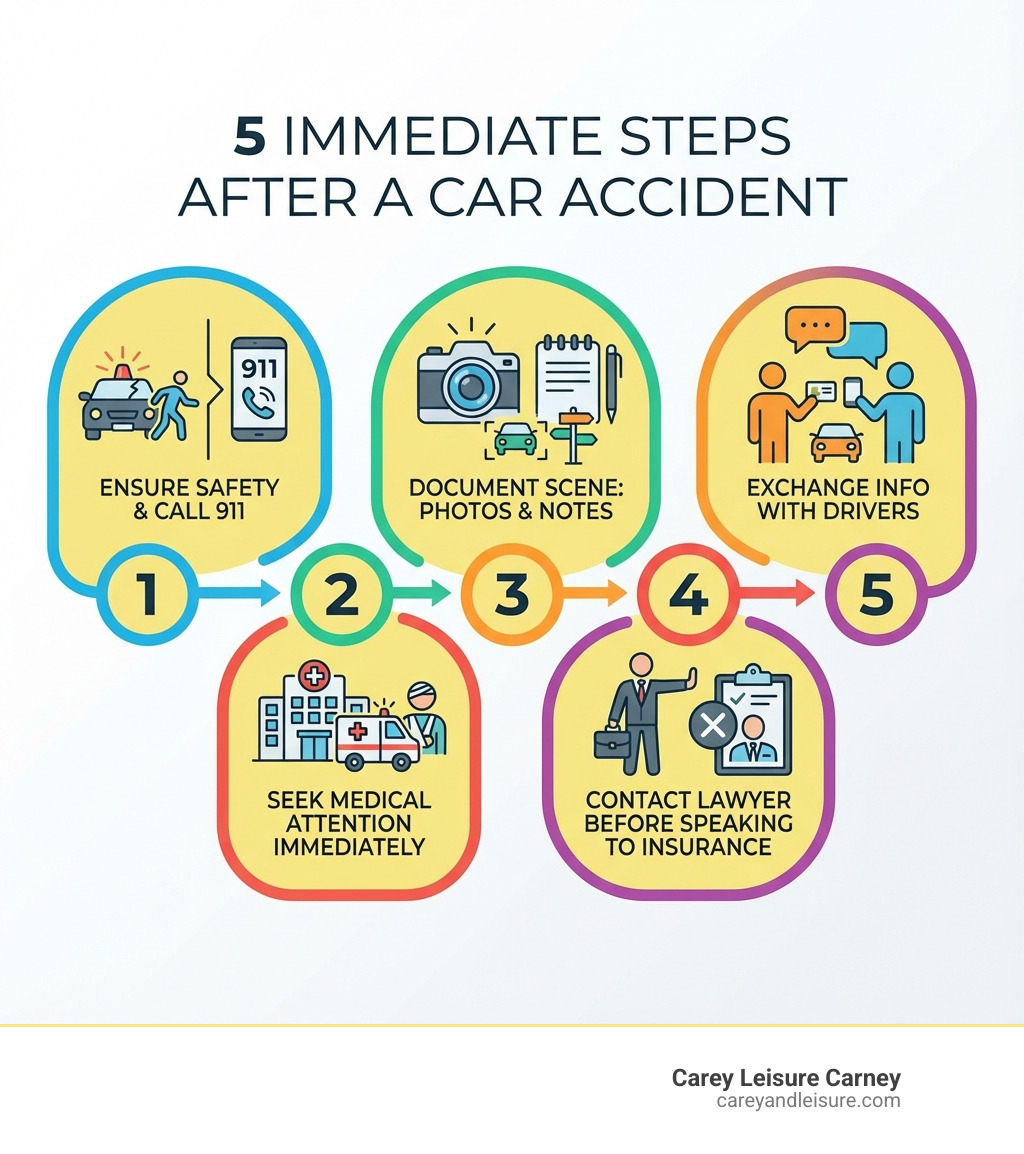
- Hire a Lawyer: The first step is a free consultation with us to discuss your case, rights, and legal options. We’ll help you gather initial information like police reports and medical bills.
- Investigation: We immediately collect all evidence, including police reports, witness statements, medical records, and scene photos/videos. We may also hire experts like accident reconstructionists.
- Demand Letter: We prepare a comprehensive demand package outlining the facts, the defendant’s liability, and the compensation we seek. This is sent to the at-fault party’s insurance company.
- Negotiation: The insurer will respond with a settlement offer, which is often too low. We negotiate fiercely on your behalf, leveraging the strength of your case.
- Filing the Complaint: If negotiations fail, we file a formal lawsuit. This legal document outlines the facts, why the defendant is responsible, and the damages sought.
- Serving the Defendant: The defendant is formally notified of the lawsuit with a copy of the complaint and a summons to appear in court.
- Findy Process: This is a crucial phase where both sides exchange information and gather facts for trial.
- Mediation: A neutral mediator facilitates discussions to help both sides reach a settlement, often resolving cases without a trial.
- Settlement Negotiations: Negotiations can continue at any point throughout the lawsuit process.
- Trial: If no settlement is reached, the case goes to trial, where evidence and arguments are presented to a judge or jury for a verdict.
- Appeals: If either party is dissatisfied with the verdict, they may file an appeal, prolonging the process.
What Are the Key Stages of Findy?
The findy (findy) phase allows all parties to gather facts to plan their case.
- Pleadings: The initial court documents, including the complaint (from the plaintiff) and the answer (from the defendant).
- Interrogatories: Written questions sent to the other party, which must be answered under oath to gather facts.
- Requests for Production of Documents: Written requests for relevant documents like medical records, police reports, and insurance policies.
- Deposition: Oral questioning of a witness or party under oath, recorded by a court reporter for potential use at trial.
- Independent Medical Examinations (IMEs): The defense may request you see their doctor, who may try to minimize your injuries. We will prepare you for this.
- Pre-Trial Motions: Motions filed with the court to resolve issues without a full trial, such as a motion for summary judgment.
Should You Settle or Go to Trial?
Your lawyer will help you decide whether to settle or go to trial. Most cases settle, but a trial is sometimes necessary for justice.
| Feature | Settlement | Trial |
|---|---|---|
| Control | You and the defendant agree to terms. | Judge or jury decides the outcome. |
| Cost | Generally lower legal fees and expenses. | Significantly higher due to extensive preparation and court time. |
| Time | Typically faster resolution (months to a year+). | Can take years (2-3 years to get a trial date, 3-5 for complex cases). |
| Privacy | Confidential terms are often negotiated. | Public record; details of your case become public. |
| Risk | Guaranteed outcome; no risk of losing. | Unpredictable; risk of losing and receiving no compensation. |
| Finality | Once signed, it’s usually final. | Can be appealed, prolonging the process. |
Our role as your accident lawsuit lawyer is to assess your case, explain the risks and potential outcomes, and negotiate from a position of strength. We are always prepared for trial if a fair settlement isn’t offered, and we will never pressure you to accept an inadequate offer.
Navigating Critical Deadlines and Choosing Your Legal Advocate
Time is a critical element in any car accident claim. Missing a deadline can mean forfeiting your right to compensation.
What is the Time Limit for Filing a Car Accident Lawsuit in Florida?
Florida’s “statute of limitations” is a strict deadline for filing a lawsuit. For most car accident injury claims in Florida, you have two years from the date of the accident to file in court.
- General Negligence Deadline: Two years from the date of the accident.
- Claims Against Government Entities: These claims have much shorter and stricter notice periods and deadlines.
- Wrongful Death Claims: The statute of limitations is also two years from the date of death.
- Florida’s statute of limitations details: It is crucial to understand these specific timelines.
- Consequences of Missing the Deadline: If you miss this deadline, you lose your right to seek compensation forever. This is why contacting an accident lawsuit lawyer immediately is so important.
The “findy rule” can sometimes create exceptions, but relying on them is risky. Acting quickly also helps in preserving crucial evidence like witness memories and video footage before it’s lost.
How to Choose the Right Accident Lawsuit Lawyer
Choosing the right accident lawsuit lawyer is one of the most important decisions you’ll make. Here’s what to look for:
- Board Certification Significance: Choose a lawyer Board Certified in Civil Trial Law by the Florida Bar. This designates them as a specialist with proven expertise, a distinction held by only the top 2% of Florida attorneys.
- Verifiable Trial Record: A lawyer with a proven record of winning at trial is invaluable. Insurers are more likely to offer fair settlements to firms known for their willingness to litigate aggressively.
- Client Testimonials and Reviews: What past clients say offers insight into a lawyer’s communication, compassion, and ability to get results.
- Contingency Fee Structure: A reputable accident lawsuit lawyer works on a contingency fee basis. You pay no upfront fees, and we only get paid if we win your case.
- Personalized Service: You are not just a case number. We provide personalized attention and ensure you have regular updates on your case.
- Direct Attorney Access: This is our USP. You will have direct access to our Board-Certified attorneys, ensuring your questions are answered by experienced legal professionals.
What to Expect: Compensation and Case Timelines
Two of the most common questions after an accident are, “How much is my case worth?” and “How long will this take?” While every case is unique, here are some general expectations.
How Much is My Car Accident Claim Worth?
Your claim’s value depends on the severity of your injuries and the total losses you’ve suffered.
- Minor vs. Severe Injuries: A minor injury claim may settle for thousands, while cases with severe, long-term, or catastrophic injuries can be worth hundreds of thousands or millions.
- Catastrophic Injury Claims: Claims involving traumatic brain injuries (TBI) or spinal cord injuries are often the highest value due to immense medical costs and the need for lifelong care.
- Multi-million dollar settlement examples: We have secured major results for clients, including a $12.5 million settlement for a severe brain injury from a collision and $12 million for a similar injury in a cargo container incident.
- Documenting All Losses: To maximize your claim, we carefully document all damages, including medical bills, lost wages, and pain and suffering.
- Role of Expert Witnesses: For complex cases, we work with economic and medical experts who provide crucial testimony on future costs and lost earning capacity, which significantly impacts your claim’s valuation.
How Long Does a Car Accident Lawsuit Take?
The timeline varies based on case complexity, injury severity, and the insurer’s willingness to negotiate.
- Uncomplicated Claims Timeline: May settle in just over a year if liability is clear and the insurer is reasonable.
- Complex Litigation Timeline: Serious injury cases that go to trial can take three to five years or more, as it can take two to three years just to get a trial date in Florida.
- Factors Causing Delays:
- Findy Process: Gathering evidence, depositions, and expert reports takes time.
- Medical Treatment: We often wait until you reach “maximum medical improvement” (MMI) to ensure we understand the full extent of your damages before settling.
- Insurance Company Tactics: Insurers may use delay tactics or make lowball offers to wear you down.
- Court Schedules: The legal system moves at its own pace, and dockets can be crowded.
- The Path to Resolution: Our goal is to achieve the best possible outcome, whether through a negotiated settlement or a trial verdict. We will keep you informed every step of the way.
Conclusion: Securing Justice with the Right Legal Partner
The aftermath of a Florida car accident is overwhelming, but you are not alone. This guide has outlined the lawsuit process, from understanding liability and damages to meeting critical deadlines. Choosing an experienced accident lawsuit lawyer is the most important step.
At Carey Leisure Carney, we secure justice for the injured across Florida, including in Clearwater, Largo, New Port Richey, Spring Hill, St Petersburg, Trinity, and Wesley Chapel. Our Board-Certified attorneys (top 2% in Florida) have over 100 years of combined experience and offer direct, personalized service. We’ll handle the legal burden so you can focus on recovery.
If you’ve been injured in a car accident, don’t delay. The sooner you contact us, the sooner we can begin building a strong case to protect your rights and pursue the maximum compensation you deserve. Take the first step towards recovery and securing your future.