
Rear end accident: 1 Essential Guide to Avoid
The Most Common Type of Crash
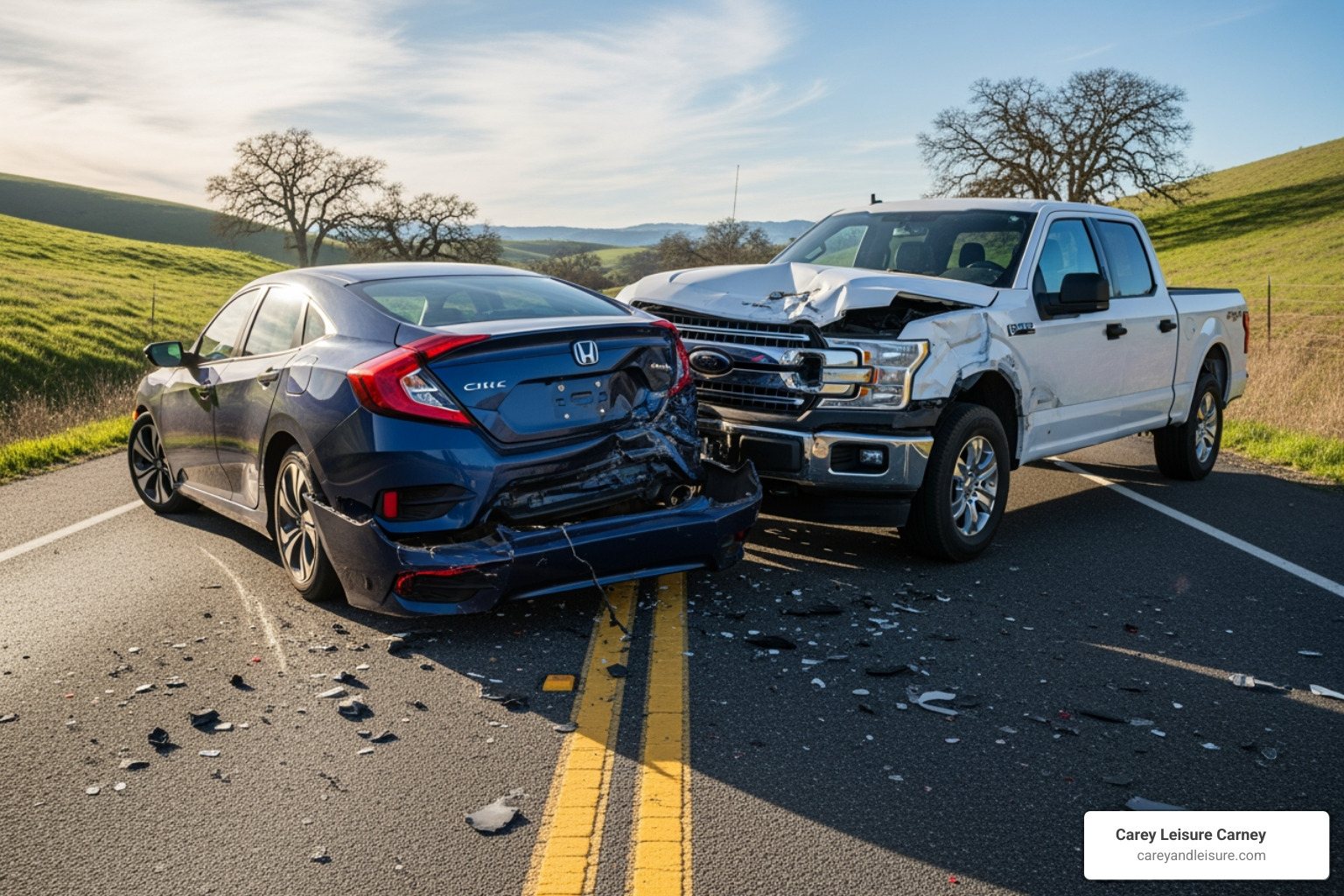
A rear end accident occurs when one vehicle strikes the back of another, and it’s the single most frequent type of collision on our roads. Understanding why these crashes happen, who is typically at fault, and what to do afterward can make a significant difference in protecting your health, your legal rights, and your financial recovery.
Quick Facts About Rear-End Collisions:
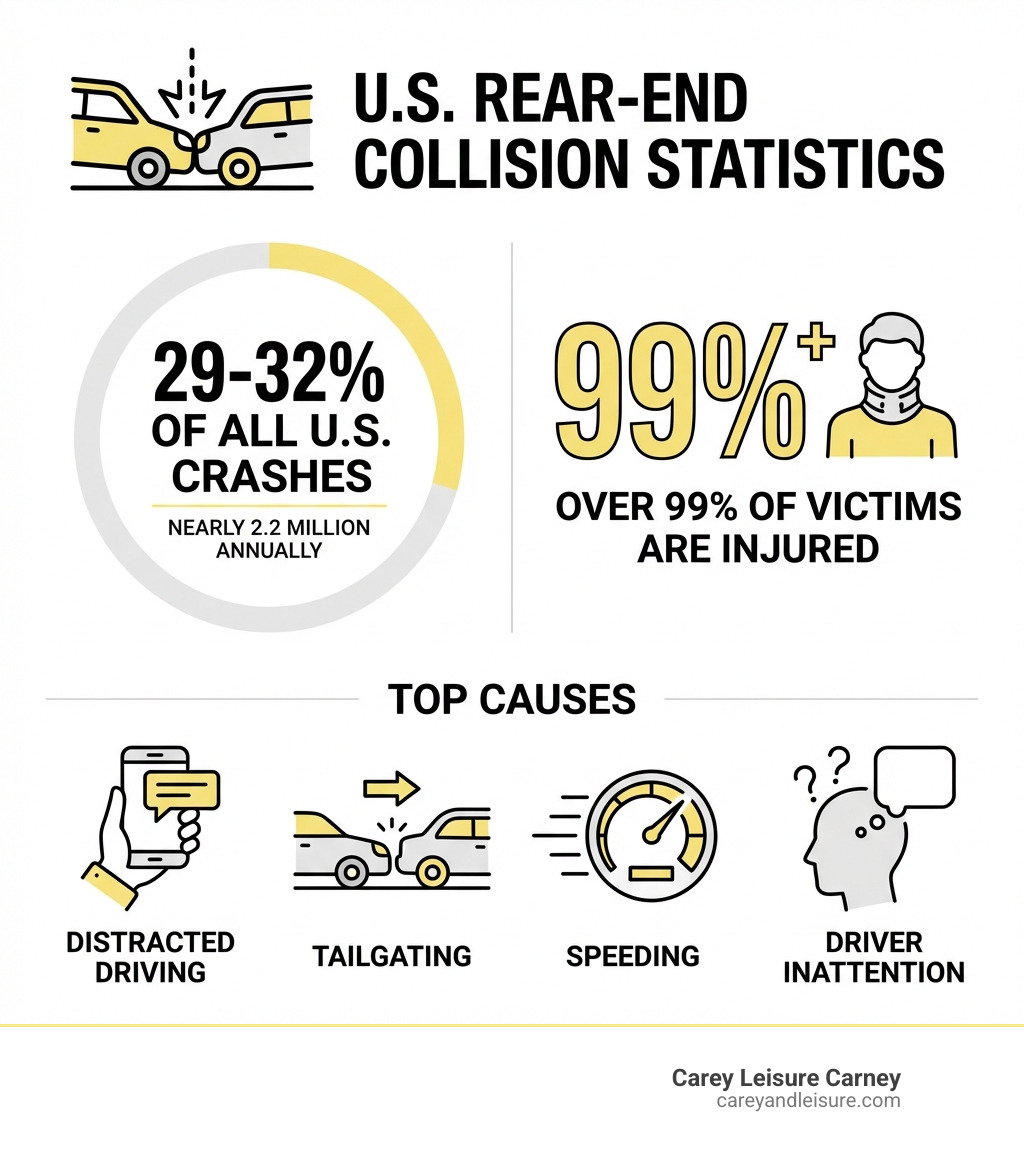
- Frequency: Rear-end accidents account for approximately 29–32% of all crashes in the United States—nearly 2.2 million police-reported collisions every year.
- Common Causes: Driver inattention, following too closely (tailgating), speeding, and distracted driving (texting, eating, adjusting the radio).
- Typical Injuries: Whiplash, back and spinal injuries, traumatic brain injuries, and soft tissue damage—many of which don’t appear until days or weeks after the crash.
- Fault Presumption: In most cases, the driver who hits from behind is presumed to be at fault for failing to maintain a safe following distance or to stop in time.
Despite being common, rear-end collisions can cause serious—even life-altering—injuries. In 2020, over 99% of the 419,400 people involved in rear-end crashes in the U.S. were injured, and roughly 3,600 fatalities resulted from these accidents in 2021. Even a “minor” fender-bender can leave you with mounting medical bills, lost wages, and long-term pain.
As Thomas W. Carey, a board-certified civil trial lawyer with decades of experience handling motor vehicle injury cases—including thousands involving rear end accident claims—I’ve seen how overwhelming the aftermath can be. That’s why understanding your rights from the start is so important.
Understanding Fault and Liability in a Rear End Accident
One of the first questions after any rear end accident is, “Who’s at fault?” While it might seem straightforward, determining liability can sometimes be more complex than it appears, especially when injuries are involved. In Florida, specific laws and legal principles guide this process.

Who Is Usually At Fault?
The general rule in a rear end accident is that the trailing driver, or the driver who hits the car in front, is presumed to be at fault. This presumption stems from the idea that drivers should always maintain a safe following distance and be attentive enough to stop their vehicle in time to avoid a collision, even if the car ahead stops suddenly. This principle is often referred to as the “presumption of negligence.”
In Florida, this legal presumption means that if you’re the driver who rear-ended another vehicle, the law generally assumes you were negligent unless proven otherwise. Factors like speeding, distracted driving, or simply not paying attention contribute to this presumption. Our firm, Carey Leisure Carney, has seen countless cases where this presumption is applied.
However, Florida operates under a system of comparative negligence. This means that even if you’re initially presumed at fault, if the other driver contributed to the accident in some way, your share of the blame (and thus your liability) can be reduced. For example, if you were following too closely but the lead driver slammed on their brakes for no reason, both parties might share some percentage of fault. This is why a thorough investigation is always crucial.
Common Exceptions to the Rule
While the trailing driver is usually at fault, there are several common exceptions where the lead driver might share some, or even all, of the blame in a rear end accident. These exceptions are vital to understand if you find yourself in such a situation:
- Sudden Braking Without Reason: If the lead driver slams on their brakes suddenly and without a valid reason (e.g., no obstacle, no emergency), causing the trailing vehicle to collide, the lead driver might be found partially or wholly at fault. This is particularly true if they intended to cause a collision.
- Brake-Checking: This aggressive maneuver involves a driver intentionally and abruptly braking in front of another vehicle to intimidate them. If proven, the lead driver could be held liable.
- Broken Brake Lights: If the lead vehicle’s brake lights are not functioning, the trailing driver might not have adequate warning to stop. This mechanical defect could shift some fault to the lead driver.
- Unsafe Lane Change: If a driver abruptly cuts in front of another vehicle, leaving insufficient space, and is then rear-ended, they could be found partially at fault for the unsafe maneuver.
- Multi-Car Pile-Ups: In complex scenarios involving three or more vehicles, often called chain-reaction accidents, determining fault can be intricate. The driver who caused the initial impact, or whose negligence contributed to the domino effect, might be held responsible for subsequent collisions. For instance, if a third vehicle strikes a middle car, pushing it into the car in front, the third vehicle’s driver might bear significant responsibility.
Even if one of these exceptions applies, the trailing driver still has a responsibility to maintain control of their vehicle and drive safely. The concept of comparative negligence often comes into play here, where both parties might be assigned a percentage of fault.
How to Prove You’re Not At Fault
If you believe you were not at fault, or only partially at fault, in a rear end accident, gathering strong evidence is paramount. This evidence can help rebut the presumption of negligence against the trailing driver and build a solid case for your claim. Here’s what we advise our clients to do:
- Police Reports: Always call the police to the scene, especially if there are injuries or significant property damage. The police report will document key details, including the officer’s initial assessment of fault, witness statements, and contributing factors. In Florida, if property damage exceeds a certain threshold (which can vary, but generally around $500-$1000), a police report is often required.
- Eyewitness Testimony: Independent witnesses can provide unbiased accounts of what happened. Get their contact information immediately at the scene. Their statements can corroborate your version of events.
- Dashcam Footage: If you have a dashcam, its footage can be invaluable. It provides an objective record of the accident, including speeds, distances, and sudden maneuvers.
- Scene Photography: Take plenty of photos and videos at the accident scene. Capture vehicle damage, road conditions, traffic signs, skid marks, debris, and the positions of all vehicles involved. These visual records can be critical evidence.
- Documenting Evidence in Personal Injury Claims: Beyond the immediate scene, keep a detailed record of everything related to the accident – medical appointments, repair estimates, communication with insurance companies, and any lost wages.
- Accident Reconstruction: In complex cases, accident reconstruction experts can analyze physical evidence, vehicle data, and witness statements to scientifically determine how the accident occurred and who was at fault.
By carefully collecting and preserving this evidence, you significantly strengthen your position when dealing with insurance companies or, if necessary, pursuing legal action.
The Aftermath: Common Injuries and Vehicle Damage
Even seemingly minor rear end accidents can have significant and lasting consequences. While the physical impact might appear limited to a “fender-bender,” the human body and vehicle structure can suffer considerable trauma.
Common Injuries Sustained in a Rear End Accident
The sudden, forceful impact of a rear end accident can cause a wide range of injuries, from immediate and obvious to delayed and insidious. It’s crucial to seek medical attention promptly, as some serious conditions might not manifest symptoms for days or even weeks.
- Whiplash: This is perhaps the most common injury in rear-end collisions. It occurs when the head and neck are violently jerked forward and backward, straining muscles, ligaments, and discs. Symptoms can include neck pain, stiffness, headaches, dizziness, and numbness in the arms.
- Soft Tissue Injuries: Beyond whiplash, other soft tissue injuries like muscle strains, sprains, and tears in the back, shoulders, and torso are very common. These can be difficult to diagnose without specific tests and often lead to chronic pain.
- Neck and Back Injuries: The lower and middle back can be violently moved, disrupting the spine’s natural curve. This can lead to disc herniations, bulging discs, pinched nerves, and facet joint injuries. These are often debilitating and require extensive treatment.
- Spinal Cord Injuries: In severe cases, the impact can damage the spinal cord itself, leading to partial or complete paralysis, loss of sensation, and other life-altering neurological deficits.
- Traumatic Brain Injuries (TBI): Even without direct head impact, the brain can strike the inside of the skull due to rapid acceleration and deceleration. This can result in concussions or more severe TBIs, causing symptoms like memory loss, confusion, fatigue, and cognitive difficulties. A rear end accident could cause your head to crash into the steering wheel, airbag, or window, directly leading to TBI.
- Concussions: A mild form of TBI, concussions are often overlooked but can have long-term effects if not properly treated.
- Delayed Injury Symptoms: It’s critical to understand that pain and other symptoms might not appear immediately. Many people feel fine after a minor fender-bender, only for neck or shoulder pain to flare up days later. This is why medical evaluation is so important, even if you feel okay at first.
- Fractures: While less common in low-speed rear-end collisions, higher impact crashes can result in broken bones, especially in the wrists, arms (as drivers brace for impact), or even ribs.
In 2020, out of 419,400 people involved in rear-end crashes in the U.S., over 99% were injured. This staggering statistic underscores the severity of these collisions.
Typical Vehicle Damage
The vehicle involved in a rear end accident can suffer a wide range of damage, some of which may not be immediately obvious. It’s important to get a professional inspection, as hidden damage can compromise your vehicle’s safety and value.
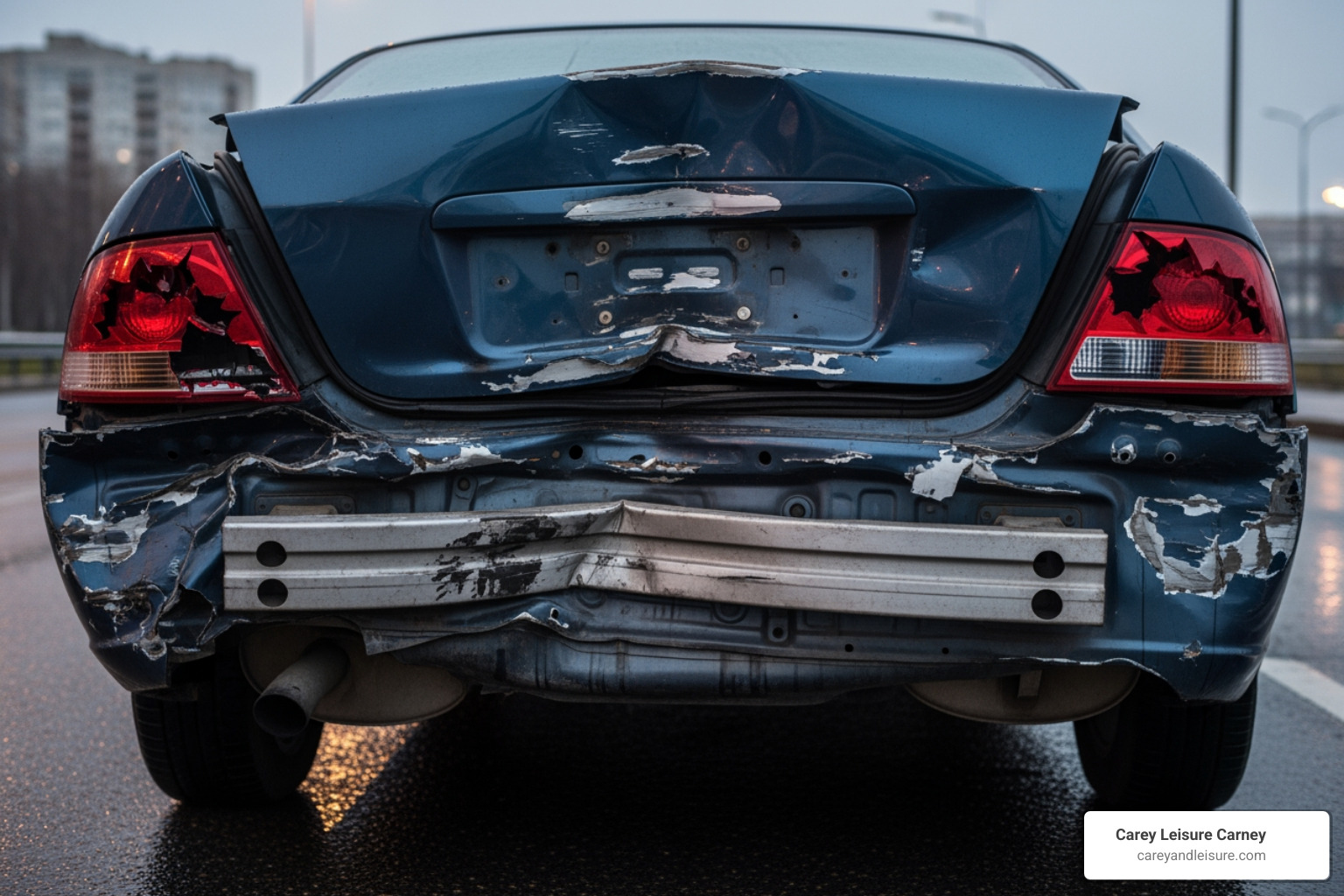
- Bumper Damage: This is the most visible damage. Bumpers are designed to absorb impact, but even a minor collision can cause cracks, dents, or detachment.
- Trunk Damage: The trunk lid, latch, and hinges can be bent, misaligned, or completely crushed. The trunk floor and spare tire well can also be affected.
- Frame Damage: This is one of the most serious types of damage. The vehicle’s frame provides its structural integrity. Even a slight bend can affect alignment, handling, and overall safety, potentially rendering the car a total loss.
- Exhaust System Issues: The exhaust system runs along the underside of the vehicle and is vulnerable in a rear-end collision. Damage can lead to strange noises, reduced gas mileage, or even dangerous exhaust leaks.
- Tail Light Damage: Tail lights, including brake lights, are often among the first components to be damaged. Broken lights can lead to further citations or accidents if not repaired promptly.
- Alignment Problems: Even if the frame isn’t visibly bent, the force of impact can throw off your vehicle’s wheel alignment. This can cause uneven tire wear, steering issues, and reduced fuel efficiency.
- Compensation for Diminished Car Value After Accident Florida: Beyond repair costs, your vehicle might suffer from “diminished value” after a significant rear end accident. This means its market value is lower, even after repairs, because it has an accident history. In Florida, you may be able to claim compensation for this loss.
It’s crucial to have your vehicle thoroughly inspected by a qualified mechanic after any rear end accident, as many damages are not visible and can lead to more significant problems and costly repairs down the road.
What to Do Immediately After Being Rear-Ended
The moments immediately following a rear end accident can be chaotic and stressful. However, taking the right steps can protect your safety, health, and legal rights.
Your First Steps at the Scene
Our top priority is always your safety. Here’s what you should do:
- Ensure Safety: Move yourself and any passengers to a safe location, away from traffic. If your vehicle is drivable and it’s safe to do so, move it to the shoulder or a nearby parking lot to prevent further collisions.
- Call 911: Always call 911 if anyone is injured, or if there’s significant property damage. In Florida, if property damage exceeds a certain threshold (which can vary by county but generally means significant damage), you must report the accident to the police. They will create an official accident report, which is vital for insurance claims.
- Check for Injuries: Assess yourself and your passengers for any injuries. Then, if you are able, check on the occupants of the other vehicle.
- What to Do After a Car Accident Florida: This resource provides a comprehensive guide specific to Florida laws and procedures.
- Exchange Information: Get the other driver’s name, contact information, insurance details, driver’s license number, and vehicle license plate number. Provide them with yours.
- Do Not Admit Fault: Even if you think you might be partially to blame, do not admit fault or apologize at the scene. Statements made at the scene can be used against you later. Stick to the facts.
- Document the Scene: Take photos and videos of everything: vehicle damage, the positions of the cars, road conditions, traffic signs, skid marks, and any visible injuries. Get contact information from any witnesses.
Protecting Your Health and Legal Rights
Beyond the immediate scene, protecting your health and legal rights is a process that continues in the days and weeks following a rear end accident.
- Seek Immediate Medical Attention: Even if you feel fine, see a doctor as soon as possible. As we discussed, many injuries, like whiplash or concussions, have delayed injury symptoms. A medical professional can diagnose hidden injuries and create an official record linking your injuries to the accident.
- How Much Time Do I Have to See Doctor After Car Accident: In Florida, there are specific time limits to seek initial medical treatment to qualify for Personal Injury Protection (PIP) benefits, typically 14 days. Delaying treatment can jeopardize your claim.
- Report the Accident to Your Insurer: Notify your own insurance company promptly. In Florida, which is a no-fault state, your initial medical expenses will typically be covered by your Personal Injury Protection (PIP) benefits, regardless of who was at fault.
- Keep Detailed Records: Maintain a meticulous file of all accident-related documents. This includes medical bills, treatment records, receipts for medications, car repair estimates, and records of any lost wages due to your injuries. These records are crucial for calculating your damages.
The period immediately after an accident is not the time to make light of your injuries or agree to quick settlements. Your focus should be on your recovery and protecting your future.
Navigating Insurance and Legal Claims
Dealing with insurance companies and understanding the legal landscape after a rear end accident can feel like navigating a maze. Our goal is to explain this process for our clients in Clearwater, Largo, New Port Richey, Spring Hill, St Petersburg, Trinity, and Wesley Chapel, Florida.
Dealing with Insurance Companies
After a rear end accident, you’ll inevitably interact with insurance companies. Knowing what to expect can help you protect your interests.
- Impact on Premiums: If you are found at fault in a rear end accident, your insurance premiums will likely increase upon renewal. If you are not at fault, your premiums typically should not increase, especially in Florida’s no-fault system where your PIP covers your initial medical costs. However, it’s always wise to confirm with your insurer.
- At-Fault vs. Not-At-Fault: The determination of fault directly impacts who pays for what. If the other driver is at fault, their liability insurance should cover your damages beyond your PIP limits. If you’re at fault, your collision coverage would pay for your vehicle damage.
- Accident Forgiveness: Some insurance policies offer “accident forgiveness,” which might prevent your premiums from rising after your first at-fault accident. However, these programs often have exclusions and don’t erase the accident from your record.
- The Role of Insurance Companies in a Car Accident: Insurance companies are businesses, and their primary goal is to minimize payouts. They may offer a quick settlement, especially if your injuries are not immediately apparent. It’s almost always best to politely decline to discuss any kind of settlement until you’ve fully healed or understand the full extent of your injuries and damages.
- No-Fault Insurance: Florida is a no-fault insurance state. This means your initial medical expenses and lost wages are covered by your own Personal Injury Protection (PIP) insurance, regardless of who caused the accident. Florida law requires drivers to carry PIP coverage, which typically pays up to $10,000 for injuries, covering 80% of medical treatment and 60% of lost income. However, if your injuries are severe and exceed your PIP coverage, you can pursue a claim against the at-fault driver.
Legal Considerations for a Rear End Accident
Understanding the legal aspects of a rear end accident is crucial for securing the compensation you deserve.
- Statute of Limitations: In Florida, you generally have a specific timeframe, known as the statute of limitations, to file a personal injury lawsuit after an accident. This is typically two years from the date of the accident for personal injury claims. If you miss this deadline, you could lose your right to seek compensation.
- Economic Damages: These are quantifiable financial losses directly resulting from the accident. They include medical bills (past and future), lost wages (past and future), property damage, and other out-of-pocket expenses.
- Non-Economic Damages: These are more subjective losses that don’t have a direct monetary value but significantly impact your life. They include pain and suffering, emotional distress, loss of enjoyment of life, and disfigurement. Florida law defines a “serious injury” (e.g., permanent loss of bodily function, permanent injury, or significant scarring/disfigurement) as a prerequisite to claim non-economic damages beyond PIP coverage.
- Punitive Damages: In rare cases, if the at-fault driver’s actions were grossly negligent or intentional (e.g., drunk driving, extreme road rage), a court might award punitive damages. These are designed to punish the wrongdoer and deter similar conduct.
- What is My Personal Injury Case Worth?: The value of your case depends on many factors, including the severity of your injuries, the extent of your medical treatment, lost income, and the impact on your quality of life. An experienced personal injury attorney can help you assess the full value of your claim.
Navigating these legal complexities alone can be daunting. Our Board-Certified attorneys at Carey Leisure Carney are here to guide you through every step, ensuring your rights are protected and you receive fair compensation.
How to Prevent Rear-End Collisions
While we can’t control other drivers, we can significantly reduce our risk of being involved in a rear end accident by practicing defensive driving and eliminating common causes.
Defensive Driving Techniques
The best offense is a good defense, especially on the road. Here are some techniques to help you avoid a rear end accident:
- Maintain a 3-Second Following Distance: This is a fundamental rule of safe driving. Pick a fixed object ahead (like a sign or tree). When the vehicle in front passes it, start counting “one-thousand-one, one-thousand-two, one-thousand-three.” If you pass the object before you finish counting, you’re following too closely.
- Increase Distance in Bad Weather: In rain, fog, or on wet or slippery roads (common in Florida during hurricane season!), increase your following distance to 5-6 seconds or more. Reduced traction means you’ll need more time and distance to stop safely.
- Scan the Road Ahead: Don’t just look at the car directly in front of you. Look several cars ahead to anticipate traffic slowdowns, brake lights, or potential hazards. This gives you more reaction time.
- Anticipate Sudden Stops: Be prepared for the unexpected. If you see brake lights several cars ahead, or a pedestrian about to cross, start slowing down early.
- Safe Driving Part Three Avoid a Car Accident: This resource offers more comprehensive tips on avoiding various types of accidents.
- Avoid Tailgating: This aggressive behavior significantly increases your risk of a rear end accident and can also lead to citations. Give other drivers space, and they’ll likely give you space too.
Eliminating Common Causes
Many rear end accidents are preventable. By addressing the root causes, we can make our roads safer for everyone in Clearwater, Largo, New Port Richey, Spring Hill, St Petersburg, Trinity, and Wesley Chapel.
- Avoid Distracted Driving: This is a leading cause of all accidents, including rear-enders. Any non-driving activity a person engages in while operating a motor vehicle—texting, eating, grooming, adjusting the radio, or even daydreaming—is a distraction. Put your phone away, finish your coffee before you drive, and keep your focus on the road. For more insights, check out our article on Texting While Driving Summer Series 3.
- Do Not Speed: Speeding reduces your reaction time and increases the distance required to stop your vehicle. Speeding is a leading cause of accidents and was a factor in roughly 12,330 fatalities in 2021. Always adhere to posted speed limits and adjust your speed for conditions.
- Vehicle Maintenance: Regularly check your brakes, tires, and lights. Worn brakes or bald tires can severely impact your stopping ability. Malfunctioning brake lights can prevent the driver behind you from reacting in time.
- Avoid Drowsy or Impaired Driving: Fatigue can impair your judgment and reaction time as much as alcohol. Never drive if you’re feeling drowsy, and absolutely never drive under the influence of alcohol or drugs. In Florida, a blood alcohol concentration (BAC) of .08 or higher is considered legally intoxicated.
By adopting these practices, we can all contribute to safer roads and significantly reduce the incidence of rear end accidents.
Injured in a Rear-End Crash? Know Your Next Steps
We’ve covered a lot about rear end accidents, from understanding fault and exceptions to the common injuries and vehicle damages they cause. We’ve also discussed the crucial steps to take immediately after an accident and how to steer the complex world of insurance and legal claims here in Florida.
The key takeaway is this: a rear end accident, even a seemingly minor one, can have serious consequences for your health, your vehicle, and your financial well-being. Injuries often surface days or weeks later, and insurance companies are not always looking out for your best interests.
If you’ve been involved in a rear end accident in Clearwater, Largo, New Port Richey, Spring Hill, St Petersburg, Trinity, or Wesley Chapel, Florida, acting quickly and strategically is essential. Protecting your rights and securing fair compensation for your medical bills, lost wages, and pain and suffering requires a thorough understanding of Florida law and a strong advocate by your side.
At Carey Leisure Carney, our Board-Certified attorneys—representing the top 2% in Florida—bring over 100 years of combined experience to your case. We offer direct attorney access and personalized service, ensuring you have the expert guidance you need.
If you’ve been in a crash, an experienced lawyer can protect your rights and help you steer the claims process. Don’t let the stress of an accident overwhelm you. Reach out to us for a free consultation. Let us help you get back on the road to recovery.