
Dog Attack Legal Advice: Secure Your 2025 Claim
Why Understanding Your Rights After a Dog Attack Matters
Dog attack legal advice is crucial for victims seeking justice. After an attack, your priorities are to seek medical care, report the incident to authorities, and document everything. It’s also vital to understand the statute of limitations—4 years in Florida—and the basics of owner liability. Consulting an attorney quickly helps protect your rights and steer insurance negotiations.
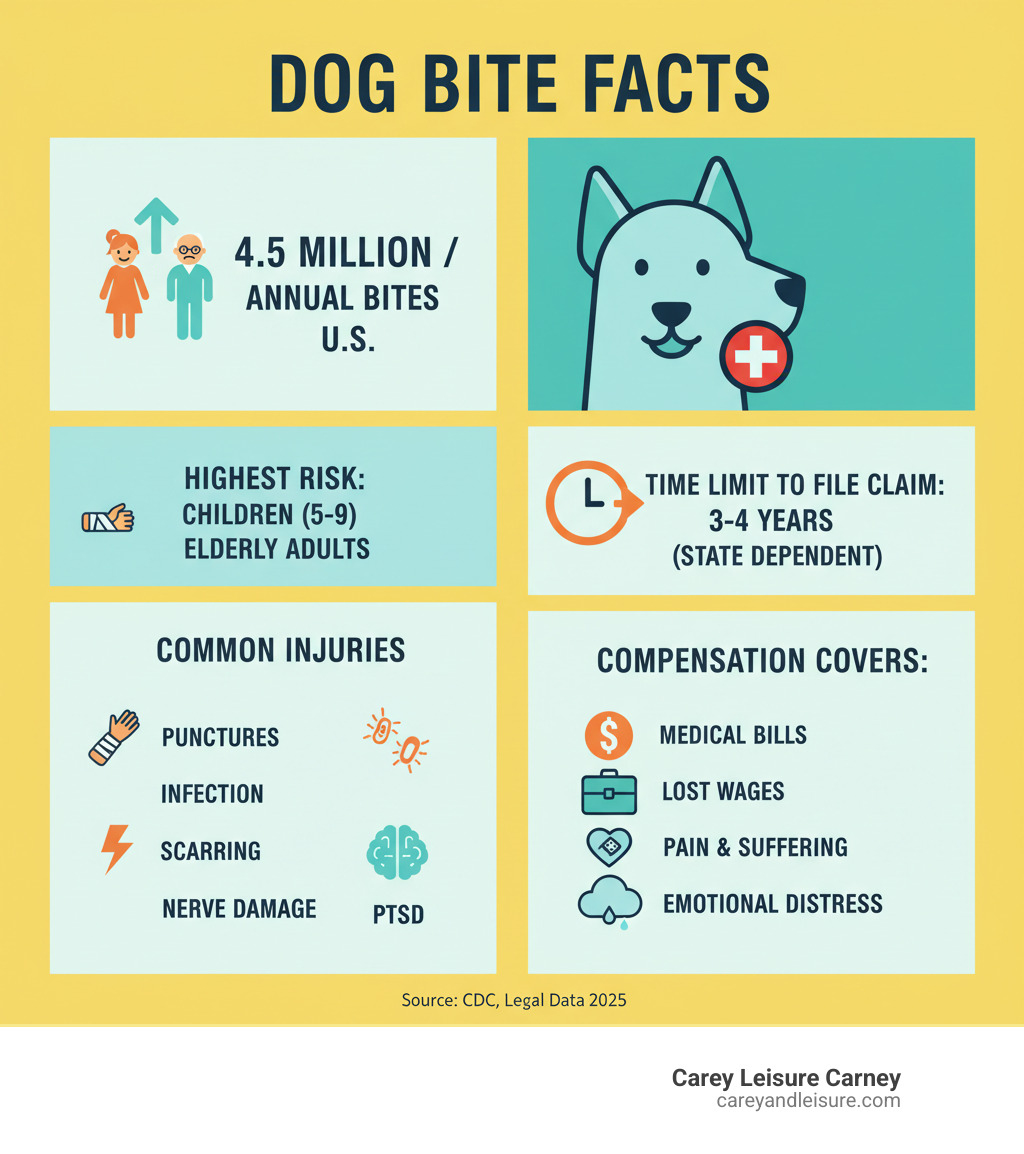
Dog attacks are alarmingly common, with approximately 4.5 million people bitten in the U.S. each year. Children and the elderly face the highest risk of serious injuries like puncture wounds, broken bones, nerve damage, scarring, and lasting emotional trauma like PTSD.
The legal landscape is complex. Some states use “strict liability” rules, holding owners automatically responsible, while others use a “one-bite rule.” Florida’s law is a hybrid, and recent court decisions are expanding victims’ rights. Liability can extend beyond the owner to landlords, property managers, or kennel operators. Insurance companies often try to minimize payouts, making professional guidance essential.
I’m Thomas W. Carey, founding partner of Carey Leisure Carney and a board-certified civil trial lawyer with over 35 years of experience in Florida personal injury cases. Our firm provides clear dog attack legal advice to ensure victims understand their rights and receive fair compensation.
First Steps: What to Do Immediately After a Dog Attack
The moments after a dog attack are overwhelming. What you do next is critical for your health and for protecting your legal rights.
First, get medical attention right away. Even minor bites can cause deep tissue damage and lead to dangerous infections like rabies or tetanus. A doctor’s visit is essential for proper care, and the medical records become vital evidence for your claim. Don’t delay; your health is the priority.
Next, report the incident to create an official record. Call the police to get an objective account of the attack. Also, contact your local animal control agency. They investigate attacks, track the dog and its owner, and check for a history of aggression—information that can be crucial for your case. In some areas, like New York City, reporting animal bites to the NYC Department of Health is mandatory. This paper trail establishes facts that insurance companies can’t easily dismiss.
Finally, gather evidence while the details are fresh. Take photos of your injuries and the location of the attack. If you can do so safely, photograph the dog. Get names and contact information from any witnesses. Identify the dog’s owner and ask for their contact and insurance information. Write down everything you remember about the incident.
Common Dog Bite Injuries
Dog bites can cause devastating, life-changing injuries. We frequently see clients suffering from:
- Puncture wounds and Lacerations: These can damage muscles and tendons, lead to infection, and require stitches, often leaving permanent scars.
- Nerve Damage: A severe bite can crush or sever nerves, causing chronic pain or loss of function and feeling.
- Broken Bones: The force of an attack, or a resulting fall, can easily break bones, especially in children and the elderly.
- Scarring and Disfigurement: Facial bites, in particular, can require multiple reconstructive surgeries and leave lifelong physical and emotional scars.
- Infections: All dog bites carry a risk of bacterial infection, including cellulitis, tetanus, and rabies, which can be fatal if untreated. Florida sees more than 600 hospitalizations annually.
- Psychological Trauma: Many victims develop an intense fear of dogs, anxiety, and PTSD, which can disrupt their daily lives for years.
Children and the elderly are most vulnerable. Children are often bitten on the face due to their height, and elderly victims face a high risk of death from falls and other complications during an attack.
Essential Dog Attack Legal Advice: Understanding Liability and Your Rights

After an attack, victims want to know: “Who is responsible?” Dog attack legal advice starts with understanding the legal framework that determines liability, which varies by state. The two main legal concepts are strict liability and negligence.
Strict Liability vs. The “One-Bite Rule”
Some states follow the “one-bite rule,” where an owner is typically only liable if they already knew their dog was dangerous. However, many states, including Florida, have moved toward strict liability. Under a strict liability law, an owner is responsible for injuries their dog causes, regardless of whether the dog had a history of aggression.
Florida Statute 767.04 establishes strict liability, meaning owners are automatically responsible for medical bills if their dog bites someone who is lawfully on the property. You can find more info about Dog Owner Liability in our guide. However, to recover compensation beyond medical costs—for things like pain and suffering or lost wages—it is often necessary to prove the owner was also negligent.
Proving Negligence in a Dog Bite Case
Negligence means the owner failed to use reasonable care to prevent the attack. We build a negligence case by showing the owner violated their duty of care. Examples include:
- Violating local leash laws.
- Failing to secure the property with a proper fence or gate.
- Ignoring warning signs of aggression, like growling or lunging.
An owner who knows their dog is aggressive but fails to take precautions is negligent. Recent legal trends, highlighted by cases like New York’s Flanders v. Goodfellow, show that courts are increasingly holding owners responsible for failing to prevent foreseeable harm, even without a prior bite history.
Defenses and Exceptions to Owner Liability
Insurance companies will use several defenses to avoid paying a claim. Common arguments include:
- Trespassing: The victim was not lawfully on the property.
- Provocation: The victim teased, tormented, or provoked the dog.
- Committing a Crime: The victim was engaged in a criminal act during the attack.
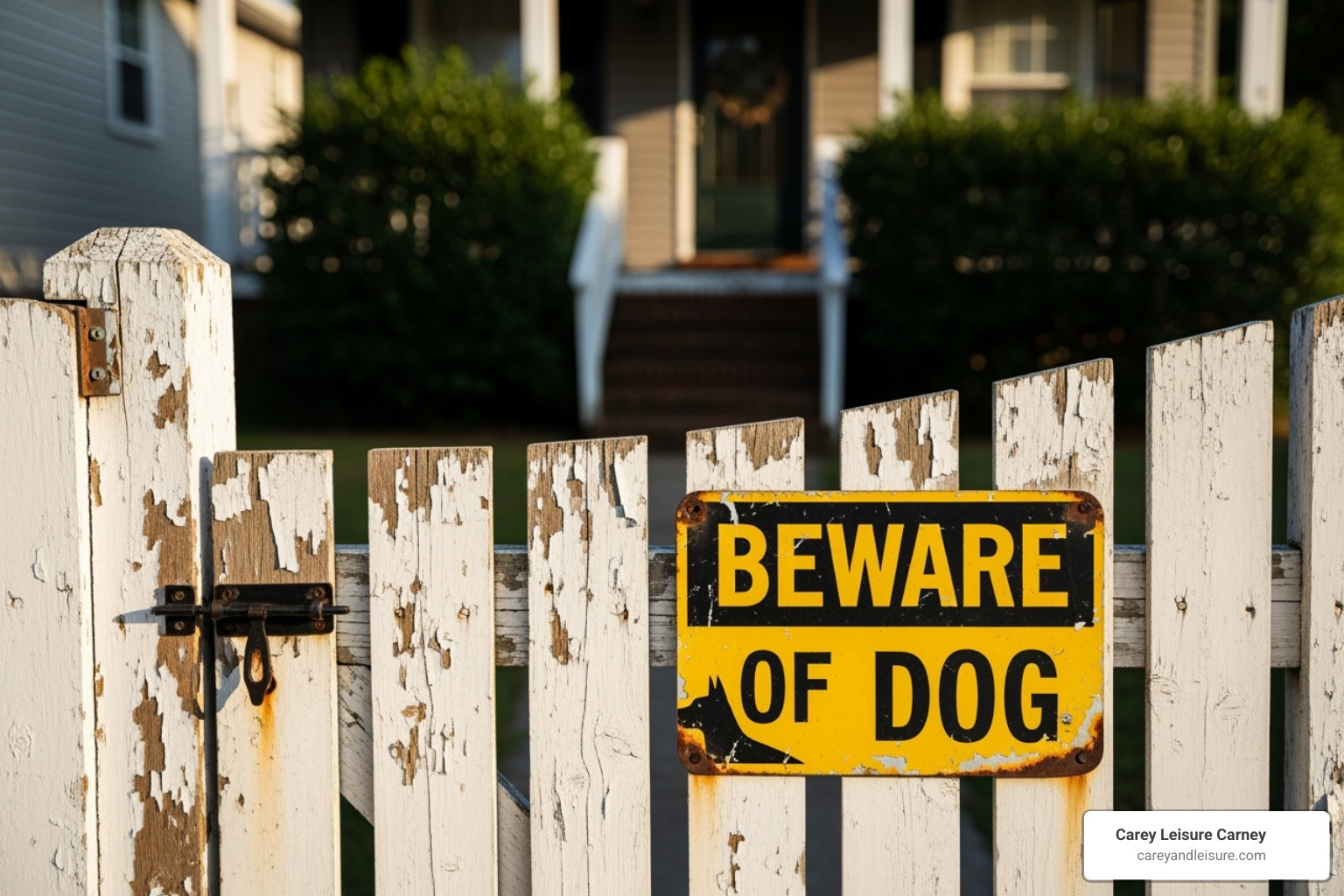
In Florida, an owner may avoid liability if they displayed a prominent “Bad Dog” sign. However, this defense does not apply if the victim is under six years old or if the owner’s own negligence (like a leash law violation) contributed to the bite. Understanding these complexities is why getting solid dog attack legal advice is so important.
Who Can Be Held Liable for a Dog Bite?
An important piece of dog attack legal advice is knowing that liability can extend beyond the dog’s owner. While the owner is the primary focus, other parties may also be responsible, including:
- Property Owners and Landlords: They can be liable if they knew a dangerous animal lived on their property and failed to take action.
- Kennel Operators and Pet Sitters: These professionals assume responsibility for the animals in their care and can be held accountable for negligent supervision.
- Dog Walkers: A dog walker who fails to control an animal can be liable for an attack.
The key factor in these cases is knowledge: did the party know the dog was dangerous and have the power to do something about it?
Landlord Liability in New York and Florida
Landlords in both New York and Florida can be held liable for a dog bite if they knew about a tenant’s dangerous dog and did nothing. This applies whether they knew of the dog’s aggressive nature when the lease was signed or learned of it later. Evidence of landlord knowledge can include prior complaints from other tenants or the landlord’s own observations. A landlord’s failure to enforce a “no pets” clause or other lease provision after learning of a dangerous dog can strengthen a victim’s claim. This liability can even extend to off-premises attacks if the landlord failed in their duty to protect the community from a known danger.
What Constitutes a ‘Dangerous Dog’?
Legally defining a dog as “dangerous” is crucial for a claim. Both New York’s dangerous dog statute and local ordinances in Florida provide guidance. A dog may be classified as dangerous if it has, without justification or provocation:
- Attacked, injured, or killed a person or domestic animal.
- Behaved in a way that a reasonable person would believe poses a serious threat of injury or death.
- Chased or approached people in a menacing fashion.
A documented history of aggression—even without a prior bite—can be enough to establish that the owner knew their dog was dangerous. Once a dog is officially classified as dangerous, the owner must follow strict confinement and muzzling rules. For a victim, this classification is powerful evidence that strengthens a claim for full compensation.
The Legal Process: Filing a Claim and Seeking Compensation
After a dog attack, navigating the legal process can feel daunting. Understanding the timeline and your options is where dog attack legal advice becomes invaluable.
The most critical deadline is the statute of limitations—the time limit for filing a lawsuit. In Florida, you have four years from the date of the bite to file a claim (New York allows three years). Missing this deadline means losing your right to compensation. It’s essential to start early, as building a strong case takes time.
Our Clearwater Dog Bite Lawyer team pursues two main types of compensation: economic damages (financial losses) and non-economic damages (the human cost of the attack).
What Compensation Can You Recover?
Our goal is to recover compensation for the full impact of the attack on your life. This can include:
- Medical Bills: All costs for past and future treatment, including ER visits, surgery, and physical therapy.
- Lost Wages: Income lost while you were unable to work.
- Loss of Earning Capacity: Compensation if the injury permanently affects your ability to earn a living.
- Pain and Suffering: For the physical pain and discomfort you have endured.
- Emotional Distress: For psychological trauma such as anxiety, fear, or PTSD.
- Scarring and Disfigurement: For the emotional toll of permanent physical reminders of the attack.
- Punitive Damages: In rare cases of extreme negligence, these are awarded to punish the defendant and deter future misconduct.
When to seek dog attack legal advice
While a minor nip may not require legal action, you should seek professional dog attack legal advice if:
- Your injuries are severe, requiring surgery or leaving permanent scars.
- The insurance company is uncooperative, offering a low settlement or denying your claim.
- Liability is complex, potentially involving a landlord or other third party.
- The dog owner is uncooperative or denies responsibility.
- You are unsure what your claim is truly worth. An attorney can calculate the full value, including future costs and non-economic damages.
An attorney ensures you meet all deadlines and protects you from the tactics insurance companies use to pay less than you deserve.
How an Experienced Dog Bite Attorney Can Help
After a dog attack, an experienced attorney handles the legal complexities so you can focus on healing. At Carey Leisure Carney, we take immediate action on your behalf.
First, we thoroughly investigate the attack. We gather police and animal control reports, medical records, and witness statements. We dig into the dog’s history, searching for prior complaints or incidents that establish a pattern of aggression.
Proving vicious propensity—that the owner knew their dog was dangerous—is key to securing full compensation beyond just medical bills. We find the evidence to build this part of your case.
We also calculate your total damages. This includes not just current medical bills and lost wages, but also future medical needs, diminished earning capacity, and the significant cost of your pain, suffering, and emotional trauma. We work with experts to ensure we are pursuing the full value of your claim.
Next, we negotiate with the insurance companies. Their goal is to pay as little as possible. With over 100 years of combined experience, our Board-Certified attorneys know their tactics and fight for a fair settlement. If they refuse to be reasonable, we are always prepared to represent you in court. Our trial expertise means we are not afraid to take your case before a jury to get you justice.
Key questions for your dog attack legal advice consultation
During your free consultation, we encourage you to ask questions. Here are some common ones we address:
- What is your fee structure? We work on a contingency fee basis. You pay no upfront fees, and we only get paid if we win your case.
- What do you think my case is worth? We will provide an honest assessment based on the facts of your case and our experience, outlining the types of compensation you may be entitled to.
- How long will this process take? We will give you a realistic timeline, from investigation to a potential settlement or trial.
- What evidence do we need? We’ll provide a clear list of documents and information that will help us build the strongest possible case for you.
- What are the next steps? We will outline our action plan so you know exactly what to expect.
Our goal is to provide clear dog attack legal advice and make the process as stress-free as possible.
Conclusion
Understanding your rights after a dog attack is the first step toward justice. Remember the essentials: get medical care, report the incident, and document everything. In Florida, you have four years to file a claim, so it’s crucial to act promptly.
Navigating liability rules, calculating your full damages, and dealing with insurance companies is complex. Dog attack legal advice from an experienced attorney is often the deciding factor between a lowball offer and the fair compensation you deserve. Insurance companies have lawyers working to protect their interests; you need a skilled advocate fighting for yours.
At Carey Leisure Carney, our Board-Certified attorneys bring over 100 years of combined experience to help injury victims. We offer direct attorney access and personalized service, because your case is our priority.
Acting quickly is vital. Evidence can be lost and memories fade. The sooner you contact us, the stronger we can build your case. You’ve been through enough. Let us handle the legal fight while you focus on your recovery.
We offer free, no-obligation consultations to discuss your rights and options. It’s a straightforward conversation about how we can help.