
Florida Alcohol Laws: Ultimate 2025 Guide
Why Understanding Florida Alcohol Laws Matters for Your Safety and Legal Protection
Florida alcohol laws govern the purchase, possession, and consumption of alcohol. For residents and visitors alike, understanding these regulations is key to avoiding serious fines, criminal charges, and the life-altering consequences of a drunk driving accident.
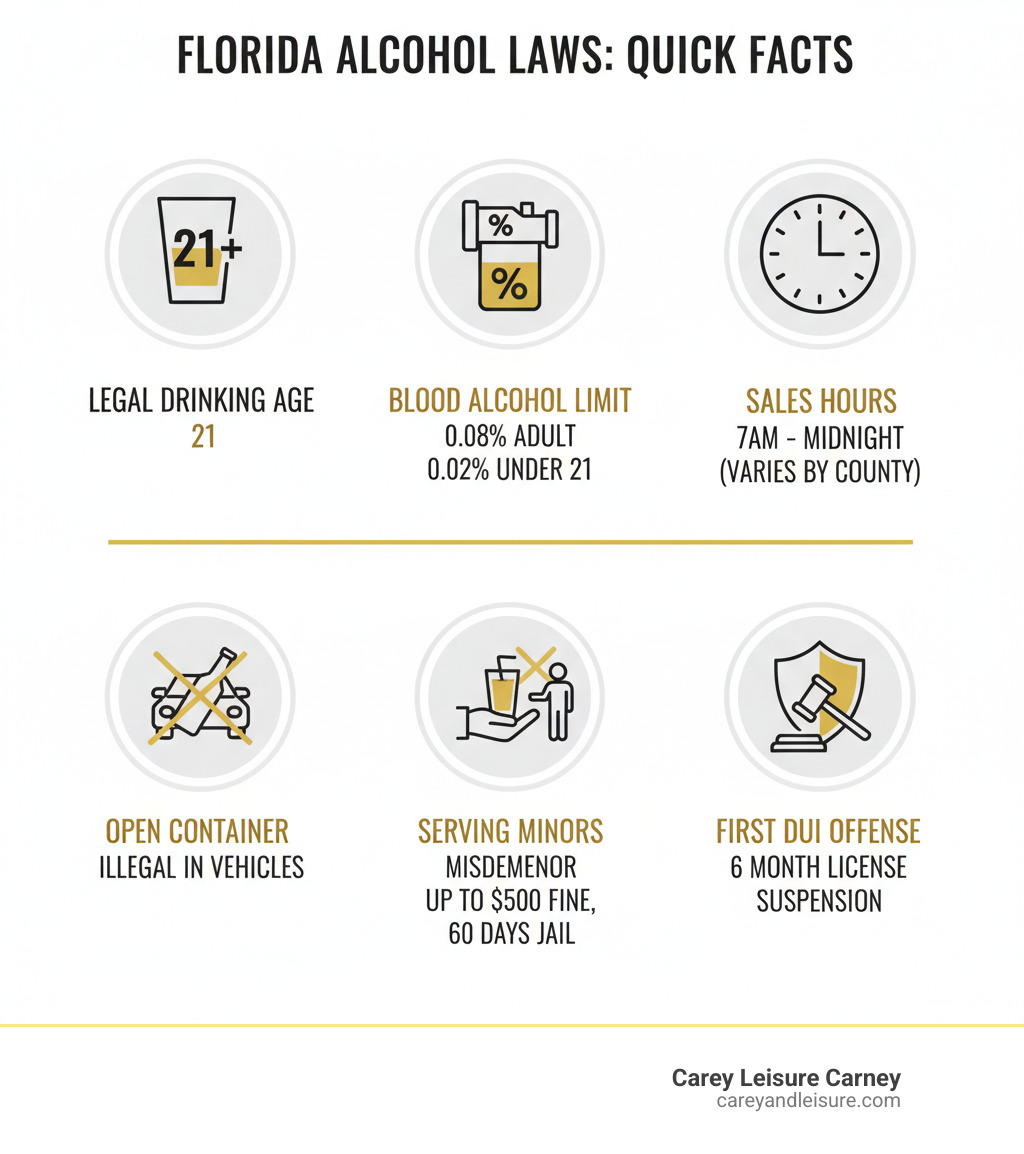
Quick Facts About Florida Alcohol Laws:
- Legal Drinking Age: 21 years old (raised from 18 in 1987)
- Standard Sales Hours: 7 a.m. to midnight (varies by county)
- BAC Limit for Drivers: 0.08% (0.02% for drivers under 21)
- Open Containers: Illegal in vehicles for both drivers and passengers
- Penalties for Serving Minors: Up to $500 fine and 60 days in jail
- First DUI Conviction: 6-month license suspension minimum
Florida takes alcohol violations seriously. A first underage drinking offense carries a $500 fine and up to 60 days in jail. Using a fake ID to buy alcohol can result in a felony charge with up to five years in prison and a $5,000 fine. For DUI offenses, penalties escalate quickly—from license suspension to felony charges after a fourth conviction.
The stakes are even higher when drunk driving leads to serious injuries or death. These cases often involve complex questions about who can be held responsible—not just the impaired driver, but potentially bars, restaurants, or even social hosts who provided alcohol illegally.
As Thomas W. Carey, founding partner of Carey Leisure Carney and former Florida State Chairman for Mothers Against Drunk Driving, I’ve spent decades advocating for victims of alcohol-related accidents. After losing my wife Joni to a drunk driver, I’ve dedicated my career to holding negligent parties accountable and helping injury victims secure the compensation they deserve.
This guide breaks down everything you need to know about Florida’s drinking rules—from purchase restrictions and underage penalties to DUI consequences and open container laws—so you can stay informed, stay safe, and understand your legal rights.
Buying Alcohol in the Sunshine State: Where, When, and What
Understanding when and where you can buy alcohol in Florida will save you from a wasted trip to the store.

Florida alcohol laws set the basic framework, but your local county or city gets the final word on many details. State law provides the foundation, but local ordinances can vary significantly from one place to another.
The statewide default is that most establishments can sell, serve, or permit alcohol consumption from 7 a.m. to midnight every day. The hours between midnight and 7 a.m. are typically dry across most of Florida.
However, your county or city can change these hours. What’s legal in Tampa might be against the rules in a neighboring town, so checking local regulations is always smart.
Holidays add another layer. State law doesn’t ban alcohol sales on Christmas or New Year’s Day, but local governments can. Florida law also allows authorities to ban alcohol sales during emergencies like hurricanes, so don’t wait until the last minute to stock up if a storm is approaching.
For the legal details straight from the source, check out the Florida Beverage Law: Enforcement statutes.
What Time Can You Buy Alcohol on Sundays in Florida?
Florida’s old “Blue Laws” that once restricted Sunday morning alcohol sales are a thing of the past.
Under current Florida alcohol laws, you can purchase alcohol starting at 7 a.m. on Sundays statewide.
But as always, local rules can shake things up. Some counties and cities have extended their hours even further. Miami-Dade County, for example, allows 24-hour alcohol sales seven days a week.
Polk County also made changes to extend Sunday sales for beer and wine to start at 7 a.m., ending the previous noon start time in some areas.
The bottom line? While 7 a.m. is the general rule across Florida, your specific area might be different. When in doubt, ask the store or check your local municipal code.
Where Can You Purchase Different Types of Alcohol?
Not all alcohol is created equal under Florida law, and where you can buy it depends on what you’re looking for.
Beer and wine are the easiest to find. You can pick them up at grocery stores, convenience stores, and gas stations across the state. These locations typically sell from 7 a.m. to midnight, Monday through Sunday, though local variations apply.
Liquor and spirits are a different story. For the hard stuff, you need to visit a standalone liquor store (often called a package store). These operate under stricter licensing requirements. Florida uses a “quota license” system for stores selling all types of alcohol, awarding limited licenses via an annual lottery based on county population. This is why you can’t buy vodka in every corner store.
The difference between on-premise and off-premise licenses matters too. On-premise means you drink it there—think bars and restaurants. Off-premise means you take it home—like liquor stores and grocery stores. Bars and restaurants with on-premise licenses typically must stop serving between 1 a.m. and 7 a.m., though some local ordinances allow service until 3 a.m. or even 24 hours in places like Miami-Dade.
That if you’re visiting federal or tribal lands within Florida, different rules may apply. These areas often follow federal regulations or tribal codes rather than state statutes.
Underage Drinking: Florida’s Zero-Tolerance Approach
Florida takes underage drinking very seriously, with a fortress of laws designed to keep alcohol from young people and protect them from the dangers of early alcohol use.
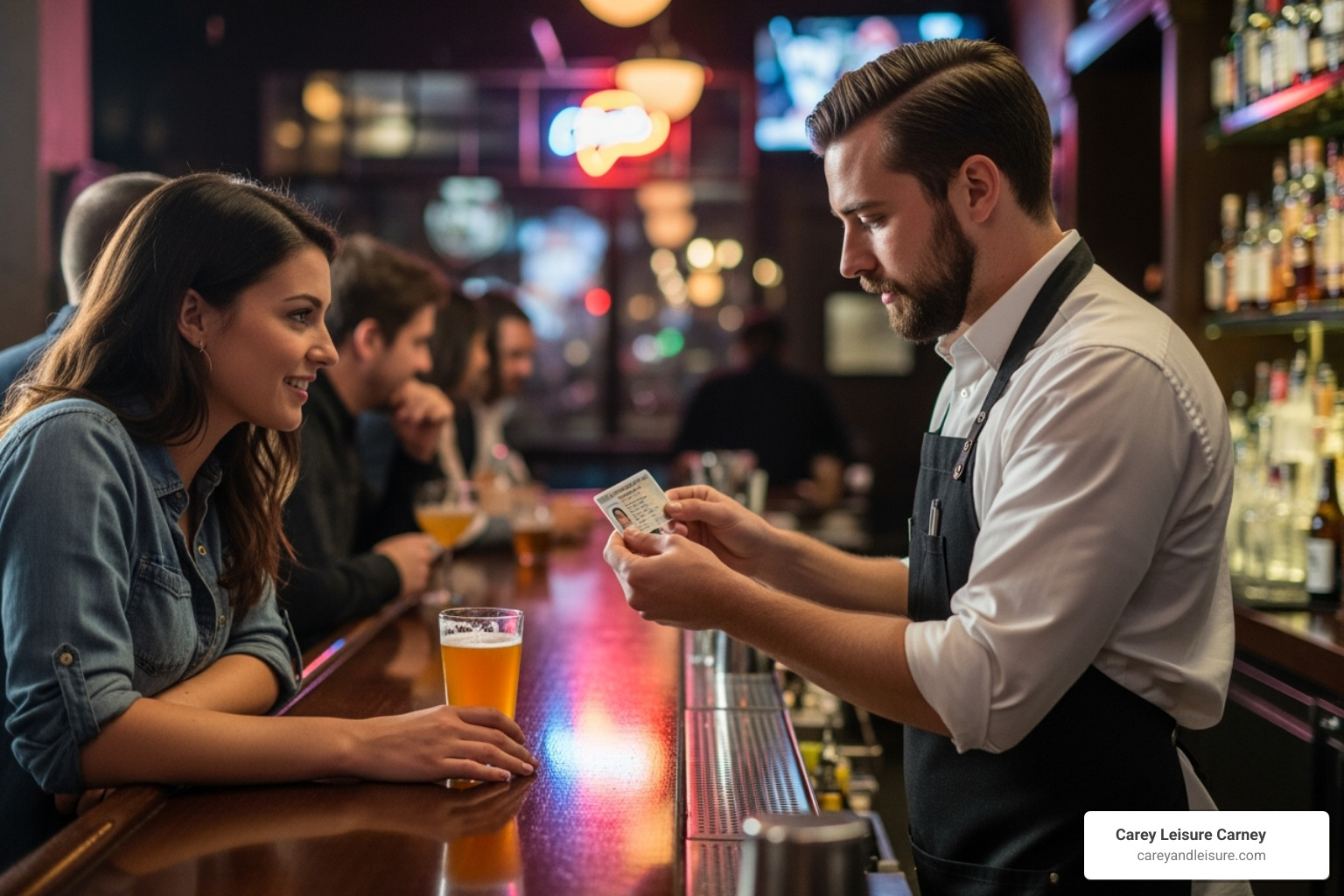
The legal drinking age in Florida is 21 years old, period. The age was raised from 18 to 21 in 1987 to reduce alcohol-related accidents among young people, and the state enforces this law strictly.
Understanding Florida’s Underage Drinking Penalties
Getting caught with alcohol under 21 can derail your life, as the penalties go far beyond a slap on the wrist.
If you’re a minor in possession of alcohol, your first offense brings a $500 fine and up to 60 days in jail. A second offense doubles to a $1,000 fine and up to a year in prison. Crucially, the court can suspend or revoke your driver’s license, even if you weren’t driving.
The fake ID consequences are even more severe. Using a forged ID to buy alcohol is a felony charge that can land you in prison for up to five years with a $5,000 fine. Even borrowing someone else’s real ID can result in a $500 fine, 60 days in jail, and a year without your license. For anyone under 17 caught misrepresenting their age, the case typically moves to juvenile court, but the consequences still follow you.
These harsh penalties reflect Florida’s commitment to preventing the tragic consequences of underage drinking through strict enforcement.
What are the laws regarding serving alcohol to minors in Florida?
If you work where alcohol is sold, understanding who you can and cannot serve is critical. Florida alcohol laws are crystal clear: you cannot sell, give, or serve alcoholic beverages to anyone under 21. You also cannot allow someone under 21 to consume alcohol on your licensed premises.
Breaking this rule is a second-degree misdemeanor for a first offense. A second violation within a year escalates to a first-degree misdemeanor. For businesses, the stakes are higher still—they can face substantial liability through what’s known as “dram shop” laws.
These laws hold establishments accountable when they illegally serve alcohol to a minor who then causes harm. If you or someone you love was injured because a bar or restaurant served alcohol to a minor, you have legal options. Our team at Carey Leisure Carney has extensive experience handling these complex cases. We can help you understand Dram Shop Claims Attorney and determine Minor Served Alcohol in Florida: Who Is Responsible?.
Florida law has some nuances for young workers. An 18-year-old can serve alcohol in a restaurant or bar, but they cannot pour it—you must be 21 to pour drinks. Similarly, an 18-year-old can sell packaged beer and wine in a grocery store, but they need to be 21 to handle or sell spirits.
There’s also an exception for education: students 18 or older in an accredited college can taste (but not consume) alcoholic beverages for required coursework, like a culinary program. This must happen under strict supervision by someone 21 or older.
The bottom line: Florida’s strict underage drinking laws exist to protect young people. Understanding them is crucial for staying safe and legal, as the penalties can be life-altering for both the minor and the server.
Navigating Florida Alcohol Laws on the Road: DUI and Open Containers
When it comes to drinking and driving, Florida’s laws are strict for a reason. The connection between alcohol and road safety is about real people, real families, and preventing consequences that change lives forever.
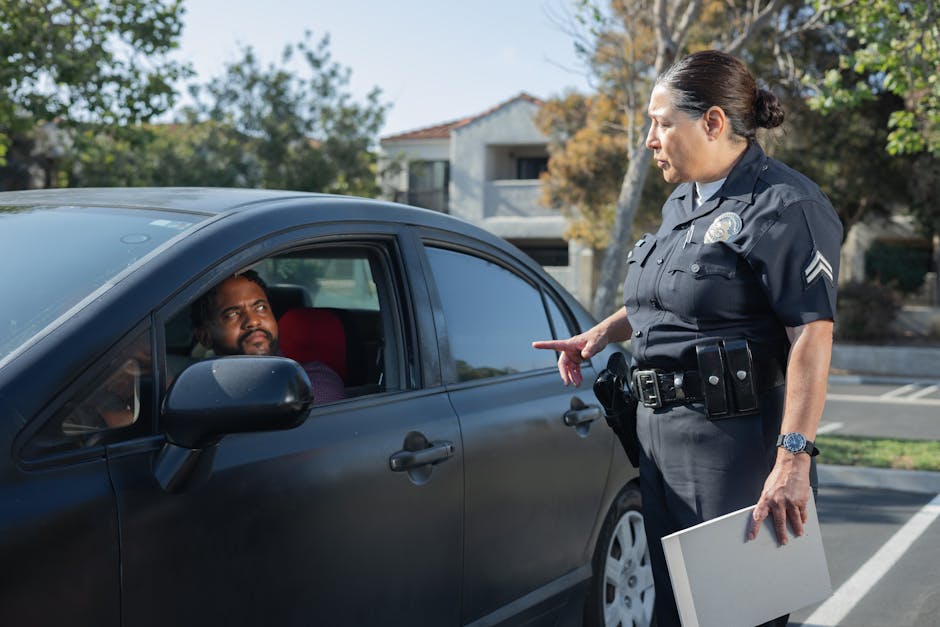
At Carey Leisure Carney, we’ve seen the devastating ripple effects of drunk driving accidents. If you or someone you love has been injured by an impaired driver, our Drunk Driving Accident Attorney team is here to help you steer the legal complexities and fight for the justice you deserve.
Blood Alcohol Content (BAC) Limits and Implied Consent
Blood Alcohol Content (BAC) is the legal line you cannot cross, and the limit varies depending on the driver.
For most adult drivers aged 21 and over, the legal limit is .08 percent. Exceeding the limit can lead to a DUI charge, regardless of whether you feel impaired.
Florida’s zero-tolerance policy for underage drivers is even stricter. If you’re 21 or younger, your BAC limit is just .02 percent. A single drink could put you over the limit. For commercial vehicle operators with a CDL, the standard is .04 percent.
By driving in Florida, you give implied consent to be tested for alcohol if lawfully arrested for DUI. You can refuse a breath, blood, or urine test, but that refusal comes with its own punishment—an immediate license suspension for up to one year, separate from any DUI conviction penalties.
This tough stance is designed to encourage compliance and keep impaired drivers off the road. For more details, check out Florida DUI and administrative suspension laws.
Florida’s Open Container Law Explained
Don’t assume you’re in the clear just because you aren’t driving. Florida alcohol laws include an open container law that applies to everyone in the vehicle—drivers and passengers alike.
An open container is any alcoholic beverage that’s been opened, has a broken seal, or is ready for consumption.
Under Florida Statutes Chapter 316.1936, it’s illegal to possess or consume alcohol from an open container in a motor vehicle on public roads. Exceptions include passengers in commercial vehicles (limos, buses), people in an RV’s living quarters, and taking home a partially consumed, re-sealed bottle of wine from a restaurant.
For drivers, an open container is a non-criminal moving violation with a fine up to $90 and potential license points. Passengers face a non-criminal infraction with fines up to $60. Some local ordinances are tougher, with fines up to $500 and 60 days in jail.
An open container violation can lead to further investigation, including field sobriety tests and a potential DUI charge. It can also serve as evidence of negligence in a personal injury lawsuit after an accident. For a deeper understanding, visit our page on Florida Open Container Law.
What are the penalties for DUI in Florida?
Florida treats DUI seriously, and the penalties escalate quickly with each offense.
For a first conviction, you face a mandatory six-month driver’s license suspension (up to one year), fines from $500 to $1,000, and up to six months in jail. You must also complete a DUI course, perform 50 hours of community service, and have your vehicle impounded for 10 days. If your BAC was .15 or higher, an ignition interlock device (IID) is required for six months.
A second offense within five years brings a one-year license suspension (or up to five years), fines from $1,000 to $2,000, at least 10 days in jail, and a one-year IID requirement. Vehicle impoundment increases to 30 days.
By your third offense within 10 years of a prior, you face a two-year license suspension (up to 10 years), fines from $2,000 to $5,000, at least 30 days in jail, and a two-year IID requirement. Your vehicle will be impounded for 90 days.
A fourth or subsequent conviction is a felony offense. Your license suspension becomes five years or potentially permanent. Fines start at $2,000, and you could face up to five years in prison.
In addition to criminal penalties, a drunk driver who causes injury or death can face civil lawsuits seeking damages, including punitive damages for reckless behavior. Our team has extensive experience helping victims pursue DUI Punitive Damages Florida claims to hold negligent drivers accountable.
The bottom line? The legal consequences are severe, but they pale in comparison to the human cost of drunk driving. Making the right choice—calling a cab, using a rideshare, or designating a sober driver—can literally save lives.
Frequently Asked Questions about Florida’s Alcohol Rules
Navigating Florida alcohol laws can be confusing due to local variations. Here, we clear up some of the most common questions.

Can passengers drink alcohol in a car in Florida?
The short answer is no. Florida’s open container law applies to everyone in the vehicle, not just the person behind the wheel.
It’s illegal for passengers to possess or consume an open alcoholic beverage while riding in a motor vehicle on any public roadway. The only real exceptions are passengers in commercial vehicles like limousines or buses, or folks in the living quarters of an RV. Otherwise, keep those containers sealed until you reach your destination!
Are there any “dry” counties in Florida?
Unlike some states, Florida has no fully “dry” counties where all alcohol sales are banned.
That said, three North Florida counties—Lafayette, Liberty, and Washington—have specific local laws that significantly restrict alcohol sales. These aren’t “dry” in the strictest sense, but they are more conservative than most of the state. The restrictions might limit where you can buy alcohol, what types are available, or when sales can occur. You should plan ahead if visiting these areas.
Can you be on the beach with alcohol in Florida?
Whether you can drink on a Florida beach depends entirely on the municipality. Each city and county sets its own rules about alcohol on public beaches, and they vary widely.
Many popular public beaches, like Clearwater Beach, strictly prohibit alcohol. You’ll often see clear signage stating “No Alcohol” or “No Glass Containers” at beach entrances.
However, some beaches do allow alcohol, either throughout or in designated areas, often as long as it’s in non-glass containers. A few beach towns are more relaxed, while others enforce strict bans year-round.
Our best advice is to always check local signs and ordinances before you pack that cooler. When in doubt, leave the alcohol behind to avoid a citation.
Conclusion: Staying Safe and Legal in Florida
Understanding Florida alcohol laws is about more than avoiding a ticket—it’s about protecting yourself, your loved ones, and everyone on the road. While these regulations can seem complex, they all serve to keep communities safe and promote responsible consumption.
To recap: alcohol sales in Florida generally run from 7 a.m. to midnight but vary by county; beer and wine are widely available, but spirits are sold only in liquor stores; and Sundays are fair game for alcohol sales starting at 7 a.m. in most places.
We’ve also explored Florida’s unwavering stance on underage drinking. A first offense brings a $500 fine and potential jail time, while using a fake ID can lead to a felony charge.
But perhaps the most critical takeaway is this: Florida alcohol laws regarding impaired driving exist for a reason. With a BAC limit of .08% for adults and just .02% for underage drivers, the state makes its priorities clear. The open container law means even passengers can’t drink in the car. And DUI penalties escalate fast—from license suspension for a first offense to felony charges after a fourth conviction.
The legal consequences of drunk driving pale in comparison to the human cost. Behind every DUI statistic is a real family and a preventable tragedy. I know this personally. After losing my wife Joni to a drunk driver, I dedicated my career to fighting for victims and holding negligent parties accountable. It’s the driving force behind our work at Carey Leisure Carney.
If you or someone you love has been injured by a drunk driver, you don’t have to face the aftermath alone. The legal system can be overwhelming as you face medical bills, lost wages, and emotional trauma. Our board-certified attorneys bring over 100 years of combined experience to every case, and we understand how Florida alcohol laws intersect with personal injury claims—including when bars, restaurants, or social hosts share liability for serving alcohol illegally.
We’re your advocates, your support system, and your voice when you need it most. Contact a Drunk Driving Accident Attorney at Carey Leisure Carney today for a free consultation. With convenient offices throughout the Tampa Bay area—including Clearwater, Largo, New Port Richey, Spring Hill, St. Petersburg, Trinity, and Wesley Chapel—we’re here to help you understand your rights and pursue the justice you deserve.
Stay safe out there, Florida. And remember: when it comes to alcohol and driving, the only acceptable choice is zero tolerance.