
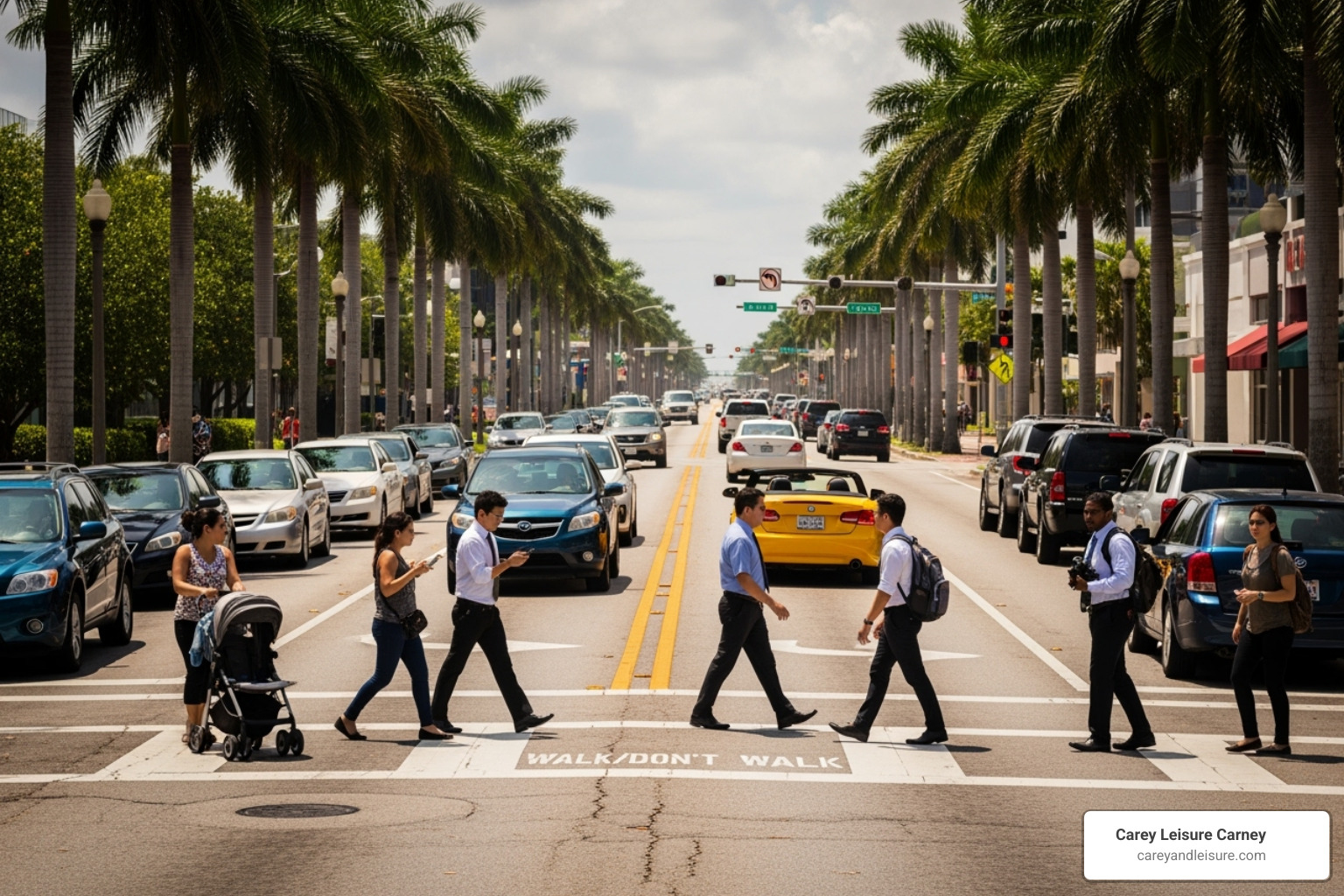
Florida Pedestrian Accident 2022: Sobering Facts
Florida’s Pedestrian Safety Crisis: The Numbers Tell a Troubling Story
Florida pedestrian accident statistics reveal a sobering reality: the Sunshine State is one of the most dangerous places in America for people on foot. Heavy pedestrian traffic from residents and tourists alike leads to devastating consequences.
Key Florida Pedestrian Accident Facts:
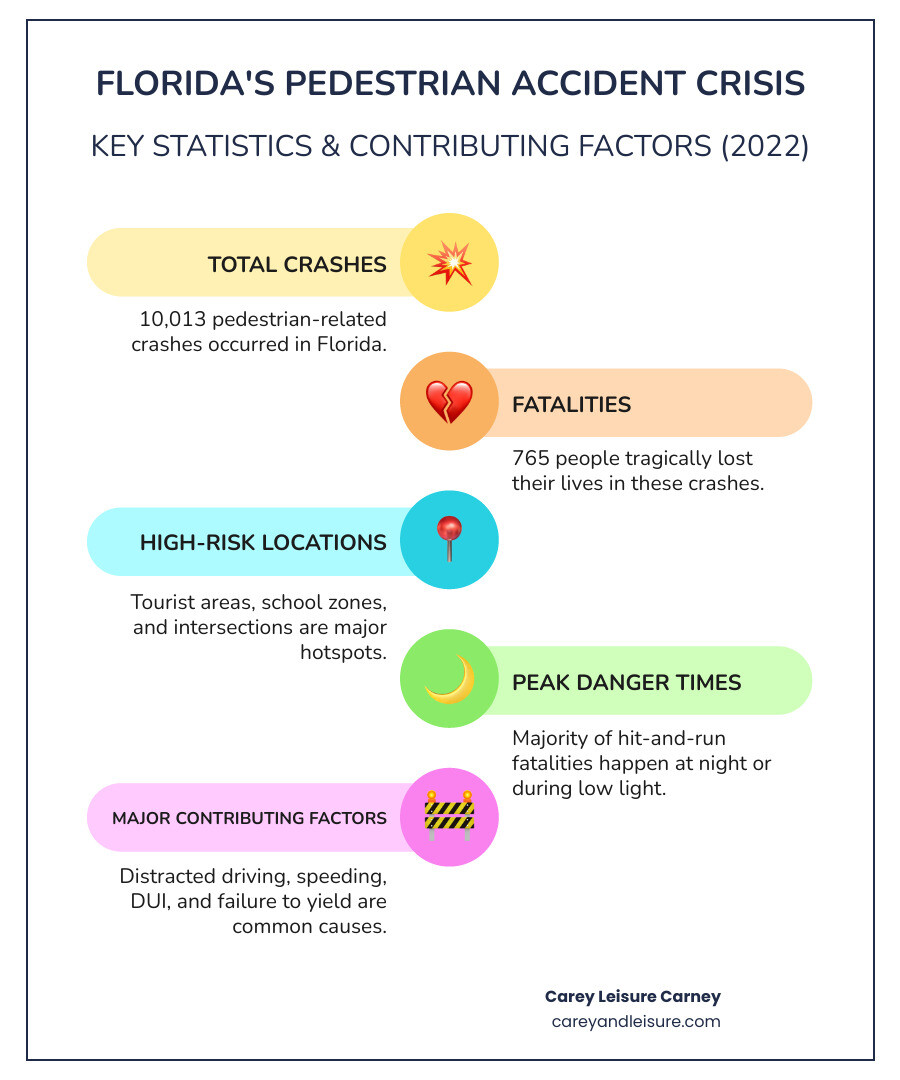
- 10,013 pedestrian crashes occurred in Florida in 2022
- 765 people died in these crashes
- Florida cities consistently rank among the most dangerous nationally for pedestrians
- The vast majority of hit-and-run fatalities happen at night or during low-light hours
- Tourist areas and school zones see the highest accident rates
Understanding these trends is about knowing your rights and staying safe. Pedestrian accidents often result in serious injuries or death because pedestrians have no protection against vehicles. This guide breaks down Florida’s pedestrian accident data, explains how fault is determined, and outlines your legal options if you’ve been injured. These aren’t just numbers; they represent real people whose lives have been forever changed.
The Sobering Statistics: A Look at Pedestrian Accidents in the Sunshine State
When we talk about florida pedestrian accident statistics, we’re discussing a critical public safety issue. Florida consistently ranks among the states with the highest rates of pedestrian fatalities and injuries.
In 2022 alone, Florida saw 10,013 pedestrian-related crashes, leading to 765 tragic fatalities. These figures highlight a persistent challenge. According to the National Highway Traffic Safety Administration (NHTSA), Florida has previously led the nation in pedestrian accidents, reflecting its disproportionately high numbers.
The vulnerability of pedestrians is clear. Unlike vehicle occupants protected by airbags and a metal frame, pedestrians have virtually no defense against a multi-ton vehicle, meaning even minor collisions can be catastrophic.
A significant portion of these incidents occurs during low-light hours, with the vast majority of hit-and-run fatalities happening at night or twilight. This emphasizes the critical importance of visibility for both drivers and pedestrians.
Certain areas in Florida are particularly prone to pedestrian accidents. Tourist destinations, busy beach areas, school zones, and residential neighborhoods often see heavy foot traffic. Cities like Orlando, Tampa, Jacksonville, and Miami are consistently identified as some of the most dangerous for pedestrians, often due to a combination of high population density and road designs that prioritize vehicles over pedestrians.
Common Causes and Locations
Understanding why these accidents happen is crucial. Research by NHTSA points to several key factors:
- Distracted Driving: Texting, talking on the phone, or other distractions pose a significant threat to pedestrians.
- Speeding: Excessive speed reduces a driver’s reaction time and dramatically increases the severity of impact and injury.
- Driving Under the Influence (DUI): Impaired drivers have reduced judgment and slower reflexes, making them extremely dangerous.
- Failure to Yield: Drivers failing to yield the right-of-way at crosswalks is a frequent cause of collisions.
- Poorly Lit Roads: Inadequate lighting makes it difficult for drivers to see pedestrians, especially at night.
- Poor Intersection Design: Poorly designed crosswalks, lack of sidewalks, or malfunctioning traffic signals can create hazardous conditions.
- Left-Hand Turns: These turns are statistically more dangerous for pedestrians, as drivers may be focused on oncoming traffic.
While accidents can happen anywhere, intersections, mid-block crossings, tourist areas, and school zones are common hotspots. If you’re involved in an incident, knowing what to do after a car accident in Florida is vital.
The Vulnerability of Pedestrians
When a pedestrian is hit by a car, the outcome is almost always severe. The difference in mass means collisions often result in devastating injuries or fatalities. Common injuries include:
- Traumatic Brain Injuries (TBI): Head impacts can cause lifelong cognitive and physical impairments. Learn more about Car Accidents and Traumatic Brain Injuries.
- Spinal Cord Injuries: These can result in partial or complete paralysis.
- Broken Bones: Fractures to legs, hips, and arms are common and may require extensive surgery and rehabilitation.
- Lacerations and Bruises: These can be extensive and lead to infections.
- Internal Injuries: Damage to organs can be life-threatening and may not be immediately apparent.
- Psychological Trauma: Victims often suffer from PTSD, anxiety, and depression, requiring long-term support.
These injuries frequently lead to prolonged hospitalization, multiple surgeries, and a significant impact on the victim’s ability to work and enjoy life.
Florida’s Rules of the Road: Determining Fault
Determining fault in a florida pedestrian accident isn’t always straightforward. Florida law emphasizes a shared responsibility for safety, and both drivers and pedestrians have a duty of care to follow traffic laws and prevent accidents.

Traffic laws and signals are paramount in determining fault. When either party violates a traffic law and causes an accident, it can be considered “negligence per se,” which creates a presumption of fault. Key Florida Pedestrian Laws from Florida Statute 316.130 include:
- Sidewalk Use (316.130(3)): Pedestrians must use sidewalks where provided.
- Roadway Walking (316.130(4)): If no sidewalk is available, pedestrians must walk on the left shoulder, facing traffic.
- Crosswalks and Signals (316.130(7)(a)): Pedestrians must obey traffic signals and use marked crosswalks where available.
- Yielding Outside Crosswalks (316.130(10)): Pedestrians crossing outside a crosswalk must yield to vehicles.
- Sudden Entry (316.130(8)): Pedestrians cannot suddenly leave a curb and enter the path of a vehicle that is too close to stop.
- Driver’s Due Care (316.130(15)): Every driver must exercise due care to avoid colliding with pedestrians and sound their horn when necessary.
The Driver’s Duty of Care in a Florida Pedestrian Accident
Drivers owe a fundamental duty of care to pedestrians. Breaching this duty can establish liability. Key responsibilities include:
- Yielding Right-of-Way: Drivers must yield to pedestrians in marked and some unmarked crosswalks.
- Maintaining a Safe Speed: Drivers must obey speed limits and adjust for conditions.
- Avoiding Distractions: A driver’s full attention must be on the road, not on a phone or other distraction.
- Maintaining Proper Lookout: Drivers must continuously scan for pedestrians, especially in high-traffic areas.
- Special Duty of Care Toward Children: Drivers must exercise higher caution around children, who can be unpredictable.
When a driver’s negligence causes injury, they can be held liable. For more on this, review our guide on how to tell who is at fault in a car accident.
When a Pedestrian Can Be at Fault
Pedestrians also have a duty to ensure their own safety. A pedestrian can be found partially or wholly at fault in a florida pedestrian accident for:
- Jaywalking: Crossing a street outside of a designated crosswalk or against a signal.
- Crossing Against a Signal: Ignoring a “Don’t Walk” signal or red light.
- Distracted Walking: Walking while distracted by a phone or headphones, leading to a failure to notice traffic.
- Walking While Intoxicated: Impaired judgment from drugs or alcohol can lead to unsafe actions like stumbling into the road.
- Darting into Traffic: Suddenly entering the roadway from an obstructed view, giving a driver no time to react.
Even if a pedestrian is partially at fault, they may still recover compensation under Florida’s comparative negligence laws. If you were in an accident that wasn’t entirely your fault, our guide on what to do after a car accident that’s not your fault might be helpful.
Navigating Your Claim After a Florida Pedestrian Accident
After a florida pedestrian accident, the legal and insurance process can be overwhelming. To receive compensation, you must prove the at-fault party was negligent by establishing four elements: a duty of care was owed, that duty was breached, the breach caused the accident, and you suffered actual harm.
While the driver is often liable, other parties can be at fault, such as a municipality for a faulty traffic signal or a property owner for an obstructed sidewalk. Gathering evidence like police reports, witness statements, and medical records is crucial.
How Florida’s Comparative Negligence Law Affects Your Case
Florida uses a “pure comparative negligence” system, detailed in Florida’s comparative fault statute. This means you can recover damages even if you are partially at fault. Your compensation is simply reduced by your percentage of blame. For example, if you have $100,000 in damages but are found 30% at fault, you can still recover $70,000. This system ensures all parties are held responsible for their role in an accident.
Types of Compensation You Can Claim in a Florida Pedestrian Accident
Victims can claim various types of compensation, which fall into two main categories:
Economic Damages: These are quantifiable financial losses, including:
- Medical Expenses: All current and future costs for treatment, hospitalization, surgery, medication, and rehabilitation.
- Lost Wages: Income lost due to time off work for recovery.
- Loss of Earning Capacity: Future income you can no longer earn due to permanent disability.
- Property Damage: Costs for personal items damaged in the accident.
Non-Economic Damages: These are subjective losses affecting your quality of life. While harder to quantify, they are a critical part of your claim. They include:
- Pain and Suffering: Compensation for physical pain and emotional distress like fear, anxiety, and PTSD. Learn more about defining pain and suffering.
- Disability and Disfigurement: Compensation for permanent impairments or scarring.
- Loss of Enjoyment of Life: Damages for the inability to participate in hobbies and activities you once enjoyed.
Wrongful Death Claims: If an accident is fatal, certain family members can file a wrongful death claim under Florida’s Wrongful Death Act. This allows them to seek compensation for funeral expenses, lost financial support, and loss of companionship. Navigating these claims requires a seasoned Personal Injury Attorney.
Understanding the Time Limits for Filing a Claim
Florida has strict deadlines, known as the statute of limitations, for filing lawsuits. Missing these deadlines can permanently bar you from seeking compensation.
- Personal Injury Claims: For most florida pedestrian accident claims, you have four years from the date of the accident to file a lawsuit, per Florida Statute 95.11.
- Wrongful Death Claims: The deadline is typically two years from the date of the victim’s death.
It is crucial to act quickly to preserve evidence and protect your legal rights.
Proactive Safety Tips for Florida Pedestrians
While we can’t control every driver, we can take steps to protect ourselves. Pedestrian safety is a shared responsibility, and being proactive can dramatically reduce your risk of becoming another statistic.

Most pedestrian accidents are preventable. By making smart choices and staying alert, you can keep yourself and your loved ones safe on Florida’s busy streets.
How to Reduce Your Risk
Be Visible. If drivers can’t see you, they can’t avoid you. Wear bright colors during the day and reflective clothing at night, dawn, or dusk. Carry a flashlight or use your phone’s light to increase your visibility.
Put the Phone Away. Distracted walking is dangerous. When crossing the street or near traffic, your eyes and ears need to be focused on your surroundings, not your phone.
Use Crosswalks. Always use marked crosswalks when available and obey all traffic signals. The “Don’t Walk” sign is a command, not a suggestion. If no crosswalk is available, cross at a well-lit spot where you have a clear view of traffic.
Make Eye Contact. Before stepping into the road, make eye contact with drivers to confirm they see you. Never assume a driver has noticed you, even if you have the right-of-way.
Walk Facing Traffic. If there are no sidewalks, walk on the left side of the road facing oncoming traffic. This allows you to see approaching vehicles and react if necessary.
Protect Children. Children are unpredictable and need extra supervision. Teach them to stop, look both ways, and listen before crossing any street. Always hold their hands near traffic.
The National Safety Council offers excellent resources for staying safe. However, accidents can still happen. If you are injured, knowing the steps to take after being a pedestrian accident victim is crucial for protecting your health and legal rights.
Frequently Asked Questions
After a florida pedestrian accident, it’s normal to have questions. Here are answers to some of the most common ones we hear.
What are the first steps I should take after being hit by a car in Florida?
Your actions immediately after an accident can protect your health and your legal rights. Focus on these critical steps:
- Get to Safety: If you can, move out of the roadway to avoid further injury.
- Call 911: Request both police and paramedics. A police report is crucial, and paramedics can assess for injuries that may not be immediately obvious due to adrenaline.
- Seek Medical Attention: Even if you feel fine, get checked at a hospital or urgent care. This creates a medical record linking your injuries to the accident.
- Document Everything: If possible, take photos of the scene, your injuries, and the vehicle. Get the driver’s contact and insurance information, and the names of any witnesses.
- Do Not Admit Fault: Avoid saying anything like “I’m sorry,” as it can be used against you later. Stick to the facts.
- Contact an Attorney: Insurance companies start building their case immediately. You need an advocate on your side just as quickly. For more details, see our guide on what to do when you are involved in a car accident Part 1.
Can I still get compensation if I was partially at fault for the accident?
Yes. Florida’s comparative negligence law allows you to recover compensation even if you were partially to blame. Your total compensation will simply be reduced by your percentage of fault. For example, if you are found 20% at fault, you can still recover 80% of your damages. An experienced attorney is essential to properly investigate the accident and minimize any fault assigned to you.
Who pays for my medical bills right after the accident?
Florida’s no-fault insurance system provides immediate coverage for medical bills. The payment process typically follows this order:
- Your Personal Injury Protection (PIP): If you own a car, your own auto insurance policy’s PIP coverage is the primary source, paying up to $10,000 for medical bills and lost wages.
- A Resident Relative’s PIP: If you don’t have a car but live with a relative who does, their PIP may cover you.
- The At-Fault Driver’s PIP: If neither of the above applies, you may be able to claim benefits from the driver’s policy.
Once PIP benefits are exhausted, your health insurance will typically cover additional costs. A personal injury claim against the at-fault driver is necessary to recover damages beyond what PIP covers, including the full extent of your medical bills, lost income, and pain and suffering.
Protect Your Rights After an Accident
When you’re dealing with a florida pedestrian accident, you’re not just facing physical injuries—you’re up against a complex legal system. With over 10,000 crashes annually, Florida’s pedestrian safety crisis is a harsh reality. Whether you were in a crosswalk or made a mistake, you deserve to understand your rights.
Determining fault, navigating comparative negligence laws, and dealing with insurance companies requires skilled legal guidance. Insurance adjusters are trained to minimize payouts. Having an experienced advocate in your corner is essential to level the playing field.
At Carey Leisure Carney, our board-certified attorneys—a distinction held by only the top 2% in Florida—bring over 100 years of combined experience to your case. We believe in direct communication; you’ll work with your attorney, not just a case manager. We are committed to giving your case the personal attention it deserves.
If you or a loved one was injured in a florida pedestrian accident in Clearwater, Largo, New Port Richey, Spring Hill, St. Petersburg, Trinity, Wesley Chapel, or anywhere else in Florida, don’t face this alone. The clock is ticking on your right to file a claim.
Contact an experienced Pedestrian Accident Attorney at Carey Leisure Carney today. We’re ready to listen and help you take the first step toward recovery.