

Do Personal Injury Lawyers Go to Court: 95% Truth Revealed
Introduction: The Verdict on Courtroom Drama
Do personal injury lawyers go to court? Yes, when necessary, but the reality is far less dramatic than television suggests. Here’s what actually happens:
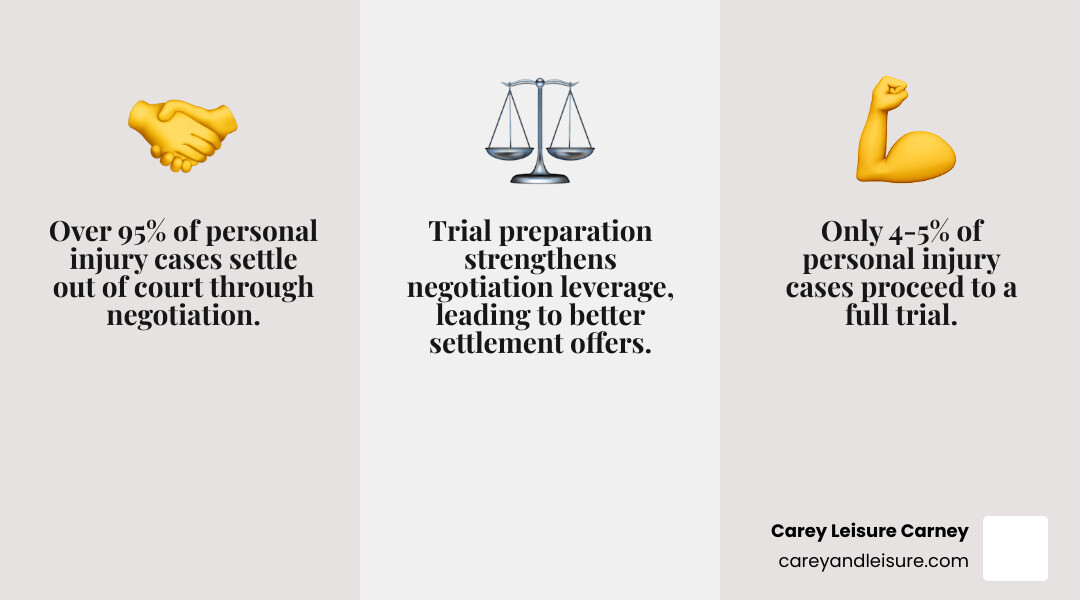
- 95-96% of personal injury cases settle before reaching a courtroom.
- Only 4-5% of cases go to trial, typically when liability is disputed or settlement offers are too low.
- Lawyers prepare every case for trial to strengthen negotiation leverage, even if settlement is the goal.
- Trial experience matters because insurance companies offer better settlements to attorneys they know will fight in court.
Most personal injury claims resolve through negotiation. Insurance companies prefer to settle because trials are expensive, time-consuming, and risky. However, an attorney’s ability and willingness to go to trial is the key to securing a fair settlement. A lawyer who never goes to court has limited leverage, and insurance companies know they can be pushed around.
As Thomas W. Carey, a board-certified civil trial lawyer who has handled roughly 40,000 injury matters across Florida, I’ve learned that preparing every case for trial is the best way to achieve justice, whether at the negotiation table or in court. This preparation makes all the difference.
Settlement vs. Litigation: The Two Paths of a Personal Injury Claim

When you’ve been injured due to someone else’s negligence in Clearwater, Largo, St. Petersburg, or anywhere in Florida, your case will follow one of two paths: settlement or litigation. Understanding the difference is key to knowing what to expect.
A settlement is a negotiated agreement to resolve the claim without a trial. Litigation is the formal legal process of taking a dispute through the court system, which may end in a trial.
Here’s a quick comparison:
| Factor | Settlement | Litigation |
|---|---|---|
| Time | Faster, often within months. | Can take years, especially with appeals. |
| Cost | Lower costs, avoiding most court and expert fees. | Higher costs from court fees, depositions, and experts. |
| Privacy | Confidential and not public record. | Public record, with proceedings open to the public. |
| Control | You agree to the final terms and outcome. | A judge or jury decides the outcome, which is unpredictable. |
| Payout | A guaranteed, specific amount. | Uncertain; could be more or less than a settlement, or nothing. |
Why Most Cases Settle
The vast majority of cases settle because it offers significant advantages for both the injured person (the plaintiff) and the insurance company.
For plaintiffs, a settlement means a faster, guaranteed payment to cover medical bills and lost wages. It’s also a private and less stressful process, avoiding the emotional toll of reliving the accident in a public courtroom. A certain payout provides stability and peace of mind, which is why we work with you to determine if a settlement meets your goals. You can learn more in our guide on Working With Your Lawyer.
For insurance companies, settling is a business decision to control costs and risk. Trials are expensive for them, involving high-priced defense attorneys and expert witnesses. More importantly, juries are unpredictable and might award a much larger sum than the insurer wants to pay. To avoid this risk, they are often motivated to offer a fair settlement, especially when facing an attorney known for winning in court.
However, some insurers may use “bad faith” tactics and refuse to settle a valid claim. An experienced attorney can counter these strategies and, if needed, sue the insurance company for their actions. This is why it’s crucial to have lawyers who aren’t afraid to hold insurers accountable. Learn more in our guide, Lawyers That Sue Insurance Companies.
When Do Personal Injury Lawyers Go to Court?

While most cases settle, personal injury lawyers go to court when negotiations fail. This typically happens for a few key reasons:
- Disputes Over Liability: The insurance company denies their client was at fault or claims you were responsible for the accident.
- Low Settlement Offers: The insurer’s offer is far below what your injuries and damages are worth. We help you understand What Is My Personal Injury Case Worth? to fight for a fair amount.
- Complex Cases: Cases with catastrophic injuries (like brain or spinal cord injuries), multiple parties, or complex legal issues may require a trial to resolve.
- Bad Faith Tactics: An insurance company may refuse to negotiate reasonably, leaving litigation as the only path to justice.
Florida’s comparative negligence law can also complicate things. Under this rule, your compensation is reduced by your percentage of fault. Insurers may try to push a case to trial if they believe they can convince a jury you were largely at fault. You can find more information here: More info about Comparative Negligence.
The Typical Stages of the Litigation Process
If your case proceeds to litigation, it follows a structured process:
- Filing the Lawsuit: Your attorney files a formal complaint in the appropriate Florida court (e.g., in Pinellas, Pasco, or Hillsborough County), outlining your case and the damages sought.
- Findy: This is the evidence-gathering phase. Both sides exchange information through written questions (interrogatories), requests for documents, and sworn testimony (depositions). Learn more in our guide, The Litigation Process: Depositions.
- Pre-Trial Motions: Lawyers may ask the judge to rule on specific issues, such as what evidence can be presented at trial.
- Mediation: Before trial, a neutral mediator helps both sides try to negotiate a settlement.
- Trial: If no settlement is reached, the case goes to trial. This involves jury selection, presenting evidence, witness testimony, and arguments before a judge or jury delivers a verdict. For more details, check out Your Trial Part 1.
- Appeal: If either party is unhappy with the verdict, they may appeal the decision to a higher court, which can add months or years to the process.
The Trial-Ready Attorney: Why Courtroom Experience Matters
Even though most cases settle, the answer to do personal injury lawyers go to court is critical when choosing representation. The threat of a trial, backed by a lawyer with real courtroom experience, is your strongest negotiating tool.
Insurance companies know which attorneys will settle for less and which ones are prepared to win in court. An attorney’s track record of trial success makes insurers more likely to offer a fair settlement to avoid the risk and expense of a trial. As the American Bar Association on personal injury claims notes, skilled representation is crucial.
At Carey Leisure Carney, our board-certified attorneys are among the top 2% in Florida, with over 100 years of combined experience. This distinction means we have proven expertise in trial law, which gives our clients:
- Negotiation Leverage: Our reputation for winning in court often results in better settlement offers.
- Thorough Case Preparation: We prepare every case for trial, meaning our investigations are more comprehensive and our legal strategies more robust. Learn more about How Attorneys Use Investigations for Your Personal Injury Claim.
- Credibility and Maximum Value: Our courtroom experience lends credibility to your claim, forcing insurers to negotiate seriously and maximizing your settlement value.
How a Trial-Ready Approach Benefits Your Settlement
Being fully prepared for trial is the best way to achieve a favorable settlement. We build a strong case from day one, gathering all necessary evidence to demonstrate fault and damages. When we present this to the insurance company, they know we are ready for a courtroom battle. This position of strength often compels them to offer a settlement that truly reflects your claim’s value, rather than a lowball amount.
What is the role of a lawyer if personal injury lawyers go to court?
If a case goes to trial, your lawyer is your champion and guide. Our role includes:
- Jury Selection: Carefully selecting fair and impartial jurors.
- Opening and Closing Arguments: Presenting a compelling narrative of your case to the jury.
- Presenting Evidence: Strategically using witness testimony, expert opinions, and documents to prove your case.
- Cross-Examining Witnesses: Challenging the defense’s arguments and witness credibility.
- Post-Trial Actions: Filing motions or appeals if necessary to protect the outcome. Learn more in The Trial Part 2: Closing Arguments and Judgments.
Frequently Asked Questions about Personal Injury Cases and Court
It’s natural to have questions about the legal process. Here are answers to some common questions we hear from clients in Clearwater, St. Petersburg, and across Florida.
How long does a personal injury lawsuit take if it goes to court?
The timeline varies based on case complexity and the court’s schedule. The findy (evidence gathering) phase can take months to a year. The trial itself may last days or weeks, and any appeals can add several more years. Overall, a case that goes through a full trial and appeal can take several years to resolve.
What are the costs associated with going to trial?
Going to trial is more expensive than settling due to costs like court filing fees, expert witness fees (which can be thousands of dollars), deposition transcriptions, and creating trial exhibits. At Carey Leisure Carney, we work on a contingency fee basis and typically cover these upfront litigation costs. This means you don’t pay us any fees unless we win your case, allowing you to pursue justice without immediate financial burden.
If most cases settle, why do I need a lawyer who is prepared to go to court?
This is a crucial question. The answer is leverage. An attorney’s proven willingness and ability to win at trial is the most powerful tool for securing a fair settlement. Insurance companies know which lawyers will back down and which will fight. When they see you have a trial-ready attorney, they are far more likely to offer a reasonable settlement to avoid the risk and expense of a trial. It gives you the best chance of getting maximum value for your case, often without ever stepping into a courtroom.
The Final Verdict: Prepared for Battle, Aiming for Peace
So, do personal injury lawyers go to court? The definitive answer is yes, we do, but not as often as you might think. The vast majority of personal injury cases resolve through settlement, a process that offers quicker resolution, lower costs, and less stress for everyone involved. However, the decision to settle or pursue litigation is a complex one, influenced by many factors unique to each case, including liability disputes, the severity of injuries, and the reasonableness of settlement offers.
Whether your case settles or goes to trial, the most critical factor in achieving a favorable outcome is having an experienced, trial-ready personal injury attorney by your side. An attorney who is known for their courtroom prowess and meticulous preparation holds significant leverage in negotiations, often leading to better settlements for their clients.
At Carey Leisure Carney, our board-certified attorneys bring over a century of combined experience to every case. We pride ourselves on providing direct attorney access and personalized service, ensuring that you are fully informed and supported throughout your legal journey. From Clearwater to Spring Hill, and all our Florida locations, we prepare every case as if it will go to trial, even if our goal is to secure a fair settlement without one. This commitment ensures that you receive the justice and compensation you deserve.
If you’ve been injured due to someone else’s negligence, don’t steer the complexities of personal injury law alone. Let our dedicated team assess your case and guide you toward the best possible resolution.
Contact our Motorcycle Accident Attorneys for a free consultation today. We’re here to help you get back on your feet.