Wrongful death attorney Florida: 4 Steps to Justice
Why Choosing the Right Legal Representation Matters After a Tragic Loss
Wrongful death attorney Florida cases arise when a loved one dies due to another’s negligence or misconduct. If you’re facing such a tragedy, navigating the legal system can feel overwhelming. Here’s what you need to know:
Key Steps to Take After a Wrongful Death in Florida:
- Identify who can file – In Florida, only the personal representative of the deceased’s estate can file a wrongful death lawsuit.
- Act quickly – You have only two years from the date of death to file a claim.
- Understand recoverable damages – Families may recover compensation for medical bills, funeral costs, lost income, and loss of companionship.
- Hire experienced counsel – Board-certified trial attorneys can maximize your chances of receiving fair compensation.
Losing a loved one is devastating, but when the loss is due to someone’s negligence, the pain is compounded by anger and financial strain from medical bills, funeral costs, and lost income.
You don’t have to face this alone. Florida’s Wrongful Death Act exists to hold negligent parties accountable and provide financial recovery for surviving family members. However, the legal process is complex, and insurance companies often try to deny or minimize claims. The path to justice demands thorough investigation, expert witnesses, and proven trial skill. The right attorney makes all the difference.
I’m Thomas W. Carey, a board-certified civil trial lawyer and founding partner of Carey Leisure Carney. Since 1988, I have dedicated my career to holding negligent parties accountable in wrongful death attorney Florida cases. My personal experience of losing my wife to a drunk driver fuels my commitment to fighting for families facing similar tragedies.
Understanding the Foundations of a Florida Wrongful Death Claim
When a loved one’s death is caused by another’s wrongdoing, the grief can be overwhelming. Understanding how Florida’s wrongful death laws work can help you find a path toward holding the responsible party accountable and protecting your family’s future.
A wrongful death claim is a civil action designed to provide financial recovery for the people left behind. Knowing your legal rights can provide clarity when everything else feels uncertain.
What Constitutes Wrongful Death in Florida?
Florida law defines wrongful death as a death caused by the wrongful act, negligence, or breach of contract of another person or entity. To prove a wrongful death case under The Florida Wrongful Death Act, we must establish four key elements:
- Duty of Care: The responsible party owed your loved one a legal obligation to act safely (e.g., a driver’s duty to follow traffic laws).
- Breach of Duty: They violated that obligation through negligence, recklessness, or intentional misconduct. Learn more about Intentional Misconduct and Gross Negligence.
- Causation: There must be a direct link between the breach of duty and your loved one’s death.
- Damages: The surviving family members suffered measurable financial and emotional losses.
Common examples include fatal car accidents, medical malpractice, and defective products.
Who Is Eligible to File a Lawsuit?
While several family members may receive compensation, Florida law is strict: only the personal representative of the deceased’s estate can file a wrongful death claim. This person is named in the will or appointed by the court and acts on behalf of all eligible survivors.
Eligible survivors who can recover damages include:
- Spouse: For loss of companionship, protection, and mental pain.
- Minor Children (under 25): For lost parental guidance, companionship, and mental pain.
- Adult Children: Generally limited to lost financial support, not pain and suffering.
- Parents: For mental anguish from the loss of a minor child, or an adult child if there are no other survivors.
- Dependent Relatives: For lost financial support or services.
Florida Statute 768.20 provides more detail on the personal representative’s role. As your wrongful death attorney Florida, we manage this process to ensure every survivor’s rights are protected.
The Critical Two-Year Statute of Limitations
In Florida, you have just two years from the date of death to file a wrongful death lawsuit. If you miss this deadline, you will likely lose your right to compensation forever.
Two years passes quickly. Investigating the death, gathering evidence, and appointing a personal representative all take time. The longer you wait, the harder it is to build a strong case. While there are rare exceptions, such as for some medical malpractice cases (read more info about filing a medical malpractice lawsuit in Florida), you should not rely on them.
Contacting an experienced wrongful death attorney Florida as soon as possible is critical to protecting your family’s rights while you focus on healing.
Common Causes and Proving Negligence
Our first priority in a wrongful death case is to investigate what happened, identify the responsible parties, and build a strong case for your family. We must prove that another party’s negligence directly caused the fatal accident, which is why starting this process early is crucial before evidence is lost.
Frequent Causes of Fatal Accidents in Florida
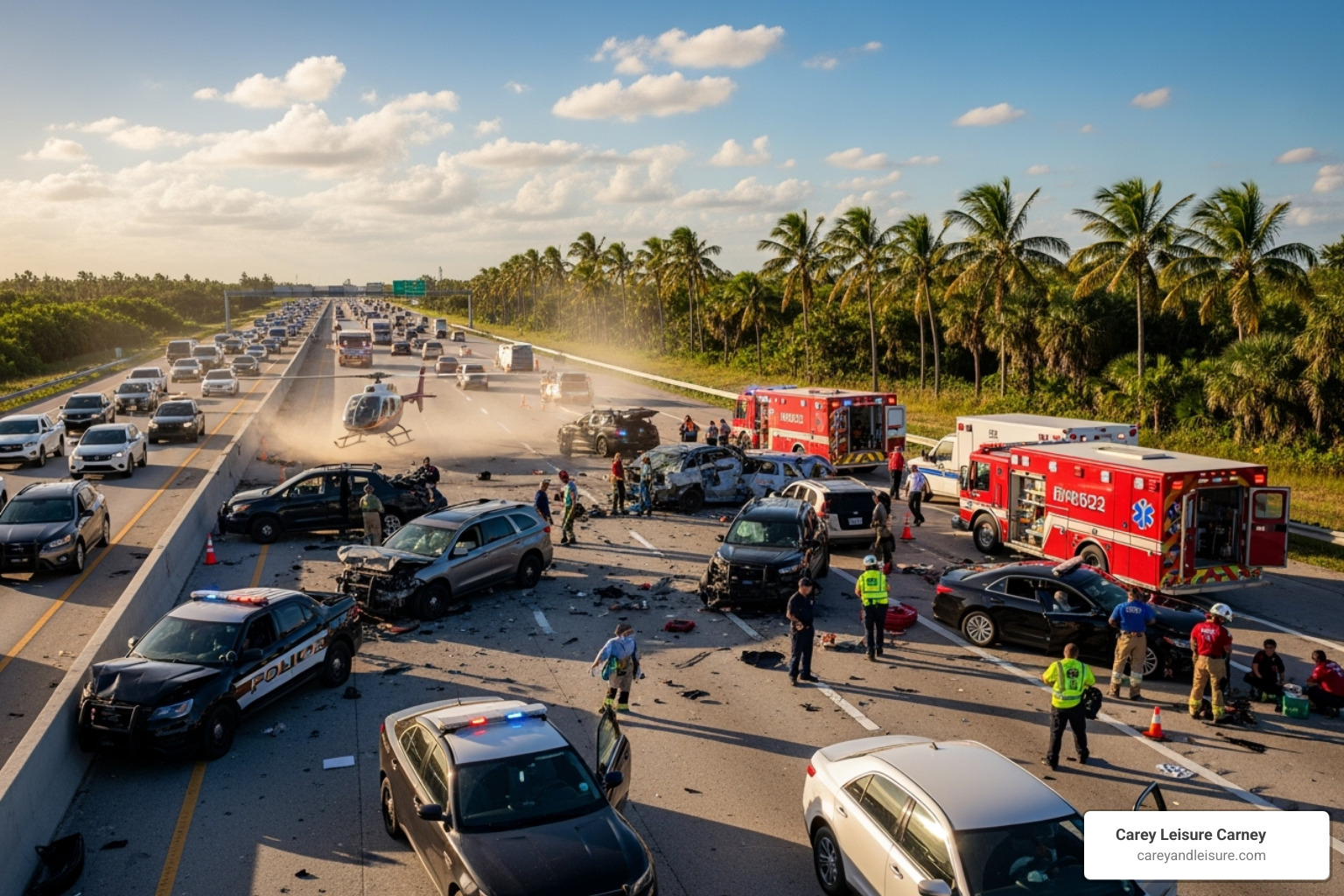
As a wrongful death attorney Florida, I’ve seen countless tragedies stem from preventable incidents. Common causes include:
- Car and Truck Accidents: Often caused by drunk, distracted, or fatigued drivers. Our Fatal Accident Attorney team has experience in these cases.
- Medical Malpractice: Surgical errors, misdiagnoses, and medication mistakes can be deadly. Our Medical Malpractice Attorney Clearwater FL team can help.
- Workplace Accidents: Unsafe conditions or equipment failure, especially in high-risk industries like construction.
- Defective Products: Manufacturers can be held liable when unsafe products cause death.
- Premises Liability: Property owners may be responsible for fatal accidents caused by unsafe conditions, such as drownings or falls. Learn more about Premises Liability.
- Nursing Home Abuse: Neglect, malnutrition, or abuse leading to a resident’s death.
The Difference Between Wrongful Death and Survival Actions
Florida law allows for two types of claims after a fatal accident, which are often pursued together:
- A wrongful death claim compensates the survivors for their losses, such as lost financial support, lost companionship, and mental pain and suffering.
- A survival action compensates the deceased’s estate for losses the deceased incurred before death. This includes medical expenses, lost wages between the injury and death, and the conscious pain and suffering they experienced.
Together, these actions aim to provide comprehensive recovery for the full scope of harm caused.
What if the Deceased Was Partially at Fault?
Florida uses a modified comparative negligence system. This means your family can still recover damages even if your loved one was partially at fault, as long as they were not more than 50% responsible for the incident. The total compensation will be reduced by their percentage of fault.
For example, if your loved one was found to be 20% at fault for an accident with $1 million in damages, your family could recover $800,000. However, if they were found to be 51% at fault, you would recover nothing. Insurance companies often exploit this rule to shift blame and reduce their payout. An experienced wrongful death attorney Florida will fight to protect your loved one’s reputation and ensure any allocation of fault is based on evidence. You can read more about this principle in our article on Comparative Negligence.
Calculating Damages: What Your Claim Could Be Worth

No amount of money can replace your loved one. However, a wrongful death claim can provide the financial stability your family needs to move forward and hold the at-fault party accountable. We fight to secure the maximum possible recovery by calculating all economic and non-economic losses.
Types of Damages You Can Recover
Florida law allows for the recovery of several types of damages:
Economic Damages: These are the tangible financial losses your family has suffered. They include medical bills from the final injury, funeral and burial expenses, lost wages, and the loss of future income and support your loved one would have provided.
Non-Economic Damages: These address the profound personal losses that are harder to quantify. They include a surviving spouse’s loss of companionship and protection, a child’s loss of parental guidance, and the mental pain and suffering endured by survivors. You can learn more in our article on Compensation for Pain and Suffering in Florida.
Can Punitive Damages Be Awarded?
In cases involving extreme recklessness or intentional harm, Florida law allows for punitive damages. These are not meant to compensate for losses but to punish the wrongdoer and deter similar conduct in the future. Proving entitlement to punitive damages requires meeting a high legal standard of gross negligence or intentional misconduct, such as in some drunk driving cases. Our article on DUI Punitive Damages Florida explains this further.
Your wrongful death attorney Florida will evaluate if your case qualifies for these damages.
How Is the Value of a Wrongful Death Claim Determined?
Every case is unique, and there is no simple formula for determining its value. Key factors include:
- The deceased’s age, health, and earning capacity.
- The amount of financial support provided to the family.
- The number of survivors and their relationship to the deceased.
- The strength of the evidence proving negligence.
- The limits of any applicable insurance policies.
An experienced attorney can assess these factors to provide a realistic valuation of your claim. The principles are similar to those in other injury cases, as discussed in our article on what your personal injury case is worth.
Understanding the Foundations of a Florida Wrongful Death Claim
When a loved one dies due to someone else’s actions, the grief is immense. A wrongful death claim is a civil action that provides a path to hold the responsible party accountable and secure your family’s financial future.
What Constitutes Wrongful Death in Florida?
Under Florida’s Wrongful Death Act, a death is considered “wrongful” if it was caused by another’s negligence, recklessness, or intentional act. To succeed, a claim must prove the defendant breached a duty of care, that this breach caused the death, and that the family suffered damages as a result. For more context on levels of wrongdoing, see our article on Intentional Misconduct and Gross Negligence.
Who Is Eligible to File a Lawsuit?
In Florida, only the personal representative of the deceased’s estate can file the lawsuit. This individual, often named in a will or appointed by a court, acts on behalf of all eligible “survivors.” These survivors, including the spouse, minor children, and in some cases parents or other dependent relatives, are the ones who can recover damages for their losses. The specifics of this role are outlined in Florida Statute 768.20.
As your wrongful death attorney Florida, we can guide you through the process of establishing the estate and identifying all eligible survivors.
The Critical Two-Year Statute of Limitations
Florida imposes a strict two-year deadline from the date of death to file a wrongful death lawsuit. Missing this deadline almost always means losing your right to seek compensation forever. Investigating a case and preparing it for filing takes time, so it is vital to act quickly. While narrow exceptions exist, such as for some medical malpractice claims (explained in our guide on filing a medical malpractice lawsuit in Florida), you should not delay. Contacting an attorney promptly ensures all deadlines are met while you focus on your family.
Common Causes and Proving Negligence
To win a wrongful death case, we must investigate the incident to establish fault and prove that another party’s negligence caused your loved one’s death. This requires gathering evidence to build a compelling claim.
Frequent Causes of Fatal Accidents in Florida
Wrongful deaths in Florida often result from preventable incidents, including:
- Car Accidents: A leading cause of fatalities, frequently involving drunk, distracted, or reckless driving. Our Fatal Accident Attorney team can help.
- Truck Accidents: Collisions with large commercial trucks are often catastrophic.
- Medical Malpractice: Errors by healthcare professionals can have fatal consequences. Our Medical Malpractice Attorney Clearwater FL team is experienced in these claims.
- Workplace Incidents: Unsafe conditions or faulty equipment can lead to fatal accidents.
- Defective Products: Manufacturers may be liable if a dangerous product causes a death.
- Premises Liability: Property owners have a duty to keep their premises safe from fatal hazards. Learn more about Premises Liability.
- Nursing Home Abuse or Neglect: Inadequate care or mistreatment can be fatal for elderly residents.
The Difference Between Wrongful Death and Survival Actions
Florida law distinguishes between two claims that are often filed together:
- Wrongful Death Claim: This compensates the survivors (spouse, children, etc.) for their losses, such as lost support and mental pain and suffering.
- Survival Action: This recovers damages for the deceased’s estate, including medical bills and the conscious pain and suffering the deceased experienced before passing.
What if the Deceased Was Partially at Fault?
Florida’s modified comparative negligence rule allows a family to recover damages even if the deceased was partially at fault, as long as their fault was not greater than 50%. The total compensation is simply reduced by the deceased’s percentage of fault. Insurance companies often try to shift blame to avoid paying. Our wrongful death attorney Florida team will fight to ensure fault is allocated fairly based on the evidence. Learn more in our article on Comparative Negligence.
Calculating Damages: What Your Claim Could Be Worth
While no amount of money can replace a loved one, a wrongful death claim can provide critical financial stability for your family. Our goal is to secure the maximum possible recovery by accounting for all economic and non-economic damages.
Types of Damages You Can Recover
In a Florida wrongful death case, damages are designed to compensate for the full impact of the loss.
| Damage Type | Description |
|---|---|
| Economic Damages | These are the measurable financial losses, including medical bills incurred before death, funeral and burial expenses, and the loss of the deceased’s future earnings and financial support. |
| Non-Economic Damages | These compensate for the intangible, personal losses, such as a surviving spouse’s loss of companionship, a child’s loss of parental guidance, and the mental pain and suffering endured by close family members. |
| Punitive Damages | In cases of extreme recklessness or intentional harm (like a DUI accident), these damages may be awarded to punish the wrongdoer and deter similar conduct. They are not available in every case. |