
Lawyer for Lyft Driver: Top 3 Expert Support
Why Lyft Drivers Face Unique Legal Challenges
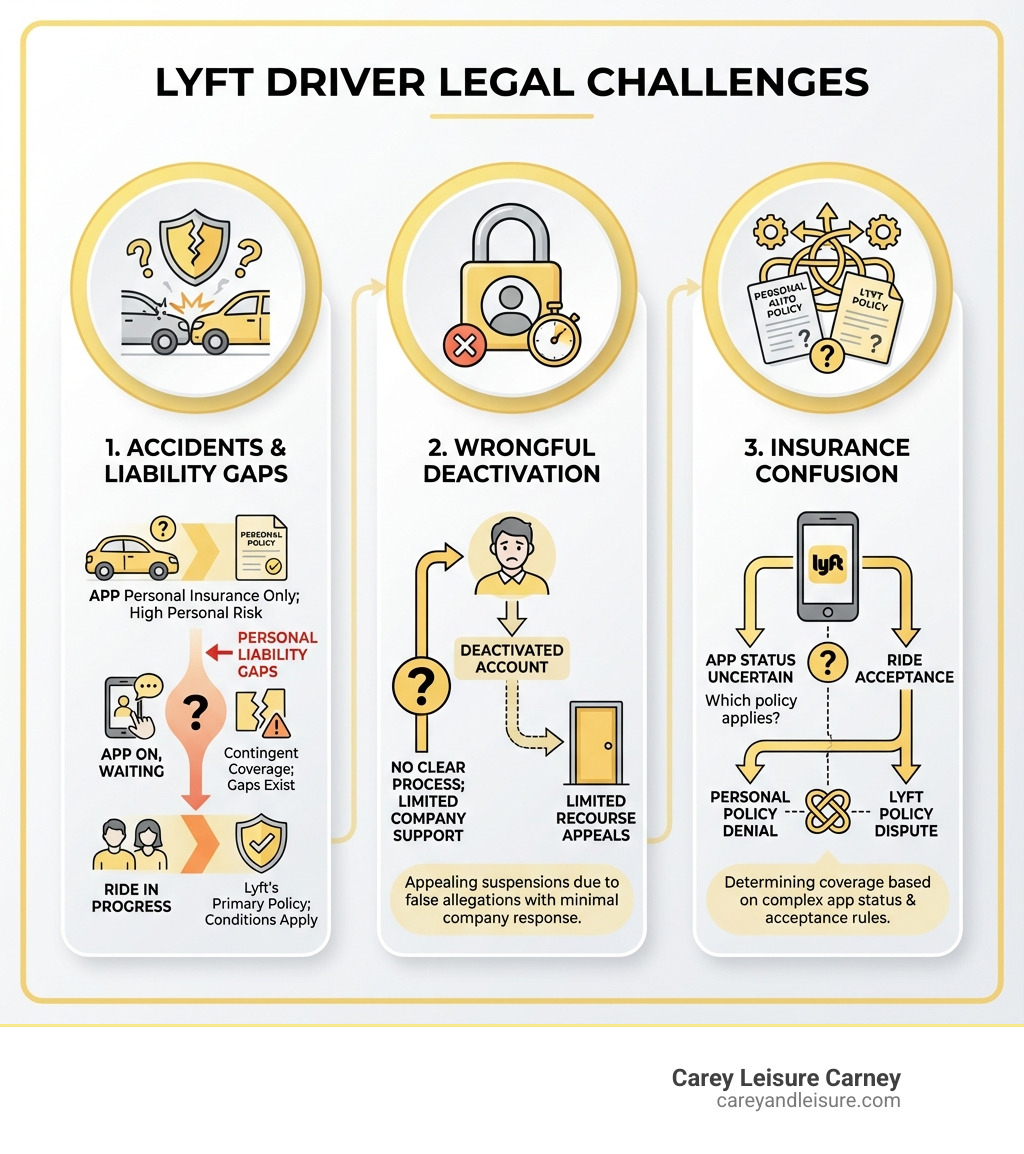
A lawyer for lyft driver cases helps with accident claims, wrongful deactivation appeals, insurance disputes, and navigating the complex liability issues created by independent contractor status. Lyft drivers face unique legal risks including personal liability gaps, multi-layered insurance coverage, and limited worker protections—making specialized legal representation essential after an accident or platform deactivation.
When you need a lawyer for a Lyft driver:
- After an accident – to determine which insurance applies (yours, Lyft’s, or the other driver’s) and maximize your compensation
- For wrongful deactivation – to appeal unfair account suspensions or termination due to false allegations or policy disputes
- Insurance claim denials – when Lyft’s insurer or your personal carrier refuses to cover damages
- Personal injury claims – to recover medical bills, lost income, and pain and suffering when another driver caused your crash
- TLC or licensing issues – for help protecting your ability to continue driving
Driving for Lyft may feel straightforward, but the legal reality is anything but simple. You’re classified as an independent contractor, which means you don’t get the worker protections employees enjoy—no workers’ compensation, no unemployment benefits, and often confusing insurance gaps. When an accident happens or your account gets deactivated, you’re left navigating a maze of policies, insurance tiers, and platform rules designed to protect the company, not you.
Rideshare drivers face constant pressure to maintain high ratings, accept back-to-back rides, and interact with their app while driving—all of which increase accident risk. You’re also personally liable in ways traditional employees aren’t. If you’re in a crash while the app is off or during certain periods of your shift, your personal auto insurance may deny your claim because you were using your vehicle commercially. Lyft’s $1 million policy sounds reassuring, but it only applies under specific conditions, and the company often disputes whether those conditions were met.
Beyond accidents, drivers face deactivation threats from low ratings, false passenger complaints, or alleged policy violations—with little recourse and no clear appeals process. Whether you’ve been injured, wrongfully deactivated, or caught between conflicting insurance policies, you need someone who understands the gig economy’s legal gray areas and will fight to protect your rights and livelihood.
I’m Thomas W. Carey, a board-certified civil trial lawyer and founding partner of Carey Leisure Carney, with over three decades of experience handling complex personal injury and motor vehicle cases across Florida—including the unique insurance and liability challenges faced by rideshare drivers seeking a lawyer for Lyft driver representation. My firm is dedicated to cutting through the red tape and securing the compensation and justice you deserve.
The legal landscape for rideshare drivers is constantly evolving. In the sections that follow, we’ll break down exactly how Lyft’s insurance works, what steps to take immediately after a crash, when you’re personally liable, and how the right attorney can protect your rights and maximize your recovery.
Basic lawyer for lyft driver terms:
The Unique Risks and Liabilities of Driving for Lyft
Driving for a rideshare service like Lyft offers flexibility, but it also comes with a distinct set of pressures and risks that can lead to accidents and complex legal situations. Unlike traditional employment, Lyft drivers are independent contractors, which means they often bear more personal responsibility and face unique challenges in the event of an accident.
Lyft drivers are constantly under pressure. Their livelihoods often depend on performance evaluations and tips, creating an incentive to rush or take risks to achieve better ratings and complete more rides. This pressure can lead to dangerous behaviors, such as speeding to reach a destination quickly, or becoming distracted by the app while navigating unfamiliar areas. Studies suggest that rideshare services may have even increased the number of car accidents in areas where they operate.
Interacting with the app for ride requests, GPS navigation, and passenger communication can be a significant source of distraction. Drivers also have to contend with frequent stops, entering and exiting traffic in unexpected locations, and sometimes unruly or dangerous passengers. These factors collectively contribute to a higher risk of accidents.
Common Causes of Lyft Accidents
Accidents involving Lyft drivers can stem from a variety of factors, many of which are exacerbated by the nature of rideshare driving.

Some of the most common causes include:
- Speeding: The pressure to complete more rides and maintain ratings can lead drivers to exceed speed limits.
- Drowsy Driving: Long hours on the road, often at night, can result in fatigue and impaired driving.
- Distracted Driving: Constant interaction with the Lyft app for navigation, accepting rides, or communicating with passengers diverts attention from the road. This also includes general phone use or focusing on passengers.
- Following GPS: Blindly following GPS directions, even into dangerous situations or unfamiliar routes, can lead to accidents.
- Unsafe Stops: Stopping abruptly or in unexpected places to pick up or drop off passengers can cause rear-end collisions or other incidents.
- Aggressive Driving/Road Rage: Frustration from traffic, demanding passengers, or the pressure of the job can lead to aggressive driving behaviors.
- Reckless Driving: A driver might become reckless due to stress or trying to meet performance targets.
- Driving Under the Influence (DUI): Though Lyft requires background checks, there have been instances of drivers operating under the influence.
Are You Personally Liable After an Accident?
This is where the independent contractor status of Lyft drivers becomes particularly critical. As an independent contractor, you are generally considered responsible for your own actions and liabilities, unlike an employee whose employer might bear more responsibility. While some states, like California with its Assembly Bill 5, have attempted to reclassify gig workers as employees, the situation in Florida generally aligns with the independent contractor model.
This distinction has significant implications for insurance and personal liability. Your personal auto insurance policy is typically designed for personal use and may not cover accidents that occur while you are driving for commercial purposes, such as ridesharing. If your personal insurance denies coverage, you could be left personally liable for damages, which can be devastating.
Fortunately, Lyft does provide its own commercial liability insurance, but the coverage levels and applicability depend entirely on your “app status” at the time of the accident. Understanding these varying levels of coverage is essential to knowing when Lyft’s insurance protects you and when you might be on your own.
Navigating a Lyft Accident: Insurance, Fault, and Immediate Steps
Being involved in a Lyft accident, whether as a driver or a passenger, introduces layers of complexity far beyond a typical car crash. We’re dealing with multiple parties—you, the other driver, Lyft, and various insurance companies—each with their own interests. In Florida, which is a no-fault state for Personal Injury Protection (PIP) benefits, understanding how fault is determined and how insurance policies interact is crucial.
Understanding Lyft’s Three-Tier Insurance System
Lyft’s insurance coverage for drivers is not a one-size-fits-all policy. It operates on a three-tier system, plus an “offline” status, with coverage limits varying significantly based on your activity within the app.
Period 0: App is Off (Offline)
- Coverage: Your personal auto insurance policy is primary.
- Details: If the Lyft app is off and you are not available for rides, any accident is treated as a personal car accident. Your personal insurance will be responsible for damages, assuming your policy covers the incident. It’s vital to ensure your personal policy does not have exclusions for rideshare driving, even when offline.
Period 1: Online, Waiting for a Ride Request
- Coverage: Lyft provides contingent liability coverage if your personal auto insurance denies the claim.
- $50,000 per person for bodily injury
- $100,000 per accident for bodily injury
- $25,000 for property damage
- Details: When you’re logged into the app and waiting for a ride request but haven’t accepted one yet, Lyft’s insurance acts as secondary coverage. This means your personal insurance is expected to pay first. If your personal insurer denies the claim (which they often do if they find you were engaged in rideshare activities), Lyft’s contingent policy may kick in, up to the limits listed above.
Periods 2 & 3: En Route to Pick Up a Passenger OR Passenger in Car
- Coverage: Lyft provides primary commercial auto insurance.
- $1,000,000 in third-party liability coverage
- $1,000,000 in uninsured/underinsured motorist coverage
- Details: This is the highest level of coverage. Once you have accepted a ride request and are either driving to pick up the passenger (Period 2) or have the passenger in your vehicle (Period 3), Lyft’s $1 million liability policy becomes primary. This policy covers bodily injury and property damage to third parties (the other driver, pedestrians, or even your passenger). Additionally, Lyft provides $1 million in uninsured/underinsured motorist coverage, which is critical if the at-fault driver has no insurance or insufficient insurance.
Here’s a summary of Lyft’s insurance coverage:
| App Status | Primary Coverage | Bodily Injury Liability (per person/per accident) | Property Damage Liability | Uninsured/Underinsured Motorist |
|---|---|---|---|---|
| Offline (App Off) | Driver’s Personal Auto | Varies by Policy | Varies by Policy | Varies by Policy |
| Online, Waiting (Period 1) | Driver’s Personal Auto (then Lyft contingent) | $50,000 / $100,000 (from Lyft if personal denies) | $25,000 (from Lyft if personal denies) | None (from Lyft) |
| En Route to Passenger (Period 2) | Lyft’s Commercial Policy | $1,000,000 | Included in $1M | $1,000,000 |
| Passenger in Car (Period 3) | Lyft’s Commercial Policy | $1,000,000 | Included in $1M | $1,000,000 |
Note: In Florida, a no-fault state, your own Personal Injury Protection (PIP) coverage will typically be the first source for your medical expenses, regardless of who is at fault.
You can find more detailed information on Lyft’s liability coverage.
Your Action Plan: Steps to Take Immediately After a Crash
The moments immediately following an accident can be chaotic, but taking the right steps can significantly impact your ability to recover compensation. As a Lyft driver, these steps are even more critical.
- Move to Safety: If possible and safe, move your vehicle to the side of the road to prevent further accidents.
- Call 911: Report the accident to the police and request an ambulance if anyone is injured. Even if injuries seem minor, a police report creates an official record of the incident, which is vital for insurance claims.
- Seek Medical Attention: Even if you feel fine, pain and symptoms can appear hours or days later. Prompt medical evaluation creates a crucial paper trail of your injuries. Seek medical attention immediately to protect your health and your potential claim.
- Document the Scene: Use your phone to take photos and videos of:
- Damage to all vehicles involved.
- The accident scene from different angles.
- Road conditions, traffic signs, and signals.
- Visible injuries.
- Gather Information: Collect contact and insurance information from all involved drivers and witnesses. If you had a passenger, discreetly note their name and contact information if they are willing to provide it.
- Do Not Admit Fault: Never admit fault or apologize for the accident, even if you think you might be to blame. This could jeopardize your claim. Stick to the facts when speaking with police.
- Report the Crash in the Lyft App: Report the accident through the Lyft app as soon as it’s safe to do so. This creates a record with Lyft and initiates their internal processes. Download or screenshot your trip information, and request driving information (location, speed, braking) from the Lyft app.
- Contact a Lawyer: Given the complexities of Lyft accidents, contacting an experienced lawyer for lyft driver cases is one of the most important steps you can take. We can guide you through the process and ensure your rights are protected.
For more general advice, see What to do after a car accident in Florida.
Common Injuries and Recoverable Damages
Accidents, especially those involving the forces of a car crash, can lead to a wide range of injuries, some of which may not be immediately apparent.

Common injuries sustained in Lyft accidents include:
- Whiplash: Whiplash is common in rear-end accidents and can lead to swelling, long-lasting neck pain, and even vocal cord paralysis in serious cases.
- Traumatic Brain Injuries (TBI): From concussions to severe head trauma, TBIs can have long-term cognitive and physical effects.
- Spinal Cord Injuries: These can range from herniated discs to paralysis, often requiring extensive and ongoing medical care.
- Broken Bones: Fractures are common, especially in collisions involving significant force.
- Internal Injuries: Organ damage or internal bleeding may not be visible but can be life-threatening.
- Psychological Injuries: Accidents can cause emotional distress, anxiety, PTSD, and depression, which are legitimate and compensable damages.
If you’ve been injured, you may be entitled to recover various damages, including:
- Medical Bills: Past and future medical expenses, including doctor visits, hospital stays, physical therapy, medication, and rehabilitation.
- Lost Wages: Compensation for income lost due to time off work for recovery.
- Lost Earning Capacity: If your injuries prevent you from earning at your previous capacity in the future.
- Property Damage: Costs to repair or replace your vehicle and any damaged personal property.
- Pain and Suffering: Compensation for physical pain, emotional distress, and reduced quality of life. In Florida, you must meet a “serious injury threshold” to pursue non-economic damages like pain and suffering compensation. This threshold includes significant and permanent loss of an important bodily function, permanent injury, significant and permanent scarring or disfigurement, or death.
Why You Need a Lawyer for a Lyft Driver
The unique challenges of rideshare accidents, combined with the tactics of large insurance companies, make legal representation not just helpful, but often essential. Lyft and other rideshare services may try to dodge responsibility, claiming they are not liable for your injuries, even with significant liability coverage. Insurance companies, notorious for trying to reduce, delay, and deny compensation, are even more inclined to do so in complex rideshare cases. This is precisely why you need a personal injury lawyer who understands these nuances.
How a Lawyer Maximizes Your Accident Claim
A skilled lawyer for lyft driver cases does more than just fill out paperwork; we become your advocate, navigating the legal complexities to ensure you receive fair compensation.
- Investigating the Crash: We thoroughly investigate the accident to determine who was at fault and what insurance policies apply. This includes gathering police reports, witness statements, and accident reconstruction data.
- Documenting Evidence: We assist in documenting evidence such as medical records, bills, lost wage statements, and property damage estimates.
- Accessing App Data: Crucially, we can compel Lyft to provide app data, such as driver location, speed, and braking information, which can be vital in proving fault and establishing the driver’s app status at the time of the crash.
- Handling All Communication: We manage all communications with Lyft, its insurance providers, the at-fault driver’s insurance, and your personal insurance. This protects you from saying anything that could harm your claim.
- Negotiating with Multiple Insurers: With multiple insurance companies often involved (Lyft’s, the other driver’s, and your own), negotiations can be incredibly complex. We have the experience to negotiate effectively with all parties.
- Calculating Total Damages: We ensure all your damages, including future medical costs, lost earning capacity, and pain and suffering, are accurately calculated and included in your claim.
- Filing a Lawsuit if Necessary: If a fair settlement cannot be reached through negotiation, we are prepared to take your case to court. Many claims against Uber or Lyft are subject to arbitration rather than traditional court proceedings due to their terms of service, and we can guide you through that process as well.
Finding the Right Lawyer for a Lyft Driver
When your livelihood and well-being are on the line, choosing the right legal representation is paramount. Here at Carey Leisure Carney, we believe the right lawyer for lyft driver cases should possess specific qualities:
- Experience with Rideshare Cases: We have extensive experience handling the unique insurance and liability issues that arise in Lyft accidents in Florida. This specialized knowledge is critical.
- Board-Certified Expertise: Our firm is proud to have board-certified attorneys, a distinction held by only the top 2% of Florida lawyers. This certification signifies proven expertise and commitment to the highest standards of legal practice.
- Understanding of Florida’s No-Fault and PIP Laws: Florida is a no-fault state, meaning your Personal Injury Protection (PIP) explained coverage is typically the first source for medical bills, regardless of fault. We understand how PIP interacts with Lyft’s policies and other insurance coverages.
- Contingency Fee Basis: We handle personal injury cases on a contingency fee basis, meaning you pay nothing upfront, and we only get paid if we win your case. This ensures that quality legal representation is accessible to everyone, regardless of their financial situation.
- Direct Attorney Access: We believe in personalized service. When you hire us, you get direct access to your attorney, not just paralegals or case managers.
Legal Help Beyond Accidents: Deactivation and Other Issues
A lawyer for lyft driver cases can also assist with issues beyond accidents, particularly wrongful deactivation, which can severely impact a driver’s income. Lyft drivers may face deactivation for various reasons, including low ratings, alleged policy violations, or even false accusations of assault by passengers. While Lyft has implemented new safety guidelines and a Safety Policy and Community Compliance (SPCC) team to review serious complaints, the process can still feel opaque and unfair.
If you’ve received a deactivation notice, a lawyer can help you:
- Understand the Reason: Lyft typically provides reasons for account deactivation. A lawyer can help you interpret the deactivation notice and understand the specific allegations.
- Gather Evidence: Collect all relevant evidence to support your appeal, such as trip details, communication logs, and any mitigating circumstances.
- Appeal the Deactivation: We can help you steer Lyft’s internal review process, draft compelling appeal letters, and represent your interests in any arbitration proceedings. Lyft’s policies allow drivers previously banned to seek a review for potential reinstatement, but having legal guidance through this process is crucial.
- Address Assault Allegations: If you face serious allegations, legal counsel is essential to protect your reputation and your ability to drive.
Frequently Asked Questions for Lyft Drivers
What happens if I’m in an accident while driving for Lyft but it wasn’t my fault?
If another driver caused the accident, your options typically involve:
- Claim Against At-Fault Driver: You would file a claim with the at-fault driver’s insurance company for property damage, bodily injury, and other losses.
- Your Own PIP Coverage: In Florida, your Personal Injury Protection (PIP) coverage will pay for 80% of your medical expenses and 60% of lost wages, up to your policy limits, regardless of fault.
- Uninsured/Underinsured Motorist Coverage: If the at-fault driver has no insurance or insufficient insurance, your own uninsured motorist coverage (if you have it) or Lyft’s $1 million uninsured/underinsured motorist coverage (if you were in Period 2 or 3) could apply.
- Lyft’s Insurance: Depending on your app status, Lyft’s liability coverage might still come into play, especially if damages exceed other available policies.
Can I get workers’ compensation as a Lyft driver in Florida?
As an independent contractor, Lyft drivers in Florida generally do not qualify for traditional workers’ compensation benefits. This means you are typically responsible for your own medical expenses and lost wages if you are injured on the job, unless you can recover these damages through a personal injury claim against an at-fault party.
While there might be some specific, limited programs or funds in certain areas (such as The Black Car Fund in New York for some for-hire drivers), these are not standard in Florida for Lyft drivers. It is highly advisable for Lyft drivers to carry robust health insurance, disability insurance, and personal injury protection (PIP) to cover potential gaps. If you are injured due to someone else’s negligence, a personal injury claim becomes your primary avenue for recovering losses.
How long do I have to file a claim after a Lyft accident in Florida?
The statute of limitations for filing a personal injury claim after an accident in Florida is typically two (2) years from the date of the accident. For property damage claims, it is generally four (4) years.
However, waiting too long can severely jeopardize your case. Evidence can disappear, witness memories fade, and the complexities of rideshare insurance claims demand prompt action. It’s always best to contact a lawyer for lyft driver cases immediately after an accident to ensure all deadlines are met and your rights are fully protected.
Get the Specialized Legal Support You Deserve
Driving for Lyft offers unique opportunities, but it also presents a complex web of legal challenges, from navigating multi-tiered insurance policies to protecting yourself against wrongful deactivation. You are not just a driver; you are an independent contractor operating in a rapidly evolving gig economy, and that status brings specific risks and responsibilities.
When faced with an accident, an insurance dispute, or a deactivation notice, having a specialized lawyer for lyft driver cases by your side is not just an advantage—it’s a necessity. We understand the intricacies of Florida’s no-fault laws, the nuances of Lyft’s insurance policies, and the strategies that insurance companies use to minimize payouts.
At Carey Leisure Carney, we bring over 100 years of combined experience and the distinction of being board-certified attorneys to your case. This means you benefit from top-tier legal expertise, direct attorney access, and personalized service focused on your specific needs as a rideshare driver. We are dedicated to cutting through the red tape and fighting for the maximum compensation you deserve.
Don’t let the complexities of rideshare law overwhelm you. Protect your rights, your livelihood, and your future. Schedule your free consultation with a rideshare accident attorney today. We serve clients across Clearwater, Largo, New Port Richey, Spring Hill, St. Petersburg, Trinity, and Wesley Chapel, Florida.