

Amputation injury claim: Secure Your #1 Guide
The Life-Altering Reality of Limb Loss and Your Legal Options
An amputation injury claim is a legal action to recover compensation when you’ve lost a limb due to someone else’s negligence. The consequences of limb loss are life-altering, but understanding your legal rights is the first step toward securing the financial resources you need to rebuild.
Quick Overview: What You Need to Know About Amputation Injury Claims
- What it is: A legal claim to recover damages when negligence causes limb loss.
- Common causes: Motor vehicle accidents, workplace incidents, defective products, medical malpractice.
- Types of compensation: Medical expenses, prosthetics, rehabilitation, lost wages, pain and suffering.
- Time limits: Florida generally requires filing within two years of the injury.
- Workers’ comp: Work-related amputations may qualify for both workers’ compensation and a third-party personal injury claim.
- Key step: Document everything and consult a personal injury attorney immediately.
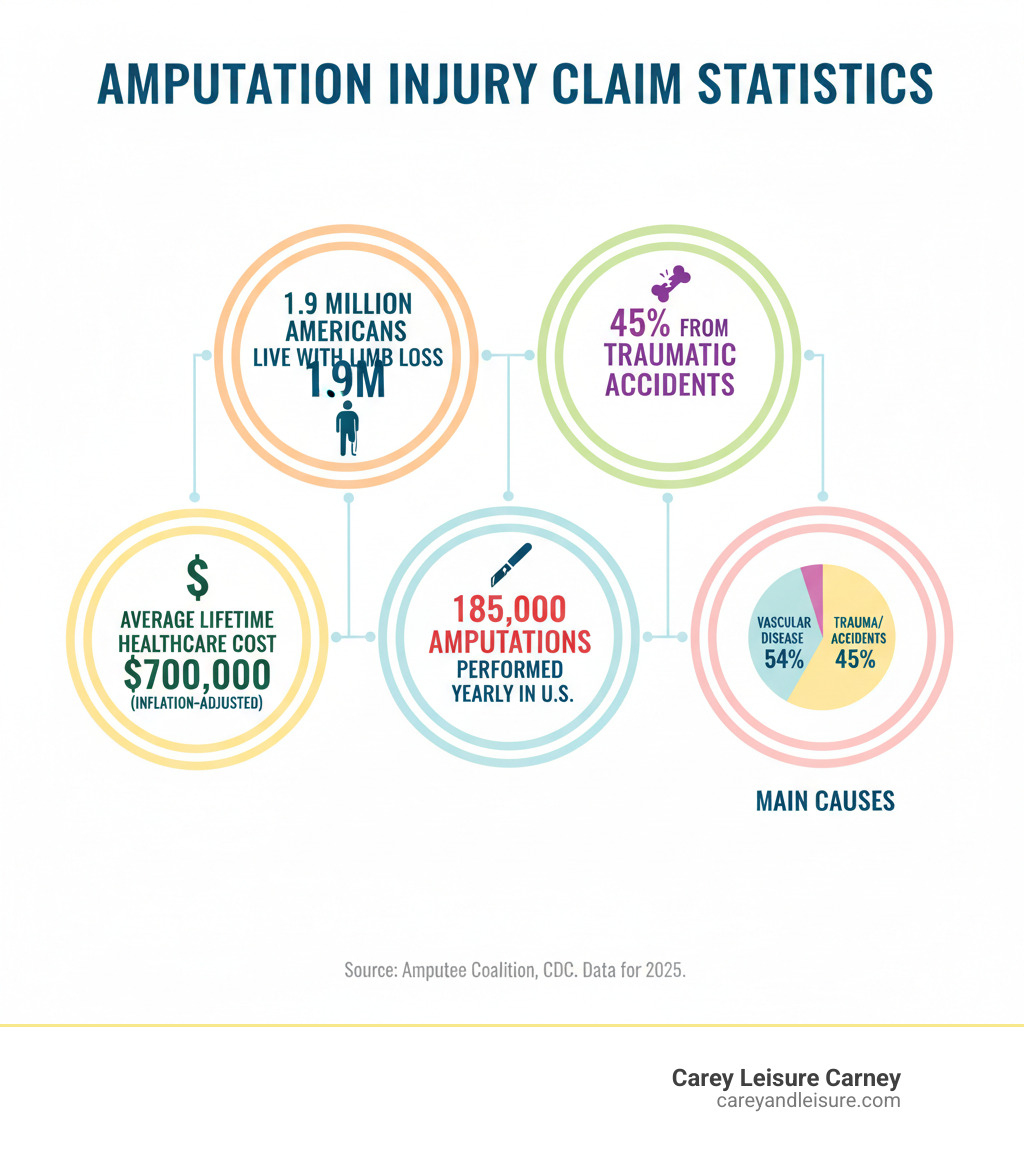
Nearly 1.9 million people in the U.S. are living with limb loss, with about 45% resulting from a traumatic accident. The average lifetime healthcare cost for an amputee is roughly $700,000 today when adjusted for inflation—a figure that excludes lost wages, pain and suffering, or diminished quality of life.
Amputation injuries are permanent and catastrophic. They involve immense physical pain, psychological trauma, and a complete change to your daily life. If someone else’s negligence caused your amputation, you have the legal right to seek compensation for all medical expenses (past and future), lost income, rehabilitation, prosthetics, home modifications, and damages for your pain and suffering.
Whether your injury happened in a car crash, at a construction site, or due to medical malpractice, the claims process is complex. You must prove fault, document your damages, and negotiate with insurance companies aiming to minimize your payout.
I’m Thomas W. Carey, a board-certified civil trial lawyer. Since 1988, my firm has handled thousands of injury matters across Florida, including catastrophic amputation injury claims resulting in multi-million-dollar recoveries. This guide will explain your legal rights and how to maximize your claim.
What is an Amputation Injury and What Are the Common Causes?
An amputation is the loss of a limb or body part. It can happen in two ways:
- Traumatic amputation (or dismemberment) is when a body part is severed instantly during an accident, such as a severe car crash or machinery incident.
- Surgical amputation is when doctors remove a limb to save a life or prevent further damage, often after a severe crush injury, infection, or when a traumatic injury is too damaged to repair.
In the U.S., about 185,000 amputations are performed each year, and nearly 45% result from trauma or accidents. Many of these are preventable incidents caused by negligence. If another party’s failure to exercise reasonable care—such as ignoring safety rules, driving recklessly, or making a medical error—caused your injury, you may have grounds for an amputation injury claim. Proving this link is the foundation of your case.

Common Causes of Amputation
Many amputations result from preventable negligence. Common causes include:
- Motor vehicle accidents: The extreme force in car, truck, and motorcycle crashes can crush limbs beyond repair.
- Workplace accidents: Particularly in construction and manufacturing, incidents with heavy machinery, power tools, or conveyor belts are a major cause. In 2021-22, Safework Australia reported that 14.3% of serious injury claims involved amputation.
- Defective products: Faulty safety guards on tools, design flaws in industrial machinery, or failing auto parts can lead to catastrophic injuries.
- Construction sites: Hazards like falls, falling objects, and machinery malfunctions create a high risk for limb loss.
- Medical malpractice: Surgical errors, such as operating on the wrong limb, or a delayed diagnosis of infection or blood clots can lead to an avoidable amputation. These “never events” occur in about one in 112,000 surgical procedures.
- Severe burns: Extensive tissue damage from fires or electrical incidents may require amputation to prevent life-threatening infections.
Immediate Steps to Protect Your Rights
The actions you take immediately after an injury are critical for your health and your legal claim.
- Seek immediate medical attention. Your health is the priority. Medical records are also crucial evidence for your amputation injury claim.
- Document the scene. If possible, have someone take photos or videos of the location, equipment, and any hazardous conditions.
- File an official report. A police report for a vehicle accident or an incident report at work creates an official record of the event.
- Gather witness information. Get names and contact details from anyone who saw what happened. Their accounts can be invaluable.
- Do not speak to insurance adjusters. They are trained to minimize payouts. Politely decline to give a statement until you have legal counsel.
- Contact a personal injury attorney immediately. An experienced lawyer can preserve evidence, handle insurance companies, and start building your case while you focus on recovery. For more on this, see our guide on Why You Need a Personal Injury Lawyer.
Types of Compensation You Can Seek for an Amputation
The financial burden of an amputation is staggering. A 2007 study in the Journal of Bone and Joint Surgery found lifetime healthcare costs for amputees averaged over $500,000, which is roughly $700,000 today when adjusted for inflation. This figure doesn’t include lost income or the immense personal suffering involved.
An amputation injury claim seeks comprehensive compensation for every aspect of your loss, both now and in the future. Damages fall into two main categories: economic and non-economic. In cases of extreme negligence, punitive damages may also be awarded to punish the wrongdoer.

Calculating Economic (Special) Damages
Economic damages are the tangible, calculable financial losses from your injury. For amputees, these costs are astronomical and lifelong. They include:
- Medical Expenses (Past and Future): This covers all treatment, from the initial emergency care and surgeries to a lifetime of follow-up appointments and medications.
- Prosthetics: Modern prosthetic limbs are expensive, costing from $5,000 to over $100,000, and need to be replaced every 3-5 years. We calculate the cost of all future replacements, repairs, and adjustments.
- Rehabilitation: Extensive physical and occupational therapy is necessary to learn to use a prosthetic and adapt to daily life.
- Lost Wages and Earning Capacity: We seek compensation for the income you’ve already lost and, more importantly, for your diminished ability to earn in the future. Vocational experts help us calculate this long-term loss.
- Home and Vehicle Modifications: This includes costs for ramps, accessible bathrooms, hand controls for vehicles, and other modifications needed to maintain your independence.
To accurately project these future costs, we often create a “life care plan.” This detailed document, prepared by medical and financial experts, outlines all your anticipated needs for the rest of your life. Learn more in our guide, What Are Life Care Plans in Personal Injury Cases?.
Calculating Non-Economic (General) Damages
Non-economic damages compensate for the profound human cost of an amputation—the suffering that doesn’t come with a price tag. These include:
- Pain and Suffering: Compensation for the initial trauma, chronic nerve pain, and the daily discomfort of living with an amputation.
- Phantom Limb Pain: This is a real, debilitating neurological condition where you feel pain in the limb that is no longer there.
- Emotional Distress and PTSD: Amputation often leads to depression, anxiety, and post-traumatic stress disorder (PTSD), as documented by the National Center for Biotechnology Information.
- Disfigurement: This addresses the psychological impact of living with a visible physical difference, including social anxiety and self-consciousness.
- Loss of Enjoyment of Life: This compensates you for the inability to pursue hobbies, activities, and simple daily pleasures that you once took for granted.
In Florida, we calculate these damages based on the severity and permanence of your injury. For more details, read our article on Compensation for Pain and Suffering in Florida: What You Need to Know. We fight to ensure your compensation reflects the complete picture of how this injury has impacted your life.
Navigating Your Amputation Injury Claim: The Legal Process
The legal process for an amputation injury claim can feel daunting, but understanding the steps can provide a sense of control. The process begins with a thorough investigation to gather evidence like medical records, accident reports, and witness statements. We often use experts to build the strongest case possible, as detailed in our guide on How Attorneys Use Investigations for Your Personal Injury Claim.
After establishing liability and calculating your total damages, we negotiate with the at-fault party’s insurance company. Insurers will try to minimize your payout by downplaying your injuries or shifting blame. We counter these tactics with solid evidence and aggressive advocacy. While most amputation claims settle out of court, we are always prepared to go to trial if a fair offer is not made.

Statute of Limitations and Comparative Negligence in Florida
Two Florida laws are critical to your amputation injury claim:
- Statute of Limitations: This is the deadline for filing a lawsuit. In Florida, you generally have two years from the date of injury to file a personal injury claim. If you miss this deadline, you lose your right to seek compensation forever. It is crucial to act quickly.
- Comparative Negligence: Florida’s “modified comparative fault” rule means your compensation is reduced by your percentage of fault. For example, if you are found 20% at fault for an accident, your $1,000,000 award would be reduced to $800,000. Critically, if you are found to be more than 50% at fault, you cannot recover any compensation. This makes a thorough investigation to prove the other party’s liability essential.
Filing a Work-Related Amputation Injury Claim
If your amputation happened at work, you may have two avenues for compensation: a workers’ compensation claim and a third-party personal injury claim.
Workers’ compensation is a no-fault system that covers medical bills and a portion of lost wages, but it does not cover pain and suffering. A third-party claim, however, allows you to sue a negligent party other than your employer—such as a defective equipment manufacturer, a careless contractor on a job site, or the at-fault driver in a work-related car accident. This separate claim can provide compensation for pain and suffering and full lost wages.
| Feature | Workers’ Compensation Claim | Third-Party Personal Injury Claim |
|---|---|---|
| Fault Required | No (no-fault system) | Yes (must prove negligence of a third party) |
| Employer Sued | No (employer is immune from direct lawsuit in most cases) | Yes (if a third party, not your employer, caused the injury) |
| Damages Covered | Medical expenses, lost wages (partial), permanent impairment benefits, vocational rehabilitation | Medical expenses, lost wages, loss of future earning capacity, pain and suffering, emotional distress, loss of enjoyment of life |
| Pain & Suffering | Not covered | Fully covered |
| Source of Funds | Employer’s workers’ compensation insurance | At-fault third party’s liability insurance |
| Filing Timeline | Typically shorter (e.g., 6 months in FL for notice) | Generally longer (e.g., 2 years in FL for lawsuit) |
Pursuing both types of claims can significantly increase your total recovery. We investigate every case to identify all possible sources of compensation.
How a Lawyer Maximizes Your Amputation Injury Claim
After a limb loss, you should be focused on healing, not fighting insurance companies. An experienced personal injury attorney acts as your investigator, negotiator, and advocate. We handle the entire legal battle, from gathering evidence and proving negligence to calculating the full, lifetime value of your amputation injury claim.
We bring in a network of medical, vocational, and economic experts to ensure nothing is overlooked. This detailed preparation allows us to counter the tactics of insurance companies, who are trained to minimize your claim. We handle all communications and negotiations, and if a fair settlement isn’t offered, we are fully prepared to take your case to trial.

Key Factors That Influence Your Amputation Injury Claim Value
The value of your claim depends on several unique factors:
- Severity of the Injury: The loss of a full limb is valued more highly than a partial loss, and the specific limb lost matters.
- Your Age and Occupation: A younger person with a long career ahead in a physical job will have a larger claim for lost future earnings.
- Impact on Daily Life: The effect on your ability to drive, care for family, and enjoy hobbies is a major component of non-economic damages.
- Strength of Evidence: Clear proof of negligence and comprehensive documentation of your losses strengthen your case significantly.
- Degree of Fault: Under Florida’s comparative fault rule, establishing that the other party was entirely at fault is crucial to maximizing your recovery.
- Insurance Policy Limits: The amount of available insurance coverage can affect the final recovery, though we explore all avenues to find sufficient compensation.
The Role of a Catastrophic Injury Attorney
Amputation is a catastrophic injury, requiring an attorney with specialized experience in high-stakes cases. As Board-Certified civil trial lawyers—a distinction held by less than 2% of Florida attorneys—we bring over a century of combined experience to your case.
Our role includes:
- Comprehensive Case Management: We handle all paperwork, deadlines, and coordination so you can focus on recovery.
- Proving Negligence: We use experts to establish that another party’s breach of care directly caused your injury.
- Calculating Lifetime Costs: We work with life care planners to project all your future needs, from prosthetics to home modifications, ensuring your settlement covers you for life.
- Fighting for Fair Compensation: We negotiate relentlessly and are always prepared for litigation to secure the maximum compensation you deserve.
To learn more about our specialized approach, visit our page on Catastrophic Injury Attorney | Carey & Leisure.
Frequently Asked Questions about Amputation Claims
Here are answers to some of the most common questions we hear regarding amputation injury claims.
Will I have to go to court for my amputation claim?
Most amputation injury claims are settled out of court. Insurance companies prefer to avoid the risk and expense of a trial, especially in cases involving such a severe injury. However, we prepare every case as if it will go to trial. This thorough preparation signals to the insurer that we are serious, which often leads to a fair settlement offer. If they refuse to be fair, we are experienced trial lawyers ready to fight for you in court. The final decision to settle or go to trial is always yours.
Can I still claim compensation if a pre-existing condition was a factor?
Yes. Florida’s “eggshell plaintiff rule” means a negligent party is responsible for all the harm they cause, even if the victim was more susceptible to injury due to a pre-existing condition. For example, if a car accident aggravated your pre-existing diabetes, leading to an amputation that might not have happened otherwise, the at-fault driver is still liable for the full extent of the injury. The key is proving that the accident caused or worsened the condition, which we establish with strong medical evidence.
What is the difference between amputation and dismemberment?
While often used interchangeably, they have distinct meanings:
- Dismemberment is the traumatic, accidental severing of a body part during an incident.
- Amputation is the surgical removal of a body part by a doctor.
Often, a traumatic dismemberment will require a follow-up surgical amputation to clean the wound and prepare the limb for a prosthetic. For your amputation injury claim, what matters is that someone’s negligence was the root cause of the limb loss, whether it happened instantly in the accident or later in an operating room.
Secure Your Future with a Board-Certified Attorney
Life after an amputation is a difficult journey, but you do not have to face it alone. A successful amputation injury claim provides the financial resources you need for advanced prosthetics, rehabilitation, and home modifications, allowing you to focus on healing instead of bills.
At Carey Leisure Carney, our Board-Certified attorneys—a distinction held by less than 2% of Florida lawyers—bring over a century of combined experience to these complex cases. We provide direct attorney access and personalized service, treating you as a person, not a case number. We fight to prove negligence, calculate the full lifetime costs of your injury, and negotiate aggressively for the maximum compensation you deserve.
We serve clients in Clearwater, Largo, New Port Richey, Spring Hill, St. Petersburg, Trinity, Wesley Chapel, and throughout Florida.
The two-year statute of limitations in Florida means you must act quickly. Don’t risk losing your right to compensation. If you or a loved one has suffered an amputation due to someone else’s negligence, contact us today for a free, no-obligation consultation. Let us handle the legal burden while you focus on rebuilding your life.
Contact a Catastrophic Injury Attorney for a Free Consultation