

Child Car Seat Laws: 4 Essential Safety Stages
Why Child Car Seat Safety Laws Save Lives
Child car seat laws exist because car crashes are a leading cause of death for children ages 1 to 13. In 2020, an average of 3 children died and 380 were injured daily in North American traffic crashes.
Quick Reference: Child Car Seat Legal Requirements
- Stage 1 (Rear-facing): Birth to at least age 2 or until child outgrows seat limits
- Stage 2 (Forward-facing): Age 2+ with 5-point harness until outgrown
- Stage 3 (Booster seat): Typically ages 4-8 until proper seat belt fit
- Stage 4 (Seat belt): Age 8+ or when child passes the 5-Step Fit Test
The statistics are heartbreaking but also hopeful. While 43% of children killed in 2023 car crashes were unrestrained, proper car seat use reduces injury risk by 71-82% for infants and toddlers compared to seat belts alone. Booster seats cut serious injury risk by 45% for children ages 4-8.
Understanding these laws isn’t just about avoiding fines—which can reach $240 and include demerit points in places like Ontario—it’s about protecting your most precious passengers.
Legal requirements vary by region, but the science is constant. Children under 13 are 75% safer in the back seat, and each car seat stage serves a critical purpose in protecting developing bodies during a crash.
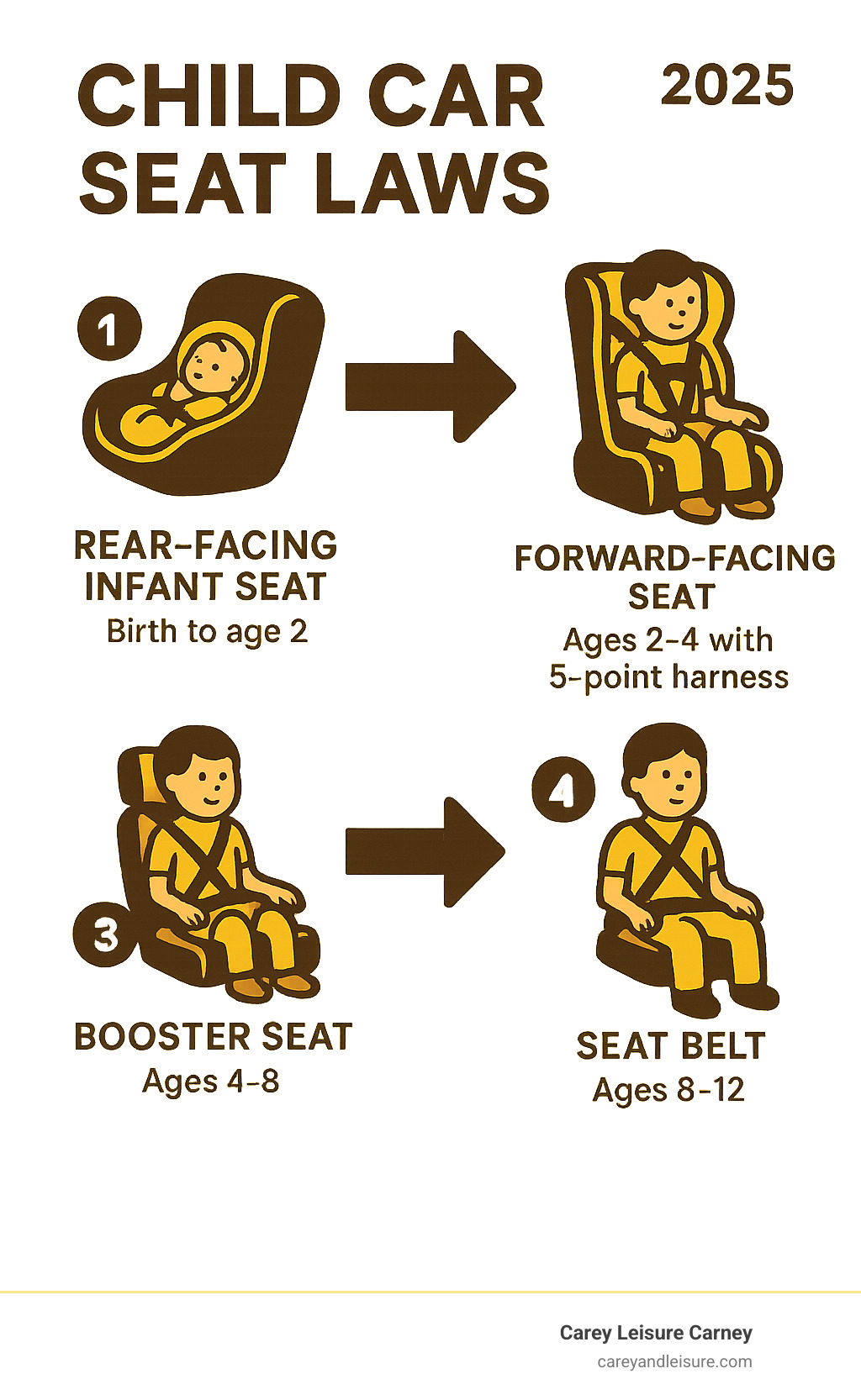
The Four Stages of Child Car Seat Use
Think of child car seat laws as a safety roadmap. From birth to their teens, your child will progress through four stages, each designed to protect their growing body. The key is that every child develops differently. While age is a guideline, it’s really about your child’s weight, height, and fit in the seat. Always check your car seat and vehicle manuals; they are your guides for proper installation and use.
Stage 1: Rear-Facing Seats
This is where your baby’s safety journey begins and is the most important stage. Infants have large heads and developing neck muscles, making them especially vulnerable. In a crash, a rear-facing seat acts like a cocoon, cradling the baby’s body and spreading crash forces across their back, preventing their head from snapping forward. Options include infant-only seats (often outgrown within a year) or convertible and all-in-one seats that start rear-facing. The American Academy of Pediatrics is clear: keep your child rear-facing as long as possible, until they reach the seat’s maximum height or weight limit. This often means staying rear-facing past age two, which is normal. The neck and spine protection at this stage is incredible, reducing injury risk by 71-82% compared to seat belts alone.
Stage 2: Forward-Facing Seats
Once your toddler outgrows their rear-facing seat (and is at least two), it’s time to turn them around. Forward-facing seats use a 5-point harness (shoulders, hips, and between the legs). A key safety feature is the top tether strap, which anchors the seat to the vehicle, dramatically reducing forward movement in a crash. Your child should weigh at least 22 pounds to use a forward-facing seat, but remember, longer rear-facing is safer. This stage is for toddlers and preschoolers until they outgrow the seat’s limits. If you’re curious about the different restraint options available, there’s helpful information about the three styles of car restraints that can guide your decision.
Stage 3: Booster Seats
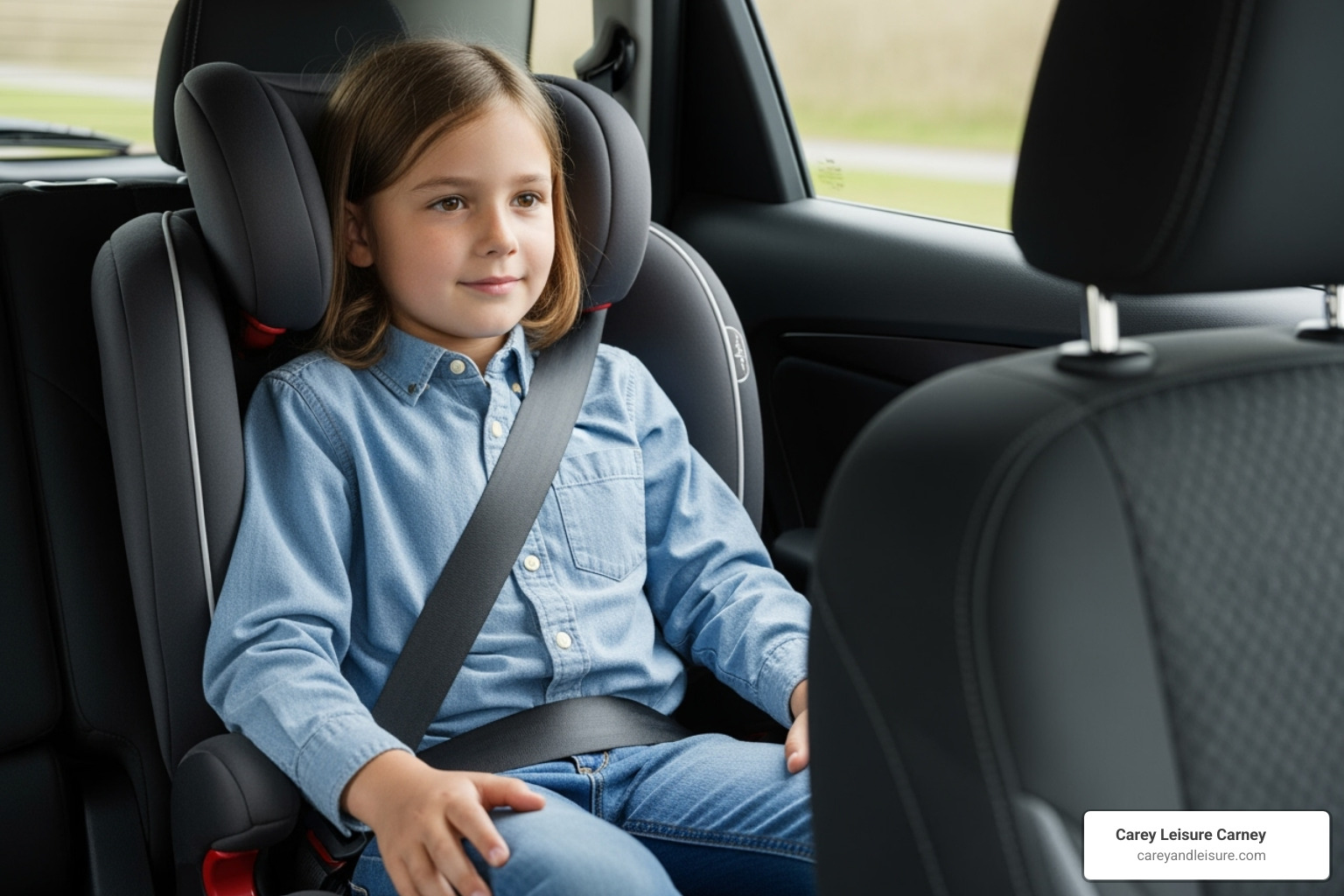
When your school-aged child outgrows their harnessed seat (around 40 pounds), they’re still too small for adult seat belts. Booster seats bridge this gap. These seats boost your child up so the vehicle’s seat belt fits correctly. Choices include high-back boosters for head and neck support, or backless boosters if your vehicle has adequate headrests.
The key is proper seat belt fit. The lap belt must sit on the hips, not the belly. The shoulder belt should cross the chest and shoulder, not the neck or behind the back. Correctly used, booster seats reduce serious injury risk by 45% for kids ages 4-8. Proper belt-positioning is crucial for this stage.
Stage 4: Adult Seat Belts
Transitioning from booster seats to adult belts is a big step, but don’t rush it. This usually happens between ages 8-12, but the real test is the 5-Step Test, not age. Can they sit back with knees bending at the seat edge? Does the lap belt sit low on their hips? Is the shoulder belt flat across their chest and shoulder? Can they stay in this position for the whole ride? If the answer to any question is “no,” your child still needs a booster. There’s no shame in keeping them safer longer!
Seat belts are for adults. Improper fit can cause harm in a crash. These proper fit guidelines exist because they save lives. Every safety decision you make matters, as we emphasize in discussions about children and pet safety in parked vehicles. Your vigilance during this age 8-12 transition period helps ensure your child is truly ready for this final stage of their car safety journey.
Understanding the Child Car Seat Laws in Ontario and Florida
Child car seat laws can differ dramatically by region. What’s legal in one state or province may not be in another. Parents must know the rules wherever they drive. The driver is responsible for ensuring children are properly secured. The stakes are higher than fines; they involve children’s lives. Let’s review the laws in Ontario, Canada, and here in Florida.
Key Tenets of Ontario’s Child Car Seat Laws

Ontario’s Highway Traffic Act is straightforward: children under eight must be in a proper car or booster seat. The driver is responsible for all passengers under 16. In Ontario, a child can use an adult seat belt after meeting one of these milestones: turning eight, weighing 36 kg (80 lbs), or reaching 145 cm (4 feet 9 inches) tall. This means a tall six-year-old might legally use a seat belt, while a smaller eight-year-old still needs a booster. Enforcement is strict. An improperly secured child results in a $240 fine and two demerit points, affecting your wallet and insurance rates. You can dive deeper into the specifics at Ontario’s Child Passenger Seat Requirements.
A Look at Florida’s Child Car Seat Laws
Down here in the Sunshine State, Florida takes an age-focused approach to child car seat laws. State statutes require safety restraints for all children under 18, with the type depending on age. Children 3 and under must be in a federally-approved, crash-tested, and properly installed child safety seat. Children aged 4 and 5 must be in a federally-approved safety seat (a booster is an option for 4-year-olds). At age 6, children can legally use a seat belt, though boosters are recommended until they fit properly (around 4 feet 9 inches).
The numbers show why these laws exist. In 2019 alone, Florida saw 127,285 children involved in traffic crashes, with 142 young lives lost. These aren’t just statistics; they’re children. Violating Florida’s car seat laws leads to fines, but the legal consequences are minor compared to the risk to your child in a crash. If you do find yourself dealing with the aftermath of an accident, knowing what to do after a car accident Florida can help protect your family’s rights.
Front Seat vs. Back Seat: What the Law and Science Say
“Can my child ride up front?” is a common question. Kids love the front seat, and it can seem easier for parents. The reality is that airbags are designed for adults. They deploy at up to 210 km/h (130 mph) and can be dangerous for a child, potentially causing severe head, neck, and spinal injuries.
The science is clear: Children under 13 are 75% safer in the back seat. Transport Canada and the American Academy of Pediatrics recommend kids stay in the back until age 13. Even a tall 10-year-old is safer in the back. Florida law permits children in the front seat at age 13, but legal doesn’t always mean safest. When you consider the serious injuries that can occur in crashes, as outlined in our guide on types of car accident injuries, keeping kids in the back just makes sense. For additional safety information, Transport Canada safety data provides excellent research on why the back seat remains the gold standard for child passenger safety.
A Parent’s Practical Safety and Installation Guide
Even the best car seat is unsafe if installed incorrectly. Studies show that three out of four car seats are installed incorrectly, putting children at risk. The good news is most mistakes are preventable. First, many parents don’t realize car seats expire. A hand-me-down seat might seem like a money-saver, but it could be dangerous.
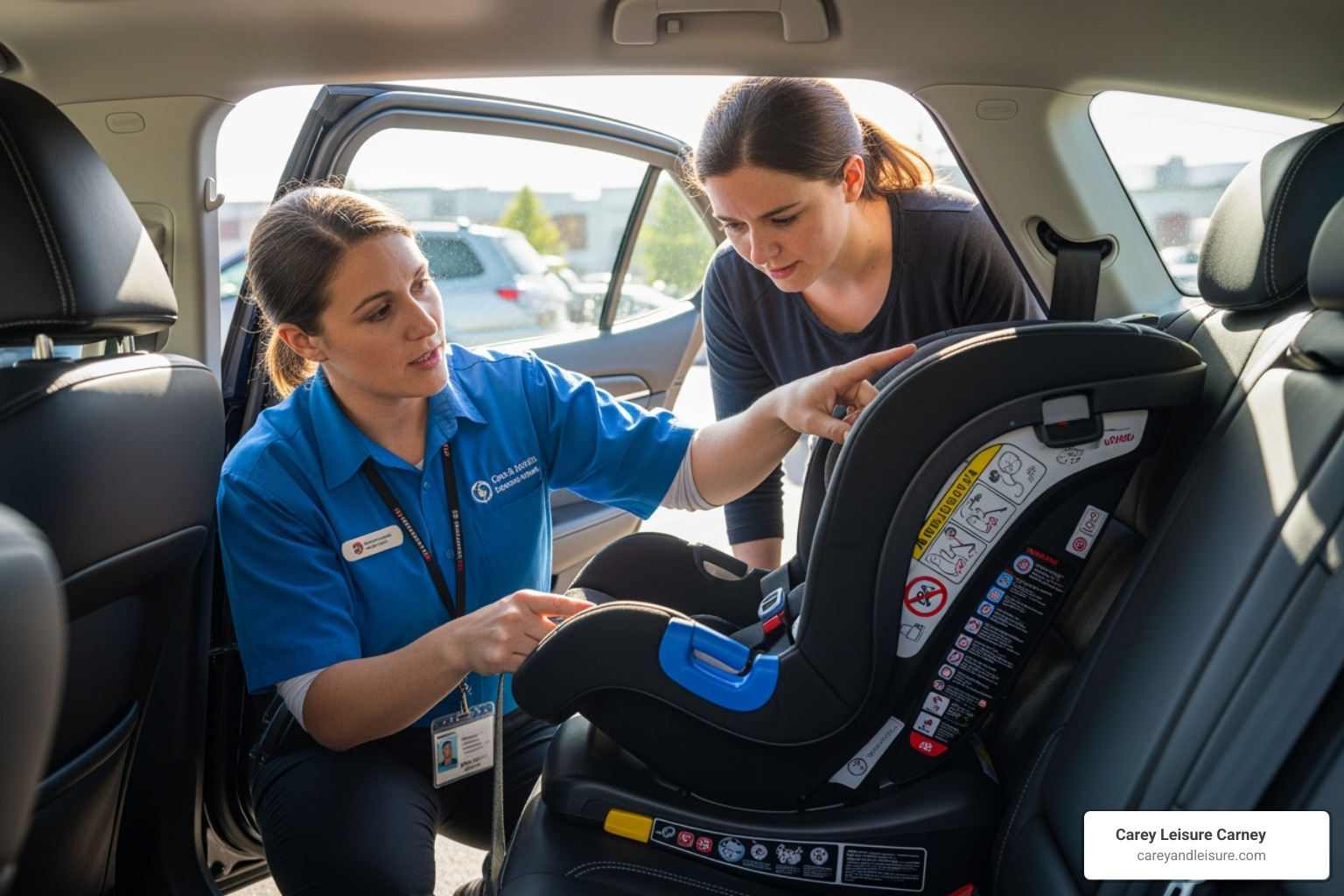
How to Install Your Car Seat Correctly
Car seat installation requires following instructions exactly. Your key resources are the car seat manual and your vehicle’s owner’s manual. The golden rule is the “one-inch test.” Once installed, grab the seat at the belt path. It shouldn’t move more than one inch in any direction. If it does, it’s too loose. Getting the harness right is key. For rear-facing seats, straps should be at or below the shoulders. For forward-facing seats, straps should be at or above the shoulders. The chest clip keeps shoulder straps in place and should be at armpit level. To test harness tightness, pinch the strap at the shoulder. If you can pinch excess webbing, it’s too loose. For a forward-facing seat, never skip the top tether strap. It can reduce head movement in a crash by up to 6 inches—a potentially life-saving difference. For rear-facing seats, getting the angle right is crucial to prevent your baby’s head from flopping forward and blocking their airway. Use the seat’s built-in level indicator. Bulky winter coats and car seats don’t mix. The material compresses in a crash, creating slack in the harness. Buckle your child in regular clothes and put a blanket over the harness.
Buying a Car Seat: Safety First
When buying a car seat, always check for safety certification. In Canada, look for the National Safety Mark. In the U.S., seats must meet Federal Motor Vehicle Safety Standard 213. No certification mark means don’t buy it. Online shopping is convenient but beware of counterfeit seats. Stick to reputable retailers. Most aftermarket products are dangerous because they haven’t been crash-tested with your specific seat. If it didn’t come in the box with your car seat, don’t use it. Second-hand car seats are risky. You don’t know its history—if it was in a crash, stored improperly, or is missing parts. Every car seat has an expiration date, usually 6 to 10 years from its manufacture date. Plastic degrades over time, and an expired seat can fail in a crash.
Registration, Recalls, and Special Considerations
Registering your seat with the manufacturer is vital. It takes five minutes and ensures you’re notified directly of any safety recalls. Car seat recalls are common. In the United States, you can sign up to receive e-mail alerts from NHTSA about recalls. Some children need specialized restraints for medical reasons. Standard seats may not work for premature babies or children with conditions like spina bifida. Transport Canada provides detailed information about special needs car seat options that still meet safety standards. If your child has special needs, work with your medical team and a certified Child Passenger Safety Technician to find a safe solution. Following child car seat laws is about giving your child the best chance of surviving a crash uninjured.
Frequently Asked Questions about Child Car Seat Laws
Navigating child car seat laws can be overwhelming. It’s natural to have questions. Here are answers to common concerns from families.
When can my child legally stop using a booster seat?
This is a common question. The answer depends on your location, but a key rule is: it’s not just about age. In Ontario, a child can use a seat belt after meeting one of these criteria: age 8, weight of 36kg (80 lbs), or height of 145 cm (4’9″). However, legal doesn’t always mean safest. We recommend using a booster until your child passes the 5-Step Test for proper seat belt fit, usually between ages 8 and 12. If the belt doesn’t fit them as it fits an adult, they aren’t ready. Their safety is worth the extra time in a booster.
What are the penalties for not using a car seat correctly?
No one wants a fine, but the real penalty for ignoring child car seat laws goes beyond money. Legally, consequences vary. In Ontario, the penalty is a $240 fine and two demerit points for an improperly secured child under eight. Florida also has fines for violations. The most devastating penalty isn’t financial; it’s the risk of serious injury or death to your child. These laws exist because proper car seat use saves lives, making any fine insignificant by comparison.
Can I use a car seat that was purchased in the U.S. in Canada, or vice-versa?
This is a great question for families who travel. The short answer is no, you cannot legally use a car seat across the border, even if it looks identical. Here’s why: Canada requires the National Safety Mark from Transport Canada, while the U.S. requires seats to meet Federal Motor Vehicle Safety Standard (FMVSS) 213. These represent different testing, certification, and safety requirements. Even if seats from the same manufacturer look identical, they are certified to different standards. The differences are significant, and using the wrong one is illegal and can compromise safety. If moving or planning an extended stay, you must buy a new car seat that meets local standards. It’s a necessary investment in your child’s safety and legal compliance.
Conclusion
Buckling your child into their car seat is a life-saving decision. This guide covered the essential journey of child car seat laws and safety, from rear-facing seats to passing the 5-Step Test for adult seat belts.
The four stages are a progression designed to protect your child’s developing body: Rear-facing seats cradle infants, forward-facing seats with 5-point harnesses secure toddlers, booster seats ensure proper belt fit for older children, and adult seat belts provide protection when they are truly ready.
We’ve reviewed laws in Ontario and Florida, including penalties like Ontario’s $240 fine and two demerit points. The real motivation, however, is safety. Since car crashes are a leading cause of child death and proper car seat use reduces injury risk by up to 82%, the choice is clear.
Practical steps are as important as legal ones. Reading manuals, doing the one-inch test, and positioning the chest clip correctly make a huge difference. Remember to register your seat, watch for recalls, and avoid expired or second-hand seats.
Most importantly, the back seat is the safest place for children under 13. Airbags that protect adults can be dangerous for children, making this a critical safety rule.
Your vigilance with child car seat laws and best practices protects your passengers. Every correct installation, adjustment, and safety-first decision saves lives.
If you or a loved one has been affected by a car accident, the experienced attorneys at Carey Leisure Carney can help you understand your rights. For more information on ensuring your child’s safety in the car, please visit our page on Children’s Car Seat Laws.