

Negligent Security Lawyer: 4 Unlocking Justice
Understanding Negligent Security: When Property Owners Fail to Protect Visitors
A negligent security lawyer helps victims of crimes that could have been prevented if property owners had provided adequate security measures. These specialized attorneys handle cases where assaults, robberies, or other violent crimes occur due to poor lighting, broken security cameras, inadequate staffing, or other security failures on someone else’s property.
When you might need a negligent security lawyer:
- You were assaulted in a poorly lit parking lot
- A robbery occurred where security cameras weren’t working
- You were attacked in an area with broken locks or gates
- Violence happened despite known crime in the area
- Property owners ignored previous security complaints
Negligent security falls under premises liability law – the legal principle that property owners must keep their premises reasonably safe for visitors. According to legal research, nearly 500 negligent security cases are filed annually, with settlements regularly reaching millions of dollars when property owners fail to protect against foreseeable criminal acts.
The key legal concept is foreseeability. If a property owner knew or should have known that criminal activity was likely based on prior incidents, crime statistics, or police reports, they have a duty to implement reasonable security measures. When they fail to do so and someone gets hurt, victims may have grounds for a negligent security claim.
These cases are complex because they require proving not just that you were injured, but that the property owner’s security failures directly contributed to the crime. A murder occurs every 35 minutes in the United States, making adequate security a critical responsibility for businesses and property owners.
The Legal Foundation: A Property Owner’s Duty of Care
When you step onto someone else’s property—whether it’s a hotel, apartment complex, or shopping center—the owner has a legal duty to keep you reasonably safe. This isn’t just common courtesy; it’s the law. Property owners must act like any reasonable person would in their situation, taking steps to prevent harm when they can see it coming.
Think of it this way: if you owned a business and noticed your parking lot was becoming a hotspot for crime, what would you do? A reasonable person might install better lighting, add security cameras, or hire a guard. The law expects property owners to think the same way.
This responsibility falls under premises liability law. When property owners fail to provide safe conditions or protect visitors from foreseeable dangers—including criminal acts—they can be held legally responsible for the consequences.

What is Foreseeability in a Negligent Security Claim?
Foreseeability is the heart of any negligent security case. It’s not enough to prove that a crime happened on someone’s property—you have to show they should have seen it coming. This legal concept asks a simple question: did the property owner know, or should they have known, that criminal activity was likely?
Prior similar crimes are often the strongest evidence of foreseeability. When a parking garage has seen three muggings in six months, the owner can’t claim surprise when a fourth occurs. The substantial similarity rule means these prior incidents don’t need to be identical to your situation—a pattern of burglaries can make violent crimes foreseeable too.
Crime statistics and police reports paint the bigger picture. We use resources like crime grids to show what was happening in the neighborhood. If police were regularly called to handle disturbances, suspicious activity, or other crimes nearby, it puts the property owner on notice.
Sometimes the nature of the business itself creates foreseeability. A late-night gas station in a high-crime area faces different risks than a quiet bookstore. Property owners must adjust their security measures accordingly.
The key is proving the owner knew or should have known about the danger, then failed to take reasonable steps to address it.
The Four Elements of a Successful Claim
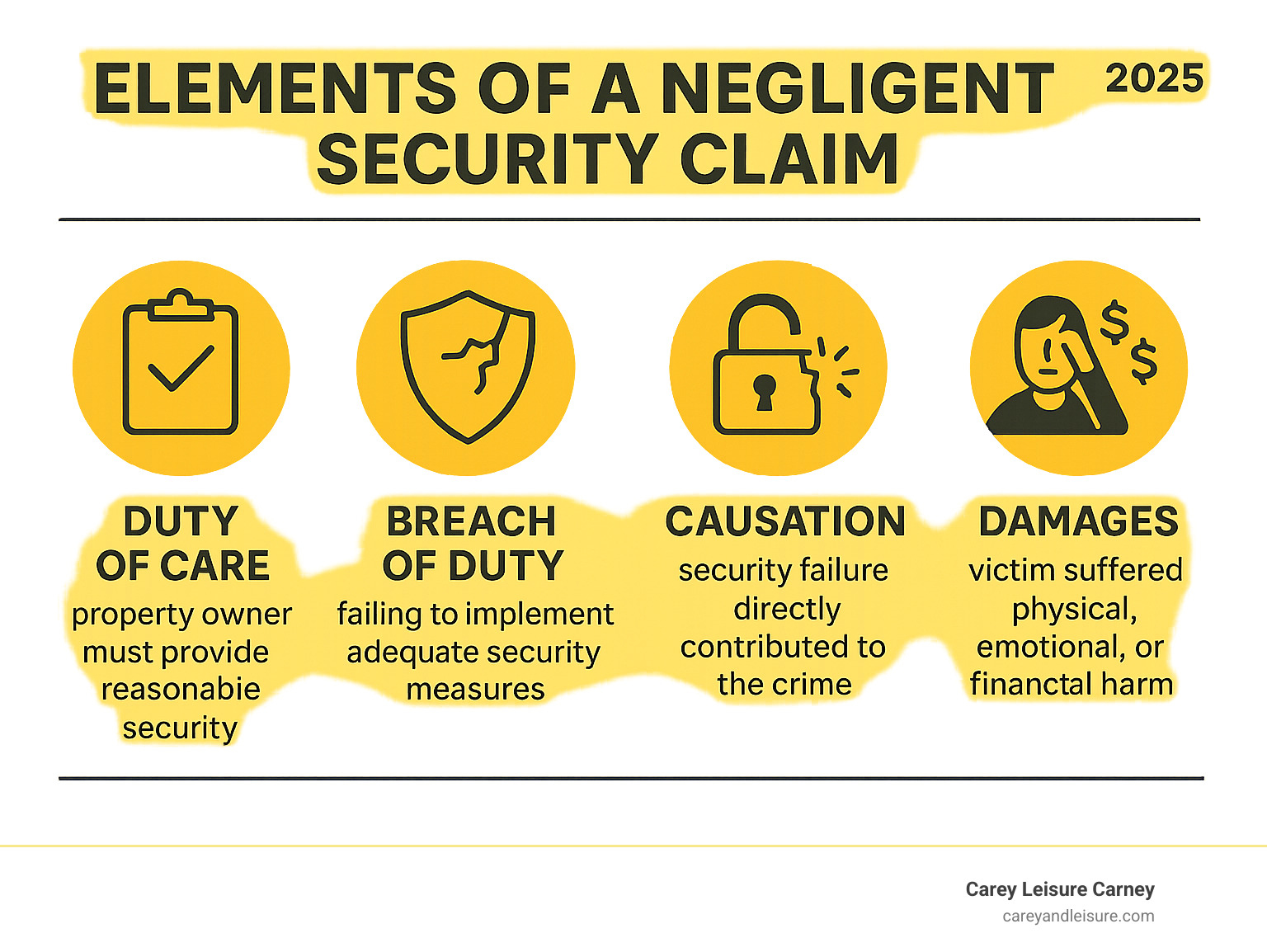
Every negligent security lawyer must prove four essential elements to win your case. Think of them as the four legs of a table—remove any one, and the whole case falls apart.
Legal duty of care establishes that the property owner owed you protection. You must have been lawfully on the property as a customer, tenant, or invited guest. The owner had a responsibility to keep you reasonably safe while you were there.
Breach of that legal duty shows the owner failed to meet their responsibility. Maybe they knew their hotel parking lot was dangerous but didn’t hire security. Perhaps broken security cameras went unrepaired for months. This element proves their actions fell below what any reasonable property owner would do.
Causation linking the breach to the injury is often the trickiest part. We must show that the security failure directly led to your harm. It’s not enough that both happened—the lack of proper security must be the reason the crime occurred or was successful.
Demonstrable damages prove you actually suffered harm. This includes physical injuries, medical bills, lost wages, emotional trauma, and pain and suffering. Without real damages, there’s no case to pursue.
Each element builds on the others to create a complete picture of the property owner’s responsibility for your injuries.
The Role of a Negligent Security Lawyer in Proving Your Case
When you’ve been hurt by a crime that should never have happened, the legal system can feel like a maze you’re not equipped to steer. That’s exactly why we’re here. As your negligent security lawyer, we become your voice, your shield, and your advocate in what can be one of the most challenging times of your life.

Our job starts with a thorough investigation. We don’t just take statements and file paperwork. We roll up our sleeves and dig deep into what really happened. This means visiting the scene, talking to witnesses, and piecing together the story that led to your injury.
We work closely with security experts who often come from law enforcement backgrounds. These professionals know what proper security looks like, and they can spot failures that might not be obvious to the average person. They’ll examine the property, review the crime patterns in the area, and provide expert opinions about whether the security measures were reasonable for the risks involved.
Insurance companies are another major part of the equation, and frankly, they’re not on your side. Their job is to pay out as little as possible, and they have teams of lawyers and adjusters whose whole purpose is to minimize your claim. We know their tactics because we’ve been fighting them for years. When negotiations don’t lead to a fair settlement, we’re fully prepared to take your case to court and fight for what you deserve.
Our experience as a premises liability attorney gives us the specialized knowledge these complex cases require. We understand the nuances of proving foreseeability, establishing duty of care, and connecting security failures to the harm you suffered.
What Evidence Is Needed to Prove a Claim?
Building a strong negligent security case is like putting together a puzzle where every piece matters. The evidence we gather tells the complete story of what went wrong and why it could have been prevented.
Police reports form the foundation of our case. These official documents capture the immediate details of what happened, including witness statements, the officer’s observations, and any evidence collected at the scene. They provide an objective record that insurance companies and courts take seriously.
We also track down witness statements from anyone who saw the incident or can speak to the security conditions at the property. Sometimes the most powerful testimony comes from people who experienced near-misses or noticed security problems before your incident occurred.
Surveillance video can be incredibly powerful evidence when it exists and is working properly. But broken or poorly positioned cameras can be just as telling, showing the property owner’s failure to maintain adequate security systems. We move quickly to preserve this footage before it’s deleted or recorded over.
Property maintenance logs often reveal a pattern of neglect. When we find records showing that broken lights were reported months ago but never fixed, or security patrols were scheduled but never performed, it paints a clear picture of negligence.
We also examine employee records to understand whether staff were properly trained to handle security issues, or if there were known problems with employees that weren’t addressed. Expert testimony from security professionals helps explain to juries what reasonable security should have looked like.
Perhaps most importantly, prior incident reports establish the foreseeability that’s so crucial to these cases. When we can show a pattern of similar crimes or security complaints that the property owner ignored, it becomes much harder for them to claim they couldn’t have predicted what happened to you.
Finally, building code violations related to safety and security standards can provide additional evidence that the property owner wasn’t meeting even basic legal requirements for keeping people safe.
Common Examples of Negligent Security
Security failures come in many forms, but they usually boil down to property owners either cutting corners to save money or simply ignoring problems they know exist. The most common issue we see is inadequate or broken lighting. Dark parking lots, dim stairwells, and poorly lit common areas create perfect hiding spots for criminals.
Malfunctioning security cameras are another frequent problem. Some properties have cameras that look impressive but don’t actually work, aren’t monitored, or are positioned so poorly they might as well not exist. It’s like having a security system that’s all for show.
Physical security failures are equally dangerous. Broken locks, gates, or fences essentially roll out the welcome mat for anyone who wants unauthorized access to the property. We’ve seen cases where apartment complex gates have been broken for months, allowing strangers to wander freely through what should be secure areas.
When properties do have security guards, problems arise when there are too few guards for the size of the property or guards who haven’t been properly trained to handle dangerous situations. Sometimes untrained security personnel actually make situations worse by escalating conflicts they’re not equipped to handle.
Some property owners take a completely hands-off approach, failing to monitor their premises or conduct regular patrols of high-risk areas. But perhaps the most frustrating cases involve property owners who ignore past incidents entirely. When someone has already been assaulted in a parking lot, and the property owner does nothing to prevent it from happening again, that’s negligence in its purest form.
Common Scenarios, Injuries, and Potential Compensation
When you think about going to the grocery store, visiting a friend’s apartment, or staying at a hotel, the last thing on your mind should be whether you’ll be safe from crime. Unfortunately, when property owners cut corners on security, these everyday places can become dangerous. The heartbreaking reality is that many violent crimes could have been prevented if property owners had simply done their job.
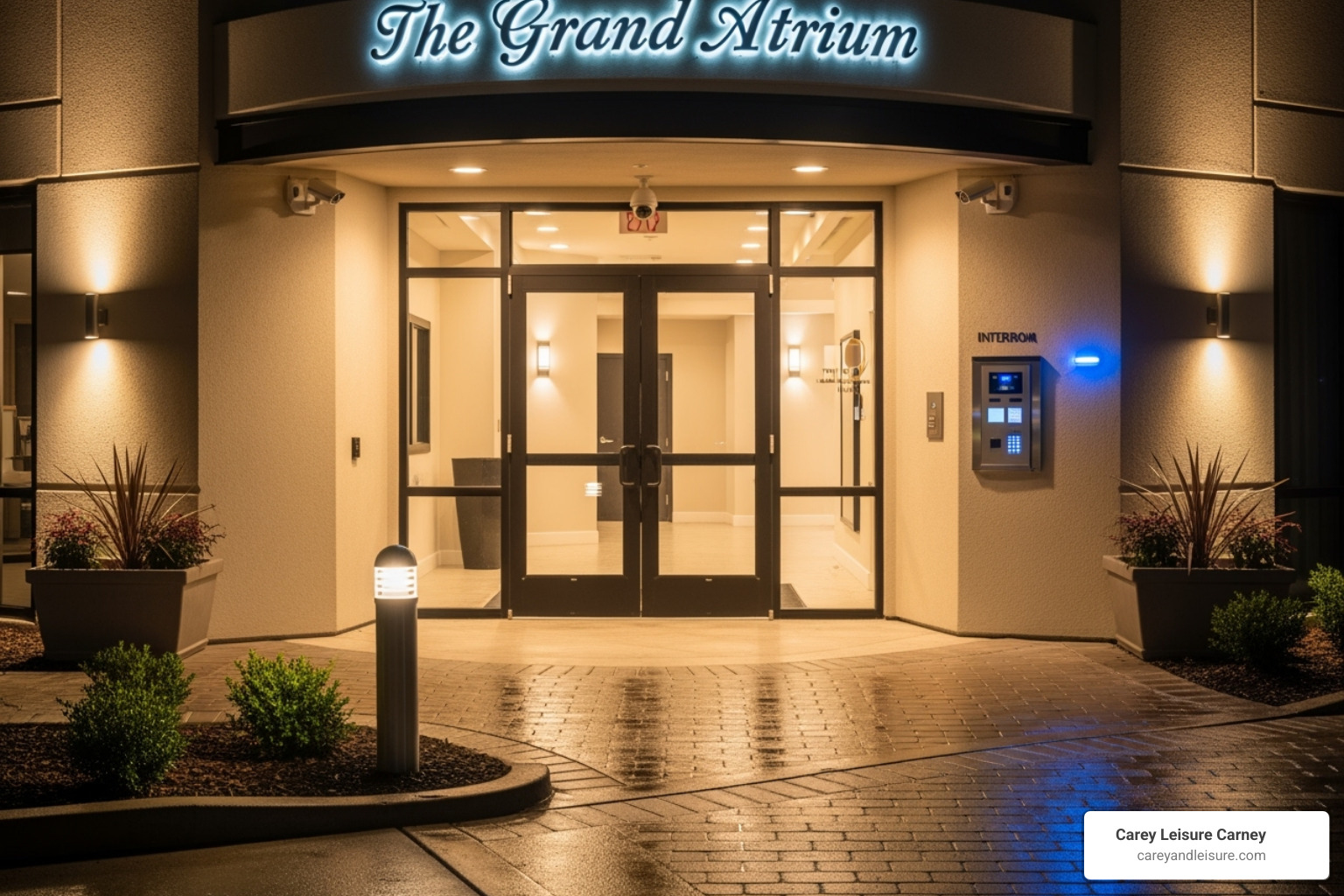
As your negligent security lawyer, we’ve seen how security failures directly lead to real-world harm. Our mission is straightforward: hold negligent property owners accountable and secure the financial recovery you deserve to rebuild your life after a preventable tragedy.
Where Do Negligent Security Incidents Occur?
You might be surprised by how many different places negligent security incidents happen. The truth is, anywhere people gather or visit regularly can become a crime scene when security fails. According to the Bureau of Justice Statistics, certain locations see these incidents more frequently than others.
Apartment complexes top the list because residents and their guests spend so much time there. When there’s a history of break-ins or assaults, property managers have a clear duty to beef up security. Yet we’ve handled cases where owners ignored repeated complaints about broken gates, burned-out lights, or suspicious activity.
Hotels and motels present unique challenges because guests are unfamiliar with the area and often carrying valuables. A poorly lit parking lot or unsecured stairwell can spell disaster for travelers who expect basic safety measures.
Parking garages and lots are particularly vulnerable. These spaces are often dimly lit, poorly monitored, and provide numerous hiding spots for criminals. We’ve represented clients attacked while simply trying to get to their cars after work or a night out.
Gas stations handle cash and stay open late, making them natural targets. When owners skimp on lighting, cameras, or overnight security, they’re essentially rolling out the welcome mat for criminals.
Bars and nightclubs mix large crowds with alcohol, creating a volatile situation that demands experienced security staff. Too often, we see establishments that hire untrained bouncers or don’t have enough security for the size of their crowds.
Shopping malls and retail stores attract both shoppers and criminals. The parking areas, in particular, need adequate lighting and surveillance to protect customers loading purchases into their cars.
Even ATMs and hospitals aren’t immune. These locations require proper lighting and surveillance, yet we’ve handled cases where basic security measures were ignored.
Our team regularly helps victims throughout Florida, including our neighbors seeking a negligent security lawyer in St. Petersburg, FL, where these incidents unfortunately occur with troubling frequency.
What Types of Injuries Can Result?
The injuries from negligent security incidents go far beyond what you might expect. When someone becomes a victim of a preventable crime, the damage affects every aspect of their life.
Physical injuries can range from cuts and bruises to life-threatening trauma. The Centers for Disease Control and Prevention reports that assault injuries commonly include bone fractures, lacerations, and internal injuries. In more severe cases, victims suffer gunshot wounds, stabbings, traumatic brain injuries, or paralysis that changes their lives forever.
But here’s what many people don’t realize: the emotional and psychological trauma often proves more devastating than the physical wounds. Victims frequently develop anxiety so severe they can’t return to the location where the attack occurred. Depression becomes a constant companion, and post-traumatic stress disorder (PTSD) can make simple daily activities feel impossible.
We’ve represented clients who can no longer work in their chosen careers, maintain relationships, or enjoy activities they once loved. The psychological scars don’t fade as quickly as physical bruises, and they deserve just as much attention in any legal claim.
Tragically, some negligent security cases result in wrongful death, leaving families to grapple with both overwhelming grief and financial hardship. These cases require special sensitivity and expertise that our team provides with compassion and determination.
What Compensation Can Victims Expect?
Every victim deserves fair compensation for what they’ve endured, but the amount varies significantly based on the specific circumstances of each case. The legal system recognizes two main types of “damages” – a fancy term for the money you can recover.
Economic damages cover your actual financial losses. This includes all medical expenses from the emergency room visit through ongoing therapy and future medical care. If your injuries prevent you from working, you can recover lost wages and compensation for diminished future earning capacity. We also pursue recovery for any property damage, like a stolen purse or damaged clothing.
Non-economic damages address the intangible losses that money can’t truly replace but that the law recognizes deserve compensation. Pain and suffering covers the physical discomfort and limitations your injuries cause. Emotional distress compensation acknowledges the anxiety, fear, and psychological impact of the trauma.
Perhaps most importantly, loss of enjoyment of life damages recognize that your injuries may prevent you from participating in hobbies, sports, or activities that once brought you joy. If you can no longer play with your grandchildren or pursue your favorite hobby because of your injuries, that loss has real value.
The value of negligent security cases ranges from tens of thousands to multi-million dollar settlements. The key factors include the severity of your injuries, how they impact your daily life and future, and just how badly the property owner failed in their duty to protect you. Our Board-Certified attorneys have the experience to maximize your recovery and ensure you receive every dollar you deserve.
Frequently Asked Questions about Negligent Security Claims
When you’re dealing with the aftermath of a crime that could have been prevented, it’s natural to have questions about your legal options. We hear these concerns every day in our practice, and we want you to feel informed and confident about moving forward.
How long do I have to file a negligent security claim in Florida?
Time is absolutely critical when it comes to filing your claim. Florida’s statute of limitations creates a strict deadline that can make or break your case, and the rules recently changed in a way that affects many victims.
If your incident happened on or after March 24th, 2023, you have two years from the date of the crime to file your lawsuit. For incidents that occurred before March 24th, 2023, you have four years to take legal action. This change under Florida’s statute of limitations means the clock is ticking faster for more recent cases.
But here’s the thing – waiting until the last minute isn’t just risky, it’s often devastating to your case. Surveillance footage gets deleted or recorded over. Witnesses forget crucial details or move away. Physical evidence at the scene changes or disappears. The sooner you contact a negligent security lawyer, the better we can preserve the evidence that will make or break your claim.
We’ve seen too many strong cases weakened simply because victims waited too long to seek help. Don’t let that happen to you.
What if I am partially at fault for my injuries?
This is one of the most common worries we hear, and it’s understandable. Maybe you were walking alone at night, or perhaps you didn’t take a route that seemed safer. The good news is that being partially at fault doesn’t automatically destroy your case in Florida.
Florida follows what’s called “modified comparative fault,” and understanding how this works under Florida’s comparative fault statute is crucial. If you’re found to be 50% or less responsible for what happened, you can still recover compensation – it’s just reduced by your percentage of fault. So if a jury awards you $100,000 but finds you were 30% at fault, you’d receive $70,000.
However, there’s a significant catch. If you’re found to be 51% or more at fault, Florida’s law bars you from recovering anything at all. This is why insurance companies and property owners will often try desperately to shift blame onto you.
We’ve handled cases where insurance companies argued that victims were at fault for everything from “walking in a dangerous area” to “not being aware of their surroundings.” These tactics are predictable, and we know how to counter them effectively. Your actions don’t excuse a property owner’s failure to provide reasonable security.
Why do I need an experienced negligent security lawyer for my case?
You might be thinking, “The property owner clearly failed to protect me – isn’t this straightforward?” We understand why it might seem that way, but negligent security cases are among the most complex in personal injury law.
Proving foreseeability alone is a monumental task. We need to dig through crime statistics, police reports, and incident records to show the property owner knew or should have known about the danger. This isn’t something you can do effectively on your own – it requires legal expertise and investigative resources.
Insurance companies bring their A-game to these cases. They know negligent security claims can result in substantial payouts, so they fight them aggressively. They’ll hire their own experts, challenge every aspect of your claim, and use sophisticated tactics to minimize what they pay. Without experienced legal representation, you’re bringing a knife to a gunfight.
The investigation process requires specialized knowledge. We work with security experts who can evaluate whether the property’s security measures met industry standards. These professionals often have law enforcement backgrounds and can provide compelling testimony about what reasonable security should have looked like.
Maximizing your compensation requires understanding all your damages. Beyond medical bills and lost wages, you may be entitled to compensation for pain and suffering, emotional distress, and loss of enjoyment of life. An experienced negligent security lawyer knows how to properly value and present these damages.
The legal system is complex, and one mistake in filing paperwork or meeting deadlines can derail your entire case. We handle every aspect of the legal process so you can focus on healing and moving forward with your life.
Take the First Step: Contact a Board-Certified Attorney

If you’ve been harmed because a property owner failed to keep you safe, you’re facing one of the most challenging types of personal injury cases. Negligent security claims require proving not just that you were hurt, but that the property owner should have seen it coming and done something to prevent it. That’s no small task.
These cases demand thorough investigation, expert testimony, and the legal skill to connect complex dots between crime statistics, security failures, and your injuries. Insurance companies know how difficult these cases can be to prove, and they’ll use every tool at their disposal to avoid paying what you deserve.
At Carey Leisure Carney, we’ve built our reputation on taking on these complex challenges. We understand the devastating impact that preventable crimes can have on victims and their families. When you’re dealing with physical injuries, emotional trauma, and mounting bills, the last thing you should worry about is whether your lawyer has the experience to handle your case.
Our Board-Certified attorneys represent the top 2% of lawyers in Florida—a distinction that speaks to our commitment to excellence and deep expertise in personal injury law. With over 100 years of combined experience, we’ve seen every type of negligent security case imaginable, from parking lot assaults to hotel room attacks.
What sets us apart is our commitment to direct attorney access and personalized service. You won’t be shuffled off to paralegals or case managers. When you call, you’ll speak with the attorneys handling your case. We know the local landscape throughout the Tampa Bay area, from Clearwater to St. Petersburg, New Port Richey to Wesley Chapel, and we’re deeply committed to protecting our neighbors.
We know that taking legal action can feel overwhelming, especially when you’re still recovering from a traumatic incident. That’s why we offer a free, no-obligation consultation to discuss your situation. We’ll listen to your story, explain your legal options, and help you understand exactly how a negligent security lawyer can fight for the compensation you deserve.
You don’t have to face this alone. Let us put our experience and dedication to work for you. Contact a Negligent Security Attorney at Carey Leisure Carney today and take the first step toward getting the justice you deserve.