
Wrongful Cremation Lawsuit: 2026 Guide to Justice
When Trust is Broken: Understanding Your Rights After Wrongful Cremation
A wrongful cremation lawsuit provides families with legal recourse when a funeral home or crematory fails to honor final wishes, cremates the wrong body, or mishandles remains. If you’ve experienced this devastating breach of trust, you need to understand your options for seeking justice and compensation.
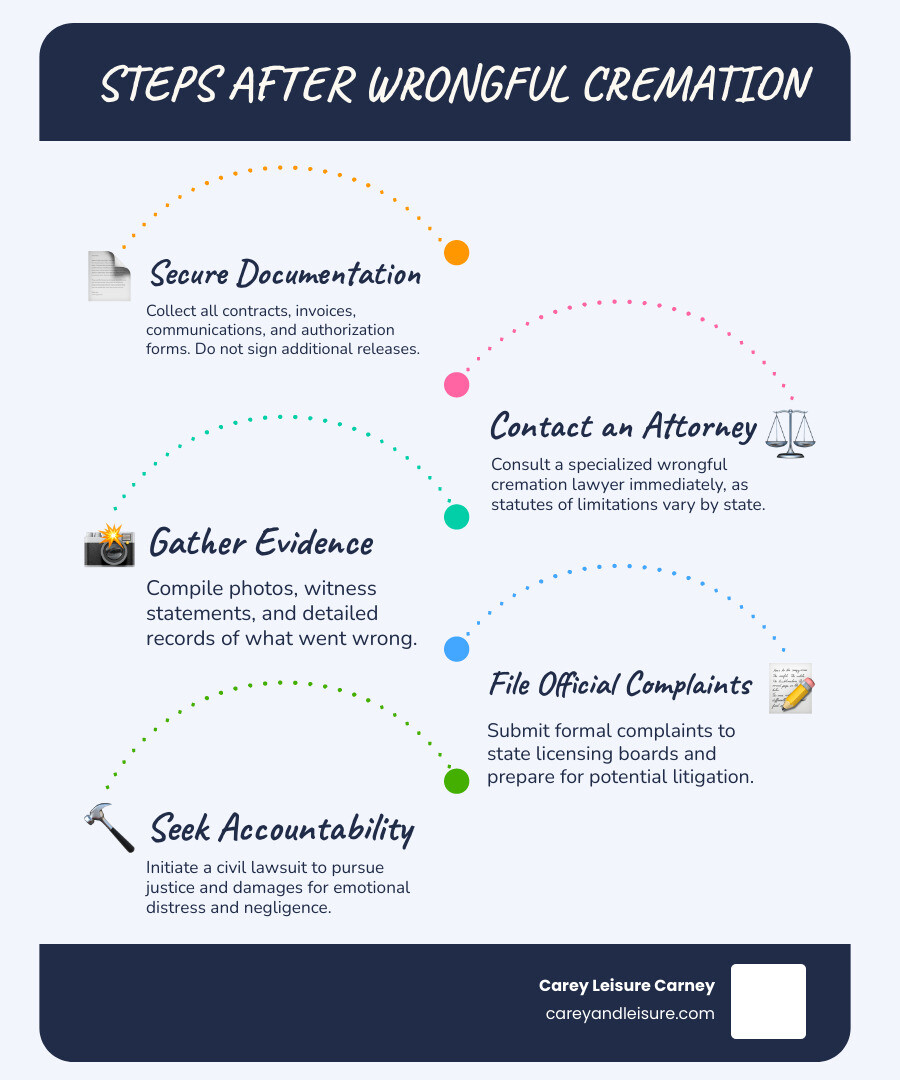
What You Can Do If Your Loved One Was Wrongfully Cremated:
- Document everything – Keep all contracts, invoices, communications, and authorization forms
- Contact an attorney immediately – Statute of limitations varies by state
- Gather evidence – Photos, witness statements, and records of what went wrong
- File a civil lawsuit – Seek damages for emotional distress, breach of contract, and negligence
- Hold facilities accountable – Punitive damages may apply in cases of gross negligence
Wrongful cremation occurs when funeral homes or crematories fail to exercise proper care during the cremation process. Common scenarios include cremating someone against their religious beliefs, cremating without proper authorization, misidentifying bodies, co-mingling ashes, or losing remains entirely. The emotional impact on families is devastating – many describe it as losing their loved one twice.
Recent cases highlight the severity of this issue. A Missouri man was awarded $5 million after his mother was cremated against her wishes without notifying him. In Indiana, 28 lawsuits have been filed alleging negligence and mishandling of remains, with dozens more expected. Parents in one case sued for $10 million after receiving the wrong ashes and finding their infant’s body had been improperly stored for four months.
When you entrust a funeral home with your loved one’s remains, you’re placing faith in their professional duty of care. When that trust is violated – whether through negligence, recklessness, or intentional misconduct – the law provides pathways to hold them accountable.
As Thomas W. Carey, I’ve spent over three decades helping families steer complex personal injury and wrongful death claims, including cases involving funeral home and cremation malpractice. My experience with wrongful cremation lawsuit cases has shown me that compassionate, experienced legal representation is essential to achieving justice and fair compensation for grieving families.
Wrongful cremation lawsuit basics:
Understanding Wrongful Cremation: Causes and Legal Duties
When we lose a loved one, we trust funeral homes and crematories to handle their remains with dignity. This trust forms the basis of a legal duty of care. Funeral homes in Florida, including in communities like Clearwater, Largo, and Spring Hill, are bound by a professional standard of care. They must act with the skill and caution that a reasonably prudent funeral professional would exercise in similar circumstances.
A breach of this duty can lead to the mishandling of remains, which often forms the foundation of a wrongful cremation lawsuit. This can stem from negligence—failing to take reasonable steps to prevent errors—or a breach of contract if services don’t align with the family’s agreement. These failures inflict profound emotional and psychological pain on grieving families.

What Constitutes Wrongful Cremation?
Wrongful cremation includes severe errors and misconduct. While not always malicious, the cause is often incompetence or neglect, with a devastating impact on families. Common scenarios include:
- Cremating the wrong body: One of the most horrifying errors is when a funeral home misidentifies a body, cremating someone intended for burial or vice-versa. In a Wilmington, Delaware case, a funeral home allegedly cremated a person and presented the family with another man’s body. The family finded the error during the viewing and later found a picture of their loved one online, confirming he had been cremated.
- Cremating against religious beliefs or wishes: Some religions forbid cremation. If a funeral home cremates someone despite clear instructions, known religious objections, or an explicit wish for burial, it is a profound violation of trust that can lead to a wrongful cremation lawsuit.
- Cremating without proper authorization: Strict protocols govern who can authorize a cremation. Proceeding without consent from the legal next-of-kin or power of attorney is an unauthorized cremation. This was key in a Missouri case where a man was awarded $5 million after his mother was cremated against her wishes and without notifying him, who held her power of attorney.
- Co-mingling ashes: This happens when remains of multiple individuals are cremated together or mixed afterward. Families expect to receive only their loved one’s remains. Receiving mixed ashes is deeply upsetting. In Indiana, lawsuits alleged families received ashes of different colors, suggesting they were from multiple individuals.
- Losing remains: The complete loss of a body or cremated remains is an unimaginable tragedy, often resulting from poor record-keeping, theft, or gross negligence.
- Misidentification of remains: This can happen at any stage, from intake to labeling urns. Receiving the wrong ashes denies families proper closure. In one case, parents sued for $10 million after receiving the wrong ashes for their infant and finding the child’s body was stored for four months after death.
These common causes highlight the need for vigilance and strict protocols in the cremation industry. When these are ignored, families in Florida, from St. Petersburg to Wesley Chapel, have every right to seek justice.
Documentation and Authorization Failures
The cremation process is governed by stringent regulations to prevent errors and honor the family’s rights. These center on specific documentation and authorization requirements. In Florida, several critical documents must be in place before a cremation can occur:
- Cremation Authorization Forms: These legally binding forms provide consent for cremation and must be signed by the legally authorized individual, such as the next-of-kin. If these forms are forged, improperly obtained, or ignored, the cremation is wrongful.
- Death Certificates: A certified death certificate is required before any final disposition. It confirms the death, its cause, and the deceased’s identity.
- Coroner’s or Medical Examiner’s Permission: In cases like unattended or suspicious deaths, or when medical devices must be removed, the coroner or medical examiner must grant permission to cremate. This step is crucial for public health and legal investigations.
- Next-of-Kin Rights: Florida law defines the hierarchy of who has the legal right to control the disposition of remains (e.g., spouse, adult children, parents). Funeral homes must identify and get authorization from the correct individual. Failure to do so, as seen in the Missouri case where a man with power of attorney was not notified, is a serious breach.
When these protocols are not followed, it violates state laws and inflicts unimaginable emotional distress. These failures are often key indicators of Funeral Home Negligence Signs and can form the basis of a strong wrongful cremation lawsuit. We understand these laws and can protect your rights. For more on Florida laws, see our resources on Florida Deceased Preservation and Storage Laws.
Navigating a Wrongful Cremation Lawsuit: Your Legal Options
When a funeral home or crematory commits an act of wrongful cremation, grieving families have clear legal avenues to pursue justice. Filing a civil lawsuit is the primary way to seek legal recourse and hold the negligent facility accountable. Our firm, serving clients from Clearwater to Wesley Chapel, can guide you through this complex process, ensuring that your rights are protected and your voice is heard.
A wrongful cremation lawsuit typically involves proving negligence. This means demonstrating that the funeral home or crematory owed a duty of care to your loved one and your family, that they breached that duty through their actions or inactions, and that this breach directly caused the wrongful cremation and the resulting harm to you. This is where meticulous evidence gathering and experienced legal representation become invaluable.

How to Gather Evidence for a Wrongful Cremation Lawsuit
Building a strong wrongful cremation lawsuit requires diligent collection of evidence. The more information you can provide, the better equipped your legal team will be to advocate on your behalf. We strongly advise families to gather the following:
- Documentation: This includes all contracts signed with the funeral home or crematory, invoices for services, and any pamphlets or advertising materials they provided. These documents will outline the agreed-upon services and the standard of care promised.
- Communication Records: Keep copies of all emails, text messages, and detailed notes of phone calls or in-person conversations with funeral home staff. These records can reveal discrepancies, miscommunications, or direct evidence of negligence.
- Authorization Forms: Crucially, collect all cremation authorization forms and any other consent documents. We will review these to ensure they were properly completed and signed by the legally authorized individual.
- Photographs: If there were any visual discrepancies, such as the wrong body being presented, or signs of mishandling, photographs can be powerful evidence. Even photos of the facility or urns can be relevant.
- Witness Statements: Anyone who observed questionable behavior, misidentification, or received conflicting information from the funeral home staff can provide a witness statement. This could include family members, friends, or even other funeral attendees.
- Autopsy Reports: If an autopsy was performed, the report might contain critical information regarding the identity of the deceased or any physical evidence related to mishandling.
Gathering this evidence can be overwhelming during a time of grief. Our firm can assist you in this process, ensuring that all necessary information is collected and preserved. For more insights into what constitutes negligence and how to prove it, visit our page on Proving Funeral Home Negligence.
The Role of Legal Representation
Navigating a wrongful cremation lawsuit is a complex undertaking, especially while dealing with profound grief. This is precisely why experienced legal representation is not just helpful but essential. At Carey Leisure Carney, we bring over 100 years of combined experience to the table, with Board-Certified attorneys who are among the top 2% in Florida. We offer direct attorney access and personalized service, ensuring you’re never alone in this fight.
Our role involves:
- Navigating Complex Laws: Cremation and funeral home regulations are intricate and vary by state. We understand Florida’s specific statutes and how they apply to your case, ensuring all legal requirements are met.
- Establishing Liability: We carefully review all evidence to identify who is responsible for the wrongful cremation—whether it’s the funeral home, the crematory, or other involved parties. This often involves demonstrating a breach of their duty of care.
- Calculating Damages: The harm caused by wrongful cremation extends far beyond financial costs. We work to quantify not only economic losses but also the immense emotional distress, pain, and suffering you and your family have endured.
- Fighting for Fair Compensation: We aggressively negotiate with insurance companies and, if necessary, litigate in court to secure the maximum compensation you deserve. Our goal is to alleviate your financial burden and provide a measure of justice for your emotional suffering.
- Importance of Experience: Cases involving the mishandling of human remains are emotionally charged and legally challenging. Our seasoned attorneys have the expertise to handle these delicate situations with sensitivity and strength, allowing you to focus on healing.
Seeking justice in such a personal and painful matter requires a legal team that is not only competent but also compassionate. We are here to help you Sue for Funeral Home Negligence and hold the responsible parties accountable. Whether you’re in Largo, New Port Richey, or St. Petersburg, we’re ready to provide the dedicated support you need.
Damages and Accountability in Cremation Negligence Cases
When a funeral home or crematory’s negligence leads to wrongful cremation, the legal system provides a pathway for families to seek justice and accountability. While no amount of money can truly compensate for the emotional pain and violation of trust, financial compensation can help families cope with the aftermath and ensure such egregious errors are not repeated.
The cases we see, even from outside Florida, demonstrate the severe consequences of such negligence. A Missouri man, for example, was awarded a staggering $5 million after alleging his mother was wrongly cremated against her wishes without proper notification. Similarly, in Indiana, over two dozen lawsuits have been filed, with many more expected, alleging widespread mishandling of remains. These examples underscore the gravity of these incidents and the significant awards juries and courts can grant.
What Damages Can Be Claimed in a Wrongful Cremation Lawsuit?
In a wrongful cremation lawsuit filed in Florida, families can pursue various types of damages to compensate for the profound losses they’ve endured. These can be categorized as economic, non-economic, and punitive damages:
- Economic Damages: These cover quantifiable financial losses directly resulting from the wrongful cremation. Examples include:
- Funeral Expenses: Reimbursement for any costs incurred for funeral, burial, or re-cremation services that were mishandled or had to be redone.
- Costs associated with identifying, retrieving, or re-interring remains.
- Lost wages if family members had to take time off work to deal with the crisis.
- Non-Economic Damages: These are often the most significant in wrongful cremation cases, as they address the intangible, yet very real, suffering experienced by the family. In Florida, these can include:
- Mental Pain and Suffering: The severe emotional distress, trauma, anxiety, and grief caused by the desecration of a loved one’s remains. This can be particularly acute when families receive the wrong ashes or learn their loved one’s body was mishandled.
- Loss of Companionship and Protection: While typically associated with wrongful death, the profound loss of the proper finality and respect for a loved one’s remains can also contribute to this category, especially for surviving spouses or children.
- Loss of Dignity and Respect: The violation of the deceased’s and the family’s right to have remains handled with reverence.
- Punitive Damages: These are not meant to compensate the family but rather to punish the funeral home or crematory for particularly egregious, reckless, or malicious conduct, and to deter similar behavior in the future. If a facility acted with intentional misconduct, gross negligence, or a wanton disregard for the family’s rights, punitive damages may be awarded.
Our firm is experienced in assessing the full scope of damages in these sensitive cases. We work diligently to ensure that all your losses, both financial and emotional, are properly accounted for and pursued. For a deeper understanding of what you can claim, please review our guide on Funeral Home Negligence Lawsuit Damage Claims.
Notable Cases and Their Outcomes
While we cannot discuss specific cases within Florida that our firm has handled due to client confidentiality, examples from other states vividly illustrate the types of misconduct and the substantial legal consequences funeral homes and crematories can face. These cases serve as a stark reminder of the importance of vigilance and the availability of legal recourse.
- Wilmington Funeral Home Body Swap: A Delaware funeral home was accused in a lawsuit of accidentally cremating a man and then presenting his family with the body of another man for burial. The family finded the error during the viewing, noting the body was not their loved one. The lawsuit alleged an intentional cover-up, claiming the funeral home deliberately misled the family. While the funeral home acknowledged the cremation, it denied an intentional cover-up. This case, extensively reported by Delaware Online | The News Journal, highlights the profound distress caused by misidentification and alleged deception.
- Parents Sue for $10 Million Over Wrong Ashes: In another heartbreaking case, parents of a two-month-old child sued a crematory for $10 million after receiving the wrong ashes. They later finded their child’s body had been improperly stored for four months after death, a findy that reopened the wounds of their initial loss. This incident underscores the severe emotional impact and the significant damages sought in such cases.
- Indiana Crematory Mishandling Dozens of Remains: The closure of a crematory in Chicago Heights, Illinois, led to a cascade of wrongful cremation lawsuit filings in Indiana and Illinois. Allegations included leaving bodies improperly stored in trailers, not cremating them for extended periods (sometimes months), co-mingling ashes, and returning the wrong remains to families. Lawyers involved planned to file dozens more lawsuits, seeking compensatory damages for the emotional trauma and grief suffered by affected families. These cases highlight systemic failures and the need for stricter industry regulations.
These examples, though from outside our immediate service area, reflect the types of devastating incidents that can occur when funeral homes and crematories fail in their duty of care. They illustrate why grieving families in Florida, from Trinity to New Port Richey, deserve experienced legal counsel to steer these challenging situations and seek the justice they are entitled to. We are committed to Seeking Justice for Funeral, Cemetery & Cremation Malpractice for our clients.
Frequently Asked Questions about Wrongful Cremation Claims
Understanding your rights and the legal process can be daunting, especially during a time of loss. Here, we address some common questions we receive regarding wrongful cremation lawsuit claims.
How long do I have to file a wrongful cremation lawsuit?
The timeframe for filing a wrongful cremation lawsuit is governed by what is known as the “statute of limitations.” This is a strict legal deadline that varies significantly by state and even by the specific type of claim being made (e.g., negligence, breach of contract, intentional infliction of emotional distress).
In Florida, the statute of limitations for personal injury claims, which often encompass the emotional distress caused by wrongful cremation, is typically two years from the date the negligence was finded or should have been finded. However, other claims, such as breach of contract, might have different deadlines. It is critical to understand that if you miss this deadline, you may lose your right to pursue compensation, regardless of the merits of your case.
This is why we cannot stress enough the importance of acting quickly. As soon as you suspect a wrongful cremation or mishandling of remains, you should consult with an attorney. We can help you determine the applicable statute of limitations for your specific situation and ensure that all necessary legal actions are taken within the required timeframe.
Can I sue if the funeral home gave me the wrong ashes?
Yes, absolutely. Receiving the wrong ashes is a deeply traumatic experience and a clear instance of mishandling of remains, which can form the basis of a wrongful cremation lawsuit. This can happen due to misidentification of the deceased before cremation or co-mingling of ashes during or after the process.
When a funeral home or crematory provides you with incorrect ashes, they have likely breached their duty of care and possibly their contract with you. This negligence directly causes severe emotional distress, grief, and a profound sense of violation for the family. You can seek compensation for these non-economic damages, as well as any economic damages incurred (e.g., if you had to pay for DNA testing or additional services).
Our firm is experienced in handling these sensitive cases and understands the unique emotional impact of such an error. We will work diligently to hold the responsible parties accountable and help you secure the justice and compensation you deserve.
What is the difference between wrongful cremation and wrongful death?
While both terms involve the loss of a loved one and can lead to legal action, “wrongful cremation” and “wrongful death” refer to distinct legal claims:
- Wrongful Death: A wrongful death claim arises when a person’s death is caused by the negligence, wrongful act, or breach of contract of another party. This means the actions (or inactions) of the defendant directly led to the individual’s demise. Common examples include fatal car accidents due to a drunk driver, medical malpractice leading to a patient’s death, or dangerous conditions on a property causing a fatal fall. In Florida, the personal representative of the deceased’s estate typically files a Wrongful Death Lawyer Largo, FL lawsuit on behalf of surviving family members.
- Wrongful Cremation / Mishandling of Remains: This type of claim focuses on the improper treatment or disposition of a deceased person’s body after their death. The wrongful act here is not causing the death itself, but rather the negligent or intentional mishandling of the remains. This includes scenarios like cremating the wrong body, cremating without authorization, co-mingling ashes, losing remains, or otherwise failing to treat the deceased with dignity and respect as per agreed-upon terms or legal requirements. The harm in these cases is primarily the emotional distress and violation experienced by the surviving family members due to the desecration of their loved one’s remains.
While a wrongful cremation lawsuit is a specific type of claim related to the mishandling of remains, it can sometimes occur in conjunction with a wrongful death claim if the circumstances surrounding the death and the subsequent handling of the body both involve negligence. However, they are distinct legal actions with different elements of proof and potential damages. We have dedicated teams specializing in both Lawyers for Wrongful Death and funeral home negligence claims to address your specific needs.
Conclusion: Seeking Justice After a Wrongful Cremation
The experience of a wrongful cremation is an unimaginable burden on grieving families. When the trust placed in funeral homes and crematories is violated through negligence, misidentification, unauthorized actions, or other forms of mishandling, the emotional and psychological toll can be profound. We firmly believe that families in Florida, from Clearwater to Wesley Chapel, have fundamental rights to expect their loved ones’ remains to be treated with the utmost dignity and respect.
If you and your family have been impacted by such a devastating event, you are not alone, and you have legal options. Holding negligent parties accountable is not just about financial compensation; it’s about seeking closure, upholding the dignity of your loved one, and preventing similar tragedies from befalling other families.
The path to justice and healing after a wrongful cremation begins with understanding your rights and taking decisive action. With experienced legal guidance, you can steer the complexities of a wrongful cremation lawsuit, gather the necessary evidence, and fight for the compensation you deserve.
At Carey Leisure Carney, our Board-Certified attorneys bring over 100 years of combined experience to these sensitive cases. We offer personalized service and direct attorney access, ensuring you receive compassionate yet aggressive representation. We are dedicated to helping families like yours find closure and achieve accountability.
Don’t let the statute of limitations or the emotional weight of the situation prevent you from seeking the justice your family deserves.
Contact a Funeral Home Malpractice Attorney at Carey Leisure Carney today for a confidential consultation. Let us help you take the first step towards healing and justice.