
Funeral Home Negligence Attorney: Seek Justice 2026
When Loss Is Compounded by Betrayal
A funeral home negligence attorney represents families whose grief has been compounded by the misconduct or carelessness of the professionals they trusted most during their darkest hour. If you’ve experienced mishandling of remains, lost ashes, the wrong body presented at a service, theft of personal items, or other serious failures by a funeral home, an attorney specializing in these cases can help you pursue justice and financial compensation for your emotional and financial losses.
When to contact a funeral home negligence attorney:
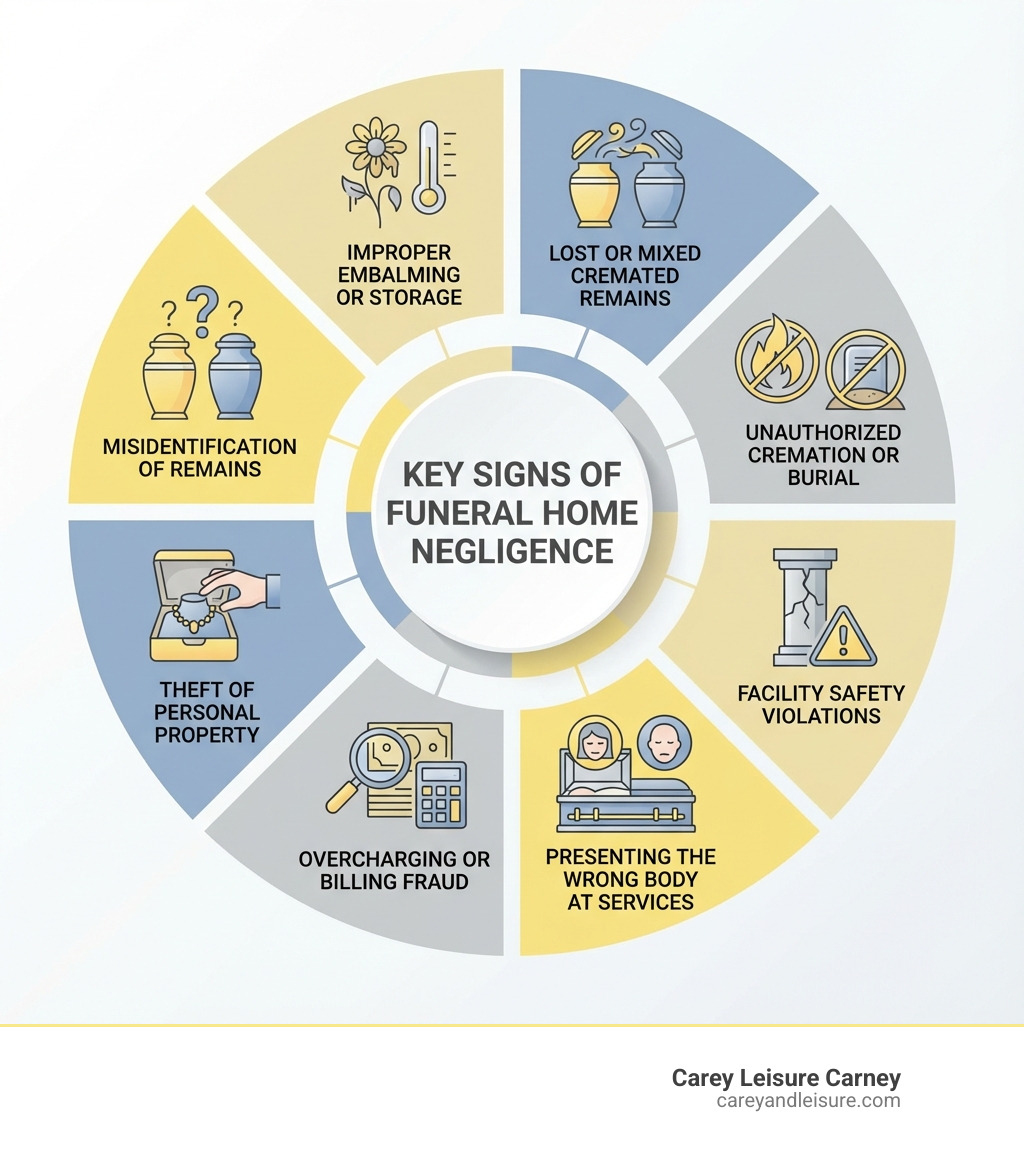
- Misidentification or presentation of the wrong body at a funeral or burial
- Lost, mixed, or mishandled cremated remains (ashes)
- Improper embalming or preservation leading to visible decomposition
- Unauthorized cremation or burial without family consent
- Theft of jewelry, clothing, or personal items from the deceased
- Overcharging or billing for services never provided
- Facility negligence causing health or safety hazards
- Breach of contract for agreed-upon funeral services
The law recognizes that death is sacred. Funeral homes provide essential services for the deceased and their families during one of life’s most challenging moments. Unfortunately, sometimes funeral homes fail to meet expectations through negligence, intent, or fraud—leading to devastating consequences for grieving families.
No one should have to go through the trauma of losing a loved one and then face the injustice of substandard funeral care. When funeral homes betray the trust placed in them, families have legal recourse. You can hold negligent funeral homes accountable through civil lawsuits designed to recover compensation for emotional distress, financial losses, and in egregious cases, punitive damages.
Proving funeral home negligence requires demonstrating that the funeral home owed a duty of care, breached that duty, and caused damages as a direct result. This process involves gathering evidence—contracts, photographs, witness statements, and expert testimony—and navigating complex legal proceedings within strict time limits known as statutes of limitations.
I’m Thomas W. Carey, founding partner of Carey Leisure Carney, and I’ve spent over three decades representing families in wrongful death and negligence cases across Florida. As a board-certified civil trial lawyer with experience in funeral, cemetery, and cremation malpractice, I understand how to build strong funeral home negligence attorney cases that hold these institutions accountable and secure the compensation grieving families deserve.
What Constitutes Funeral Home Negligence?
Funeral home negligence occurs when a funeral service provider fails to meet the professional standards of care expected in their industry, resulting in harm, distress, or financial loss to the family of the deceased. This goes beyond simple mistakes; it involves a breach of the duty of care that funeral homes owe to their clients and the deceased. These establishments are entrusted with the profound responsibility of handling a loved one’s final arrangements with dignity and respect. When they fall short, it can cause immense emotional anguish to grieving families.
Funeral homes operate under a legal and ethical obligation to perform their services with due care and according to established professional standards and state regulations. In Florida, specific laws govern the preservation and storage of deceased individuals, setting clear guidelines that funeral homes must follow. For a deeper understanding, you can review Florida Deceased Preservation and Storage Laws. A failure to adhere to these standards, whether through carelessness, incompetence, or intentional misconduct, forms the basis of a negligence claim. To learn more about what constitutes this type of negligence, visit our detailed guide on What is funeral home negligence?.
Common Examples of Funeral Home Misconduct
The types of misconduct that can constitute funeral home negligence are varied and deeply distressing. Unfortunately, statistics show that this is not an uncommon issue; approximately 3,500 complaints of funeral home negligence are filed each year, and 10% of funeral homes in the U.S. have been cited for violations. Since 2020, negligence cases have increased by 25%.
Here are some common examples we’ve seen in our practice across Clearwater, Largo, New Port Richey, Spring Hill, St Petersburg, Trinity, and Wesley Chapel, Florida:
- Improper Embalming or Preservation: This is one of the most common issues. It can lead to rapid decomposition, disfigurement, or an undignified appearance of the deceased, causing severe emotional distress during viewings.
- Mishandling of Remains: This includes dropping a body, damaging it during transport or preparation, or failing to store it properly, leading to decay or infestation. Improper storage or handling is the most common issue in lawsuits.
- Cremation Errors: These are particularly devastating and often irreversible. Examples include cremating the wrong body, mixing ashes from multiple individuals, losing cremated remains, or providing the family with the wrong ashes.
- Wrongful Burial or Entombment: Burying the deceased in the wrong plot, burying an empty coffin, or placing multiple bodies in a single coffin without authorization.
- Theft of Personal Items: Stealing jewelry, clothing, or other personal belongings from the deceased before burial or cremation.
- Overcharging or Billing Fraud: Charging for services not rendered, adding hidden fees, or substituting cheaper goods (like caskets) for those paid for.
- Lost Remains: Completely losing track of a body or cremated remains.
- Wrong Body Presented: Presenting the wrong deceased individual at a viewing or funeral service, causing unimaginable shock and trauma.
- Facility Negligence: Unsanitary conditions, unsafe premises, or other failures in the physical environment of the funeral home that pose health or safety risks.
- Unauthorized Actions: Performing embalming, cremation, or other services without explicit family consent.
- Failure to Follow Instructions or Contract Terms: Disregarding specific wishes of the family regarding religious rites, clothing, or other arrangements.
- Sexual Abuse of a Corpse: While rare, this extreme form of misconduct is a horrific breach of trust and a criminal act.
- Illegal Sale of Body Parts: Engaging in the unauthorized sale of organs or other body parts.
Understanding the ‘Right of Sepulcher’
While the term ‘Right of Sepulcher’ is often associated with New York common law, the underlying principle is a fundamental aspect of how Florida law views a family’s rights concerning their deceased loved one. Essentially, it refers to the legal right of the next of kin to control the disposition of the deceased’s remains. This includes decisions about burial, cremation, or other final arrangements, as well as the right to immediate possession of the body for preservation and respectful handling.
This right is crucial in funeral home negligence attorney cases because any interference with it by a funeral home can form a strong basis for a lawsuit. When a funeral home mishandles a body, performs unauthorized procedures, or fails to follow the family’s instructions, they are not only breaching a contract or professional standard but also violating the family’s deeply personal and legally protected right to care for their loved one’s remains with dignity. It underscores the profound emotional and psychological harm that results when this sacred trust is broken.
How to Prove a Funeral Home Negligence Claim
Proving a claim against a funeral home for negligence can be a complex undertaking, requiring a thorough understanding of legal principles and meticulous evidence collection. The legal burden of proof rests on the family bringing the claim, meaning we must demonstrate that the funeral home’s actions (or inactions) directly led to the harm suffered.
Gathering compelling evidence is paramount. This includes all documentation related to the services, any photographs or videos that capture the negligence, and statements from witnesses. An experienced funeral home negligence attorney knows precisely what to look for and how to build a robust case. For more detailed information on this process, you can refer to our guide on Proving Funeral Home Negligence.

The Four Essential Elements of Negligence
To successfully prove a funeral home negligence claim in Florida, we must establish four essential legal elements:
- Duty of Care: The funeral home owed a legal duty of care to the deceased and their family. This duty is typically established through the contract for services you signed. By agreeing to provide funeral, embalming, or cremation services, the funeral home assumes a professional and ethical obligation to act with reasonable care, competence, and respect.
- Breach of Duty: The funeral home breached that duty of care. This means they failed to meet the professional standards expected in the industry or violated the terms of their contract. Examples of a breach include improper embalming, losing remains, or providing unauthorized services.
- Causation: The funeral home’s breach of duty directly caused the harm or damages you suffered. There must be a clear link between their negligent actions and your emotional distress or financial losses. For instance, if improper embalming (breach of duty) led to rapid decomposition (causation), which then caused you severe emotional distress (damages).
- Damages: You experienced actual damages as a result of the negligence. These can be financial losses, emotional distress, or other forms of harm recognized by law. We will dig deeper into the types of damages recoverable shortly. Understanding these elements is crucial for any negligence claim, as outlined by general legal principles for Damages.
Steps to Take if You Suspect Negligence
Finding funeral home negligence can be incredibly painful and confusing. It’s natural to feel overwhelmed, but taking swift and deliberate action is crucial to protect your rights and build a strong case.
The first and most important step is to document everything. This includes:
- Contracts and Receipts: Keep all agreements, invoices, and payment records from the funeral home. These documents establish the services you paid for and the duty of care owed.
- Photo and Video Evidence: If possible, take photographs or videos of any visible signs of negligence, such as improper embalming, damaged remains, unsanitary conditions, or discrepancies in the services provided. Act quickly, as some evidence may be time-sensitive.
- Witness Accounts: Speak with family members, friends, or anyone else who observed the negligence. Their statements can provide valuable corroboration.
- Communication Records: Keep a detailed log of all communications with the funeral home, including dates, times, names of individuals spoken to, and a summary of the conversation. Save emails, texts, and any other written correspondence.
While it’s difficult, try to avoid confrontation with the funeral home staff in the immediate aftermath. Your priority should be to gather facts and preserve evidence before engaging in potentially emotional discussions that could compromise your legal position. For a comprehensive overview of how such cases proceed, you might find our insights on The Litigation Process helpful.
Preserving Evidence and Filing a Complaint
Once you suspect negligence, securing all available evidence is critical. Beyond the documentation mentioned above, consider if there are any physical items that could serve as evidence. For instance, if clothing was damaged or personal items were stolen, keep them exactly as they are.
In addition to documenting your case, it’s often advisable to contact relevant regulatory boards. In Florida, funeral homes are licensed and regulated by state agencies. Filing a formal complaint with the appropriate state licensing board can initiate an investigation and create an official record of the alleged misconduct. This step can be vital, but it does not replace the need for legal action.
The importance of acting quickly cannot be overstated. There are strict time limits, known as statutes of limitations, for filing a lawsuit. Missing these deadlines can mean losing your right to seek compensation forever.
Consulting with a Funeral Home Negligence Attorney
After you have taken initial steps to document the situation, your next move should be to seek legal counsel. An initial consultation with an experienced funeral home negligence attorney can provide invaluable guidance during this challenging time.
During this consultation, we will evaluate your case, discuss the evidence you’ve gathered, and provide a clear assessment of your legal options. We can explain your rights, clarify what constitutes negligence, and help you understand the potential outcomes of pursuing a claim. This early consultation allows us to begin building a strong case and ensures that all necessary legal procedures are followed correctly and within the appropriate timeframes. To understand more about the critical role an attorney plays, read Why You Need a Personal Injury Lawyer.
How a Funeral Home Negligence Attorney Can Help You
When you’re dealing with the profound grief of losing a loved one, navigating a complex legal battle against a funeral home is likely the last thing you want to do. This is precisely where an experienced funeral home negligence attorney becomes your most valuable ally. We take the burden off your shoulders, allowing you to focus on healing while we handle the legal complexities.
Our role extends far beyond simply filing paperwork. We conduct thorough investigations, gathering all necessary evidence, including contracts, communications, and expert testimony from medical professionals or forensic pathologists who can explain how the funeral home’s actions fell below industry standards. We negotiate with insurance companies on your behalf, aiming for a fair settlement. If a settlement cannot be reached, we are prepared to represent you in litigation, advocating fiercely for your family in court. For more on our commitment to justice in these sensitive matters, see Seeking Justice for Funeral, Cemetery & Cremation Malpractice.
Who Has the Legal Standing to Sue?
Determining who has the legal right to file a lawsuit for funeral home negligence can be confusing. In Florida, the law specifies who can bring a claim. For wrongful death claims, which often overlap with severe funeral home negligence, only the personal representative of an estate is allowed to file a lawsuit. This personal representative is either named in the deceased’s will or appointed by the court.
While the personal representative files the lawsuit, the compensation recovered is typically for the benefit of the surviving family members. Those who generally have legal standing to benefit from such a claim include:
- The surviving spouse
- Surviving children (biological and adopted)
- Surviving parents (biological and adoptive)
- Any other person(s) named in the will of the deceased as being entitled to the deceased’s estate.
- The individual who contracted the funeral services and suffered direct harm, such as emotional distress or financial loss due to the funeral home’s negligence.
State laws can vary, and consulting with a Florida-based funeral home negligence attorney is essential to understand your specific eligibility.
What Damages Can Be Recovered?
The damages recoverable in a funeral home negligence lawsuit are designed to compensate families for the losses they’ve endured due to the funeral home’s misconduct. These damages typically fall into three main categories:
- Economic Damages: These cover measurable financial losses directly resulting from the negligence. Examples include:
- Additional funeral or burial expenses incurred due to the negligence.
- Reimbursement for services paid for but not properly rendered.
- Costs of emotional support or counseling needed due to the trauma.
- Legal fees and court costs.
- Non-Economic Damages: These address the intangible, yet profound, suffering caused by the negligence. In funeral home cases, these are often substantial and include:
- Emotional distress and mental anguish: The severe psychological pain, grief, and trauma resulting from the mishandling or disrespect of a loved one’s remains.
- Loss of enjoyment of life.
- Loss of companionship or consortium (if applicable).
- Pain and suffering before death (if the negligence contributed to or prolonged suffering).
- Punitive Damages: In egregious cases where the funeral home’s actions were intentional, malicious, or demonstrated gross negligence, punitive damages may be awarded. These are not meant to compensate the family but to punish the wrongdoer and deter similar conduct in the future, sending a strong message that such behavior is unacceptable.
The average compensation awarded in cases of funeral home negligence can range from $50,000 to $100,000, but every case is unique. We are committed to fighting for every penny your family deserves. Our dedicated page on Funeral Home Negligence Lawsuit Damage Claims provides more in-depth information.
Navigating the Statute of Limitations with a Funeral Home Negligence Attorney
The statute of limitations is a critical legal deadline that dictates how long you have to file a lawsuit after an incident occurs. Missing this deadline, even by a single day, can permanently bar you from seeking compensation, regardless of the strength of your case.
In Florida, the statute of limitations for a wrongful death case (which often applies to severe funeral home negligence) is generally two years from the date of the deceased’s death. There can be exceptions, such as cases involving a government entity, where the timeframe might differ (e.g., four years). It’s also important to consider when the negligence was finded, as some states have “findy rules” that can extend the clock, but relying on these without legal advice is risky.
Given these strict time limits and the complexities of legal filing, consulting with a funeral home negligence attorney as soon as you suspect misconduct is paramount. We can quickly assess your situation, determine the applicable statute of limitations, and ensure all necessary paperwork is filed correctly and on time, protecting your family’s right to pursue justice.
Frequently Asked Questions about Funeral Home Lawsuits
We understand that families facing funeral home negligence have many questions. Here are some of the most common inquiries we receive:
How can our family prevent funeral home negligence?
While it’s impossible to guarantee against all forms of misconduct, families can take proactive steps to minimize the risk:
- Research Funeral Homes Thoroughly: Look up reviews, check their reputation, and ask for recommendations.
- Verify Licenses: Ensure the funeral home and its directors are properly licensed by the state of Florida.
- Ask for a Detailed Contract: Insist on a written contract that clearly outlines all services, goods, and their associated costs. Read it carefully before signing and ensure all your specific wishes are documented.
- Inspect the Facility (if possible): If you’re able, discreetly observe the cleanliness and organization of the funeral home.
- Maintain Open Communication: Stay in regular contact with the funeral home and ask for updates on the process.
- Document Everything: Keep copies of all communications, receipts, and agreements.
Can I sue a funeral home for just emotional distress?
Yes, in cases of funeral home negligence, emotional distress is often a primary component of the damages sought. The law recognizes the unique and profound emotional impact that mishandling a loved one’s remains or disrespecting their memory can have on grieving families. Unlike some personal injury cases, a physical injury to you, the claimant, is often not required to pursue a claim for severe mental anguish and emotional distress caused by a funeral home’s negligence. The breach of trust and the violation of the sacred duty of care are themselves grounds for claiming emotional suffering.
How much does it cost to hire an attorney for this type of case?
At Carey Leisure Carney, we understand that families dealing with funeral home negligence are already facing immense emotional and financial strain. That’s why we typically handle these cases on a contingency fee basis. This means:
- You pay no upfront costs for our legal services.
- We only get paid if we successfully recover compensation for you, either through a settlement or a favorable verdict at trial.
- Our attorney fees are a pre-agreed percentage of the total amount we recover.
This arrangement ensures that access to justice is available to everyone, regardless of their financial situation. To learn more about our fee structure, please visit How Much Does It Cost to Hire a Personal Injury Attorney?.
Get the Compassionate and Experienced Representation You Deserve
Losing a loved one is an experience that changes your life forever. When that profound grief is compounded by the negligence or misconduct of the very professionals you trusted, it adds an unbearable layer of pain and betrayal. Our firm, Carey Leisure Carney, believes that no family in Clearwater, Largo, New Port Richey, Spring Hill, St Petersburg, Trinity, or Wesley Chapel, Florida, should have to steer such a devastating situation alone.
We are dedicated to helping families hold negligent funeral homes accountable for their actions. Our team of Board-Certified attorneys, representing the top 2% in Florida, brings over 100 years of combined experience to your case. We offer direct attorney access and personalized service, ensuring that your family receives the empathetic and expert legal guidance you deserve.
If you suspect funeral home negligence has impacted your family, don’t hesitate to reach out. We are here to listen, to understand, and to fight for the justice and compensation you are owed.
Contact our experienced funeral home malpractice attorney today for a free consultation. Let us help you find peace and accountability.