

Depression after car accident compensation: Secure 2026 Payouts
The Hidden Injury: Why Depression After Car Accident Compensation Matters
Depression after car accident compensation is a legal right many crash survivors don’t realize they have. If you’re struggling with sadness, anxiety, or fear of driving after a collision, you may be entitled to financial recovery—even if your physical injuries were minor.
Quick Answer: What You Can Claim
- Medical expenses: Therapy, psychiatrist visits, and medication.
- Lost wages: Income lost due to your inability to work.
- Pain and suffering: Emotional distress and loss of enjoyment of life.
- Future costs: Ongoing treatment and long-term care.
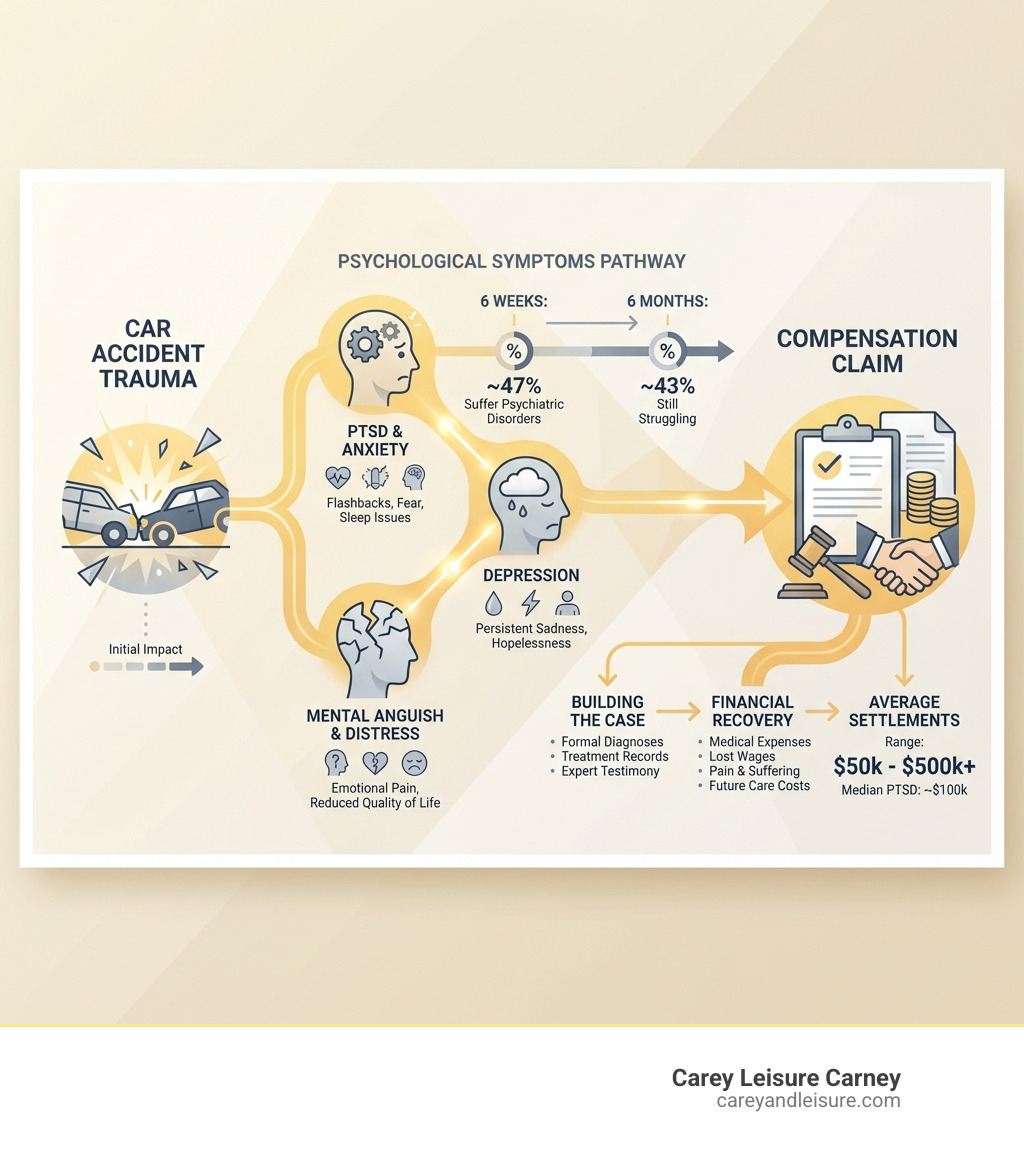
While every case is different, average settlements for psychological trauma can range from $50,000 to $500,000, with the median PTSD settlement around $100,000.
Psychological wounds like depression, anxiety, and post-traumatic stress disorder (PTSD) are real medical conditions that deserve compensation. Research shows that nearly half of accident survivors suffer from psychiatric disorders six weeks after a crash. Unfortunately, insurance companies often try to downplay or dismiss these invisible injuries.
This isn’t just about money. It’s about access to treatment, acknowledging your pain, and holding negligent parties accountable. Compensation can fund the therapy you need, replace lost income, and provide a sense of justice.
In Florida, psychological injuries are classified as “non-economic damages.” Proving these claims requires specific evidence, including formal diagnoses, treatment records, and testimony connecting your depression to the accident.
I’m Thomas W. Carey, founding partner of Carey Leisure Carney. As a board-certified civil trial lawyer, I’ve helped thousands of clients in Florida since 1988. My team and I specialize in building strong cases for depression after car accident compensation to ensure our clients get the justice they deserve.
Basic depression after car accident compensation terms:
Recognizing Depression After a Car Accident: Symptoms and Causes
Car accidents are traumatic events that can leave deep psychological scars, even if physical injuries are minor. The emotional and mental aftermath can be just as, if not more, debilitating than visible wounds. Among the most common psychological responses is depression.

Post-accident depression, also known as reactive depression, is a medical illness that affects how a person feels, thinks, and behaves. It’s a persistent state of low mood and apathy that significantly interferes with daily life. This condition can be triggered by the trauma of the crash, chronic pain from physical injuries, financial stress, or the profound disruption to one’s lifestyle. A study published by BMJ Journals confirmed that mental health issues after an accident can last for months. The brain’s response to trauma can alter its chemistry, leading to a cycle where psychological distress worsens physical pain, and vice versa. Sometimes, the accident can even cause a Traumatic Brain Injury, which can directly contribute to depressive symptoms.
Common Symptoms of Post-Accident Depression
Recognizing the signs of depression is the first step toward seeking help and pursuing depression after car accident compensation. Watch for these key emotional and behavioral symptoms:
- Persistent Sadness or Emptiness: A constant feeling of gloom, hopelessness, or despair.
- Loss of Interest (Anhedonia): A significant decrease in pleasure or interest in activities once enjoyed.
- Sleep Issues: Insomnia (difficulty sleeping) or hypersomnia (sleeping excessively).
- Fatigue or Loss of Energy: Feeling constantly tired and lacking motivation.
- Appetite Changes: Significant weight loss or gain.
- Anxiety and Panic Attacks: Feeling tense, fearful, or having sudden rushes of intense fear.
- Fear of Driving (Amaxophobia): An intense, irrational fear of being in or operating a vehicle.
- Irritability or Restlessness: Feeling easily agitated or frustrated.
- Feelings of Worthlessness or Guilt: Excessive self-blame or low self-esteem.
- Difficulty Concentrating: Trouble focusing, remembering things, or making decisions.
- Thoughts of Death or Suicide: These are serious symptoms that require immediate professional help.
How the Trauma of a Crash Leads to Depression
The sudden and violent nature of a car accident can profoundly impact a person’s mental state.
- Psychological Shock: The body’s fight-or-flight response, if prolonged, can lead to chronic stress, anxiety, and depression.
- Chronic Pain’s Effect on Mood: Living with constant pain is a significant risk factor for depression, leading to feelings of hopelessness.
- Social Isolation and Lifestyle Disruption: An accident can force a person to withdraw from social activities and hobbies, leading to sadness and a loss of identity.
- Connection to Traumatic Brain Injury (TBI): Even a minor head injury can result in a TBI or concussion, which can cause or worsen depression. For more information, see our resources on Car Accidents and Traumatic Brain Injuries.
Proving Your Claim: Linking Depression to the Accident
Insurance companies are often skeptical of psychological injuries like depression, arguing they aren’t directly related to the car accident. Proving your claim for depression after car accident compensation requires strong evidence to establish this link.

The burden of proof is on you to show that the accident caused or worsened your depression. This involves medical evidence, consistent documentation, and compelling testimony.
The Crucial Role of Medical Documentation
Meticulous documentation is the foundation of a successful claim.
- Seek Immediate Medical Help: Just as with physical injuries, see a doctor for your mental health symptoms as soon as possible. This creates a clear timeline linking the accident to your depression. For more on this, see You’ve Been in an Accident, What’s Next? Part 2: Medical Attention.
- Get a Formal Diagnosis: A diagnosis from a psychiatrist, psychologist, or licensed clinical social worker is essential. The diagnosis should clearly link your depression to the car accident.
- Keep Records: Maintain detailed records of all therapy sessions, prescriptions, and related expenses. These documents demonstrate the severity of your condition and the costs incurred.
- Maintain a Symptom Journal: A personal journal detailing your daily symptoms, mood, and how the depression affects your life provides powerful, evidence of your suffering.
Using Expert and Witness Testimony
Testimony can bring your experience to life for insurance adjusters and juries.
- Mental Health Expert Testimony: Your psychiatrist or psychologist can explain your diagnosis, its connection to the accident, and your prognosis, adding medical authority to your claim.
- Testimony from Family and Friends: People close to you can describe the changes in your personality and daily life since the accident, providing powerful, relatable evidence.
- Employer Statements: If your depression has impacted your work, a statement from your employer can support claims for lost wages or diminished earning capacity.
- Demonstrate Life Changes: Show how your life has changed. Evidence of missed events, abandoned hobbies, and altered routines helps establish the non-economic damages you’ve suffered.
Can You Claim for Depression Without Physical Injuries?
Yes, in Florida, you can claim depression after car accident compensation even without physical injuries. Emotional distress is a valid form of damage under Florida law. This can include claims for Negligent Infliction of Emotional Distress (NIED) or if you witnessed a traumatic event. The key is proving the severity of your depression and its impact on your daily life. For more on this, read our guide on Compensation for Pain and Suffering in Florida: What You Need to Know.
Securing Depression After Car Accident Compensation: What You Can Claim
When pursuing depression after car accident compensation, the goal is to recover for all the ways your life has been impacted, both financially and emotionally. Understanding the types of damages you can claim is crucial. To learn more about how we assess the value of your case, visit What is My Personal Injury Case Worth?.
Economic vs. Non-Economic Damages Explained
In Florida, personal injury damages are divided into two categories:
| Type of Damage | Description |
|---|---|
| Economic Damages | These are tangible, calculable financial losses. They include: – Medical bills (therapy, medication, etc.) – Lost wages and future earning capacity – Other out-of-pocket expenses. |
| Non-Economic Damages | These are intangible losses that don’t have a specific price tag. They include: – Pain and suffering – Emotional anguish and mental distress – Loss of enjoyment of life. |
Factors That Influence Your Depression After Car Accident Compensation
Several key factors will influence the amount of depression after car accident compensation you may receive in Florida:
- Severity and Duration of Depression: How profoundly your depression impacts your daily life and how long it is expected to last.
- Impact on Work and Life: Documented effects on your career, relationships, and ability to enjoy life.
- Cost of Treatment: The total cost of all medical care, both past and future, including therapy and medication.
- Strength of Evidence: The quality of your medical records, expert testimony, and witness statements linking the depression to the accident.
- Insurance Policy Limits: The at-fault party’s insurance coverage can limit the maximum amount you can recover.
- Average Settlement Ranges: While every case is unique, settlements for psychological trauma can range from $50,000 to over $500,000, with a median PTSD settlement around $100,000. Your specific case value will depend on the circumstances.
Navigating the Legal Process for Your Depression Claim
The legal process for securing depression after car accident compensation can be complex, especially when dealing with insurance companies that often resist paying out for psychological injuries. Having a clear understanding of the steps involved and the benefit of experienced legal representation is crucial.
Step-by-Step Guide to Filing a Claim for Depression After Car Accident Compensation
Here’s a general roadmap for pursuing your claim in Florida:
- Report the Accident & Seek Medical Care: Immediately report the accident to the police and see a doctor for both physical and mental health concerns. This creates an official record and links your injuries to the event. For more details, see What to Do After a Car Accident Florida.
- Document Everything: Keep all medical records, bills, and a personal journal of your symptoms and their impact on your life.
- Consult a Lawyer: An experienced attorney can evaluate your case, explain your rights, and guide you through the legal system.
- File the Claim: Your lawyer will file a formal claim with the at-fault party’s insurance company, demanding compensation for your damages.
- Findy & Negotiation: Both sides will exchange information. Your attorney will then negotiate with the insurer to reach a fair settlement.
- Litigation: If a fair settlement isn’t possible, your lawyer may advise filing a lawsuit and taking the case to court.
Understanding the Statute of Limitations
The “statute of limitations” is a strict deadline for filing a lawsuit. In Florida, you generally have two years from the date of the accident to file a lawsuit. If you miss this deadline, you could lose your right to seek compensation forever. It’s crucial to act quickly, as exceptions to this rule are rare and complex. Consulting an attorney promptly ensures your rights are protected.
How a Personal Injury Lawyer Maximizes Your Claim
Hiring an experienced personal injury lawyer is vital for maximizing your depression after car accident compensation. Our team at Carey Leisure Carney will:
- Evaluate Your Case: We assess the strength of your claim and potential value.
- Gather Evidence: We collect all necessary documentation, from police reports to medical records and expert testimony.
- Handle Insurance Companies: We manage all communications and negotiations, protecting you from tactics used to devalue your claim.
- Calculate Full Damages: We ensure all current and future costs, including pain and suffering, are included in your demand.
- Provide Expert Representation: As Board-Certified attorneys, we are prepared to take your case to court if a fair settlement isn’t offered. We provide the direct attorney access and personalized service you deserve.
For a detailed explanation of the benefits of legal representation, please read Why You Need a Personal Injury Lawyer.
Frequently Asked Questions about Depression After Car Accident Compensation
It’s natural to have many questions when considering a claim for depression after car accident compensation. Here are answers to some common inquiries.
How much is a depression claim worth?
The value of a depression claim after a car accident varies significantly from case to case. There is no fixed amount, as compensation depends on numerous factors unique to your situation.
- Economic Damages Calculation: This portion covers specific financial losses like medical bills (therapy, medication, hospital stays), lost wages, and future medical expenses.
- Non-Economic Damages Assessment: This is compensation for pain and suffering, emotional anguish, and loss of enjoyment of life. It is determined by the severity and duration of your depression and its impact on your daily life.
While average settlements for emotional trauma can range from $50,000 to $500,000, severe cases can exceed these figures. Our Board-Certified attorneys have the experience to accurately assess and pursue the full value of your claim.
How long does it take to settle a depression claim?
The timeline for settling a depression after car accident compensation claim can range from several months to several years. Factors include the complexity of your case, the insurance company’s willingness to negotiate fairly, and whether a lawsuit is necessary. A claim cannot be fully valued until your medical treatment has progressed sufficiently, which also affects the timeline.
What if I had pre-existing depression?
Having a pre-existing condition, such as depression, does not automatically disqualify you from receiving depression after car accident compensation. Florida law acknowledges that an accident can aggravate a pre-existing condition, making it worse or causing it to resurface.
- “Eggshell Skull” Rule: Florida follows the “eggshell skull” rule, which means the negligent party is responsible for all damages they cause, even if the victim had a pre-existing vulnerability that made their injuries worse.
- Aggravation of a Prior Condition: If the car accident worsened your pre-existing depression, you can claim compensation for that aggravation.
- Proving the Accident Worsened Your State: The key is to demonstrate through medical records and expert testimony that the accident caused a new injury or exacerbated your pre-existing depression. This often involves comparing your mental health state and treatment before and after the accident.
- Importance of Honest Disclosure: Always be honest with your medical providers and attorney about any pre-existing conditions. Transparency helps build a stronger case.
Don’t Suffer in Silence: Take the First Step Towards Recovery and Justice
Experiencing depression after a car accident is a profound and often isolating ordeal. It’s a hidden injury, but it’s no less real or debilitating than a broken bone. We hope this guide has illuminated the path to understanding your rights and the potential for depression after car accident compensation.
Remember these key takeaways:
- Depression after a car accident is a legitimate and compensable injury in Florida.
- Recognizing symptoms early and seeking immediate medical and mental health treatment is crucial for both your well-being and your legal claim.
- Meticulous documentation, including formal diagnoses, therapy records, and personal journals, is essential to prove causation.
- You can claim compensation for both economic losses (medical bills, lost wages) and non-economic damages (pain and suffering, emotional distress).
- Even if you had pre-existing depression, you might still be entitled to compensation if the accident aggravated your condition.
- The legal process has strict deadlines, making timely consultation with an attorney vital.
You don’t have to go through this challenging journey alone. At Carey Leisure Carney, we are deeply committed to helping accident victims in Clearwater, Largo, New Port Richey, Spring Hill, St. Petersburg, Trinity, and Wesley Chapel, Florida, find their way back to a full life. Our Board-Certified attorneys, with over 100 years of combined experience, are here to provide direct attorney access and personalized service, ensuring your voice is heard and your suffering is acknowledged.
If you or a loved one are struggling with depression after a car accident, don’t suffer in silence. Take the first courageous step towards recovery and justice.
Contact an experienced Personal Injury Attorney today for a free, no-obligation consultation. Let us help you secure the depression after car accident compensation you deserve, so you can focus on healing and reclaiming your life.