
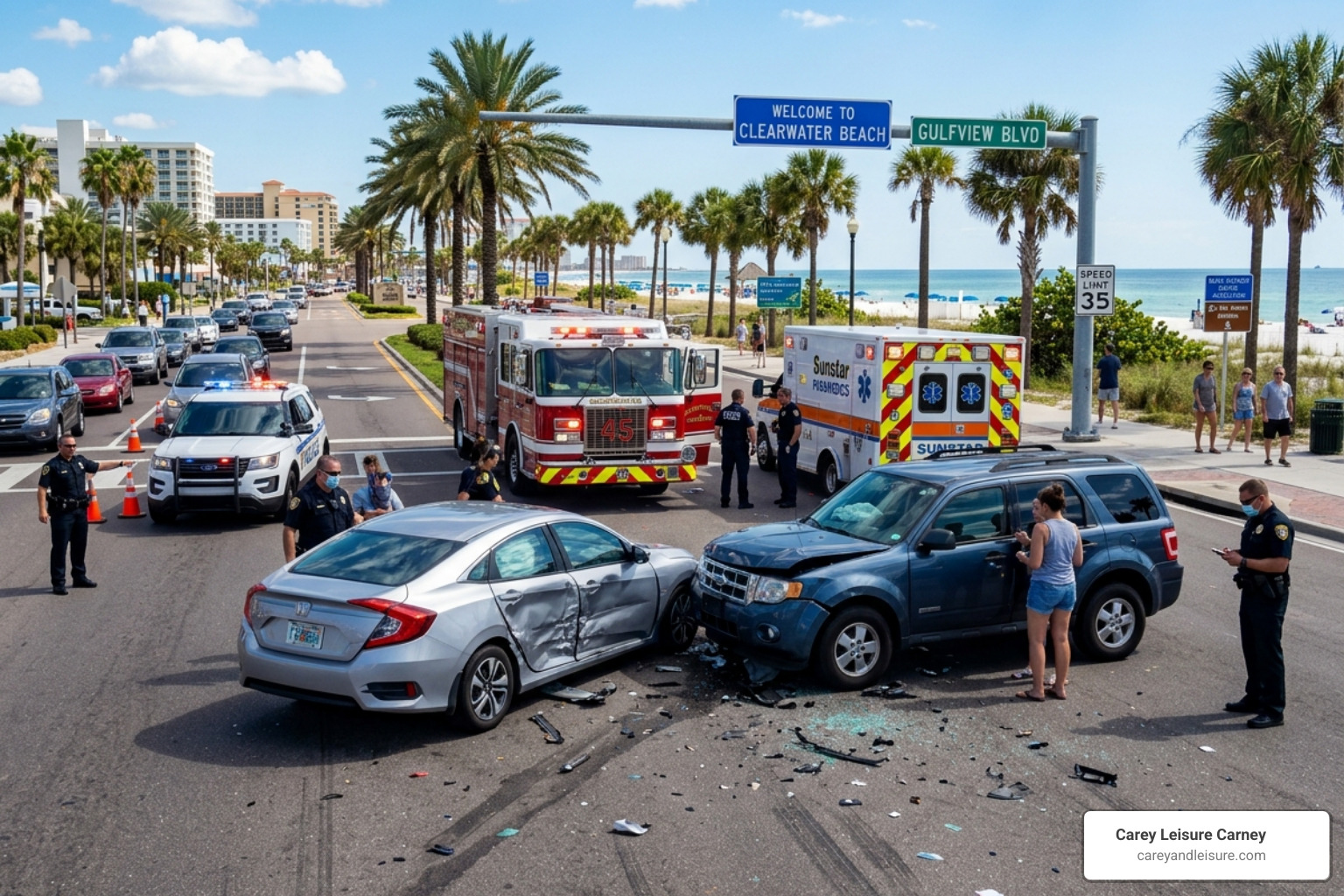
Whose Fault Is It Anyway? Understanding No-Fault Accidents
What You Need to Know About a No Fault Car Accident in Florida
A no fault car accident is one where your own insurance — not the other driver’s — pays for your medical bills and lost wages, regardless of who caused the crash.
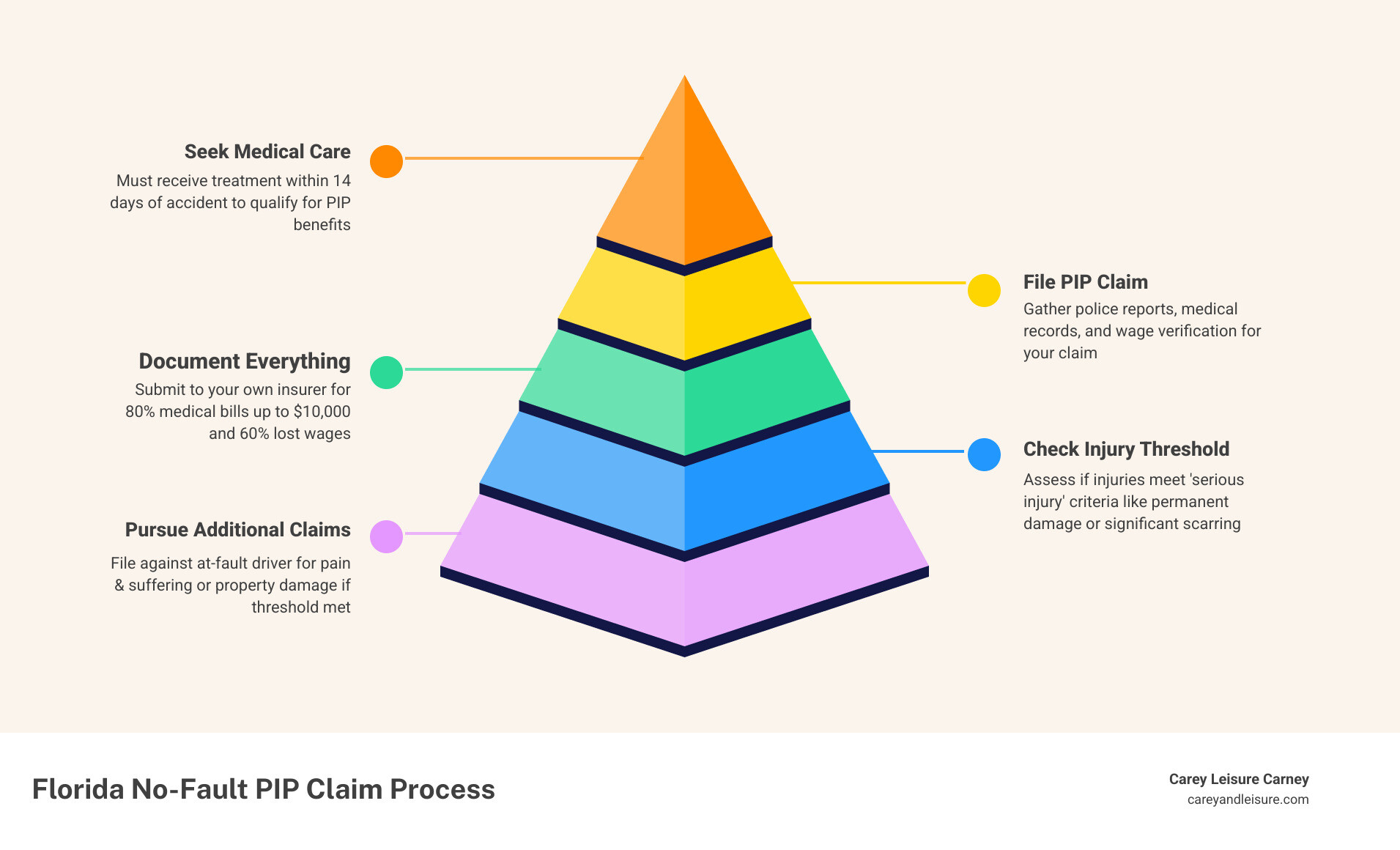
Here’s a quick breakdown of how it works in Florida:
| Key Point | What It Means for You |
|---|---|
| Your own PIP pays first | You file with your insurer, not the at-fault driver’s |
| PIP covers up to $10,000 | 80% of medical bills, 60% of lost wages |
| 14-day rule applies | You must seek medical care within 14 days of the accident |
| Pain & suffering is NOT covered | PIP only covers economic losses |
| You can still sue | If your injuries meet Florida’s “serious injury” threshold |
| Property damage works differently | The at-fault driver’s liability insurance covers your vehicle |
If you were hurt in a crash in Clearwater or anywhere in the Tampa Bay area, understanding these rules is the difference between getting fair compensation and leaving money on the table.
Florida is one of roughly a dozen states that follow a no-fault system — and it comes with specific rules, deadlines, and limits that catch many accident victims off guard.
I’m Thomas W. Carey, founding partner of Carey Leisure Carney, a board-certified civil trial lawyer with over 35 years of experience handling no fault car accident claims across Florida, including thousands of cases right here in the Tampa Bay area. In this guide, I’ll walk you through exactly how Florida’s no-fault laws work — and when you may have the right to go further.
No fault car accident vocab explained:
- Florida car crash lawyer
- Uninsured motorist claim Florida
- how to settle a car accident claim without a lawyer
What is a No Fault Car Accident and How Does Insurance Work?
When we talk about a no fault car accident, the name can be a bit of a trick. It doesn’t mean that “nobody is at fault” for the crash. If someone blows a red light on Gulf-to-Bay Boulevard and hits you, they are definitely at fault. However, for the purposes of getting your initial medical bills paid, Florida law says your insurance company is the one that writes the check first.
This system was designed to speed up the process. Instead of waiting months for insurance companies to argue over who was 60% responsible versus 40% responsible, you can get treatment immediately. This is what we call “first-party benefits.” You are the first party, and you are using the insurance you pay for every month.
According to No-Fault Car Insurance Explained, this system is mandatory in about a dozen states, including Florida. The goal is to lower the number of small claims clogging up our courts in Pinellas and Pasco Counties. But while it’s faster, it’s also limited.
It’s important to understand what is PIP Insurance Florida? and how it dictates your recovery. In a no-fault system, fault determination only matters if you are trying to recover money for things like vehicle repairs or if your injuries are so severe that you need to step outside the no-fault system to sue.
Understanding Personal Injury Protection (PIP)
In Florida, your no-fault coverage is officially known as Personal Injury Protection, or PIP. Think of it as a “medical umbrella” that follows you around. Whether you are driving your car, riding as a passenger in a friend’s truck, or even walking across the street as a pedestrian in St. Petersburg, PIP is there to cover your economic losses.
As we explain in Personal Injury Protection (PIP) Insurance 101 Part 2, PIP covers:
- Medical Bills: It pays 80% of all reasonable and necessary medical expenses.
- Lost Wages: If you can’t work after your no fault car accident, PIP pays 60% of your lost earnings.
- Household Services: If you can no longer mow the lawn or clean the house, it may cover the cost of hiring help (up to $25 a day in some instances).
- Death Benefits: Florida PIP provides a $5,000 death benefit per individual.
The Difference Between At-Fault and No-Fault Systems
The biggest difference between Florida and an “at-fault” state (like Georgia) is who you talk to first. In an at-fault state, you would file a claim against the other driver’s insurance immediately. In Florida, you start with your own.
According to At-Fault vs No Fault Accident Claims in Your State – ValuePenguin, no-fault systems generally lead to higher insurance premiums but faster payouts for medical care. However, the downside is that you lose the right to sue for “non-economic” damages — like pain and suffering — unless your injury is considered permanent or significant.
Understanding the role of insurance companies in a car accident is vital. Even though you are dealing with your insurance company, they are still a business. They want to pay out as little as possible. We often see insurers try to argue that a medical procedure wasn’t “necessary” just to save a few dollars.
Navigating Florida’s No-Fault Laws and PIP Coverage
If you live in Clearwater, Largo, or Wesley Chapel, you are likely familiar with the $10,000 PIP limit. This is the minimum required by Florida law. But here is the catch: you don’t always get the full $10,000.
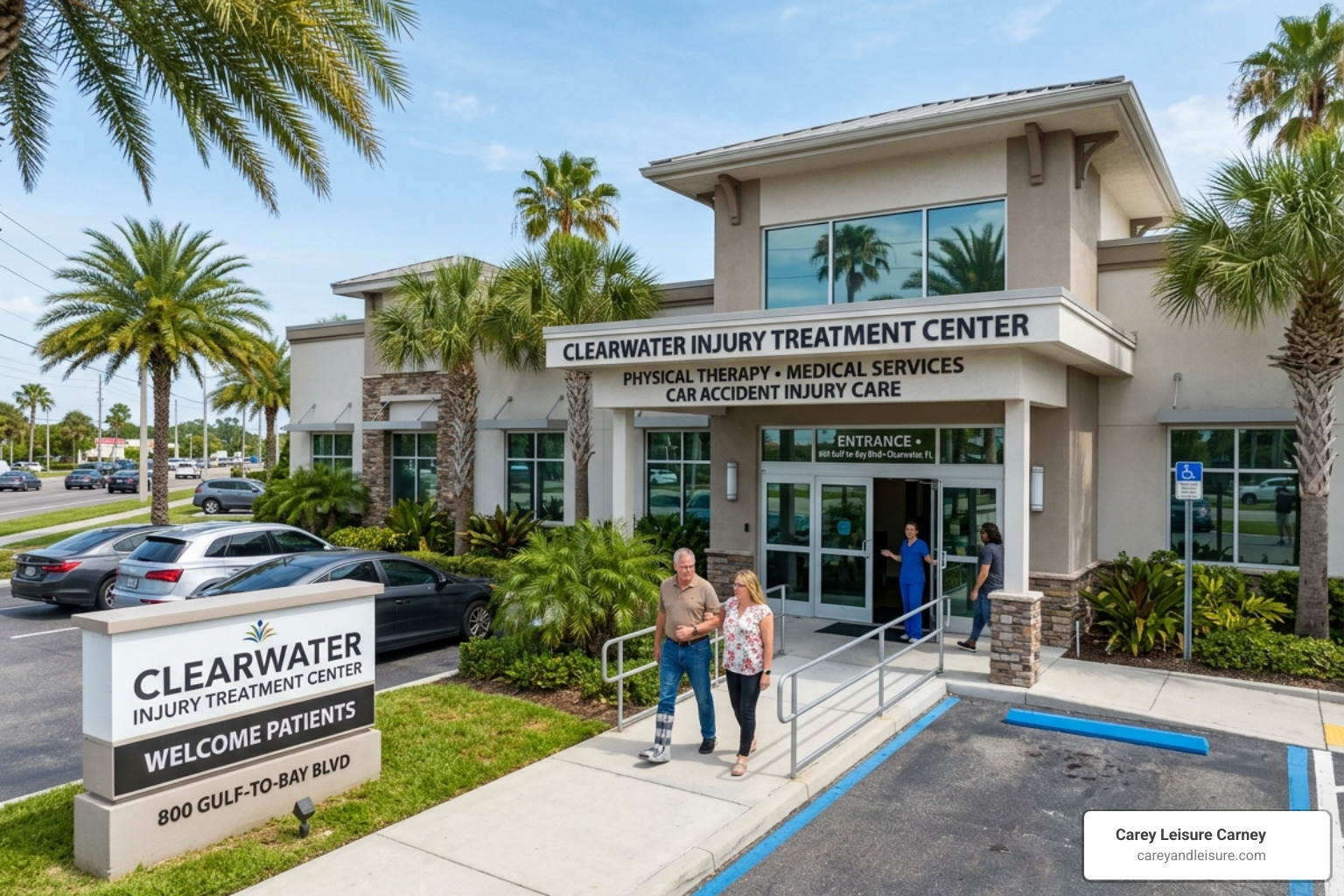
Florida has a very strict 14-day rule. If you don’t see a doctor within 14 days of your no fault car accident, your insurance company can legally deny your PIP claim entirely. It doesn’t matter if your back starts hurting on day 15; if you didn’t have that first appointment within the two-week window, you’re out of luck.
Furthermore, there is the “Emergency Medical Condition” (EMC) requirement. To access the full $10,000 of your PIP benefits, a qualified medical professional must determine that you suffered an EMC. If they don’t, your benefits are capped at just $2,500.
We’ve detailed these nuances in our guide on New PIP Florida Law Changes. Here is a quick look at how that breakdown works:
| Benefit Level | Diagnosis Requirement | Coverage Amount |
|---|---|---|
| Full PIP | Emergency Medical Condition (EMC) | Up to $10,000 |
| Limited PIP | Non-Emergency Condition | Capped at $2,500 |
| No PIP | Treatment sought after 14 days | $0 |
Filing a No Fault Car Accident Claim in Clearwater
Filing a claim might seem straightforward, but the paperwork can be a nightmare. You’ll need to provide:
- Police Reports: Even for a minor fender-bender on US-19, get a report. It’s an objective record of the event.
- Medical Records: Every doctor visit, X-ray, and physical therapy session must be documented.
- Wage Verification: Your employer will need to fill out forms confirming how much work you missed.
Knowing what to do after a car accident Florida is the first step toward a successful claim. When the insurance adjuster calls, be careful. They might sound friendly, but they are looking for reasons to reduce your payout. We always recommend letting your attorney handle the talking.
Exclusions from No-Fault Benefits
Not everyone is entitled to PIP benefits. There are specific situations where an insurance company can deny your claim:
- DUI accidents: If you were driving under the influence, you might be excluded from certain benefits.
- Intentional Harm: If you caused the accident on purpose, you aren’t covered.
- Stolen Vehicles: If you were in a stolen car, PIP won’t help you.
- Motorcycles: This is a big one. Florida’s no-fault laws generally do not apply to motorcycles. If you’re a rider in New Port Richey, you need a different type of coverage.
- Felony Commission: If the accident happened while you were committing a felony, you’re excluded.
As noted in Car Accident No Insurance Not At Fault Florida, if you don’t have insurance at all, you face stiff penalties and lose the ability to file a PIP claim, even if the other person hit you.
When You Can Sue the At-Fault Driver in a No-Fault State
So, when can you actually sue the other guy? In Florida, you have to meet the “serious injury threshold.” Because we are a no-fault state, the law protects drivers from being sued for minor bumps and bruises.
To step outside the no-fault system and pursue a liability claim for pain and suffering, your injury must consist of:
- Significant and permanent loss of an important bodily function.
- Permanent injury within a reasonable degree of medical probability.
- Significant and permanent scarring or disfigurement.
- Death.
In Beyond the Bump: Navigating Injuries and No-Fault After a Car Crash, we explain that these “non-economic” damages are often the largest part of a settlement. They compensate you for the loss of quality of life, the inability to play with your kids, or the chronic pain that keeps you up at night.
If you’re unsure if your injuries qualify, it’s time to ask when to call an accident lawyer. At Carey Leisure Carney, we have doctors we work with who can help determine the long-term impact of your injuries.
Property Damage Liability in a No Fault Car Accident
Here is a common point of confusion: No-fault only applies to injuries. It does not apply to your car.
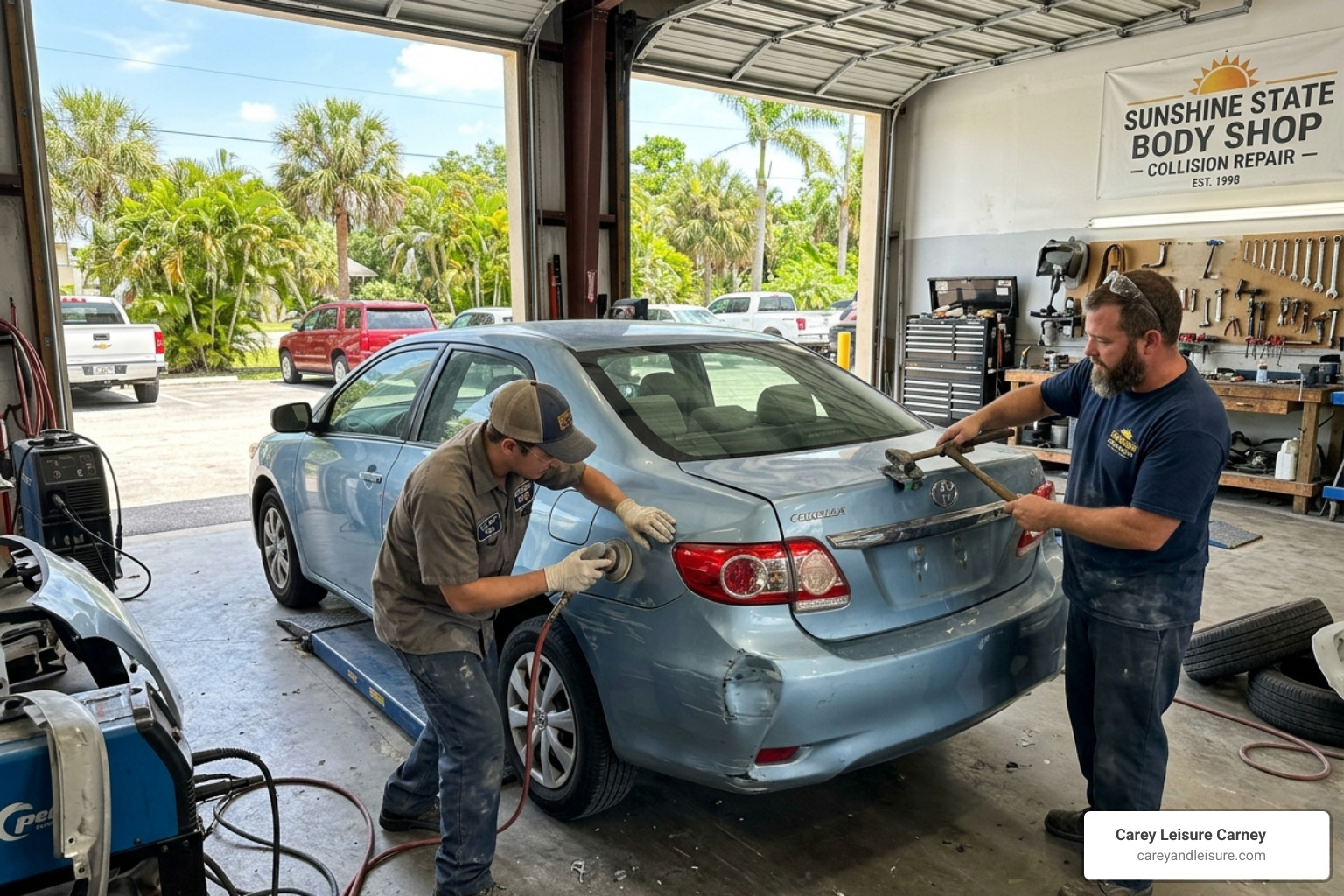
If someone hits your car in a parking lot in Trinity, the “no-fault” rules don’t matter for the repairs. You have two choices:
- File a claim with the at-fault driver’s insurance: Their Property Damage Liability (PDL) coverage should pay for your repairs.
- File with your own Collision coverage: If you have collision insurance, your company will pay for the repairs (minus your deductible) and then go after the other driver’s insurance to get their money back. This process is called “subrogation.”
Florida’s Modified Comparative Negligence Standard
As of March 2023, Florida changed its rules on how fault is shared. We now follow a modified comparative negligence standard with a “51% bar.”
What does this mean for your no fault car accident?
- If you are 50% or less at fault, you can still recover damages from the other driver (though your payout is reduced by your percentage of fault).
- If you are 51% or more at fault, you are barred from recovering any money from the other driver.
For example, if a jury decides your total damages are $100,000, but you were 20% at fault because you were speeding, you would receive $80,000. But if you were 51% at fault? You get $0. This makes how to get the most compensation from a car accident settlement in Florida a matter of proving the other driver was the primary cause of the crash.
Frequently Asked Questions About a No Fault Car Accident
Does no-fault insurance cover my vehicle damage?
No. This is the most common myth we hear. No-fault (PIP) only covers medical bills and lost wages. Vehicle damage is handled through Property Damage Liability (PDL) insurance or your own Collision coverage. If the other driver is at fault, their insurance is responsible for your car’s repairs.
What happens if my medical expenses exceed the $10,000 PIP limit?
This happens more often than you’d think. A single night at a hospital in St. Petersburg can easily cost more than $10,000. Once your PIP is exhausted, you can:
- Use your private health insurance.
- File a claim against the at-fault driver’s Bodily Injury (BI) liability coverage (if they have it).
- File a personal injury lawsuit to recover the remaining costs.
Is Florida still a no-fault state in 2026?
Yes. Despite several attempts by the legislature to move to a tort-based (at-fault) system, as of April 2026, Florida remains a no-fault state. All drivers are still required to carry $10,000 in PIP and $10,000 in PDL.
Conclusion
Navigating a no fault car accident in Florida can feel like trying to drive through Clearwater Beach traffic on a holiday weekend — frustrating and full of roadblocks. Between the 14-day rule, the EMC requirement, and the new 51% fault bar, there are plenty of ways for insurance companies to deny you the money you deserve.
At Carey Leisure Carney, we don’t think you should have to handle this alone. We are a family-run firm with over 100 years of combined experience. What sets us apart? We have Board-Certified trial lawyers — a distinction held by only the top 2% of attorneys in Florida. When you call us, you get direct access to your attorney, not just a paralegal or a case manager.
Whether you are in Largo, Spring Hill, or Wesley Chapel, we are here to help you navigate the system and fight for every penny. If you’ve been injured, don’t wait for the 14-day clock to run out. Contact a Car Accident Attorney at Carey Leisure Carney today for a free consultation. We’ll help you figure out whose fault it really was — and make sure they pay for it.