Beyond the Bump: Navigating Injuries and No-Fault After a Car Crash
Why Your Next Steps After Being Injured in a Car Matter
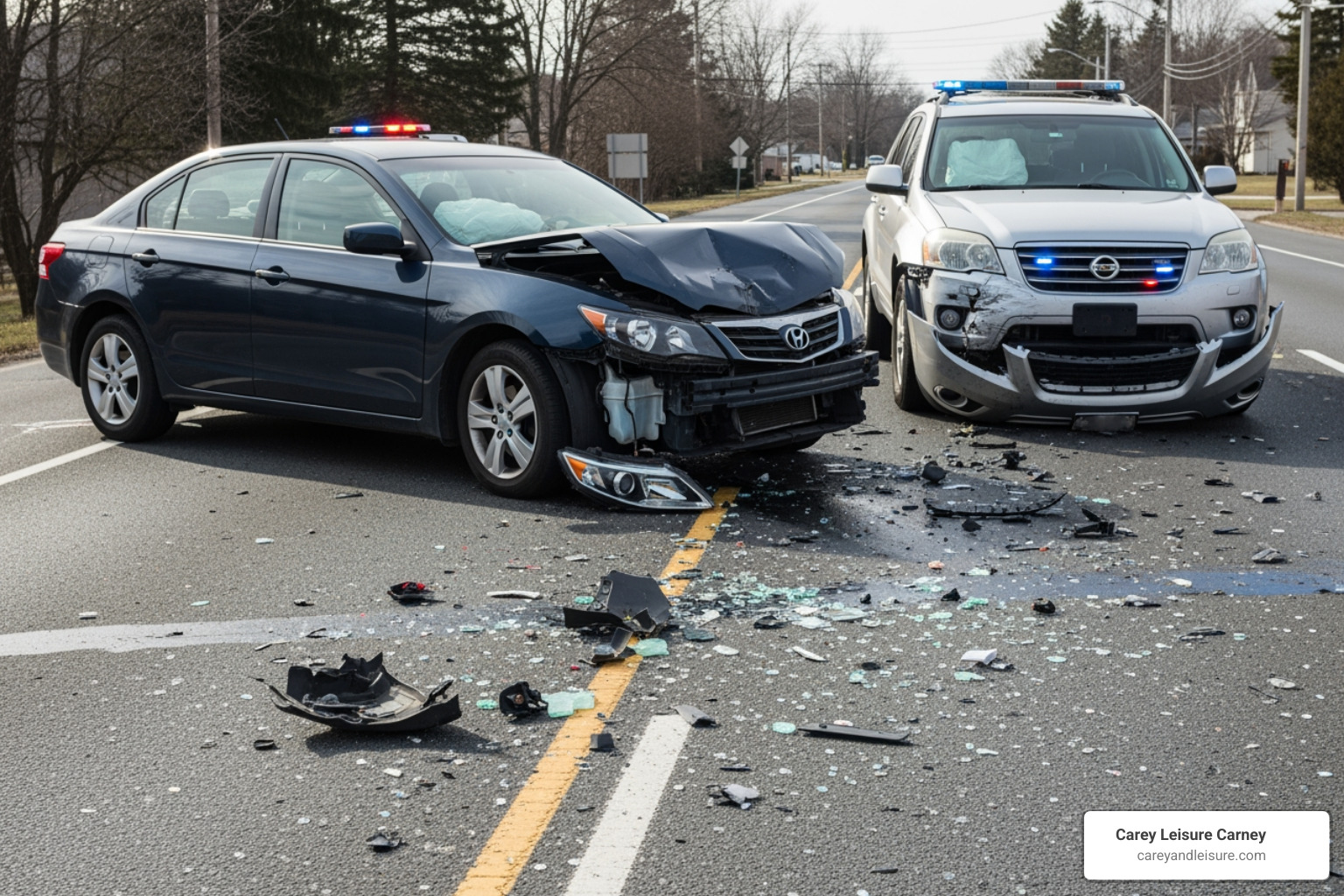
Injured in car crashes face a critical window of time to protect both their health and their legal rights. If you’ve just been in a collision, here’s what you need to do immediately:
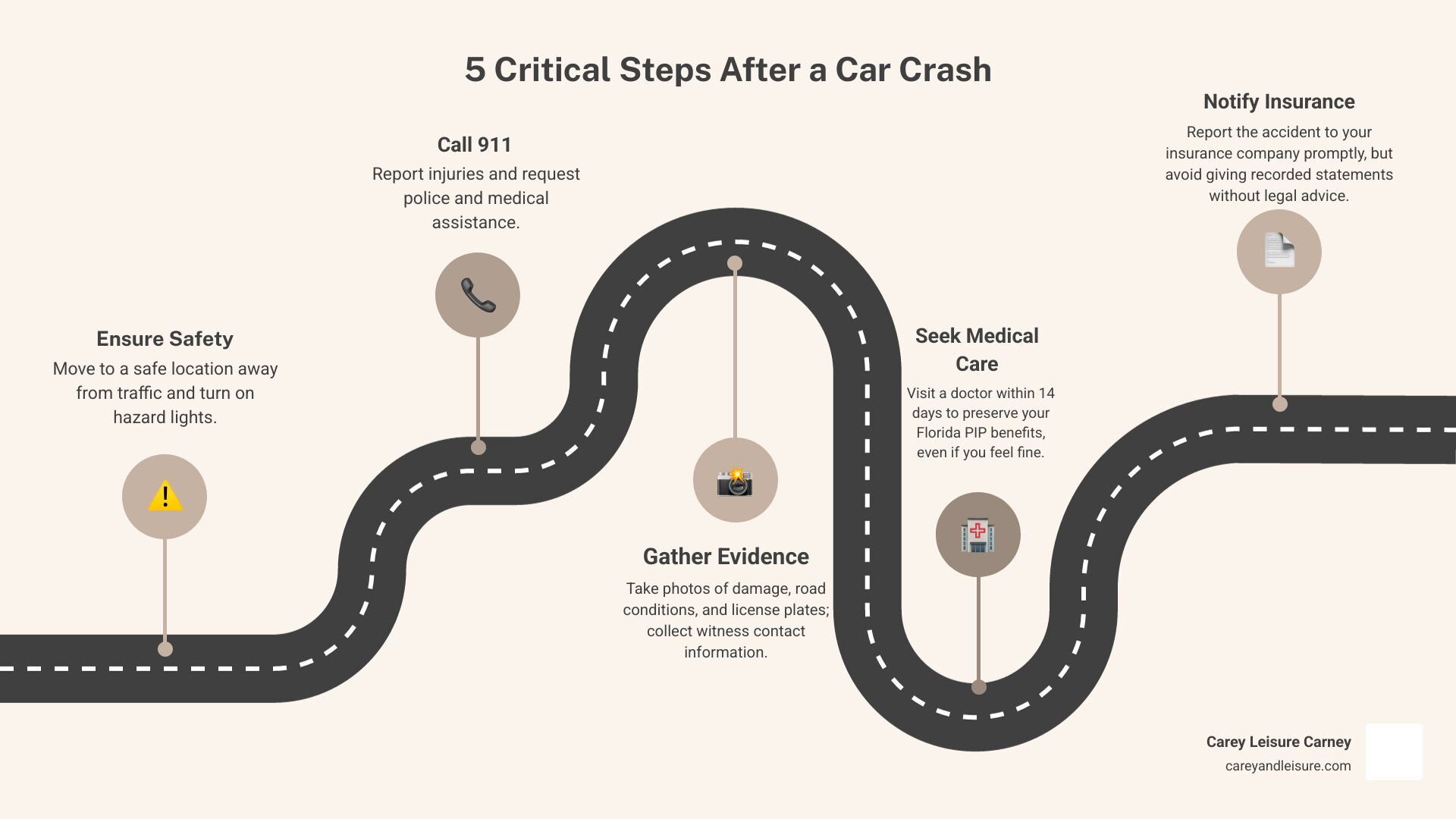
Immediate Actions After a Car Crash:
- Stop safely and turn on hazard lights
- Call 911 if anyone is injured
- Exchange information with all drivers (license, insurance, registration)
- Document the scene with photos and notes
- Seek medical care within 14 days to preserve your Florida PIP benefits
- Report to your insurance company promptly
- Avoid admitting fault or signing documents without legal review
The research shows that over 255,000 people were injured in Florida traffic accidents in a single recent year, and many made costly mistakes in the hours and days that followed. Adrenaline often masks pain, meaning injuries like whiplash, concussions, or internal trauma may not appear until later. Florida’s unique “no-fault” insurance system adds another layer of complexity—you must steer both your own Personal Injury Protection (PIP) benefits and potentially a lawsuit against the at-fault driver if your injuries meet the state’s “serious injury” threshold.
For a broader perspective on roadway risk, national crash data from the National Highway Traffic Safety Administration highlights how common serious injuries are after collisions.
The stakes are high. Missing Florida’s 14-day medical treatment deadline can forfeit your PIP coverage. Giving a recorded statement to an insurance adjuster without preparation can undermine your claim. Posting about the accident on social media can be used against you. One study found that insurance companies actively look for ways to minimize payouts, and without proper documentation, you may receive far less than your injuries warrant.
I’m Thomas W. Carey, a board-certified civil trial lawyer who has guided roughly 40,000 injury matters across Florida since 1988, securing multi-million-dollar results in cases involving individuals injured in car accidents, drunk-driving crashes, and other serious collisions. My firm, Carey Leisure Carney, was founded on the principle that accident victims deserve compassionate, accessible, and aggressive representation when insurance companies and at-fault parties try to minimize their suffering.
What to Do Immediately After a Car Accident
The screech of tires and the sudden jolt can leave you disoriented. But the moments immediately following a car accident are crucial for your safety and any potential legal claim. It’s vital to remain as calm as possible and follow a methodical approach.
At the Scene: Safety and Information
Your first priority should always be safety. If you’re able, pull your vehicle over to the side of the road, out of the flow of traffic. Turn on your hazard lights to alert other drivers. Even if the damage seems minor, stopping is a legal requirement.
Next, check yourself and your passengers for injuries. If anyone is visibly injured, or if you suspect serious injuries, call 911 immediately. Emergency services can assess the situation, provide medical attention, and dispatch law enforcement to the scene. If no one is seriously hurt, you should still contact the local police department in Clearwater, Largo, New Port Richey, Spring Hill, St. Petersburg, Trinity, or Wesley Chapel, depending on your location. A police report can be invaluable documentation for your insurance claim.
After ensuring safety and contacting authorities, it’s time to gather information. This includes exchanging details with all other drivers involved. You’ll need their:
- Name and contact information
- Driver’s license number
- Vehicle registration
- Insurance company name and policy number
You should also provide them with your own information. If there are any witnesses, politely ask for their contact information as well. Their unbiased account could be very helpful later on.
It’s natural to feel shaken, but try your best not to admit fault, even if you think you might be to blame. Statements made at the scene, especially under duress, can be used against you by insurance companies. Simply exchange information and wait for law enforcement to arrive. Your rights are paramount. For a more comprehensive checklist, refer to our guide on What to Do After a Car Accident Florida.
The Importance of Prompt Medical Attention
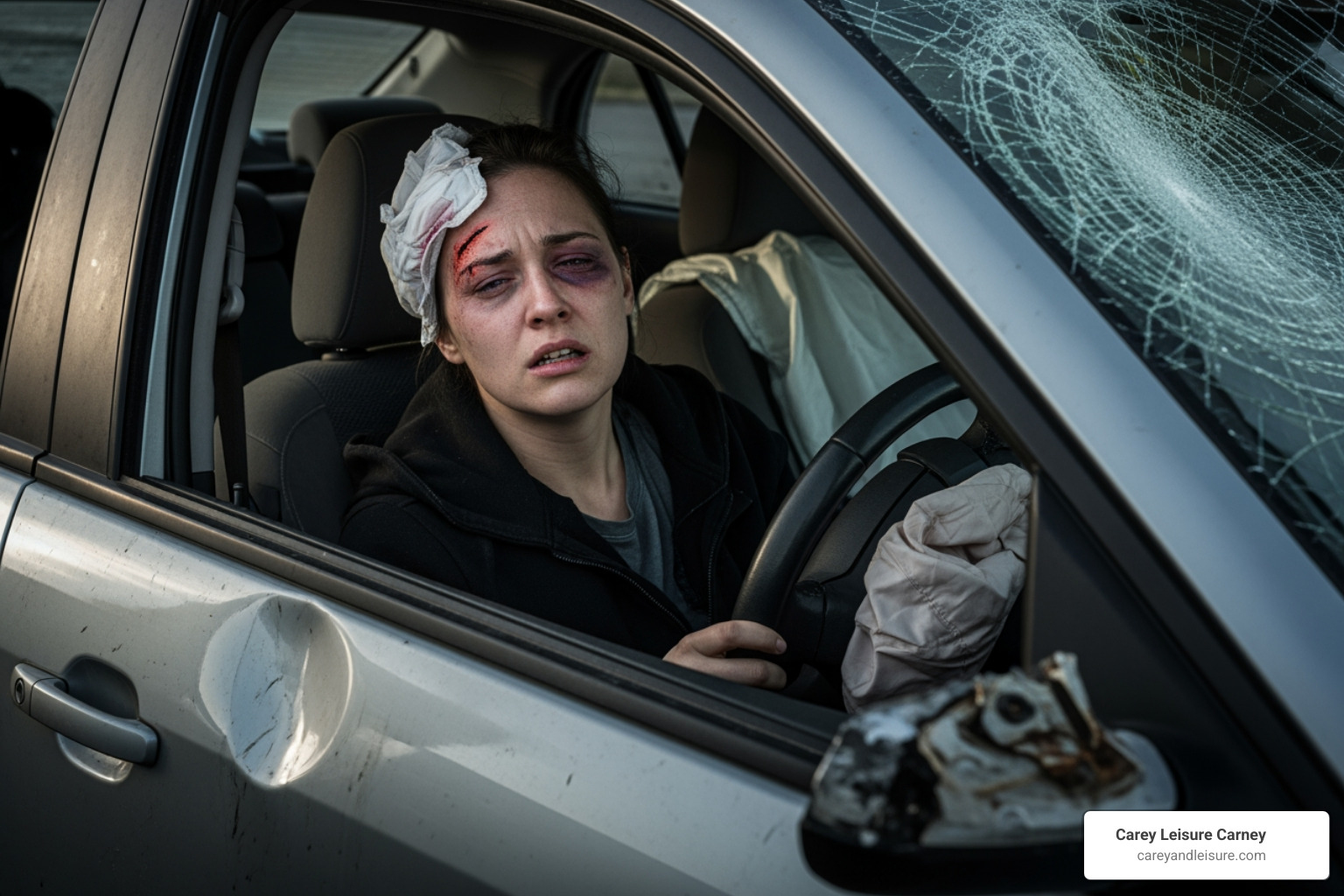
One of the most common mistakes people make after a car accident is delaying medical attention. Adrenaline is a powerful hormone that can mask pain and the severity of injuries. You might walk away from a crash feeling okay, only for symptoms of whiplash, concussions, or internal injuries to appear days or even weeks later.
In Florida, seeking prompt medical attention is not just good for your health; it’s critical for your insurance claim. Florida has a “14-day rule” for Personal Injury Protection (PIP) coverage. This means if you don’t seek initial medical treatment within 14 days of your accident, your PIP benefits for medical expenses could be denied. This is a significant deadline that we cannot stress enough.
Even for seemingly minor aches, see a doctor. This establishes a clear link between the crash and your injuries, creating a medical record that proves your injuries were caused by the accident. Insurance adjusters are notorious for arguing that delayed treatment means your injuries weren’t serious or weren’t related to the accident at all. Don’t give them that ammunition. Always follow all medical advice, attend follow-up appointments, and complete any prescribed therapies. For more on this, consult our detailed guide: You’ve Been in an Accident: What’s Next? Part 2: Medical Attention.
Reporting the Accident and Starting a Claim
After tending to your immediate safety and medical needs, your next step is to notify your insurance company. While Florida law requires you to notify your insurer within a reasonable timeframe, many policies stipulate reporting “as soon as practicable,” often within a few days. It’s always best to report the accident promptly.
When you contact your insurer, provide only the basic facts: the date, time, and location of the accident, and the names of the drivers involved. Resist the urge to give a detailed, recorded statement without first consulting with an attorney. Insurance companies aim to minimize payouts, and their adjusters are trained to ask questions that can hurt your claim. They are not there to protect your rights.
If you’re unsure what to say or have concerns about protecting your interests, contact us before speaking with any insurance adjusters, including your own. We can help you understand your rights and guide you through the process. For more information on how insurance companies operate after an accident, read The Role of Insurance Companies in a Car Accident. You can also find specific guidance on Contacting My Carrier Following Florida Car Accident.
Understanding Your Florida Car Accident Claim
Florida’s auto insurance system can be a bit of a head-scratcher. When you’re injured in car accident, you’ll likely encounter two main avenues for compensation: the “no-fault” benefits from your own policy and a potential lawsuit against the at-fault driver.
Florida’s No-Fault System: Personal Injury Protection (PIP)
Florida operates under a “no-fault” insurance system, which means that after an accident, your own insurance company, through your Personal Injury Protection (PIP) coverage, pays for a portion of your medical expenses and lost wages, regardless of who was at fault for the crash. This is mandatory coverage for all drivers in Florida.
Here’s how PIP generally works:
- Medical Bills: PIP covers 80% of your reasonable and necessary medical expenses.
- Lost Wages: It covers 60% of your lost wages if your injuries prevent you from working.
- Death Benefits: It can also provide a limited death benefit.
- Coverage Limit: The standard PIP policy has a maximum benefit of $10,000.
Crucially, as we mentioned earlier, you must seek initial medical treatment within 14 days of the accident to be eligible for these PIP benefits. If you miss this deadline, you could lose your right to any PIP coverage, leaving you personally responsible for significant medical bills. For a deeper dive into this essential coverage, check out What is PIP Insurance Florida? and understand your PIP Coverage Limits.
Suing the At-Fault Driver: The Tort Claim
While PIP covers immediate expenses, its $10,000 limit often falls far short of what’s needed for serious injuries. This is where a “tort claim” comes in. A tort claim is a lawsuit filed against the at-fault driver to recover damages that exceed your PIP benefits.
Here’s a comparison to help clarify the differences:
| Feature | PIP Claims (No-Fault) | Tort Claims (At-Fault Lawsuit) |
|---|---|---|
| Who you claim from | Your own insurance company | The at-fault driver (and their insurance company) |
| What it covers | 80% medical bills, 60% lost wages, limited death benefits | Pain and suffering, future medical expenses, full lost wages, property damage, other non-economic damages |
| Key limitations | $10,000 maximum benefit; 14-day rule for treatment; doesn’t cover pain and suffering | Requires “serious injury” threshold; can be reduced by comparative negligence |
To pursue a tort claim for pain and suffering in Florida, your injuries must meet a “serious injury” threshold. This typically means suffering a permanent injury, significant and permanent scarring or disfigurement, or death. If your injuries are minor and don’t meet this threshold, your recovery might be limited to your PIP benefits.
A tort claim allows you to seek compensation for:
- Pain and Suffering: This includes physical pain, mental anguish, loss of enjoyment of life, and emotional distress.
- Future Medical Expenses: Costs for ongoing treatment, therapy, and medication.
- Full Lost Wages: The total income you’ve lost and expect to lose due to your injuries.
- Property Damage: Repairs or replacement of your vehicle.
- Other Economic Damages: Out-of-pocket expenses related to the accident.
It’s also important to understand Florida’s Comparative Negligence law. If you are found to be partly at fault for the accident, your total compensation award could be reduced by your percentage of fault. For instance, if you’re awarded $100,000 but found 20% at fault, you would only receive $80,000. For more details on what you can recover, see Car Accident Compensation Florida.
Building Your Case After Being Injured in a Car
After an accident, every detail can matter. A strong claim is built on solid evidence that proves the other driver’s fault and the extent of your injuries.
Essential Evidence to Collect
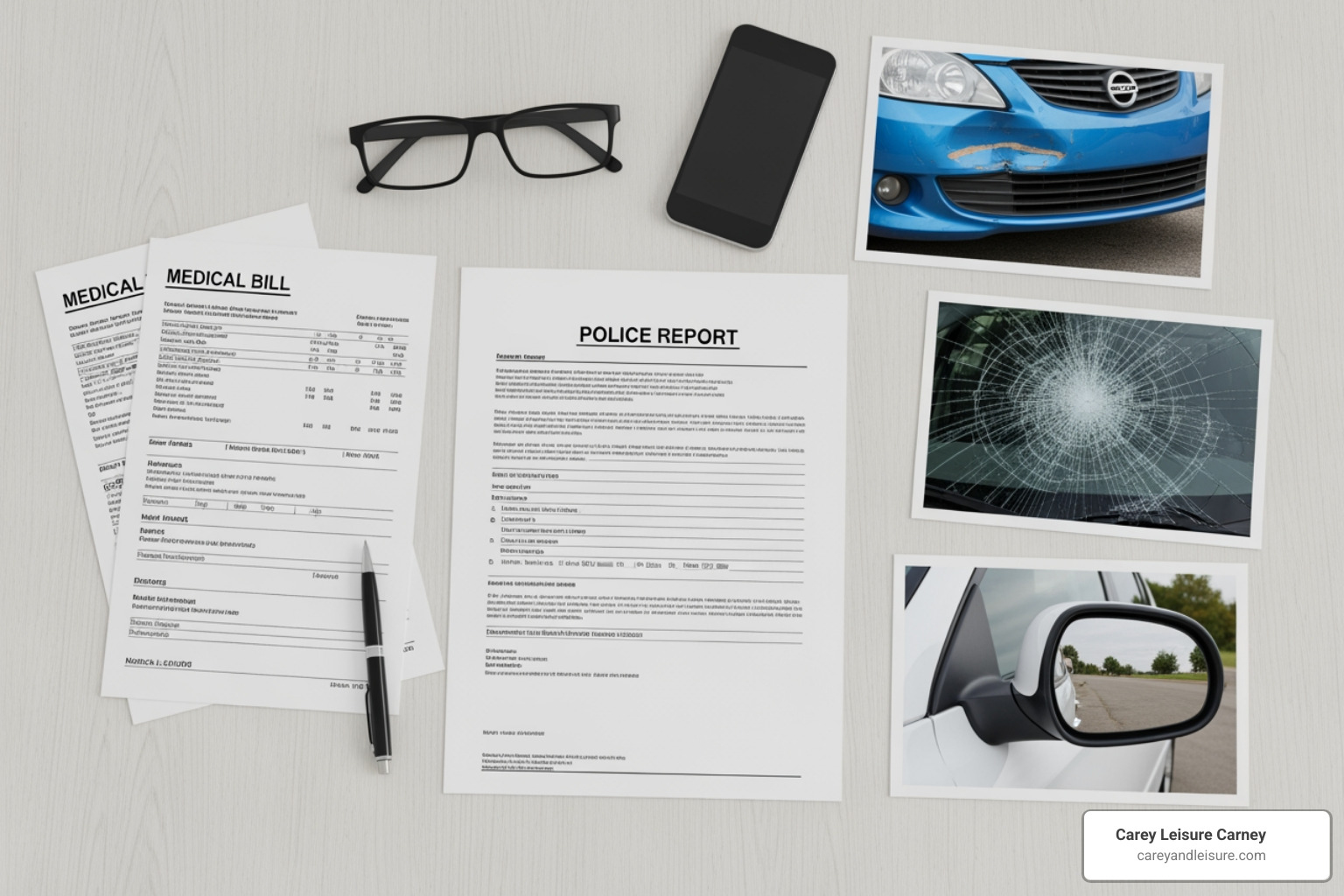
The more evidence you gather, the stronger your personal injury claim will be. We encourage you to be a diligent detective at the scene and in the days that follow.
- Photos and Videos of the Scene: Use your smartphone to capture everything. Get wide shots of the overall accident scene, showing vehicle positions, skid marks, and traffic signals. Take close-ups of vehicle damage, road conditions, debris, and any visible injuries.
- Exchange Information: As mentioned, collect names, contact numbers, driver’s license numbers, vehicle registrations, and insurance details from all drivers. Don’t forget witness contact information.
- Police Report: Obtain a copy of the official police report. This document often contains crucial details about the accident, including the officer’s initial assessment of fault.
- Medical Records: Keep detailed records of all medical appointments, diagnoses, treatment plans, and prognoses, including emergency room visits, specialist consultations, physical therapy, and chiropractic care.
- Financial Documentation: Keep all receipts for prescription medications, over-the-counter pain relievers, medical devices, transportation to and from appointments, and any other out-of-pocket expenses related to your injuries.
- Lost Wage Statements: If your injuries have caused you to miss work, gather pay stubs, employer statements, and any other documentation proving your lost income.
- Journal: Consider keeping a journal of your daily pain levels, limitations, and how your injuries are impacting your life.
Florida has laws regarding Florida Spoliation of Evidence, which means the intentional destruction or alteration of evidence can have serious legal consequences. It’s important to preserve all relevant information. For a comprehensive guide on what to collect, refer to Documenting Evidence in Personal Injury Claims.
Common Car Accident Injuries and Their Impact
Car accidents, even seemingly minor ones, can result in a wide range of injuries, some with long-lasting and debilitating effects.
Some of the most frequent injuries we see when someone is injured in car accidents include:
- Soft Tissue Injuries: These affect muscles, ligaments, and tendons. Whiplash, a common neck injury from rapid back-and-forth movement, falls into this category and can lead to chronic pain, headaches, and limited mobility.
- Broken Bones (Fractures): From simple to compound fractures, broken bones require significant healing time, medical intervention, and often rehabilitation.
- Spinal Cord Injuries: These are among the most severe and life-altering injuries, ranging from herniated discs to complete paralysis. Even a seemingly minor spinal injury can lead to chronic pain, numbness, and weakness. Learn more about Spinal Cord Injuries.
- Traumatic Brain Injuries (TBI): Concussions are a mild form of TBI, but even mild TBIs can have lasting effects on memory, concentration, mood, and sleep. More severe TBIs can lead to permanent cognitive and physical impairments. Read more about Car Accidents and Traumatic Brain Injuries.
- Psychological Trauma: Victims can develop Post-Traumatic Stress Disorder (PTSD), anxiety, and depression. These psychological injuries are as real as physical ones and deserve compensation.
The long-term impact of these injuries can include chronic pain, reduced quality of life, inability to work, and significant financial strain. For a detailed overview, visit Types of Car Accident Injuries.
What to Do if You’re a Passenger Injured in a Car
If you were a passenger and injured in car crash, your situation is slightly different than that of a driver, but your rights to compensation are just as strong.
As an injured passenger, you generally have several avenues for seeking compensation:
- At-Fault Driver’s Liability Insurance: You can file a claim against the bodily injury liability policy of the driver who caused the accident.
- Your Driver’s PIP Coverage: In Florida, your driver’s PIP policy should cover a portion of your medical expenses and lost wages, up to the $10,000 limit, regardless of who was at fault.
- Your Own PIP Coverage: If you have your own auto insurance policy, your PIP benefits may also apply, even if you weren’t driving your own car.
- Uninsured/Underinsured Motorist (UM/UIM) Coverage: If the at-fault driver has no insurance or insufficient insurance, your own UM/UIM policy (or potentially the driver of the car you were in) can step in to cover your damages.
Regardless of whose insurance applies, it’s vital to follow the same steps as a driver: seek immediate medical attention, document everything, and avoid making statements to insurance companies without legal guidance. For more specific advice, please see our guide What to do if you’re a passenger in an accident.
When to Hire a Personal Injury Lawyer
Being injured in car accident is a life-altering event, bringing physical pain, emotional distress, and financial burdens from medical bills and lost income. A personal injury lawyer becomes your ally, leveling the playing field with insurance companies, managing your claim’s complexities, and pursuing the compensation you deserve.
The Advantages of Legal Representation
Why should you consider hiring a personal injury lawyer after a car accident? Our clients turn to us because we help with:
- Navigating Deadlines and Complex Laws: Florida’s personal injury laws and insurance regulations are intricate. There are strict deadlines, like the two-year statute of limitations for filing a lawsuit and the 14-day rule for PIP benefits. We ensure all deadlines are met and all legal procedures are followed correctly.
- Dealing with Insurance Adjusters: Insurance adjusters are trained to minimize payouts. They might offer low settlements, try to get you to admit fault, or pressure you into giving recorded statements that can harm your case. We act as your shield, handling all communications and negotiations, ensuring your rights are protected. We are, quite literally, Lawyers That Sue Insurance Companies when necessary.
- Calculating Total Damages: It’s not just about immediate medical bills. We carefully calculate all your damages, including future medical expenses, lost earning capacity, pain and suffering, and other non-economic losses. This helps you seek comprehensive compensation for the full impact of your injuries. To understand more about the potential value of your claim, see What Is My Personal Injury Case Worth?.
- Litigation Expertise: While many cases settle out of court, if a fair settlement cannot be reached, we are prepared to take your case to trial. Our board-certified attorneys have over 100 years of combined experience in the courtroom.
- Peace of Mind: Hiring us allows you to focus on your recovery while we handle the legal burden.
For a deeper understanding of the value we bring to your case, explore Why You Need a Personal Injury Lawyer.
Common Mistakes When Injured in a Car
In the aftermath of an accident, it’s easy to make missteps that can jeopardize your claim.
- Admitting Fault: Never admit fault at the scene, even if you think you might be responsible. The full circumstances of the accident might not be immediately clear.
- Signing Documents Without Review: Do not sign any medical releases, settlement offers, or other documents from the insurance company without first having an attorney review them.
- Giving a Recorded Statement: Insurance adjusters will often ask for a recorded statement. Politely decline until you’ve spoken with your lawyer.
- Minimizing Your Injuries: Don’t tell doctors or insurance adjusters that you’re “fine” if that isn’t accurate. Be honest and thorough about all your symptoms.
- Social Media Posts: Be extremely cautious about what you post on social media after an accident. For more on this, check out Personal Injury and Social Media.
- Accepting a Quick, Low Settlement: Insurers often push for quick, low settlements before you know the full extent of your injuries and long-term costs.
Frequently Asked Questions About Car Accident Injuries
What if the at-fault driver has no insurance or not enough?
This is a unfortunately common scenario in Florida, where many drivers are either uninsured or carry only the minimum required coverage, which is often insufficient for serious injuries. If the at-fault driver has no insurance or not enough to cover your damages, your own Uninsured/Underinsured Motorist (UM/UIM) coverage becomes crucial.
UM/UIM coverage is an optional but vital add-on to your auto insurance policy. It steps in to cover your medical expenses, lost wages, and pain and suffering when the at-fault driver’s policy cannot. We strongly recommend all our clients carry robust UM/UIM coverage to protect themselves and their families. This coverage can be the difference between getting the care and compensation you need and facing devastating financial burdens. For a more detailed explanation, refer to Uninsured vs. Underinsured Motorist Coverage Explained.
How long do I have to file a lawsuit in Florida?
In Florida, the statute of limitations for a car accident negligence claim is generally two years from the date of the accident. This means you have two years from the date of the crash to file a lawsuit against the at-fault driver.
It is absolutely critical to act quickly. Missing this two-year deadline can mean losing your right to seek compensation forever, regardless of how severe your injuries are or how clear the other driver’s fault. There are very limited exceptions to this rule. That’s why contacting an attorney as soon as possible after an accident is so important—it ensures your legal rights are protected and all deadlines are met. For more information on legal timelines and processes, review our Lawsuit Basics.
What if my accident was caused by a drunk driver?
Being injured in car accident by a drunk driver is particularly egregious. Drunk driving is not just negligence; it’s a criminal act that shows a blatant disregard for the safety of others. In such cases, you may be entitled to more than just standard compensatory damages (medical bills, lost wages, pain and suffering).
Florida law often allows for the recovery of punitive damages in drunk driving cases. These damages are not meant to compensate you for your losses but rather to punish the offender for their reckless behavior and to deter others from similar conduct. Punitive damages can significantly increase the value of your claim.
Furthermore, in some situations, it may be possible to pursue a claim against the bar, restaurant, or establishment that over-served the drunk driver, under Florida’s “Dram Shop” laws. This adds another layer of legal complexity and potential recovery. If you were hit by a drunk driver, it’s important to consult with an experienced attorney to explore all your legal options. Learn more about your rights in our Drunk Driving Accident Claims Guide 2025.
Conclusion: Taking Control of Your Recovery
Being injured in car accident can turn your life upside down, but you don’t have to steer the aftermath alone. By taking immediate safety precautions, seeking prompt medical care, understanding your rights under Florida’s no-fault and tort laws, and diligently gathering evidence, you can take control of your situation.
For serious injuries, the complexities of the legal system and the often-aggressive tactics of insurance companies can be a significant barrier to fair compensation. Our board-certified attorneys at Carey Leisure Carney have over 100 years of combined experience guiding clients through every step of this challenging journey. We offer direct attorney access and personalized service, ensuring your rights are protected so you can focus on what matters most—your recovery.
If you’ve been hurt in a crash in Clearwater, Largo, New Port Richey, Spring Hill, St. Petersburg, Trinity, or Wesley Chapel, take the next step toward justice.