Top Car accident attorneys in clearwater fl: Expert
Why Finding the Right Legal Help After a Crash Matters
If you’ve been in a wreck in Clearwater, finding car accident attorneys in Clearwater FL quickly can make the difference between receiving full compensation and settling for far less than you deserve. The right attorney will investigate your crash, handle insurance companies, and fight for every dollar you’re owed while you focus on recovery.
What to Look for in a Clearwater Car Accident Attorney:
- Board Certification – Only about 2% of Florida attorneys hold this distinction in civil trial law
- Local Experience – Knowledge of Clearwater’s dangerous intersections and Pinellas County courts
- Direct Attorney Access – You speak with your lawyer, not just paralegals
- Contingency Fee Basis – No upfront costs; you pay only if you win
- Proven Track Record – Multi-million dollar verdicts and settlements
Being involved in a car accident is extremely stressful. One moment you’re driving through Clearwater, and the next you’re dealing with injuries, medical bills, insurance adjusters, and questions about your legal rights. In 2024 alone, Pinellas County saw 14,378 motor vehicle accidents resulting in 108 deaths and nearly 8,810 injuries. That’s roughly 40 crashes every single day in our area.
The reality is harsh: insurance companies have teams of lawyers working to minimize what they pay you. Without experienced legal representation, you’re at a severe disadvantage.
Florida’s no-fault insurance system adds another layer of complexity. Your Personal Injury Protection (PIP) coverage typically pays only up to 80% of medical bills and 60% of lost wages, capped at $10,000. For serious injuries—which often cost tens or hundreds of thousands of dollars to treat—that’s nowhere near enough. You need an attorney who understands how to pursue additional compensation from the at-fault driver.
Time is also critical. Florida law gives you just two years from the date of your crash to file a personal injury lawsuit. Miss that deadline, and you lose your right to compensation forever. Insurance companies know this and often drag out negotiations, hoping you’ll accept a lowball settlement or run out of time.
I’m Thomas W. Carey, founding partner of Carey Leisure Carney and a Board-Certified Civil Trial Lawyer since 1992. Over nearly four decades, I’ve guided roughly 40,000 injury cases across Florida, securing multi-million-dollar results for clients hurt by negligent drivers—and I’ve made it my mission to help accident victims in Clearwater, FL find experienced car accident attorneys in Clearwater FL who will fight for their rights. This guide will walk you through everything you need to know about protecting yourself after a crash and choosing the right legal team.
The Reality of Car Accidents in Clearwater
Clearwater is known for its stunning beaches, friendly community, and year-round sunshine. But there’s a darker reality beneath the surface: our roads are some of the most dangerous in Florida. The numbers are sobering. Florida ranks as the third most dangerous state in the nation for drivers when it comes to car-accident-related deaths. Here in Pinellas County, we see that statistic play out in real time—with a deadly accident occurring roughly once every three or four days.
In 2024, Pinellas County recorded 14,378 motor vehicle accidents, resulting in 108 deaths and nearly 8,810 injuries. That’s an average of 40 crashes happening every single day in our community. Think about that for a moment: while you’re reading this, someone nearby is likely dealing with the aftermath of a collision.
The trend continued into 2025. By February alone, Pinellas County had already seen 1,428 crashes, with 818 causing injuries and 8 taking lives. These aren’t just statistics—they’re our neighbors, family members, and friends. Each number represents a person whose life was turned upside down in an instant.
For a more detailed look at the data, visit our page on Clearwater Auto Accident Statistics. You can also read more about why Florida is a dangerous state for drivers in this comprehensive report.
This constant danger is exactly why having experienced car accident attorneys in Clearwater FL matters so much. When crashes happen this frequently, you need someone who knows the local courts, understands Florida’s complex insurance laws, and has the trial experience to stand up to aggressive insurance companies.
Common Causes of Clearwater Car Crashes
Most accidents don’t just “happen.” There’s almost always a preventable cause—and usually, it’s another driver’s negligence. Understanding what causes crashes in Clearwater can help you protect yourself and, if you’ve already been hurt, identify who should be held responsible.
Distracted driving has become an epidemic. We’ve all seen it: someone drifting into another lane while checking their phone, or a driver who doesn’t notice the light has changed because they’re adjusting the radio. Texting while driving is particularly deadly because it combines three types of distraction at once—your eyes leave the road, your hands leave the wheel, and your mind leaves the task of driving.
Speeding might seem like a minor violation, but it dramatically increases both the likelihood and severity of crashes. When you’re going 60 mph instead of 45, you have far less time to react to sudden stops or pedestrians. The physics are unforgiving—higher speeds mean harder impacts and more devastating injuries.
Drunk driving continues to plague our roads despite decades of public awareness campaigns. In 2024 alone, Pinellas County saw 296 alcohol-involved wrecks that resulted in 7 deaths and 156 additional injuries. If a drunk driver hit you, you have specific legal rights beyond what typical accident victims can claim. Learn more about your options if a Drunk Driver Hit Me.
Reckless driving—aggressive lane changes, tailgating, running red lights, road rage—puts everyone at risk. We see this behavior daily on US-19 and other high-traffic corridors.
Finally, tourist unfamiliarity with roads creates a unique challenge in Clearwater. Our beautiful beaches attract millions of visitors each year, many of whom don’t know the area. They might miss exits, make sudden turns, or drive too slowly in fast-moving traffic. While being lost doesn’t excuse causing an accident, it’s a reality we deal with in a tourist-heavy community.
Clearwater’s Most Dangerous Intersections
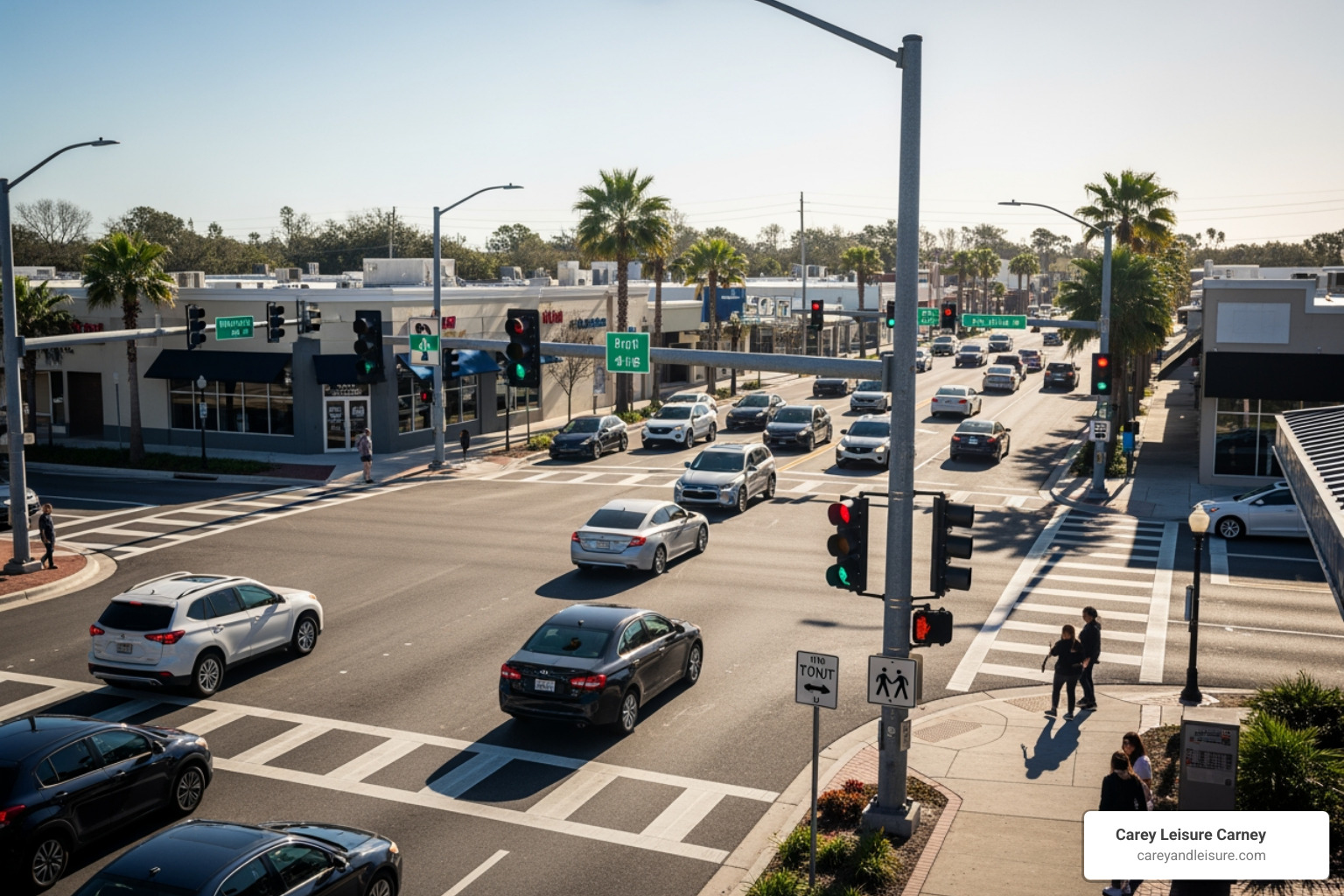
Some spots in Clearwater see far more crashes than others. High traffic volume, confusing layouts, and the mix of locals, tourists, and commercial vehicles all contribute to these danger zones. Based on accident data and our four decades of experience representing crash victims, these intersections stand out as particularly hazardous:
Gulf to Bay Blvd & S Belcher Rd tops the list. This busy intersection handles heavy traffic from multiple directions throughout the day. We’ve represented numerous clients hurt at this location.
US-19 & Sunset Point Rd is another hotspot. US-19 itself is one of the most dangerous roads in Florida, and this intersection combines high speeds with complex turning patterns.
US-19 & Drew St sees similar problems—fast-moving traffic, multiple lanes, and drivers making last-second decisions that lead to T-bone collisions and rear-end crashes.
Eastland Blvd & McMullen Booth Rd rounds out the list. This intersection serves as a major connector for east-west traffic and sees significant congestion during rush hours.
If you drive through these areas regularly, stay extra alert. And if you’ve been hurt at one of these intersections, that location history can actually help your case—it demonstrates a pattern of dangerous conditions that car accident attorneys in Clearwater FL can use to strengthen your claim.
Critical Steps to Take After a Clearwater Car Accident
The moments right after a car accident feel like a blur. Your heart is racing, your hands might be shaking, and you’re trying to process what just happened. I’ve walked thousands of clients through this, and I want you to know something important: what you do in the next few minutes can make or break your ability to recover fair compensation down the road.
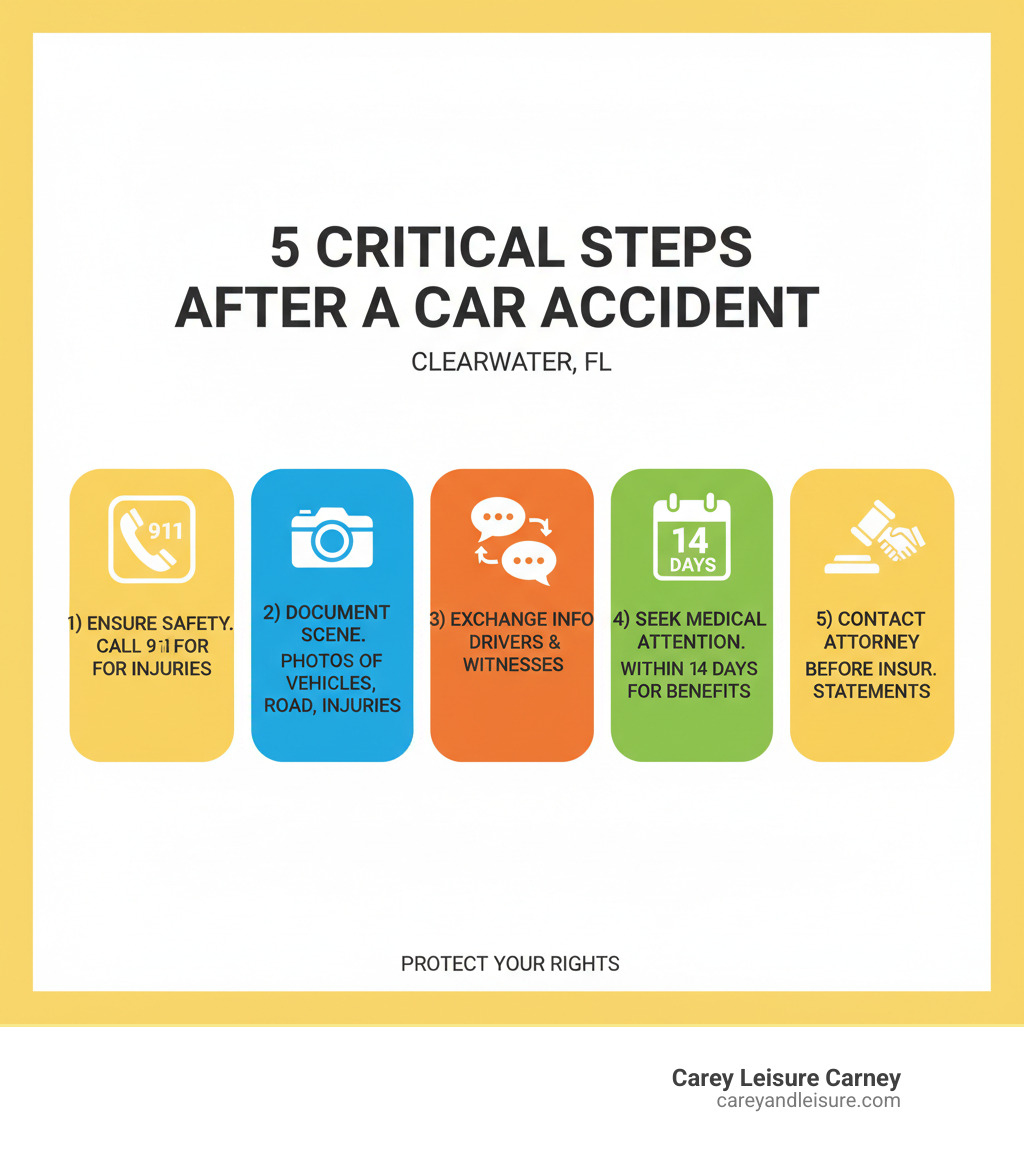
Think of this as your post-accident checklist. These steps aren’t just suggestions—they’re essential actions that protect both your health and your legal rights. The insurance companies certainly know what they want you to do (or not do), and we need to make sure you’re just as prepared. For a comprehensive guide, check out our page on what to do after a car accident Florida.
1. Ensure Safety and Call for Help
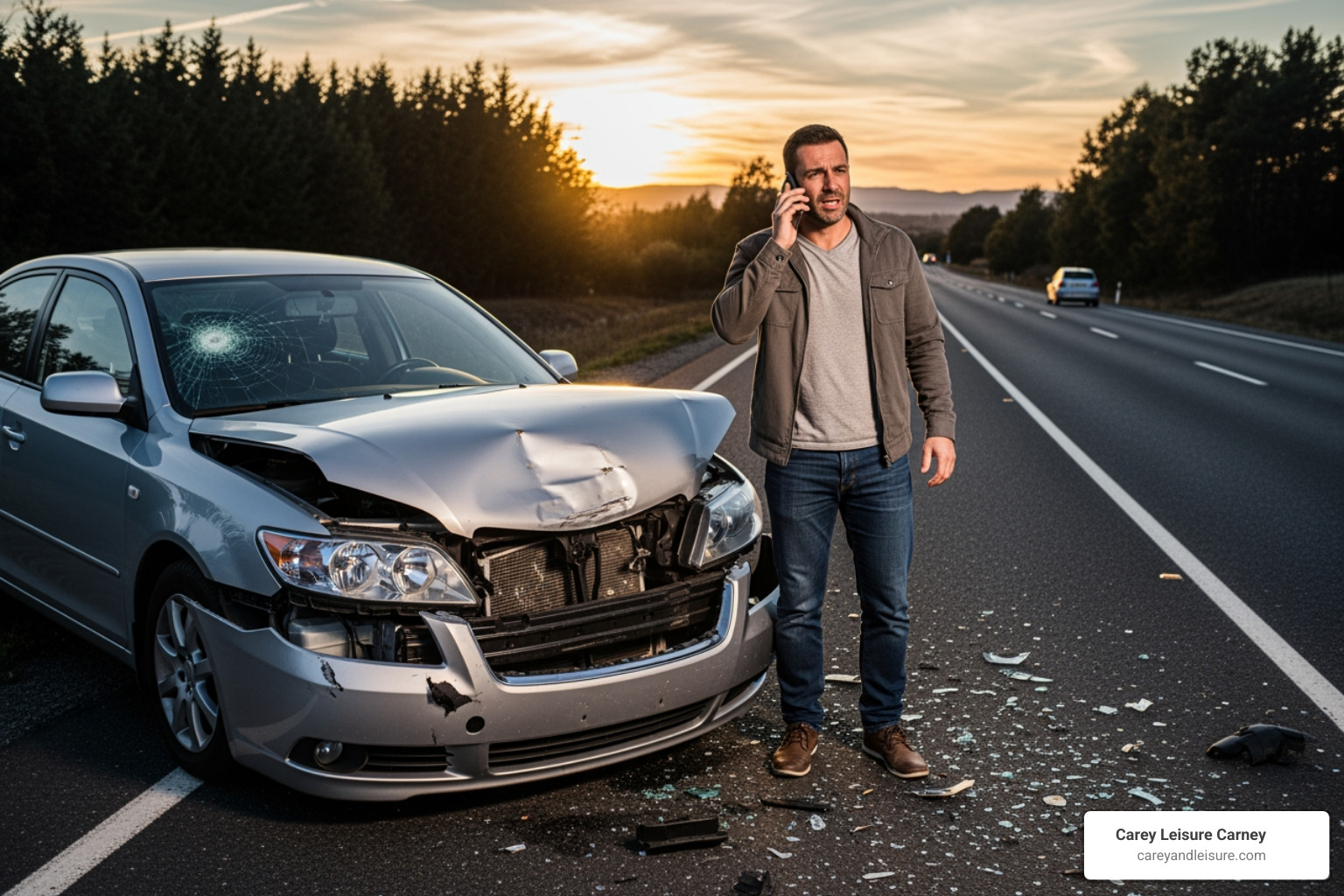
Before anything else, you need to make sure everyone is safe. If your car can still move and you’re not blocking traffic, carefully drive to the shoulder or a nearby parking lot. Turn on those hazard lights immediately. If your vehicle won’t budge, stay inside with your seatbelt on until help arrives—unless there’s a fire or another immediate danger.
Take a moment to check yourself and your passengers for injuries. Are you bleeding? Does anything feel broken or especially painful? Sometimes the adrenaline coursing through your body can mask serious injuries, so even if you feel “okay,” pay attention to your body.
Now call 911. Yes, even for what seems like a minor fender-bender. Here’s why: that police report creates an official record of what happened, who was involved, and often includes the officer’s assessment of fault. I can’t tell you how many times that report has been the difference between winning and losing a case. Insurance companies take official police reports seriously—and so should you.
2. Document Everything at the Scene
Your phone is about to become your best friend. Once everyone is safe and help is on the way, it’s time to gather evidence. This isn’t about being paranoid—it’s about protecting yourself when memories fade and stories change.
Start by exchanging information with the other driver. You need their full name, phone number, insurance company and policy number, driver’s license number, and license plate. Be polite but brief. Don’t discuss who was at fault or apologize—just swap information.
If anyone saw the accident happen, ask for their contact information. These witnesses didn’t have a dog in this fight, which makes their testimony incredibly valuable if your case goes to court or if the other driver suddenly changes their story.
Now pull out your phone and start documenting. Take photos and videos of absolutely everything. I mean everything: all vehicle damage from multiple angles, the final position of the cars, any skid marks on the road, broken glass or debris, traffic signs, weather conditions, and any visible injuries you or your passengers have. Zoom in on the damage, then take wide shots showing the whole scene. If your hands are shaking too much, ask a passenger or witness to help. The more visual evidence you collect right now, the stronger your case will be later.
3. Seek Prompt Medical Attention
Here’s something that surprises a lot of people: you might not feel hurt right after a crash, but that doesn’t mean you’re not injured. Your body floods with adrenaline during traumatic events, which can mask pain for hours or even days. I’ve seen clients walk away from accidents feeling fine, only to wake up the next morning barely able to move.
Get checked out by a doctor within 14 days of your accident. This isn’t just good medical advice—it’s a legal requirement in Florida. Under our state’s no-fault insurance system, you must seek medical care within 14 days to qualify for your Personal Injury Protection (PIP) benefits. Miss that deadline, and you could lose coverage for your medical bills entirely.
A medical examination does more than just check your health. It creates an official record that links your injuries directly to the accident. This documentation becomes crucial evidence when you’re seeking compensation. Some injuries like whiplash, concussions, or soft tissue damage don’t show up on the scene—they emerge later. A prompt medical visit ensures these latent injuries get caught early and properly documented.
For more detailed guidance on this critical step, read our article You’ve Been In An Accident What’s Next Part 2 Medical Attention.
4. Report the Accident, But Be Careful What You Say
You need to notify your insurance company about the accident—that’s typically required under your policy. But here’s where things get tricky, and where a lot of good people accidentally hurt their own cases.
Never admit fault or apologize, even if you think you might have caused the accident. You don’t have all the facts yet. Maybe the other driver was speeding. Maybe a traffic light was malfunctioning. Maybe road conditions played a bigger role than you realize. Saying “I’m sorry” or “It was my fault” at the scene can come back to haunt you when the insurance companies start pointing fingers.
The other driver’s insurance company will probably contact you quickly. They’ll seem friendly and concerned. They might ask for a recorded statement about what happened. Here’s my advice after handling roughly 40,000 injury cases: politely decline to give any recorded statement until you’ve spoken with car accident attorneys in Clearwater FL. These adjusters are trained professionals whose job is to minimize what their company pays out. They’re very good at asking questions that seem innocent but can trap you into saying something that damages your claim.
When you do contact your own insurance company, stick to the basic facts: when and where the accident happened, who was involved, and that you’re seeking medical attention. Keep it simple and factual. For more guidance on this conversation, check out our article on Contacting My Carrier Following Florida Car Accident.
The bottom line? The steps you take immediately after a crash set the foundation for everything that follows. Get safe, document thoroughly, see a doctor, and be careful what you say to insurance companies. And when in doubt, call us before making any decisions that could affect your recovery.
Understanding Your Legal Rights and Florida’s Laws
Navigating the aftermath of a car accident in Clearwater involves understanding a complex web of legal principles, insurance policies, and state statutes. This is where the expertise of car accident attorneys in Clearwater FL becomes invaluable. They can help you make sense of your options, whether it involves negotiating with insurance companies or pursuing a lawsuit. For general legal advice, check out our Car Accident Legal Advice page.
Florida’s No-Fault Insurance System
Florida operates under a “no-fault” car insurance system, which can be confusing for accident victims. Here’s what you need to know.
Personal Injury Protection (PIP) is the core of Florida’s no-fault system. Every driver in Florida is required to carry PIP coverage. After an accident, your own PIP insurance is typically the first line of defense for your medical bills and lost wages, regardless of who was at fault for the crash. This is why seeking medical attention within 14 days is so critical—it’s a prerequisite for accessing these benefits.
How PIP works: Your PIP coverage will usually cover up to 80% of your medical bills and 60% of your lost wages, up to a maximum of $10,000. While PIP provides immediate benefits, the $10,000 limit is often quickly exhausted, especially with serious injuries.
The limitations are real. If your injuries are severe enough to meet Florida’s “serious injury” threshold—which includes significant and permanent loss of an important bodily function, permanent injury within a reasonable degree of medical probability, significant and permanent scarring or disfigurement, or death—you may be able to step outside the no-fault system and pursue a claim against the at-fault driver for additional damages. Our article, What is PIP Insurance Florida, provides more details.
Recoverable Damages in a Car Accident Claim
If you’ve been injured due to another driver’s negligence, you may be entitled to recover various types of damages. These can broadly be categorized as economic and non-economic.
Economic damages cover your actual financial losses. These include medical bills (both past and future), lost wages (both past and future), property damage to your vehicle, and out-of-pocket expenses like transportation to medical appointments or medication costs. These are the tangible, calculable losses that directly impact your bank account.
Non-economic damages are more subjective and compensate for non-financial losses. These include pain and suffering, emotional distress, mental anguish, loss of enjoyment of life, disfigurement, and loss of consortium (for spouses). While harder to quantify, these damages recognize the real toll an accident takes on your quality of life.
In rare cases involving particularly egregious conduct—such as drunk driving—punitive damages may also be awarded to punish the wrongdoer and deter similar behavior. For more on what you may recover, visit our page on Compensation After Accident.
Florida’s Statute of Limitations
Time is not on your side when it comes to filing a car accident lawsuit in Florida. The law imposes a strict two-year deadline from the date of your crash to file a personal injury lawsuit. Miss that deadline, and you lose your right to compensation forever—no matter how strong your case is.
Insurance companies are well aware of this deadline and often drag out negotiations, hoping you’ll accept a lowball settlement or simply run out of time. This is why it’s so important to act quickly and consult with experienced car accident attorneys in Clearwater FL as soon as possible after your accident.
While the statute of limitations for personal injury claims is two years, other types of claims may have different deadlines. For example, you can learn more about medical malpractice deadlines on our page about How Long Do You Have to File a Medical Malpractice Lawsuit in Florida. Don’t wait—the clock starts ticking the moment your accident happens.