
Funeral Malpractice Lawyer: Right Choice 2025
When Funeral Homes Fail During Your Darkest Hour
Finding the right funeral malpractice lawyer is essential when a funeral home breaches its duty of care during your family’s most vulnerable time. These specialized attorneys handle cases involving mishandling of remains, billing fraud, and other forms of negligence that compound your grief.
What You Need to Know About Funeral Malpractice Lawyers:
- Specialization: Look for personal injury lawyers experienced in funeral home negligence.
- Fee Structure: Most work on contingency, so you only pay if you win.
- Case Types: They handle misidentification of remains, improper embalming, theft, fraud, and emotional distress claims.
- Time Limits: Florida’s statute of limitations is typically 2-4 years to file a claim.
- Damages: You can recover funeral costs, other expenses, and damages for emotional anguish.
Losing a loved one is devastating enough without dealing with a funeral home’s negligence. As one legal expert noted, “It seems incredible that these cases even exist, but they are not uncommon.”
The funeral industry handles over $20 billion annually, yet thousands of negligence complaints are filed each year. When funeral homes fail to meet professional standards, families face additional trauma. This betrayal of trust is profound, as families rely on these institutions for dignity, only to face further harm through negligence or fraud.
What Constitutes Funeral Home Malpractice?
Funeral home malpractice occurs when a provider fails to meet professional standards, causing harm, distress, or financial loss to a grieving family. It’s a profound breach of trust during a family’s most vulnerable time, when they expect compassion, respect, and competence.
Funeral homes owe a “duty of care” to the deceased and their family. This includes proper handling of remains, accurate billing, and delivering promised services. Failure to do so can range from simple negligence to intentional misconduct, causing devastating pain. If you believe you’ve experienced such a betrayal, you have legal recourse. We are here to help you in Seeking Justice for Funeral Cemetery Cremation Malpractice.
Common Types of Funeral Home Negligence and Abuse
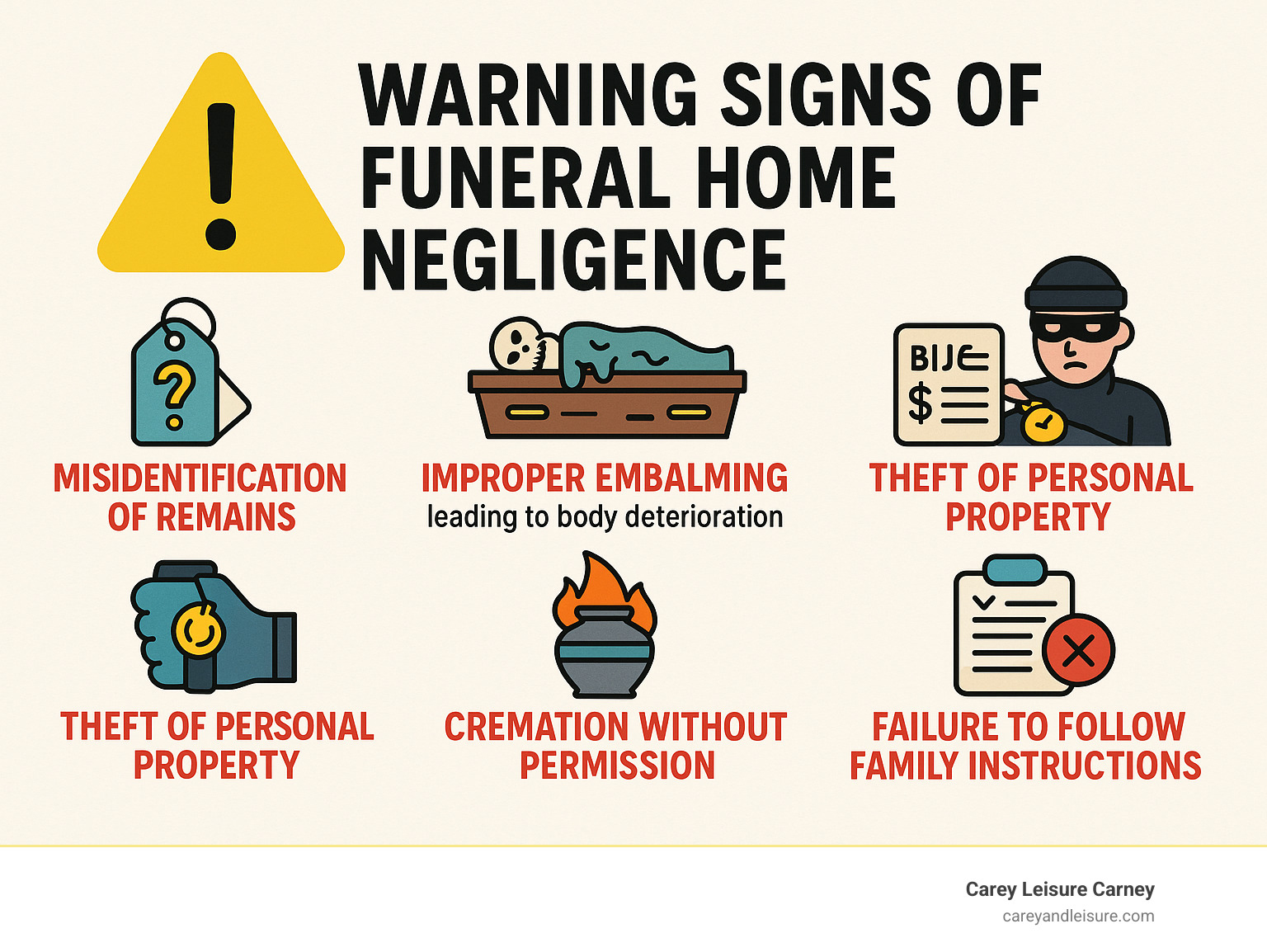
The types of negligence and abuse in these cases are varied and often horrifying. They can include:
- Misidentification of Remains: This agonizing error can involve providing the wrong body for viewing or burial, or returning the wrong cremains. Signs include mislabeling or missing medical devices from cremains.
- Improper Embalming or Refrigeration: Funeral homes must properly preserve the deceased. Incorrect embalming or poor refrigeration can cause rapid deterioration, preventing a final viewing and causing extreme emotional distress.
- Mishandling of Cremains: This includes losing or mixing cremated remains, or cremating a body without legal permission, denying families proper closure.
- Theft of Personal Property or Body Parts: Disturbingly, staff may steal valuables like jewelry from the deceased. In extreme cases, body parts are illegally removed and sold.
- Fraudulent Practices and Overcharging: This includes billing for unrendered services, adding hidden fees, or substituting cheaper caskets. For example, a family might pay for a full-body treatment when only visible parts are preserved.
- Improper Burial or Cremation: This involves burying a body in the wrong plot, burying multiple bodies in a single plot, or cremating without proper authorization.
- Unlicensed Personnel: Sometimes, unlicensed individuals perform crucial tasks like embalming, leading to disfigurement or mishandling.
- Failure to Tend to Gravesites: Cemetery negligence can include neglecting gravesite upkeep or failing to address vandalism.
These are just some examples of heartbreaking situations that require legal action. For more details, see our guide on Funeral Home Negligence Signs.
The Laws Governing Funeral Homes
The funeral industry is regulated by federal and state laws to protect consumers and ensure dignified treatment of the deceased.
At the federal level, the FTC Funeral Rule is paramount. It requires funeral homes to provide itemized pricing, allow consumers to select only the services they want, and disclose legal requirements for services like embalming. This rule aims to prevent deceptive practices and ensure transparency.
Beyond federal oversight, each state has specific regulations. In Florida, for example, we have specific laws regarding the preservation and storage of deceased individuals, which you can read about in Florida Deceased Preservation and Storage Laws. These state laws often cover licensing, facility standards, disposition of remains, and consumer protection. State licensing boards, like the Florida Board of Funeral, Cemetery, and Consumer Services, enforce these regulations. When a funeral home violates these standards, it can be held accountable through civil litigation. You can learn more about the FTC’s enforcement efforts at The Federal Trade Commission’s Funeral Rule.
Steps to Take if You Suspect Malpractice
Suspecting funeral home negligence adds trauma to an already heartbreaking time. Taking the right steps immediately is crucial for protecting your rights and seeking justice.
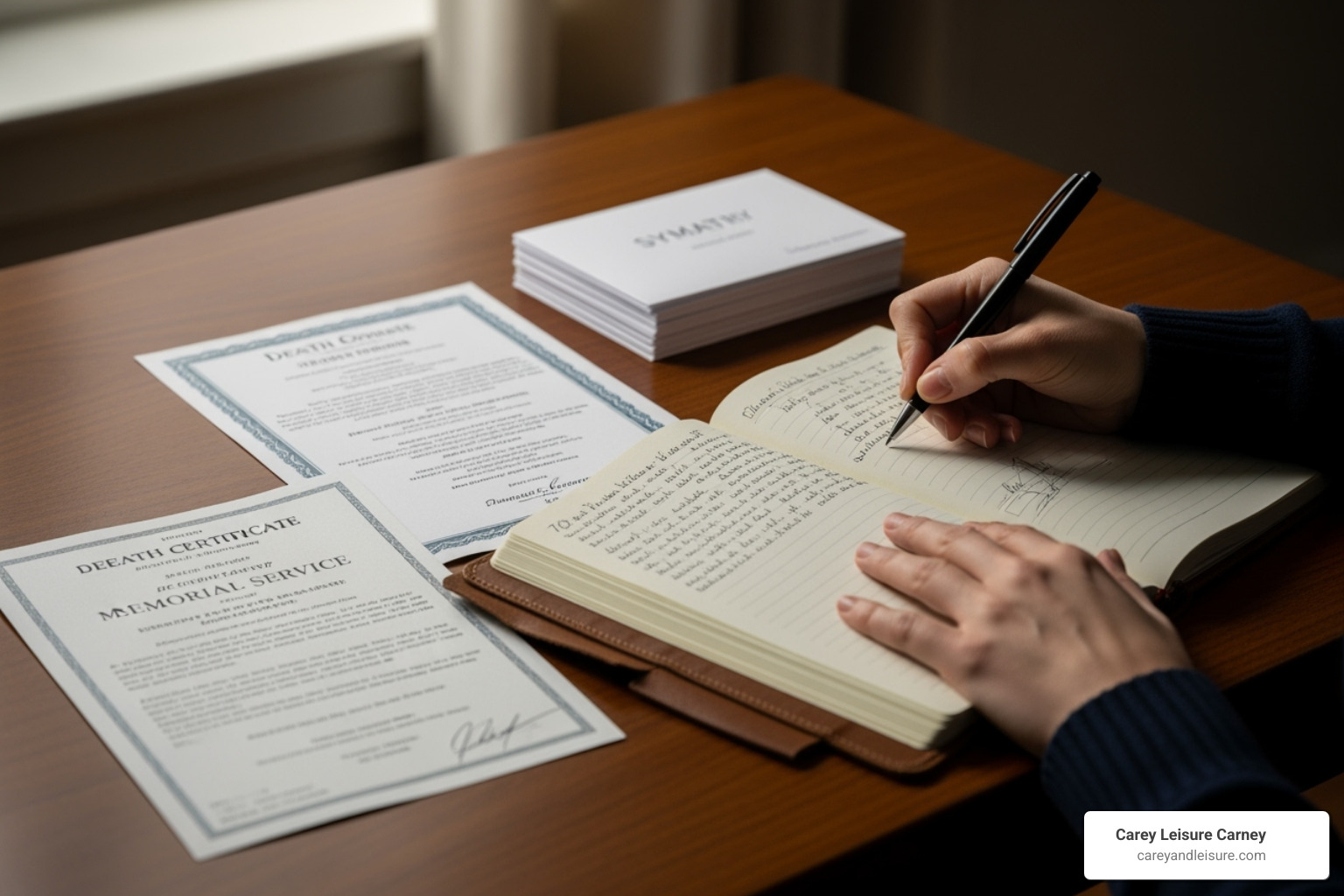
Document everything immediately. Keep all receipts, contracts, emails, and text messages. Start a journal to log every conversation with funeral home staff, including dates, times, names, and what was said.
Collect evidence. If you notice anything wrong with your loved one’s appearance, the casket, or the services, take photos and videos. This visual evidence is powerful in court.
Gather witness statements. Ask family, friends, or other attendees to write down what they observed while their memories are fresh.
Report the incident to state authorities. File a complaint with your state’s funeral regulatory board. Their investigation can uncover valuable information for your case and help protect other families.
Track the emotional impact. Document your feelings, anxiety, or any physical symptoms. This emotional impact is a real form of damage that deserves compensation.
Contact a *funeral malpractice lawyer as soon as possible.* An experienced attorney can guide you through this complex process while you focus on healing. For more guidance, see our guide on Documenting Evidence in Personal Injury Claims.
Proving Negligence or Intentional Wrongdoing
A successful malpractice case requires specific evidence to prove the funeral home failed in its duties. The law requires more than a feeling of being wronged. Here is how your funeral malpractice lawyer will build your case:
- Establishing Duty of Care: When you hire a funeral home, they automatically owe you a professional duty of care.
- Proving Breach of Duty: You must show their actions fell below acceptable standards, such as improper embalming or billing fraud. Expert testimony is often used to establish these standards.
- Connecting Failure to Harm: You must prove a direct link between their failure and the damage you suffered.
- Demonstrating Damages: This involves documenting both financial losses and emotional suffering.
Expert testimony from morticians or forensic specialists is crucial. Their opinions explain industry standards and pinpoint where the funeral home went wrong. Cases of intentional wrongdoing, like theft or fraud, require proving deliberate misconduct and often result in higher damages.
For more information, visit our guide on Proving Funeral Home Negligence. Understanding What is the difference between intentional misconduct and gross negligence? can also help.
Understanding the Statute of Limitations
The statute of limitations is a strict deadline for filing a lawsuit. Missing it means you lose your right to seek compensation, no matter how strong your case is.
In Florida, the statute of limitations for negligence is typically two years. However, the findy rule can extend this deadline. If the negligence was concealed, the clock may start when you finded or reasonably should have finded the problem.
Acting quickly is vital. Evidence can be lost and witnesses’ memories fade. Consulting with a funeral malpractice lawyer early protects your rights and ensures all claims are filed within the proper timeframe.
While dealing with legal matters during mourning is overwhelming, waiting too long can jeopardize your case. Contacting a lawyer promptly is the best way to protect your interests.
For specific details, review Florida’s statute of limitations for negligence. Our guide on When to Hire Lawyer can also help.
Why You Need an Experienced Funeral Malpractice Lawyer
When a funeral home betrays your trust, you shouldn’t face the legal battle alone. An experienced lawyer can handle the complexities of your case while you grieve.

These cases sit at the intersection of legal complexity and profound emotional trauma. Here’s why an experienced lawyer is critical:
- Legal Complexity: These cases involve breach of contract, consumer protection violations, and state and federal regulations. Your lawyer needs to understand mortuary science and industry standards, which most attorneys do not.
- Emotional Support: You need an attorney who understands the compounded grief these situations cause and can shield you from difficult interactions with the funeral home’s legal team.
- Investigation Resources: We have connections to forensic pathologists, licensed embalmers, and other industry experts who can provide compelling testimony. Our team knows how to preserve crucial evidence and uncover internal records.
- Negotiation Skills: Funeral homes and their insurers often try to minimize claims. An experienced attorney knows the true value of these cases and won’t be intimidated into accepting a low settlement.
- Litigation Experience: Our Board-Certified attorneys, a distinction held by only the top 2% of Florida lawyers, bring over 100 years of combined courtroom experience and are prepared to go to trial if necessary.
Choosing the right legal representation is crucial. For guidance, see our resource on How do you go about choosing a lawyer?.
How a Funeral Malpractice Lawyer Builds Your Case
Building a strong case requires a methodical and compassionate approach. Here’s how we handle it:
- Case Evaluation: Our process begins with a free consultation where we listen to your story, review your documents, and help you understand your legal options.
- Evidence Gathering: We immediately work to preserve contracts, communications, and witness statements. Time is critical, as evidence can disappear.
- Hiring Experts: We work with licensed embalmers, forensic pathologists, and funeral industry specialists to provide credible, objective evidence for your case.
- Calculating Damages: We document all your financial losses and work to quantify the emotional anguish and trauma.
- Filing Claims: We handle all legal paperwork and court filings, ensuring your claim is comprehensive and meets all technical requirements.
- Communicating with Defendants: We become your shield, handling all negotiations and communications with the funeral home’s lawyers and insurance adjusters.
- Representing You in Court: While many cases settle, we prepare every case for trial. Our readiness to fight in court often leads to better settlement offers.
For more details, see How Attorneys Use Investigations for Your Personal Injury Claim.
Recoverable Damages in a Lawsuit
The law allows families to recover compensation for both financial losses and emotional suffering.
Economic damages cover measurable financial losses. This includes funeral cost refunds for services not rendered properly and additional expenses like re-embalming, DNA testing, or therapy. Lost wages from time off work to deal with the situation are also recoverable.
Non-economic damages often form the largest part of an award, compensating for the severe emotional anguish that goes beyond normal grief. When a funeral home’s actions cause additional trauma, the law recognizes this suffering. Loss of consortium damages may also apply if the negligence affects family relationships. You can learn more about this legal concept at Explaining Intentional Infliction of Emotional Distress.
Punitive damages are awarded in cases of extreme callousness or fraud. They are intended to punish the funeral home and deter similar behavior in the future. Case values vary, but courts often award significant compensation because they recognize how devastating these violations are.
For more information, review our guide on Funeral Home Negligence Lawsuit Damage Claims.
Frequently Asked Questions about Funeral Home Lawsuits
During such a difficult time, it’s natural to have questions about your legal options. Here are the most common concerns we hear:
What kind of lawyer do I need to sue a funeral home?
You need a personal injury attorney with specific experience in funeral malpractice. These cases require a civil litigation lawyer who understands how to build compelling arguments around emotional distress and can steer the complex web of state and federal funeral regulations. Most importantly, find a lawyer who approaches these sensitive cases with compassion. At our firm, we know that behind every lawsuit is a family whose trust was shattered. For more guidance, see What is a lawyer?.
Can a wrongful death lawyer help in these cases?
Yes, though the two claim types are distinct. A wrongful death lawyer is essential if the funeral home’s negligence caused a death, which is rare. More commonly, a wrongful death claim from another incident (like a car accident) is compounded by a separate funeral malpractice claim for mishandling the remains. Wrongful death claims focus on the loss of life, while funeral malpractice claims address the additional trauma from improper final care. Our firm handles both, allowing us to seek comprehensive justice. Learn more about Wrongful Death Attorney services.
How much does it cost to hire a funeral malpractice lawyer?
We handle these cases on a contingency fee basis, so you face no financial risk. This means:
- No upfront costs
- No payment unless we win
- A free consultation to review your case
Our fee is a percentage of the settlement or award, agreed upon at the start. This structure ensures every family has access to quality legal representation, regardless of their financial situation. For more details, visit How much does it cost to hire a personal injury attorney?.
Holding Negligent Funeral Homes Accountable
When funeral homes fail you, the betrayal is profound. You don’t have to carry this burden alone. At Carey Leisure Carney, we understand the violation you’ve experienced, and we’re here to help you hold negligent funeral homes accountable. Our approach combines legal expertise with genuine compassion because we know this is about restoring your faith in justice and helping you heal.
What sets us apart as your funeral malpractice lawyer:
- Our attorneys are Board-Certified, a distinction earned by only the top 2% of lawyers in Florida, representing proven mastery and extensive trial experience.
- With over 100 years of combined experience, we understand the devastating impact and unique challenges of these cases.
- You get direct attorney access, ensuring you always speak with an experienced lawyer who understands your case.
- Our personalized service means we take the time to understand your family’s unique situation and needs.
- Compassionate representation is at our core. We handle the legal battle so you can focus on healing, fighting tirelessly for the justice you deserve.
If your family has been affected by a negligent funeral home in Clearwater, Largo, New Port Richey, Spring Hill, St Petersburg, Trinity, or Wesley Chapel, Florida, we are here to help. Don’t let their wrongdoing go unanswered.
Contact our experienced funeral home malpractice attorneys today for a free consultation. Let us help you seek the justice your family deserves during this difficult time.