
Gross Negligence Law: Ultimate Guide 2025
What Gross Negligence Law Really Means for Injury Victims
Gross negligence law is a critical legal concept that sits between ordinary carelessness and intentional harm. If you’ve been injured by someone who showed an extreme disregard for your safety, understanding this distinction could be the key to fair compensation.
Quick Definition: Gross negligence is the failure to exercise even slight care, demonstrating a reckless disregard for the safety or lives of others. It’s more severe than ordinary negligence but less than intentional wrongdoing.
Key Differences at a Glance:
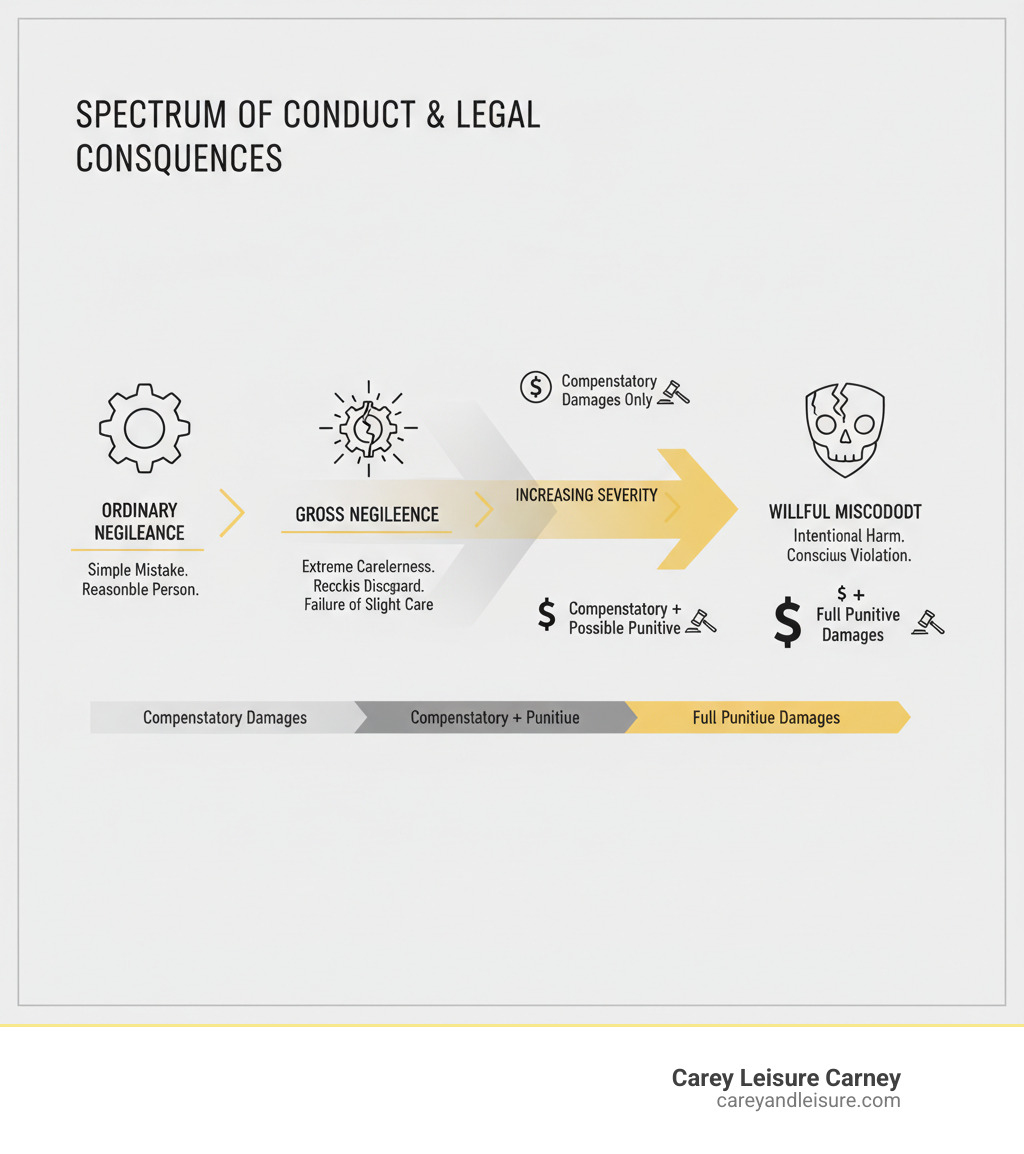
| Type of Conduct | Level of Care | Consciousness | Damages Available |
|---|---|---|---|
| Ordinary Negligence | Failure to use reasonable care | Unintentional | Compensatory only |
| Gross Negligence | Failure to use even slight care | Conscious disregard or extreme indifference | Compensatory + possible punitive |
| Willful/Wanton | Reckless indifference with awareness | Conscious + knowledge of probable harm | Compensatory + punitive |
When someone’s conduct goes beyond simple carelessness into the field of gross negligence, the legal system recognizes this difference. A drunk driver speeding through a school zone, a doctor amputating the wrong limb, or a nursing home leaving a resident without food for days—these aren’t just mistakes. They represent such an extreme departure from acceptable behavior that the law treats them differently.
The practical impact matters to you. In cases involving gross negligence, victims may be able to recover punitive damages designed to punish the wrongdoer and deter similar conduct. Even signed liability waivers—which might protect against ordinary negligence claims—often can’t shield someone from liability for grossly negligent behavior.
I’m Thomas W. Carey, a board-certified civil trial lawyer who has guided over 40,000 injury matters across Florida since 1988, including complex cases involving gross negligence law where the defendant’s conduct went far beyond ordinary carelessness. My experience has shown me that understanding the distinction between negligence levels is essential to securing the compensation injury victims truly deserve.
What is Gross Negligence and How Does It Differ?
If you’ve been injured by someone’s careless behavior, you might be wondering: was this just a mistake, or was it something worse? The difference between ordinary negligence and gross negligence law is critical, affecting your compensation and whether the at-fault party faces additional penalties.
Defining Gross Negligence
In legal terms, gross negligence is a “conscious, voluntary act or omission in reckless disregard of a legal duty and of the consequences to another party,” according to the Wex Definitions Team at Cornell Law School. Put simply, it’s the failure to use even a minimal amount of care. It represents an extreme departure from the standard of care—not just a lapse in judgment, but a thoughtless disregard of consequences that shows an utter indifference to the safety of others.
Gross negligence is more than carelessness but less than intentional harm. The person may not have intended to hurt you, but their actions were so reckless that the law treats them more seriously than an everyday mistake.
Ordinary Negligence vs. Gross Negligence
The key difference is the level of carelessness.
Ordinary negligence is the failure to act as a “reasonable person” would. For example, glancing at your phone while driving and causing a fender bender is an unintentional, momentary lapse that constitutes ordinary negligence.
Gross negligence is far worse. It involves acting with extreme disregard or conscious indifference to others’ safety. The harm is often clearly foreseeable. A driver speeding at 80 mph through a school zone isn’t just careless; they are consciously violating basic safety rules, creating an obvious and unreasonable risk.
This distinction is crucial for your case. Ordinary negligence typically leads to compensatory damages (for medical bills, lost wages, etc.). A finding of gross negligence, however, may allow you to pursue punitive damages, which are intended to punish the wrongdoer and deter similar conduct.
Gross Negligence vs. Willful and Wanton Misconduct
On the spectrum of bad behavior, gross negligence is more severe than ordinary carelessness but less so than willful and wanton misconduct. It’s a matter of degree, as noted in resources like Black’s Law Dictionary.
Willful and wanton misconduct involves a higher level of awareness. The person acts with reckless indifference to consequences, knowing their conduct will probably cause injury, and proceeds anyway. It’s close to an intent to harm.
The distinction is subtle: gross negligence involves an extreme disregard for obvious risks, while willful misconduct involves a conscious choice with knowledge of probable harm. For example, a contractor ignoring safety protocols is grossly negligent. A contractor who knows a floor will collapse and lets workers stand on it is acting willfully and wantonly.
This difference impacts your case, as punitive damages are more consistently available for willful and wanton conduct than for gross negligence.
Understanding the Core Principles of Gross Negligence Law
When someone’s careless actions hurt you, grasping how gross negligence law works is essential to getting the justice you deserve. Here are the core principles that form the foundation of these claims.
Key Elements for Proving a Claim Under Gross Negligence Law
Proving a gross negligence law claim requires establishing four critical elements:
- Duty of Care Owed: The defendant had a legal responsibility to act with a certain level of care toward you (e.g., a driver’s duty to operate a vehicle safely).
- Extreme Breach of Duty: The defendant’s conduct was a shocking departure from acceptable behavior, representing a failure to exercise even slight care or a reckless disregard for your safety. This is the core of a gross negligence claim.
- Causation of Harm: The defendant’s actions directly caused your injuries, and the harm was a foreseeable result of their extreme carelessness.
- Resulting Damages: You suffered actual, measurable harm, such as medical bills, lost wages, and pain and suffering.
Successfully proving each element is essential. The main challenge is demonstrating that the conduct was grossly careless, not just a simple mistake, which is why experienced legal guidance is so important.
The Role of Intent and Consciousness
Gross negligence does not require malicious intent to cause harm. Instead, it involves a conscious disregard for safety or a reckless disregard for the rights of others. The defendant may not have wanted to injure anyone, but their actions showed an extreme indifference to the probable injury. Their conduct demonstrates a thoughtless disregard of consequences, which is more severe than a simple mistake, even without a deliberate plan to cause harm. This level of indifference may be considered evidence of mala fides (bad faith).
Can a Liability Waiver Protect Against Gross Negligence?
If you signed a waiver before an activity at a gym or adventure park, you might wonder if you can still seek compensation for an injury.
Here’s the good news: a liability waiver generally cannot protect someone from their own gross negligence.
While waivers may be enforceable for ordinary negligence, most jurisdictions, including California in cases like Santa Barbara v. Superior Court, agree that allowing someone to waive liability for grossly negligent conduct violates public policy. The law won’t let a business operate with an extreme lack of care and then hide behind a piece of paper.
If you were injured despite signing a waiver, don’t assume you have no recourse. An experienced attorney can evaluate whether the conduct crossed into gross negligence law territory, potentially invalidating the waiver.
Real-World Applications and Legal Consequences
The abstract concept of gross negligence law becomes painfully real in everyday situations. At Carey Leisure Carney, we’ve seen how someone’s extreme carelessness can change lives forever.

Gross Negligence in Specific Legal Contexts
Gross negligence appears in many devastating real-world situations. The conduct goes far beyond a simple error and shocks the conscience.
- In medical settings: This isn’t a difficult diagnosis, but an appalling failure of care. Examples include a surgeon amputating the wrong limb, leaving a surgical tool inside a patient, or a nursing home failing to feed a resident for days.
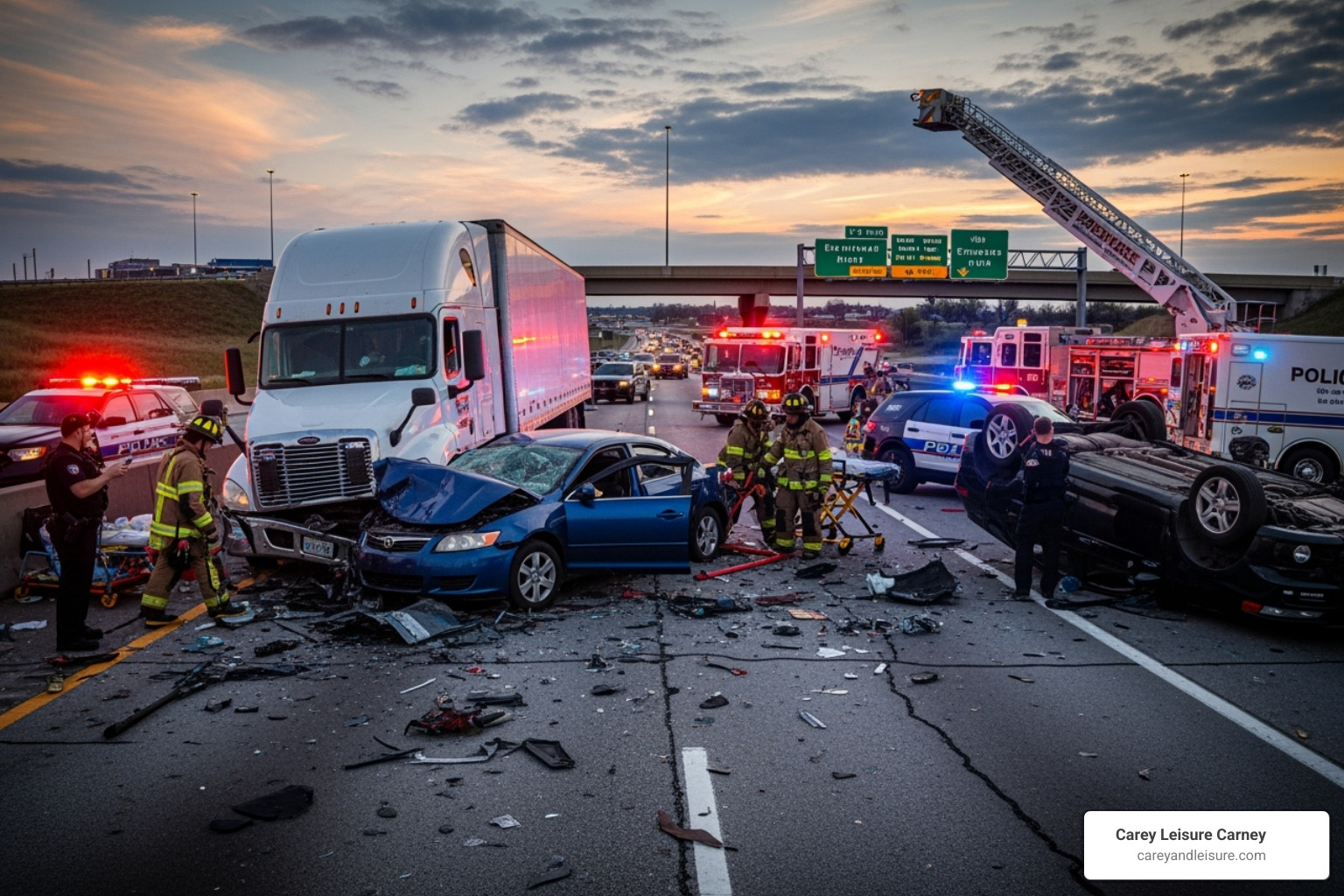
- In personal injury cases: A drunk driver causing a fatal crash demonstrates a conscious disregard for human life. Other examples include a driver speeding excessively through a school zone or a company knowingly selling a dangerously defective product. These actions show a reckless indifference to the safety of others.
Civil and Criminal Consequences
Because the conduct is so egregious, the legal consequences for gross negligence are more severe.
- Civil Consequences: In addition to compensatory damages (for medical bills, lost wages, etc.), victims can often seek punitive damages. These are designed to punish the wrongdoer and deter similar behavior, as noted in legal scholarship. The amounts can be substantial, such as the $65 million penalty an oil company faced for gross negligence in a 2023 oil spill.
- Criminal Consequences: In the most severe cases, gross negligence can lead to criminal charges. If extreme carelessness causes a death, a prosecutor might file charges for gross negligence manslaughter, which can result in prison time. The Deepwater Horizon oil spill is a famous example where corporate gross negligence led to both massive civil penalties and criminal charges.
How a Gross Negligence Case is Proven
Proving a gross negligence law claim is more complex than showing a simple mistake. We must demonstrate that the defendant’s conduct was truly shocking.
The Burden of Proof and Role of Expert Witnesses
In a gross negligence case, the plaintiff (the injured person) has the “burden of proof.” This means you must prove your claim by a “preponderance of the evidence,” or that it’s “more likely than not” that the defendant was grossly negligent. This requires gathering substantial evidence, such as safety violation records, internal company documents, and eyewitness testimony.
Expert witnesses are often crucial. A medical expert can testify how a doctor’s actions deviated from the standard of care, while a safety engineer can explain how a company ignored industry safety standards. These experts provide the specialized knowledge needed to show the court that the defendant’s conduct was an extreme departure from acceptable behavior and constituted gross negligence.
Navigating Jurisdictional Nuances in Gross Negligence Law
Gross negligence law varies by state, and these differences can significantly impact a case.
- Florida: Here, where our firm practices, gross negligence involves a “reckless disregard” for others’ safety. Our experience in Florida courts allows us to build cases that meet the specific standards local judges and juries expect.
- California: Defines it as an “extreme disregard” or “conscious indifference” to safety.
- Georgia: Uniquely defines it as “the absence of slight diligence,” meaning the failure to use even the minimal care a person of common sense would, as stated in Georgia Code § 51-1-4.
- Virginia: Defines it as conduct showing “an utter disregard of prudence” that would “shock fair-minded persons.”
These nuances are not just technicalities; they determine the evidence needed to win your case. An attorney familiar with the specific laws in your jurisdiction is essential.
Frequently Asked Questions about Gross Negligence
We often receive questions about gross negligence law from clients trying to understand their legal situation. Here are answers to some of the most common ones.
What is the main difference between gross negligence and malpractice?
While the terms can overlap, the distinction is simple: malpractice is professional negligence, while gross negligence is a severe degree of carelessness.
- Malpractice applies specifically when a licensed professional (like a doctor or lawyer) fails to meet the standard of care for their profession, causing harm.
- Gross negligence describes the severity of the mistake. Anyone can be grossly negligent, including a professional.
A professional can be guilty of both. A doctor who makes a simple diagnostic error commits ordinary malpractice. A doctor who amputates the wrong limb commits gross negligence within the context of malpractice. In short, malpractice defines who was negligent, while gross negligence defines how negligent they were.
What are the most common examples of gross negligence?
Common examples of gross negligence involve conduct so reckless it demonstrates a conscious disregard for safety. These include:
- A drunk driver causing a fatal or serious injury crash.
- A nursing home caregiver failing to provide food or basic medical care to a resident for days.
- A business knowingly selling a product with a dangerous defect.
- A surgeon leaving a surgical instrument inside a patient.
- An employer forcing employees to work in unsafe conditions that violate regulations.
Can you sue for punitive damages in a gross negligence case?
Yes, the availability of punitive damages is a key difference between ordinary and gross negligence. While compensatory damages cover your losses (medical bills, lost wages), punitive damages are intended to punish the defendant for outrageous conduct and deter future misconduct, as discussed in research on the topic.
Courts reserve punitive damages for cases where conduct is truly reprehensible. The rules also vary by state. Some states cap the amount of punitive damages, while others have specific requirements for proving eligibility. Here in Florida, our team understands the state’s requirements and can evaluate whether your case qualifies for punitive damages as part of seeking full justice.
Securing Your Rights After an Injury
If you were injured by someone’s extreme carelessness, the legal path forward is complex. A gross negligence claim opens the door to greater accountability, but proving it requires skilled legal guidance.
At Carey Leisure Carney, we have decades of experience with gross negligence law in Florida. Our team includes Board-Certified civil trial attorneys—a distinction held by only 2% of Florida lawyers—with over 100 years of combined experience. We know how to build a case that proves an action crossed the line from carelessness into a reckless disregard for safety.
With offices in Clearwater, Largo, New Port Richey, Spring Hill, St. Petersburg, Trinity, and Wesley Chapel, we are accessible throughout the region. We pride ourselves on direct attorney access and personalized service. When you call us, you speak directly with your lawyer because we know your story is unique and deserves focused attention.
We can evaluate your case, explain whether punitive damages may be available, and clarify complex issues like the difference between intentional misconduct and gross negligence. Since 1988, we have handled over 40,000 injury matters, holding drunk drivers, negligent medical professionals, and unsafe businesses accountable.
Don’t let another’s reckless disregard for your safety define your future. You deserve accountability and fair compensation. Contact us today for a case evaluation and let our experienced, dedicated team work for you.