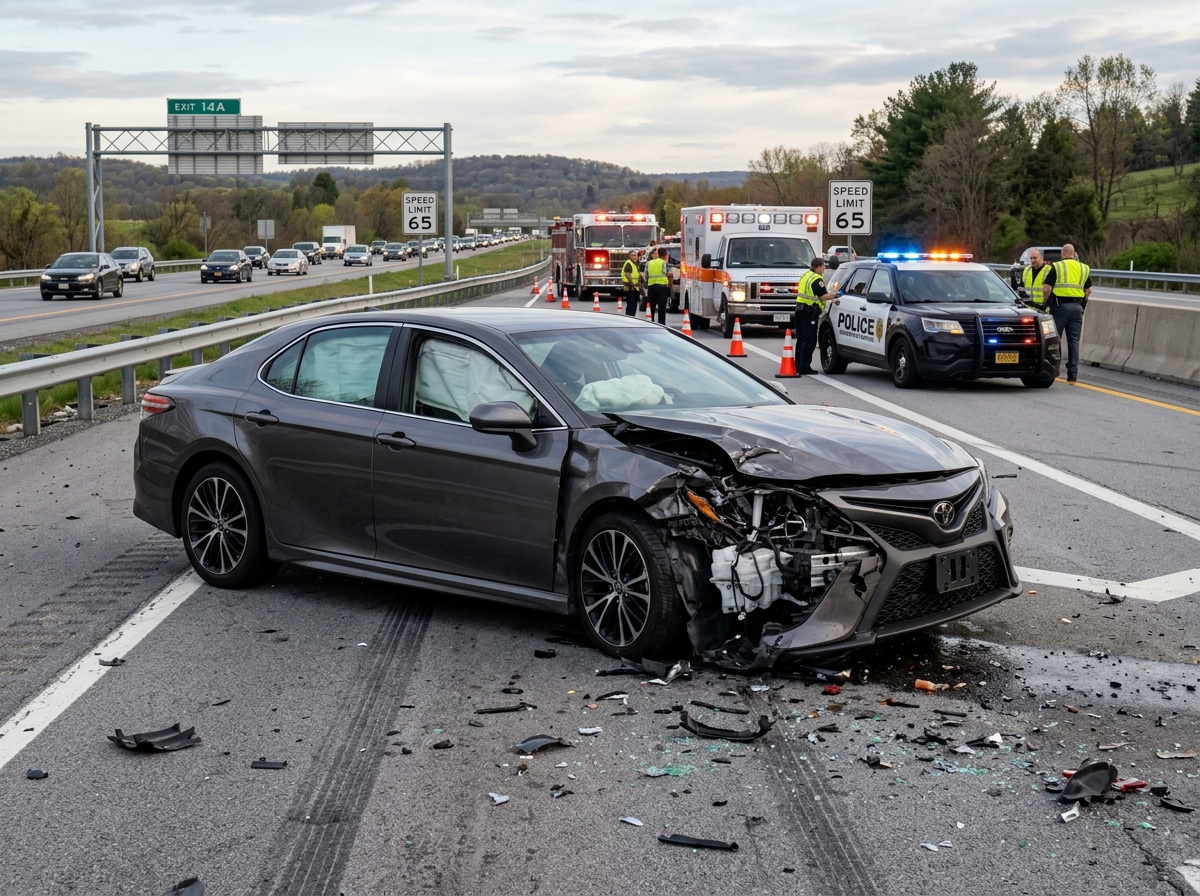
Your Car is Wrecked: Do You Need a Lawyer for Property Damage?
When Your Car is Wrecked: What a Property Damage Accident Lawyer Can Do for You
A property damage accident lawyer helps car accident victims recover compensation for vehicle repairs, total loss payouts, diminished value, and damaged personal belongings — especially when insurance companies offer less than you deserve.
Here’s what you need to know at a glance:
| Situation | What You Can Recover |
|---|---|
| Repairable vehicle | Cost of repairs + rental car during repairs |
| Totaled vehicle | Fair market value at time of accident |
| Vehicle loses resale value | Diminished value compensation |
| Personal items damaged | Replacement cost of belongings |
| At-fault driver uninsured | Uninsured motorist property damage (UMPD) coverage |
| Insurance lowballs you | Legal negotiation or lawsuit |
After a crash, you’re already dealing with stress, paperwork, and disruption to your daily life. The last thing you need is an insurance adjuster pushing a settlement that doesn’t come close to covering your real losses. Property damage claims in Florida can involve more than just a repair bill — they can include diminished value, rental coverage, and personal property, all governed by specific Florida laws and deadlines.
I’m Thomas W. Carey, founding partner of Carey Leisure Carney and a board-certified civil trial lawyer with decades of experience guiding Florida accident victims through every aspect of their claims — including property damage. As a property damage accident lawyer serving the Tampa Bay area, I’ve seen how quickly insurance companies move to close these claims for less than victims are owed. Let’s make sure that doesn’t happen to you.

Easy Property damage accident lawyer glossary:
Understanding Property Damage Claims After a Florida Car Accident
When we talk about property damage in the context of a car accident, we aren’t just talking about a dented bumper. In legal terms, property damage refers to any harm caused to tangible property—basically, anything you can touch that was broken or destroyed because of the crash.

In Florida, these claims are usually handled as an “economic loss.” This means we are looking at the actual dollar amount it takes to fix or replace what was lost. While personal injury claims focus on your body and mind, property damage claims focus on your assets.
There are two main categories of property:
- Real Property: This is land and anything permanently attached to it. If a car veers off the road in St. Petersburg and smashes into your living room, that is a real property claim.
- Personal Property: This is the big one for most of our clients. It includes your vehicle, but also the “stuff” inside it.
Understanding the aftermath of an accident is the first step toward making sure you don’t get stuck with the bill for someone else’s mistake.
What Does a Property Damage Accident Lawyer Cover?
Many people assume a property damage accident lawyer only cares about the car. While the car is usually the most expensive item, it’s far from the only thing we can help you recover. If it was in the car and it broke, it’s part of the claim.
- Vehicle Repairs: The cost to bring your car back to its pre-accident condition.
- Personal Belongings: Did your sunglasses fly off the dashboard? Was your laptop in the backseat? These are recoverable.
- Car Seats: This is a safety essential. Most manufacturers recommend replacing a car seat after any moderate to severe accident, even if there’s no visible damage. Insurance should cover the replacement cost.
- Electronics: Smartphones, tablets, and GPS units often take a hit during a collision.
- Replacement Costs: If an item can’t be fixed, you are entitled to the cost of a replacement of similar kind and quality.
Whether you were driving or someone hit your parked car while you were shopping in Clearwater, you have the right to be made “whole” again.
Who is Responsible for Paying for Your Damages?
Florida is a “no-fault” state for medical PIP (Personal Injury Protection) coverage, but property damage works differently. Property damage follows a fault-based system.
The person who caused the accident is the one responsible for the bills. In Florida, every driver is required to carry a minimum of $10,000 in Property Damage Liability (PDL). This insurance pays for the damage the policyholder causes to other people’s property.
To get the at-fault driver’s insurance to pay, we have to prove negligence. This means showing that the other driver failed to use reasonable care—like texting while driving through a Largo intersection or failing to yield the right of way in New Port Richey.
Determining Value: Total Loss and Diminished Value
One of the biggest headaches in a property damage claim is figuring out what your car is actually worth. Insurance companies aren’t exactly known for their generosity. They want to pay you the “Actual Cash Value” (ACV), which is essentially what you could have sold the car for a second before the crash happened.
This value accounts for depreciation. Even if you just bought the car last year, the moment you drove it off the lot, the value dropped. We use industry-standard tools like Kelley Blue Book and NADA consumer vehicle values to ensure the insurance company isn’t using “lowball” numbers that don’t reflect the local Florida market.
When is a Vehicle Considered a Total Loss?
Your car doesn’t have to be a flattened pancake to be “totaled.” In Florida, a vehicle is generally considered a total loss when the cost of repairs plus the salvage value meets or exceeds 80% of the vehicle’s actual cash value.
If the insurance company decides to total your car, they will take the vehicle, give it a salvage title, and write you a check for the ACV. The problem? That check might not be enough to pay off your car loan if you are “underwater” on your financing. This is where having a property damage accident lawyer becomes vital—we can help dispute unfair valuations to get you closer to a fair payout.
Recovering Compensation with a Property Damage Accident Lawyer
Even if your car is perfectly repaired, it’s still worth less than it was before the accident. Why? Because now it has an “accident history” on reports like Carfax. If you try to sell it, a buyer will see that it was in a wreck and offer you less money.
This loss in value is called diminished value.
- Inherent Diminished Value: The most common type, referring to the loss in market value simply because the car has a crash record.
- Repair-Related Diminished Value: If the body shop did a subpar job (using non-OEM parts or leaving mismatched paint).
Many people don’t realize that diminished car value is a recoverable loss in Florida. We specialize in securing compensation for diminished value in Florida, ensuring you aren’t the one eating the loss when you eventually go to trade in your vehicle.
Navigating the Insurance Process and Florida Law
Understanding your own policy is just as important as knowing the other guy’s. In Florida, your own insurance might come into play depending on what kind of coverage you chose to pay for.
| Coverage Type | What it Covers | Is it Mandatory in FL? |
|---|---|---|
| Property Damage Liability (PDL) | Damage you cause to others | Yes ($10k minimum) |
| Collision Coverage | Damage to your car regardless of fault | No |
| Comprehensive Coverage | Non-accident damage (theft, fire, floods) | No |
If you have collision coverage, you can actually file through your own insurance to get your car fixed faster, and then let your insurance company “subrogate” (chase the other driver’s insurance for the money).
Dealing with Uninsured Drivers and Lowball Offers
What happens if the person who hit you in Spring Hill has no insurance? Unfortunately, statistics show that Florida has one of the highest rates of uninsured drivers in the country.
If the at-fault driver is uninsured, you can turn to your Uninsured Motorist Property Damage (UMPD) coverage if you have it. If you don’t, you may have to rely on your collision coverage or, in some cases, file a lawsuit directly against the driver (though “sue a turnip, get no juice” applies here—if they don’t have insurance, they often don’t have assets).
Beware of the “lowball” offer. Insurance adjusters are trained to settle quickly. They might offer you a check within 48 hours. Do not sign a release until you are sure the amount covers everything, including diminished value. Once you sign that paper, your claim is usually closed for good.
Special Scenarios: Government and Commercial Vehicles
If you are hit by a city bus in St. Petersburg or a mail truck in Trinity, the rules change. Government entities have something called “sovereign immunity,” which limits how much you can recover and requires a very specific “tort claim notice” to be filed within a strict timeframe.
Commercial vehicles (like semi-trucks or delivery vans) usually have much higher insurance limits, but they also have aggressive legal teams. Whether it’s a flooding issue or a fleet accident, these cases require a steady legal hand.
Why You Might Need a Property Damage Accident Lawyer
You might think, “It’s just a car, I can handle this myself.” And for a minor fender bender where the insurance company plays fair, you might be right. But when things get complicated, a property damage accident lawyer is your best defense.
We jump in when:
- Fault is Disputed: The other driver claims you ran the red light.
- Complex Valuations: You drive a classic car, a luxury vehicle, or a heavily modified truck that the insurance company refuses to value correctly.
- Expert Testimony: We hire professional appraisers to prove exactly how much value your car lost.
Evidence Needed to Prove Property Damage
To win your claim, we need to build a mountain of evidence:
- Police Reports: Essential for establishing the facts of the crash.
- Photos/Videos: Take pictures of the damage to both cars, the debris on the road, and the surrounding area.
- Witness Statements: People who saw the crash can be the tie-breaker in “he-said, she-said” disputes.
- Repair Estimates: Get at least two independent quotes from reputable shops.
- Receipts: For any personal items destroyed in the crash.
Steps to Protect Your Claim Immediately After a Crash
What you do in the first thirty minutes after a crash in Wesley Chapel can make or break your claim.
- Call the Police: Always get an official report.
- Take Scene Photos: Before the cars are moved, if it’s safe.
- Exchange Info: Get the other driver’s name, phone number, and insurance policy number.
- Choose Your Own Shop: In Florida, you have the right to choose where your car is repaired. Don’t let the insurance company force you into a “preferred” shop that might use cheap parts.
- Rental Car: Check if you have rental reimbursement on your policy or if the at-fault party’s insurance will provide one.
Statute of Limitations for Florida Property Damage
Time is not on your side. In Florida, the statute of limitations for property damage claims is generally four years from the date of the accident.
While four years sounds like a long time, evidence disappears quickly. Skid marks fade, witnesses move away, and video footage from nearby businesses gets deleted. If you wait too long, you lose your right to sue forever. This “legal discovery” phase is much easier when started immediately after the wreck.
Frequently Asked Questions about Property Damage
Can I choose my own repair shop?
Yes! In Florida, insurance companies cannot legally force you to use a specific repair shop. They may suggest “preferred” shops because they have pre-negotiated lower rates, but you have the final say on who touches your vehicle.
What happens if the repair costs are higher than the insurance estimate?
This happens all the time. Once a mechanic starts taking the car apart, they often find “supplemental” damage. Your shop will submit a supplemental claim to the insurance company. If the insurer refuses to pay the difference, that’s when we step in to negotiate.
Is my rental car covered while my vehicle is being repaired?
If you were not at fault, the other driver’s insurance should pay for a “loss of use” claim, which typically covers a rental car of similar class to yours. If you were at fault, you are only covered if you specifically have “rental reimbursement” on your own policy.
Conclusion
Dealing with a wrecked car is a massive headache, but you don’t have to navigate the maze of Florida insurance laws alone. At Carey Leisure Carney, we bring over 100 years of combined experience to the table. Our board-certified attorneys are in the top 2% of lawyers in Florida, and we pride ourselves on giving our clients direct access to their attorney—not just a paralegal or an assistant.
Whether you are in Clearwater, Largo, New Port Richey, Spring Hill, St. Petersburg, Trinity, or Wesley Chapel, we are here to help you get every penny you deserve for your property. Don’t let the insurance companies decide what your property is worth.
Contact our Clearwater Personal Injury Lawyers today for a free consultation and let us take the wheel on your property damage claim.