

Navigating Back Pain Compensation After a Car Accident: A Comprehensive Guide
What You Can Expect From Back Pain After Car Accident Compensation
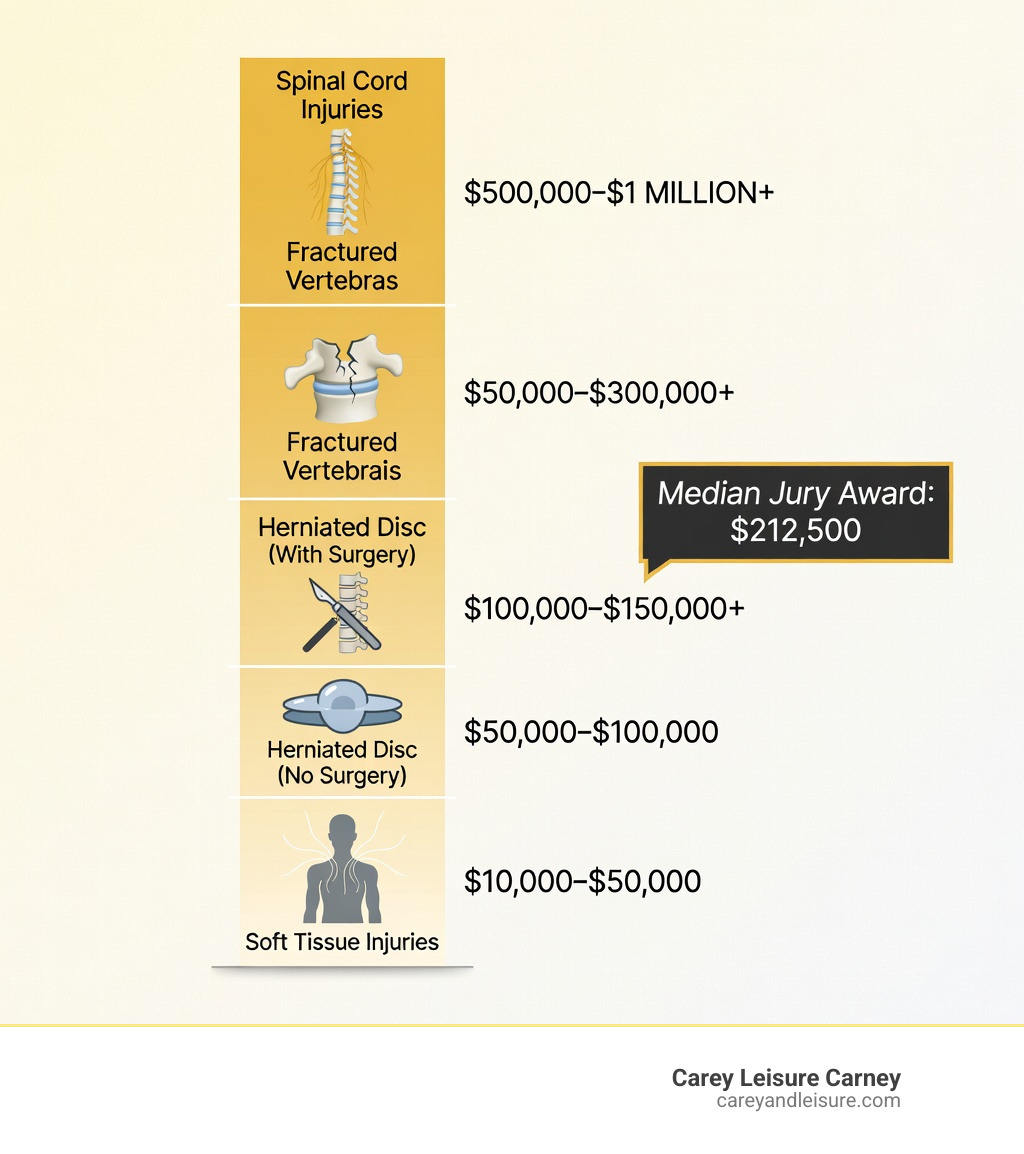
Back pain after car accident compensation typically falls within the following ranges, depending on injury severity:
| Injury Type | Typical Settlement Range |
|---|---|
| Soft tissue / muscle strain | $10,000 – $50,000 |
| Herniated disc (no surgery) | $50,000 – $100,000 |
| Herniated disc (with surgery) | $100,000 – $150,000+ |
| Fractured vertebrae | $50,000 – $300,000 |
| Spinal cord injury | $500,000 – $1,000,000+ |
The median jury award for back injury cases is $212,500, though many factors push settlements higher or lower. Insurance companies routinely offer far less than a case is worth — especially for soft tissue injuries that don’t show up clearly on imaging.
Back injuries are among the most common — and most undervalued — injuries after a car crash. Even a low-speed collision can cause lasting damage to your spine, discs, or surrounding muscles. And the pain doesn’t always appear right away. Adrenaline can mask symptoms for days, meaning victims sometimes don’t realize the full extent of their injury until well after the accident.
If you’re dealing with back pain after a crash, understanding what your claim is worth — and what affects that value — is the first step to getting fair compensation.
I’m Thomas W. Carey, founding partner of Carey Leisure Carney and a board-certified civil trial lawyer with over 35 years of experience helping Florida injury victims pursue back pain after car accident compensation. Having guided approximately 40,000 injury matters across Florida, I’ve seen how the right legal strategy can be the difference between a lowball settlement and the full recovery you deserve.
Learn more about back pain after car accident compensation:
Common Back Injuries and Their Impact on Settlement Value
When we evaluate a claim for back pain after car accident compensation, the specific diagnosis is often the largest driver of value. Not all back pain is created equal in the eyes of an insurance adjuster or a jury.
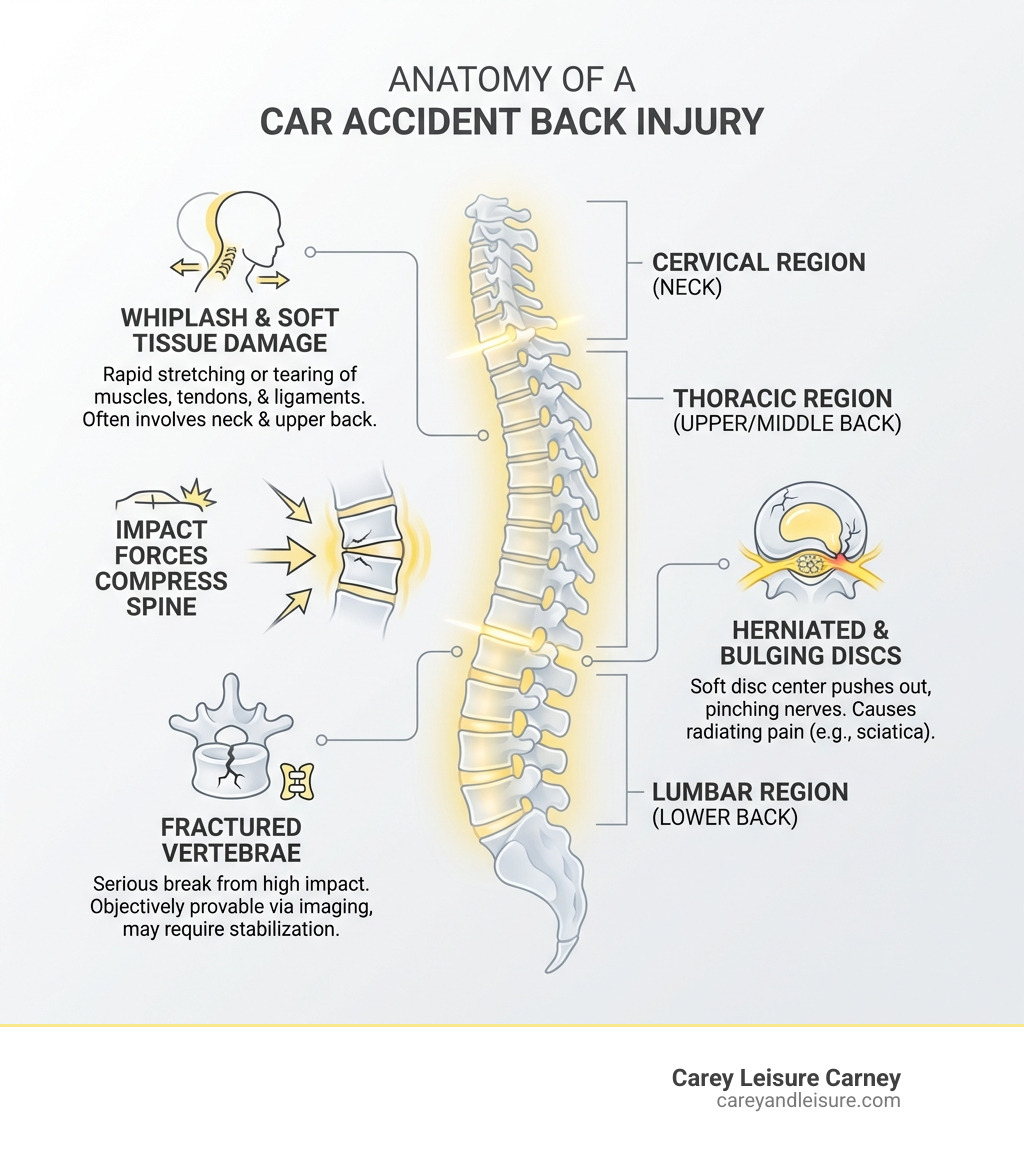
Whiplash and Soft Tissue Damage
While often associated with the neck, whiplash frequently involves the upper and middle back (thoracic spine). These injuries involve the stretching or tearing of muscles, tendons, and ligaments. Because these injuries don’t always appear on an X-ray or MRI, insurance companies often try to “lowball” these claims, with settlements typically averaging between $6,000 and $22,000.
Herniated and Bulging Discs
The most commonly injured region in many crashes is the cervical spine (neck), but lumbar (lower back) disc injuries are also incredibly frequent. A herniated disc occurs when the soft center of a spinal disc pushes through a crack in the tougher exterior casing. This can pinch nearby nerves, causing radiating pain, numbness, or weakness in the legs (sciatica). These cases often settle in the $50,000 to $100,000 range, but can skyrocket if surgery is required.
Fractured Vertebrae
A spinal fracture is a serious injury that often results from high-impact collisions or rollover accidents. These may require bracing or surgery to stabilize the spine. Because they are objectively provable through imaging, fractured vertebrae settlements often range from $50,000 to $300,000.
Spinal Cord Injuries
The most devastating category, motor vehicle crashes account for approximately 38% of all spinal cord injuries in the United States. These injuries can result in partial or total paralysis. Given the lifetime costs of care, these settlements typically start at $500,000 and frequently reach into the millions.
Common symptoms to watch for include:
- Persistent aching or stiffness anywhere along your spine.
- Sharp, localized pain in the neck or upper/lower back.
- Chronic ache in the middle or lower back, especially after sitting or standing for long periods.
- Back pain that radiates down into the buttocks and legs.
- Numbness, tingling, or “pins and needles” in the extremities.
For a deeper dive into these conditions, see our guide on types of car accident injuries.
Calculating Your Back Pain After Car Accident Compensation
Calculating a fair settlement isn’t as simple as plugging numbers into a calculator. We look at two primary categories of damages:
Economic Damages
These are your tangible, out-of-pocket losses. They are usually easier to calculate because they come with “price tags” like receipts and bills. They include:
- Medical Expenses: Past ER visits, surgeries, physical therapy, and future projected costs.
- Lost Wages: Income lost while you were unable to work.
- Loss of Earning Capacity: If your back injury prevents you from returning to your previous career or working full-time.
Non-Economic Damages
This is where the “Pain and Suffering” component lives. This covers the intangible impact on your life—the fact that you can no longer pick up your kids, play golf, or sleep through the night without pain. In many cases, we use a “multiplier” method, where economic damages are multiplied by a factor (usually 1.5 to 5) based on the severity and permanence of the injury.
To get a better idea of how these numbers apply to your specific situation, you can read more about what is my personal injury case worth?
Key Factors Influencing Florida Settlement Amounts
In Clearwater and throughout Florida, several specific legal factors can drastically change the outcome of your claim.
- Florida PIP Coverage: Florida is a “no-fault” state, meaning your own Personal Injury Protection (PIP) insurance typically covers the first $10,000 of medical bills, regardless of who caused the crash. To sue for pain and suffering, you must generally meet a “permanent injury” threshold.
- Statute of Limitations: Under Florida Statutes § 95.11, you generally have a limited window to file a lawsuit. Missing this deadline means you lose your right to recover compensation forever.
- Comparative Negligence: Florida follows a modified comparative negligence system. If you were 20% at fault for the accident, your total compensation will be reduced by 20%. If you are more than 50% at fault, you may be barred from recovery entirely.
- Insurance Policy Limits: You cannot collect more than the available insurance coverage unless the defendant has significant personal assets. This is why we look for “hidden” coverage, such as umbrella policies or corporate liability.
- Epidural Steroid Injections (ESIs): Interestingly, the types of treatment you receive impact value. Insurance adjusters often view ESIs as a sign of a more “serious” injury than physical therapy alone, often boosting the settlement value significantly.
How Surgery Affects Back Pain After Car Accident Compensation
Surgery is a “value driver” in personal injury law. A case that involves a spinal fusion or a laminectomy is almost always worth more than a “conservative treatment” case. This is because surgery proves the injury was severe enough to warrant invasive measures, and it often results in a permanent impairment rating.
However, surgery isn’t always the answer. Studies show that 90% of patients with classic lumbar disc injuries improve without surgery through conservative treatment. If you do require surgery, our neck and back injury lawyers work to ensure the settlement reflects the increased risks and long-term recovery involved.
Overcoming Challenges with Pre-Existing Conditions
One of the most common tactics insurance companies use to deny back pain after car accident compensation is claiming the pain is “pre-existing.” They might point to degenerative disc disease—a natural wear-and-tear process that affects almost everyone as they age—and claim the accident didn’t cause your pain.
In Florida, the “Eggshell Skull Doctrine” protects you. It states that a defendant is liable for the damages they cause, even if the victim was more susceptible to injury due to a pre-existing condition. If the accident aggravated a dormant condition or made a manageable back ache unbearable, you are entitled to compensation for that worsening.
We overcome these defenses using:
- MRI Diagnostics: Comparing pre-accident and post-accident scans to show new trauma.
- Medical Expert Testimony: Having specialists explain exactly how the crash forces impacted your specific spinal structure.
Proving Your Need for Back Pain After Car Accident Compensation
To win, you must prove “causation”—that the accident directly caused the injury. This requires a consistent treatment history. If you wait three weeks to see a doctor, the insurance company will argue that something else caused your back pain in the interim. For more tips, see our guide on how to get the most compensation in Florida.
Steps to Take After a Clearwater Accident to Protect Your Claim
Whether you were hit on US-19 or a quiet street in Trinity, the steps you take immediately following a crash are vital.
- Seek Immediate Medical Attention: Even if you just feel “stiff,” go to the ER or an urgent care center. Documentation is the bedrock of your claim.
- Call the Police: An official crash report provides an unbiased account of the facts.
- Document the Scene: Take photos of the vehicle damage, the road conditions, and any visible bruising.
- Gather Witness Info: Get names and phone numbers. Their testimony can be gold if the other driver changes their story.
- Avoid Recorded Statements: Do not talk to the other driver’s insurance adjuster until you’ve spoken with us. They are trained to get you to admit fault or downplay your pain.
For more detailed advice, check out what to do after a car accident in Florida.
Frequently Asked Questions about Back Injury Settlements
What is the average settlement for back pain after a car accident?
While the average ranges from $12,000 to $90,000 for moderate injuries, there is no true “average” that applies to everyone. A soft tissue strain might settle for $15,000, while a spinal fusion case could settle for $250,000. High-value cases involving paralysis can reach seven figures. You can find more details on car accident compensation in Florida.
How long does it take to settle a back injury claim?
On average, it takes 12 to 18 months. We generally wait until you reach Maximum Medical Improvement (MMI)—the point where your doctor says you are as healed as you’re going to get. If we settle too early, we might miss future medical needs that haven’t surfaced yet.
Can I recover compensation if I had prior back pain?
Absolutely. As mentioned, the law protects those with pre-existing conditions. The key is proving the “change in baseline”—showing that while you had some pain before, your quality of life and physical capabilities were significantly diminished by the crash.
Conclusion
At Carey Leisure Carney, we understand that back pain isn’t just a physical sensation; it’s a disruption to your entire life. As Clearwater-based personal injury specialists, our board-certified trial attorneys bring over 100 years of combined experience to every case.
We don’t believe in “settlement mills” where you never speak to your lawyer. We offer direct attorney access and personalized service to neighbors in Largo, New Port Richey, Spring Hill, St. Petersburg, Trinity, and Wesley Chapel. If you’re struggling with back pain and need help navigating the complexities of insurance claims, we are here to fight for the maximum compensation you deserve.
Contact a personal injury attorney today for a free consultation. We work on a contingency fee basis, meaning we don’t get paid unless you do.