

Navigating Loss: Compensation for Miscarriage Following an Accident
Miscarriage After Car Accident Compensation: What You May Be Able to Claim
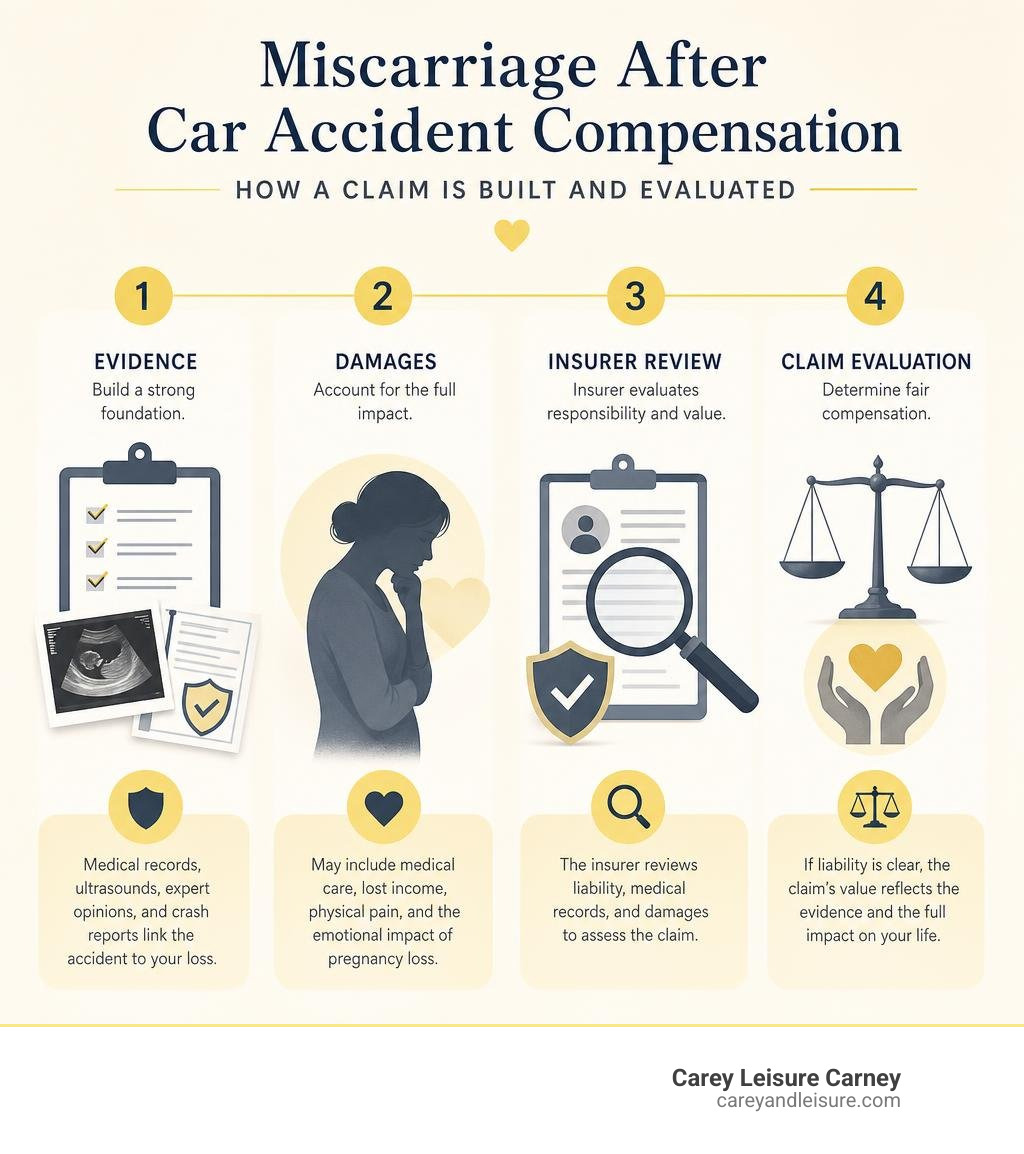
Miscarriage after car accident compensation may include payment for medical care, lost income, physical pain, and the profound emotional harm of a pregnancy loss when another driver’s negligence caused the crash. There is no standard settlement amount: the value depends on the evidence of fault, the medical link between the collision and the loss, the seriousness of your injuries, and the full impact on your life.
- Medical proof matters most. Prenatal records, ultrasound results, OB-GYN opinions, and crash records can help show the accident was a substantial factor.
- A delayed loss can still be a claim. A miscarriage days or weeks after a collision is not automatically excluded, but insurers often challenge the connection.
- Do not rush to accept an offer. A quick offer, including one limited to $5,000 for pain and suffering, may not reflect future treatment, wage loss, or the full emotional impact. Accepting it may require signing away further rights.
- Florida claims are fact-specific. The available damages and legal options depend on the circumstances, including the stage of pregnancy and the evidence available.
I am Thomas W. Carey, a board-certified civil trial lawyer and founding partner of Carey Leisure Carney, with decades of experience overseeing injury cases arising from serious motor-vehicle crashes in Florida. In matters involving miscarriage after car accident compensation, I understand that careful evidence and compassionate legal guidance both matter before deciding what a claim is worth.
Important miscarriage after car accident compensation terms:
- compensation for pain and suffering after a car accident
- how much compensation after car accident
- compensation after accident
Understanding Miscarriage After Car Accident Compensation and Case Values
When a pregnant woman is involved in a motor vehicle collision, physical injuries are only part of the tragedy. Losing a pregnancy due to someone else’s carelessness is one of the most painful experiences a family can endure. Seeking miscarriage after car accident compensation is about holding the responsible party accountable and securing the financial recovery needed to heal physically, emotionally, and financially.
Because no two motor vehicle collisions or medical situations are identical, there is no one-size-fits-all settlement figure. Evaluating a personal injury claim involving pregnancy loss requires looking closely at several core factors:
- Liability and Negligence: Establishing that the other driver was primarily or entirely at fault for the crash.
- Medical Expenses: Past medical bills, emergency transport, hospital stays, surgical interventions (such as a dilation and curettage or D&C), follow-up OB-GYN care, and specialized psychological counseling.
- Causation and Medical Evidence: Clear documentation from qualified medical experts linking the physical trauma or severe psychological shock of the collision to the loss of the pregnancy.
- Severity of Physical Injuries: Additional bodily injuries suffered by the mother, such as spinal trauma, fractures, or internal bleeding.
- Non-Economic Damages: Mental anguish, grief, loss of enjoyment of life, and physical pain and suffering.
To understand how personal injury compensation is calculated under state law, you can read our detailed guide on What is My Personal Injury Case Worth?. Under Florida law, injured victims are entitled to recover both economic damages (measurable monetary losses) and non-economic damages (human suffering and grief). Learn more about how non-economic losses are evaluated by reading our article on Compensation for Pain and Suffering in Florida: What You Need to Know.
Types of Damages Available in Pregnancy Loss Claims
When we construct a claim for miscarriage after car accident compensation, we look at every dimension of loss that the expectant mother and family have suffered. Compensation typically falls into economic and non-economic categories:
- Current and Future Medical Expenses: This covers all emergency department visits, obstetric evaluations, diagnostic imaging, blood work, surgical procedures, and follow-up clinical visits.
- Lost Income and Diminished Earning Capacity: Recovering wages lost while taking time off work for medical procedures, hospitalization, and emotional healing. If the trauma limits your future working ability, loss of earning capacity can also be sought.
- Pain and Suffering: The intense physical pain caused by the crash, pelvic trauma, and subsequent medical interventions.
- Emotional Distress and Psychological Care: Miscarriages frequently trigger deep psychological impacts, including major depression, post-traumatic stress disorder (PTSD), severe anxiety, and intense grief. Compensation should account for necessary ongoing therapy, counseling, and psychiatric care.
- Specialized Reproductive Treatment Costs: In complex cases where a pregnancy loss severely affects future fertility or involves pre-existing fertility treatments, courts have recognized damages for future reproductive assistance. For instance, legal rulings such as Court awards damages for IVF following Claimant’s miscarriage in RTA highlight how courts recognize the tangible costs of restorative fertility care like In Vitro Fertilization (IVF) when accident trauma disrupts family planning.
Why Low Initial Settlement Offers Occur in Miscarriage After Car Accident Compensation
It is alarmingly common for insurance adjusters to reach out quickly after a serious crash with a swift settlement offer—sometimes offering a modest amount such as $5,000 for “pain and suffering.”
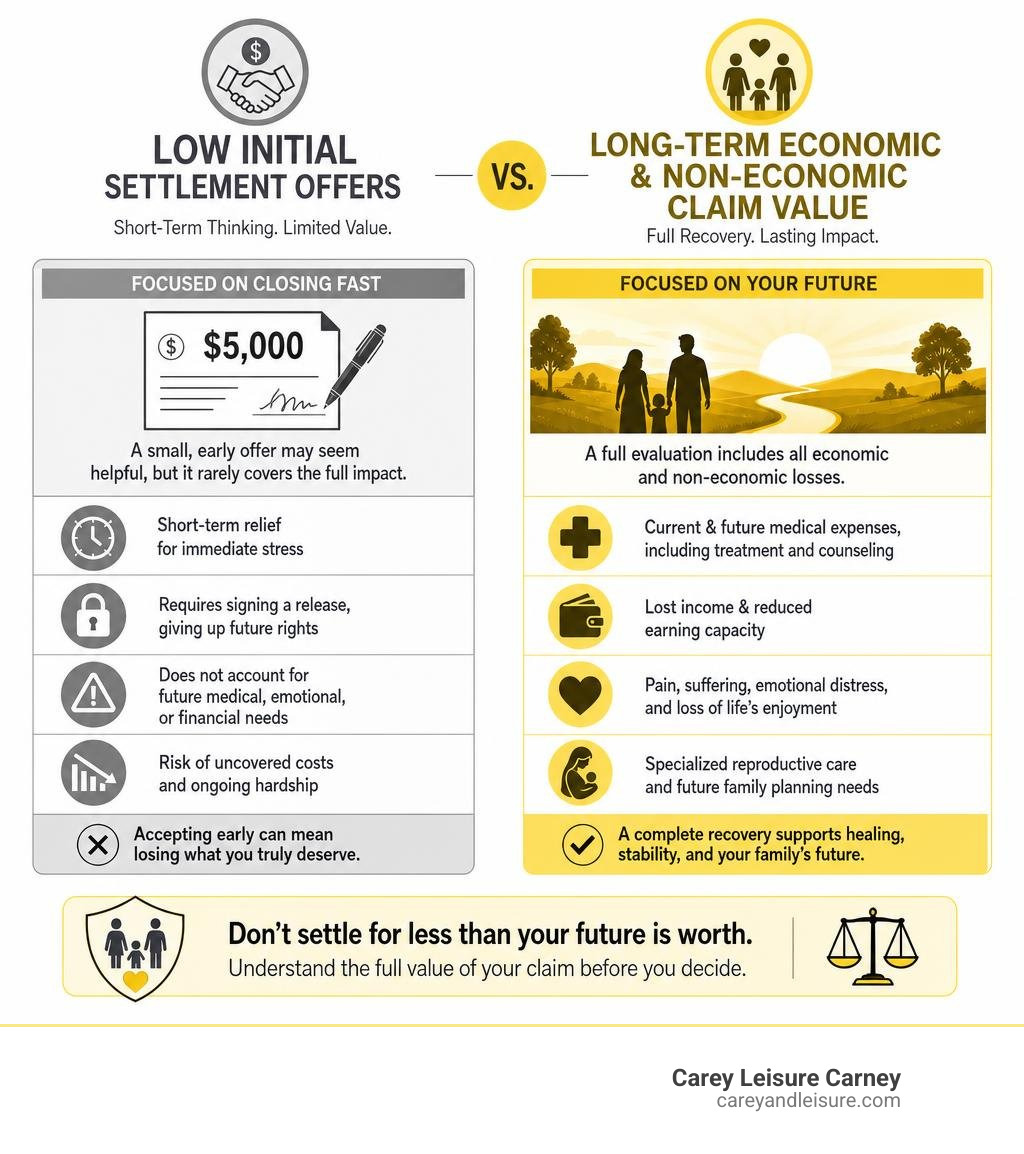
Insurance carriers do this for a specific commercial reason: to limit their monetary liability. They know that early in the process, families are grieving and stressed by incoming medical bills. An adjuster may present a small settlement check as a gesture of fast support. However, accepting that check requires signing a release of liability. Once signed, you give up your legal right to pursue any additional compensation—even if you incur tens of thousands in unexpected medical bills or face chronic health issues later.
If you receive a low initial offer, do not sign any documents or make recorded statements. Contact our team in Clearwater or St. Petersburg so we can evaluate the true value of your claim before you waive your rights.
Establishing Causation and Proving Medical Necessity
The central legal issue in any pregnancy loss claim is proving direct causation. Under Florida personal injury law, the plaintiff bears the burden of proof. You must prove by a preponderance of the evidence—meaning it is more likely true than not—that the defendant’s negligent driving caused the collision, and that the collision directly triggered or substantially contributed to the miscarriage.
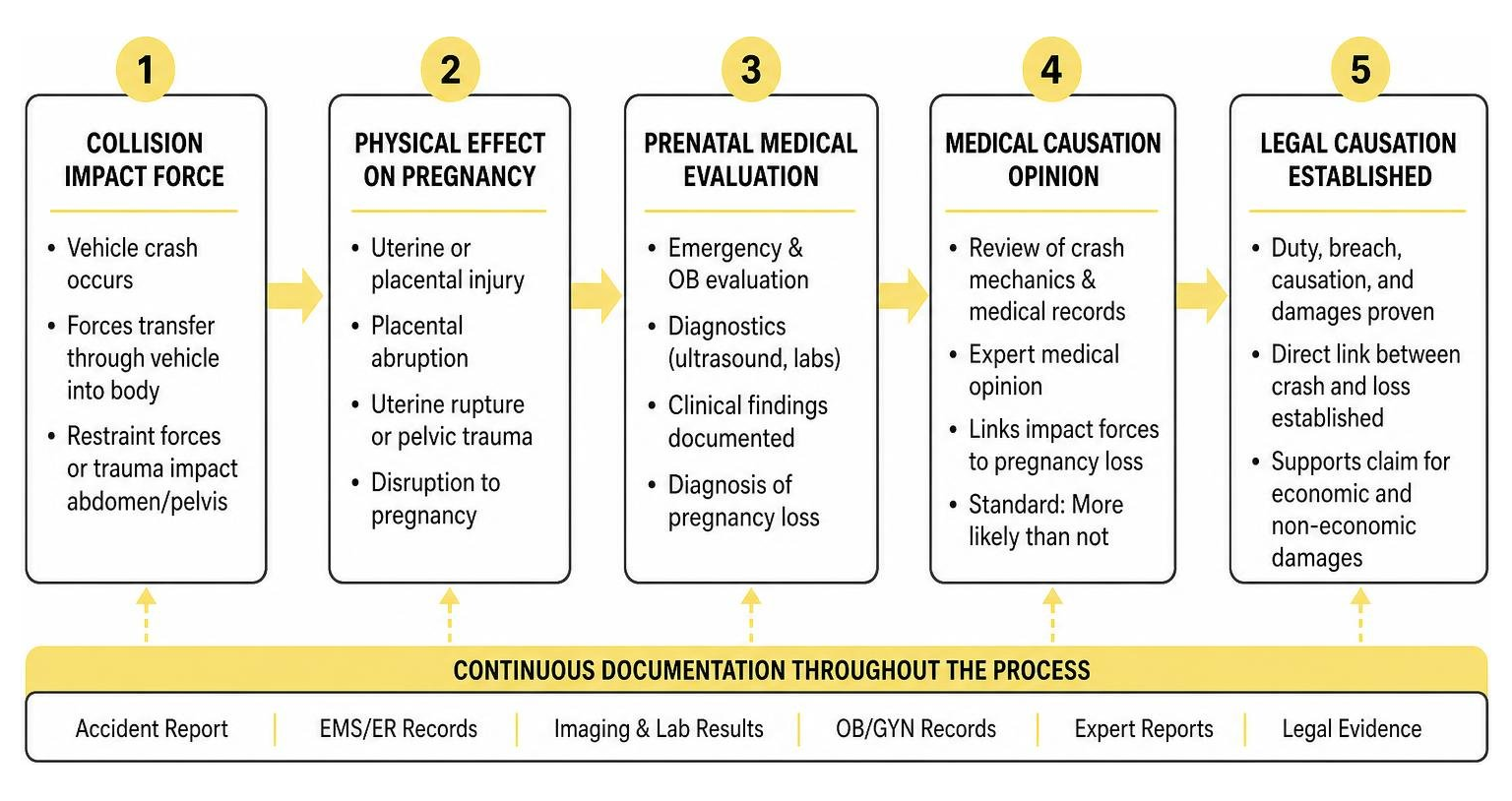
When a crash occurs, massive forces transfer through the frame of the vehicle into the human body. Even at moderate speeds, lap and shoulder belts exert sudden restraint force across the abdomen. Severe force can cause:
- Placental abruption (peeling away of the placenta from the uterine wall)
- Uterine rupture or severe pelvic trauma
- Direct physical trauma to the fetus
- Extreme physical shock and hormonal distress that disrupt the pregnancy

Proving Causation for Delayed Pregnancy Loss
One of the most complex challenges occurs when a miscarriage does not happen immediately at the crash scene, but occurs several days or weeks later. Insurance adjusters frequently argue that a delayed pregnancy loss must have been caused by natural causes rather than the collision.
To overcome this defense, we compile an uninterrupted medical paper trail showing the timeline of trauma. We work directly with treating OB-GYNs, maternal-fetal medicine specialists, and forensic pathologists to establish:
- Pre-Crash Health: Prenatal care records, bloodwork, and ultrasound images confirming that the baby was healthy and developing normally prior to the impact.
- Immediate Post-Crash Symptoms: Hospital ER notes detailing post-accident abdominal pain, cramping, spotting, elevated stress response, or uterine irritability, even if minor initially.
- Clinical Evolution: Medical documentation charting how minor early physical disruptions steadily worsened until the pregnancy was lost.
Legal precedents confirm that physical trauma does not need to cause instantaneous pregnancy loss to be legally compensable. As long as medical experts can demonstrate that the crash was a substantial contributing factor, liability remains with the negligent driver.
Legal Challenges with Pre-Existing Conditions
According to medical statistics, roughly 15% to 20% of early pregnancies end in spontaneous miscarriage due to unpreventable genetic or physiological factors. Insurance defense attorneys seize upon this general baseline statistic to argue that an accident victim’s pregnancy loss was merely coincidental or caused by an underlying pre-existing condition (such as advanced maternal age, thyroid imbalances, or hormone deficiencies).
However, Florida law protects victims through the established legal principle known as the “Eggshell Plaintiff Rule.” This rule states that a negligent defendant takes the victim as they find them. If you had a pre-existing vulnerability or a high-risk pregnancy, but the trauma of the car crash triggered or accelerated a loss that otherwise may not have occurred, the negligent driver remains fully liable for the resulting harm.
Insurance Company Tactics and Legal Burdens of Proof
Insurance adjusters are trained professionals whose job is to minimize claim payouts. In high-stakes cases involving miscarriage after car accident compensation, adjusters employ specific defense tactics:
- Disputing Impact Severity: Claiming that low vehicle damage proves the impact was too mild to harm an occupant or a pregnancy. However, impact force transfers directly into biological tissue regardless of whether a bumper crumples.
- Blaming Post-Accident Treatment: Arguing that necessary diagnostic X-rays or pain medications administered by ER physicians caused the pregnancy loss rather than the collision itself. (Under legal standards, the at-fault driver is responsible for medical complications resulting from reasonable emergency care required after the crash).
- Invasive Background Inquiries: Demanding access to complete historical medical records to uncover prior reproductive health issues, former miscarriages, or unrelated health factors.
- Surveillance and Social Media Monitoring: Monitoring an injured mother’s public social media accounts to try to portray her life as normal or unimpacted by grief.
Overcoming Defense Tactics in Miscarriage After Car Accident Compensation
Overcoming these aggressive insurance tactics requires meticulous legal preparation and top-tier expert support. We build a bulletproof case through:
- Expert Medical Testimony: Retaining respected board-certified OB-GYNs, maternal-fetal medical experts, and placental pathologists who review cellular data and medical records to provide clear, objective opinions on causation.
- Detailed Ultrasound and Imaging Analysis: Comparing pre-crash and post-crash ultrasounds to prove sudden changes in fetal heart rate, amniotic fluid levels, or placental tissue integrity.
- Autopsy Reports: When available and appropriate, pathological examination of fetal and placental tissue can rule out genetic anomalies and prove physical traumatic detachment or acute hypoxia.
- Accident Reconstruction: Utilizing biomechanical engineers to reconstruct crash dynamics and illustrate how restraint forces and kinetic energy transferred into the vehicle cabin.
Immediate Steps to Protect Your Rights After an Accident
If you are involved in an auto crash while pregnant, taking clear steps immediately helps safeguard your physical well-being and preserves your legal rights.
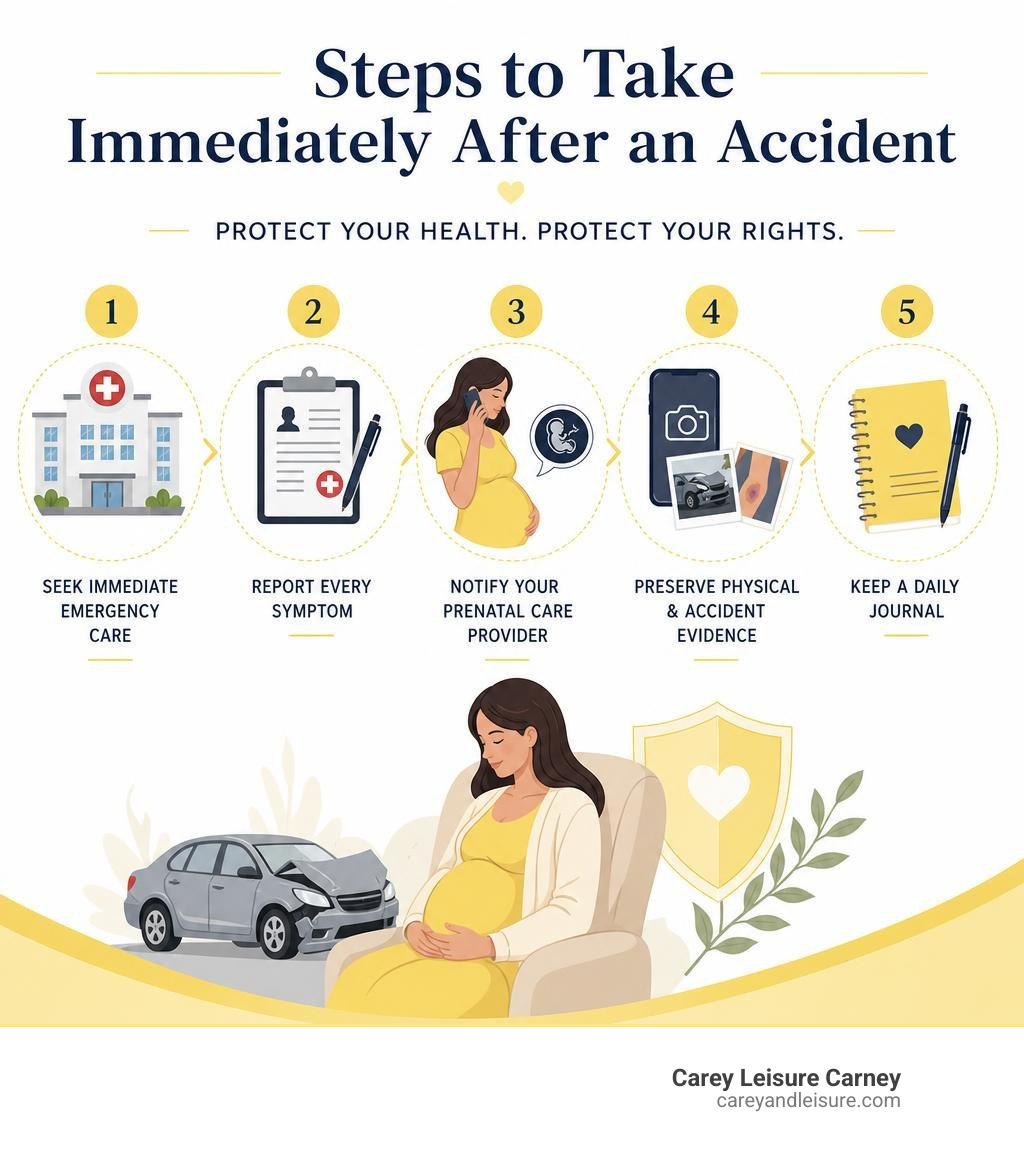
- Seek Immediate Emergency Medical Care: Even if you feel fine or think the impact was minor, go to the nearest emergency room or maternity ward immediately. Fetal distress or placental detachment can occur without obvious immediate external bleeding.
- Report Every Symptom: Tell the attending doctors every detail about what you are feeling—abdominal discomfort, back strain, spotting, cramping, dizziness, or intense anxiety. Ensure these notes are recorded in your chart.
- Notify Your Prenatal Care Provider: Contact your primary OB-GYN as soon as possible so they can coordinate care, perform urgent ultrasounds, and document the crash in your prenatal file.
- Preserve Physical and Accident Evidence: Take photographs of vehicle damage, physical bruising from seatbelts, the crash scene, and road conditions. Keep the clothes and shoes you were wearing during the crash.
- Keep a Daily Journal: Record your physical symptoms, emotional state, medical appointments, and missed workdays in a journal.
- Avoid Insurance Statements: Do not give recorded statements to the other driver’s insurance adjuster before consulting an attorney.
If you were injured as a pedestrian or motor vehicle occupant, review our legal guidance on Steps to Take After Being a Pedestrian Accident Victim for broader insight on preserving evidence.

Evaluating Wrongful Death and Fetal Viability Laws in Florida
A critical distinction under Florida law depends on the developmental stage of the pregnancy at the time of the collision.
- Miscarriage Prior to Fetal Viability: Under Florida civil law, an unborn fetus that has not reached legal “viability” (typically defined around 23 to 24 weeks of gestation) is not considered a separate person for the purpose of bringing a separate statutory wrongful death action. Instead, the loss of the pregnancy is evaluated as a physical and emotional injury directly to the mother. The mother is entitled to recover non-economic damages for her severe pain, suffering, and mental anguish caused by the loss of her unborn child.
- Loss After Fetal Viability: If the crash causes the loss of a viable fetus, Florida law provides rights under the state’s Wrongful Death Act (Florida Statutes § 768.16–768.26). Parents can seek statutory wrongful death recovery for mental pain and suffering from the loss of a viable unborn child.
To understand how wrongful death laws apply across different scenarios, explore our A Complete Guide to Florida Wrongful Death Claims or speak directly with a Wrongful Death Lawyer St Petersburg Fl.
Frequently Asked Questions About Pregnancy Loss Claims
How long do I have to file a claim for a miscarriage caused by a crash in Florida?
In Florida, personal injury lawsuits arising from motor vehicle crashes are subject to strict legal statutes of limitations. Under current state law, most negligence claims must be filed within two years from the date of the accident.
Failing to file your formal lawsuit within this legal timeframe will permanently bar your right to recover financial compensation. Because gathering complex medical records and hiring medical experts takes time, it is vital to speak with an attorney as early as possible.
What if the car accident caused minimal vehicle property damage?
Insurance companies frequently argue that low property damage means biological injuries could not have occurred. However, this argument ignores basic physics. Modern vehicle bumpers are engineered to resist cosmetic damage, but shockwaves from an impact travel directly through the frame into the seats and seatbelts.
Even a low-speed rear-end crash can generate sudden whipping motions that cause severe internal shear stress to delicate biological tissues like the placenta. We regularly work with biomechanical experts who demonstrate how low-damage crashes generate sufficient impact force to cause fetal loss.
Can I recover compensation if I had a high-risk pregnancy prior to the accident?
Yes. Having a pre-existing medical condition or high-risk classification does not disqualify you from recovering miscarriage after car accident compensation. Under Florida’s Eggshell Plaintiff Doctrine, the negligent driver who caused the crash is held fully responsible if their actions aggravated your condition or converted a high-risk pregnancy into an actual loss.
We utilize your pre-accident medical records and statements from your treating physicians to show that your pregnancy was stable prior to the crash and that the collision was the trigger for the loss.
Conclusion
Losing a pregnancy due to a car crash is a heartbreaking experience. While financial compensation cannot replace what you have lost, securing fair miscarriage after car accident compensation can help pay medical bills, cover lost income, support needed counseling, and provide accountability for another driver’s negligence.
At Carey Leisure Carney, our board-certified personal injury lawyers have spent over three decades helping families navigate severe motor vehicle accident claims across Florida, including Clearwater, Largo, New Port Richey, Spring Hill, St. Petersburg, Trinity, and Wesley Chapel. We provide direct access to experienced trial attorneys who treat your case with the empathy, care, and legal force it deserves.
If you or a loved one suffered a pregnancy loss after a crash, do not face the insurance companies alone. Contact an experienced Personal Injury Attorney at Carey Leisure Carney today for a free, confidential consultation. Let us handle the legal burdens so you can focus on healing.