The Ultimate Guide to Finding a Premise Liability Lawyer
Understanding Property Owner Duty of Care and Legal Liability
Knowing What is Premises Liability? begins with understanding the legal responsibility known as duty of care. Every landowner, landlord, business proprietor, or property management entity has a duty to manage their land and buildings in a way that protects visitors from avoidable danger. However, the exact extent of this legal duty depends heavily on why you were on the property in the first place.
When you bring a claim, a Premises Liability attorney evaluates your legal classification at the exact time the incident occurred.
Duty Standards for Invitees, Licensees, and Trespassers
Under Florida law, visitors on someone else’s property are categorized into three distinct legal statuses, each carrying a different level of protection:
- Public and Business Invitees: These are individuals invited onto the property for commercial or public purposes, such as shoppers in a Clearwater store or patrons at a St. Petersburg restaurant. Property owners owe invitees the highest duty of care. Owners must actively perform reasonable property inspections, repair known hazards, and post clear warning signage regarding hidden dangers.
- Licensees: These are social guests or individuals entering a residential home or land for their own convenience with the owner’s express or implied permission. Property owners must maintain the property in a reasonably safe condition and warn social guests of known, non-obvious dangers, but they are not generally held to the rigorous ongoing inspection duties required for business invitees.
- Trespassers: These are individuals who enter a property without permission or legal right. Property owners generally owe no duty of care to adult trespassers other than refraining from causing intentional injury. An exception exists under the attractive nuisance doctrine, which holds property owners responsible if an exposed hazard, like an unsecured residential pool, attracts young children who may not comprehend the danger.
Proving Knowledge: Actual vs. Constructive Notice
To hold a property owner liable for your harm, an injured party must establish that the owner had notice of the hazardous condition before the accident occurred. Notice falls into two separate legal categories:
- Actual Notice: The owner, manager, or employee knew about the hazard because they created it, saw it directly, or received a verbal or written complaint before you were hurt.
- Constructive Notice: The hazardous condition existed for a sufficient length of time that a reasonable owner, exercising ordinary maintenance and routine property inspections, should have discovered and corrected it.
Establishing constructive notice often requires reviewing maintenance logs, inspecting cleaning records, and gathering witness statements to demonstrate how long a hazard went unaddressed.
Common Types of Accidents Handled by a Premise Liability Lawyer

Unsafe property conditions manifest in many ways. A qualified premise liability lawyer handles a broad spectrum of claims where property management failure leads to severe physical harm. For a detailed breakdown of these legal rights, explore our Premises Liability Attorney Complete Guide.
Slip, Trip, and Fall Hazards
Slip, trip, and fall claims represent the most common premises liability matters. If you require legal assistance in Pinellas County, consulting a Slip and Fall Attorney Clearwater FL can help safeguard your rights.
Common environmental hazards causing falls include:
- Puddles, active leaks, or freshly mopped commercial floors lacking caution cones.
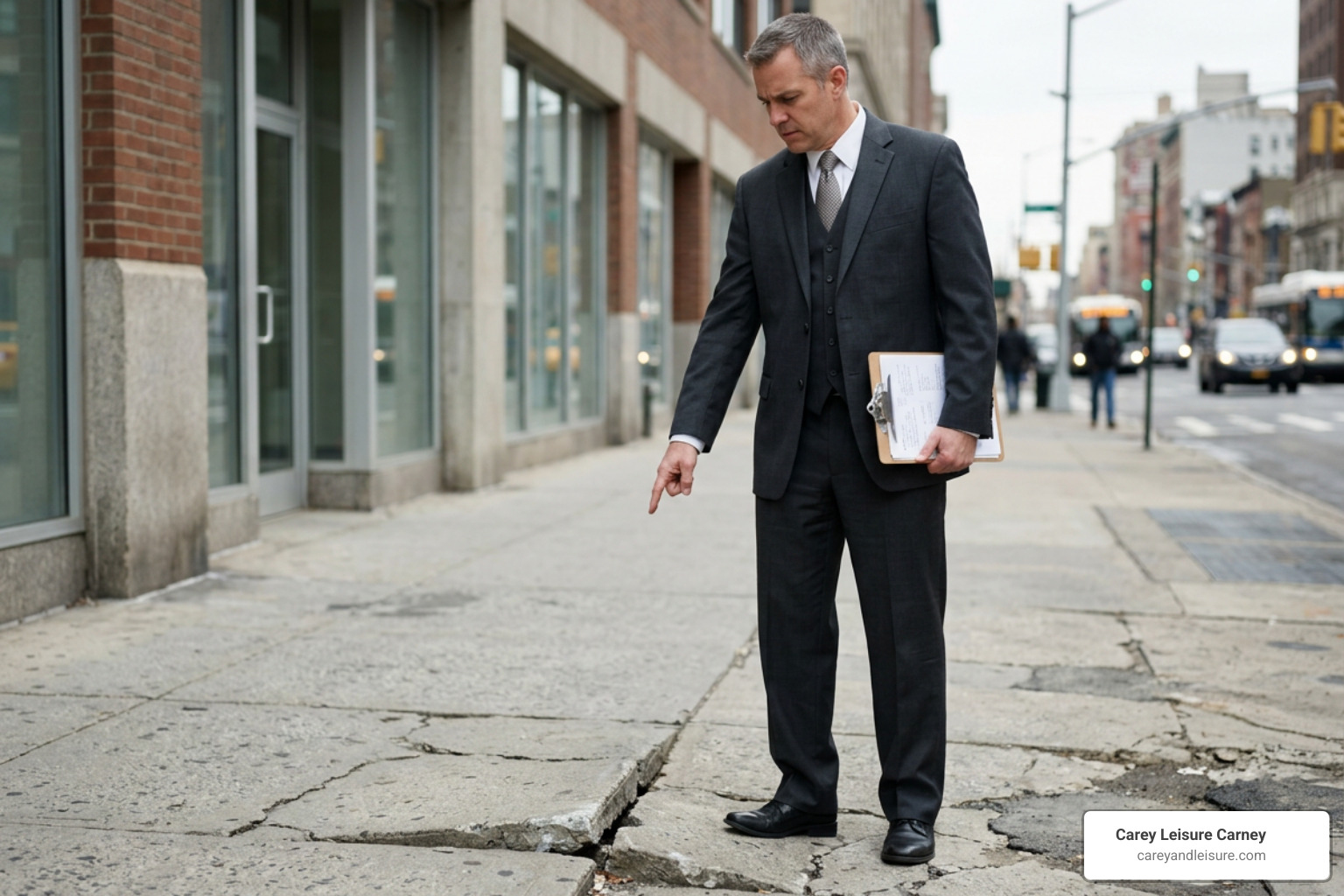
- Uneven sidewalks, cracked parking lot pavement, or misaligned floor mats.
- Broken stair treads, missing or loose handrails, and poorly lit stairwells.
- Structural or floor design defects that obscure unexpected changes in elevation.
Our comprehensive Best Slip Fall Attorneys Guide provides additional clarity on building hazards and owner responsibilities.
Negligent Security and Dangerous Conditions
Property owners must take reasonable measures to protect lawful visitors from foreseeable criminal acts committed by third parties. Our Negligent Security Lawyer Ultimate Guide details how property managers at commercial centers, parking facilities, or apartment complexes in Tampa Bay can be held financially liable if inadequate security contributes to violent crimes.
If an assault or robbery occurs due to broken security gates, malfunctioning apartment door locks, or unlit walkways, a Negligent Security Lawyers St Petersburg FL practitioner can examine the property’s crime history to establish whether the event was legally foreseeable.
Swimming Pool Accidents and Animal Attacks
Due to warm coastal weather, outdoor hazards are common across local properties. Swimming pool owners must adhere to strict fencing, barrier, and gate-latch regulations. Our insight into Pool Accidents highlights how defective drain covers, lack of mandatory safety barriers, or absent lifeguard warnings lead to devastating near-drowning or catastrophic submersion injuries.
Similarly, domestic pet attacks fall under premises safety obligations. Florida enforces strict liability against dog owners, meaning owners are typically responsible if their pet bites someone lawfully on public or private property. Victims can seek support through a Dog Bite Lawyer to evaluate full Dog Owner Liability.
How a Premise Liability Lawyer Investigates Negligence and Gathers Evidence
Proving liability requires comprehensive legal investigation techniques:
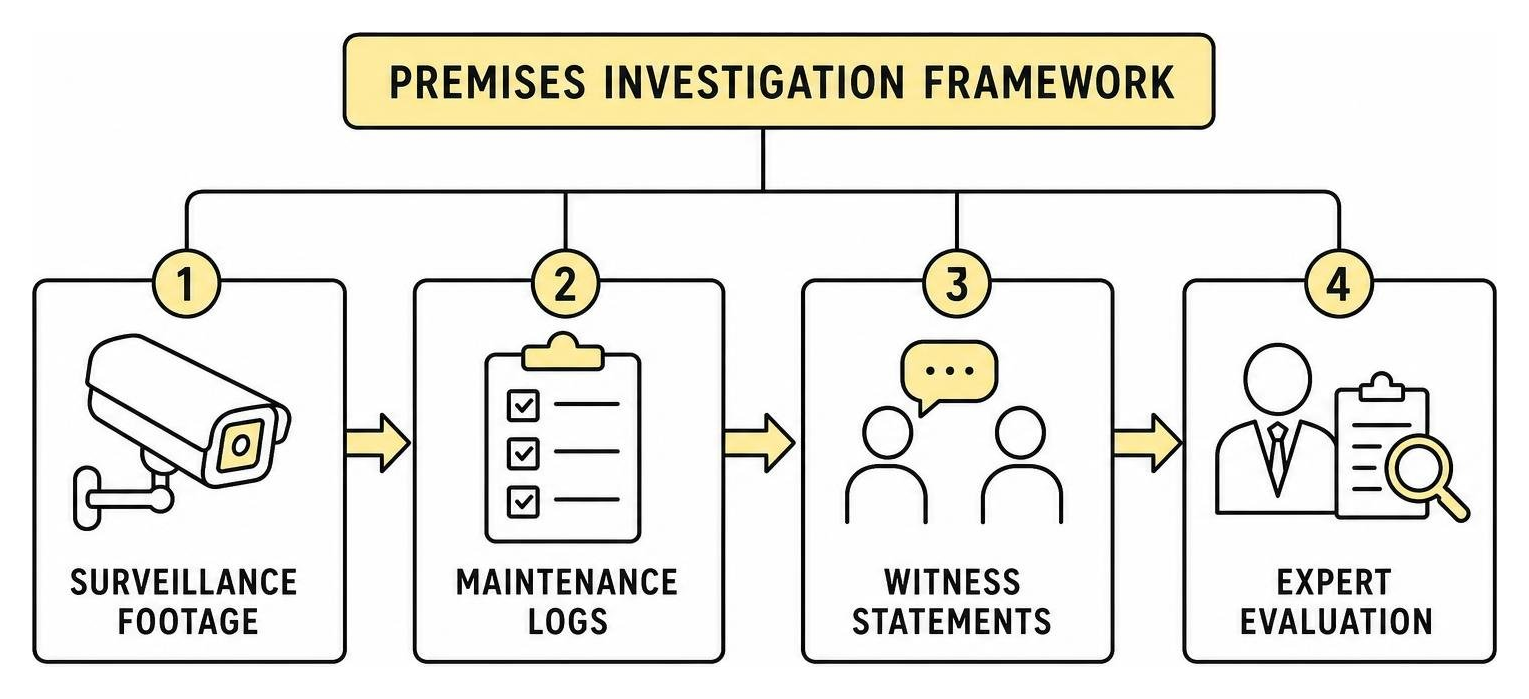
- Surveillance Video Preservation: Securing digital video footage before store management overrides or deletes security recordings.
- Maintenance Logs and Inspection Records: Subpoenaing internal janitorial schedules, sweep logs, and structural work orders.
- Eyewitness Statements: Securing recorded testimony from independent store patrons, employees, or neighbors.
- Accident Reconstruction: Utilizing building code experts and forensic engineers to evaluate stair geometry, lighting levels, or surface friction coefficients.
Essential Steps to Take Immediately After an Injury

What you do in the minutes and days following an accident significantly impacts the strength of your personal injury claim. Knowing What to Do After a Slip and Fall Accident protects both your physical well-being and your financial recovery.
Documenting the Scene and Gathering Immediate Evidence
If physical health allows, take immediate steps to preserve evidence at the scene:
- Take Pictures and Videos: Capture clear photographs of the hazard from multiple angles, including wide shots showing the surrounding area and close-ups of the specific defect.
- Preserve Clothing and Shoes: Do not wash or alter the clothes or shoes worn during the fall. Store them safely as physical evidence, especially if oil, grease, or liquids left physical stains.
- Collect Eyewitness Information: Write down names, phone numbers, and addresses of anyone who saw the incident or noticed the dangerous condition before your fall.
When structural issues are involved, review our guide on What to Do After a Trip and Fall Accident Caused by a Building or Design Defect.
Incident Reporting and Medical Documentation
- Report the Injury Promptly: Inform the store manager, landlord, property owner, or security chief immediately. Request an official, written incident report and obtain a physical copy before leaving.
- Seek Immediate Medical Attention: Visit an emergency room, urgent care center, or physician without delay. Prompt medical evaluations create an objective legal bridge linking the physical accident directly to your documented medical injuries.
- Avoid Recorded Statements: Do not provide recorded statements or sign liability waivers provided by insurance adjusters without first speaking with an experienced premise liability lawyer.
Financial Compensation, Comparative Fault, and Legal Defenses

Victims injured by dangerous property conditions often face substantial unexpected financial costs alongside severe pain. Understanding potential recovery avenues helps ensure you do not accept an unfair, premature settlement offer.
Recoverable Economic and Non-Economic Damages
Under state law, injured individuals can seek economic and non-economic damages through formal Personal Injury Lawsuits:
- Economic Damages:
- Past, current, and future medical treatment expenses.
- Rehabilitation services, physical therapy, and home care modifications.
- Lost wages from missed work shifts.
- Diminished future earning capacity if disability limits future career potential.
- Non-Economic Damages:
- Physical pain and suffering endured during recovery.
- Emotional distress, trauma, and anxiety resulting from the event.
- Loss of enjoyment of life and inability to participate in daily hobbies.
Overcoming Common Property Owner Defenses
Insurance adjusters regularly deploy aggressive legal strategies to deny or reduce injury payouts. The two primary defense tactics involve:
- Comparative Fault: Insurance companies frequently claim the victim was distracted, wearing improper footwear, or failed to pay attention to where they were walking.
- The Open and Obvious Doctrine: Defense attorneys assert that the hazard was so visible and apparent that any reasonable person would have noticed and avoided it naturally.
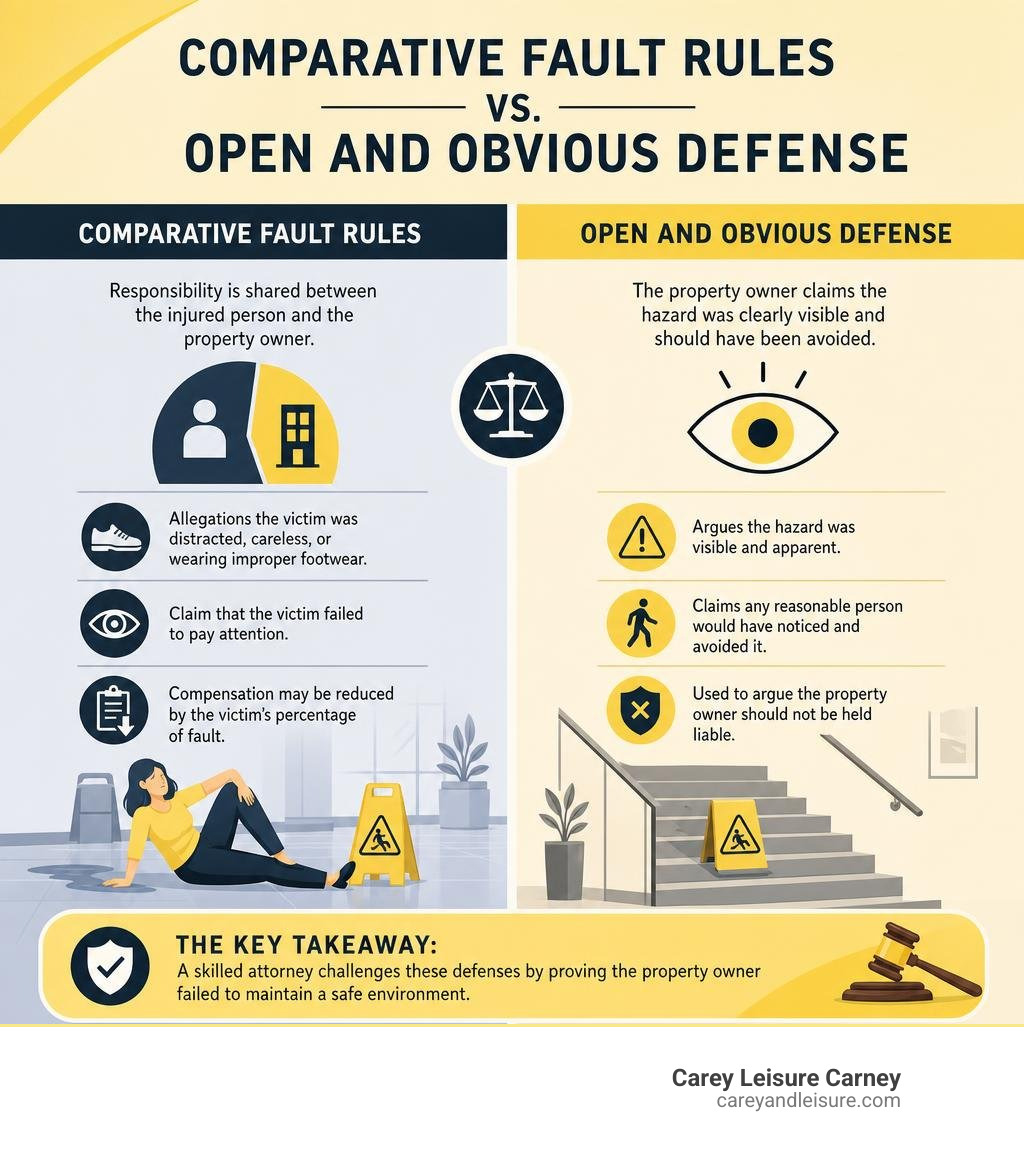
A skilled attorney counters these arguments by using building code violations, human factors engineering, and expert witness testimony to show that even visible hazards present unreasonable, unavoidable risks when combined with poor property layouts or distracting environments. To explore this legal standard further, read our overview on Comparative Negligence and our Gross Negligence Law Complete Guide.
Filing Claims Against Private Owners vs. Government Entities
Filing a premises liability claim against a private business owner in Wesley Chapel or Largo is straightforward compared to filing against municipal or government bodies.
When an injury happens on government-managed property—such as a public park, public library, county courthouse, or municipal sidewalk in Trinity, Spring Hill, or New Port Richey—special rules apply. Government entities enjoy partial sovereign immunity. To bring a valid claim, you must comply with strict written notification rules, formal administrative submission deadlines, and lower statutory limits on legal financial recovery.
How to Choose the Right Premise Liability Lawyer for Your Case
Selecting the right attorney directly influences your case outcome. Not all personal injury attorneys possess the trial background required to push insurance companies into paying full settlement values.
Key Qualities to Look for When Hiring a Premise Liability Lawyer
When evaluating experienced Liability Lawyers, focus on these critical qualifications:
- Board Certification: Board certification in civil trial law represents the highest level of legal achievement in Florida, held by top civil litigation attorneys.
- Direct Attorney Access: Ensure you work directly with your attorney rather than having your case assigned entirely to paralegals or junior staff.
- Proven Trial Record: Choose a firm that prepares every single case for trial rather than settling prematurely for low offers.
- Contingency Fee Structure: You should pay zero upfront out-of-pocket costs unless your legal team secures a financial recovery on your behalf.
Essential Questions for Your Free Legal Consultation
During your initial consultation, ask these direct questions to evaluate the firm:
- Are you board-certified in civil trial law?
- Will I have direct phone and email access to my attorney throughout my case?
- How many premises liability claims have you taken directly to trial and verdict?
- What specific experts will you consult to evaluate my property hazard and injuries?
Frequently Asked Questions About Premises Liability
What is the statute of limitations for filing a premises liability claim?
In Florida, the statute of limitations for general negligence and personal injury claims—including premises liability—is two years from the exact date of the injury. Claims involving government-owned properties carry shorter formal notice timelines, making early legal action essential.
Can I still receive compensation if I was partially at fault?
Yes. Florida operates under a modified comparative fault standard. So long as you are found 50% or less at fault for your accident, you can still recover compensation, though your financial recovery will be reduced proportionately by your assigned percentage of fault. If you are found more than 50% responsible, you are barred from financial recovery.
Who is liable for injuries occurring at a rental or vacation property?
If you are Injured at an Airbnb in Florida or inside a residential rental property, liability depends on who controlled the specific hazard. Landlords and property managers are responsible for structural defects and common area upkeep. Individual hosts or tenants may be liable if their direct actions or internal neglect created a temporary dangerous condition.
Conclusion
When an unexpected injury occurs on unsafe property in Clearwater, Largo, New Port Richey, Spring Hill, St Petersburg, Trinity, or Wesley Chapel, you need dedicated legal advocates who know how to protect your rights. At Carey Leisure Carney, our board-certified personal injury trial lawyers bring over 100 years of combined experience fighting for injury victims across our local Bay Area communities.
We offer direct attorney access and personalized service to ensure you never feel like just a case number. If you or a loved one was hurt on public, private, or commercial property, schedule a consultation with a qualified premises liability attorney today for a free case evaluation. Let our team handle the legal burdens so you can focus entirely on your physical recovery.