

Do No More Harm: How to Choose a Good Medical Malpractice Lawyer
How to Choose a Lawyer for a Medical Malpractice Claim
Choose a lawyer who has handled medical malpractice cases like yours, has trial experience, and can work with qualified medical experts. Check their Florida Bar record. During a consultation, ask who will handle your case, who pays expert costs, and how the fee works. Get the terms in writing, and pay attention to whether the lawyer answers you clearly.
Start looking promptly. A lawyer needs time to review the records, assess whether the care caused your injury, and identify the deadlines that apply.
I’m Thomas W. Carey, founding partner of Carey Leisure Carney and a board-certified civil trial lawyer with experience in medical malpractice cases. I’ll draw on that experience to explain how to choose a good medical malpractice lawyer and what to verify before you sign.
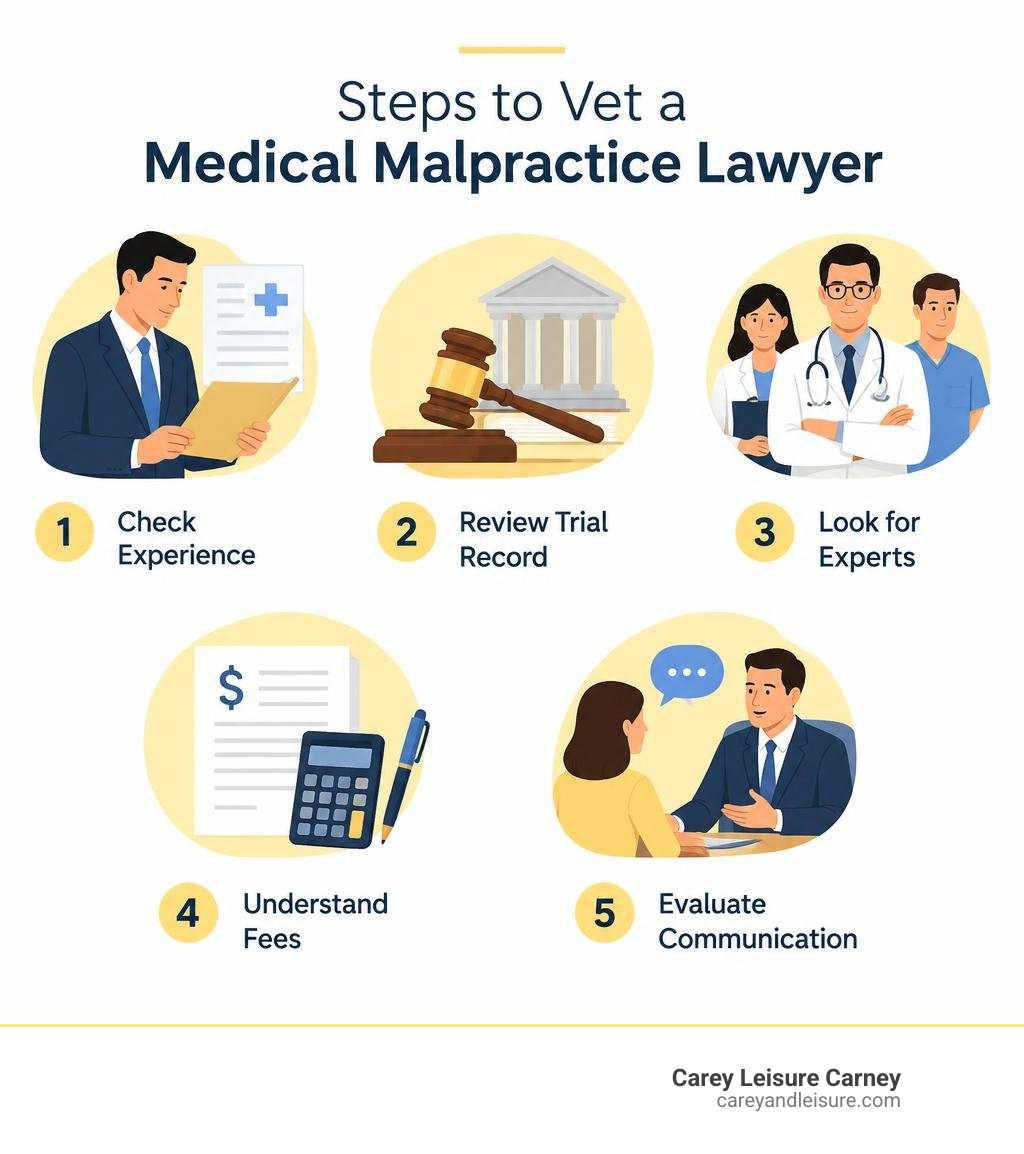
Simple guide to how to choose a good medical malpractice lawyer:
Essential Qualifications: How to Choose a Good Medical Malpractice Lawyer

When medical treatment goes wrong, it is natural to feel betrayed and overwhelmed. Choosing the right legal counsel is the single most critical decision you will make in securing justice. Medical malpractice is not simple personal injury law; it is an intricate hybrid of medicine, clinical standards, and specialized civil procedure.
Key Credentials and Experience: How to Choose a Good Medical Malpractice Lawyer for Complex Claims
A primary credential to look for is Board Certification in Civil Trial Law. In Florida, fewer than 2% of licensed attorneys earn this distinction. Board certification identifies an attorney as having verified courtroom trial experience, peer-reviewed ethical standards, and specialized competence in trying complex cases before juries.
Beyond formal certification, your attorney must possess deep medical record literacy. A lawyer cannot successfully cross-examine a defense specialist if they do not understand operative reports, lab trends, and diagnostic imaging. We always recommend checking an attorney’s standing with the state bar to ensure they have an unblemished disciplinary history. Industry resources on how to choose a medical malpractice lawyer emphasize that focused litigation experience in medical negligence is essential. If you are seeking local representation in Clearwater, consulting a dedicated Clearwater medical malpractice attorney ensures your legal team understands local court procedures and regional healthcare facilities.
Verifying Proven Trial Records and Case Settlements
Insurance carriers know which attorneys settle for quick, discounted payouts and which ones prepare every case for trial. Proving severe bodily injury caused by medical negligence requires extensive courtroom readiness.
When vetting an attorney, ask directly about their jury verdict history in medical malpractice cases. A proven track record in the courtroom gives your legal team substantial leverage during settlement negotiations. Hospital defense lawyers and their insurance carriers evaluate risk based on whether your attorney has the skill, reputation, and stamina to take a case all the way to a jury verdict.
Evaluating Firm Resources, Medical Experts, and Caseload Management

Medical malpractice lawsuits are resource-intensive battles against well-funded hospital corporations and defense firms. To succeed, your legal team must have both the financial capacity and professional connections necessary to take on corporate healthcare networks.
Access to Board-Certified Medical Expert Networks
Every valid medical malpractice lawsuit requires proving four core legal elements:
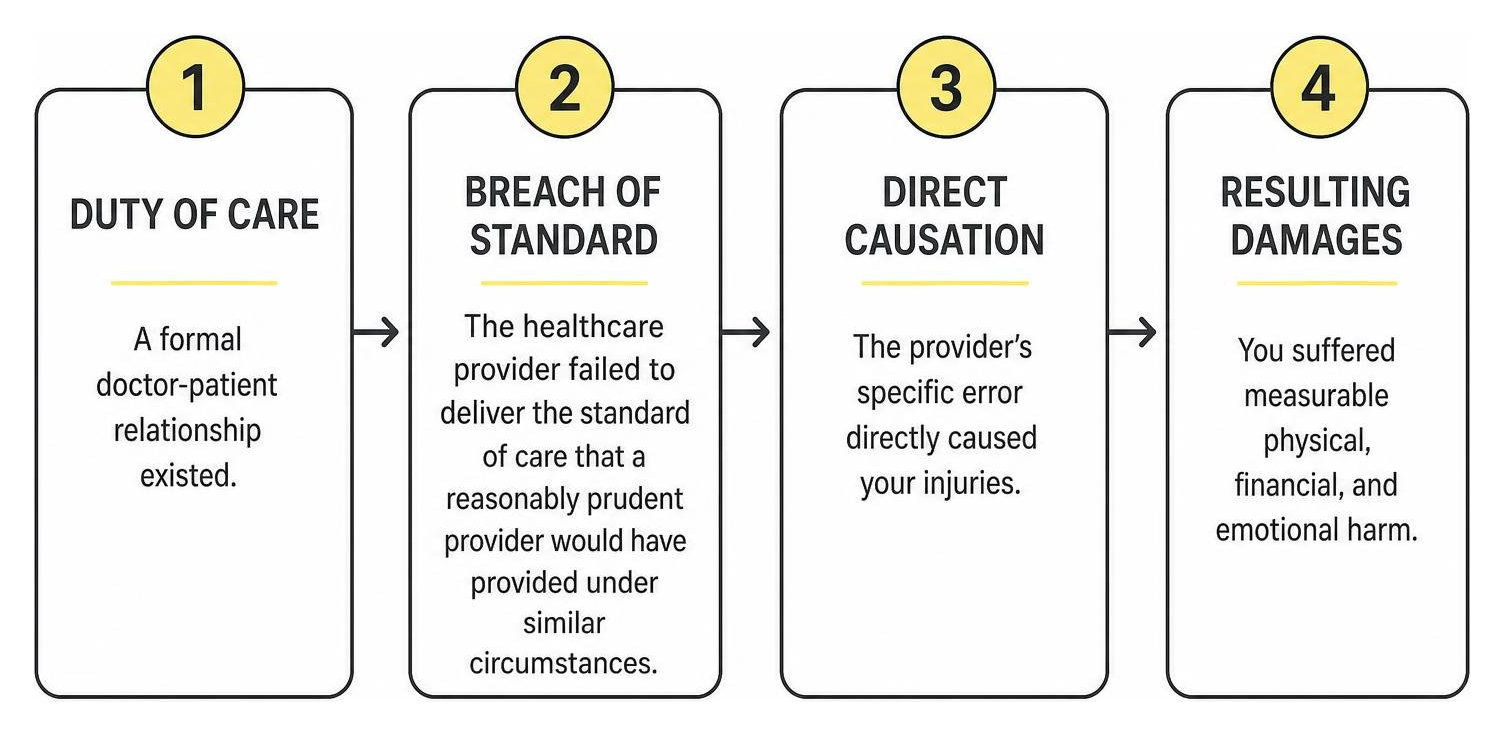
- Duty of Care: A formal doctor-patient relationship existed.
- Breach of the Standard of Care: The healthcare provider failed to deliver the standard of care that a reasonably prudent provider would have provided under similar circumstances.
- Causation: The provider’s specific error directly caused your injuries.
- Damages: You suffered measurable physical, financial, and emotional harm.
Establishing a breach and direct causation requires retaining independent, board-certified medical experts. Whether evaluating complex emergency room errors or devastating birth injury claims, credible expert witnesses in the exact same medical specialty are essential. Top-tier attorneys maintain relationships with respected medical specialists across the country to secure objective, peer-reviewed testimony for your claim.
Financial Capacity and Dedicated Legal Support Staff
Investigating medical negligence requires substantial upfront capital. Expert witness fees alone routinely cost tens of thousands of dollars before a case ever reaches a courtroom. Top firms front all of these expenses, including costs for obtaining thousands of pages of digital medical records, high-resolution radiology re-reads, court reporters, and demonstrative trial exhibits.
A well-resourced law firm also provides dedicated paralegals, legal assistants, and in-house medical record coordinators. Equally important is selective caseload management. Law firms that accept hundreds of cases at once often struggle to give each client the personalized attention complex medical cases demand.
The Consultation Process: Questions to Ask and Red Flags to Avoid
An initial consultation allows you to evaluate whether a firm possesses the right experience, resources, and communication style for your needs.
Essential Questions on How to Choose a Good Medical Malpractice Lawyer During Your Consultation
During your initial consultation, ask direct questions to gauge the attorney’s suitability:
- Lead Counsel: Will you personally handle my case and take it to trial, or will it be passed to a junior associate?
- Relevant Experience: How many medical malpractice cases involving my specific type of injury or medical error have you successfully resolved?
- Financial Investment: Does your firm have the capital to advance all expert witness and discovery expenses?
- Caseload and Attention: How many active litigation cases are you currently managing?
- Communication Protocol: Who will be my day-to-day point of contact, and how quickly does your office return client inquiries?
- Anticipated Challenges: What are the specific evidentiary strengths and hurdles you foresee in my medical records?
Warning Signs and Red Flags During Attorney Selection
Be vigilant for warning signs during your consultation. No ethical lawyer can ever guarantee a specific financial outcome or settlement amount. Medical malpractice litigation is inherently unpredictable, and any attorney promising a guaranteed payout is violating professional conduct rules.
Other warning signs include high-pressure sales tactics to sign a retainer, vague answers regarding courtroom trial experience, and poor communication during initial inquiries. If a firm takes weeks to return your initial phone calls, that lack of responsiveness will only worsen once your case is underway.
Understanding Legal Fees, Costs, and Applicable Malpractice Rules
Medical malpractice fee structures and procedural hurdles must be fully understood before signing a representation agreement.
| Feature | Standard Contingency Fee | Advanced Case Costs | Hourly / Retainer Fee (Non-Standard) |
|---|---|---|---|
| Upfront Cost to Client | $0 out-of-pocket | $0 (advanced by firm) | Substantial upfront retainer |
| Payment Trigger | Percentage paid only upon recovery | Deducted from final recovery | Billed monthly regardless of outcome |
| Typical Percentage | 33.3% to 40% based on case stage | Actual costs incurred (experts, records) | N/A |
| Client Risk if Case Loses | No legal fees owed | Reputable firms absorb advanced costs | Client pays all hours and costs |
Contingency Fee Arrangements and Case Expense Deductions
Most medical malpractice attorneys handle cases on a contingency fee basis. Under this arrangement, legal fees are a percentage of the financial recovery secured through settlement or verdict—typically ranging from 33.3% to 40% depending on the stage at which the case resolves.
Ensure your retainer agreement clearly defines how case expenses (such as expert witness fees and court costs) are handled. A reputable law firm will advance all expenses and deduct them from the gross settlement only after a successful outcome, absorbing those expenses if the claim is unsuccessful.
Applicable Pre-Suit Requirements and Statutory Deadlines
Medical malpractice lawsuits are subject to strict procedural rules. Understanding the medical malpractice statute of limitations is vital, as missing this window permanently bars your right to financial recovery.
Before a medical negligence lawsuit can even be filed in court, the law requires a comprehensive pre-suit investigation process. This includes serving a formal Notice of Intent to Initiate Litigation and providing a verified written medical expert opinion confirming that reasonable grounds exist to support a claim of medical negligence.
Frequently Asked Questions About Hiring a Medical Malpractice Lawyer
How do I know if my injury was caused by medical malpractice or an unavoidable complication?
Not every poor medical outcome constitutes malpractice. Medicine is inherently uncertain, and known complications can occur even with proper care. A viable medical malpractice claim requires proving that a healthcare professional deviated from accepted clinical standards of care, and that this specific deviation directly caused injuries that would have otherwise been avoided. A thorough review of your medical records by an independent medical expert is necessary to make this determination.
How long does a medical malpractice lawsuit typically take to resolve?
Because of mandatory pre-suit screening periods, extensive medical records reviews, expert depositions, and court scheduling, medical malpractice cases typically take between one and three years to resolve. Complex claims requiring multi-week jury trials can take longer.
What documentation should I bring to my initial legal consultation?
To help your attorney evaluate your case, bring:
- All medical records, discharge summaries, and operative notes currently in your possession.
- Digital copies or discs of relevant diagnostic imaging (such as MRIs, CT scans, and X-rays).
- A concise, chronological timeline detailing your treatments, doctor visits, and symptom onset.
- Itemized medical bills, pharmacy receipts, and documentation of lost wages.
- Any correspondence between you and the healthcare providers or facilities involved.
Conclusion
Medical malpractice claims demand exceptional legal skill, comprehensive medical knowledge, and the financial resources to take on corporate hospital networks. At Carey Leisure Carney, our board-certified civil trial attorneys bring over 100 years of combined legal experience to every case. We provide direct attorney access and compassionate, personalized advocacy for patients and families throughout Clearwater, Largo, New Port Richey, Spring Hill, St. Petersburg, Trinity, and Wesley Chapel.
If you or a loved one has suffered harm due to medical negligence, contact Carey Leisure Carney today to schedule a free, confidential medical malpractice claim evaluation. Let us help you hold negligent providers accountable and secure the compensation you deserve.