

Why Settling Without a Personal Injury Attorney Costs You Big Money
A Personal Injury Attorney Can Help You Avoid an Undervalued Settlement
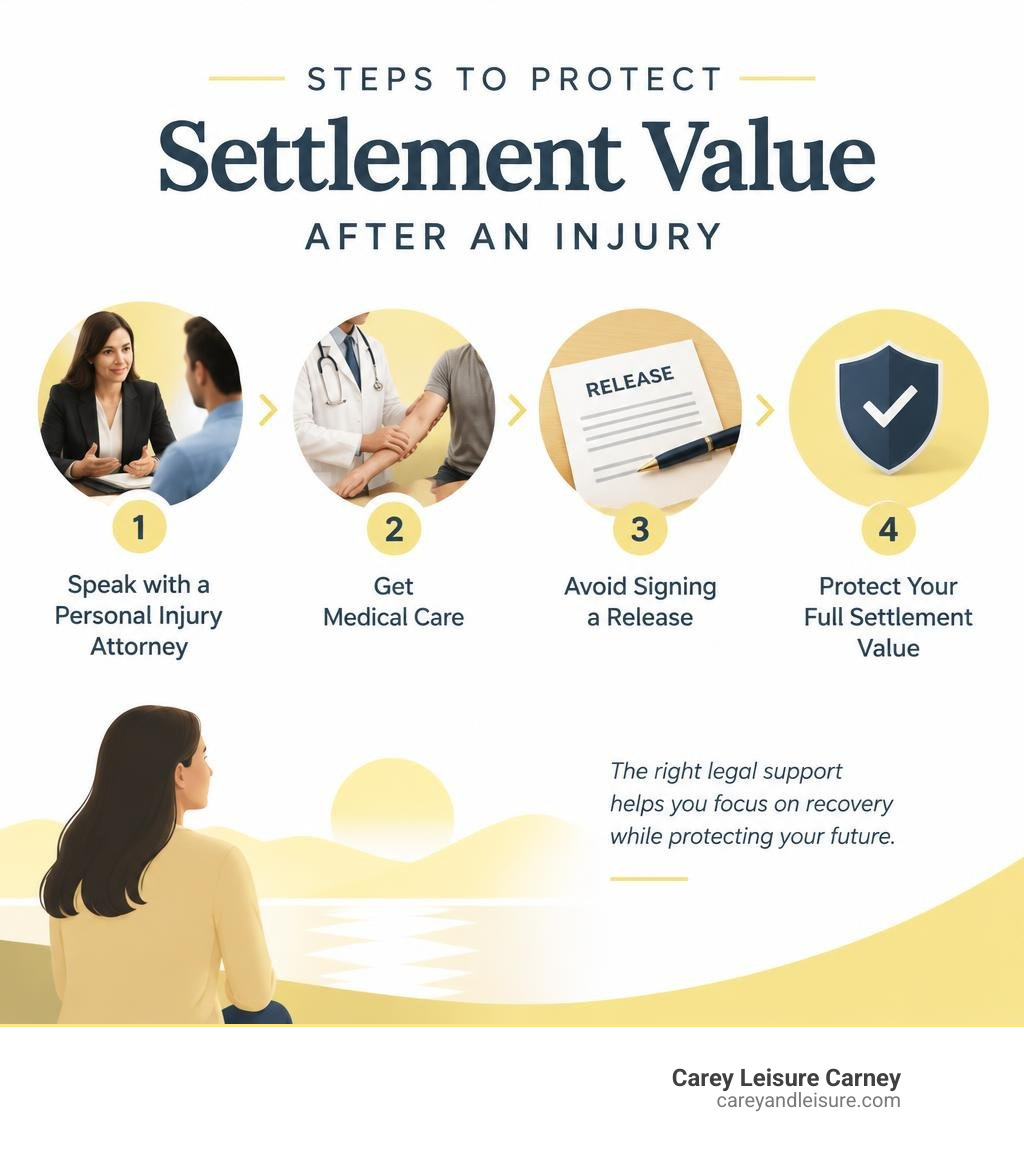
Before accepting an insurance settlement, speak with a Personal Injury Attorney, get medical care, and avoid signing a release until you understand your full losses. A quick offer may not account for future treatment, lost income, pain, or the lasting effect an injury can have on your life.
A lawyer can investigate what happened, preserve evidence, calculate both current and future damages, and handle insurer communications. This gives you time to focus on recovery while protecting your right to seek fair compensation.
Insurance companies have teams that evaluate claims every day. Their first offer may be based on limited records and may close your claim permanently. Experienced legal representation helps make sure the offer reflects the real cost of the accident, not just the bills already in hand.
I am Thomas W. Carey, a founding partner at Carey Leisure Carney and a board-certified civil trial lawyer who has guided or overseen roughly 40,000 injury matters. As a Personal Injury Attorney, I have spent decades helping injured people and families pursue accountability in complex accident, wrongful death, and negligence cases.
Personal injury attorney terms explained:
For a broader overview of how personal injury claims work, see this personal injury reference.
The Hidden Risks of Settling Without a Personal Injury Attorney

When an accident upends your life, insurance adjusters often reach out within days. They sound sympathetic, ask how you are feeling, and suggest a fast settlement check to help with immediate bills. While a quick payout might seem like a relief, accepting it without professional guidance is one of the costliest mistakes an injured person can make.
Adjusters work for the insurance company, not for you. Their primary goal is to close claims quickly while paying out as little as possible. When you settle directly, insurers take advantage of the fact that most people do not know the full financial, physical, and legal scope of their claim.
There are several major dangers to handling a claim entirely on your own:
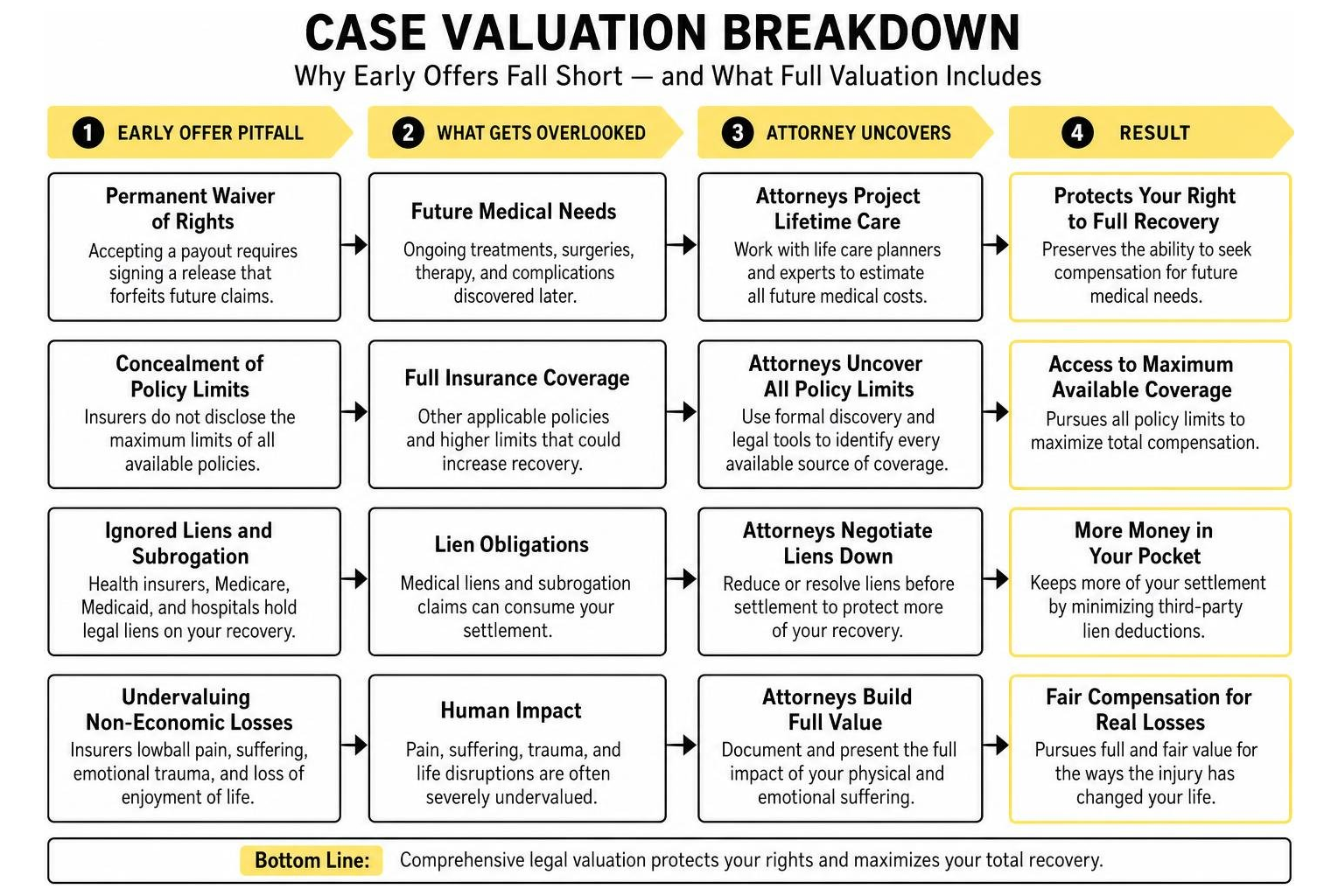
- Permanent Waiver of Rights: When you accept a payout, you must sign a comprehensive liability release. This document permanently forfeits your right to seek additional compensation from that insurer or defendant for the incident—even if you discover days later that you need spinal surgery.
- Concealment of Policy Limits: Insurance carriers have no obligation to volunteer the maximum limits of all available policies covering the at-fault party unless legally compelled during formal proceedings.
- Ignored Liens and Subrogation: Health insurers, Medicare, Medicaid, and hospital facilities often hold legal liens against your recovery. If you settle without negotiating these liens down, you could end up having to pay the entire settlement check straight to third-party lienholders.
- Undervaluing Non-Economic Losses: Insurers rarely offer fair compensation for pain, suffering, emotional trauma, or loss of enjoyment of life unless pressed by counsel prepared for court.
Understanding why you need a personal injury lawyer helps protect you from these early settlement traps and ensures you do not leave vital financial recovery on the table.
How a Personal Injury Attorney Uncovers Overlooked Future Damages
The true cost of an injury rarely stops at the emergency room door. Serious injuries—such as traumatic brain damage, herniated discs, or joint tears—often require years of ongoing physical therapy, pain management, revision surgeries, and specialized home care.
When evaluating what is my personal injury case worth, our team looks far beyond initial medical invoices. We consult with certified life care planners, vocational specialists, and economic experts to quantify:
- Lifetime Medical Interventions: Estimating future prescription costs, assistive devices, routine imaging, and potential surgical procedures over your life expectancy.
- Vocational Loss and Diminished Earning Capacity: Calculating the income you will lose if your injury prevents you from returning to your prior profession, forces you to work reduced hours, or eliminates future promotions.
- Cognitive Rehabilitation and Mental Health Support: Accounting for ongoing counseling, cognitive therapy, and treatment for accident-related trauma.
- Loss of Household Services: Factoring in the real cost of hiring help for tasks you can no longer perform around the home, such as childcare, maintenance, or cleaning.
Why Working with a Personal Injury Attorney Outweighs Out-of-Pocket Concerns
A common hesitation accident victims experience is worrying about the legal fees involved in hiring representation. Many assume that legal counsel requires hefty hourly retainers or out-of-pocket payments. In personal injury law, that is not how it works.
Reputable trial attorneys operate on a contingency fee arrangement. This means:
- Zero Upfront Costs: You do not pay anything out of pocket to retain counsel or start your case.
- We Advance All Litigation Expenses: Our firm fronts the costs required to build a winning claim, including filing fees, court reporter charges, private investigator services, accident reconstruction models, and expert witness retainers.
- No Win, No Fee: If we do not secure a settlement or jury verdict on your behalf, you owe us nothing in attorney fees.
Learning more about how much does it cost to hire a personal injury attorney reveals that this model aligns your attorney’s interests directly with your own: maximizing your net financial recovery while eliminating upfront risk.
Step-by-Step: How to Calculate True Case Value Before Signing a Release
Accurately calculating the value of an injury claim requires combining tangible losses with intangible human damages. Examining real-world personal injury settlement examples demonstrates how comprehensive legal analysis substantially alters the financial outcome.
| Damage Category | Self-Representation (Early Insurer Offer) | Comprehensive Legal Valuation |
|---|---|---|
| Past Medical Expenses | Only emergency room and initial doctor bills | Full gross past medical bills plus out-of-pocket medical expenses |
| Future Medical Treatment | Excluded or assigned a nominal estimated amount | Detailed life care plan covering future surgeries, therapy, and care |
| Lost Wages | Only documented days missed from work immediately after | Past lost income plus projected future loss of earning capacity |
| Pain and Suffering | Minimal standard multiplier or omitted entirely | Full non-economic compensation reflecting lifestyle disruption |
| Lien Reductions | Victim pays full hospital/health insurance liens directly | Attorney negotiates substantial reductions with lienholders |
Critical Factors That Influence Total Case Value
Every personal injury matter presents unique challenges. Reviewing the A to Z of personal injury claims: a comprehensive guide highlights the central factors that dictate the final value of a claim:
- Severity and Permanence of the Injury: Catastrophic trauma, permanent scarring, or loss of bodily function command significantly higher compensation than soft-tissue strains that resolve within weeks.
- The Victim’s Age and Work Life Expectancy: A younger claimant with thirty years of lost earning capacity faces different economic consequences than someone nearing retirement.
- Pre-Existing Conditions and Aggravation: Insurers frequently argue that current pain stems from old injuries. Legal counsel gathers prior medical histories and physician testimony to prove how the recent incident aggravated those baseline conditions.
- Available Insurance Coverage Limits: The at-fault party’s policy limits—along with your own uninsured/underinsured motorist (UM) coverage and commercial umbrellas—establish the available financial recovery pool.
- Comparative Fault Allocations: Any degree of fault attributed to you directly reduces your recovery percentage, making clear evidence of liability essential.
How Professional Representation Counters Aggressive Insurance Tactics

Insurance adjusters are skilled negotiators trained to protect their company’s bottom line. When an unrepresented victim files a claim, adjusters often deploy tactics designed to lower claim payouts before the claimant realizes the full extent of their injuries.
Common insurer strategies include:
- Recorded Statement Traps: Adjusters often request a recorded statement early on, asking leading questions designed to get you to downplay your pain or inadvertently admit partial fault.
- Blanket Medical Authorizations: Insurers may ask you to sign broad medical releases, allowing them to search through decades of your private medical history to blame current symptoms on unrelated prior issues.
- Delaying Tactics: Insurers might drag out administrative reviews to run down legal deadlines or increase financial pressure on you until you accept a lowball offer.
Successfully navigating the path to personal injury settlements requires putting an experienced legal team between you and the insurance company. When an insurer realizes you are ready to file formal personal injury lawsuits and take your case before a jury, their settlement posture often changes significantly.
Gathering and Preserving Essential Fault Evidence
The foundation of any successful personal injury recovery is indisputable evidence of fault. Crucial evidence can vanish quickly if not preserved immediately after an incident.
Our investigative process focuses on:
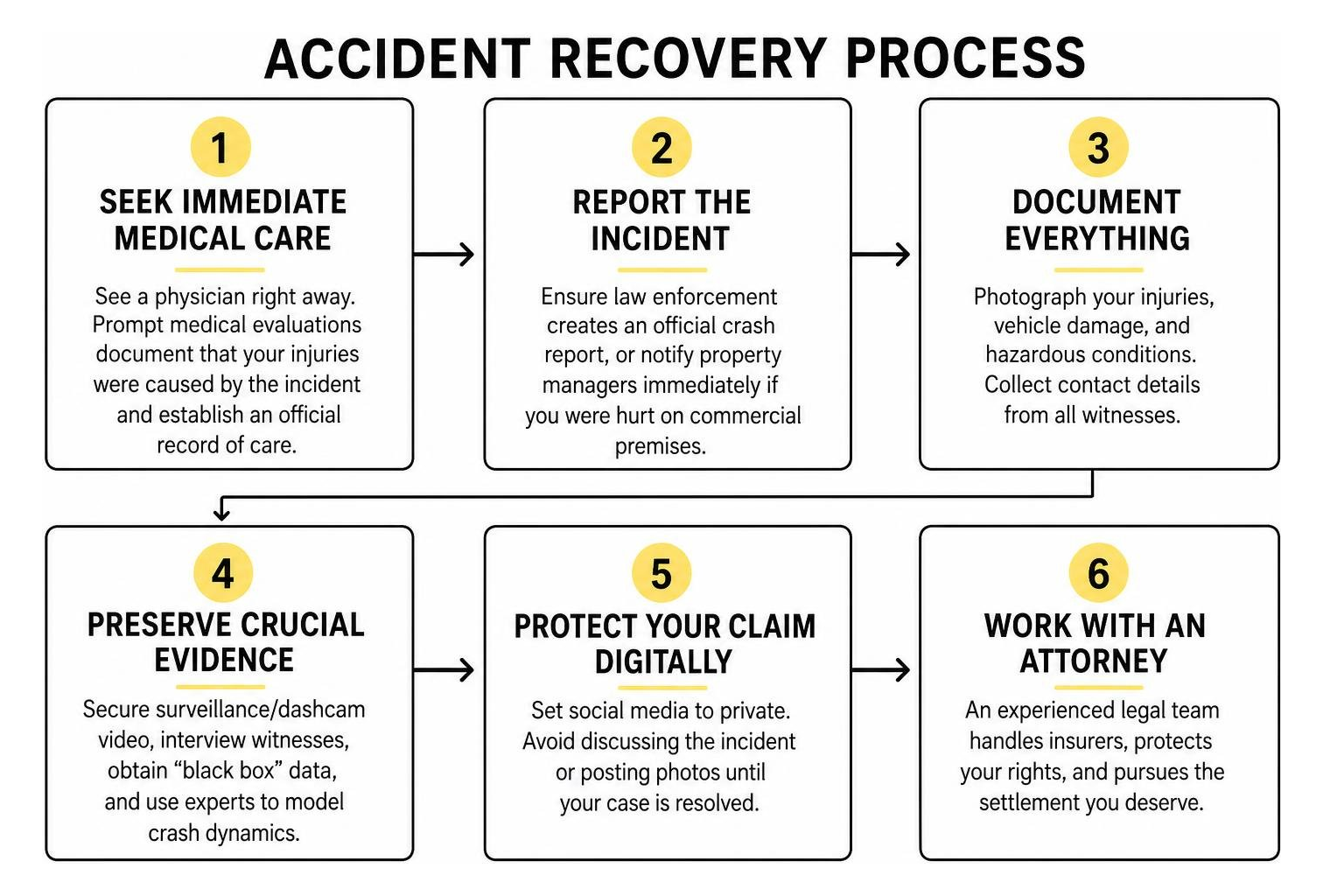
- Securing surveillance and dashcam video footage before it is routinely recorded over.
- Interviewing eyewitnesses while their memories remain fresh.
- Obtaining electronic control module (“black box”) data in commercial trucking or high-speed motor vehicle crashes.
- Utilizing forensic engineers and accident reconstruction specialists to model crash dynamics.
Properly documenting evidence in personal injury claims is a vital part of early case preparation. Discovering how attorneys use investigations for your personal injury claim demonstrates how thorough investigations build strong leverage during settlement talks.
Protecting Your Claim from Digital and Social Media Mistakes
In the modern digital landscape, insurance investigators routinely monitor claimants’ public social media profiles. A casual photo taken at a family dinner or a brief comment about your day can be taken out of context by defense lawyers to argue you are not as injured as you claim.
Understanding the relationship between personal injury and social media is essential. We advise clients to set all social media profiles to strict privacy modes, refrain from discussing the incident or their recovery online, and avoid posting photographs of physical activities until their case is resolved.
Steps to Take Immediately Following an Injury to Protect Your Rights
The actions you take in the hours and days following an accident directly impact both your physical recovery and your legal rights.
Whether you are navigating incidents detailed in from car crashes to slip and falls: the A-Z of personal injury cases, follow these essential steps:
- Seek Immediate Medical Care: See a physician right away. Prompt medical evaluations document that your injuries were directly caused by the incident and establish an official record of care.
- Report the Incident: Ensure local law enforcement generates an official crash report, or notify property managers immediately if you were hurt on commercial premises.
- Document Everything: Photograph your visible injuries, vehicle damage, dangerous property conditions, and weather factors. Collect contact details from all witnesses.
- Follow Doctor’s Orders: Attend all follow-up physical therapy, specialist consultations, and imaging appointments. Gaps in care give insurers room to argue your recovery is complete.
- Consult an Experienced Personal Injury Attorney: Contact legal counsel before giving statements or accepting checks from insurance representatives.
Frequently Asked Questions About Personal Injury Claims
What should I do if an insurance company contacts me right after an accident?
If an insurance adjuster contacts you, remain polite but avoid giving a recorded statement or signing any releases. You are not legally required to provide an on-the-record interview immediately after an injury. Inform the adjuster that you are currently undergoing medical treatment and that your legal counsel will handle all communications on your behalf.
How is fault determined under comparative negligence rules?
Under modified comparative negligence rules, an injured claimant’s compensation is reduced proportionately by their assigned percentage of responsibility for the incident. Furthermore, if a claimant is found to be more than 50% responsible for their own injuries, they may be barred from recovering any financial compensation from the other party. Establishing strong evidence of liability early helps counter bad-faith attempts to shift fault onto you.
What damages can be recovered in a catastrophic injury lawsuit?
Victims of severe injuries can pursue both economic and non-economic damages. This includes past and future medical expenses, specialized home modifications, in-home nursing assistance, lost wages, diminished future earning capacity, physical pain, emotional anguish, permanent disability, and loss of companionship. In cases involving gross negligence or intentional misconduct, punitive damages may also be sought to penalize the wrongdoer.
Conclusion
Attempting to resolve an injury claim alone leaves you at a distinct disadvantage against seasoned insurance adjusters. An undervalued settlement check may provide temporary relief, but it often leaves accident victims facing substantial out-of-pocket expenses when future medical issues arise.
At Carey Leisure Carney, our board-certified civil trial attorneys bring over 100 years of combined legal experience to your corner. We provide direct access to your attorney, thorough accident investigations, and aggressive trial preparation to help you pursue the complete compensation you deserve. If you or a loved one has suffered harm, reach out to our team for dedicated rideshare and auto accident legal representation to protect your family’s financial future.