8 Eye-Opening Premises Liability Case Examples and What They Cost Negligent Owners
Why Premises Liability Case Examples Matter After a Serious Fall
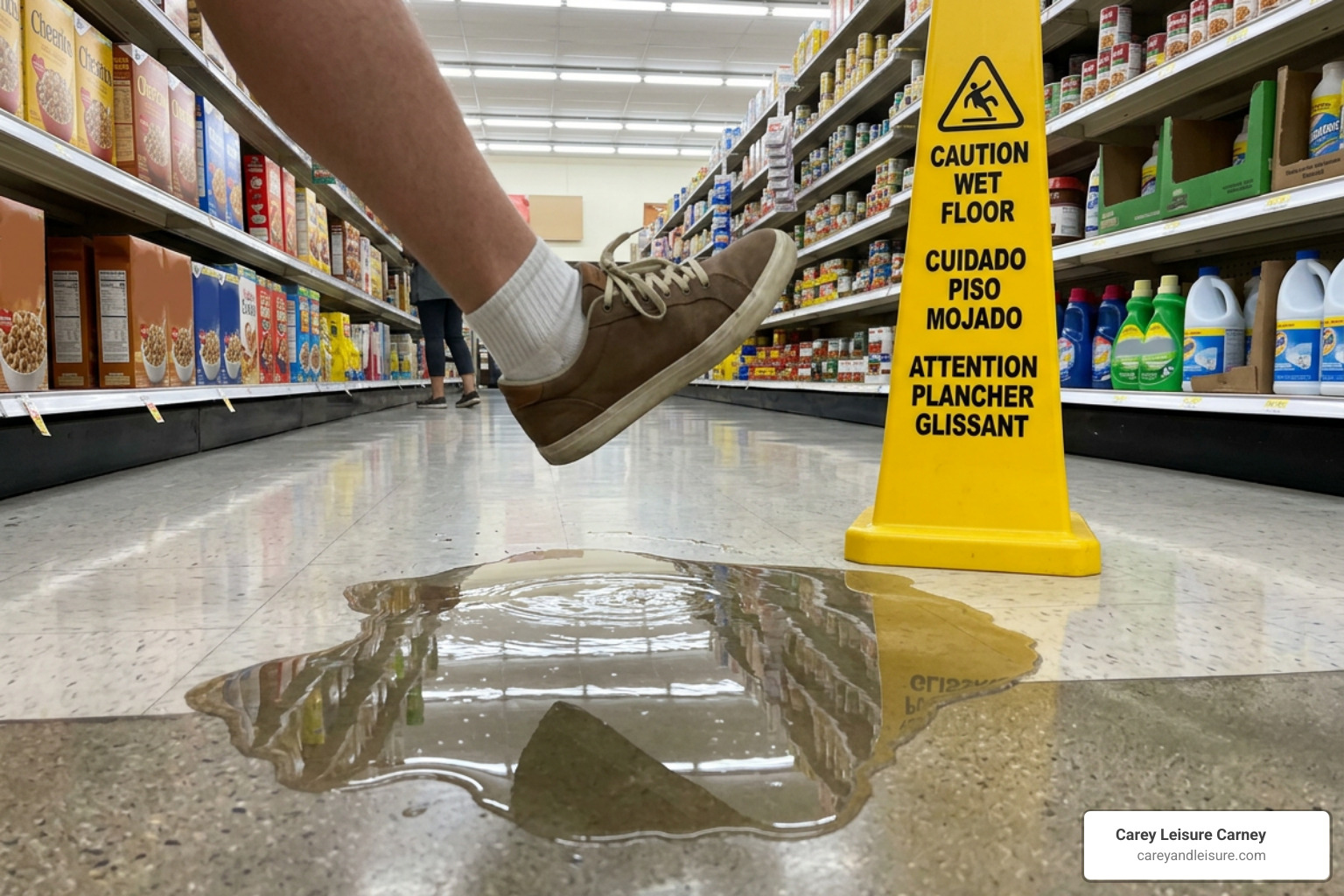
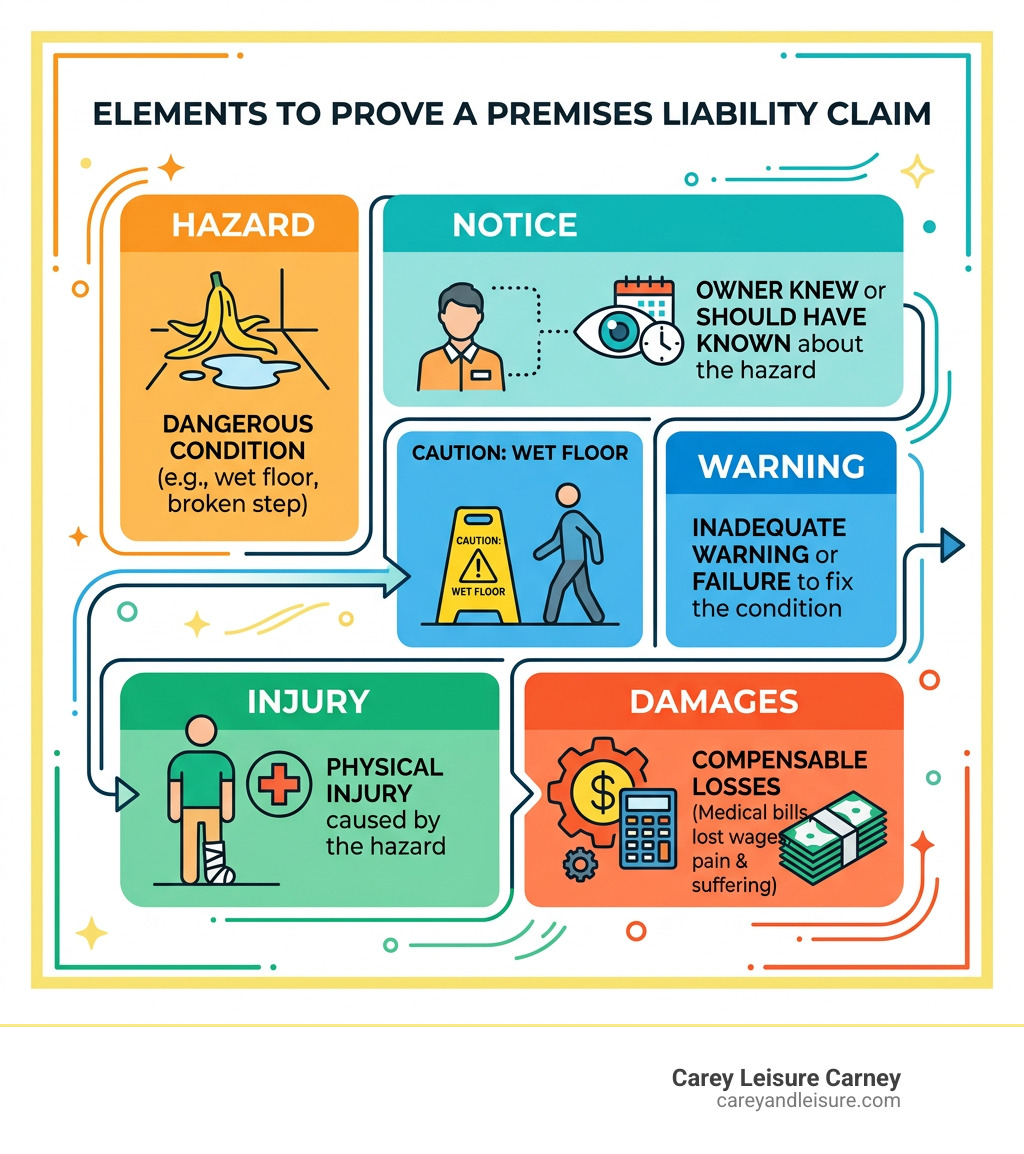
Premises liability case examples show what often makes or breaks an injury claim: a dangerous condition, proof the property owner knew or should have known about it, inadequate warnings or cleanup, and evidence connecting the hazard to the injury.
Common examples include:
- A customer slipping on a spill that was left on a store floor long enough to be discovered.
- A wet entrance with missing mats, warning signs, or timely cleanup during rainy weather.
- A person falling on a chemically cleaned walkway with no cones, barriers, or clear warning.
- An injury caused by unsafe stairs, broken handrails, poor lighting, or neglected parking-lot conditions.
These cases are rarely decided by the fact that someone fell alone. Courts look closely at surveillance video, inspection records, employee training, prior incidents, photographs, witness accounts, and medical evidence. A hazard may be “open and obvious” only if a reasonable person could truly see and appreciate the danger; wet or chemically treated surfaces are not automatically obvious.
I am Thomas W. Carey, a board-certified civil trial lawyer and founding partner of Carey Leisure Carney. Over decades handling and overseeing injury matters in Florida, I have seen how strong evidence turns premises liability case examples into clear claims for accountability and fair compensation.
Slip-and-fall accidents account for over 1 million emergency room visits annually in the United States, and approximately 20% of these incidents result in severe trauma such as fractures, ruptured tendons, or traumatic brain injuries. Across the country, retail stores are the most common venue, representing nearly 40% of all premises liability claims, with over 60% involving wet or slippery floors. For businesses, the cost of cutting corners is steep: average claims range from $20,000 to $50,000, with catastrophic injury cases frequently exceeding $1 million in damages.
Understanding Property Owner Duty: Core Concepts Behind Premises Liability Case Examples
At its foundation, premises liability depends on the legal relationship between the visitor and the property owner. Commercial establishments hold a distinct legal responsibility toward invitees—customers and patrons welcomed onto the property for business purposes.
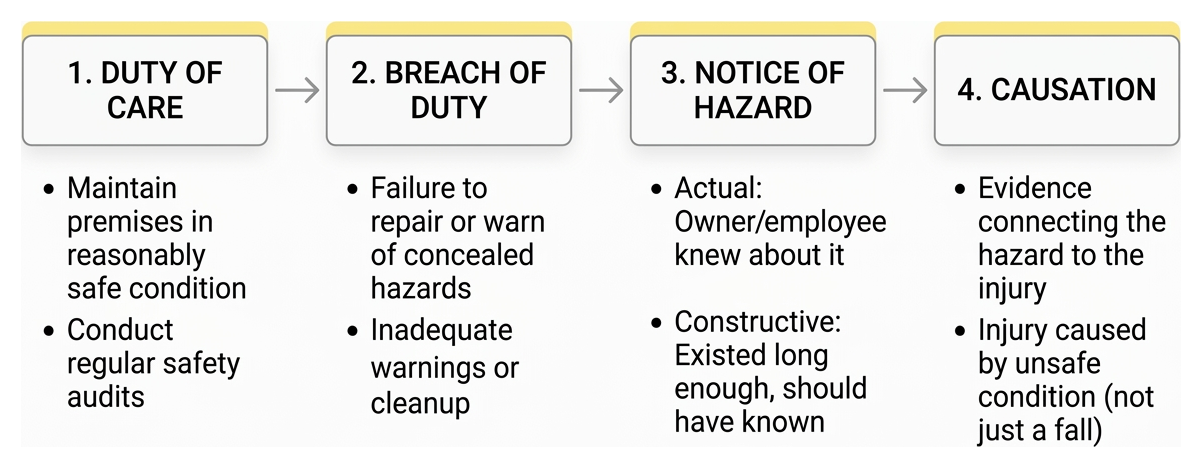
To establish liability when an injury occurs, courts evaluate several core legal principles:
- Duty of Care: Commercial owners must maintain their premises in a reasonably safe condition, conduct regular safety audits, and either repair or warn visitors of concealed hazards.
- Actual vs. Constructive Notice: Actual notice means management knew a hazard existed (such as an employee seeing a spill occur). Constructive notice applies when a condition existed for a sufficient length of time or occurred with such regularity that the owner, exercising ordinary care, should have discovered and eliminated it.
- The “Open and Obvious” Doctrine: Property owners frequently argue that a danger was so apparent that any reasonable person would have avoided it. However, courts hold that mere wetness or hidden chemical slickness does not make a hazard open and obvious; if a reasonable person would not readily perceive the full extent of the risk, the property owner remains liable.
- Material Disputes of Fact: When surveillance logs, witness reports, or maintenance policies conflict, a judge cannot dismiss the case before trial. Instead, the dispute proceeds to a jury to evaluate witness credibility and physical evidence.
8 High-Impact Premises Liability Case Examples and Legal Precedents
Reviewing actual case patterns demonstrates how courts evaluate maintenance failures, evidentiary disputes, and commercial responsibility.
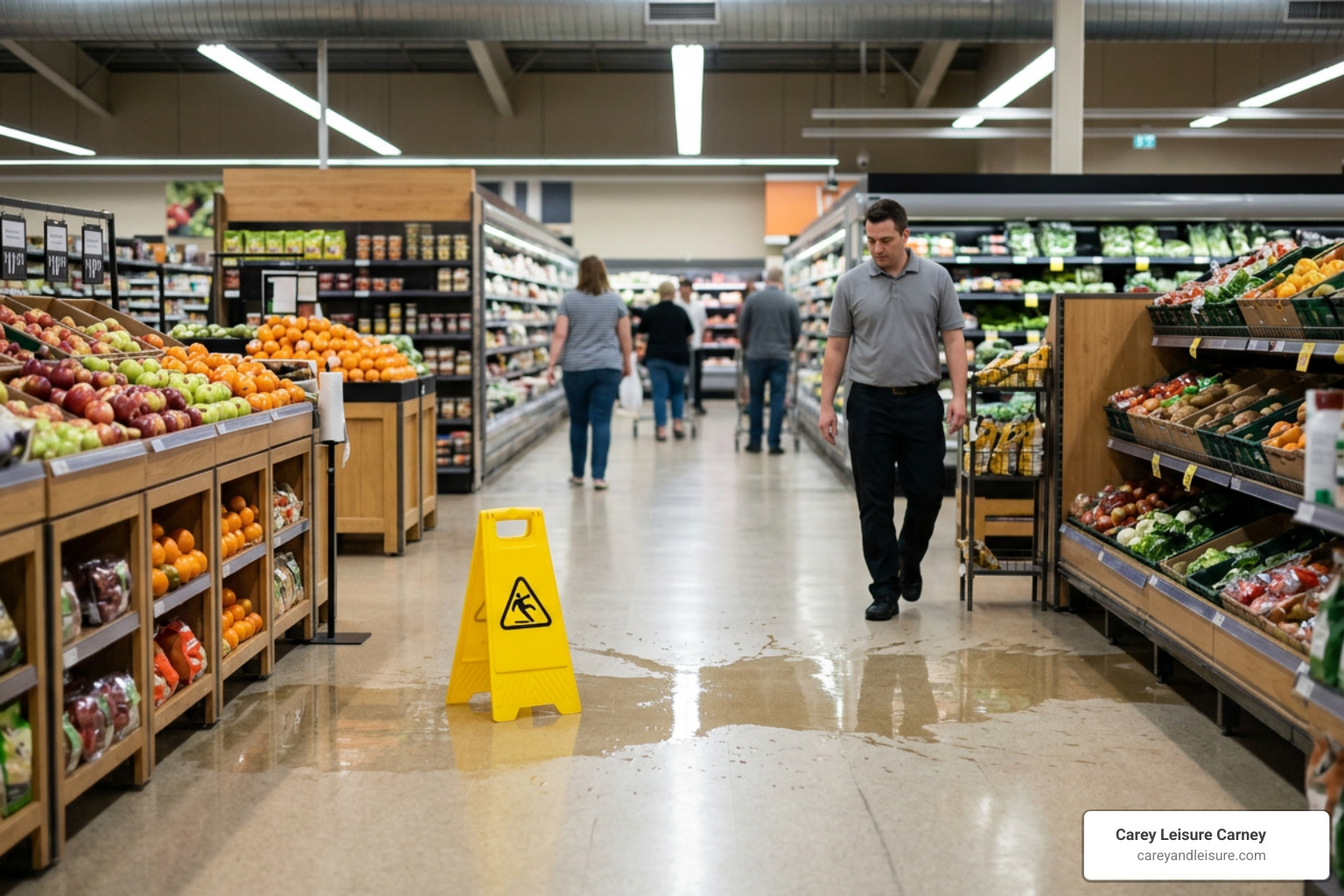
Retail Store Slip-and-Fall Premises Liability Case Examples and Constructive Notice
In a notable federal appellate decision (Cruz v. Costco Wholesale Corp.), a shopper slipped on drops of a pink smoothie on a concrete aisle floor. The central issue was constructive notice. Surveillance video showed no employee inspecting the specific aisle for 28 minutes prior to the fall, and the plaintiff observed the substance on her clothing immediately afterward. The court held that a 28-minute gap without documented floor sweeps raised a genuine factual dispute regarding whether the store should have discovered and cleaned the transitory substance, sending the case forward.
Chemical Hazard and Hidden Danger Premises Liability Case Examples
In a critical appellate case (Circle K Stores v. Jonathan Lewis), a customer stepped onto a painted parking lot stripe that had been treated with an invisible, powdered concrete cleaner, causing him to slip and suffer a severe patellar tendon rupture resulting in over $430,000 in medical costs. The business argued the wet pavement was open and obvious. The court rejected this defense, holding that clear chemical slickness is a concealed danger. The store failed to place warning cones or physical barriers, and the employee was not wearing a required high-visibility safety vest. Furthermore, the court affirmed that the plaintiff did not need complex biomechanical expert testimony to prove causation, as the mechanism of slipping on slick pavement falls squarely within common lay knowledge.
Self-Service Food Courts and the Mode-of-Operation Rule
Self-service environments require heightened vigilance. In Sarah Banta v. Costco Wholesale Corp., a patron slipped on a small piece of food debris near a self-service condiment station. Retailers operating self-service stations face recurring hazards because patrons constantly handle food and liquids. While the business defended itself by demonstrating oral “don’t-walk-by” policies and frequent employee walkthroughs, the case highlights that self-service business models create a foreseeable risk of frequent spills, requiring structured, documented safety sweeps.
Rainy Weather Vestibule Slips and Floor Mat Placement
Inclement weather frequently leads to dangerous store entrances. In Barbara Krieger v. Walmart Stores East, L.P., a patron entered an entrance vestibule during rain, slipped on pooled water, and suffered severe injuries. The court denied the retailer’s motion for summary judgment because the store had received notice of two similar slip incidents within the prior year and failed to place adequate water-absorbent walk-off mats or visible wet-floor warning cones at the specific exit door. The ruling confirmed that prior similar incidents establish constructive notice of recurring rainwater intrusion.
Parking Lot Hazards, Repainting, and Spoliation of Evidence
Commercial parking lots present severe tripping and slipping hazards due to degraded asphalt, sudden elevation shifts, and slippery paint. In cases where property managers quickly repaint surfaces or patch potholes immediately following an injury—before the plaintiff’s legal team can inspect the scene—courts evaluate claims of evidence spoliation. If an owner alters or destroys physical evidence in bad faith while aware of pending litigation, judges can issue adverse inference instructions that penalize the defense at trial.
Inadequate Commercial Security and Violent Crime
Premises liability extends beyond physical slip hazards to negligent security. When commercial establishments, apartment complexes, or parking garages operate in areas with foreseeable criminal activity, owners must provide adequate security measures. Broken perimeter gates, burned-out exterior lighting, malfunctioning door locks, or a lack of security personnel can expose owners to substantial liability if a visitor is assaulted or injured on the property.
Defective Staircases and Handrail Building Code Violations
Staircase falls often result in catastrophic injuries due to the height of the fall. Common violations include inconsistent riser heights, improper tread depth, lack of non-slip nosing, and unstable handrails. When a commercial property violates building and safety codes, plaintiffs can establish negligence per se or strong circumstantial proof that the architectural defect caused the fall.
Mechanical Failures in Escalators and Elevators
Commercial building operators owe a heightened duty of care regarding mechanical conveyance systems. Sudden elevator drops, misleveling between the elevator cab and floor threshold, and abrupt escalator stops frequently result in severe fractures and spinal trauma. Under the doctrine of res ipsa loquitur (“the thing speaks for itself”), an unmaintained elevator that abruptly malfunctions creates a strong presumption of owner and maintenance contractor negligence.
Evidentiary Factors That Determine Premises Liability Settlement Value
Building a successful premises liability claim requires thorough evidence gathering to substantiate both liability and damages:
| Evidence Type | Legal Purpose | Case Impact |
|---|---|---|
| Surveillance Footage | Confirms hazard duration, fall mechanics, and employee sweeps | Disproves fabricated sweep logs; proves constructive notice |
| Maintenance Logs | Establishes adherence to safety schedules and cleaning policies | Shows systematic failure to follow reasonable protocols |
| Prior Incident Reports | Proves constructive notice and foreseeable hazards | Defeats claims that an incident was an unforeseen fluke |
| Medical Records & Bills | Proves direct causation and economic damages | Quantifies total medical costs and future care needs |
| Expert Testimony | Analyzes structural defects, lighting levels, and building codes | Establishes specialized code violations and biomechanics |

Proving Injury Causation: Lay Testimony vs. Expert Witnesses
A critical legal question is whether a plaintiff needs medical or biomechanical expert testimony to link a fall to their injuries. In straightforward slip-and-fall incidents, lay testimony—the injured person describing their immediate slip and immediate onset of pain—combined with treating physician records, is fully sufficient under the law. Expert testimony under the Daubert standard is reserved for complex, pre-existing degenerative conditions or rare structural failures.
Reconciling Surveillance Video With Conflicting Witness Testimony
Surveillance video provides an objective timeline that often contradicts corporate defense statements. If an incident report claims a floor was inspected five minutes before a fall, but video footage reveals that no employee traversed the area for half an hour, the video discredits the defense’s position and supports constructive notice.
Comparative Fault Allocation and Jury Apportionment
Property owners frequently claim the injured person was distracted, texting, or failing to watch their step. In Florida, personal injury claims are governed by comparative negligence rules. When both parties share responsibility, the jury allocates fault percentages. For instance, if a plaintiff is found 10% responsible for failing to notice a puddle, the total recovery is reduced by 10%. Demonstrating that a hazard was difficult to see preserves full recovery.
Frequently Asked Questions About Premises Liability Cases
What constitutes an open and obvious hazard in a slip-and-fall lawsuit?
An open and obvious hazard is a condition that an average person with normal perception would readily recognize and avoid under ordinary circumstances. However, clear liquids, transparent chemical cleaners, and dimly lit floor defects are not legally open and obvious because their danger is hidden.
How long must a spill exist before a business is considered to have constructive notice?
There is no universal minute requirement. Instead, courts assess the duration relative to the nature of the business. In high-traffic retail aisles and food courts, unaddressed spills present for 15 to 30 minutes without documented employee inspections have routinely been held sufficient to establish constructive notice.
What should an injured victim do immediately after a slip-and-fall accident?
- Report the incident immediately to property management and ensure an official written report is generated.
- Photograph the exact hazard, surrounding area, absence of warning signs, and footwear.
- Obtain contact details from independent witnesses.
- Seek immediate medical evaluation to document injuries.
- Consult a board-certified personal injury lawyer before giving recorded statements to insurance adjusters.
Conclusion
Commercial property owners and retailers carry a clear legal obligation to protect visitors from preventable hazards. When businesses cut corners on safety sweeps, ignore chemical slickness, fail to place floor mats during rain, or delay essential property repairs, the consequences for innocent victims are life-altering. Understanding key legal precedents and the evidentiary standards governing notice and causation empowers injured individuals to seek the justice they deserve.
At Carey Leisure Carney, our board-certified personal injury attorneys draw upon over a century of combined legal experience to hold negligent property owners accountable. We provide direct attorney access and personalized representation to clients throughout Clearwater, Largo, St. Petersburg, New Port Richey, Trinity, Wesley Chapel, and Spring Hill. If you or a loved one has suffered an injury due to unsafe property conditions, contact our team today for a free consultation on your Clearwater premises liability claim.