
Why an Underride Truck Accident Attorney is Your Best Defense
Why an Underride Truck Accident Attorney Matters After a Serious Crash
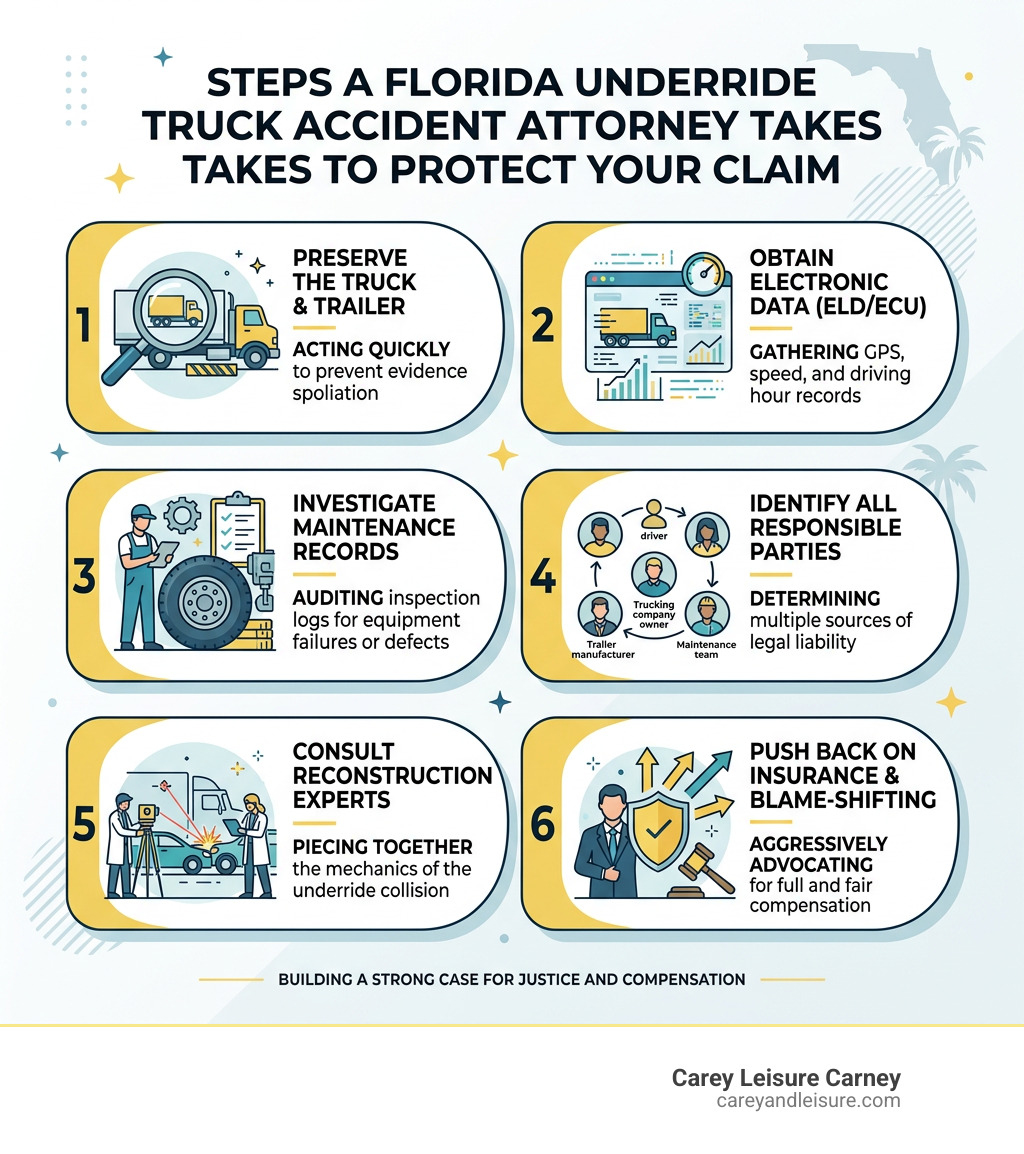
An Underride truck accident attorney can protect your claim by moving quickly to preserve the truck, obtain electronic data and maintenance records, identify every responsible party, and push back when insurers try to shift blame or minimize catastrophic injuries. If you or a loved one was hurt in Florida, avoid signing an insurance release or giving a recorded statement before you understand your legal options.
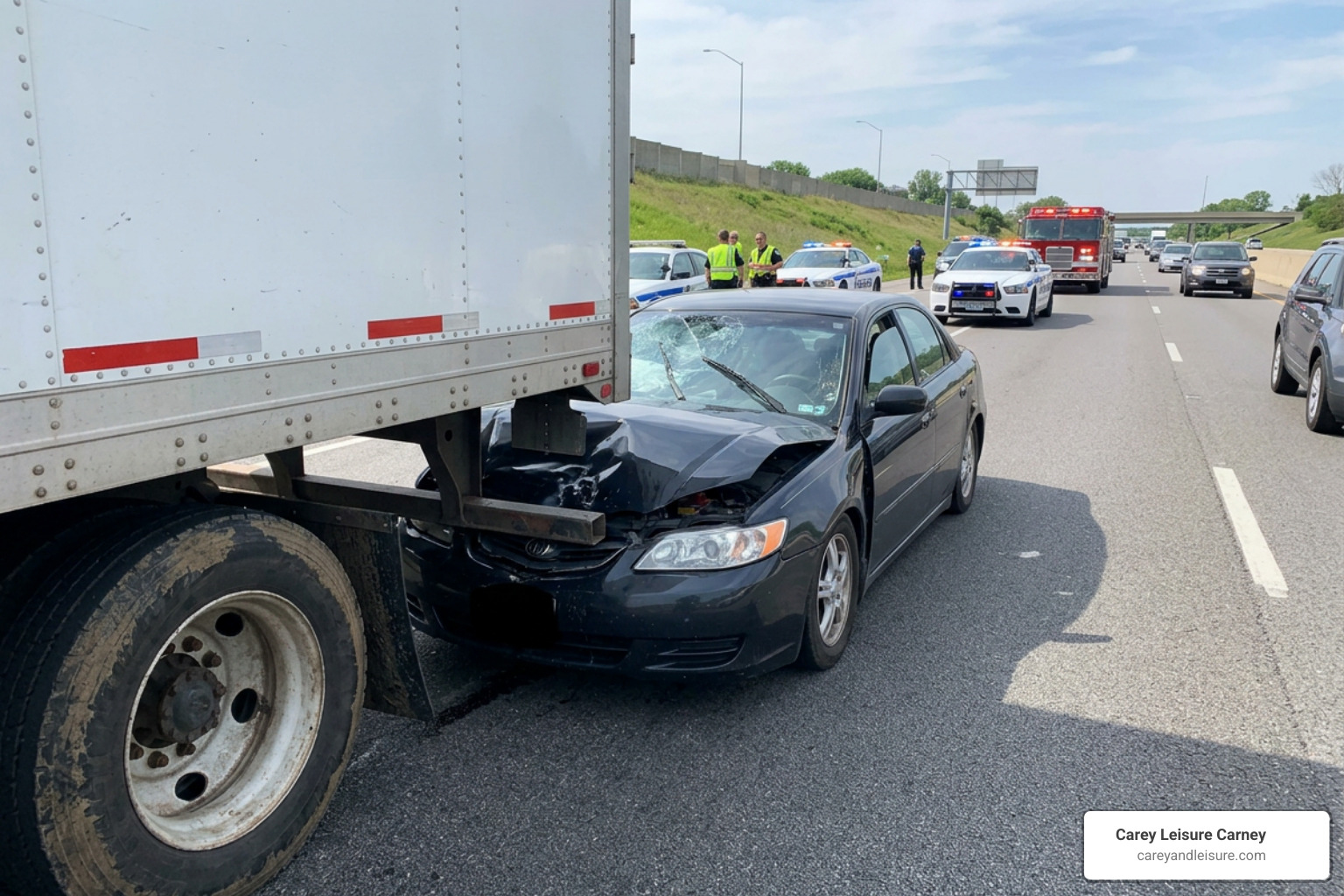
Underride crashes happen when a smaller vehicle slides beneath the rear or side of a large truck or trailer. Because the trailer can enter the passenger compartment above a car’s crash-protection zones, these collisions can cause fatal head injuries, spinal trauma, crush injuries, and life-changing medical costs.
The legal case may involve more than the truck driver. A trucking company, trailer owner, maintenance provider, or guard manufacturer may also be responsible when poor inspection, unsafe equipment, or defective underride protection contributed to the crash.
I am Thomas W. Carey, a board-certified civil trial lawyer who has handled and overseen thousands of Florida injury matters, including serious motor-vehicle and trucking claims. As an Underride truck accident attorney, I understand that prompt investigation and careful preparation can make a real difference when a family needs answers and fair compensation.
Underride truck accident attorney definitions:
Understanding Underride Collisions and Catastrophic Damages
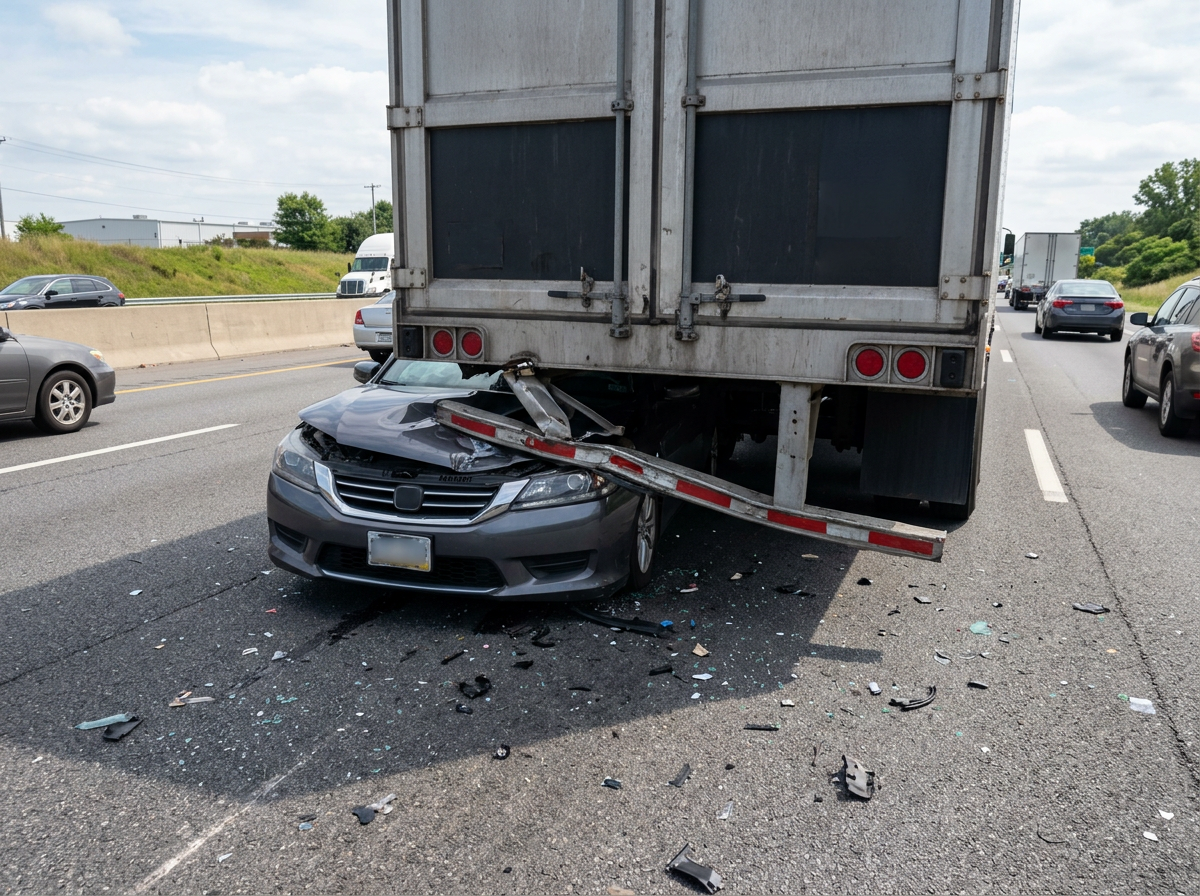
When a standard passenger car collides with an eighteen-wheeler, the physics are naturally mismatched. In an underride wreck, the geometry turns horrific. Because the bottom edge of a commercial trailer sits significantly higher off the pavement than the front bumper and crumple zones of a passenger car, the smaller automobile slides directly underneath the commercial rig.
In a split second, the hood of the car bypasses the vehicle’s engineered safety features. Airbags may fail to deploy at the proper angle, and the impact force bypasses the reinforced engine block entirely. Instead, the stiff, unyielding steel bed of the trailer smashes directly through the windshield and into the passenger cabin.
According to national traffic safety data, large truck collisions claim thousands of lives annually—including 4,955 people killed in crashes involving large trucks in 2021 alone. Underride crashes account for a substantial percentage of these devastating fatalities, causing an estimated 200 to 300 deaths every year across the country. Those who miraculously survive often suffer severe semi-truck accident injuries like traumatic brain injuries, upper-body crush trauma, severe spinal cord damage, and facial trauma.
Rear vs. Side Underride Crashes
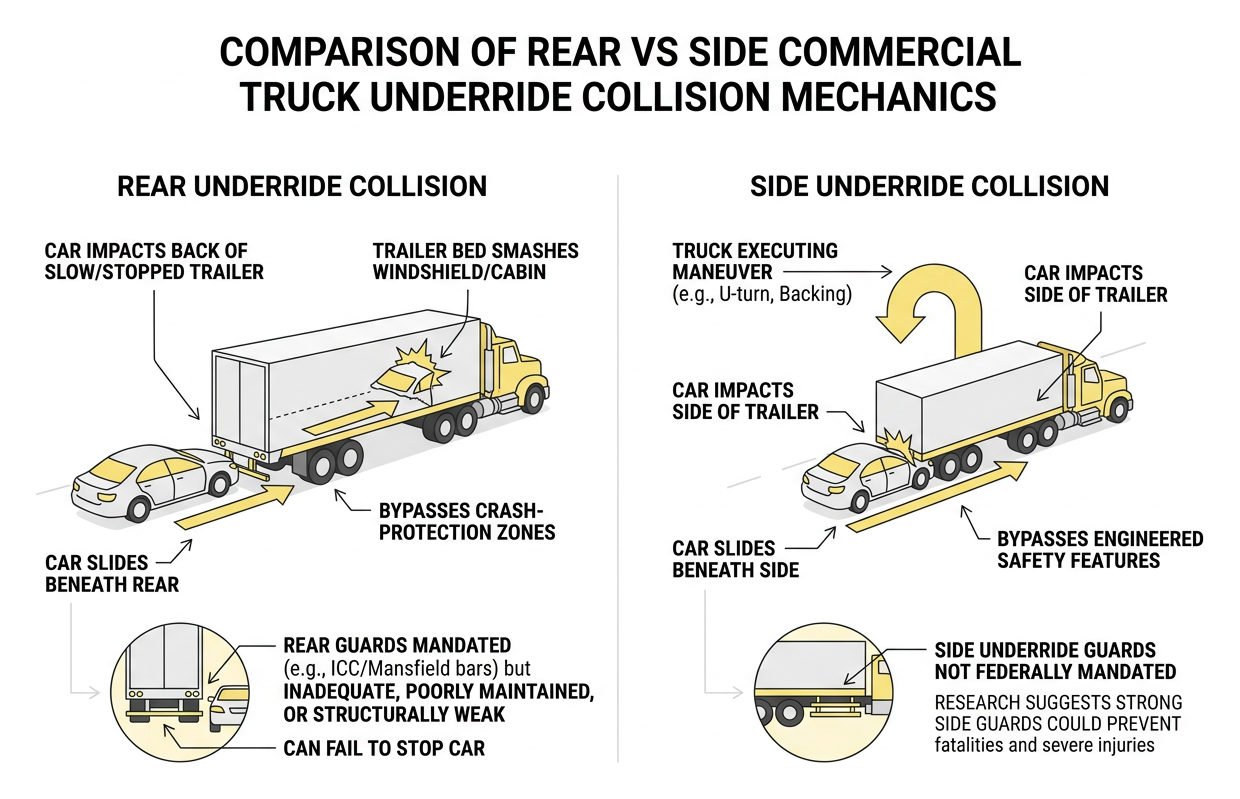
Underride collisions generally fall into two primary categories: rear and side impacts. Both present severe hazards, but their regulatory landscapes differ drastically.
- Rear Underride Collisions: Rear underride crashes happen when a smaller automobile hits the back of a slow-moving, stopped, or improperly lit semi-trailer. The Federal Motor Carrier Safety Administration (FMCSA) and the National Highway Traffic Safety Administration (NHTSA) have required rear underride guards (often called ICC bars or Mansfield bars) on most commercial trailers since 1953. However, many rear guards are poorly maintained, severely rusted, or structurally inadequate to stop a passenger car traveling at highway speeds.
- Side Underride Collisions: Side underrides occur when a truck is executing a U-turn, backing across lanes, or pulling out of a private driveway or rest stop across traffic. Despite strong evidence that side collisions are exceptionally deadly, the federal government does not currently mandate side underride guards on all commercial tractor-trailers. Research from the Insurance Institute for Highway Safety (IIHS) revealed that installing strong side underride guards could prevent roughly 80% of fatalities and severe injuries in side-impact crashes involving large trucks.
Recoverable Economic and Non-Economic Damages
Because the physical devastation in an underride collision is so immense, the financial consequences can rapidly overwhelm an entire family. When we handle these complex cases, our goal is to pursue every dollar required to rebuild your life.
Through a comprehensive commercial vehicle accident settlement, victims and their families can pursue several forms of compensation:
- Past and Future Medical Expenses: Immediate emergency surgery, intensive care stays, specialized neurological rehabilitation, assistive mobility devices, long-term nursing care, and prescription medications.
- Lost Wages and Diminished Earning Capacity: Income lost while recovering in the hospital, as well as the loss of future earning potential if a permanent disability prevents you from returning to your career.
- Non-Economic Damages: Physical pain, mental anguish, permanent disfigurement, post-traumatic stress disorder (PTSD), and loss of enjoyment of life.
- Loss of Consortium: Compensation for the strain placed on marital and family relationships due to catastrophic trauma.
- Wrongful Death Damages: In the tragic event of a fatal crash, surviving family members can seek funeral costs, burial expenses, and compensation for the loss of companionship, protection, and financial support.
Determining Liability in an Underride Truck Crash
Unraveling the web of legal responsibility after an underride wreck requires deep industry knowledge. These are rarely simple two-car claims. Often, the truck driver’s immediate mistakes are compounded by systemic failures across multiple commercial entities.
| Liable Party | Basis of Negligence | Critical Evidence to Uncover |
|---|---|---|
| Truck Driver | Speeding, abrupt braking, illegal maneuvers, distracted driving, or driver fatigue. | Electronic logging devices (ELDs), cell phone records, dashcam video. |
| Trucking Carrier | Negligent hiring, scheduling impossible deadlines, failing to perform required maintenance. | Driver qualification files, dispatch messages, carrier safety audit logs. |
| Maintenance Contractor | Failing to repair broken, rusted, or bent rear underride guards and non-functional lights. | Work orders, pre-trip inspection reports, third-party repair invoices. |
| Trailer / Guard Manufacturer | Designing or producing guards that fail or detach under standard collision impacts. | Metallurgical analysis, crash test records, guard engineering blueprints. |
| Cargo Loading Company | Improperly securing or distributing cargo weight, compromising truck braking distances. | Bill of lading, freight weight tickets, cargo securement logs. |
When sorting out commercial trucking liability, our attorneys examine every operational layer. Suing trucking companies means holding corporate entities accountable when they prioritize rapid deliveries and profit margins over highway safety regulations.
Third-Party and Product Liability Factors
In many underride cases, a defective or rotted rear impact guard snaps like a twig upon collision. While drivers of passenger cars must maintain safe following distances, trucking companies and equipment manufacturers have an unwavering legal duty to design, install, and maintain equipment that functions as intended.
If an underride guard shears off due to substandard metal, inadequate weld joints, or improper fastening bolts, the equipment manufacturer or third-party maintenance shop may face a product liability or third-party negligence lawsuit. We collaborate with automotive engineers and safety design specialists to evaluate whether the trailer’s safety hardware met FMCSA crashworthiness standards.
Essential Evidence for Proving Truck Underride Claims
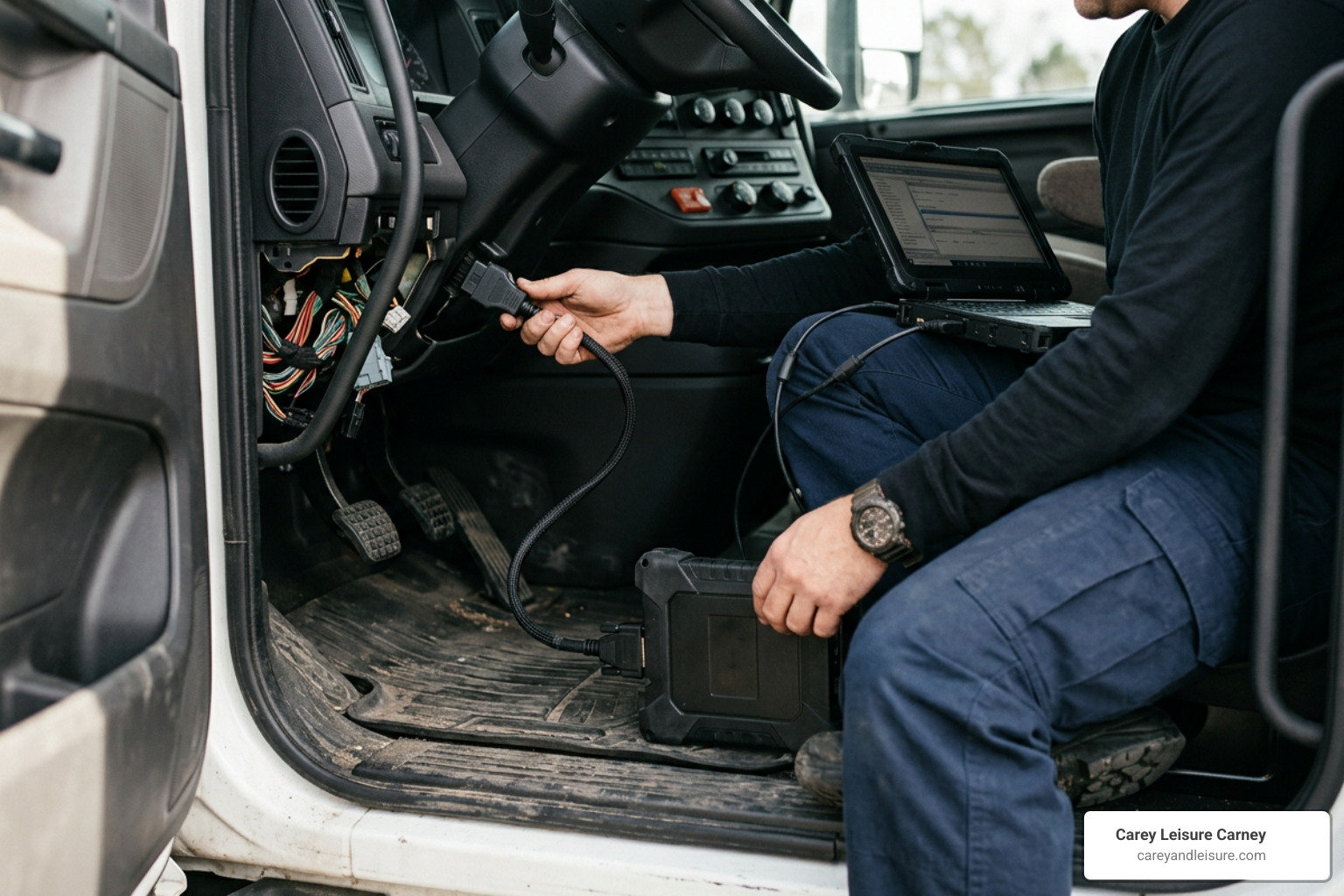
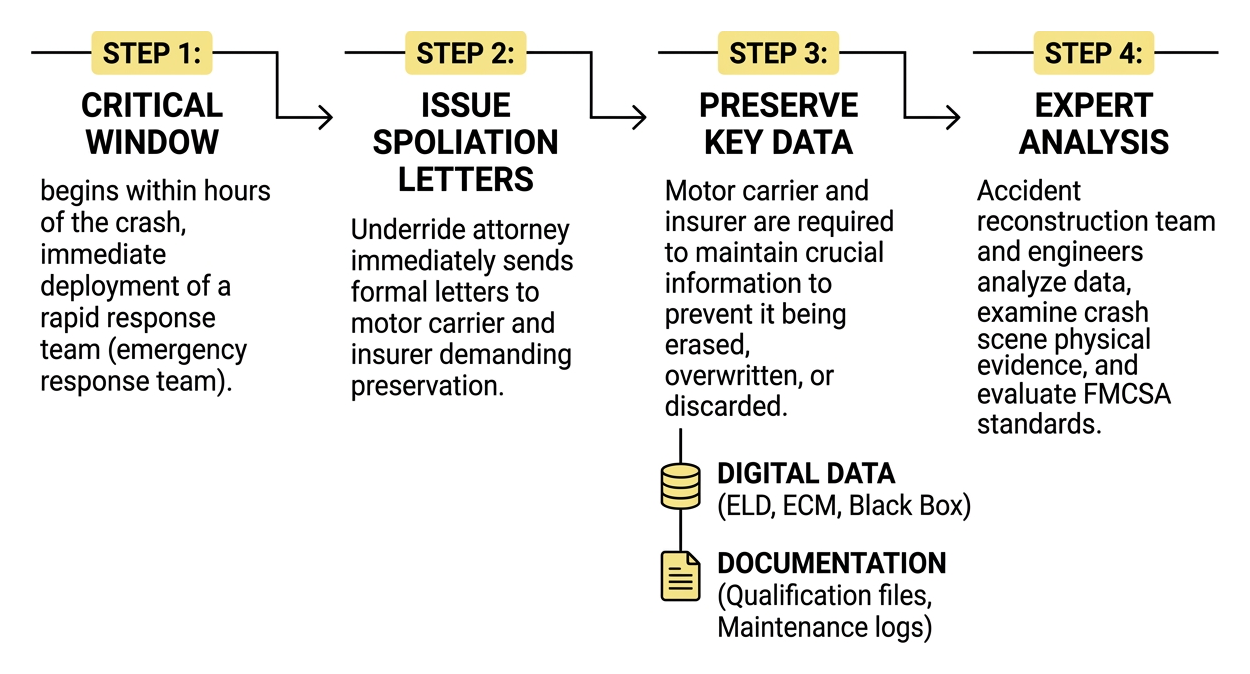
The physical and digital evidence generated by a modern semi-truck is vast, but it is also highly fragile. Motor carriers and their insurance companies often deploy emergency response teams to the crash site within hours. If you do not act swiftly, critical digital breadcrumbs can be erased, overwritten, or discarded.
To preserve key information before it disappears, an underride attorney will immediately issue formal spoliation letters to the motor carrier and their insurers, demanding the preservation of:
- Engine Control Module (ECM) and Black Box Data: Telematics detailing vehicle speed, braking application, steering input, throttle position, and engine RPMs in the seconds before impact.
- Electronic Logging Device (ELD) Data: Proof of federal Hours-of-Service (HOS) compliance to evaluate whether driver exhaustion contributed to the wreck.
- Driver Qualification Files: Background checks, driving records, medical certifications, and commercial driver’s license (CDL) drug test results.
- Maintenance and Inspection Logs: Documentation showing whether the trailer’s lights, retroreflective tape, and underride guards were inspected and kept up to code.
Working with an expert witness accident reconstruction team is essential. These specialists examine skid marks, crush profiles, lighting conditions, and road geometry to digitally recreate how the collision took place and demonstrate that the truck’s positioning or equipment failure caused the catastrophe.
Preservation of Crash Scene and Vehicle Data
Physical evidence at the accident site fades quickly. Heavy Florida downpours wash away debris fields, tire marks fade under normal highway traffic, and damaged tractor-trailers are quickly repaired or scrapped. Documenting the height of the trailer bed, the condition of the reflective conspicuity tape, and any operational defects in the truck’s tail lamps must occur as close to the time of the collision as possible.
Why You Need an Underride Truck Accident Attorney After a Crash
Truck accident litigation is not the same as handling a standard passenger car fender bender. Commercial carriers operate under a complex web of state traffic laws and strict FMCSA safety rules. Navigating multi-million-dollar insurance policies and holding corporate safety executives accountable requires trial-tested skill.
Choosing a firm with Board-Certified trial attorneys—a distinction earned by only the top 2% of lawyers in Florida—levels the playing field. With over 100 years of combined legal experience, our team knows how to dismantle commercial defense strategies and fight for the full financial recovery you deserve. If you are exploring your legal options, review our Florida truck accident lawyer guide to see what sets elite representation apart.
When to Hire an Underride Truck Accident Attorney
The best time to consult a dedicated lawyer is immediately following the incident. In Florida, the general statute of limitations allows two years from the date of the wreck to file a personal injury lawsuit, and two years for a wrongful death claim.
While two years might seem like plenty of time, waiting even a few weeks can significantly harm your case. Onboard black box computer systems routinely overwrite critical collision data within 30 days. Witnesses move, memories fade, and corporate safety records can mysteriously disappear if not legally preserved right away.
How an Underride Truck Accident Attorney Counters Insurer Tactics
Commercial insurers do not stay profitable by writing large settlement checks voluntarily. When an underride crash occurs, their defense adjusters and legal teams often deploy well-worn strategies to reduce payout amounts:
- Shifting Blame to the Motorist: They will argue that the driver of the smaller car was following too closely, speeding, or distracted, attempting to exploit comparative fault rules to eliminate or reduce their financial exposure.
- Downplaying Underride Guard Failures: Insurers often claim the crash force was too high for any underride guard to withstand, even when routine maintenance would have prevented the guard from shearing off.
- Pressuring Victims with Lowball Offers: Knowing that medical bills are mounting quickly, adjusters often offer early, inadequate settlements before the full scope of long-term medical needs is known.
We counter these tactics by conducting independent engineering audits, presenting clear accident reconstructions, and preparing every case from day one as if it will go before a jury. When insurance companies realize you have trial-ready attorneys who will not back down, settlement discussions change dramatically.
Frequently Asked Questions about Underride Truck Accidents
What makes underride collisions more lethal than typical car accidents?
In a standard automobile collision, the energy of the impact is absorbed by the vehicle’s bumper, engine block, and front crumple zone, allowing airbags and seatbelts to protect the occupants. In an underride crash, the car slides under the trailer bed, bypassing these safety zones. The trailer enters the passenger cabin directly at head height, often shearing the roof off the car and causing severe head, neck, and brain trauma.
What is the deadline to file an underride truck accident lawsuit in Florida?
In Florida, the statute of limitations for personal injury claims resulting from a commercial truck accident is typically two years from the date of the crash. Wrongful death lawsuits also carry a strict two-year filing deadline. If you do not file within this statutory window, you lose the right to pursue compensation through the court system forever.
How much is an underride truck accident case worth?
Because underride wrecks cause severe harm or fatalities, settlements and verdicts often range from $1 million to $5 million or significantly more. The exact value depends on medical costs, long-term care needs, lost future earnings, pain and suffering, and the available commercial insurance policy limits.
Conclusion
The physical, emotional, and financial aftermath of an underride collision can alter the course of your family’s life forever. Motor carriers and their corporate insurance teams act quickly to protect their bottom line; you deserve a dedicated legal team fighting just as hard to protect your future.
At Carey Leisure Carney, our Board-Certified trial attorneys bring over a century of combined courtroom experience to every case. We provide direct attorney access, personal attention, and the resources required to take on national trucking corporations. We proudly represent injured victims and their families across Florida, with convenient office locations in Clearwater, Largo, New Port Richey, Spring Hill, St. Petersburg, Trinity, and Wesley Chapel.
If you or someone you love was injured in a collision with a commercial tractor-trailer, contact our experienced Truck Accident Attorney team today for a free, no-obligation consultation. We are ready to stand up for your rights and fight for the justice you deserve.