

The Essential Guide to Hiring a Semi-Truck Accident Lawyer
Common Causes and FMCSA Regulations in Commercial Truck Crashes
Every year in the United States, there are about 500,000 accidents involving a semi-truck, and about 5,000 of those accidents are fatal. An 80,000-pound tractor-trailer traveling at highway speeds generates an incredible amount of force, which is entirely absorbed by the smaller car and the people inside it. Understanding why these catastrophic events happen is the first step toward building a strong legal case.
Commercial crashes rarely happen by pure chance. Most stem from a combination of driver fatigue, poor mechanical upkeep, and pressure from motor carriers to meet unrealistic delivery quotas. Learn more about how fatigue behind the wheel impacts truck accident safety.
Federal Motor Carrier Safety Regulations
The Federal Motor Carrier Safety Administration (FMCSA) sets strict rules to keep heavy vehicles safe on public highways. These federal safety standards dictate:
- Hours of Service (HOS): Mandated rest periods to prevent exhausted drivers from operating massive rigs.
- Electronic Logging Devices (ELDs): Automated systems that capture driver duty status and prevent manual log falsification.
- Driver Qualification Files: Background checks, medical certifications, and commercial driving history records maintained by the motor carrier.
- Routine Safety Audits: Required inspections of mechanical components before and after every trip.
When trucking companies force drivers to violate these rules to save time, they put everyone on the road at risk.
Driver Negligence and Cargo Violations
Driver error and improper cargo loading frequently combine to cause devastating collisions. Common operational failures include:
- Distracted Driving: Texting, eating, or adjusting navigation while operating a commercial vehicle.
- Failure to Adjust Speed: Driving too fast for rain, fog, or heavy traffic conditions across Florida highways.
- Improper Cargo Distribution: Unbalanced or overloaded trailers that cause jackknifing or rollover accidents.
- Unsecured Loads: Cargo falling directly onto the roadway, creating immediate hazards for trailing vehicles.
Crucial Evidence to Preserve After a Collision
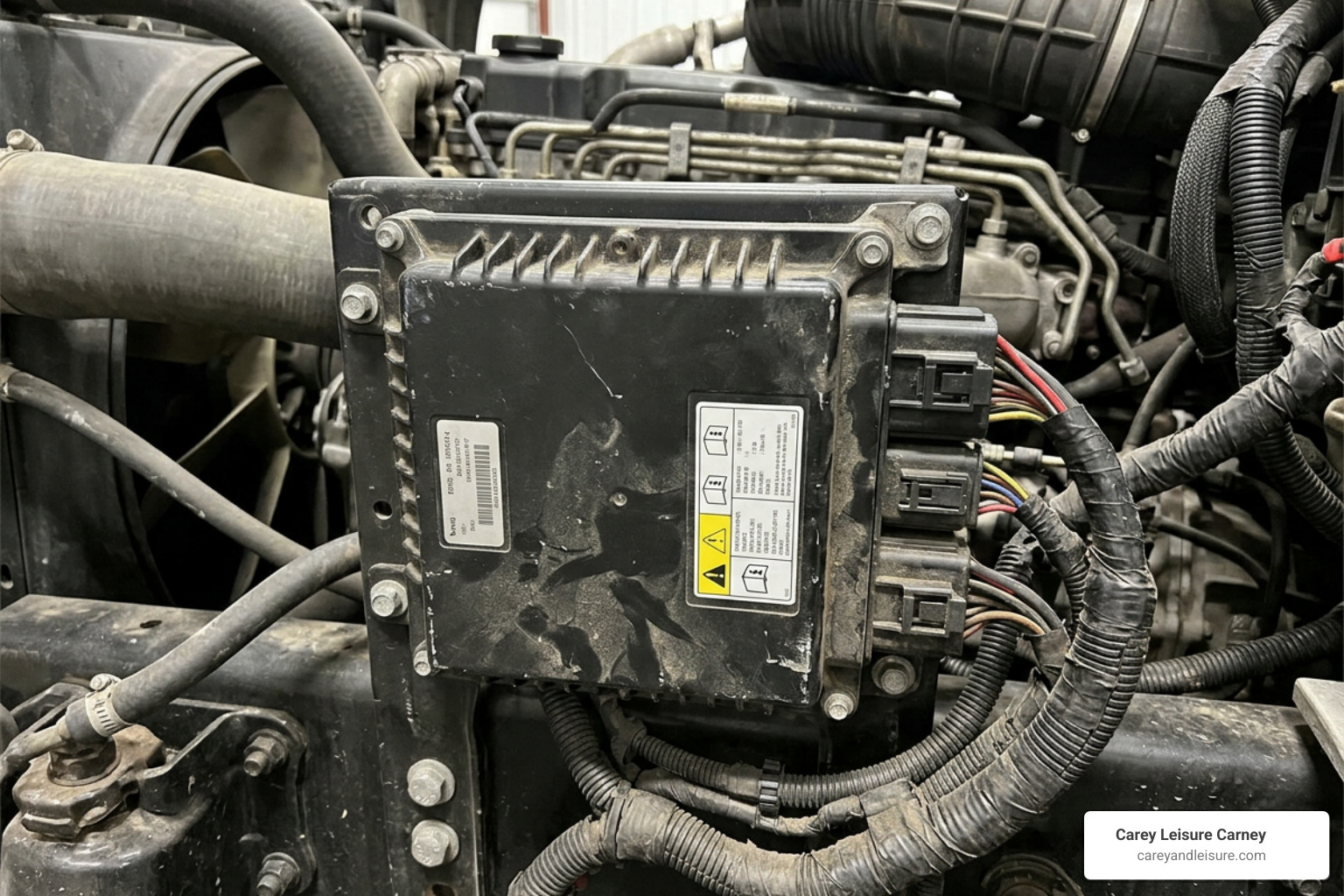
Commercial truck accident claims rely heavily on objective electronic data and physical records. Trucking companies often dispatch their own rapid-response teams to crash scenes within hours, not to help you, but to protect their financial interests. Hiring an experienced truck accident lawyer early guide ensures critical evidence is protected before it disappears.
| Evidence Type | Standard Police Crash Report | Commercial Truck ECM / ELD Data |
|---|---|---|
| Primary Focus | General summary, driver statements, initial fault officer impressions | Objective electronic metrics captured directly by vehicle sensors |
| Speed Tracking | Estimated based on physical scene evidence | Exact vehicle velocity recorded second-by-second prior to impact |
| Braking Information | Visual skid marks (if visible) | Hard braking signals, engine RPM, and exact brake pedal application timing |
| Driver Hours | Driver’s self-reported statement | Automated duty status logging tracking continuous drive time |
| Preservation Risk | Filed permanently in public police databases | Subject to routine data overwriting within days or weeks |
Electronic Control Module and ELD Logs
Modern semi-trucks carry an Electronic Control Module (ECM), commonly called the truck’s “black box,” alongside Electronic Logging Devices. These onboard computer systems log vital technical details in the seconds leading up to a collision, including vehicle speed, throttle position, steering input, and deceleration force. However, ECM memory loops overwrite automatically after a short period unless external action is taken.
Immediate Spoliation Letters and Scene Investigation
To keep critical data intact, our legal team sends a legal spoliation letter immediately to the motor carrier, their insurance providers, and their legal defense team. This formal demand legally obligates them to preserve:
- ECM black box electronic downloads
- ELD telemetry records and GPS tracking logs
- Driver qualification files and pre-employment drug screening results
- Maintenance, repair, and brake inspection histories
- Post-crash drug and alcohol testing reports
Simultaneously, we deploy independent accident reconstruction specialists and forensic mechanics to analyze skid marks, vehicle impact points, and mechanical components.

How a Semi Truck Accident Attorney Navigates Complex Vicarious Liability
Unlike standard automobile collisions involving two private motorists, commercial trucking litigation involves complex webs of legal ownership. Finding every responsible party is critical to securing complete financial recovery. Discover how to navigate the legal maze of trucking company liability.
Independent Contractors vs. Motor Carrier Liability
Trucking companies often argue that their drivers are independent contractors rather than direct employees to escape legal accountability. Under federal trucking regulations and legal principles known as respondeat superior (vicarious liability), motor carriers operating under federal authority remain legally responsible for driver negligence, regardless of how the driver’s tax paperwork is structured.
Liable parties in a single semi-truck crash can include:
- The commercial truck driver
- The motor carrier or trucking corporation
- Freight loading facilities and cargo charterers
- Third-party maintenance garages and mechanics
- Equipment manufacturers responsible for defective parts
Why You Need a Board-Certified Semi Truck Accident Attorney
Commercial motor carriers carry multi-million-dollar insurance coverage, backed by corporate defense firms determined to minimize settlements. Facing these teams requires top-tier trial experience.
At Carey Leisure Carney, our founding partners are Board-Certified in Civil Trial Law—a distinction held by less than 2% of licensed attorneys in Florida. This certification marks true specialization and trial competence. We prepare every claim for trial from day one, giving us the legal leverage needed to secure full settlement value against national carriers.
Calculating Damages and Comparative Fault Rules
Catastrophic collisions leave victims facing steep medical bills, long recovery times, and deep personal distress. Understanding what your case is worth requires looking at both present losses and long-term care needs. Learn more about understanding your commercial vehicle accident settlement.
Economic and Non-Economic Recoverable Damages
Victims of commercial trucking negligence can seek comprehensive recovery across two main damage categories:
- Economic Damages: Direct financial losses, including emergency room care, surgical costs, physical therapy, future medical care plans, lost wages, and diminished earning capacity.
- Non-Economic Damages: Personal, non-financial losses, including physical pain, emotional distress, loss of enjoyment of life, permanent scarring, disfigurement, and loss of companionship.
In cases involving reckless indifference to human safety—such as knowingly forcing a driver to operate a commercial truck with failing brakes—punitive damages may also be sought to punish bad corporate behavior.
Comparative Fault and Filing Deadlines
Florida follows a modified comparative fault system. Under this rule:
- An injured party can recover financial compensation as long as their share of fault is 50 percent or less.
- If an injured party is assigned a percentage of fault, their final financial recovery is reduced proportionally by that percentage.
- If an injured driver is found more than 50 percent at fault, they are barred from recovering damages from the other party.
Time is also limited by law. Under Florida’s statute of limitations, injury victims generally have two years from the date of the crash to file a formal lawsuit. Missing this legal deadline forfeits your right to hold negligent parties accountable.
Essential Steps to Take Post-Accident
Taking prompt, strategic action after a truck accident protects both your health and your legal rights.
- Seek immediate medical evaluation, even if you feel okay at the scene.
- Call local law enforcement so an official police crash report is documented.
- Photograph the scene, skid marks, vehicle positions, cargo spills, and your visible injuries.
- Collect contact details, driver license numbers, and DOT registration numbers from all commercial drivers.
- Send an emergency spoliation letter through legal counsel to secure black-box data.
- Avoid giving recorded statements to commercial insurance adjusters without a lawyer present.
- Follow all doctor recommendations and attend every follow-up medical appointment without gaps.
What to Expect When Consulting a Semi Truck Accident Attorney
When you reach out to our firm, we provide a free, comprehensive case evaluation to outline your options. We work on a contingency fee basis—meaning you pay zero upfront costs and no legal fees unless we successfully resolve your claim through settlement or trial verdict. We handle all insurance communication so you can focus on healing.
Immediate Actions at the Scene and Medical Care
Your health is the absolute top priority after any collision. Traumatic brain injuries, internal bleeding, and spinal damage often mask themselves behind initial adrenaline shocks. Immediate medical records directly link your injuries to the crash, defeating early insurance arguments that your pain was pre-existing.
Frequently Asked Questions About Commercial Truck Accident Claims
What makes semi-truck accident claims more complex than standard car crashes?
Commercial truck claims involve heavy federal oversight (FMCSA), massive vehicle weight disparities, multi-million-dollar corporate insurance policy structures, complex electronic evidence (ECM black box and ELD logs), and multiple commercial defendants.
How long do I have to file a semi-truck injury lawsuit?
In Florida, personal injury claims are governed by a two-year statute of limitations from the accident date. However, key electronic evidence like black-box data can be lost within weeks, so contacting a legal team right away is essential.
What if the trucking company claims the driver was an independent contractor?
Under federal regulations, operating motor carriers cannot evade liability by labeling drivers as independent contractors. If the carrier exercised operational control over the driver or dispatched the load under its DOT authority, it remains legally responsible under vicarious liability standards.
Partner with Proven Trial Lawyers
Navigating life after a commercial vehicle crash can feel overwhelming, but you do not have to handle corporate insurers alone. Carey Leisure Carney offers over 100 years of combined legal experience representing injured individuals across Clearwater, Largo, New Port Richey, Spring Hill, St. Petersburg, Trinity, and Wesley Chapel.
We deliver direct attorney access, personalized care, and board-certified trial representation focused on securing maximum recovery for your injuries. Contact us today to schedule your free consultation with an experienced Florida truck accident lawyer.