

Fatigue Behind the Wheel: A Deep Dive into Truck Accident Causes
When Drowsy Truckers Put Florida Roads at Risk
A fatigued truck driver accident can happen in an instant — but the conditions that cause it build up over hours or even days of missed sleep, relentless deadlines, and long stretches behind the wheel.
Quick answer: A fatigued truck driver accident occurs when a commercial truck driver’s lack of sleep or rest impairs their ability to drive safely, leading to a crash. Here is what you need to know:
- What causes it: Sleep deprivation, long shifts, night driving, tight delivery schedules, and medical conditions like sleep apnea
- How common it is: Federal studies link driver fatigue to roughly 13% of serious commercial truck crashes — and experts believe the real number is even higher
- Warning signs: Lane drifting, inconsistent speed, missed exits, delayed braking, or hitting rumble strips
- Who may be liable: The truck driver, the trucking company, or both
- What to do: Call 911, get medical care, document the scene, and contact a truck accident attorney as soon as possible to preserve critical evidence like electronic logging device (ELD) data
The numbers tell a sobering story. The National Transportation Safety Board found that fatigue was the most frequently cited probable cause in fatal-to-the-driver heavy truck crashes — appearing in 31 percent of those cases. Meanwhile, surveys of truck drivers themselves reveal that 65% admit to sometimes driving while drowsy, and nearly half say they have actually fallen asleep at the wheel.
For families and individuals across the Tampa Bay area — including Clearwater, Pinellas County, and surrounding communities — sharing roads with large commercial trucks is an everyday reality. When those trucks are operated by drivers running on too little sleep, the consequences for people in smaller passenger vehicles can be catastrophic.
I’m Thomas W. Carey, founding partner of Carey Leisure Carney and a Board-Certified civil trial lawyer with more than four decades of experience representing injury victims in Florida, including those harmed in fatigued truck driver accidents. Over that time, I have seen how these crashes devastate families — and how holding negligent drivers and carriers accountable can make a meaningful difference in survivors’ lives.
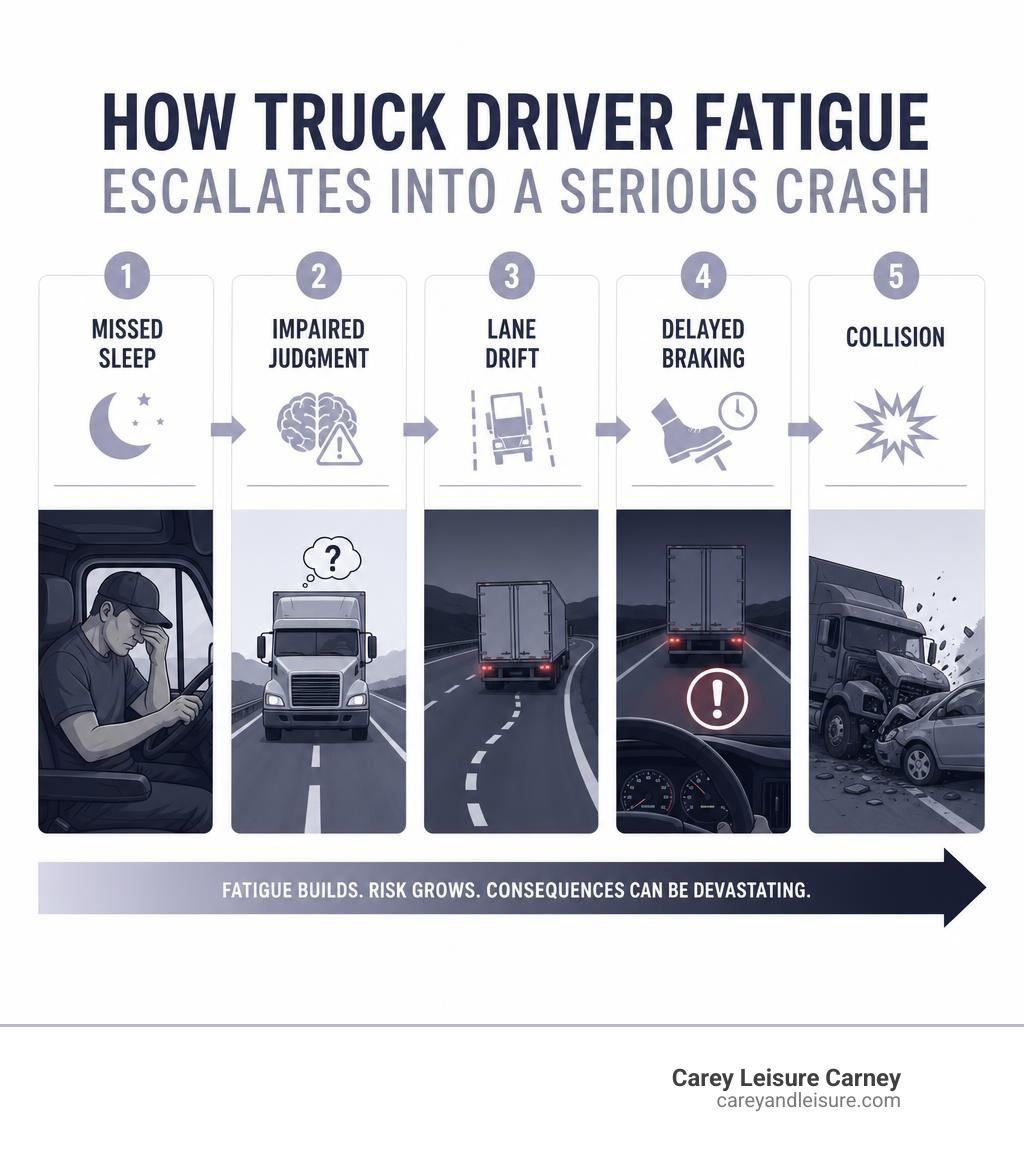
Fatigued truck driver accident word list:
What Driver Fatigue Means and Why It Makes Truckers Dangerous
Driver fatigue is more than “feeling sleepy.” It is a physical and mental state where tiredness reduces the skills needed to drive safely. A fatigued truck driver may still have their eyes open, hands on the wheel, and GPS running – but their brain may be working like it is on low battery mode.
Fatigue can cause:
- Slower reaction time
- Poor judgment
- Short attention lapses
- Lane drifting
- Delayed braking
- Reduced awareness of hazards
- Microsleep episodes, where the driver briefly falls asleep without realizing it
Microsleep is especially dangerous in a tractor-trailer. At highway speed, a truck can travel the length of a football field in just a few seconds. That is plenty of distance for a fully loaded semi to drift into another lane, rear-end stopped traffic, or miss a work-zone slowdown.
Truck drivers also face natural dips in alertness tied to the body’s circadian rhythm. Many people are sleepiest between midnight and 6 a.m. and again in the mid-afternoon, often around 2 p.m. to 4 p.m. Unfortunately, freight schedules do not always care what the human body thinks.
How Fatigue Impairs Commercial Drivers
Fatigue affects a truck driver in several ways at once. That is what makes it so dangerous.
A tired commercial driver may:
- Take longer to recognize brake lights ahead
- Misjudge following distance
- Drift onto the shoulder or into another lane
- Fail to notice stopped traffic
- Miss traffic signals or road signs
- Make wide or unsafe turns
- Speed without realizing it
- Overcorrect after drifting
In serious truck crashes, delayed braking is a common red flag. If a semi hits traffic without skid marks, witnesses report no slowing, or dashcam video shows steady speed until impact, investigators may look closely at fatigue.
Work zones are especially risky. When lanes narrow, traffic slows, and construction barriers limit escape routes, even a one-second delay can turn into a multi-vehicle crash. The NTSB has examined fatal truck crashes where fatigue, speed, and delayed reaction combined with tragic results, including the investigation summarized in this NTSB fatigue crash investigation summary.
Why Truck Drivers Face a Higher Fatigue Risk
Most of us get tired after a long day. Truckers, however, often work in conditions that stack the deck against restful sleep.
Common fatigue risks include:
- Long shifts behind the wheel
- Overnight driving
- Irregular routes and changing sleep schedules
- Monotonous highway miles
- Waiting at warehouses, docks, or distribution centers
- Time pressure from delivery deadlines
- Limited safe truck parking
- Sleeping in a berth near noise, lights, or vibration
- Unpaid waiting time that encourages drivers to keep moving later
In Florida, congestion around Tampa Bay, Clearwater, St. Petersburg, Largo, New Port Richey, Spring Hill, Trinity, and Wesley Chapel can make scheduling pressure worse. A driver may lose hours in traffic or loading delays, then feel pressure to “make up time.” That is when fatigue becomes more than a personal health issue – it becomes a public safety risk.
How Common Is a Fatigued Truck Driver Accident?
A fatigued truck driver accident is difficult to count precisely, but the available data shows it is a major factor in large truck crashes.
The Federal Motor Carrier Safety Administration’s Large Truck Crash Causation Study found that fatigue was associated with 13% of serious commercial motor vehicle crashes. The NTSB has reported even higher involvement in certain fatal crash categories, finding fatigue cited as a probable cause in 31% of fatal-to-the-driver heavy truck crashes it studied.
NHTSA reported 684 fatalities in drowsy-driving-related crashes in 2021. The CDC has also found that about 1 in 25 adults reported falling asleep while driving within the previous 30 days.
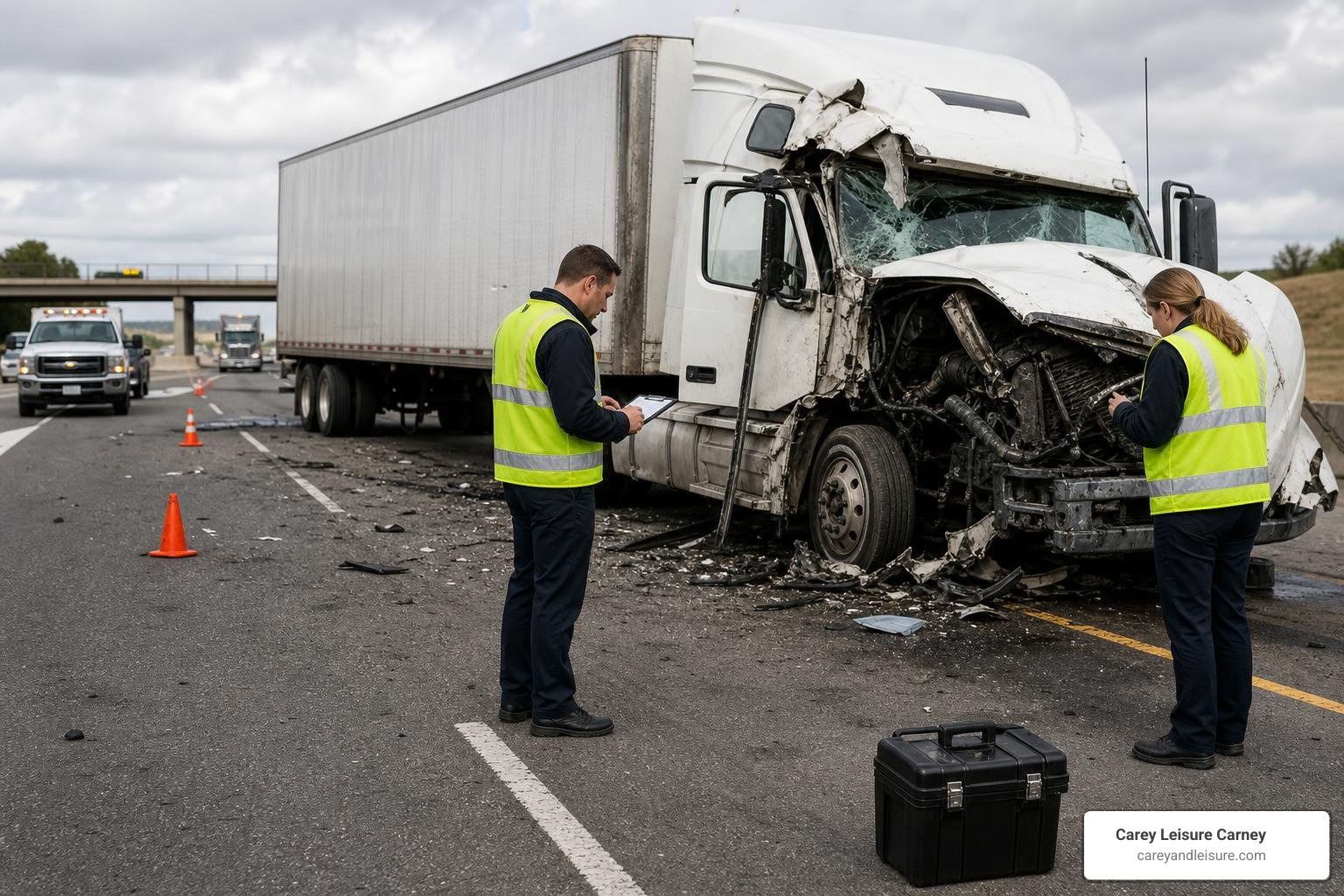
What Federal Studies Show About Truck Driver Fatigue
Federal studies and safety reviews point in the same direction: fatigue is common, dangerous, and probably underreported.
Key findings include:
- The Large Truck Crash Causation Study linked truck driver fatigue to 13% of serious crashes.
- NTSB research found fatigue was the most frequently cited probable cause in 31% of fatal-to-the-driver heavy truck crashes studied.
- FMCSA-sponsored research has reported that 65% of truck drivers often or sometimes feel drowsy while driving.
- Nearly half of truck drivers in those surveys admitted they had fallen asleep while driving in the previous year.
- NHTSA reported 684 deaths in drowsy-driving-related crashes in 2021.
- CDC research found about 1 in 25 adults had fallen asleep behind the wheel in the past month.
For context, large truck crashes have long produced severe harm. In 2012, there were 3,921 fatalities involving large truck crashes – an average of 11 deaths per day. That same year, there were about 317,000 traffic crashes involving large trucks and 73,000 injury crashes.
Why Fatigue Is Often Undercounted
Fatigue is not like alcohol impairment. There is no simple roadside test that says, “This driver was 42% too sleepy.” If only it were that easy.
Fatigue may be missed because:
- A fatigued driver may die in the crash.
- Drivers may not admit they were tired.
- Paper logs can be incomplete or inaccurate.
- Investigators may lack a full 72- or 96-hour sleep history.
- Witnesses may only see the final seconds.
- Fatigue can look like distraction, inattention, or speeding.
- Crash databases may not capture enough sleep-related detail.
This is why ELD records, dispatch messages, fuel receipts, toll records, phone data, GPS history, and medical records can matter so much. A fatigue case is often built by piecing together the driver’s real schedule before the crash.
Recent Crash Investigations Keep Fatigue in the Spotlight
Recent national crash reporting continues to show why sleep history matters. In one major 2025 investigation, NTSB materials discussed a truck driver’s sleep opportunities in the days before a deadly multi-vehicle crash, while toxicology and phone-use evidence were also examined. That kind of investigation shows how fatigue analysis often requires a full timeline, not just a snapshot at impact.
You can read more about that type of investigation in this recent NTSB sleep-opportunity reporting.
For victims, the lesson is simple: the driver may say, “I was fine.” The records may tell a different story.
Main Causes of Truck Driver Fatigue on Florida Roads
Fatigue rarely has just one cause. More often, it is the result of several pressures building at once: not enough sleep, long duty hours, tight appointments, health issues, and company systems that reward speed more than safety.
Tight Schedules and Unrealistic Delivery Windows
Delivery deadlines can create unsafe pressure. Truckers may face appointment freight, warehouse delays, port delays, weather, traffic, and last-minute route changes.
In the Tampa Bay area, traffic backups can quickly turn a realistic schedule into a stressful one. A driver heading through Clearwater, St. Petersburg, Wesley Chapel, or New Port Richey may lose time in congestion, then feel pressure to continue driving when rest would be safer.
Unrealistic scheduling can lead to:
- Skipped breaks
- Shortened sleep
- Driving deep into the night
- Speeding
- Tailgating
- Ignoring early fatigue signs
A safe company culture should never treat rest as optional.
Mileage Pay, Unpaid Time, and Safety Incentives
Many truck drivers are paid by the mile. That can create a dangerous incentive: if the wheels are not turning, the driver may not be earning.
This matters because a driver’s day includes more than driving. They may spend hours:
- Waiting to load or unload
- Inspecting the truck
- Securing cargo
- Sitting in traffic
- Completing paperwork
- Searching for parking
If much of that time is unpaid, drivers may push themselves to keep going later. Safety-focused companies can reduce this pressure through better scheduling, hourly pay for non-driving work, detention pay, safety bonuses, and strict monitoring of hours-of-service compliance.
Sleep Patterns, Night Driving, and Circadian Disruption
Truckers often sleep in split chunks instead of one solid block. A driver may sleep a few hours, wait on cargo, drive overnight, nap briefly, then drive again. Over several days, that creates cumulative fatigue.
Night driving is particularly risky because it conflicts with the body’s natural sleep rhythm. Early morning hours can be dangerous, even for drivers who believe they are “used to it.”
The 34-hour restart rule is designed to help drivers recover from long weekly schedules. Earlier safety discussions emphasized the value of getting two nighttime rest periods during a restart because nighttime sleep is more restorative for many drivers.
Medical and Lifestyle Risk Factors
Driver health also matters. Fatigue can be worsened by:
- Sleep apnea
- Obesity
- Diabetes
- High blood pressure
- Sedating prescriptions
- Alcohol recovery effects
- Chronic pain
- Depression or anxiety medications
- Stimulant misuse followed by a crash in alertness
FMCSA-related health research has found that long-haul truck drivers have high rates of chronic disease risk factors. One government fact sheet reported that 88% of long-haul truck drivers had at least one risk factor for chronic disease, compared with 54% of the general adult working population. It also cited survey data showing high obesity and smoking rates among truck drivers.
Medical conditions do not excuse unsafe driving, but they can help explain why a driver was not fit to operate a commercial vehicle safely.
Federal Fatigue Rules: Hours-of-Service, ELDs, and Safety Technology
Federal hours-of-service rules exist for one main reason: tired truckers are dangerous. These rules limit how long many commercial drivers may drive and work before taking required rest.
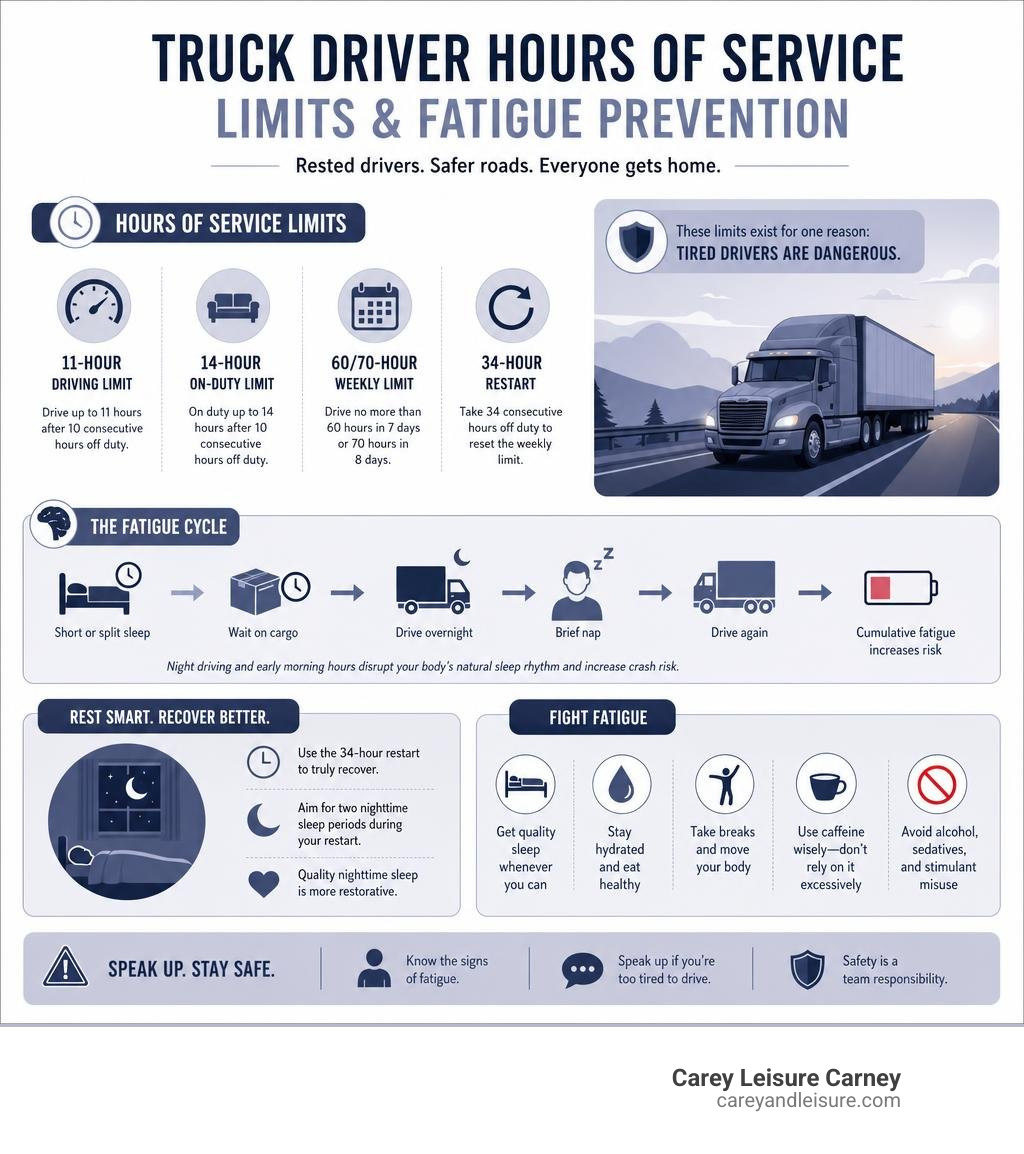
Hours-of-Service Rules Drivers Must Follow
For many property-carrying commercial drivers, the core FMCSA rules include:
- 11-hour driving limit: A driver may drive up to 11 hours after 10 consecutive hours off duty.
- 14-hour window: A driver may not drive beyond the 14th consecutive hour after coming on duty.
- 30-minute break: A driver generally must take a 30-minute break after 8 cumulative hours of driving without at least a 30-minute interruption.
- 60/70-hour weekly limit: A driver may not drive after 60 hours on duty in 7 days or 70 hours in 8 days, depending on the carrier’s schedule.
- 34-hour restart: Drivers may restart the weekly calculation after at least 34 consecutive hours off duty.
- Sleeper berth options: Certain rules allow drivers to split qualifying rest periods using the sleeper berth.
Some exceptions exist, including short-haul exceptions, but exceptions should not become loopholes that put Florida motorists at risk.
Are HOS Rules Effective?
Hours-of-service rules are not perfect, but they help. Federal analysis of revised HOS rules estimated they prevent about 1,400 crashes each year, saving 19 lives and preventing 560 injuries. The same analysis estimated major annual savings from fewer crashes and improved driver health.
Those are real benefits. Still, rules only work when carriers and drivers follow them. Compliance gaps, pressure to meet deadlines, and improper use of exceptions can undermine the purpose of the regulations.
How ELDs Help Prove or Prevent Fatigue
Electronic logging devices, or ELDs, automatically record key driving data. They were created to reduce false logbooks and make hours-of-service compliance easier to verify.
ELDs may record:
- Engine power status
- Driving time
- Miles driven
- Duty status changes
- Location information
- Vehicle identification
- Motor carrier information
In a crash case, ELD data can show whether a driver had been on the road too long, skipped a required break, or had too little off-duty time. Federal rules generally require carriers to retain ELD records for at least six months, but waiting is risky. Data can be overwritten, misplaced, or disputed.
That is why legal teams often send preservation letters quickly after a crash. For more on how truck accident claims are investigated, see The Big Rig Breakdown: Navigating Semi Truck Accident Claims.
Emerging Fatigue-Detection Technologies
Technology cannot replace responsible scheduling, but it can help.
Modern fleets may use:
- Dash cameras
- Lane departure warnings
- Forward collision alerts
- Automatic emergency braking
- Eye-tracking systems
- Steering pattern sensors
- Telematics
- Driver coaching software
These tools may detect drifting, hard braking, speed changes, or signs that a driver is nodding off. However, technology has limits. Some systems do not store enough data for post-crash analysis. Others warn the driver but do not stop the truck. The best safety programs combine technology with real accountability.
How to Recognize and Respond to a Fatigued Truck Driver Accident
If you are near a large truck that appears to be drifting or behaving unpredictably, give it space. A tired driver may not correct course in time, and arguing with an 80,000-pound vehicle is not a winning debate.

Signs of Driver Fatigue Other Motorists Should Watch For
Watch for these warning signs:
- Weaving within the lane
- Drifting across lane lines
- Hitting rumble strips
- Sudden overcorrection
- Inconsistent speed
- Tailgating
- Delayed braking
- Missing traffic signals
- Failing to respond to slowed traffic
- Wide turns
- Nearly striking barriers or shoulders
- Driving without headlights at night
- Missing exits or making abrupt lane changes
If you see these signs, slow down safely, avoid lingering beside the truck, and call 911 if the danger is immediate.
Common Injuries in Fatigue-Related Truck Crashes
Fatigue-related truck crashes are often severe because they may involve high-speed impacts, no braking, or collisions with stopped traffic.
Common injuries include:
- Traumatic brain injuries
- Spinal cord injuries
- Broken bones
- Internal bleeding
- Crush injuries
- Burns
- Amputations
- Neck and back injuries
- Severe lacerations
- Psychological trauma
- Wrongful death
People in smaller passenger vehicles usually suffer the worst harm. For a deeper look at crash injuries, visit When Big Rigs Collide: A Guide to Truck Accident Injuries.
What to Do After a Fatigued Truck Driver Accident
After a fatigued truck driver accident, your first priority is safety and medical care.
Take these steps if you can:
- Call 911 immediately.
- Get medical attention, even if symptoms seem minor.
- Photograph vehicles, skid marks, debris, road signs, and visible injuries.
- Write down what you noticed before impact, such as drifting or no braking.
- Get witness names and contact information.
- Preserve dashcam or phone video.
- Avoid giving recorded statements to insurers before getting legal advice.
- Keep medical records, repair estimates, and receipts.
- Contact a truck accident attorney quickly so ELD and company records can be preserved.
Truck crash cases move fast, and trucking companies may have investigators working almost immediately. We believe victims deserve the same urgency. Learn more about what an attorney does in these cases in our Truck Accident Lawyer Role Guide.
Evidence That Can Prove Fatigue
Fatigue is proven through patterns. The evidence often comes from multiple sources, including:
- ELD records
- Driver logs
- Dispatch messages
- Delivery schedules
- Bills of lading
- Fuel receipts
- Toll records
- GPS data
- Truck “black box” data
- Dashcam footage
- Cell phone records
- Inspection records
- Medical qualification records
- Sleep history
- Witness statements
- Crash reconstruction
- Human factors experts
Expert witnesses can be critical because they help explain how fatigue affected reaction time, perception, braking, and decision-making. For more, read Beyond the Crash: How Expert Witnesses Can Make or Break Your Truck Accident Case.
Frequently Asked Questions About a Fatigued Truck Driver Accident
How do I know if fatigue caused my truck accident?
You may suspect fatigue if the crash involved lane drift, no braking, an early morning or late-night impact, inconsistent speed, or a truck driver who seemed confused after the crash. Other clues include hours-of-service violations, missing log entries, unrealistic delivery schedules, or witness reports that the truck was weaving before impact.
The strongest proof often comes from ELD data, dispatch records, GPS records, and a reconstruction of the driver’s sleep and work schedule before the crash.
Can the trucking company be responsible for a tired driver?
Yes. A trucking company may be responsible if it contributed to the fatigue or failed to prevent it. Liability may involve:
- Unrealistic schedules
- Ignoring ELD violations
- Pressuring drivers to skip rest
- Poor training
- Negligent hiring
- Failure to monitor safety records
- Unsafe pay incentives
- Allowing medically unfit drivers on the road
The driver may be liable for choosing to drive while dangerously tired. The company may also be liable through vicarious liability or its own negligence.
How long do I have to file a Florida truck accident claim?
In many Florida negligence cases, including personal injury and wrongful death claims, the deadline is generally two years. However, you should not wait. Evidence like ELD data, dashcam video, vehicle data, and witness memory can disappear long before the legal deadline arrives.
If a crash happened in Clearwater, Largo, New Port Richey, Spring Hill, St. Petersburg, Trinity, Wesley Chapel, or nearby Florida communities, early investigation can make a major difference.
Conclusion
Truck driver fatigue is preventable. Safe scheduling, honest logs, medical screening, better parking, fair pay practices, and strong company safety policies can all reduce the risk. But when a carrier or driver ignores fatigue, the consequences can be life-changing for innocent motorists.
At Carey Leisure Carney, we help injured Floridians and families understand what happened, preserve critical evidence, and pursue accountability. Our firm offers direct attorney access, personalized service, Board-Certified attorneys, and more than 100 years of combined experience in personal injury law.
If you believe fatigue played a role in a truck crash, do not wait for the trucking company’s insurer to define the story. Let us help investigate the facts. Contact Carey Leisure Carney through our Auto Accident Attorney/Truck Accident Attorney page to discuss your options.