Unraveling the Truth: A Guide to Fatal Accident Investigations
When Every Second Counts: Understanding Fatal Accident Investigations
A fatal accident investigation is one of the most complex and consequential processes in the legal and law enforcement world — and if you’ve just lost someone, understanding how it works can feel overwhelming. Here’s a quick overview:
What is a fatal accident investigation?
- A formal, multi-agency process to determine the cause of a crash that resulted in death
- Goes far beyond a standard crash report — involving forensic analysis, specialized investigators, and both criminal and civil review
- Can take weeks or months to complete
- Results in an official report that becomes critical evidence in wrongful death and criminal cases
Approximately 42,000 people die in U.S. car accidents every year. Florida is consistently among the states with the highest traffic fatality rates, with an average of 3,098 fatal crashes occurring annually across the state. Behind every one of those numbers is a family searching for answers.
This guide walks you through exactly how a fatal accident investigation works — from the first minutes at the scene to the legal processes that follow — so you know what to expect and how to protect your rights.
I’m Thomas W. Carey, founding partner of Carey Leisure Carney and a Board-Certified civil trial lawyer who has handled roughly 40,000 injury and wrongful death matters across Florida, including fatal accident investigation cases involving drunk drivers, commercial vehicles, and complex multi-party liability. After losing my own wife to a drunk driver, this work became deeply personal — and I’ve spent my career making sure families like yours get real answers and real justice.
Fatal accident investigation terms you need:
Why a Fatal Accident Investigation Differs from Standard Crash Reviews
When a fender-bender occurs on US-19 in Clearwater or a minor collision happens in a St. Petersburg parking lot, the responding police officer writes a brief report, notes the drivers’ statements, and clears the road. The entire process takes under an hour.
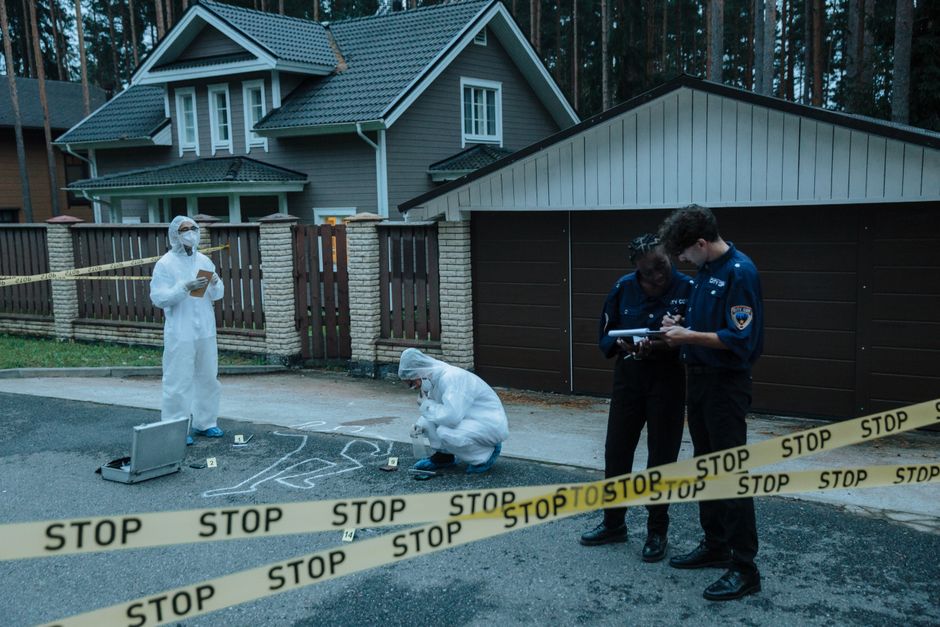
A fatal accident investigation is an entirely different beast. Because a human life has been lost, the crash scene is treated with the same meticulous gravity as a potential crime scene.
In any collision resulting in death, specialized units are mobilized immediately. In our local communities across Pinellas, Pasco, and Hillsborough counties, this means dispatching homicide detectives and notifying the Medical Examiner’s Office. The investigation must address two distinct tracks of liability:
- Criminal Liability: Did a driver commit a crime, such as vehicular manslaughter, DUI manslaughter, or reckless driving?
- Civil Liability: Who is financially responsible for the devastating loss of life, and was there actionable negligence?
To understand how these high-stakes investigations unfold and why they are so vital for grieving families, we must look at what is happening beneath the surface of these tragic events, a topic we explore in our guide on the silent epidemic unpacking fatal traffic accidents.
Key Stages of a Fatal Accident Investigation
A thorough investigation is a marathon, not a sprint. It begins the moment emergency dispatchers receive the first 911 call and continues long after the physical debris is swept away.
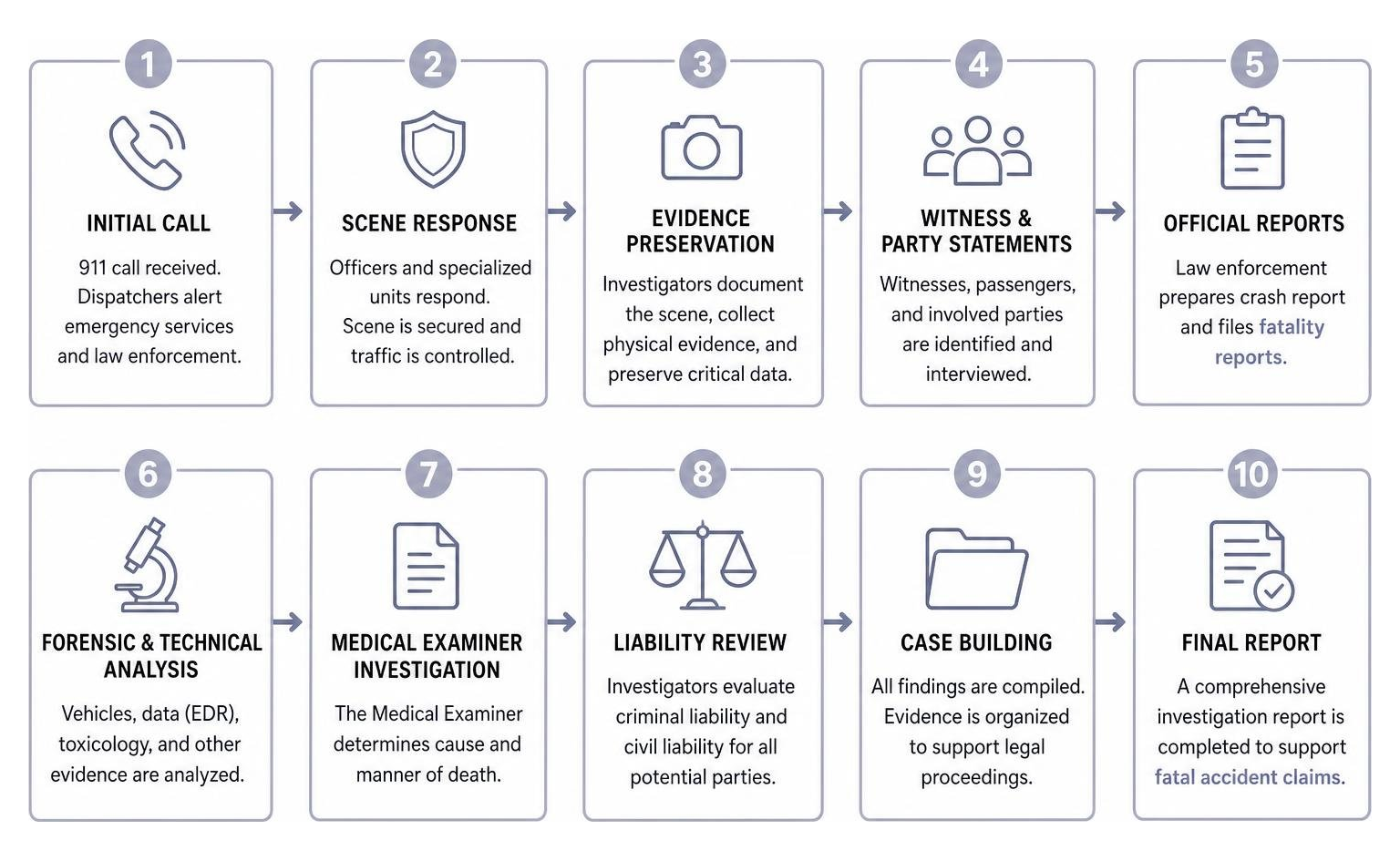
During the first critical hours, the primary focus is scene security and evidence preservation. Responding officers immediately block off the roadway, redirect traffic, and establish a wide perimeter to protect fragile evidence like tire marks, vehicle debris, and fluid spills from being destroyed by passing cars or foot traffic.
Understanding the initial steps taken at the scene is crucial for anyone dealing with a fatality car accident resulting in death, as these early hours dictate the direction of the entire legal and investigative process.
Reporting Requirements and Initial Law Enforcement Protocols
Under Florida law, law enforcement agencies must follow strict administrative protocols when documenting a fatal crash.
The Florida Department of Highway Safety and Motor Vehicles (FLHSMV) requires responding officers to submit initial data to the Fatality Analysis Reporting System (FARS) — a federal database used to track national traffic safety trends — within 24 hours of the crash.
For official documentation, officers must file a draft crash report within 72 hours. However, these initial documents are strictly preliminary. As the FLHSMV notes on their Florida Traffic Crash Reports portal, early officer observations are subject to change. Fact-finding is ongoing, and early summaries may contain errors that are corrected only weeks later through formal supplemental filings.
In our local area, specialized teams like the Pinellas County Sheriff’s Office MAIT (Major Accident Investigation Team) are called in to handle these complex cases. MAIT investigators are highly trained specialists who use advanced forensic tools to ensure every physical detail is documented with scientific precision.
Critical Evidence Collection and Scene Preservation
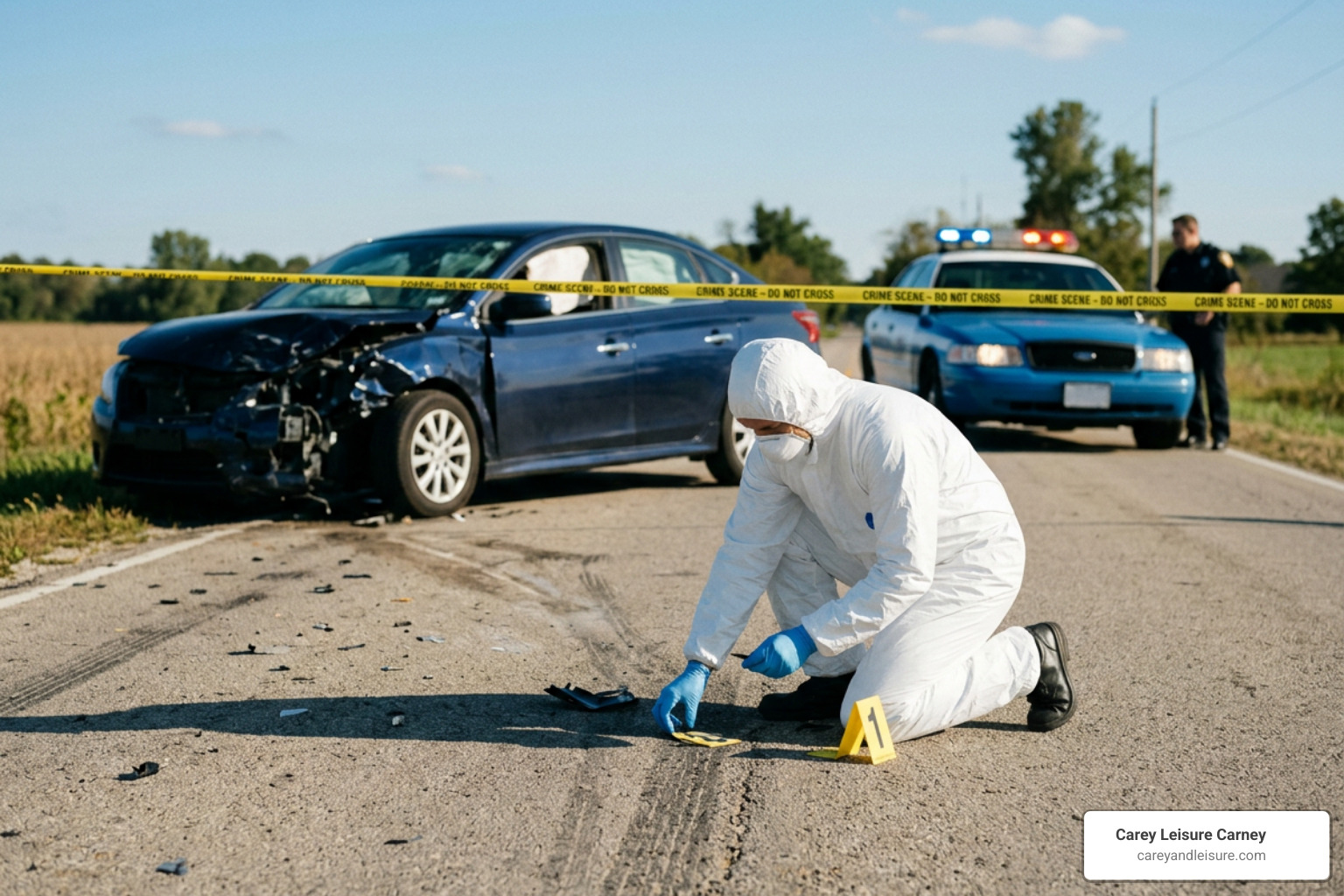
The physical environment of a crash scene is highly volatile. Rain can wash away fluid leaks, emergency vehicles can obliterate tire tracks, and road crews must eventually reopen the highway. This is why immediate, systematic evidence collection is the cornerstone of any successful fatal accident investigation.
To ensure the integrity of the findings, investigators must maintain a strict chain of custody for every piece of physical and digital evidence collected. This means documenting exactly who found each item, when it was found, and where it was stored, preventing any potential tampering or contamination defenses in court.
Physical Evidence and Forensic Scene Analysis
Modern traffic homicide investigators no longer rely on simple tape measures. Today, teams like the Pinellas County MAIT utilize high-tech 3D laser scanners to map the entire crash scene with millimeter accuracy. These scanners create a permanent, digital “point cloud” of the roadway, preserving the exact positions of:
- Skid marks and scuff marks: Revealing braking patterns, steering inputs, and pre-impact speeds.
- Fluid spills: Indicating the exact point of impact where radiators or oil pans ruptured.
- The debris field: Showing the trajectory of shattered glass and plastic parts.
Once the on-scene work is complete, the involved vehicles are towed to secure impound yards for detailed inspections. Certified mechanics and forensic technicians inspect the steering, braking, and suspension systems to rule out mechanical failure. They also document “crush profiles” — measuring the physical deformation of the metal to calculate the force of the impact.
The Role of Technology in a Modern Fatal Accident Investigation
In 2026, digital evidence is often more valuable than physical debris. Modern vehicles are essentially rolling computers, capturing a wealth of data before, during, and after a collision.
Investigators look to several key digital sources:
- Event Data Recorders (EDRs): Often called the vehicle’s “black box,” the EDR records critical pre-crash metrics, including vehicle speed, accelerator pedal position, brake application, steering angles, and seatbelt usage in the five to ten seconds leading up to an airbag deployment.
- Dashcam and Surveillance Footage: Dashcams from the vehicles involved, nearby commercial security cameras, or even doorbell cameras frequently capture the exact sequence of events.
- Advanced Driver Assistance Systems (ADAS): Investigating semi-autonomous vehicle crashes requires deep technical analysis. For example, in a high-profile NTSB Tesla Autopilot Investigation, investigators recovered internal telemetry proving that despite the driver’s claim that the vehicle accelerated on its own while on autopilot, the driver had manually overrode the system by pressing the accelerator pedal to 100%.
Medical Examiner Findings and Toxicology Reports
While crash investigators analyze the vehicles and the road, the Medical Examiner focuses on the victims. An autopsy is legally mandated in fatal traffic accidents to establish the official cause of death and determine if a medical emergency (such as a heart attack or stroke) occurred before the crash.
Toxicology reports are a vital component of this process. By analyzing blood and urine samples, toxicologists can detect the presence of alcohol, illegal narcotics, or impairing prescription medications.
In a notable 2026 wrong-way driving case, toxicology results revealed the driver had a Blood Alcohol Concentration (BAC) of 0.19% — more than twice the legal limit — alongside therapeutic levels of Bupropion (Wellbutrin). This objective scientific data is crucial for establishing driver impairment and can be used to hold negligent parties criminally and civilly liable.
Determining Liability: Accident Reconstruction and Legal Outcomes
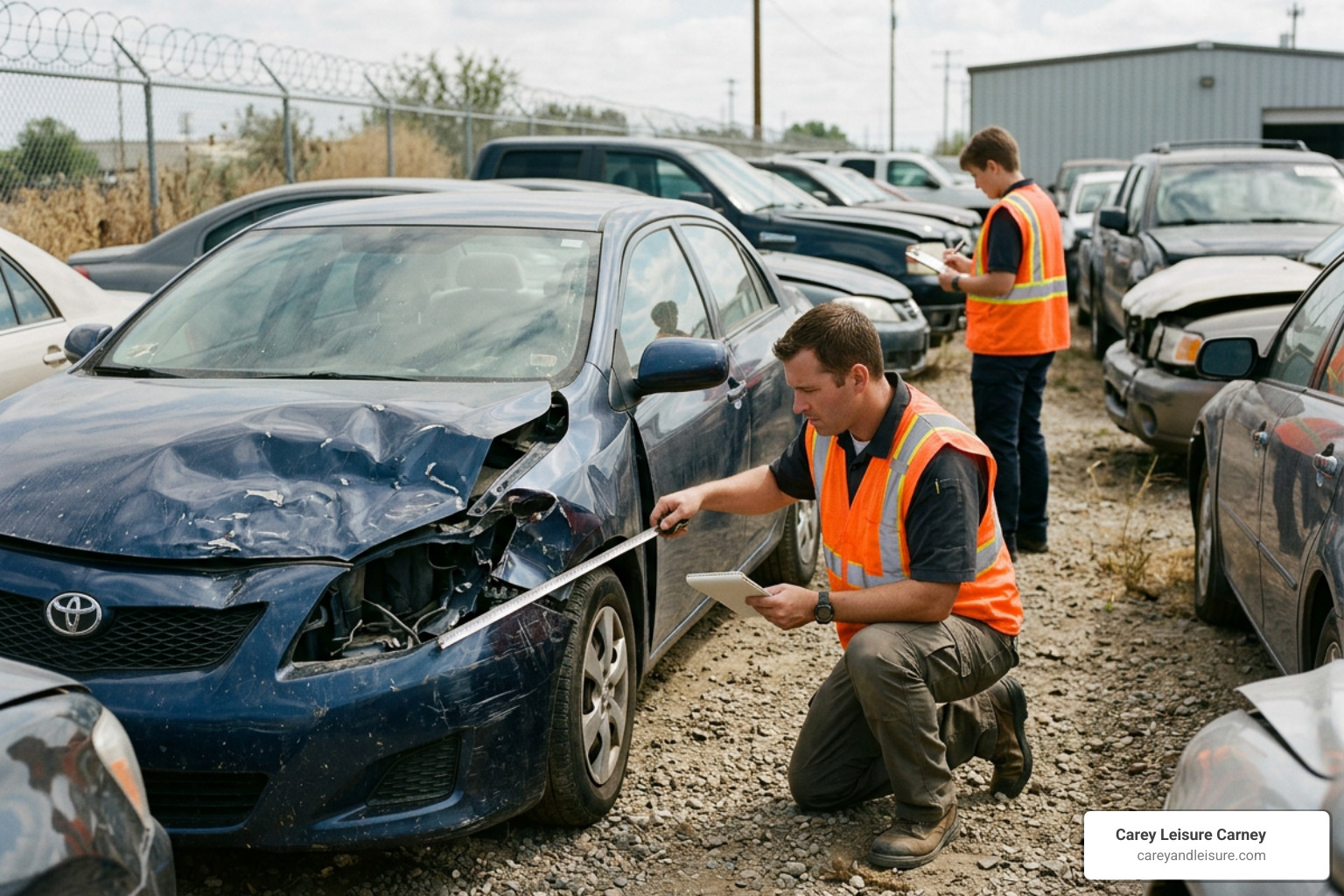
Once all the physical, digital, and medical evidence is gathered, the pieces of the puzzle must be put together. This is where the science of accident reconstruction comes into play.
How Accident Reconstructionists Rebuild the Crash
Accident reconstructionists are specialized engineers or law enforcement officers who apply the laws of physics to determine how a crash occurred. By analyzing vehicle weights, crush damage, drag factors of the asphalt, and digital EDR data, they can mathematically calculate:
- The exact speeds of the vehicles prior to impact.
- The angle of collision and the delta-V (change in velocity).
- Whether a driver attempted to steer or brake to avoid the crash.
- The visibility of road signs and the impact of weather or lighting conditions.
Using advanced simulation software, reconstructionists can create highly accurate, frame-by-frame animations of the crash. These visual models are incredibly persuasive tools in front of a jury, turning abstract physics equations into clear, understandable evidence.
Common Contributing Factors and Legal Consequences
Our investigation experience shows that most fatal crashes are entirely preventable, resulting from a handful of reckless behaviors.
| Contributing Factor | Primary Evidence Used | Potential Legal Consequences |
|---|---|---|
| Drunk / Drugged Driving | Toxicology reports, bar receipts, police bodycam | DUI Manslaughter, Dram Shop liability |
| Distracted Driving | Cell phone logs, app usage data, EDR telemetry | Vehicular Homicide, civil negligence |
| Speeding | Skid marks, crush profiles, EDR records | Reckless Driving, wrongful death damages |
| Mechanical Failure | Forensic vehicle inspection, maintenance logs | Product liability, third-party negligence |
When an investigation reveals that a driver’s reckless or illegal actions caused a death, state prosecutors can file serious criminal charges, such as vehicular manslaughter or DUI manslaughter.
Simultaneously, the surviving family members have the right to pursue a civil wrongful death lawsuit. While a criminal case focuses on punishing the wrongdoer, a civil claim focuses on providing financial security for the family left behind.
If you are navigating the heavy emotional and financial toll of a sudden loss, consulting with experienced accident attorneys clearwater fl can help you understand your options and ensure that the evidence from the police investigation is fully leveraged to secure justice for your family.
Frequently Asked Questions about Fatal Crash Investigations
How can families obtain a copy of the fatal accident investigation report?
Surviving family members and their legal representatives have a right to access the official crash reports. In Florida, preliminary traffic homicide reports are eventually compiled into a comprehensive final report.
Because these files are public records, you can request them directly from the investigating agency (such as the Pinellas County Sheriff’s Office or the Florida Highway Patrol). However, if a criminal investigation is active, certain portions of the file may be temporarily withheld or redacted. To learn more about where and how to access these documents, read our guide on uncovering the truth where to find fatality reports.
How long does a fatal accident investigation typically take?
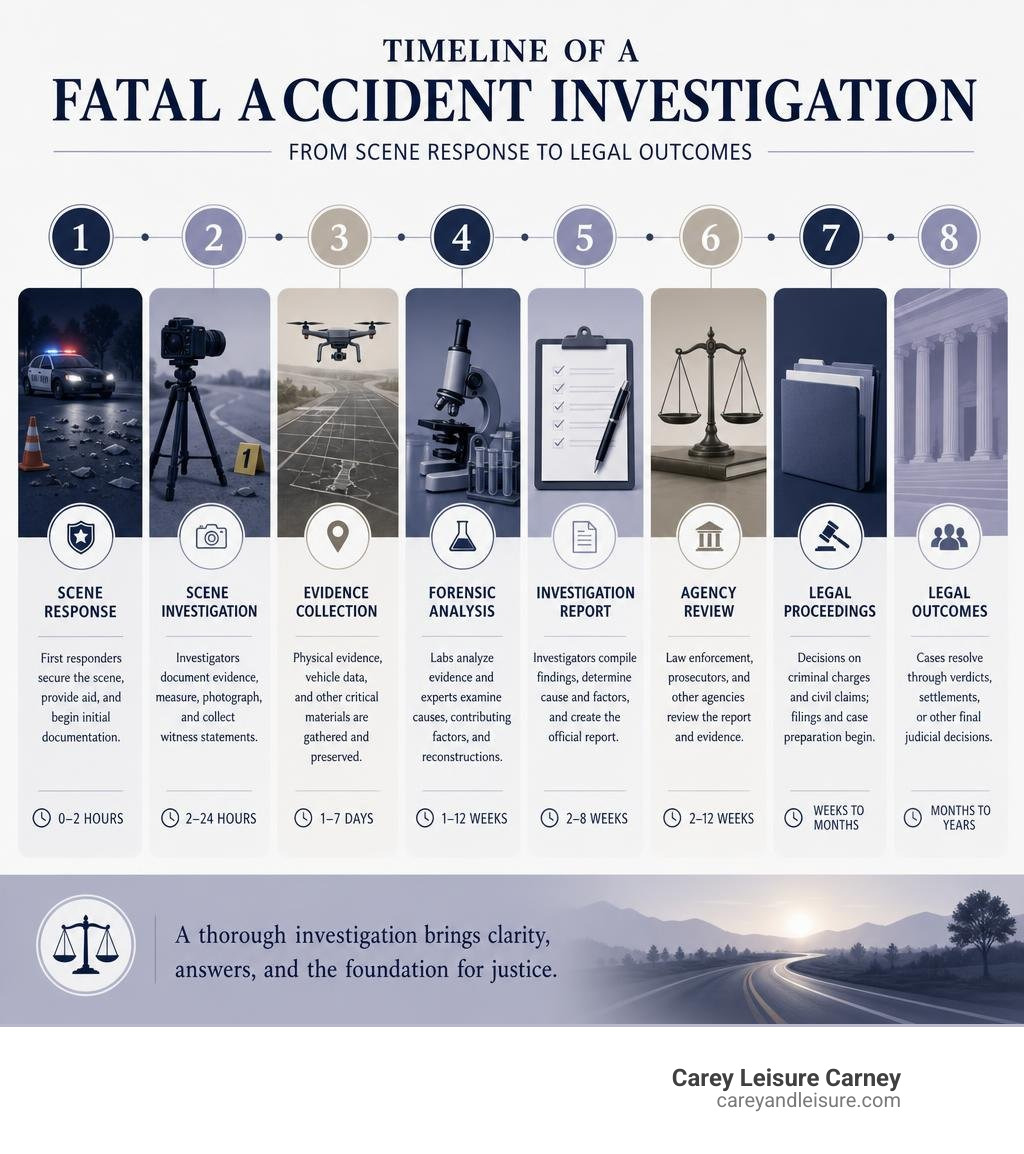
While a standard crash report is completed in a few days, a fatal accident investigation typically takes anywhere from six weeks to six months—and sometimes longer.
The timeline is heavily influenced by:
- Toxicology delays: Medical examiner lab results often take 4 to 12 weeks to process.
- Digital forensics: Retrieving and analyzing proprietary EDR data from vehicle manufacturers can take months.
- Crash complexity: Multi-vehicle pile-ups or commercial truck accidents require extensive engineering analysis compared to single-vehicle crashes.
What happens if the investigation finds no one was at fault?
It is incredibly frustrating for families when police conclude a crash was an “unavoidable accident” or decline to file criminal charges. However, a prosecutor’s decision not to file charges does not mean you have no legal recourse.
The burden of proof in a criminal case is “beyond a reasonable doubt”—the highest standard in our legal system. In a civil wrongful death claim, the standard is a “preponderance of the evidence” (meaning it is more likely than not that the defendant was negligent).
Additionally, an independent civil investigation conducted by our firm may uncover third-party liability that the police overlooked, such as a defective auto part, an improperly designed roadway, or a commercial employer’s failure to monitor their driver’s hours of service.
Conclusion
A fatal accident investigation is a highly technical, deeply emotional process. While law enforcement works to determine if a crime was committed, surviving families need an advocate who is focused entirely on their future, their security, and their right to answers.
At Carey Leisure Carney, we know that no amount of financial compensation can replace a beloved family member. But holding negligent parties accountable can provide the financial stability your family needs to heal, covering funeral expenses, lost future income, and the profound loss of companionship.
We are not just a law firm; we are a family. As Pinellas County’s first personal injury-exclusive firm, established in 1955, we bring over 100 years of combined legal experience to your side. Our team includes Board-Certified civil trial experts—a distinction held by fewer than 2% of Florida attorneys—meaning we have the proven courtroom skills to take your case to trial if insurance companies refuse to offer a fair settlement.
We serve families in Clearwater, Largo, St. Petersburg, New Port Richey, Trinity, Wesley Chapel, and Spring Hill. When you call us, you get direct attorney access and personalized, compassionate representation from start to finish.
If you have lost a loved one in a tragic accident, you do not have to carry this heavy burden alone. Contact us today for a free, no-obligation consultation, or explore our wrongful death attorney florida complete guide to learn more about how we can help you find the answers and closure you deserve.