

How Lawyers for Slip and Fall Cases Protect Your Claim
Lawyers for slip and fall cases investigate what caused the fall, gather evidence before it disappears, identify who may be responsible, and document your injuries and financial losses. They also handle insurance negotiations and, when needed, take the case to court. If you were hurt, get medical care, photograph the hazard if you can, and save the names of any witnesses.
I’m Thomas W. Carey, founding partner of Clearwater-based Carey Leisure Carney and a board-certified civil trial lawyer with decades of personal injury and premises liability experience. I know how lawyers for slip and fall cases build a claim while clients focus on getting better.
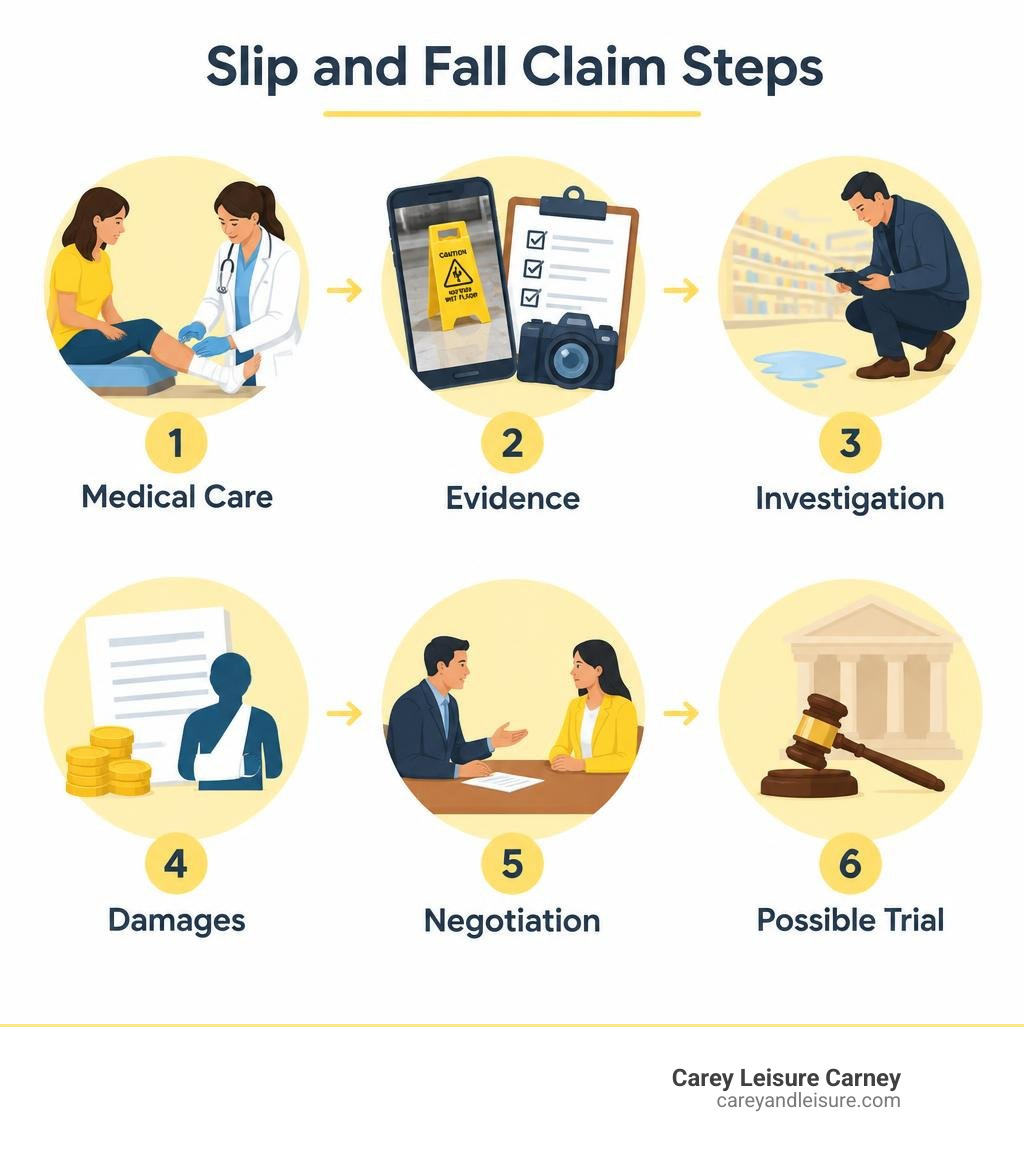
Lawyers for slip and fall cases terms to learn:
- best slip and fall attorneys near me
- lawyer for slip and fall on ice
- wet floor slip and fall accidents
Understanding Premises Liability and Property Owner Responsibility
When you visit a business, rent an apartment, or walk across a commercial property, you expect the walking surfaces to be reasonably safe. Under the legal doctrine of premises liability, property owners and managers have an ongoing legal obligation—known as a duty of care—to maintain their property in a safe condition for lawful visitors.
Whether you are shopping at a grocery store in Clearwater, dining at a restaurant in St Petersburg, visiting a clinic in New Port Richey, or browsing a retail shop in Wesley Chapel, the entity controlling the real estate must take reasonable precautions to prevent foreseeable hazards. If they fail to inspect, repair, or warn about dangerous conditions, they can be held financially responsible for resulting injuries. Working with a dedicated premises liability attorney helps ensure that all responsible parties are properly identified and held accountable.
Unsafe Conditions That Lead to Fall Accidents
Falls rarely happen without a contributing structural defect, maintenance failure, or spilled substance. Unsafe property conditions that frequently lead to severe injuries include:
- Liquid spills and tracked-in water: Uncleaned leaks, mopped floors without warning signs, or tracked-in rainwater near store entrances.
- Uneven walking surfaces: Cracked sidewalks, broken asphalt in parking lots, and sudden changes in floor elevation.
- Stairway defects: Broken steps, loose handrails, missing non-slip treads, or improperly measured risers.
- Inadequate lighting: Dim stairwells, unlit parking garages, and dark hallways that conceal floor hazards.
- Torn or bunched carpeting: Loose floor mats, frayed carpets, or unsecured transition strips between flooring types.
- Hidden obstructions: Boxes, extension cords, or inventory left unattended in store aisles and walkways.
Proving Negligence and Overcoming Common Property Owner Defenses
Holding a property owner liable requires establishing legal negligence. You must prove four foundational elements: the defendant owed you a duty of care, they breached that duty by failing to maintain the property safely, that breach directly caused your fall, and you suffered real damages (such as medical bills and physical pain).
A key hurdle in premises liability is demonstrating notice. You must show the property owner either created the hazard, had actual knowledge of it, or had constructive knowledge—meaning the hazard existed long enough that a reasonable inspection would have discovered and fixed it.
Property owners and their insurance carriers routinely raise aggressive defenses to avoid liability. They often claim the hazard was “open and obvious,” arguing you should have noticed and avoided it yourself. They may also claim comparative negligence, asserting you were distracted, wearing improper footwear, or walking in an unauthorized area. Overcoming these defense tactics requires clear evidence, precise legal arguments, and a deep understanding of the statutory and ethical standards governing a licensed attorney.
How Dedicated Lawyers for Slip and Fall Cases Investigate and Build Your Claim

Proving a slip and fall claim requires far more than showing that you were hurt on someone else’s premises. Experienced legal advocates take immediate control of the claims process, uncovering critical facts that property owners might try to conceal or downplay.
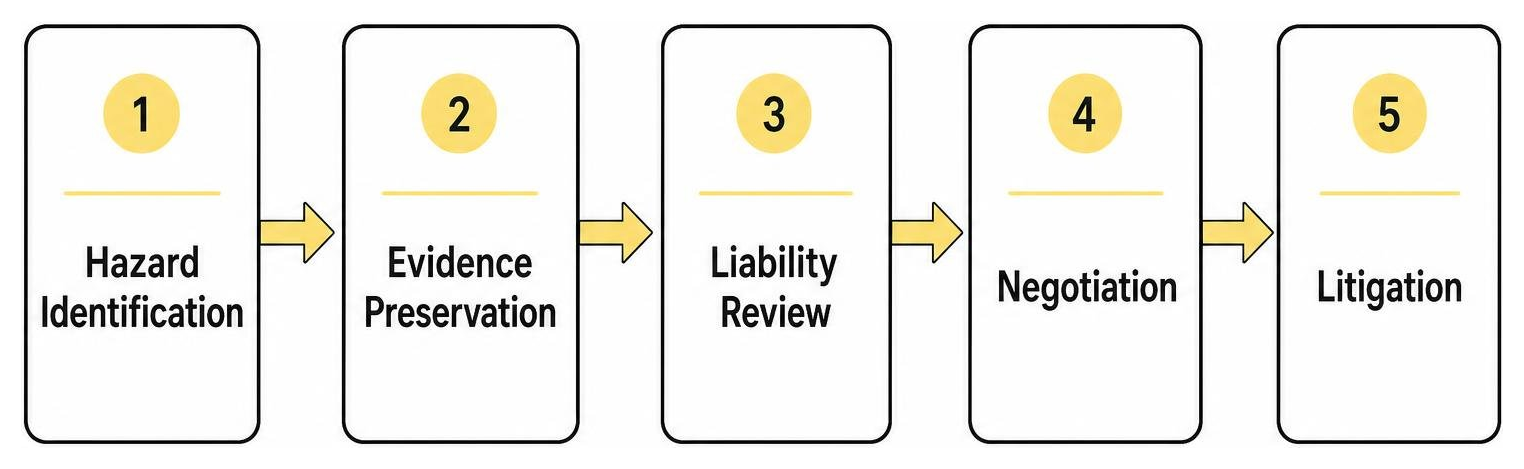
Critical Evidence Collected by Lawyers for Slip and Fall Cases
Evidence can disappear quickly after an accident. Spills are cleaned, cracked tiles are patched, and digital security recordings are routinely overwritten within days or weeks. Dedicated attorneys immediately issue formal spoliation letters to preserve crucial evidence, including:
- Surveillance video: Time-stamped footage showing how the hazard formed, how long it remained unattended, and the exact mechanics of your fall.
- Maintenance and sweep logs: Internal business records detailing when employees last inspected or cleaned the area.
- Official incident reports: Internal company reports filled out immediately after your fall, which often contain candid employee statements.
- Eyewitness testimony: Statements and contact details from customers or employees who saw the hazard or witnessed the incident.
- Detailed medical records: Comprehensive documentation linking your physical trauma directly to the mechanism of the fall.
- Expert analysis: Opinions from safety engineers, floor-traction specialists, and medical professionals who can testify on standard safety codes and long-term prognosis.
Managing Early Insurer Settlement Tactics and Pre-Existing Injuries
Insurance adjusters often contact injured individuals quickly, offering a fast, low settlement check before the true extent of the injuries is known. These early offers rarely account for ongoing physical therapy, missed work, or future surgical needs. Accepting an offer means signing a liability release, permanently barring you from seeking further compensation. Knowing when to hire a slip and fall attorney prevents you from falling into these common insurer traps.
Insurers also attempt to devalue claims by arguing that your pain stems from an older medical issue rather than the fall. However, under the law’s “eggshell skull” doctrine, a negligent property owner is fully responsible for aggravating or worsening a pre-existing condition. Legal counsel gathers prior medical records and works with treating physicians to clearly distinguish pre-existing symptoms from the new trauma and limitations caused by your fall.
Calculating Damages and Understanding Your Potential Case Value
Every fall produces unique financial and personal consequences. Calculating what your claim is worth requires assessing both direct economic losses and non-economic personal impacts. Reviewing past outcomes and evaluating premises liability settlements provides valuable perspective on how different factors influence overall recoveries.
| Damage Category | Examples of Recoverable Losses | Method of Proof |
|---|---|---|
| Economic Damages | Emergency bills, surgeries, rehabilitation, prescription medications, lost wages, diminished earning potential | Invoices, medical bills, pay stubs, tax returns, vocational expert reports |
| Non-Economic Damages | Physical pain, emotional trauma, loss of life enjoyment, permanent physical impairment, disfigurement | Medical testimony, daily pain journals, family statements, psychological evaluations |
Economic and Non-Economic Compensation in Slip and Fall Claims
Economic damages cover the tangible, out-of-pocket financial harm caused by the injury. This includes immediate ambulance transportation, emergency room treatment, diagnostic imaging, physical therapy, future medical care, and all lost income during your recovery.
Non-economic damages address the intangible, deeply personal toll of your injury. A broken hip, torn rotator cuff, or herniated disc causes real physical pain, sleep disruption, loss of mobility, and emotional distress. An attorney quantifies these subjective losses to ensure the full human cost of your accident is recognized.
Key Factors Influencing Settlement Timelines and Case Outcomes
The timeline for resolving a slip and fall claim depends on several distinct factors:
- Reaching Maximum Medical Improvement (MMI): It is critical not to settle until your doctors have fully determined your long-term prognosis and future care requirements.
- Clarity of liability: When video footage or maintenance logs provide indisputable proof of negligence, insurers are far more likely to negotiate reasonably without extended delays.
- Insurance policy limits: The available coverage limits carried by the commercial or residential property owner directly impact total available funds.
- Litigation and trial readiness: If an insurer refuses to make a fair offer, taking the case into formal discovery and trial preparation creates the necessary leverage to secure full value.
Essential Steps to Take After Suffering a Fall on Unsafe Property

The actions you take immediately following a fall play a major role in protecting both your health and your legal rights.
Immediate Actions to Protect Your Health and Future Claim
If you suffer a fall on commercial or residential property, take these vital steps to preserve your claim:
- Seek immediate medical attention: Visit an emergency room, urgent care center, or your primary physician right away. Prompt medical records establish an official link between the fall and your diagnosed injuries.
- Report the accident: Notify the property manager, store supervisor, or landlord immediately. Request that an incident report be created and ask for a copy or the incident reference number.
- Document the exact scene: Use your smartphone to take photos and videos of the hazardous condition from multiple angles, showing puddles, lighting, absence of warning signs, or structural damage.
- Collect witness details: Obtain names, phone numbers, and addresses of any customers, bystanders, or employees who saw the fall or the hazardous condition.
- Preserve your footwear and clothing: Keep the exact shoes and clothing you were wearing in an unwashed, unaltered state, as insurers may inspect them.
- Follow medical instructions and track losses: Attend all follow-up appointments, keep track of out-of-pocket expenses, and review detailed guidance on what to do after a slip and fall accident.
Why Consulting Lawyers for Slip and Fall Cases Immediately Matters
Delays can severely compromise your ability to recover compensation. Critical security footage is frequently erased, accident scenes are altered, and witness memories fade. Furthermore, strict statutory deadlines limit your time to take formal legal action.
Understanding why injured Floridians need an attorney right away ensures your rights remain fully protected from day one, shielding you from aggressive insurance adjusters while your legal team gathers the evidence needed to win your claim.
Frequently Asked Questions About Slip and Fall Claims
How much is my slip and fall case worth?
Case value is determined by the specific circumstances of your accident. Key variables include the severity and permanence of your injuries, total past and future medical expenses, lost wages and earning capacity, and the clarity of the property owner’s negligence. Cases involving traumatic brain injuries, spinal damage, or joint fractures requiring surgery generally result in higher valuations due to extensive medical needs and life-altering impacts.
How long do I have to file a slip and fall lawsuit in Florida?
Under Florida law, most personal injury lawsuits based on negligence must be filed within two years from the date the injury occurred. If your fall occurred on property owned or operated by a government entity—such as a municipal building, public park, or city sidewalk in Largo, Spring Hill, or Trinity—shorter notice requirements and specialized administrative filing deadlines apply. Missing these strict statutory deadlines will permanently bar you from seeking compensation.
What should I do if an insurance company makes a quick settlement offer?
Do not sign any release documents or accept a payment before consulting with an experienced premises liability lawyer. Early settlement offers are designed to close claims for a fraction of their true value before the full extent of your medical complications and future rehabilitation costs become apparent. Once you sign a liability release, you forfeit all rights to seek additional funds, even if your condition worsens or requires surgery later.
Conclusion
A serious slip and fall injury can upend your physical health, your family finances, and your overall peace of mind. You should not have to face corporate insurance adjusters and complex legal procedures on your own while trying to heal.
At Carey Leisure Carney, our board-certified civil trial attorneys bring over 100 years of combined legal experience to every claim we handle across Clearwater, Largo, New Port Richey, Spring Hill, St Petersburg, Trinity, and Wesley Chapel. We provide direct attorney access and personalized, compassionate service from day one. We handle personal injury claims on a contingency-fee basis, meaning you pay no legal fees unless we win your case. If you or a loved one suffered harm due to hazardous property conditions, contact a trusted Clearwater slip and fall attorney today to schedule your free, confidential consultation.