

When to Hire a Slip and Fall Attorney and What to Expect
What a Slip and Fall Attorney Does for Your Claim
When you hire a slip and fall attorney, you get a dedicated legal advocate who takes over the exhausting day-to-day burden of dealing with insurance adjusters, corporate risk managers, and defense counsel. Understanding What is Premises Liability is at the core of what we do. Our job is to evaluate your claim, establish liability, gather critical evidence before it gets destroyed, and maximize your financial recovery.
We step in to perform several essential tasks:
- Evidence preservation: We immediately send formal spoliation letters to the property owner and their insurance carrier demanding the preservation of surveillance video, inspection logs, cleaning records, and maintenance schedules.
- Independent investigation: We inspect the incident location, take precise measurements, examine flooring materials, review local building code compliance, and interview eyewitnesses.
- Medical record management: We compile all medical documentation, track treatment trajectories, and collaborate with your doctors to document the full scope of your injuries.
- Negotiation and litigation: We calculate the true value of your damages and handle all settlement negotiations. If the insurance company refuses to offer a fair payout, we file a formal lawsuit and take your case before a jury.
Slip and Fall Claims vs. General Personal Injury Litigation
While both fall under the broad umbrella of tort law, slip and falls require distinct legal strategies compared to other accident claims. Exploring From Car Crashes to Slip and Falls The A-Z of Personal Injury Cases helps illustrate how different these practice areas can be. Auto collision claims often center on traffic violations and driver behavior, whereas fall claims center on physical land conditions, structural codes, and the owner’s legal notice of the hazard.
| Case Feature | General Personal Injury (e.g., Auto Accidents) | Premises Liability (Slip & Fall Claims) |
|---|---|---|
| Primary Legal Standard | Driver negligence, traffic statutes, right-of-way rules | Duty of care based on visitor status and property hazard notice |
| Key Evidence Needed | Police crash reports, dashcam footage, vehicle telemetry | Maintenance logs, security video, cleaning schedules, building codes |
| Notice Requirement | Rarely involves proving prior knowledge of a hazard | Often requires showing actual or constructive knowledge of the danger |
| Defense Strategies | Disputing speed, road conditions, or vehicle damage | Arguing the hazard was “open and obvious” or that plaintiff was inattentive |
Common Hazards and Property Owner Duties
Property owners and business operators owe their visitors a legal duty to maintain their premises in a reasonably safe condition. When they neglect this duty, serious accidents happen. Understanding What to Do After a Trip and Fall Accident Caused by a Building or Design Defect is especially important when an injury involves structural issues.
Frequent hazards we see include:
- Spilled liquids, tracked-in rainwater, and freshly mopped surfaces left without warning signs
- Uneven flooring, cracked sidewalks, torn carpeting, and missing transition strips
- Broken, loose, or absent stair handrails
- Poorly lit hallways, stairwells, and parking lots
- Potholes and damaged curbs in commercial parking lots
When to Hire a Slip and Fall Attorney After an Injury

You should consider retaining legal counsel immediately after receiving emergency medical care. Our Slip Fall Lawyer Complete Guide outlines how delays can harm your ability to collect compensation. If your fall resulted in broken bones, concussions, spinal trauma, or surgical intervention, hiring a lawyer ensures your long-term medical and financial needs are fully evaluated.
Research highlighted by the Centers for Disease Control and Prevention shows that slip and fall accidents account for over 1 million emergency room visits each year across the United States, making up roughly 25% of all personal injury claims. While over 50% of falls happen at home, incidents occurring on commercial properties and public walkways are far more likely to involve legal action. Retaining an attorney can increase the likelihood of securing financial recovery by up to three times compared to attempting self-representation.
Immediate Actions Following a Property Accident
Taking proper steps right after an accident strengthens your claim. Following the recommendations in What to Do After a Slip and Fall Accident protects your physical health and preserves essential evidence:
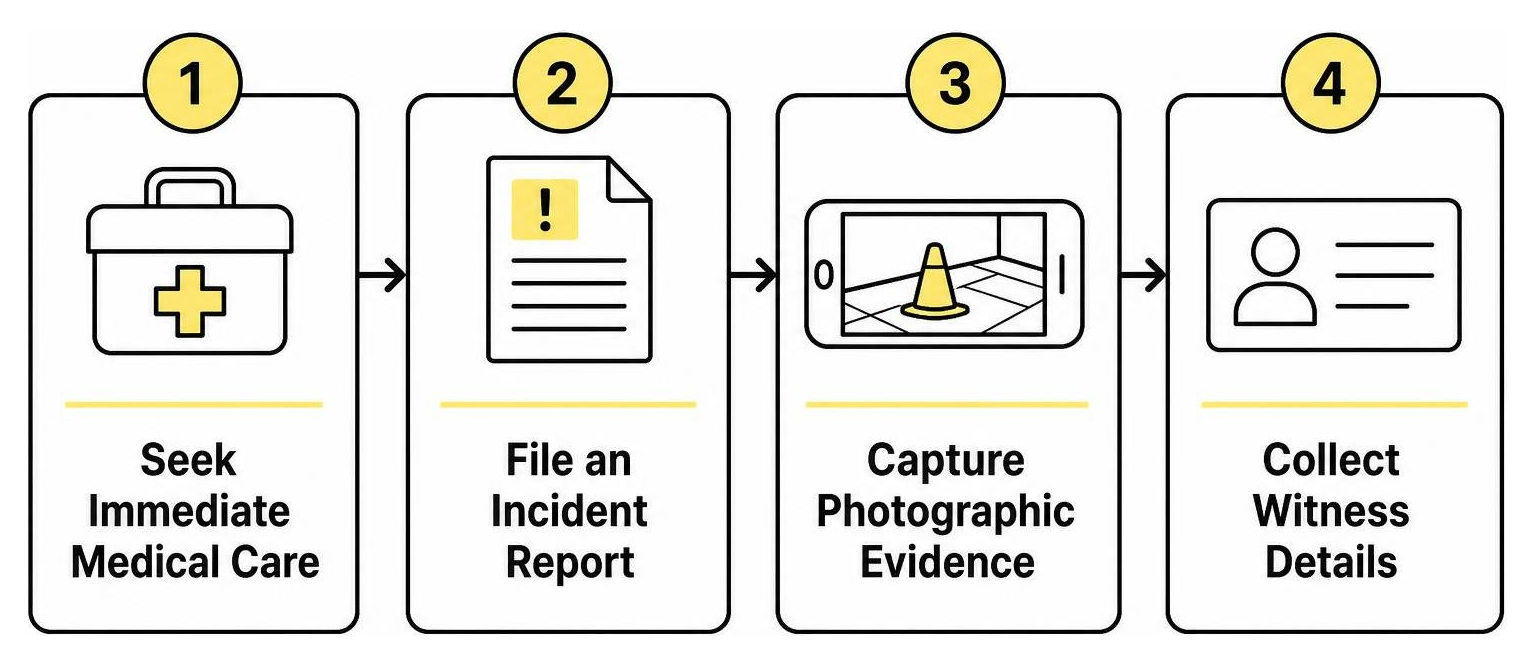
- Seek immediate medical treatment: Go to an emergency room or urgent care center even if your symptoms seem minor. Adrenaline can mask severe soft-tissue or internal trauma.
- File an incident report: Notify the property manager or store owner before leaving. Request a physical or digital copy of their incident report.
- Capture photographic evidence: Take clear pictures and videos of the hazard from multiple angles, the surrounding area, lighting conditions, and any lack of warning signs.
- Collect witness details: Get names, phone numbers, and statements from anyone who saw your fall or noticed the hazard beforehand.
- Preserve your footwear and clothing: Do not wash or wear the shoes and clothes you had on during the fall; store them in a secure place as physical evidence.
Complex Scenarios Requiring Representation
Certain fall claims involve intricate legal issues that make self-representation particularly risky. Reviewing A Guide to Torts Law and Premises Liability reveals how nuanced these disputes become.
Complex situations include:
- Commercial and leased properties: Accidents at shopping malls or retail plazas often involve disputes between the property owner, a commercial tenant, and third-party janitorial contractors over who was responsible for maintaining the floor.
- Government or municipal properties: Falls on city sidewalks or government buildings have strict notice requirements and shortened filing windows.
- Disputed liability: When an insurer argues that the spill just occurred seconds before your fall or that you were looking at your phone, you need a lawyer who knows how to subpoena internal records and prove constructive knowledge.
Proving Fault and Recovering Financial Compensation
To successfully recover compensation in a fall claim under Florida Premises Liability law, you must prove four core elements:
- Duty of care: The property owner owed you a legal duty to keep the premises safe.
- Breach of duty: The owner knew or should have known about the dangerous condition and failed to fix it or give a proper warning.
- Causation: The dangerous condition directly caused your fall and subsequent injuries.
- Damages: You suffered measurable physical, financial, or emotional harm as a result.
Types of Recoverable Damages
Victims of serious fall accidents can pursue both economic and non-economic damages:
- Past and future medical expenses: Emergency care, surgeries, hospital stays, physical therapy, medications, and anticipated long-term care.
- Lost income and diminished earning capacity: Wages lost while recovering, as well as compensation if your injuries permanently reduce your ability to work.
- Pain and suffering: Physical discomfort, physical limitations, emotional distress, and loss of enjoyment of life.
- Property damage: Reimbursement for personal items damaged during the fall, such as broken smartphones, glasses, or watches.
Navigating Florida Comparative Fault Rules
Florida operates under a modified comparative fault system with a 51% bar rule. Under this statute, an injured person can recover damages only if they are found to be 50% or less at fault for the accident. If a jury finds you 51% or more responsible for your fall—such as arguing you ignored clear barricades or walked into an off-limits area—you are barred from recovering any compensation.
If you are assigned a partial percentage of fault under 51%, your final award is reduced proportionately. For example, if your total damages equal $100,000 but you are found 20% at fault for wearing inappropriate footwear, your recovery will be $80,000. Insurance adjusters frequently try to shift blame onto victims to cross that 51% threshold, making seasoned legal representation essential.
Legal Fees, Deadlines, and Finding Representation

Navigating a legal claim can feel daunting, but finding the right help should not add financial stress. Our Best Slip Fall Attorneys Guide provides helpful insight into selecting qualified legal counsel. Reputable personal injury law firms work on a contingency fee basis, meaning you pay nothing upfront and owe no attorney fees unless your case is successfully resolved through a settlement or verdict.
Florida Statute of Limitations and Filing Deadlines
Timing is critical. In Florida, the statute of limitations for most personal injury lawsuits based on negligence is generally two years from the date of the incident. Missing this deadline means losing your legal right to pursue compensation in court forever. Additionally, critical security camera footage is often overwritten within 14 to 30 days, so acting quickly is vital to protect your claim.
How to Choose the Right Slip and Fall Attorney
When searching for legal representation, look for the following qualifications:
- Board Certification: Only the top 2% of attorneys in Florida earn Board Certification in Civil Trial Law, recognizing specialized trial expertise and ethical standards.
- Proven trial record: Insurance carriers know which attorneys settle quickly and which ones are ready to take cases to trial.
- Direct attorney communication: Ensure you will have direct access to your lawyer, not just case managers or paralegals.
- Local knowledge: A firm with roots across Florida communities—including Clearwater, Largo, New Port Richey, Spring Hill, St Petersburg, Trinity, and Wesley Chapel—understands local court procedures and regional defense firms.
Frequently Asked Questions About Slip and Fall Accidents
How much does it cost to hire an attorney for a fall claim?
Most fall attorneys work on a contingency fee structure. You pay zero upfront costs or hourly rates. The legal fee is a pre-agreed percentage paid directly from the settlement or court verdict only when your case is won.
What is the average settlement value for a slip and fall injury?
Average fall settlements typically range from $10,000 to $50,000 for moderate injuries, while severe claims involving fractures, spinal damage, or surgery can exceed $100,000 to several hundred thousand dollars, depending on available insurance policy limits and total financial losses.
How long do I have to file a premises liability lawsuit in Florida?
Under current Florida law, you generally have two years from the date of your fall to file a lawsuit. However, claims against municipal or government bodies often have much shorter administrative notice requirements, making early consultation crucial.
Conclusion
A sudden slip and fall can disrupt your physical health, financial stability, and everyday life. Property owners and their insurance carriers move quickly to protect themselves, and you deserve a dedicated legal advocate who will do the same for you. At Carey Leisure Carney, our Board-Certified trial attorneys bring over 100 years of combined experience to every case, providing personalized attention and direct access from start to finish.
If you or a loved one was injured on another person’s property, contact a trusted Slip and Fall Attorney St Petersburg FL at Carey Leisure Carney today for a free, confidential case evaluation. We proudly assist clients across Clearwater, Largo, New Port Richey, Spring Hill, St Petersburg, Trinity, and Wesley Chapel, Florida. Let us protect your rights and help you pursue the compensation you deserve.