
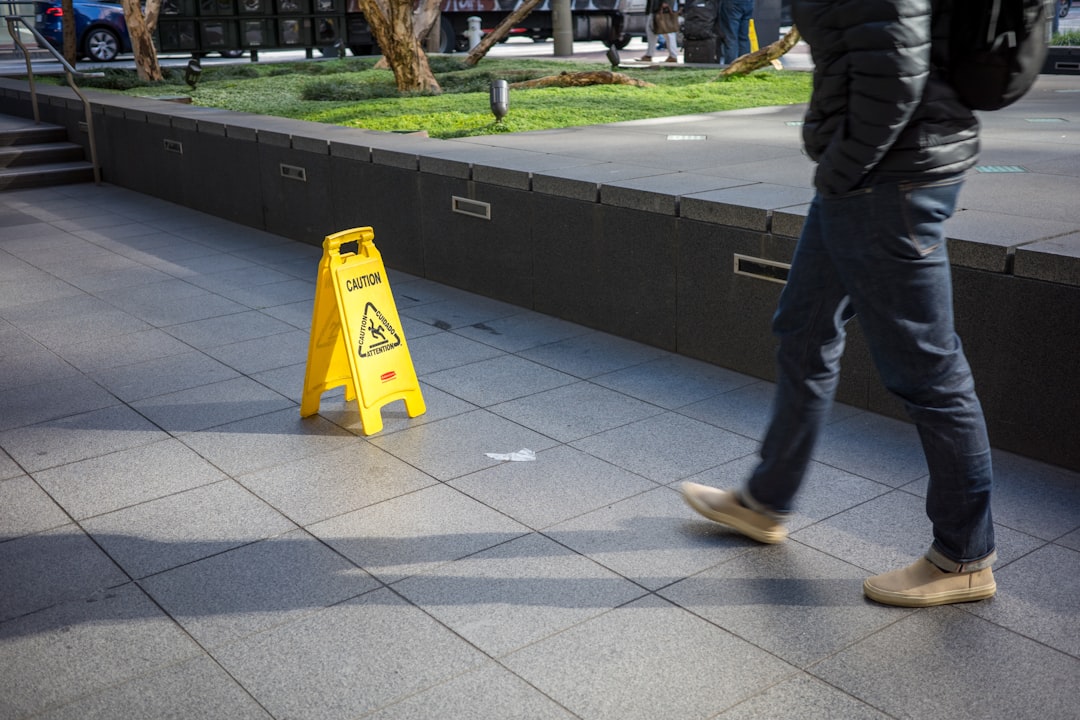
Slip and Fall Lawyer: Stress-Free Hiring 2025
Understanding Your Situation After a Fall
Finding the right slip and fall lawyer can feel overwhelming when you’re already dealing with injuries, medical bills, and lost income. The good news is that experienced attorneys handle these cases on a contingency fee basis, meaning you pay nothing unless they win your case.
Key Steps to Hire a Slip and Fall Lawyer:
- Seek immediate medical attention and document your injuries
- Gather evidence at the accident scene (photos, witness info)
- Look for attorneys with premises liability experience and board certification
- Schedule free consultations to discuss your case
- Choose a lawyer who communicates clearly and works on contingency
Slip and fall accidents affect millions of Canadians and Americans every year. These incidents happen when someone slips on a wet surface, trips over an obstacle, or falls due to unsafe property conditions. Property owners have a legal duty to maintain reasonably safe premises for visitors.
Common slip and fall accidents occur in:
- Grocery stores and retail locations
- Restaurants and hotels
- Office buildings and hospitals
- Public sidewalks and parking lots
- Private homes and apartment complexes
Serious injuries from these accidents can include broken bones, spinal cord damage, traumatic brain injuries, and hip fractures. The medical costs and lost wages can quickly pile up, making legal help essential for fair compensation.
You don’t have to steer this complex process alone. The right premises liability attorney will investigate your case, deal with insurance companies, and fight for maximum compensation while you focus on recovery.
Step 1: Know the Basics of Premises Liability Law
Think of premises liability law as the legal framework that says “property owners need to keep their places safe for visitors.” It’s really that straightforward. When you’re injured in a slip and fall accident, this area of law is what gives you the right to seek compensation from negligent property owners.
Every property owner has what’s called a “duty of care” toward people who visit their property. This isn’t about creating a bubble-wrapped world where accidents never happen. Instead, it means taking reasonable steps to prevent foreseeable dangers that could hurt someone.
The heart of most slip and fall lawyer cases comes down to proving negligence. Was the property owner careless in maintaining their property? Did they ignore a dangerous condition they knew about? Duty of care means they had a legal obligation to address hazards, and when they don’t, people get hurt.
Here’s where “foreseeable risk” comes into play. Property owners are expected to anticipate problems that could reasonably happen. That grocery store owner should know that produce sometimes falls on the floor and creates a slipping hazard. A restaurant manager should expect that spills will occur in the dining area. When they fail to address these predictable risks, they’re being negligent.
Your legal rights also depend on why you were on the property in the first place. Florida law recognizes three types of visitors:
Invitees get the highest level of protection. These are customers in stores, patients in medical offices, or anyone invited onto property for the owner’s business benefit. Property owners must actively inspect for dangers and either fix them or warn about them.
Licensees are social guests or others there for their own purposes. Property owners must warn them about known hazards but don’t have to go hunting for problems.
Trespassers generally can’t expect much protection, though property owners still can’t intentionally harm them.
Weather conditions like rain don’t give property owners a free pass. They can’t control Mother Nature, but they’re still expected to deal with the hazards weather creates. Indoor areas that get wet from rain need mats or warning signs. Outdoor walkways might need better drainage or non-slip surfaces.
There’s also an important difference between accidents on private property versus municipal property owned by the city or county. Government entities often have special rules and much shorter deadlines for filing claims. Some require notice within just 10 days of your accident.
Florida’s comparative negligence law means that even if you share some blame for your accident, you can still recover compensation. Your award gets reduced by your percentage of fault, but you’re not completely shut out like in some other states.

What are the legal responsibilities of property owners?
Property owners can’t guarantee that accidents will never happen on their property. What they must do is take reasonable safety precautions to prevent foreseeable injuries. Think of it as basic common sense backed up by legal requirements.
Routine inspections are a big part of this responsibility. A busy grocery store should check their aisles multiple times per day for spills or fallen merchandise. A quiet office building might get away with less frequent inspections, but they still need to look for problems regularly.
When property owners find hazards they can’t fix immediately, they must put up warning signs. That “Wet Floor” sign isn’t just a suggestion – it’s often a legal requirement. The signs need to be visible and clear enough that a reasonable person would notice and understand the danger.
Proving negligence in your case means showing four key things happened. First, the property owner owed you a duty of care based on why you were there. Second, they breached that duty by failing to maintain safe conditions or warn about dangers. Third, their failure directly caused your injury. Finally, you suffered real damages like medical bills or lost wages.
Our experience with Premises Liability cases helps us build strong arguments showing exactly how property owners failed in their responsibilities to keep you safe.
How does your own fault affect the claim?
Many people worry that they might have contributed to their own accident. “Was I walking too fast? Should I have been more careful? Will this ruin my case?” These are natural concerns, but they don’t necessarily destroy your claim.
The old contributory negligence rule was harsh – if you were even slightly at fault, you got nothing. Thankfully, Florida uses a much fairer system called comparative fault.
Here’s how Florida’s comparative fault rule works in practice. Let’s say the court decides the property owner was 80% responsible for your slip and fall because they ignored a leaky pipe that created a puddle. But you were 20% at fault because you were texting while walking and not paying attention to where you stepped.
Under Florida law, you’d still recover compensation, but it would be reduced by your percentage of fault. If your total damages were $50,000, you’d receive $40,000 (80% of the total). It’s not perfect, but it’s far better than getting nothing at all.
The importance of evidence becomes crystal clear when comparative fault is involved. Insurance companies love to shift blame onto injured people to reduce what they have to pay. They’ll argue you were wearing inappropriate shoes, walking too fast, or not paying attention.
That’s exactly why having an experienced legal team matters so much. We know how to gather evidence that shows the property owner’s primary responsibility for your accident while minimizing any unfair blame placed on you.
Step 2: Take Immediate Action and Gather Crucial Evidence
The moments after you hit the ground can feel like a blur of pain and confusion. Your heart is racing, you might be embarrassed, and all you want to do is get up and pretend nothing happened. But here’s the thing – these first few minutes are absolutely crucial for protecting both your health and your legal rights.

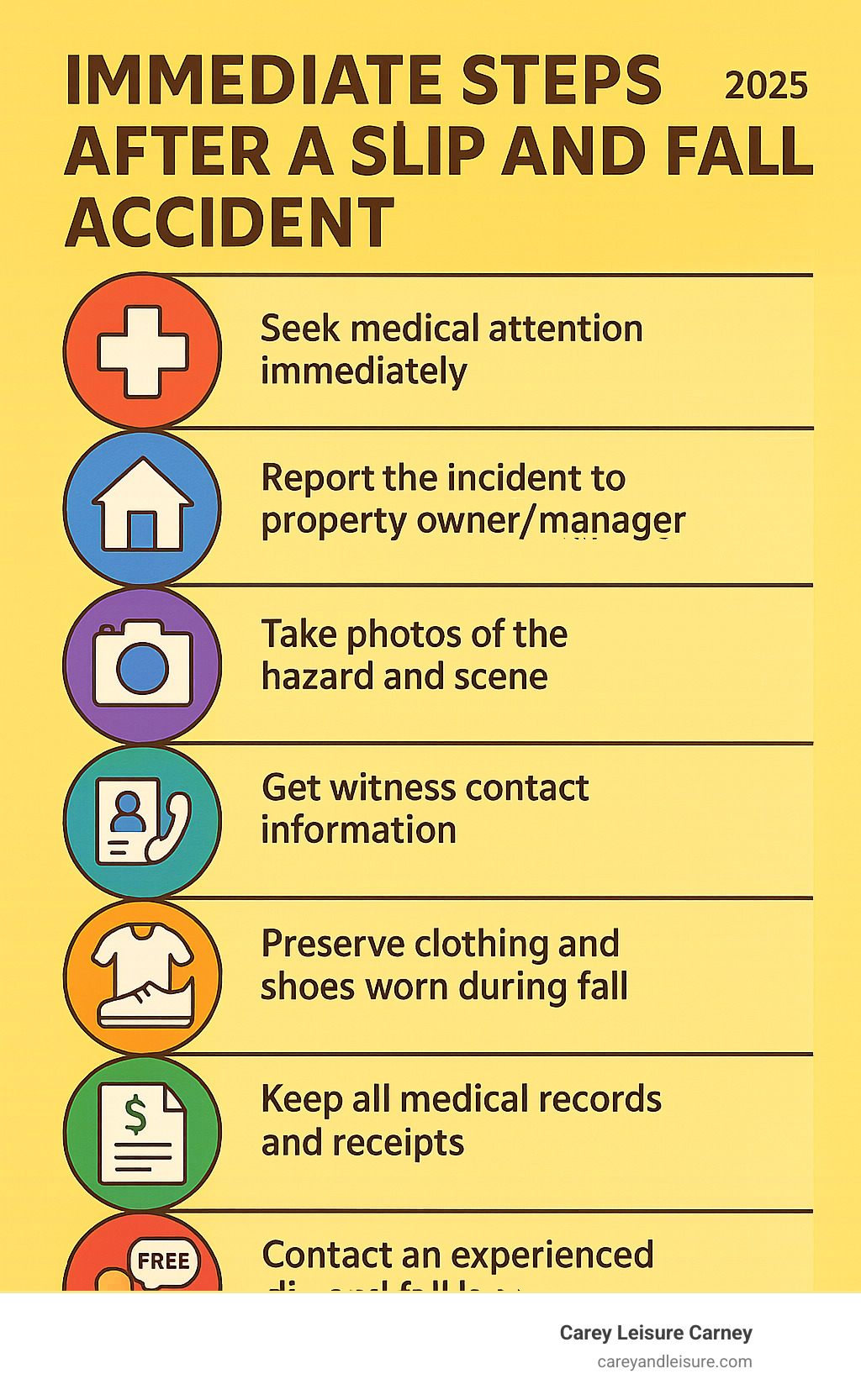
Seek medical attention immediately, even if you feel okay. I know, I know – you might be thinking “I’m fine, it’s just a bruise.” But here’s what many people don’t realize: serious injuries like concussions, spinal damage, or internal bleeding often don’t show symptoms right away. Your adrenaline is pumping, masking pain that will surface later.
Getting medical care does two important things. First, it protects your health by catching injuries early. Second, it creates an official medical record that directly links your injuries to the fall. This documentation becomes vital evidence for your slip and fall lawyer later on.
Report the incident to whoever is in charge – the store manager, building supervisor, or property owner. Be polite but firm about getting an official incident report filed. Ask for a copy of this report, and don’t leave without it. When describing what happened, keep it simple and factual. You fell, you were injured, period. Avoid detailed explanations about how the accident occurred, and definitely don’t sign anything from an insurance company without legal representation.
Now comes the detective work. If you’re physically able, document everything with your phone camera. Take photos and videos of the exact spot where you fell, the hazard that caused your fall (that puddle, broken tile, or patch of ice), and the surrounding area. Capture any warning signs – or more importantly, the lack of warning signs. Don’t forget to photograph your visible injuries too.
Look for witnesses who saw your fall happen. People are usually willing to help, especially when they see someone get hurt. Get their names, phone numbers, and email addresses. Their testimony can make or break your case, providing an independent account of what really happened.
Finally, preserve your evidence. Those shoes you were wearing? That torn clothing? Don’t clean them or throw them away. Put everything in a bag and store it safely. These items might contain crucial clues about what caused your fall. For a complete step-by-step guide, check out our detailed resource on What to do After a Slip and Fall Accident.
What evidence do you need to prove your case?
Building a winning slip and fall case is like putting together a puzzle – you need all the right pieces to see the complete picture. The evidence you collect will either strengthen your case or leave gaps that insurance companies will exploit to deny your claim.
Photographs and videos are your most powerful weapons. They capture the scene exactly as it was when you fell, freezing that moment in time before anyone can clean up, fix, or alter the hazardous condition. Take wide shots showing the overall area, close-ups of the specific hazard, and everything in between.
Medical records tell the story of your injuries and recovery. This includes emergency room reports, doctor’s notes, X-rays, MRI results, prescription records, and physical therapy documentation. These records prove the extent of your injuries and connect them directly to your fall.
Incident reports filed by the property owner or manager provide official documentation of your accident. These reports often contain admissions about the hazardous condition or lack of proper maintenance that led to your fall.
Witness statements offer independent verification of what happened. These third-party accounts can corroborate your version of events and sometimes reveal details you might have missed while dealing with your injuries.
Maintenance logs and inspection records can be goldmines of evidence. They show whether the property owner had proper safety procedures in place and whether they followed them. Missing records or gaps in maintenance can point directly to negligence.
Surveillance footage provides the ultimate proof – actual video of your accident happening. However, this footage is often deleted quickly, which is why contacting a lawyer immediately is so important.
Your personal notes about the accident, including the date, time, weather conditions, and conversations with property staff, help preserve important details that might fade from memory over time.
What are the deadlines for filing a claim in Florida?
Time is not on your side when it comes to slip and fall claims. Florida law sets strict deadlines called statutes of limitations, and missing these deadlines can completely destroy your case, no matter how strong it might be.
For most slip and fall accidents in Florida, you have four years from the date of your accident to file a lawsuit. That might sound like plenty of time, but don’t let it fool you. Evidence disappears, witnesses move away or forget details, and surveillance footage gets deleted – sometimes within just 30 days.
Claims against government entities operate under much tighter rules. If you fell on a sidewalk, in a government building, or on any property owned by the city, county, or state, you might need to provide written notice within six months of your accident. Miss this deadline, and you could lose your right to compensation entirely.
Wrongful death cases have even shorter time limits. If a loved one died from injuries sustained in a slip and fall accident, you typically have just two years from the date of death to file a claim.
The bottom line? Don’t wait. While you’re recovering from your injuries and dealing with medical bills, evidence is disappearing and deadlines are approaching. The sooner you contact an experienced slip and fall lawyer, the better your chances of building a strong case and securing the compensation you deserve.
Step 3: Evaluating and Choosing the Right Slip and Fall Lawyer
Choosing the right slip and fall lawyer feels a lot like finding the perfect doctor when you’re hurt – you want someone who truly understands your situation and will fight for your recovery. After all, you’re already dealing with pain, medical bills, and possibly lost wages. The last thing you need is an attorney who doesn’t have your back.
When you start your search, focus on finding a law firm with deep experience in personal injury cases, especially slip and fall claims. These cases aren’t as straightforward as they might seem. Property owners and their insurance companies have teams of lawyers working to minimize what they pay out. You need someone who knows their playbook inside and out.
At Carey Leisure Carney, our attorneys bring over 100 years of combined experience to the table. We’ve seen every trick in the book, and we know how to counter them effectively. But experience alone isn’t enough – you also want to look for Board Certification.
Here’s something that might surprise you: less than two percent of Florida attorneys are Board Certified in their specific field. Think of it like finding a doctor who’s not just licensed to practice medicine, but who’s also board certified in exactly the specialty you need. Our firm proudly has Board-Certified attorneys who’ve met the most rigorous standards for expertise, professionalism, and ethics in personal injury law.
Don’t just take our word for it, though. Look at case results and read what real clients say about their experiences. While we can’t promise identical outcomes (every case is unique), past results show you what a firm is capable of achieving. Client testimonials reveal something equally important – how you’ll be treated throughout the process.
The best part? Most reputable personal injury firms, including ours, offer a free consultation. This means you can sit down with an experienced attorney, discuss your case, and get honest answers about your legal options without spending a dime. We also work on a contingency fee basis, which means you pay no attorney’s fees unless we win your case. This isn’t just convenient – it aligns our interests with yours completely.

What questions should you ask a potential slip and fall lawyer?
Your free consultation is like a job interview – except you’re the one doing the hiring. Come prepared with questions that help you understand not just their legal skills, but how they’ll treat you as a person going through a difficult time.
Start with the basics: “How much experience do you have with slip and fall cases specifically?” You want someone who handles these claims regularly, not just occasionally. General personal injury experience is good, but specialized knowledge of premises liability law is what you really need.
Ask about their track record with cases similar to yours. While they can’t guarantee identical results, their history gives you insight into their capabilities and approach. Don’t be shy about asking for specific examples of successful settlements or verdicts.
Communication is crucial, so find out how they’ll keep you informed. Will you have direct access to your attorney, or will you primarily work with paralegals and assistants? At our firm, we believe in direct attorney access because your case deserves personal attention from the lawyer handling it.
Make sure you understand their fee structure completely. Confirm they work on contingency and ask about any potential costs that might come out of your settlement, such as investigation expenses or expert witness fees. There shouldn’t be any surprises down the road.
Ask about their strategy for your specific case. How will they investigate what happened? What’s their approach to dealing with insurance companies? Are they prepared to take your case to trial if necessary?
Finally, inquire about their timeline expectations. While no attorney can predict exactly how long your case will take, an experienced lawyer should give you a realistic range based on similar cases they’ve handled.
Why is specialization in personal injury important for your slip and fall lawyer?
Think about it this way: if you needed heart surgery, you wouldn’t go to a general practitioner. You’d want a cardiac surgeon who performs that specific procedure day in and day out. The same principle applies when choosing your slip and fall lawyer.
Premises liability laws are incredibly complex, with nuances that vary not just from state to state, but sometimes from county to county within Florida. A specialized attorney understands these intricacies completely. They know exactly what duty of care different property owners owe to various types of visitors, and they can spot violations that a general practitioner might miss.
Insurance companies aren’t on your side – they’re businesses focused on protecting their profits. They have experienced adjusters and lawyers whose full-time job is minimizing payouts. These professionals use sophisticated tactics to reduce settlements or deny claims entirely. A specialized Premises Liability Attorney knows these tactics intimately and can counter them effectively.
Trial experience matters more than you might think. While most personal injury cases settle out of court, insurance companies pay closer attention when they know your lawyer isn’t afraid of the courtroom. They’re more likely to offer fair settlements when they respect your attorney’s trial skills and track record.
Perhaps most importantly, specialized firms have established networks of expert witnesses. We work with medical professionals who can accurately document your injuries and prognosis, economic experts who calculate your future lost wages and medical costs, and vocational rehabilitation specialists who determine how your injuries affect your earning capacity. When needed, we also bring in accident reconstruction experts and safety engineers who can definitively establish how your accident occurred and who was responsible.
This specialized knowledge and network of resources gives your case the strongest possible foundation – something that general practitioners simply can’t match.
Step 4: Navigating the Claim Process with Your Attorney
Once you’ve chosen your slip and fall lawyer, you can breathe a little easier. You’re no longer handling this complex process alone. We become your guide, advocate, and shield throughout the entire journey, from the first investigation to that final settlement check.
The process starts with a comprehensive initial investigation. Think of us as detectives building your case from the ground up. We gather all the evidence we discussed earlier – those crucial photos, witness statements, medical records, and incident reports. We also send preservation letters to property owners and their insurance companies, legally requiring them to save important evidence like surveillance footage that might otherwise be deleted.
After we’ve painted a clear picture of what happened and documented your injuries, we prepare a demand letter. This isn’t just a simple request – it’s a detailed legal document that tells your story, explains the property owner’s negligence, outlines every way you’ve been harmed, and demands fair compensation. It’s often the first time the insurance company truly understands the strength of your case.
This typically kicks off settlement negotiations. Here’s where things get interesting (and sometimes frustrating). The insurance adjuster will review everything and almost certainly come back with a lowball offer. It’s like a chess game, except the stakes are your financial future. This is where having an experienced slip and fall lawyer makes all the difference – we know their moves before they make them.
If negotiations stall or the insurance company refuses to be reasonable, we move to the litigation process. Filing a lawsuit often gets their attention quickly. Most cases still settle even after litigation begins, but now they know we’re serious about taking them to trial if necessary. The process involves findy (where both sides exchange information), depositions (formal interviews under oath), and sometimes mediation with a neutral third party.
While the thought of going to trial might feel intimidating, we’re fully prepared for that possibility. Sometimes it’s the only way to get the justice you deserve.
What compensation can you recover?
When we talk about compensation in slip and fall cases, we’re really talking about putting your life back together financially. The law recognizes two main types of damages, and understanding both helps you see the full picture of what you might recover.
Economic damages are the easier ones to calculate because they have actual dollar amounts attached. Your medical bills – both what you’ve already paid and what doctors expect you’ll need in the future – form the foundation of your claim. This includes everything from that initial emergency room visit to ongoing physical therapy, medications, and any medical equipment you need.
Lost wages cover the income you’ve missed while recovering. But it goes deeper than that. If your injuries prevent you from returning to your old job or limit your earning potential, we calculate that loss of earning capacity too. We might work with vocational experts to determine how your injuries affect your career prospects.
Don’t forget those out-of-pocket expenses that add up quickly – transportation to medical appointments, modifications to your home, or hiring help with tasks you can no longer do yourself.
Non-economic damages are harder to put a price tag on, but they’re just as real. Pain and suffering isn’t just about physical discomfort – it includes the emotional distress, anxiety, and mental anguish that often follow a serious accident. If you can no longer enjoy activities that once brought you joy, that’s loss of enjoyment of life. Visible scars or other permanent changes to your appearance also deserve compensation.
Every case is unique, and the compensation reflects your specific situation. Our team at Slip and Fall Attorney Clearwater FL works carefully to identify every way your accident has impacted your life, ensuring nothing is overlooked.
How does a lawyer handle the insurance company?
Let’s be honest – insurance companies aren’t on your side, no matter how friendly their commercials seem. Their job is to pay out as little as possible while still closing your claim. They have teams of adjusters, investigators, and lawyers whose entire focus is protecting their company’s bottom line.
They’ll try every trick in the book. They might suggest your injuries aren’t as serious as you claim, or that you had those problems before the accident. They love to shift blame onto you – maybe you weren’t watching where you were going, or your shoes weren’t appropriate for the conditions. They’ll often make a quick, low settlement offer hoping you’ll grab it out of desperation or simply not knowing any better.
This is exactly why you need an experienced slip and fall lawyer fighting for you. We become your protective barrier against these tactics. We handle all communication with the insurance company, so you never have to worry about accidentally saying something that could hurt your case. Those recorded statements they want? We advise against giving them without us present.
We calculate your case’s true value by working with medical experts, economists, and other professionals who can accurately assess both your current damages and future needs. This isn’t guesswork – it’s a comprehensive analysis of how this accident will affect your entire life.
When it comes to negotiating a fair settlement, we bring decades of experience to the table. We know which insurance companies tend to be reasonable and which ones need more pressure. We understand their internal processes and can often predict their next moves.
Most importantly, we’re prepared to file a lawsuit if they won’t negotiate fairly. Insurance companies know which law firms actually go to trial and which ones just talk about it. Our reputation for being willing to take cases all the way to court often encourages more reasonable settlement offers.
You shouldn’t have to fight this battle alone, especially while you’re trying to heal from your injuries. Let us handle the insurance company while you focus on getting better.
Frequently Asked Questions about Slip and Fall Claims
What if I fell at a friend’s house?
We understand this situation feels awkward. Nobody wants to think about “suing” someone they care about, especially over an accident. But here’s what many people don’t realize: you’re not actually suing your friend personally.
When you file a claim after falling at a friend’s house, you’re typically dealing with their homeowner’s insurance company, not asking your friend to pay out of their own pocket. Most homeowner’s insurance policies include liability coverage specifically designed to handle accidents that happen on the property.
The premises liability principles we discussed earlier still apply, even in a friend’s home. If your friend knew about a dangerous condition (like a loose step or spilled water) and didn’t warn you or fix it, their insurance should cover your medical bills and other damages.
Yes, filing a claim might affect your friend’s insurance rates, but good friends understand that serious injuries require serious medical care – and that care costs money. Your friend would likely feel terrible knowing you were struggling with medical bills from an accident on their property when insurance coverage was available to help.
Our team handles these delicate situations with extra care and professionalism, helping preserve relationships while ensuring you get the medical care and compensation you need.
How much is the average slip and fall case worth?
This is the question everyone wants answered, and we wish we could give you a simple number. The truth is, there’s no such thing as an “average” slip and fall case value because every situation is completely different.
The severity of your injuries plays the biggest role in determining your case’s worth. A minor sprain that heals in a few weeks will result in a much smaller settlement than a broken hip requiring surgery and months of physical therapy. Catastrophic injuries like spinal cord damage or traumatic brain injuries can lead to settlements in the millions due to lifetime medical needs and lost earning capacity.
Your medical costs – both past and future – heavily influence the value. This includes everything from emergency room visits and surgeries to ongoing physical therapy and prescription medications. If your injuries require long-term care or assistive devices, these costs add up quickly.
The level of negligence also matters significantly. A case where the property owner clearly knew about a dangerous condition and ignored it will typically be worth more than a situation where fault is disputed.
How the injury affects your life beyond medical bills is crucial too. Can you still work? Enjoy hobbies? Take care of your family? These non-economic damages for pain, suffering, and lost quality of life can be substantial.
Other factors include your lost wages, whether you bear any fault for the accident, and even the insurance policy limits available. An experienced slip and fall lawyer carefully evaluates all these unique aspects of your situation to determine what your case is truly worth.
How long does a slip and fall lawsuit take?
Another question without a one-size-fits-all answer. The timeline for your case depends on several moving parts, and patience can be challenging when you’re dealing with injuries and mounting bills.
Simple cases with minor injuries and clear liability sometimes resolve within a few months. If your injuries are straightforward, the property owner’s fault is obvious, and the insurance company acts reasonably, negotiations can move quickly.
Most cases take one to two years to fully resolve. This might seem long, but there are good reasons for this timeline. You need time to complete medical treatment and understand the full extent of your injuries. We need time to gather evidence, review maintenance records, and build the strongest possible case. Insurance companies often need multiple rounds of negotiation before offering fair compensation.
Complex cases involving severe injuries or disputed fault can take several years, especially if they go to trial. Cases with catastrophic injuries require extensive documentation of future medical needs and lost earning capacity. Multiple parties or unclear liability can also extend the timeline.
Several factors affect how long your case takes: reaching maximum medical improvement is crucial because we need to understand your full recovery before finalizing any settlement. The insurance company’s cooperation varies widely – some negotiate in good faith while others drag their feet hoping you’ll accept less. Court schedules can also create delays if we need to file a lawsuit.
While waiting is frustrating, rushing often means leaving money on the table. Our team works diligently to move your case forward efficiently while ensuring we don’t miss any opportunities to maximize your compensation. We keep you informed throughout the process so you always know where things stand.
Conclusion: Take the First Step Towards Your Recovery
After a slip and fall accident, the path to recovery can feel like navigating a maze blindfolded. You’re dealing with pain, medical appointments, lost income, and insurance companies that seem more interested in protecting their profits than helping you heal. The good news? You don’t have to walk this difficult journey alone.
Throughout this guide, we’ve covered the essential steps: understanding premises liability law, gathering crucial evidence, finding the right legal representation, and navigating the claims process. Each step builds on the last, creating a strong foundation for your case and your recovery.
The most important thing to remember is that time matters. Evidence disappears, witnesses forget details, and Florida’s statute of limitations won’t wait for you to feel ready. But taking action doesn’t mean you have to figure everything out on your own.
At Carey Leisure Carney, we’ve built our practice around one simple belief: when someone’s negligence turns your life upside down, you deserve more than just legal representation—you deserve a team that truly cares about your recovery. Our Board-Certified attorneys represent less than two percent of all Florida lawyers, bringing over 100 years of combined experience to every case we handle.
What sets us apart isn’t just our credentials or track record. It’s our commitment to personalized service and direct attorney access. When you call, you’re not shuffled between paralegals or junior associates. You work directly with experienced attorneys who understand both the law and the human side of what you’re going through.
We serve families throughout Clearwater, Largo, New Port Richey, Spring Hill, St. Petersburg, Trinity, and Wesley Chapel. Every consultation is completely free, and we work on a contingency fee basis—meaning you pay nothing unless we win your case. This removes the financial barrier that might otherwise prevent you from getting the help you need.
Your slip and fall lawyer should handle the legal complexities while you focus on what matters most: your health and getting your life back on track. We deal with insurance companies, gather evidence, consult with medical experts, and fight for every dollar you deserve.
The hardest part is often just picking up the phone. But once you do, you’ll have a team of dedicated professionals working tirelessly on your behalf. Don’t let uncertainty or fear keep you from seeking the compensation that can help rebuild your life.
Take that first step toward recovery today. Contact a catastrophic injury attorney for a free consultation and find how we can help you move forward with confidence and peace of mind.