
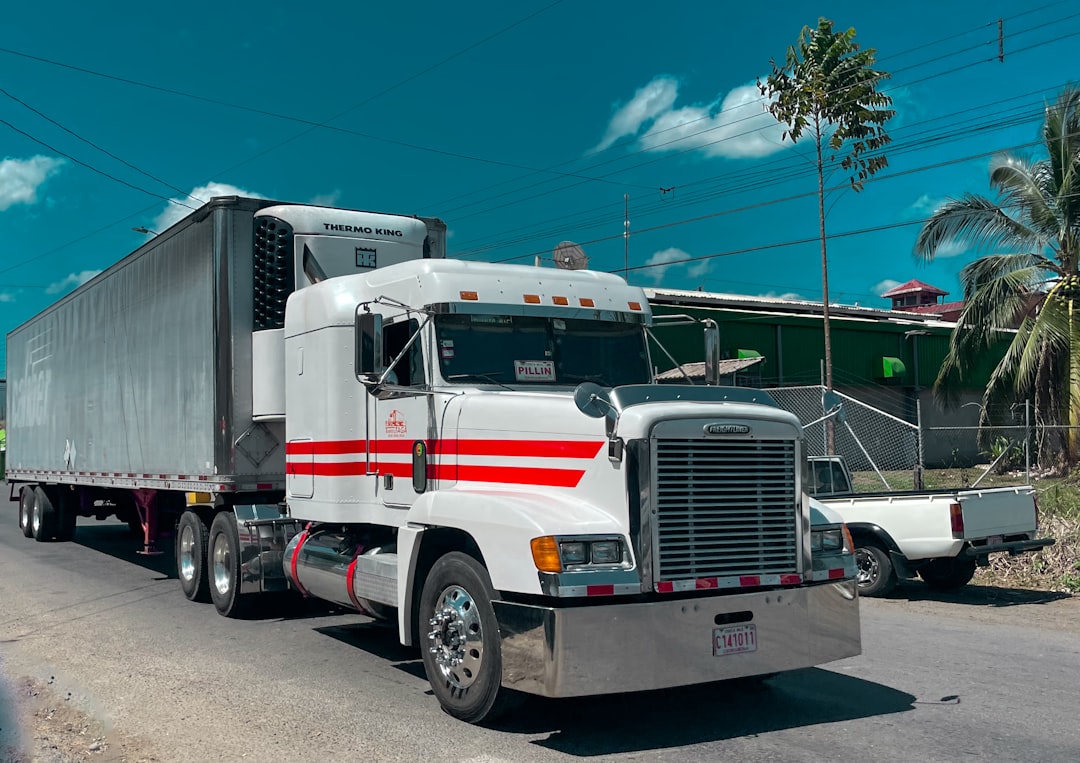
From Crash to Cash: Understanding Your Commercial Vehicle Accident Settlement
When a Commercial Vehicle Crash Turns Into a Lawsuit: What You Need to Know
A commercial vehicle accident lawsuit is a legal claim filed by an injury victim against a trucking company, driver, freight broker, or other at-fault party after a crash involving a semi-truck, delivery van, bus, or other company vehicle.
Here’s what most victims want to know right away:
| Question | Quick Answer |
|---|---|
| Who can I sue? | The driver, trucking company, freight broker, cargo loader, or manufacturer — often multiple parties at once |
| What is the average settlement? | Rear-end commercial vehicle accidents typically settle between $150,000 and $200,000, though serious injuries can reach into the millions |
| How long do I have to file in Florida? | Two years from the date of the accident under Florida Statute §95.11(5)(a) |
| Do most cases go to trial? | No — roughly 95% of commercial vehicle cases settle outside of court |
| Do I need a lawyer? | Yes — trucking companies begin building their defense within hours of a crash |
Every year, thousands of people are seriously hurt — or killed — in crashes involving large commercial vehicles. In 2023 alone, 4,354 people died in large truck crashes, according to the Insurance Institute for Highway Safety. Behind each of those numbers is a family facing medical bills, lost income, and a legal process that feels overwhelming.
Commercial vehicle cases are not like ordinary car accident claims. They involve federal regulations, corporate defendants, layered insurance policies, and evidence that can disappear fast.
I’m Thomas W. Carey, founding partner of Carey Leisure Carney and a board-certified civil trial lawyer who has guided roughly 40,000 injury matters across Florida — including commercial vehicle accident lawsuits involving trucking companies and their insurers. This guide will walk you through every stage of the process so you know exactly what to expect.
Commercial vehicle accident lawsuit terms to learn:
What a Commercial Vehicle Accident Lawsuit Really Involves
In Clearwater and the surrounding communities we serve, a commercial vehicle case may involve a tractor-trailer on US 19, a delivery van in Largo, a utility truck in New Port Richey, or a company bus near St. Petersburg. The vehicle type changes, but the legal issues are often similar: who caused the crash, who employed them, what insurance applies, and how badly the victim was hurt.
When a Crash Becomes a Lawsuit Instead of Just an Insurance Claim
Not every crash turns into a lawsuit. Many start as insurance claims. A case usually becomes a lawsuit when:
- injuries are serious or permanent
- fault is disputed
- the insurance company makes a low offer
- multiple companies point fingers at each other
- key evidence needs to be forced out through formal discovery
If the insurer refuses to pay fair value for medical care, lost earnings, and pain and suffering, filing suit may be the only way to move the case forward.
Why Commercial Vehicle Cases Are More Complex Than Ordinary Car Accidents
These cases are more complicated because they often involve:
- federal trucking rules
- employer liability
- large commercial insurance policies
- black box or event data
- maintenance and inspection records
- dispatch communications
- electronic logging device data
A regular car wreck might involve two drivers and one insurer. A truck crash can involve a driver, carrier, trailer owner, maintenance company, cargo company, and broker all at once. That is why early investigation matters. For a broader overview, see our Truck Accident Lawyer Complete Guide.
Common Causes of Commercial Vehicle Crashes in Florida
Commercial crashes rarely happen for just one reason. Usually, it is a chain of bad decisions, ignored warnings, or preventable safety failures.
The Most Common Causes of a Commercial Vehicle Accident Lawsuit
The causes we most often see include:
- driver fatigue and hours-of-service violations
- rear-end collisions from following too closely
- speeding
- distracted driving
- poor vehicle maintenance
- brake failure
- tire blowouts
- overloaded or poorly secured cargo
- unsafe lane changes and wide turns
- negligent hiring or supervision
- bad weather combined with bad judgment
In many truck cases, the real issue is not only what the driver did in the last five seconds before impact. It is also what the company failed to do in the weeks or months before the crash.
Rear-End Commercial Vehicle Accidents: Why They Happen So Often
Rear-end truck crashes are especially common because commercial vehicles need much more distance to stop. In congested Florida traffic, that is a recipe for disaster when a truck driver is distracted, tired, or tailgating.
A fully loaded truck can take dramatically longer to stop than a passenger car. When traffic suddenly slows, the smaller vehicle usually loses that physics contest.

Rear-end claims can be severe because they often cause:
- whiplash
- herniated discs
- head injuries
- spinal cord damage
- underride impacts in extreme cases
When Defective Parts or Safety Tech Failures Add Another Claim
Sometimes the crash is not just about driver error. Defective brakes, tires, steering systems, or advanced driver assistance technology may create an additional product liability claim.
Recent litigation has also focused on whether collision-warning technology worked as designed. In one federal trucking product case, the court closely examined the limits of ADAS evidence and design-defect theories in a fatal truck crash: Jauregui v. Daimler Truck North America LLC et al, No. 2:2023cv00729 – Document 202 (D. Ariz. 2025) :: Justia.
Another major 2026 development matters for victims trying to identify all responsible parties. In MONTGOMERY v. CARIBE TRANSPORT II, LLC | Supreme Court | US Law | LII / Legal Information Institute, the U.S. Supreme Court allowed a negligent-hiring claim against a freight broker to move forward under the safety exception to federal preemption. In plain English: a broker may not always escape liability just because it did not own the truck.
Who Can Be Held Liable in a Commercial Vehicle Accident Lawsuit?
One of the biggest questions in any commercial vehicle accident lawsuit is simple: who pays?
The answer is often more than one person or company.
Driver and Trucking Company Liability: Negligence and Respondeat Superior
The driver may be personally liable for careless driving, but the trucking company may also be responsible under respondeat superior if the driver was acting within the scope of employment.
That means a company can be liable for the acts of its employee while doing company business. On top of that, the company may face direct claims for:
- negligent hiring
- negligent retention
- negligent training
- negligent supervision
- negligent maintenance
- negligent entrustment
In Florida, companies sometimes argue the driver was an independent contractor. That label does not always win. Courts often look at the actual working relationship and how much control the company had. For more on how truck-case roles work, visit our Truck Accident Lawyer Role Guide.
Can a Freight Broker or Shipping Company Be Sued Too?
Yes, in some cases. A freight broker that carelessly selects an unsafe carrier may face a negligent-selection claim. That issue became even more important after the Supreme Court’s 2026 broker-liability ruling. A news summary is here: Supreme Court revives suit against major logistics company with potentially big effects on industry | FOX8 WGHP.
This does not mean every broker is automatically liable. It means the door is open when the facts support it, such as poor safety ratings, prior crashes, or warning signs that should have stopped the load assignment.
Other Parties That May Share Fault
Depending on the facts, liability may also extend to:
- a maintenance contractor
- a repair shop
- a trailer owner
- a cargo loader or shipper
- a parts manufacturer
- a road contractor or other third party
Finding all defendants matters because commercial crashes often involve catastrophic injuries, and one policy may not be enough.
Injuries, Damages, and Settlement Value After a Commercial Crash
The value of a case depends heavily on the injury picture. Bigger injuries generally mean bigger damages, but the details matter.
Injuries That Most Often Drive Higher Settlement Values
The injuries that tend to increase settlement value most include:
- traumatic brain injuries
- spinal cord injuries
- cervical and lumbar disc herniations
- fractures requiring surgery
- nerve damage
- internal injuries
- burns
- amputations
- PTSD and serious psychological trauma
- wrongful death
Cases involving surgery, permanent disability, future care, or loss of earning capacity usually carry much more value than soft-tissue injuries alone.
For example, serious rear-end truck crashes can lead to spinal fusion surgery, repeated injections, and long-term work restrictions. Those are not minor claims, even if the crash happened in a few seconds.

Economic Damages in a Commercial Vehicle Accident Lawsuit
Economic damages are the financial losses you can add up on paper, including:
- past medical bills
- future medical treatment
- rehabilitation
- prescriptions
- lost wages
- lost future earning capacity
- property damage
- out-of-pocket expenses
- household services you can no longer perform
Future damages can be substantial in truck cases. Ongoing injections, surgery, rehab, prosthetics, and vocational loss can change the value dramatically. If you are dealing with treatment costs, our guide on medical bill options after a truck crash may help.
Non-Economic Damages and How Pain and Suffering Is Valued
Non-economic damages cover the human losses that do not come with a simple receipt, such as:
- physical pain
- mental anguish
- emotional distress
- loss of enjoyment of life
- disfigurement
- disability
- loss of consortium in some cases
People often ask whether there is a formula. Insurers sometimes use a multiplier approach behind the scenes, but real case value is not a neat math problem. It depends on credibility, treatment history, permanency, and how the injury changed daily life.
Average Settlement Range for Rear-Ended Commercial Vehicle Accidents
Research commonly places rear-end commercial vehicle settlements in the $150,000 to $200,000 range on average, with a reported median verdict around $93,909. But averages can be misleading. Some cases settle for much less, while severe injury claims reach seven figures or more.
| Claim type | Typical value drivers |
|---|---|
| Minor injury | Short treatment, full recovery, limited wage loss |
| Surgery case | Herniation, fusion, injections, long rehab |
| Catastrophic injury | Brain injury, paralysis, amputation, permanent disability |
| Wrongful death | Loss of support, funeral costs, grief, lifetime income loss |
What affects the final amount?
- injury severity
- need for surgery
- future medical care
- proof of lost income
- fault disputes
- insurance limits
- quality of evidence
- whether punitive damages are in play
- the experience of your legal team
How Fault, Evidence, and Deadlines Shape the Outcome
A strong case is not just about being hurt. It is about proving what happened, proving who is responsible, and doing it before deadlines expire.
How Comparative Fault Affects a Commercial Vehicle Accident Lawsuit in Florida
Florida follows modified comparative negligence. In general, if an injured person is more than 50% at fault, recovery may be barred. If the person is less than that, damages are reduced by their percentage of fault.
So if a jury found total damages of $500,000 but assigned 20% fault to the victim, the recovery would drop to $400,000.
Defense lawyers often argue shared fault based on:
- unsafe lane changes
- following too closely
- sudden braking
- distraction
- seat belt issues where relevant
That is one reason trucking cases must be prepared carefully from day one.
Evidence That Can Make or Break Your Claim
Evidence disappears fast in commercial cases. Trucks get repaired. driver logs change. video gets overwritten. We often move quickly to preserve:
- police reports
- crash scene photos
- vehicle damage photos
- black box or ECM data
- ELD and hours-of-service records
- driver qualification files
- dispatch messages
- maintenance and inspection logs
- cell phone records
- dashcam footage
- surveillance video
- witness statements
- toxicology results when applicable
- medical records and bills
Must-have evidence checklist:
- accident report
- photos of all vehicles
- names of witnesses
- medical evaluation within 24 hours if possible
- employer and insurance information from the commercial vehicle
- preservation letter sent early
- treatment records showing symptoms over time
Florida Statute of Limitations and Key Legal Timelines
In Florida, the general deadline for a negligence-based personal injury lawsuit is two years from the accident date. The same two-year deadline generally applies to wrongful death claims.
That sounds like plenty of time until you are juggling doctors, insurance calls, missed work, and a car that now looks like modern art.
Important early steps may include:
- reporting the crash
- getting medical treatment
- notifying insurers
- preserving evidence
- investigating company records
- sending a spoliation letter to prevent evidence destruction
Waiting too long can weaken even a strong case.
Why an Experienced Lawyer Can Increase Leverage
Commercial carriers and their insurers know these claims are high stakes. They may deploy investigators immediately, sometimes before the injured person has even left the hospital.
An experienced truck accident lawyer can help by:
- preserving evidence early
- identifying every liable party
- hiring reconstruction and medical experts
- calculating future losses
- handling insurer tactics
- preparing the case for trial, not just quick settlement
At Carey Leisure Carney, our Board-Certified attorneys and direct-access approach matter in these cases. For a closer look, read our Truck Accident Injury Attorneys Complete Guide.
The Settlement Process, Lawsuit Funding, and What to Expect Next
Most people want to know two things: how the process works and when money may actually arrive.
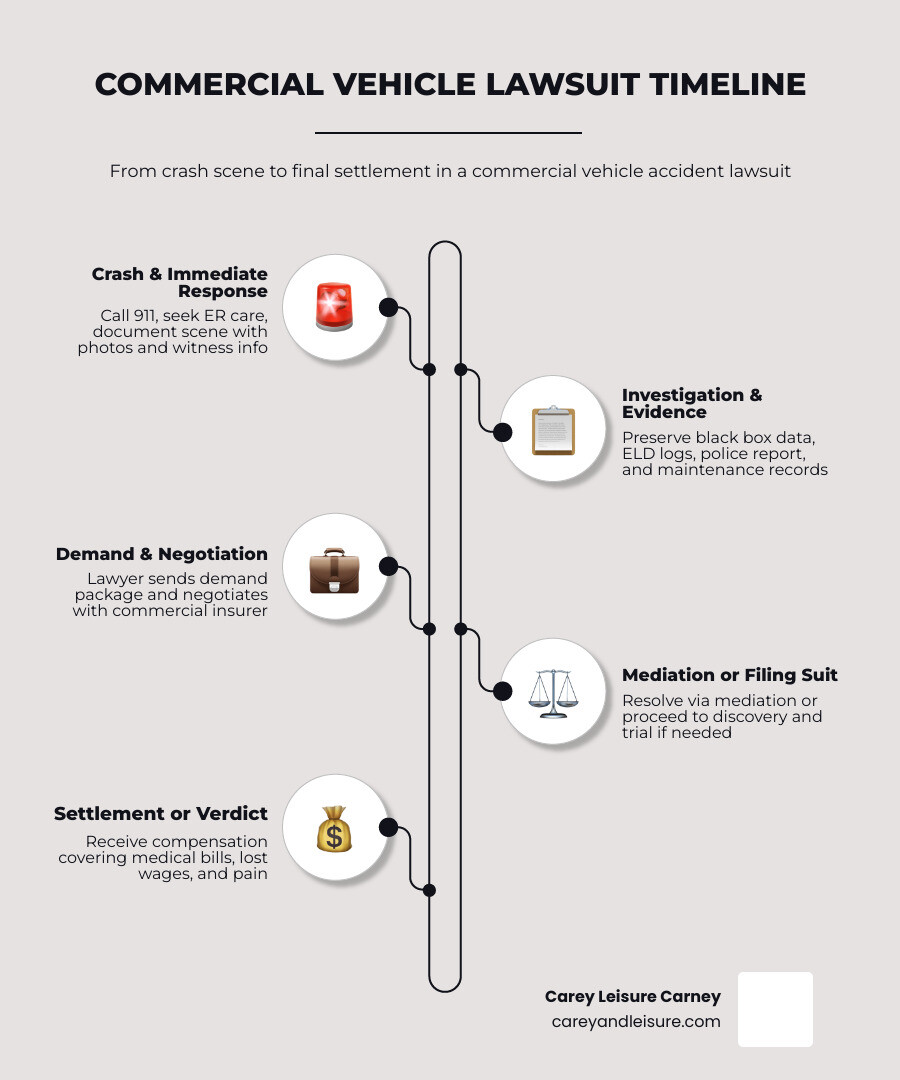
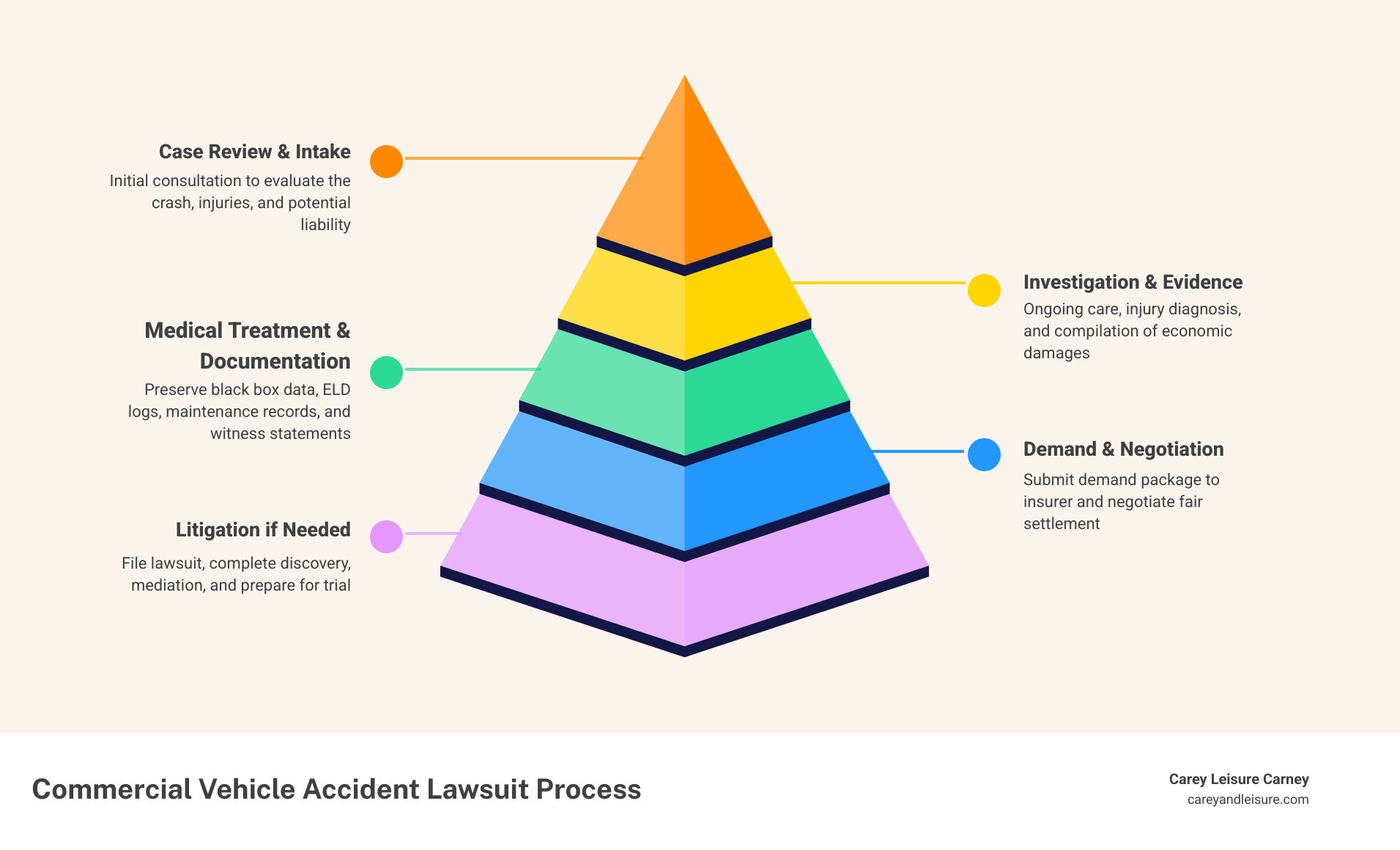
Step-by-Step Commercial Vehicle Accident Lawsuit Process
A typical case may move through these stages:
- Case review and intake
- Investigation and evidence preservation
- Medical treatment and damage documentation
- Demand package to the insurer
- Negotiation
- Lawsuit filing if needed
- Discovery, including records, depositions, and experts
- Mediation or settlement conference
- Trial
- Appeal if necessary
Some cases resolve in months. Others take a year or longer, especially if injuries are still being treated or liability is contested.
Why Most Cases Settle but Some Go to Trial
About 95% of commercial vehicle accident cases settle outside court. That is common because trial is expensive, slow, and risky for both sides.
Cases are more likely to go to trial when:
- fault is heavily disputed
- the insurer challenges the seriousness of injuries
- future damages are large
- punitive damages may apply
- the defense refuses to negotiate reasonably
Ironically, the best way to get a fair settlement is often to prepare like trial is absolutely possible.
When Pre-Settlement Funding or Lawsuit Loans May Help
Pre-settlement funding can help some victims cover:
- rent
- utilities
- groceries
- transportation
- urgent medical needs
These arrangements are often non-recourse, meaning repayment usually depends on recovery. But they can be expensive. Fees can grow, so we encourage clients to review any funding agreement carefully and talk with counsel before signing. Helpful? Sometimes. Cheap? Usually not.
Choosing the Right Lawyer for a High-Stakes Truck Case
When choosing counsel for a truck case, look for:
- trucking case experience
- trial readiness
- knowledge of commercial insurance and FMCSA issues
- strong evidence-preservation practices
- clear communication
- a fair fee structure
- direct attorney access
Our firm serves Clearwater, Largo, New Port Richey, Spring Hill, St. Petersburg, Trinity, and Wesley Chapel, and we focus on personalized representation rather than assembly-line lawyering. You can also review our guide on how much a truck accident lawyer costs.
Frequently Asked Questions About Commercial Vehicle Accident Lawsuits
How long does a commercial vehicle accident lawsuit usually take in Florida?
Many cases take several months to more than a year. Straightforward liability cases with completed treatment may settle faster. Cases involving surgery, permanent impairment, multiple defendants, or disputed fault often take longer.
Should I accept the trucking insurer’s first settlement offer?
Usually, no. Early offers are often designed to close the file before the full medical picture is known. Once you sign a release, you typically cannot go back for more money later, even if surgery becomes necessary.
What should I do in the first 24 hours after a commercial truck crash?
Try to:
- call 911
- seek immediate medical care
- photograph the scene and injuries
- get witness contact information
- report the crash
- avoid giving a recorded statement to the trucking insurer
- contact a lawyer quickly
If you feel “just sore,” get checked anyway. Truck injuries have a bad habit of getting louder after the adrenaline wears off.
Conclusion
A commercial vehicle accident lawsuit can involve far more than a simple insurance claim. Liability may reach the driver, the carrier, a broker, a maintenance company, or even a manufacturer. Settlement value depends on injury severity, evidence strength, insurance coverage, and whether fault is disputed. And in Florida, the clock starts running fast.
If you were hurt in Clearwater, Largo, New Port Richey, Spring Hill, St. Petersburg, Trinity, or Wesley Chapel, we are here to help you understand your options and build a claim with real leverage. For more information, visit our Truck Accident Attorney page.