
Crash Course: What to Look for in an Uber or Lyft Accident Lawyer
Why Your Rideshare Crash Requires More Than Just a Regular Car Accident Lawyer
An attorney uber accident specialist handles the unique insurance and liability challenges that arise when you’re injured in an Uber or Lyft crash. Unlike standard car accidents, rideshare crashes involve multiple insurance policies, shifting coverage based on driver status, and corporate legal teams defending against claims—making specialized legal representation essential to securing fair compensation.
Key reasons you need an attorney for an Uber accident:
- Complex insurance tiers – Coverage depends on whether the driver’s app was off, waiting for a ride request, en route to pick you up, or actively transporting you
- Multiple liable parties – You may have claims against the driver’s personal insurance, Uber’s commercial policy, another driver, or even the rideshare company itself
- Corporate defense tactics – Uber and Lyft classify drivers as independent contractors to limit liability, requiring an attorney who knows how to steer these arguments
- Evidence preservation – Trip data, app timestamps, and driver logs disappear quickly without proper legal intervention
- Maximum compensation – An experienced attorney identifies all sources of recovery and calculates your full damages, including future medical needs
Ridesharing has transformed how millions of Americans travel. Uber alone provides over 40 million rides globally each month. But this convenience comes with risk—MIT research points to a measurable spike in U.S. traffic deaths linked to Uber and Lyft. When you’re injured as a passenger, pedestrian, or another driver, the path to compensation becomes immediately complicated. You face questions about which insurance applies, whether the driver was “on duty,” and how to prove your claim against well-funded corporate defendants.
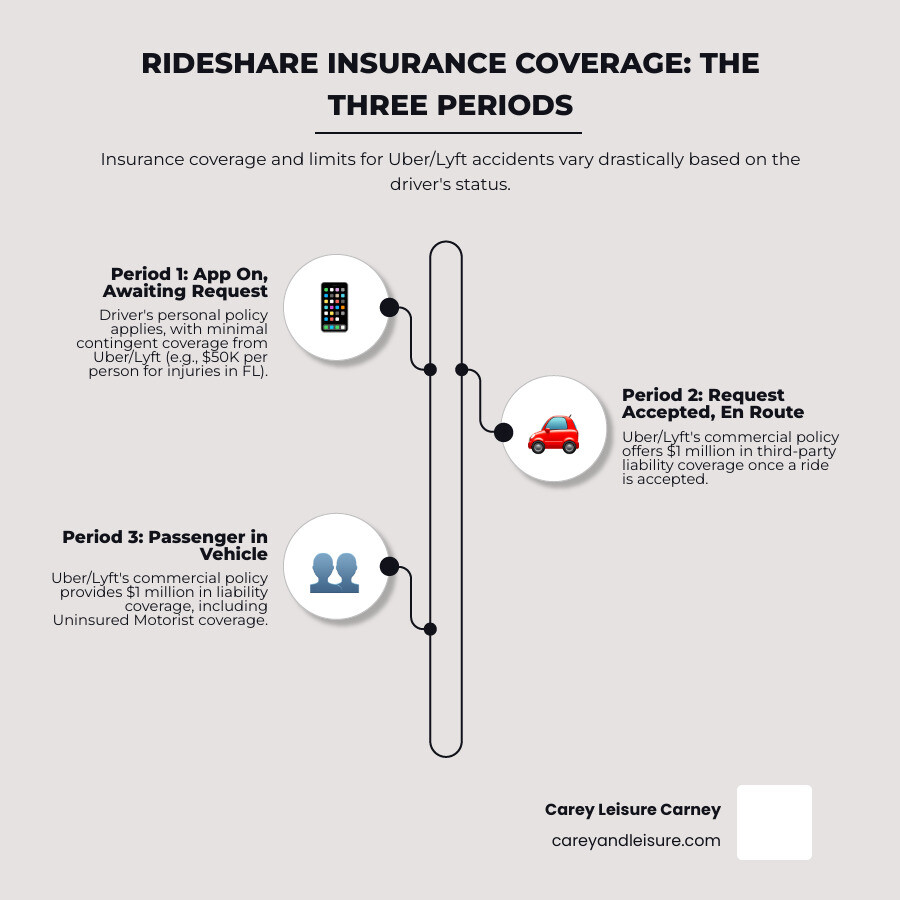
Most accident victims don’t realize that rideshare accidents involve three distinct periods of insurance coverage, each with different policy limits. Period 1 (app on, waiting for a request) provides minimal coverage—just $50,000 per person for injuries in Florida. Period 2 (en route to pick up a passenger) and Period 3 (passenger in the vehicle) trigger Uber’s $1 million commercial policy. But accessing that million-dollar coverage isn’t automatic. Insurance adjusters will scrutinize every detail to minimize what they pay.
The confusion doesn’t end with insurance. Florida is a no-fault state, meaning your own Personal Injury Protection (PIP) coverage pays for initial medical bills regardless of who caused the crash. But serious injuries exceed PIP limits quickly, and that’s when you need to pursue the at-fault driver—or Uber itself. Rideshare companies argue their drivers are independent contractors, not employees, to avoid direct liability. Breaking through this corporate shield requires an attorney who understands both Florida rideshare law (Statute 627.748) and how to prove when a company has failed its duty to screen, train, or supervise drivers properly.
As Thomas W. Carey, a board-certified civil trial lawyer with over three decades of personal injury experience, I’ve guided victims through the complexities of rideshare claims and secured multi-million-dollar results against well-defended corporations—the same aggressive representation every attorney uber accident case demands. My firm focuses exclusively on injured Floridians, and we know how to hold rideshare companies accountable.
Handy attorney uber accident terms:
Why Uber & Lyft Accidents Are More Complicated Than a Standard Car Crash
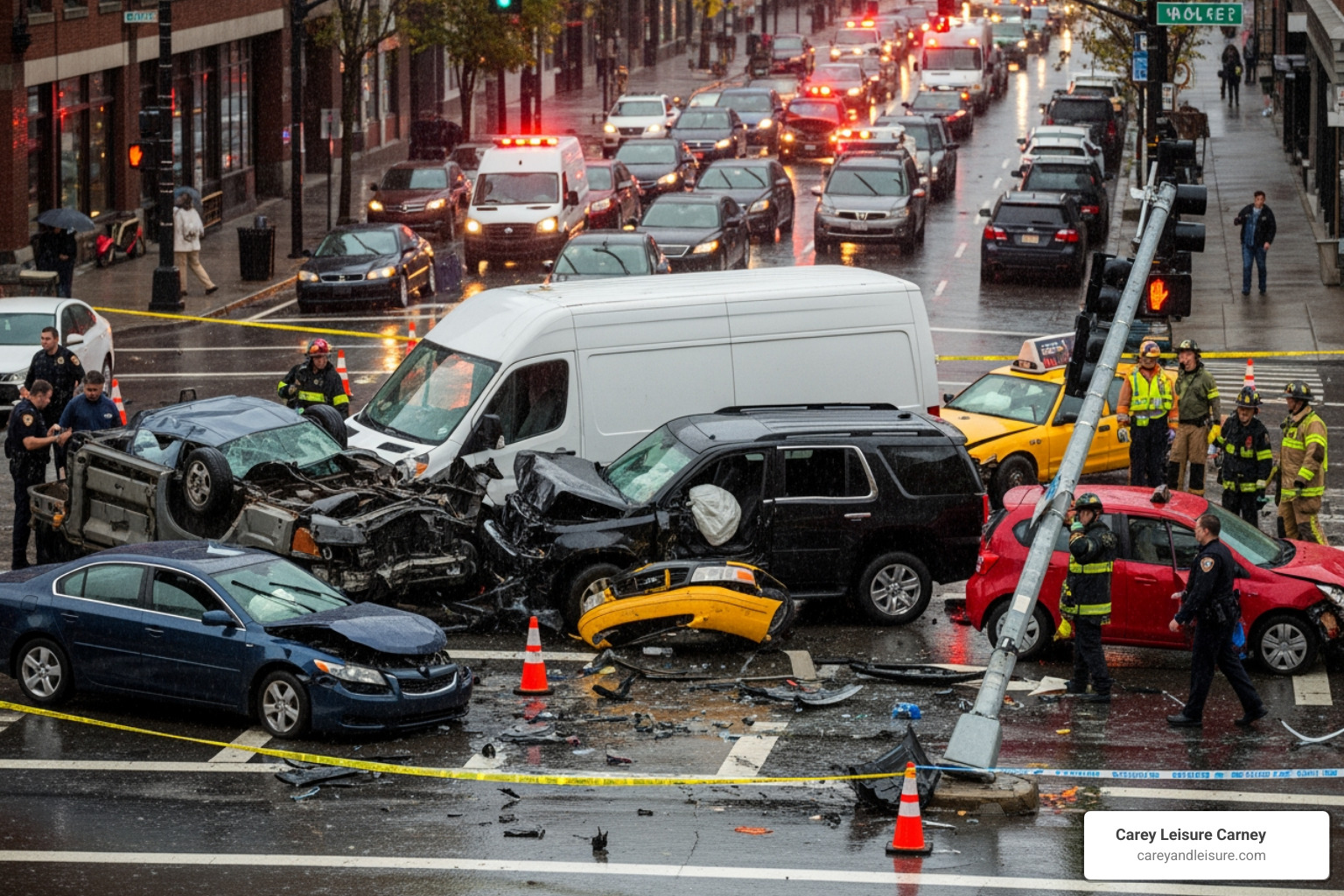
Uber and Lyft accidents are inherently more complex than typical car crashes due to several intertwined factors that complicate liability and insurance claims. When you’re involved in a collision with an Uber or Lyft vehicle, you’re not just dealing with two drivers and their personal insurance companies. Instead, you’re navigating a labyrinth of commercial insurance policies, corporate legal strategies, and nuanced state laws.
One of the primary reasons for this complexity is the unique business model of rideshare companies. Uber and Lyft classify their drivers as independent contractors, not employees. This distinction is crucial because it allows these companies to distance themselves from direct liability for their drivers’ actions. If a driver were an employee, the company would be far more likely to be held liable for someone else’s driving. This classification can lead to significant challenges when seeking compensation, as Uber and Lyft’s legal teams are well-versed in using this argument to shield the company from responsibility.
Furthermore, the insurance coverage in an Uber or Lyft accident isn’t straightforward. It depends entirely on the driver’s status at the exact moment of the crash. Was the app off? Was it on but waiting for a request? Or was the driver en route to pick up a passenger or actively transporting one? Each scenario triggers different levels of insurance coverage, often involving both the driver’s personal policy and Uber’s commercial policy. This multi-layered insurance structure means that determining who is responsible for covering damages can be a complex investigation in itself.
Common causes of Uber accidents often mirror those of regular car accidents but can be exacerbated by the nature of rideshare driving. These include:
- Distracted Driving: Drivers constantly interact with the rideshare app, GPS, and passenger requests, increasing the risk of distraction.
- Driver Fatigue: Many rideshare drivers work long hours, sometimes juggling multiple jobs, leading to fatigue and impaired judgment.
- Unfamiliar Roads: Drivers may be navigating unfamiliar routes or trying to find specific pickup/drop-off locations, which can lead to errors.
- Speeding or Reckless Driving: Drivers might rush to complete rides or reach “surge pricing” areas, increasing the likelihood of accidents.
Understanding Liability: Who Pays for Your Injuries?
Determining who is at fault for the accident is always the first step in any car accident claim, but in an Uber or Lyft accident, it’s just the beginning. The question of “who pays?” involves identifying all potentially liable parties.
Here are the main possibilities:
- The Uber/Lyft Driver: If the rideshare driver’s negligence caused the accident (e.g., distracted driving, speeding, failing to yield), their insurance would be a primary source of recovery.
- Another Driver: If a third-party driver (not the Uber/Lyft driver) caused the accident, their personal insurance would be the primary source of compensation.
- Uber or Lyft Directly: Suing Uber directly is challenging but not impossible. The company vehemently argues that its drivers are independent contractors, not employees. However, if we can demonstrate that Uber’s own negligence contributed to the accident—for example, by failing to conduct adequate background checks, ignoring driver safety complaints, or maintaining unsafe vehicle standards—then a direct claim against the company may be possible. This is a battle our attorney uber accident team is prepared to fight.
- Shared Fault: In some cases, multiple parties might share fault. Florida operates under a modified comparative negligence rule, meaning you can still recover damages even if you are partially at fault, as long as your fault is not greater than the combined fault of all other parties. This is where Comparative Negligence comes into play, and it’s crucial to have an experienced attorney uber accident lawyer to protect your right to compensation.
The Three Periods of Rideshare Insurance Coverage
One of the most critical aspects of an Uber or Lyft accident is understanding the “three-period system” of insurance coverage. This system dictates which insurance policy applies and what its limits are, based on the driver’s activity at the time of the crash.
| Driver Status | Insurance Provider | Coverage Limits (Florida) |
|---|---|---|
| App Off (Not logged in) | Driver’s Personal Auto Insurance | Varies by policy, often excludes commercial activity. |
| Period 1: App On, Awaiting Request | Driver’s Personal Insurance (primary) / Uber/Lyft (contingent) | Uber/Lyft Contingent Coverage: $50,000 bodily injury per person $100,000 bodily injury per accident $25,000 property damage per accident (if driver’s personal insurance denies coverage or is insufficient). |
| Period 2: Request Accepted, En Route to Passenger | Uber/Lyft Commercial Policy | Uber/Lyft Primary Commercial Coverage: $1,000,000 third-party liability coverage $1,000,000 uninsured/underinsured motorist (UIM) coverage (for passengers and sometimes the driver). |
| Period 3: Passenger in Vehicle | Uber/Lyft Commercial Policy | Uber/Lyft Primary Commercial Coverage: $1,000,000 third-party liability coverage $1,000,000 uninsured/underinsured motorist (UIM) coverage (for passengers and sometimes the driver). Contingent collision coverage for the driver’s vehicle. |
A driver’s personal insurance policy may deny a claim if the vehicle was being used for commercial purposes. This is why many drivers opt for specialized rideshare insurance, but even then, navigating these policies requires an experienced attorney uber accident lawyer.
Florida’s Rideshare Laws
Florida has specific laws governing rideshare services, primarily outlined in Florida Statute 627.748, often referred to as HB221. Signed into law in 2017, this bill mandates insurance requirements for rideshare drivers while they are logged into the app, even if they aren’t actively transporting a passenger.
Key aspects of Florida’s rideshare laws include:
- Minimum Insurance Requirements: The law specifies minimum coverage amounts for different periods of a rideshare driver’s activity, aligning with the tiered system described above.
- PIP Coverage: Florida is a no-fault state, meaning your own Personal Injury Protection (PIP) coverage is typically the first line of defense for medical expenses, regardless of who was at fault. However, PIP has limits, and serious injuries will quickly exhaust this coverage.
- UM/UIM Coverage: Uber and Lyft’s commercial policies in Florida generally include uninsured/underinsured motorist coverage, which is crucial if the at-fault driver has no insurance or insufficient coverage to pay for your damages.
Understanding how these state laws interact with Uber and Lyft’s corporate policies is paramount to a successful claim. Our attorney uber accident team is deeply familiar with Florida’s specific regulations and how they apply to your case, whether you’re in Clearwater, Largo, New Port Richey, Spring Hill, St. Petersburg, Trinity, or Wesley Chapel.
Critical First Steps After an Uber or Lyft Accident
The moments immediately following an Uber or Lyft accident can be chaotic and frightening. However, the actions you take (or don’t take) during this critical time can significantly impact the strength of your future claim.
- Prioritize Safety and Seek Medical Attention: Your health is paramount. If you or anyone else is injured, call 911 immediately. Even if you feel fine, it’s crucial to seek medical attention as soon as possible. Some injuries, like whiplash or concussions, may not manifest symptoms until hours or days later. Prompt medical evaluation creates an official record of your injuries, which is vital for your claim. you’ve been in an accident, what’s next? Part 2: Medical Attention emphasizes this critical step.
- Call the Police: Report the accident to local law enforcement. A police report provides an official, unbiased account of the incident, including details about the location, time, and parties involved.
- Report the Crash in the Uber/Lyft App: If you were a passenger, report the accident directly through the Uber or Lyft app. Uber provides specific instructions on what to do in a crash and a form to use this form for reporting. This creates an official record with the rideshare company.
- Do Not Give a Recorded Statement: Insurance adjusters, including those from Uber or the at-fault driver’s company, may contact you soon after the accident. While it’s important to report the incident, do not give a recorded statement or sign any documents without first consulting an attorney uber accident lawyer. Anything you say can be used against you to minimize your claim. We always advise our clients to let us handle all communications with insurance companies.
Gathering Crucial Evidence to Protect Your Claim
The more evidence you collect at the scene, the stronger your claim will be. Here’s a list of essential evidence:
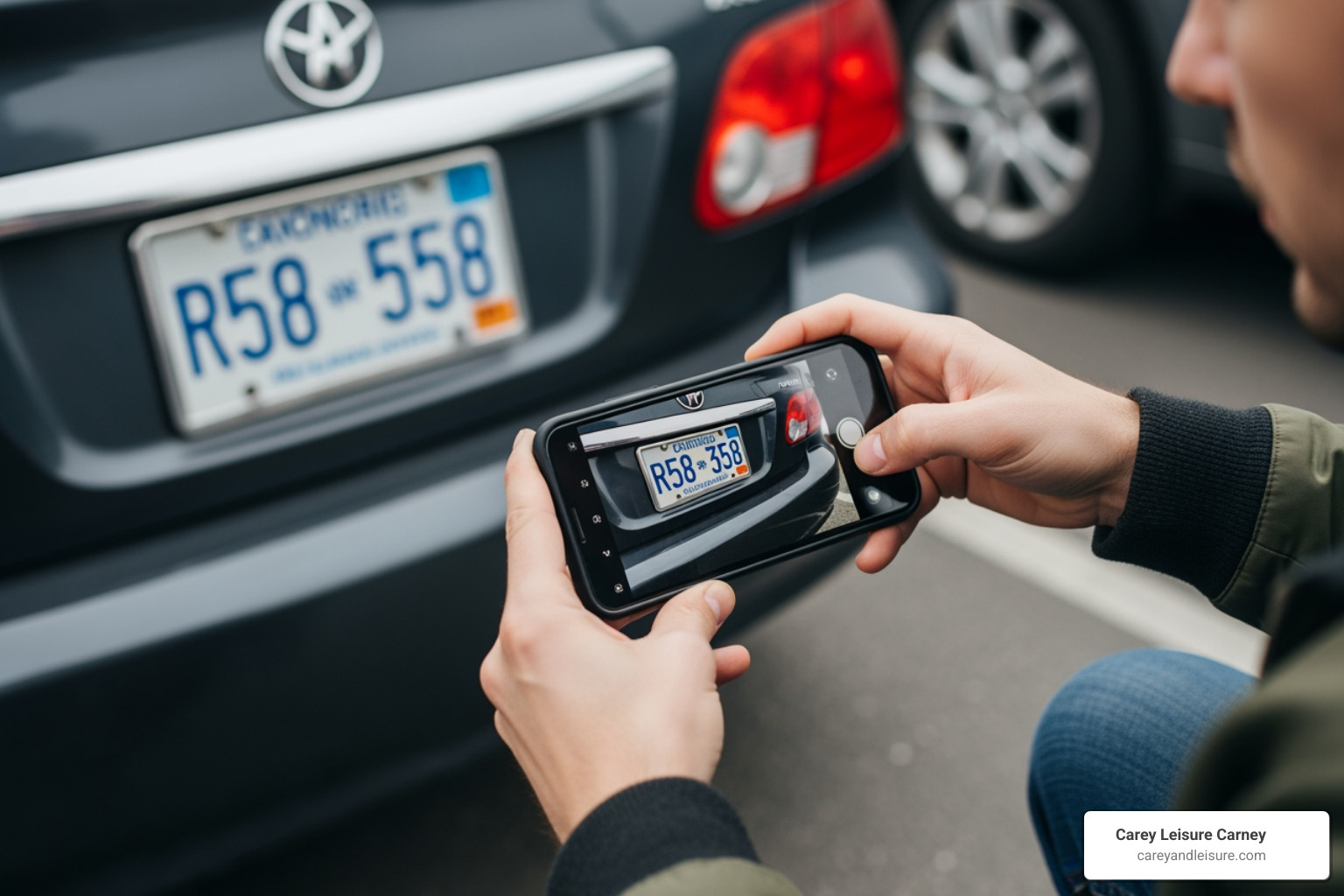
- Photos and Videos: Use your smartphone to take pictures and videos of everything: vehicle damage, visible injuries, the accident scene from multiple angles, road conditions, traffic signs, and any skid marks.
- Driver and Witness Information: Exchange contact and insurance information with all drivers involved. Crucially, get contact details for any witnesses. Collecting contact information for witnesses can provide invaluable, objective accounts of the crash.
- Police Report Number: Obtain the police report number and the investigating officer’s name and badge number. This will allow your attorney uber accident to retrieve the official report later.
- Screenshot of Your Ride Receipt: If you were a passenger, take a screenshot of your Uber or Lyft trip receipt, which shows the driver’s name, vehicle information, and the route. This is vital for establishing the driver’s status at the time of the accident.
- Medical Records: Keep meticulous records of all medical treatments, doctor visits, prescriptions, and therapy sessions related to your injuries. This documentation is critical for proving your damages. For more on this, refer to Documenting Evidence in Personal Injury Claims.
The Role of a Specialized Attorney for an Uber Accident
When you’re involved in an Uber or Lyft accident, hiring a specialized attorney uber accident lawyer isn’t just an option—it’s a necessity. The complexities of rideshare accidents demand legal expertise far beyond that of a general car accident attorney. We understand that you’ve been through a traumatic event, and our goal is to alleviate the burden of the legal process so you can focus on recovery.
Here’s how we help:
- Navigating Complex Insurance: As we’ve discussed, rideshare insurance is a multi-layered puzzle. We expertly steer the various policies—the driver’s personal insurance, Uber/Lyft’s commercial policies, and your own PIP and UIM coverages—to identify all potential sources of compensation. We know how to deal with the insurance adjusters, who are often focused on minimizing payouts.
- Fighting Corporate Legal Teams: Uber and Lyft are multi-billion dollar companies with formidable legal teams. They will aggressively defend against claims, often relying on the independent contractor argument. We have the experience and resources to stand up to these corporate giants, challenging their defenses and holding them accountable.
- Preserving Evidence: Critical evidence, like app data and driver logs, can be lost or overwritten quickly. Our immediate intervention ensures that all necessary information is preserved, strengthening your case.
- Calculating Total Damages: Your injuries may have long-term consequences. We carefully calculate all your damages, including current and future medical expenses, lost wages, pain and suffering, and other related costs, to ensure you receive full and fair compensation.
- Negotiating Settlements: Many cases are resolved through settlement negotiations. We leverage our experience and the strength of your evidence to negotiate aggressively with insurance companies for the maximum possible settlement.
- Litigation Experience: If a fair settlement cannot be reached, we are fully prepared to take your case to court. Our board-certified attorneys have extensive trial experience, giving you a distinct advantage. This is precisely why you need a personal injury lawyer who is not afraid to litigate.
What Expertise Does an Attorney for an Uber Accident Bring?
A specialized attorney uber accident lawyer brings a unique set of skills and knowledge to your case that is crucial for success:
- In-depth Knowledge of Rideshare Laws: We are experts in Florida’s specific rideshare laws, including Statute 627.748 (HB221), and how they apply to insurance and liability in your accident.
- Experience with TNC Insurance Adjusters: We understand the tactics used by insurance adjusters for Transportation Network Companies (TNCs) like Uber and Lyft. We anticipate their arguments and build strong counter-arguments to protect your claim.
- Accident Reconstruction: For complex accidents, we work with expert witnesses who can reconstruct the scene, analyze vehicle data, and provide crucial testimony on how the accident occurred and who was at fault. This aligns with the Use of Expert Witnesses in personal injury cases.
- Understanding of Driver Classification Issues: We are adept at navigating the independent contractor vs. employee debate, identifying instances where Uber or Lyft may still be held liable despite their classification arguments.
- Proving Negligence: We gather and present evidence to clearly establish negligence, whether it’s the rideshare driver’s distracted driving, fatigue, or another party’s reckless actions.
How an Attorney for an Uber Accident Maximizes Your Compensation
Our primary goal is to secure the maximum compensation you deserve. This involves a comprehensive approach to identifying all liable parties and carefully calculating your damages.
We ensure all aspects of your losses are considered, including:
- Medical Bills: Past and future medical expenses, including emergency room visits, hospital stays, surgeries, rehabilitation, medications, and ongoing care.
- Lost Wages: Income lost due to time off work for recovery, as well as future lost earning capacity if your injuries prevent you from returning to your previous job or working at all.
- Future Medical Needs: This can include long-term physical therapy, specialized equipment, or future surgical procedures.
- Compensation for Pain and Suffering in Florida: What You Need to Know: Non-economic damages for physical pain, emotional distress, mental anguish, and loss of enjoyment of life.
- Property Damage: Costs to repair or replace your vehicle or other damaged property.
We strive to answer the question, What is my personal injury case worth? by building a robust case that reflects the true impact of the accident on your life.
Frequently Asked Questions about Uber Accident Claims
What is the statute of limitations for filing an Uber accident claim in Florida?
In Florida, the statute of limitations for most personal injury claims, including those arising from Uber accidents, is generally two years from the date of the accident. This means you typically have two years to file a lawsuit in court. While two years might seem like a long time, it’s crucial to act quickly. Investigating a rideshare accident, gathering evidence, and negotiating with insurance companies takes time. Missing this deadline can result in the permanent loss of your right to seek compensation. That’s why contacting an attorney uber accident lawyer immediately after the crash is so important.
Can I still get compensation if the Uber driver wasn’t at fault?
Yes, absolutely. Even if the Uber driver was not at fault, you might still be entitled to compensation. If another driver caused the accident, we would pursue a claim against their personal insurance policy. Additionally, Uber’s commercial policy often includes uninsured/underinsured motorist (UIM) coverage. This coverage is critical if the at-fault driver has no insurance or insufficient insurance to cover your damages. We can help you understand what happens if an uninsured driver hits you and steer claims against Uber’s UIM policy, ensuring all potential sources of recovery are explored.
How much does it cost to hire an Uber accident lawyer?
We understand that you may be concerned about legal fees, especially when facing medical bills and lost income. That’s why our attorney uber accident team works on a contingency fee basis. This means you pay no upfront costs, and we only get paid if we win your case. Our fees are a percentage of the compensation we recover for you. If we don’t win, you don’t pay us. We also offer a free initial consultation to discuss your case, so there’s no risk in seeking legal advice. As we outline in How much does it cost to hire a personal injury attorney, this payment structure ensures that everyone has access to quality legal representation, regardless of their financial situation.
Don’t Steer the Aftermath Alone: Secure Expert Legal Help
Being involved in an Uber or Lyft accident can turn your world upside down. The unique legal and insurance complexities, combined with the stress of injury and recovery, can feel overwhelming. Trying to steer these waters alone, especially against well-resourced rideshare companies and their insurers, can jeopardize your right to full compensation.
That’s where a specialized attorney uber accident team like ours at Carey Leisure Carney comes in. With over 100 years of combined experience and board-certified attorneys—a distinction held by only the top 2% of Florida lawyers—we possess the deep knowledge and proven track record to handle your case effectively. We offer direct attorney access, ensuring you receive personalized service and clear communication every step of the way.
Don’t let the complexities of rideshare law prevent you from securing the justice and compensation you deserve. If you’ve been injured in an Uber or Lyft accident in Clearwater, Largo, New Port Richey, Spring Hill, St. Petersburg, Trinity, or Wesley Chapel, Florida, take the next step to protect your rights.
Contact us today for a free consultation. Let our expertise guide you through this challenging time, so you can focus on what matters most: your recovery.