

When Can You File an Anesthesia Error Lawsuit?
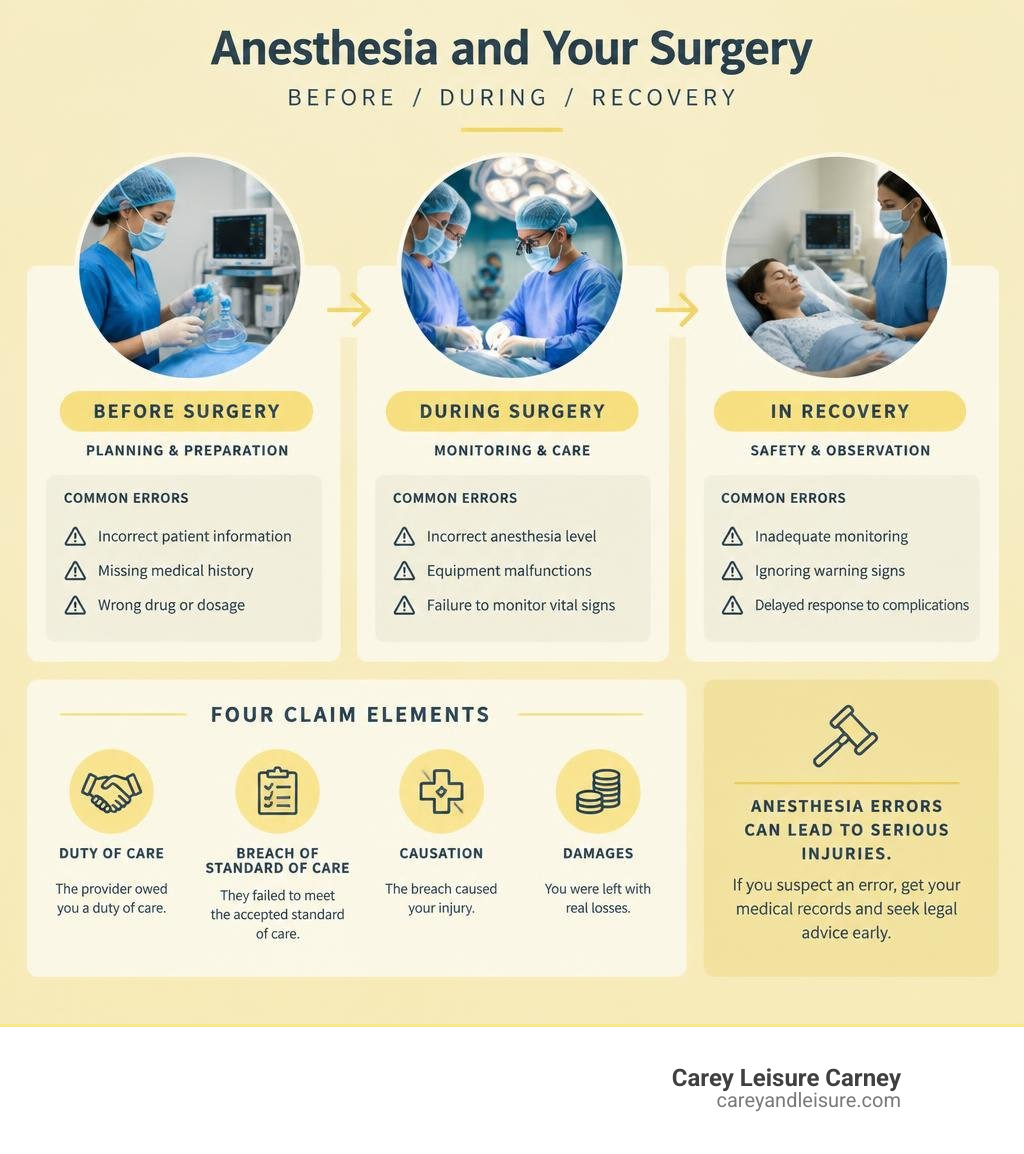
You may have grounds for an anesthesia error lawsuit if a provider’s mistake caused an injury that proper care could have prevented. To bring a claim, you must show four things: the provider owed you a duty of care, failed to meet the accepted standard of care, caused your injury, and left you with damages.
Errors can happen before surgery, during anesthesia, or in recovery. If you suspect one, request your medical records, including the anesthesia record and recovery notes. Filing deadlines and medical expert requirements can make early review important. A bad outcome alone does not prove malpractice, and signing a consent form does not excuse negligent care.
I’m Thomas W. Carey, founding partner of Carey Leisure Carney and a board-certified civil trial lawyer who has handled medical malpractice matters in Florida. If you’re considering an anesthesia error lawsuit, this guide explains what evidence and legal steps matter most.
Key anesthesia error lawsuit vocabulary:
Common Types of Anesthesia Errors and Medical Negligence

When you undergo surgery, you place absolute trust in the medical team monitoring your breathing, heart rate, and consciousness. Modern medicine has made anesthesia safer than ever, but catastrophic errors still occur when providers rush, fail to follow safety checklists, or miss critical warning signs.
In a comprehensive analysis of 1,227 closed malpractice claims, improper patient management under anesthesia represented approximately 32% of all claims, while technical procedural errors accounted for 27%. These errors range from subtle miscalculations in drug administration to direct physical trauma caused during emergency airway interventions.
Airway and Intubation Complications
Securing and maintaining a patient’s airway is one of the primary duties of an anesthesia professional. When intubation goes wrong, seconds matter. A comprehensive study on Protecting the Airway and the Physician: Lessons from 214 Cases of Endotracheal Intubation Litigation (Eloy et al., 2022) revealed that anesthesiologists were named as defendants in 59.8% of intubation lawsuits, followed by emergency physicians in 19.2% of claims, which frequently overlap with emergency room errors during acute trauma care.
Common intubation-related breakdowns include:
- Esophageal Misplacement: Accidentally inserting the breathing tube into the esophagus rather than the trachea. If undetected by capnography, this deprives the patient of oxygen and leads to hypoxic-ischemic brain damage or cardiac arrest within minutes.
- Dental Trauma: By raw volume, broken, chipped, or dislodged teeth represent roughly 20% to 23% of all anesthesia-related claims, making them the most frequently filed type of injury.
- Vocal Cord and Tracheal Injury: Forcing an endotracheal tube without adequate visualization can cause permanent vocal cord paralysis or tracheal stenosis.
- Premature Extubation: Removing the breathing tube before a patient has regained sufficient muscle strength or when end-tidal carbon dioxide (ETCO2) levels remain dangerously elevated.
When airway issues occur during emergency admissions, consulting an emergency room malpractice lawyer helps determine whether clinical staff adhered to mandatory difficult-airway protocols.
Medication Mix-Ups and Inadequate Patient Monitoring
Medication management in an operative suite demands absolute precision. Research shows that roughly 24% of medication-related anesthesia errors result in a fatality. Common pharmacology failures include:
- Syringe Swaps and Dosing Errors: Administering the wrong paralytic or sedative due to mislabeled pharmacy batches or failure to independently verify vials before injection.
- Anesthesia Awareness: Occurring in roughly 1 to 2 out of every 1,000 general anesthesia procedures, under-dosing can cause a patient to wake up during surgery—paralyzed and unable to signal distress while experiencing excruciating pain.
- Alarm Fatigue and Silencing: Turning down or ignoring pulse oximeter or capnography alarms during critical surgical phases.
- Improper Prone Positioning: Failing to reposition patients during lengthy spinal or orthopedic procedures, which can cause optic nerve ischemia and permanent blindness.
Proving Liability in an Anesthesia Error Lawsuit
Filing a successful medical negligence claim requires demonstrating that substandard care directly caused measurable physical and financial harm. Navigating medical malpractice and bodily injury claims involves establishing a clear connection between the provider’s breach of protocol and the patient’s resulting injury.
What You Must Prove in an Anesthesia Error Lawsuit
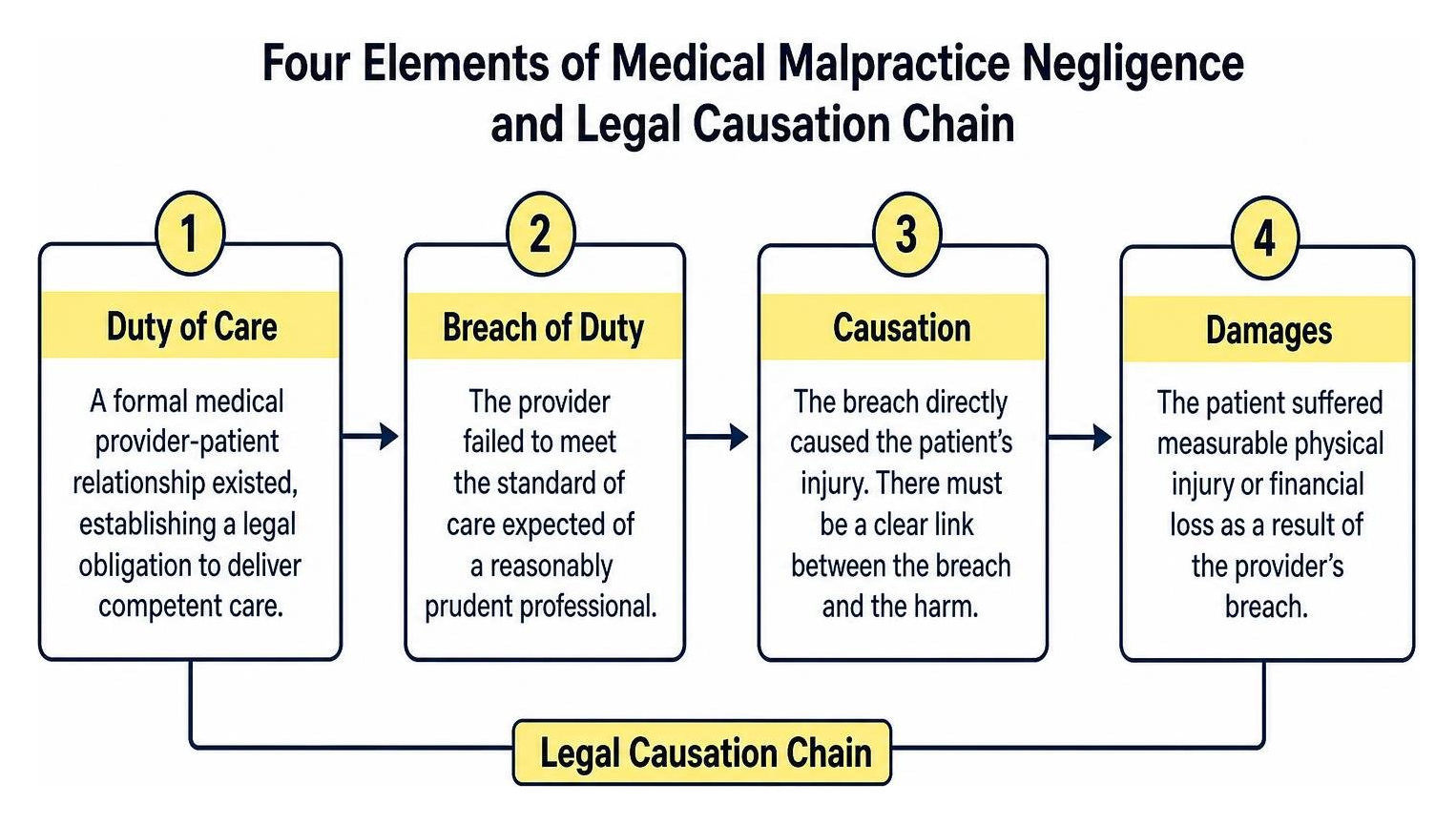
Under Florida law, a plaintiff in a medical malpractice action must establish four foundational elements:
- Duty of Care: A formal medical provider-patient relationship existed, establishing a legal obligation to deliver competent care.
- Breach of the Standard of Care: The anesthesiologist, Certified Registered Nurse Anesthetist (CRNA), or resident failed to exercise the level of skill, care, and treatment recognized as acceptable by similar prudent healthcare providers.
- Causation (Proximate Cause): The deviation from accepted medical standards directly led to the patient’s injury, rather than an underlying pre-existing condition or an unpreventable surgical risk.
- Quantifiable Damages: The patient suffered actual physical, psychological, or economic harm, such as ongoing medical bills, lost earnings, or permanent impairment.
Our Medical Malpractice Lawyer Guide 2025 provides detailed insight into how independent medical experts reconstruct anesthesia logs, vital sign trend data, and electronic health records to prove these elements.
Holding Hospitals Accountable for Independent Contractors
Hospitals frequently attempt to shield themselves from legal liability by classifying anesthesiologists and CRNAs as independent contractors rather than direct employees. However, Florida courts recognize key exceptions under the doctrine of apparent agency.
A hospital may remain vicariously liable if:
- The hospital represented to the public that it provided comprehensive anesthesia services.
- The patient reasonably relied on the hospital’s reputation rather than selecting an individual anesthesiologist.
- The facility failed to provide clear, conspicuous notice of independent contractor status prior to surgery.
Additionally, hospitals face direct corporate liability for negligent credentialing, understaffed surgical suites, and failing to maintain functioning anesthesia machines and emergency resuscitation equipment. Knowing when to call hospital malpractice lawyers ensures all potentially liable entities—from individual physicians to health systems—are named before statutory deadlines expire.
Perioperative Timing, Injuries, and Compensation Value
The timing of an anesthesia mistake dramatically influences patient outcomes and financial recoveries. According to a study on Medical Malpractice Lawsuits Involving Anesthesiology Residents: An Analysis of the National Westlaw Database – PMC (Kang et al., 2020), the median inflation-adjusted payment for trainee-related malpractice claims was $1,140,544, with 83% of claims involving death or permanent impairment.
| Perioperative Phase | Common Clinical Errors | Typical Injury Severity | Median Financial Payout |
|---|---|---|---|
| Preoperative | Inadequate airway evaluation, missing allergies, failure to give fasting instructions | Nerve block damage, allergic reactions | $212,000 |
| Intraoperative | Esophageal intubation, syringe swaps, overdose, alarm silencing | Anoxic brain damage, cardiac arrest, awareness | $1,039,000 |
| Postoperative (PACU) | Delayed respiratory depression, unmonitored extubation, airway edema | Fatal asphyxiation, severe anoxic encephalopathy | $4,250,000 |
How Perioperative Timing Impacts an Anesthesia Error Lawsuit Settlement
While the majority of clinical mistakes occur intraoperatively, claims originating in the post-anesthesia care unit (PACU) yield significantly higher median payments ($4,250,000).
In the recovery room, patients transition off mechanical ventilation while residual sedatives and paralytics linger in their systems. If recovery nurses and covering physicians fail to recognize airway obstruction or respiratory failure, the resulting lack of oxygen causes rapid, catastrophic deterioration. When calculating what is my personal injury case worth, life-care plans for 24/7 attendant care and specialized rehabilitation substantially raise the total claim valuation.
High-Impact Injuries: Anoxic Brain Damage, Disability, and Wrongful Death
When the brain is deprived of oxygen for more than four minutes, cells begin to die, leading to hypoxic-ischemic encephalopathy (HIE). In intubation-related litigation, the presence of an anoxic brain injury increases the probability of a financial recovery from 50.7% to 67.5%, with average payouts exceeding $4 million.
For families navigating long-term disability, our catastrophic injury complete guide outlines how damages are structured for:
- Lifetime medical and attendant care expenses
- Home modifications and adaptive medical equipment
- Loss of lifetime earning capacity and employment benefits
- Non-economic damages for physical pain, suffering, and loss of enjoyment of life
When an error results in a fatal outcome, surviving family members can pursue compensation under Florida’s Wrongful Death Act, as explained in A Complete Guide to Florida Wrongful Death Claims.
Procedural Requirements and Filing Deadlines in Florida
Pursuing medical malpractice claims across Florida—including Clearwater, St Petersburg, Largo, New Port Richey, Trinity, Spring Hill, and Wesley Chapel—requires strict adherence to statutory pre-suit rules. If you suspect clinical negligence, consulting a dedicated Medical Malpractice Attorney in Clearwater, FL ensures procedural hurdles are cleared before formal litigation begins.
Certificates of Merit and Pre-Suit Corroboration
Florida law mandates an extensive pre-suit screening process before a lawsuit can be filed in circuit court:
- Notice of Intent to Initiate Litigation: The claimant must serve formal notice on all prospective healthcare defendants.
- Corroborating Expert Medical Affidavit: The notice must include a verified written medical opinion from a qualified medical expert practicing in the same specialty (e.g., a board-certified anesthesiologist). This expert must certify that reasonable grounds exist to support a claim of medical negligence.
- 90-Day Investigation Window: Service of the notice initiates a mandatory 90-day investigation period during which the parties exchange informal discovery, and insurers determine whether to settle, arbitrate, or deny the claim.
Statutes of Limitations and Repose in Florida
Understanding how long do you have to file a medical malpractice lawsuit in Florida is vital to preserving your rights:
- Statute of Limitations: Generally, a claim must be filed within two years from the date the injury occurred or when the claimant knew, or through the exercise of reasonable diligence should have known, that the injury was caused by medical negligence.
- Statute of Repose: Florida enforces a strict four-year statute of repose, meaning no action may be brought more than four years after the date the incident occurred, regardless of when it was discovered (with limited exceptions for fraud, concealment, or intentional misrepresentation).
Failing to initiate pre-suit within these precise deadlines will permanently bar your claim from court.
Frequently Asked Questions About Anesthesia Malpractice
What is the most common error leading to an anesthesia claim?
By claim volume, dental damage (broken or chipped teeth caused by the laryngoscope blade during endotracheal intubation) is the most frequent complaint, representing 20% to 23% of claims. However, the most severe and financially substantial claims involve improper patient management, undetected esophageal intubations, and unmonitored postoperative respiratory failure leading to anoxic brain damage.
How long do I have to file an anesthesia malpractice claim in Florida?
In Florida, you typically have two years from the date you discovered or reasonably should have discovered the malpractice, subject to an absolute four-year statute of repose. Serving a formal Notice of Intent tolls (pauses) the statute of limitations for 90 days, providing additional time to complete pre-suit requirements.
Does signing an informed consent form prevent me from filing a lawsuit?
No. An informed consent document confirms you were advised of the ordinary, unavoidable risks inherent to a procedure. It does not grant medical providers permission to deliver negligent care or waive your right to sue for deviations from the accepted standard of care.
Conclusion
Anesthesia errors can turn a routine medical procedure into a lifelong physical and financial challenge. Holding medical providers and hospital networks accountable requires deep knowledge of perioperative standards, thorough investigation of medical records, and aggressive trial advocacy.
At Carey Leisure Carney, our board-certified trial attorneys bring over 100 years of combined legal experience to medical malpractice and catastrophic injury cases across Clearwater, St Petersburg, Largo, New Port Richey, Trinity, Spring Hill, and Wesley Chapel. If you or a loved one suffered harm due to suspected surgical negligence, explore our Florida medical malpractice category to learn how we protect your rights and help you secure the compensation you deserve.