
How to Find Top Rated DUI Lawyers in Clearwater
To find top rated dui lawyers in Clearwater, start with attorneys who regularly defend DUI cases in the local courts. Check their Florida Bar standing and disciplinary record. Then ask about their trial experience, training in breath and blood testing, and whether they handle driver’s license hearings as well as criminal charges. Compare detailed reviews and written fee agreements. Be wary of anyone who guarantees a result.
I’m Thomas W. Carey, founding partner of Clearwater personal injury firm Carey Leisure Carney. My work representing people injured by drunk drivers and my years of anti-DUI advocacy inform this guide to evaluating top rated dui lawyers; our firm handles injury claims, not criminal DUI defense.
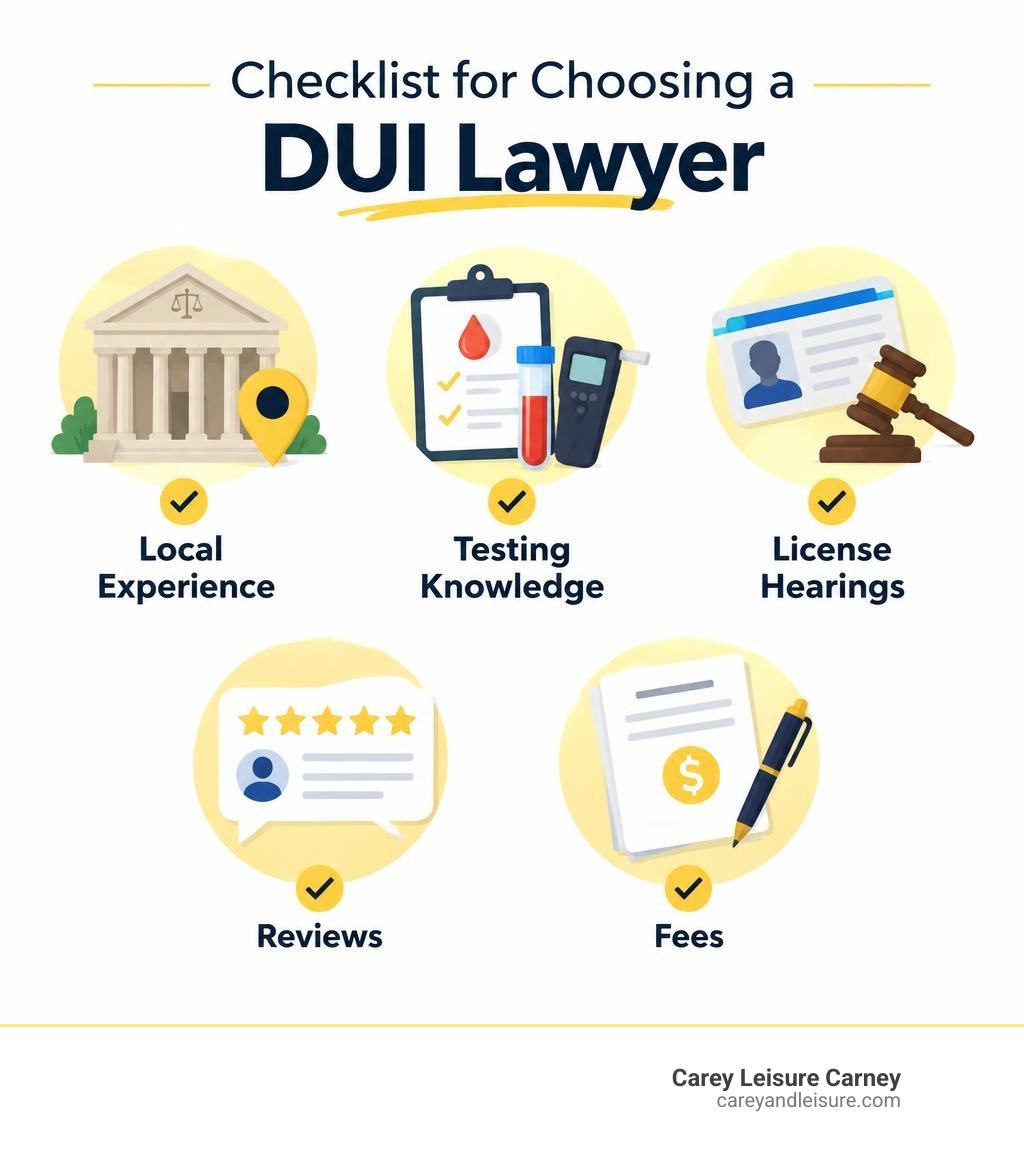
Top rated dui lawyers vocabulary:
Introduction
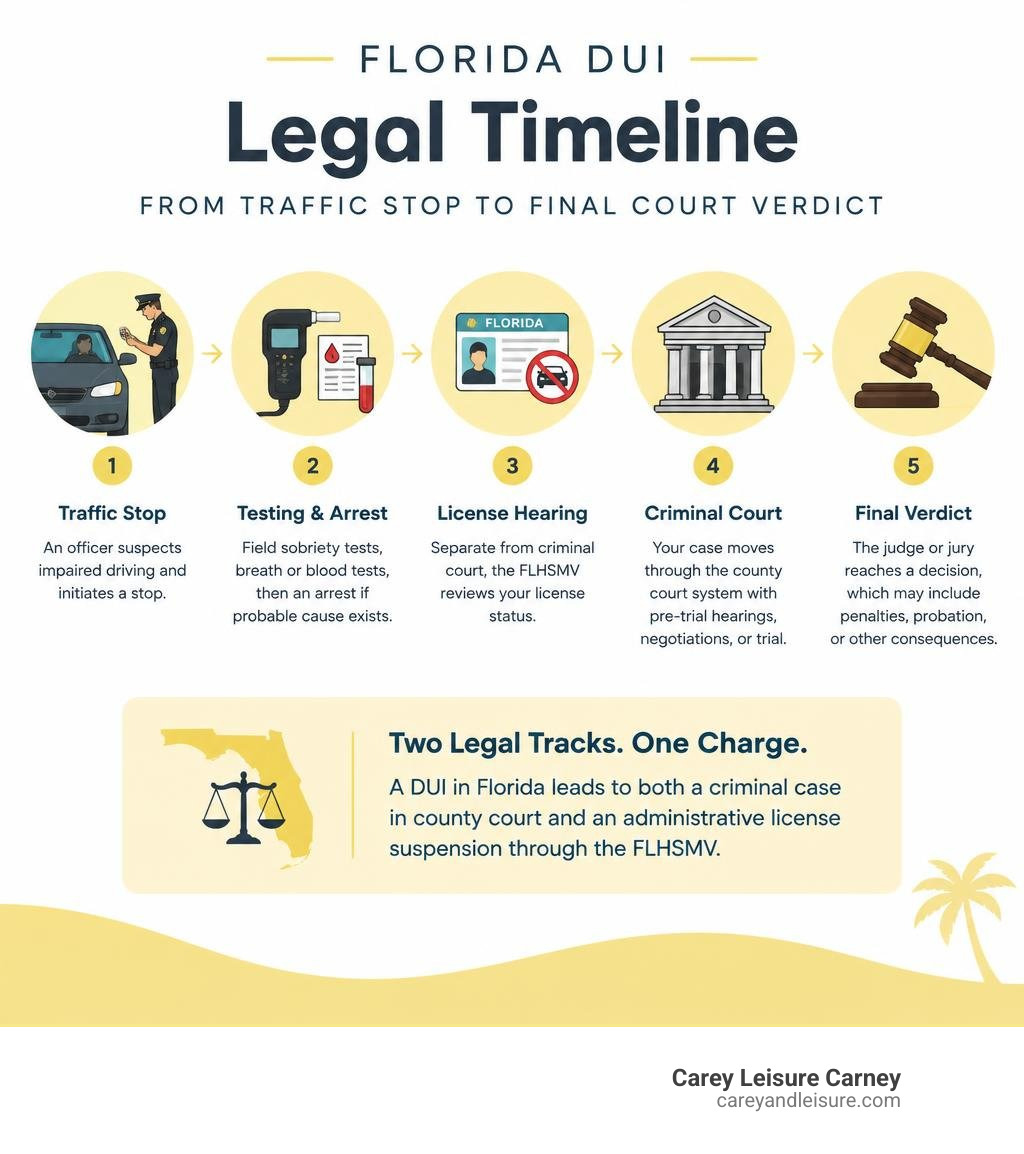
A driving under the influence (DUI) charge in Florida can completely disrupt your daily life within a matter of minutes. Whether you were pulled over along the Courtney Campbell Causeway, stopped near Clearwater Beach, or arrested in St. Petersburg, the criminal and administrative consequences hit immediately. Under Florida law, an impaired driving charge triggers two distinct legal battles: a criminal proceeding in county court and an administrative license suspension managed by the Florida Department of Highway Safety and Motor Vehicles (FLHSMV).
Without seasoned legal guidance, drivers risk substantial fines, mandatory probation, vehicle impoundment, installation of ignition interlock devices, skyrocketing insurance premiums, and potential jail sentences. Furthermore, Florida does not permit criminal records for standard DUI convictions to be sealed or expunged; once entered, a conviction remains on your permanent record for decades. Navigating these stakes demands a clear understanding of your constitutional protections and the courtroom mechanisms used to preserve your freedom.
Key Credentials That Define Top Rated DUI Lawyers
Not all legal representation offers equal protection. While many practitioners operate general criminal defense practices, impaired driving litigation is among the most scientifically complex disciplines in modern courtroom advocacy. It combines constitutional Fourth Amendment law with bio-chemical testing, digital forensics, and human toxicology.

When reviewing legal counsel, individuals must look beyond flashy advertisements and identify tangible credentials. Elite advocates understand how top-rated DUI defense attorneys leverage scientific knowledge to challenge state evidence. The benchmark for national recognition in this specialized field is accreditation by reputable bodies such as the NCDD Board Certification program, which tests an attorney’s deep command of scientific and evidentiary rules.
Specialized Scientific Training and Certification
A qualified defense attorney must understand the mechanical and physiological processes that law enforcement agencies rely upon to claim impairment. The National Highway Traffic Safety Administration (NHTSA) establishes precise standards for Standardized Field Sobriety Testing (SFST) and Advanced Roadside Impaired Driving Enforcement (ARIDE). If an arresting officer fails to administer these physical assessments in exact compliance with federal manuals, the validity of the roadside results drops significantly.
Furthermore, Florida law enforcement heavily utilizes the Intoxilyzer 8000 for evidentiary breath testing. Knowledgeable defense counsel will inspect source code updates, diagnostic software logs, maintenance records, and dry gas standard calibrations. In cases involving blood draws, attorneys trained in gas chromatography analysis can uncover laboratory sample contamination, improper storage temperatures, and broken chains of custody.
| Credential / Capability | General Criminal Defense Attorney | Board-Certified DUI Defense Specialist |
|---|---|---|
| Scientific Training | Basic procedural knowledge | Certified in SFST, ARIDE, and Breathalyzer Maintenance |
| Forensic Analysis | Relies on state lab conclusions | Audits gas chromatography, blood vial preservatives, and error rates |
| Courtroom Focus | Broad practice (theft, assault, traffic) | Heavy or exclusive focus on impaired driving and traffic trial law |
| Administrative Hearings | Often neglects DMV/FLHSMV deadlines | Concurrently files formal administrative reviews within 10 days |
| Peer Recognitions | Standard directory listings | Board-certified, Super Lawyers, AV Preeminent, NCDD recognized |
Why Board-Certified Top Rated DUI Lawyers Deliver Better Results
In Florida, board certification by The Florida Bar represents the gold standard of professional competence, ethical integrity, and courtroom experience—a distinction earned by fewer than two percent of active attorneys. While general practitioners frequently seek fast plea deals to clear heavy caseloads, board-certified specialists approach every file with an eye toward trial advocacy.
When you find experienced DWI lawyers who are respected by local judges and state prosecutors in Pinellas and Pasco counties, your defense posture changes immediately. Prosecutors recognize which lawyers possess the forensic knowledge to suppress faulty breath tests or dismantle officer testimony, creating genuine leverage for complete case dismissals or reductions to non-criminal traffic infractions.
Strategic Defense Tactics Used in Impaired Driving Cases
DUI defense is not about searching for magic loopholes; it is about holding the government strictly accountable to constitutional mandates and scientific standards. From the moment emergency lights appear in your rearview mirror, every action taken by law enforcement must comply with state and federal legal protections.

Understanding your rights begins with understanding impaired driving laws and knowing where law enforcement routinely oversteps. Top defense lawyers deploy aggressive pre-trial suppression motions to strike tainted evidence before a trial even begins.
Challenging Chemical Tests and Field Sobriety Testing
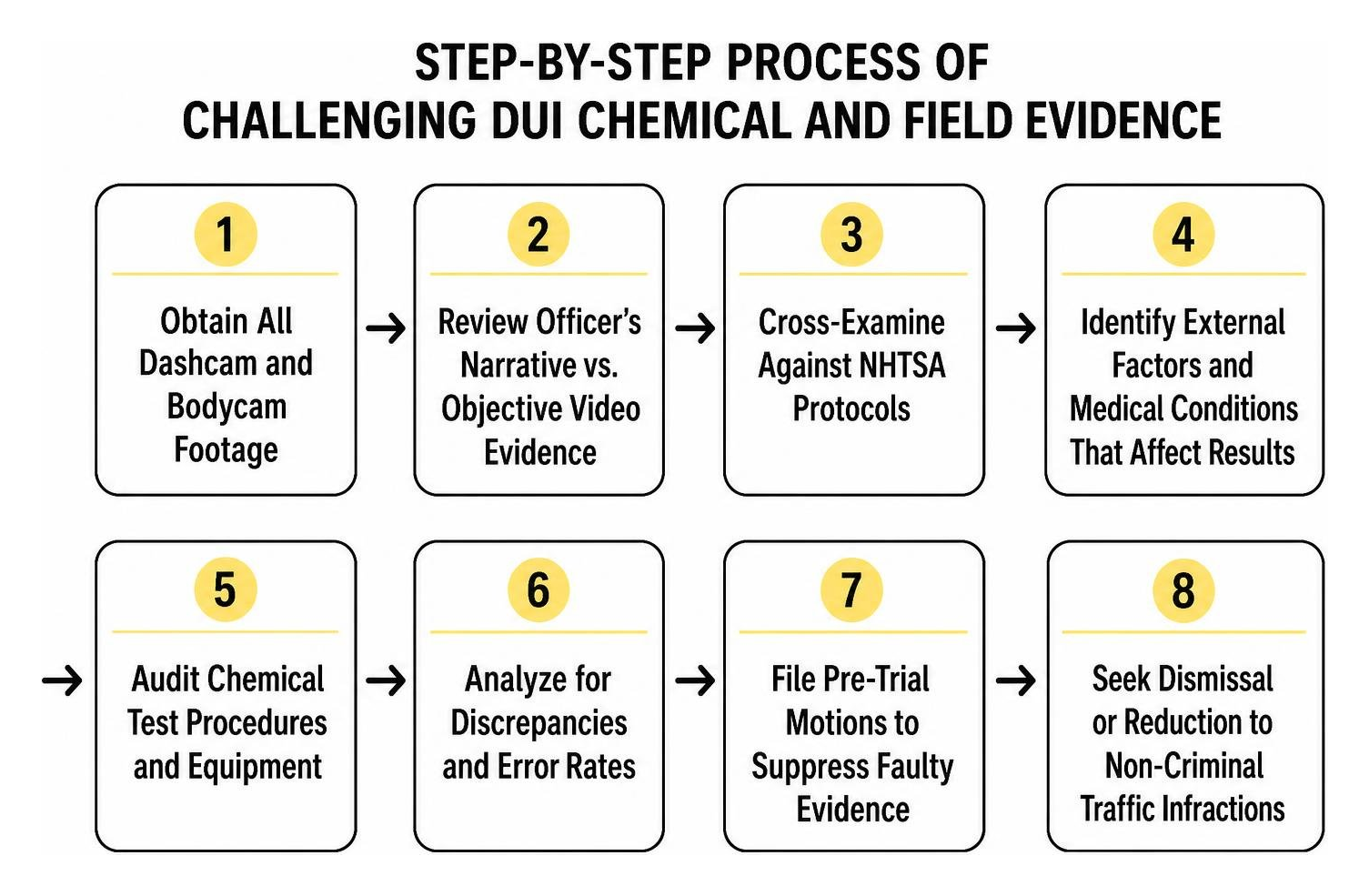
Roadside sobriety tests are designed for failure. External variables such as uneven asphalt, passing traffic, flashing strobe lights, adverse weather conditions, and nervousness frequently mimic physical impairment. Medical conditions such as inner ear disorders, previous knee or back injuries, neurological conditions, and natural acid reflux (GERD) can also artificially inflate breathalyzer readings or distort physical balance.
Applying actionable tips for finding a DUI attorney ensures your counsel obtains all squad car dashcam video, body-worn camera footage, and testing station recordings. By cross-examining the arresting officer against official NHTSA protocols, skilled counsel can expose discrepancies between the officer’s written narrative and the objective video evidence.
Navigating the Florida 10-Day Rule and License Suspensions
One of the most urgent aspects of a Florida DUI arrest is the strict 10-day administrative rule. Following an arrest, your paper citation serves as a temporary driving permit for only 10 days. Within this narrow window, you must make a critical strategic decision:
- Request a Formal Review Hearing: Challenge the legality of the administrative suspension directly before the FLHSMV to fight for full driving reinstatement.
- Opt for Immediate Hardship Reinstatement: Waive the formal review hearing to secure an immediate Business Purpose Only (BPO) hardship license, provided you have no prior DUI suspensions and enroll in approved DUI school.
Failing to act within these 10 days triggers an automatic hard license suspension—six to twelve months for unlawful blood alcohol levels, and one full year for a first-time chemical test refusal. When you focus on hiring a local drunk driving lawyer immediately after release from custody, your attorney can submit the necessary administrative filings to protect your ability to drive to work, school, and medical appointments.
Practical Steps for Evaluating DUI Defense Representation
Selecting legal counsel while managing the stress of an arrest can feel overwhelming. However, conducting thorough due diligence prevents costly mistakes.
Prospective clients should utilize respected resources such as the Best DUI & DWI Lawyers Directory to review local practitioners across Pinellas, Pasco, and Hillsborough counties, cross-referencing credentials with official state bar disciplinary databases.
Evaluating Client Reviews and Local Track Records
Online client testimonials provide valuable perspective on an attorney’s communication responsiveness and courtroom poise. However, prioritize detailed accounts over brief, generic five-star reviews. Look for narratives describing how the lawyer handled complex pre-trial motions, negotiated with local prosecutors, or managed Florida administrative hearings.
A firm thoroughly versed in a comprehensive Florida alcohol laws overview brings critical local context to your defense. Familiarity with local courtroom administrative procedures across Clearwater, Largo, St. Petersburg, New Port Richey, Spring Hill, Trinity, and Wesley Chapel allows defense counsel to anticipate how specific judges evaluate chemical suppression arguments.
Red Flags to Avoid When Retaining Top Rated DUI Lawyers
When meeting with prospective criminal defense attorneys, keep an eye out for these significant warning signs:
- Guaranteed Case Outcomes: No attorney can ethically or realistically guarantee that a charge will be dismissed or reduced. Every case depends on physical facts, judicial rulings, and evidence admissibility.
- High-Volume “Plea Mills”: Beware of law offices that rarely take cases to trial and instinctively recommend taking the first plea deal offered by the state.
- Vague or Hidden Fee Structures: Retainers should be clearly defined in writing. Ensure you understand whether trial litigation, expert witness fees, and FLHSMV administrative hearings are included in the base fee or billed separately.
- Delegated Communication: Ensure that the experienced attorney you interview during your initial consultation is the person who will actually handle your courtroom hearings, rather than an unvetted associate.
Frequently Asked Questions About DUI Charges and Defense
What is the difference between a DUI and a DWI under Florida law?
In many states, driving under the influence (DUI) and driving while intoxicated (DWI) represent different degrees of statutory impairment. However, under Florida Statute § 316.193, Florida recognizes a single umbrella offense: Driving Under the Influence (DUI).
A person is guilty of DUI in Florida if they are in actual physical control of a vehicle and:
- Have a blood alcohol level (BAL) or breath alcohol level (BAC) of 0.08 grams of alcohol per 100 milliliters of blood or 210 liters of breath (the per se standard), OR
- Are impaired by alcohol, chemical substances, or controlled substances to the extent that their normal faculties are impaired.
Can a first-time DUI charge be dismissed or reduced in Florida?
Yes. Depending on the county of arrest (such as Pinellas or Pasco), first-time offenders with no aggravating factors (such as high BAC above 0.15, minor passengers, or vehicular crashes) may qualify for specialized pre-trial diversion programs. Successful completion of these court-supervised diversion programs results in a formal dismissal of the criminal DUI charge.
Additionally, if your defense counsel identifies procedural violations—such as an unlawful traffic stop lacking reasonable suspicion or uncalibrated breath equipment—prosecutors may agree to reduce the charge to Reckless Driving (“wet reckless”), avoiding a permanent criminal DUI record.
What happens if a drunk driver causes an accident with injuries?
When impaired driving leads to collisions causing property damage, serious bodily injury, or death, the legal landscape shifts dramatically. Under Florida law, a DUI causing serious bodily injury escalates to a third-degree felony, punishable by up to five years in state prison and mandatory license revocations.
Beyond criminal prosecution, impaired motorists face severe civil exposure. Victims injured by intoxicated drivers can pursue substantial civil compensation for medical bills, lost wages, pain, and disability. In civil injury proceedings, victims can seek drunk driving accident compensation alongside financial penalties through DUI punitive damages. Punitive damages in Florida civil courts are designed specifically to punish gross misconduct and deter dangerous drunk driving on local roadways.
Conclusion
Understanding your rights under the law is essential whether you are navigating the criminal court system or dealing with the civil aftermath of a roadside collision. The choices made within the first few days of an incident—from demanding evidentiary records to meeting strict administrative deadlines—dictate the ultimate outcome of the case.
For more information on legal rights, impairment standards, and roadside regulations, explore our comprehensive Florida alcohol laws and driver rights guide to stay informed and protected.