
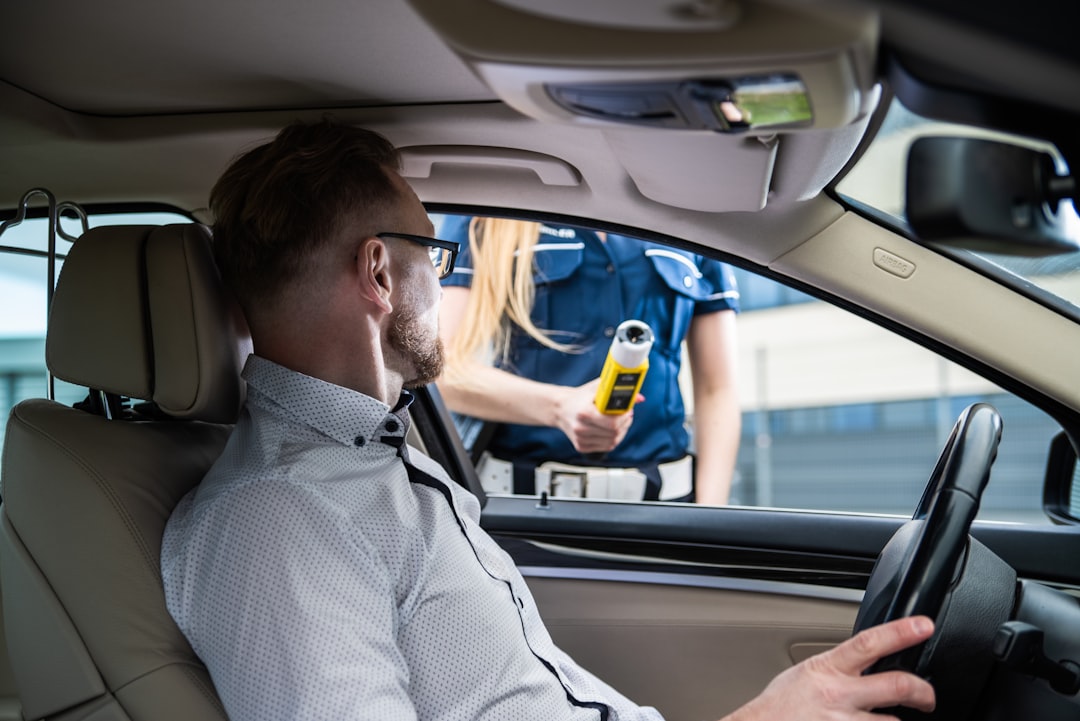
Top 5 No-Nonsense Tips for Finding a DUI Attorney
How to Find the Right Drunk Driving Attorney in Florida
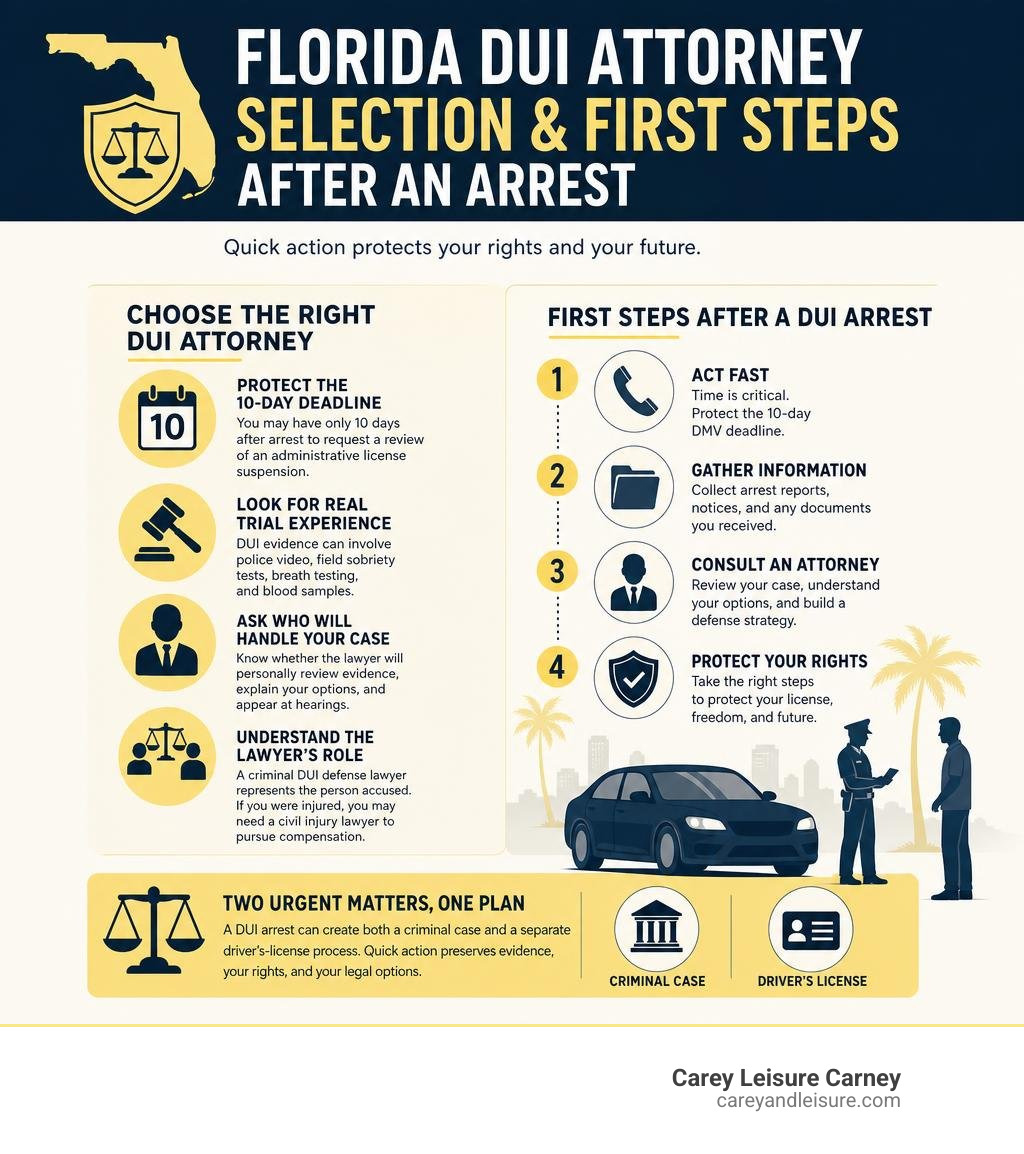
If you need a drunk driving attorney after a Florida DUI arrest, act fast and choose counsel who can handle both your license case and the criminal charge. The best starting points are simple:
- Protect the 10-day DMV deadline. You may have only 10 days after arrest to request a review of an administrative license suspension.
- Look for real trial experience. DUI evidence can involve police video, field sobriety tests, breath testing, and blood samples.
- Ask who will handle your case. You should know whether the lawyer will personally review evidence, explain your options, and appear at hearings.
- Understand the lawyer’s role. A criminal DUI defense lawyer represents the person accused. If an impaired driver injured you or took a loved one’s life, you may instead need a civil injury lawyer to pursue compensation.
A DUI arrest can create two urgent problems at once: a criminal case and a separate driver’s-license process. Quick action can preserve evidence and legal options. But when a drunk driver causes a crash, the focus shifts to holding the impaired driver and, in some cases, other responsible parties accountable for medical bills, lost income, and the harm done.
I am Thomas W. Carey, founding partner of Carey Leisure Carney and a board-certified civil trial lawyer who has handled and overseen thousands of Florida injury matters, including drunk-driving cases. After losing my wife, Joni, to a drunk driver, I became active in anti-DUI advocacy and have spent decades helping injured people and grieving families seek accountability.
Understanding Impaired Driving Laws and Legal Definitions in Florida
Florida takes impaired driving exceptionally seriously. Navigating the legal landscape requires understanding how the state defines impairment, how chemical tests function, and what statutory limits govern our roads. When reviewing duidwi what you need to know about impaired driving, one quickly realizes that the state’s legal framework leaves very little room for error.
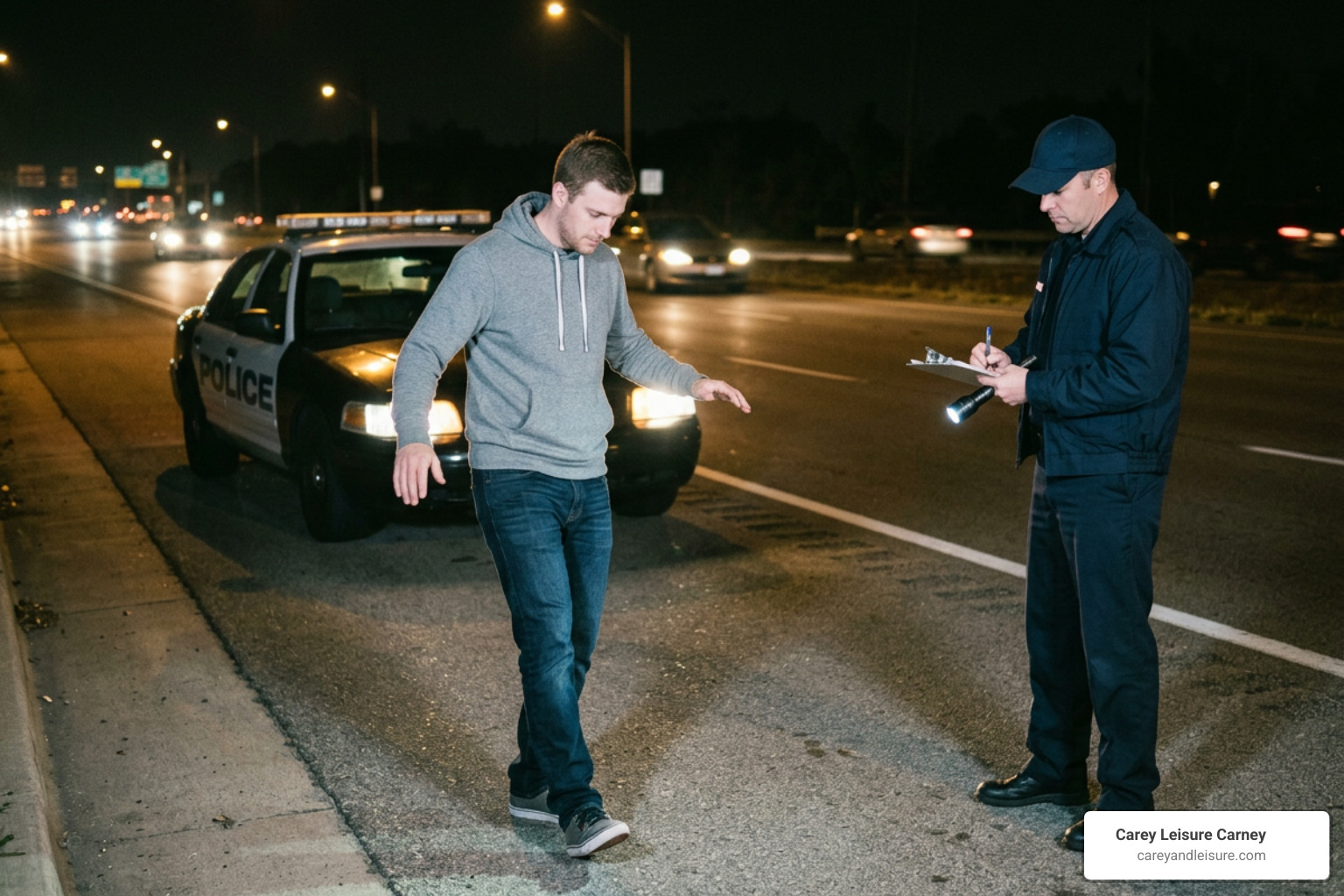
Under Florida law, driving under the influence applies not only to alcohol consumption but also to driving while impaired by illicit narcotics, controlled substances, and even legally prescribed medications. Drivers must also remain mindful of general vehicular regulations, such as what are the open container laws in florida, which make having an unsealed alcoholic container inside a vehicle a direct statutory infraction.
DUI vs. DWI Terminology and Florida Statutes
While different jurisdictions across the country use varying acronyms—such as DWI (Driving While Intoxicated), OWI (Operating While Intoxicated), or OVI (Operating a Vehicle Impaired)—Florida operates strictly under Florida Statute § 316.193, utilizing the universal term DUI (Driving Under the Influence).
Under this statute, an individual is legally guilty of DUI if they are driving or in actual physical control of a vehicle within Florida and:
- Their normal faculties are impaired by alcohol, drugs, or a combination of substances; or
- They have an unlawful blood-alcohol level (BAL) or breath-alcohol level (BAC) of 0.08 or higher.
For commercial drivers operating under a CDL, the limit drops to 0.04, while Florida enforces a strict “zero tolerance” limit of 0.02 for drivers under the age of 21.
The Critical 10-Day Florida DMV License Hearing Window
When someone is arrested for a DUI in Florida, two entirely separate legal processes kick off at the same time: the criminal court proceeding and the administrative driver’s license proceeding managed by the Florida Department of Highway Safety and Motor Vehicles (FLHSMV).
You have exactly 10 calendar days from the date of the arrest to take action regarding your driving privileges.
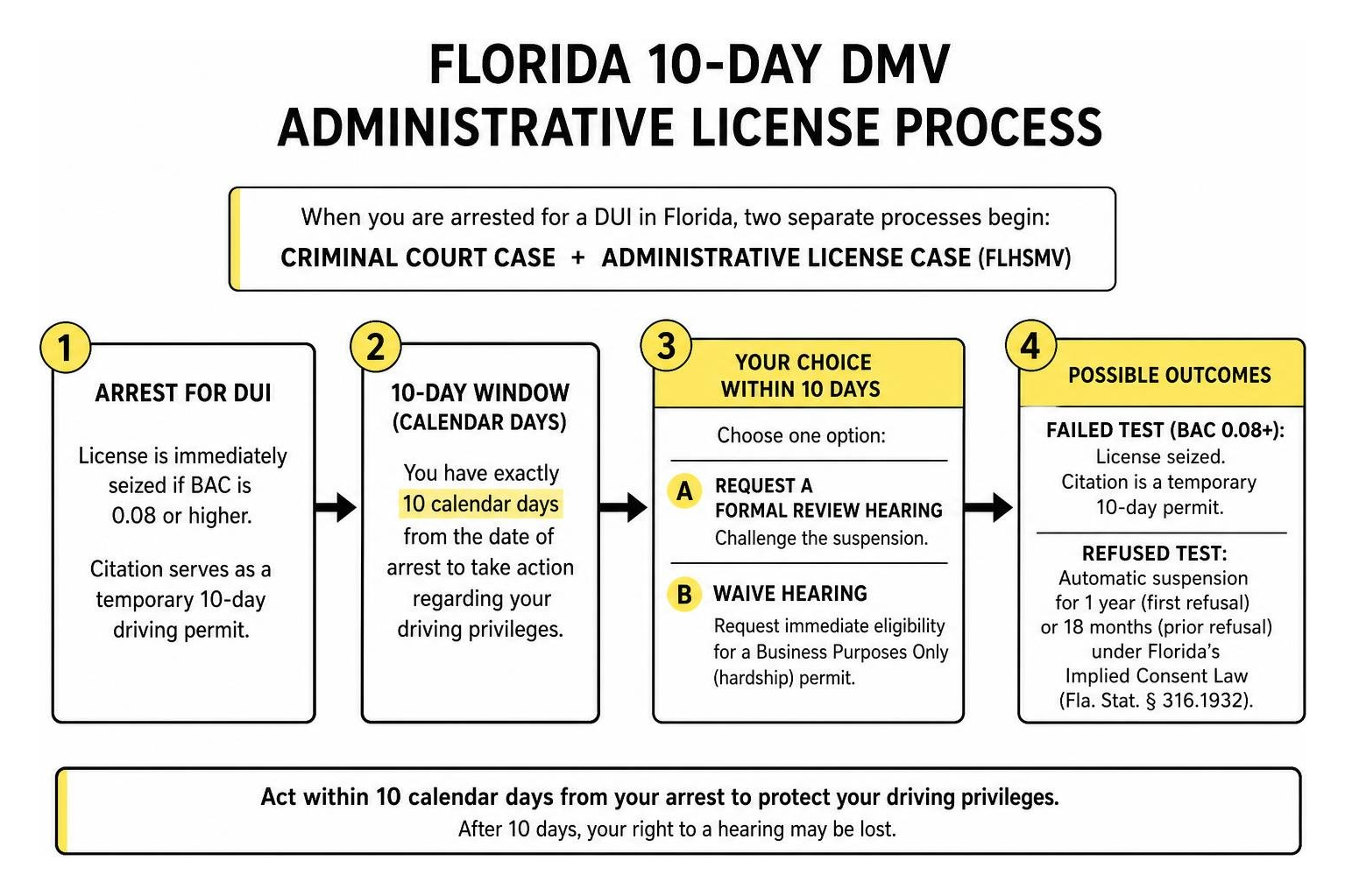
If you blew a 0.08 BAC or higher, your physical driver’s license is seized immediately, and your citation serves as a temporary 10-day driving permit. If you refused chemical testing under Florida’s Implied Consent Law (Florida Statute § 316.1932), your license faces an automatic suspension of one full year for a first refusal (or 18 months if you have previously refused). Within that 10-day window, you must choose between requesting a Formal Review Hearing to challenge the suspension or waiving the hearing to request immediate eligibility for a Business Purposes Only (hardship) permit.
5 Essential Tips for Choosing the Best Drunk Driving Attorney
Whether facing the acute stress of an arrest or seeking justice after being struck by an intoxicated motorist, retaining top-tier legal advocacy directly determines your case outcome. Not all lawyers possess the trial skills, forensic knowledge, or resources required to dismantle complex chemical evidence.
| Legal Consideration | General Practice Attorney | Board-Certified Trial Specialist |
|---|---|---|
| Florida Bar Recognition | General license to practice law | Recognized as an expert/specialist in trial law (top 2% of FL lawyers) |
| Forensic Science Mastery | Basic familiarity with police reports | In-depth training on breathalyzers, gas chromatography, and blood draws |
| Courtroom & Trial Experience | Often negotiates quick settlements/pleas | Extensive jury trial history, evidentiary motion practice, and proven verdicts |
| Direct Attorney Access | Cases frequently assigned to paralegals | Direct communication, personalized strategy, and dedicated trial counsel |
Tip 1: Prioritize Board Certification and Specialized Trial Experience
Board Certification is the highest evaluation given by The Florida Bar regarding attorney competence and experience. Only the top 2% of Florida attorneys achieve Board Certification in trial law. Choosing a firm with Board-Certified trial lawyers ensures your legal team has passed rigorous peer reviews, demonstrated substantial courtroom trial experience, and proven mastery of evidentiary rules.
Tip 2: Assess Deep Knowledge of Scientific and Chemical Evidence
Impaired driving cases turn on hard forensic science. A qualified lawyer must understand the inner workings of chemical testing tools, particularly the Intoxilyzer 8000 used across Florida. Defense counsel must know how to audit machine calibration logs, inspect software versions, review ambient air blank errors, and challenge blood draws analyzed via gas chromatography in crime laboratories.
Tip 3: Confirm Experience with Both Administrative and Courtroom Procedures
Your legal team must be equally comfortable in administrative hearing rooms and formal criminal courtrooms. Fighting an administrative license suspension before the FLHSMV requires a distinct procedural strategy from presenting suppression motions before a circuit or county judge.
Tip 4: Demand Direct Communication and Clear Defense Strategies
Too many law firms treat clients like file numbers, handing off vital communications to junior staff or call centers. You should demand a legal team that offers direct attorney access, listens to the facts of your situation, and constructs a transparent, tailored legal strategy.
Tip 5: Verify Proven Results with Dismissals and Charge Reductions
An established attorney will evaluate whether law enforcement had the necessary reasonable suspicion for the initial traffic stop or probable cause for the arrest. By uncovering procedural violations or faulty calibration records, counsel can advocate to suppress key evidence, negotiate charge reductions to lesser offenses like reckless driving, or seek complete case dismissals.
Civil Liability vs. Criminal Charges in Impaired Driving Crashes
It is critical to distinguish between criminal DUI proceedings and civil personal injury lawsuits. The state prosecutes criminal DUI cases to punish the offender through fines, probation, license revocation, or incarceration. However, criminal restitution rarely covers the full financial, medical, and emotional destruction suffered by victims and their families.
When an impaired driver harms innocent people, our team at Carey Leisure Carney steps in as personal injury trial attorneys. Through the civil justice system, an injured victim or surviving family can pursue an auto accident attorney/drunk driving accident attorney to recover complete financial compensation for medical expenses, future rehabilitation, lost earning capacity, and pain and suffering.
Holding Impaired Drivers Accountable with a Drunk Driving Attorney
When a drunk driver causes catastrophic harm, Florida law allows victims to pursue both compensatory damages and punitive damages. Under Florida Statute § 768.736, the statutory caps that normally limit punitive awards do not apply if the defendant was intoxicated at the time of the collision.
Pursuing drunk driving punitive damages allows us to hold reckless drivers financially accountable for gross negligence while sending an unmistakable message to the community that impaired driving will not be tolerated.
Third-Party Dram Shop and Social Host Accountability
Liability in an impaired driving crash does not always stop with the driver behind the wheel. In certain circumstances, businesses that provide alcohol can also be held liable under Florida Statute § 768.125.
Establishing when bars liable for drunk drivers apply requires proving that an establishment willfully and unlawfully served alcohol to a minor or knowingly served an individual habitually addicted to alcohol. To explore third-party claims in detail, review our dram shop injury attorney ultimate guide.
Frequently Asked Questions About Hiring a Drunk Driving Lawyer
How soon after an arrest should I hire a drunk driving attorney?
You should secure legal representation immediately. You have only 10 calendar days to challenge your administrative driver’s license suspension with the FLHSMV. Acting fast also ensures that critical physical evidence, including police dashcam footage, body-worn camera recordings, and 911 dispatch audio, is preserved before local agency retention windows expire.
What strategies can reduce or dismiss a DUI charge?
Attorneys evaluate several core defense areas to challenge DUI charges:
- Stop Legality: Proving the officer lacked reasonable suspicion to initiate the traffic stop.
- Field Sobriety Flaws: Demonstrating that physical roadside exercises were compromised by uneven pavement, weather, improper instructions, or pre-existing medical conditions.
- Testing Inaccuracies: Uncovering improper calibration, maintenance lapses, or software faults on the Intoxilyzer 8000 breath testing device.
- Constitutional Infringements: Showing that law enforcement conducted an unlawful search or failed to advise you of your constitutional rights during custodial interrogation.
How does an impaired driving conviction affect driving records and insurance?
A DUI conviction in Florida stays on your driving record for 75 years and cannot be sealed or expunged. Additionally, you will be required to obtain FR-44 insurance, which mandates significantly higher liability coverage limits (typically $100,000/$300,000 bodily injury and $50,000 property damage) for three continuous years. This requirement frequently causes auto insurance premiums to double or triple.
Conclusion
Impaired driving creates high-stakes legal challenges, whether you are fighting to protect your livelihood after an arrest or pursuing civil accountability against an intoxicated driver who caused devastation. Navigating these complex statutes requires seasoned, courtroom-tested representation.
At Carey Leisure Carney, our Board-Certified trial attorneys bring over 100 years of combined legal experience to every case we handle across Clearwater, Largo, New Port Richey, Spring Hill, St Petersburg, Trinity, and Wesley Chapel, Florida. We believe in providing direct attorney access, compassionate client care, and aggressive courtroom advocacy to ensure justice is served.
To understand more about state regulations and community safety, explore our comprehensive breakdown of florida alcohol laws or reach out to our team today for dedicated, no-nonsense legal counsel.