
Florida’s #1 Truck Accident Lawyers: Your Guide to Choosing the Best Firm
Why You Need a Specialized commercial truck accident law firm
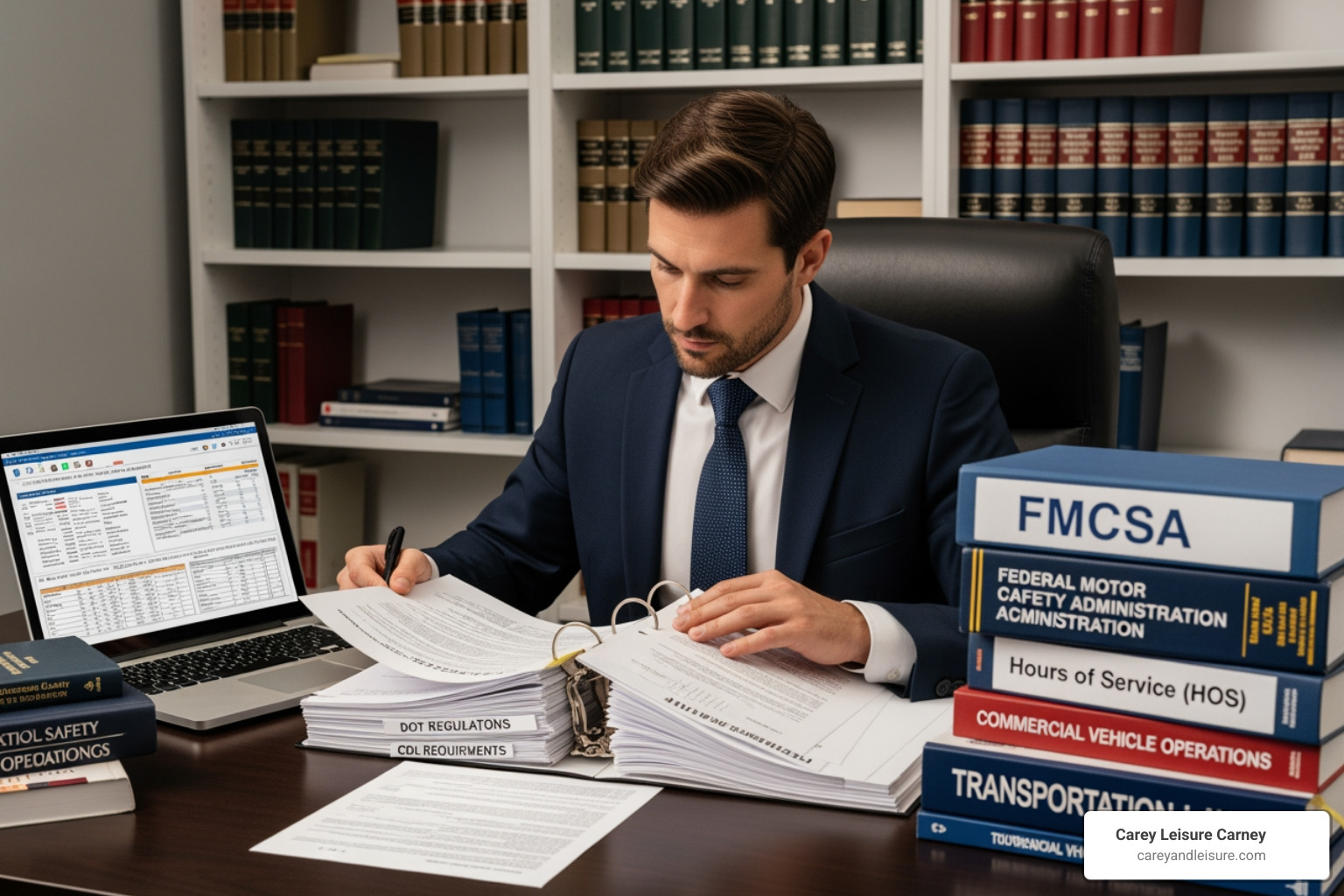
When you are involved in a collision with an 18-wheeler, you aren’t just fighting a driver; you are fighting a massive corporate entity with deep pockets and a team of lawyers whose sole job is to minimize your payout. A general practice lawyer might handle a slip-and-fall one day and a car wreck the next, but a commercial truck accident law firm lives and breathes the complexities of the trucking industry.
The stakes are higher because the physics are different. As of May 2026, the data remains clear: commercial vehicles can weigh up to 40 tons, creating impact forces that a standard sedan simply cannot withstand. This disparity often results in catastrophic injuries that require specialized legal handling. Furthermore, the legal landscape is vastly different. While car accidents are mostly governed by state traffic laws, trucking is regulated by a massive web of federal statutes.
To understand why specialization matters, look at the fundamental differences in how these cases are litigated:
| Factor | Car Accident | Truck Accident |
|---|---|---|
| Insurance Limits | Often $10k–$100k | Typically $750k–$5M+ |
| Regulations | Florida State Statutes | FMCSA Federal Regulations |
| Evidence | Police report, photos | ELD data, Black Box, Logbooks |
| Liable Parties | Usually just the driver | Driver, Carrier, Loader, Manufacturer |
| Defense Strategy | Standard adjusters | Immediate “Go-Teams” of investigators |
If your attorney doesn’t know how to request a “spoliation letter” within the first 48 hours to prevent the destruction of electronic data, your case could be over before it begins. For more detail on these differences, explore our truck accident lawyer complete guide.
The Advantage of a Board-Certified commercial truck accident law firm
In Florida, any lawyer can claim to handle truck accidents. However, only a tiny fraction—roughly 2%—are Board Certified in Civil Trial Law. At Carey Leisure Carney, our attorneys hold this distinction, which is the highest level of evaluation by the Florida Bar. It signifies “Specialist” status.
Why does this matter for your case? Because trucking companies know which firms are willing to go to trial and which ones will settle for the first lowball offer. Board-certified attorneys have the specialized knowledge to dismantle a trucking company’s defense in front of a jury. This expertise is a vital part of the road to recovery and ensures you aren’t leaving money on the table.
Navigating Complex Insurance Policies
Commercial insurance policies are a different beast. While a standard driver might have a $25,000 policy, a commercial carrier often has “layered” coverage. This might include a primary $1 million policy, followed by several layers of “excess” or “umbrella” insurance that can reach $10 million or more.
The problem? The more money is on the line, the more aggressively the insurance company will fight. They use “scorched earth” tactics, often blaming the victim or claiming the equipment failure was an “act of God.” You need a firm that has the resources to out-last and out-maneuver these billion-dollar insurers. If you’re facing these tactics, it’s time to contact a Florida truck accident expert who knows how to break through their defenses.
Identifying Liability: Who is Responsible for Your Injuries?
One of the most common mistakes victims make is assuming only the truck driver is at fault. In reality, a commercial truck accident law firm will often find a “chain of liability” that involves multiple parties. This is crucial because it allows us to tap into multiple insurance policies to cover your medical bills and lost wages.
Under the doctrine of “vicarious liability,” a trucking company is generally responsible for the actions of its drivers. However, we also look for “direct negligence” by the company itself. For a deeper dive into these complexities, see our guide on the big rig breakdown: navigating semi-truck accident claims.
Potentially Liable Parties Include:
- The Truck Driver: For fatigue, distraction, or DUI.
- The Trucking Company: For negligent hiring or pressuring drivers to skip rest.
- The Cargo Loader: If an unbalanced load caused a rollover or jackknife.
- The Maintenance Provider: If faulty brakes or worn tires caused the crash.
- The Manufacturer: If a defective part (like a steering linkage) failed.
Trucking Company Negligence
Trucking companies are notorious for prioritizing profits over safety. We often find that companies pressure their drivers to exceed the legal “Hours of Service” (HOS) to meet delivery deadlines. When a company hires a driver with a history of safety violations or fails to provide adequate training, they are directly liable for the carnage that follows.
This is a key distinction between truck accidents and car crashes; the corporate culture of the carrier often plays a starring role in the lawsuit.
Third-Party Liability
Sometimes, the fault lies with a company that never even touched the steering wheel. For example, if a third-party contractor failed to secure a heavy coil of steel and it rolled off the trailer in Clearwater, that contractor is liable. Similarly, if a tire blowout was caused by a manufacturing defect, we can pursue a product liability claim against the tire maker. Understanding liability in commercial crashes requires an exhaustive investigation into every entity involved in that truck’s journey.
Crucial Evidence and the Role of Federal Regulations
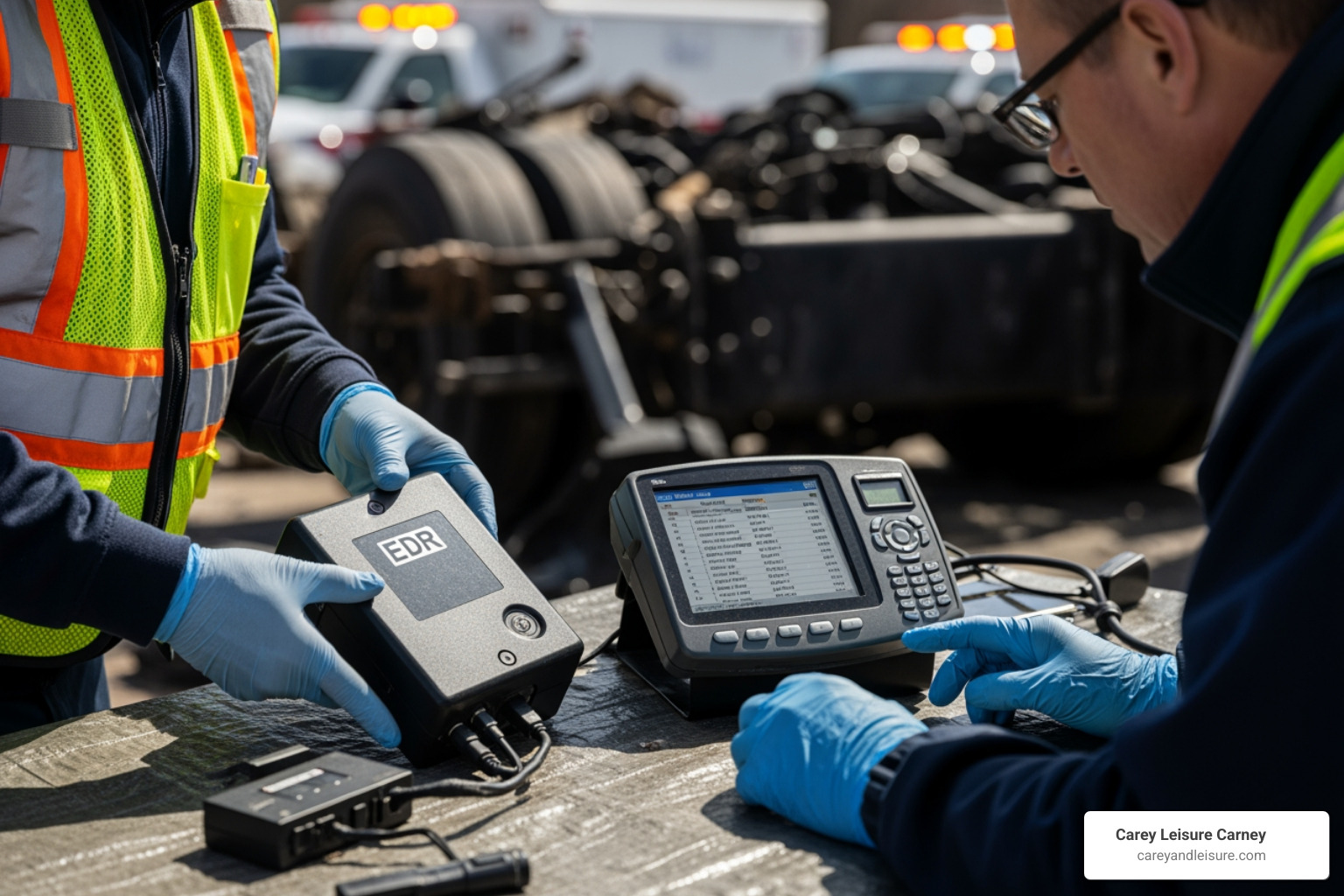
In a standard car accident, evidence usually consists of a few photos and a police report. In a commercial crash, the most important evidence is digital. The Federal Motor Carrier Safety Administration (FMCSA) mandates that trucks use Electronic Logging Devices (ELDs) to track driving time.
As your commercial truck accident law firm, we immediately move to secure this data. If the ELD shows the driver had been behind the wheel for 15 hours straight, we have an “open and shut” case of negligence. You can learn more about how we use this data in our truck accident injury attorneys complete guide.
How a commercial truck accident law firm Investigates Your Case
We don’t just wait for the police report. We conduct our own forensic investigation. This includes:
- ELD Data & Driver Logbooks: To check for HOS violations.
- The “Black Box” (ECM): This records speed, braking, and throttle position at the moment of impact.
- Maintenance Records: To see if the truck had “out-of-service” defects that were ignored.
- Cell Phone Records: To prove the driver was distracted at the time of the collision.
The role of a truck accident lawyer is to be a detective as much as a litigator.
The Importance of Immediate Evidence Preservation
Trucking companies have a “right” to destroy records after a certain period—unless they are told otherwise. We send “Spoliation Letters” immediately to the carrier, legally requiring them to preserve the truck, the data, and the driver’s records.
Whether it’s a local delivery van or a massive FedEx truck accident, the evidence can “disappear” or the truck can be repaired and sent back on the road within days if your lawyer doesn’t act fast.
Steps to Take After a Florida Trucking Collision
The moments following a truck crash are chaotic, but what you do (and don’t do) will dictate the success of your future claim. If you are in Clearwater, Largo, or anywhere in the Tampa Bay area, follow these steps religiously. If you need local help, check our New Port Richey truck accident help resources.
Post-Accident Action List:
- Call 911: Ensure a police report is filed. Commercial drivers are often required to undergo immediate drug/alcohol testing after a crash.
- Take Photos: Capture the positions of the vehicles, the skid marks, and the corporate logos on the truck.
- Gather Witness Info: Trucking company lawyers will try to twist the facts; independent witnesses are your best defense.
- Do Not Give a Statement: The trucking company’s insurance adjuster will call you, often appearing “helpful.” They are not. Do not sign anything or record any statements.
- Seek Medical Care: Even if you feel “fine,” the adrenaline of a crash can mask internal bleeding or spinal injuries.
Immediate Safety and Reporting
In Florida, a driver error contributes to over 80% of all large truck crashes. Reporting the accident accurately to the police is the first step in documenting that error. Ensure the officer notes any admissions the truck driver makes at the scene.
Medical Evaluation and Legal Consultation
Truck accidents often cause “coup-contrecoup” brain injuries or internal organ damage that doesn’t show symptoms for 48 hours. Getting a full medical screening isn’t just for your health—it’s for your case. Once you are stable, your next call should be to a firm with a long truck accident legacy of winning these specific cases.
Maximizing Your Compensation and Recovery
The goal of a commercial truck accident law firm is to make you whole. Because injuries from these crashes are often permanent, “fair” compensation must account for the rest of your life, not just your current bills.
Recoverable Damages Include:
- Economic Damages: Medical bills (past and future), lost wages, and home modifications.
- Non-Economic Damages: Pain and suffering, mental anguish, and loss of enjoyment of life.
- Wrongful Death Damages: For families who have lost a loved one.
For more information on the types of injuries we see, read when big rigs collide: a guide to truck accident injuries.
Calculating Long-Term Costs
If you can no longer work or if you require 24/7 nursing care, we hire life-care planners and vocational experts to calculate those costs. We don’t guess—we use data to ensure your settlement lasts as long as your injury does. Many victims worry about the cost of this expertise, but you can learn how much a truck accident lawyer costs (hint: we work on contingency, so there are no upfront costs).
Pursuing Punitive Damages
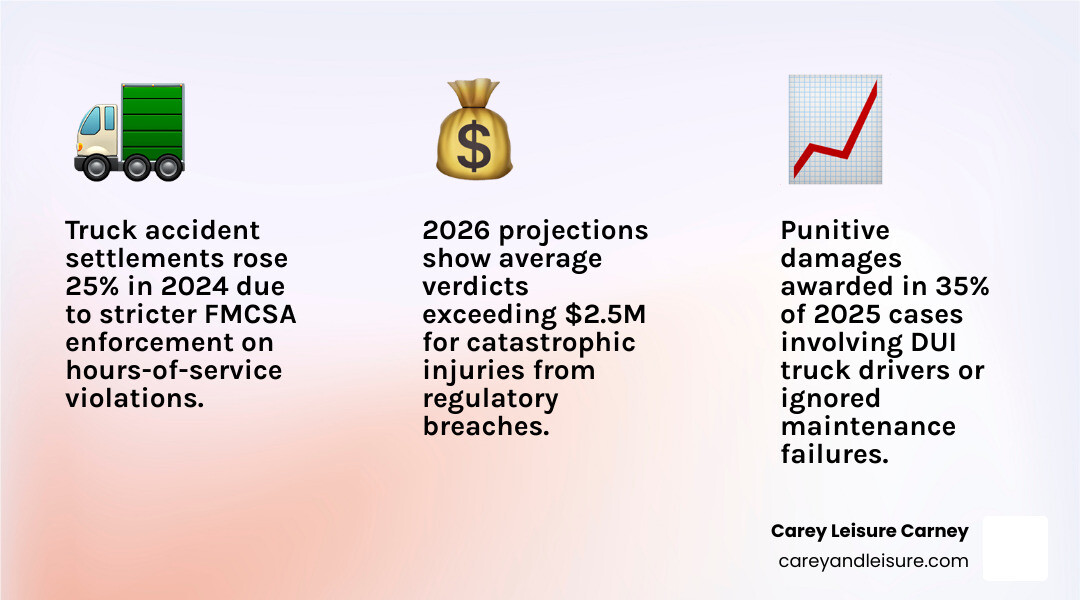
In cases of “gross negligence”—such as a truck driver operating under the influence or a company intentionally ignoring brake failures—we may pursue punitive damages. These are designed to punish the wrongdoer and prevent others from doing the same.
Frequently Asked Questions about Truck Accidents
How long do I have to file a truck accident claim in Florida?
As of May 2026, Florida’s statute of limitations generally provides a two-year window for personal injury claims (following recent legislative changes). However, in trucking cases, you should never wait. Evidence like ELD data and black box recordings can be legally purged by the company in as little as six months if a lawsuit hasn’t been initiated.
What if I was partially at fault for the truck accident?
Florida follows a “modified comparative negligence” system. This means you can still recover compensation as long as you are not more than 50% at fault. Your total award will be reduced by your percentage of fault. For example, if you are awarded $1 million but found 20% at fault, you would receive $800,000.
Why can’t a regular car accident lawyer handle my truck case?
A regular lawyer may not understand how to navigate the “Manual on Uniform Traffic Control Devices” or how to cross-examine a trucking company’s safety director. Trucking companies use elite defense firms; you need an elite commercial truck accident law firm to level the playing field.
Conclusion
At Carey Leisure Carney, we don’t just handle cases; we rebuild lives. With over 100 years of combined experience and a team of board-certified trial lawyers, we have the “knowledge and muscle” to take on the biggest trucking carriers in the world.
From our offices in Clearwater, Largo, and throughout the Tampa Bay area, we provide direct attorney access and a personalized approach that high-volume “settlement mills” simply can’t match. If you or a loved one has been injured, don’t wait for the trucking company to build their defense. Contact Florida’s #1 Truck Accident Lawyers today for a free consultation. We don’t get paid until you get paid.