

The Legal Road to Justice: Suing Trucking Companies After an Accident
Why You Need Specialized Lawyers That Sue Trucking Companies
When you are recovering from a collision with an 18-wheeler, you are not just dealing with the physical pain of your injuries; you are up against a massive corporate entity. Trucking companies do not play by the same rules as everyday drivers, and neither do their insurance carriers. This is why general personal injury representation often falls short. You need specialized lawyers that sue trucking companies who understand the unique landscape of commercial vehicle litigation.
To put the danger in perspective, commercial vehicles represent a disproportionate share of severe accidents. Here in Florida—specifically across Pinellas County, Pasco County, and Hernando County—our highways like I-275, US-19, and local shipping routes see heavy freight traffic daily. When these massive rigs collide with passenger cars, the physical forces involved are devastating, often resulting in severe injuries or wrongful death.
Corporate trucking companies have rapid-response teams of investigators, risk adjusters, and defense attorneys who are often dispatched to the crash scene within hours. Their goal is simple: minimize the company’s financial exposure. To level the playing field, you need an advocate who can step in immediately to preserve vital evidence and build a rock-solid case.
Key Qualifications of Lawyers That Sue Trucking Companies
Not all personal injury attorneys have the specific training or resources required to go toe-to-toe with interstate motor carriers. When searching for the right representation, you should look for several key qualifications:
- Board Certification: This is the gold standard. In Florida, only the top 2% of attorneys are Board-Certified Civil Trial Lawyers. This certification recognizes specialized knowledge, skills, and a proven track record of trial experience. At Carey Leisure Carney, our board-certified attorneys bring this elite level of expertise directly to your case.
- National Board of Trial Advocacy (NBTA) Certification: Specialized certifications in Truck Accident Law demonstrate that an attorney has passed rigorous testing and has extensive experience handling these exact types of cases.
- Trial Readiness: Many firms prefer to settle quickly for whatever the insurance company offers. You want a firm that prepares every single case as if it is going to trial.
Choosing the right firm means finding advocates who understand both the medical realities of your recovery and the legal complexities of commercial transportation. For more guidance, read our article on Florida’s #1 Truck Accident Lawyers: Your Guide to Choosing the Best Firm.
How Lawyers That Sue Trucking Companies Prove Liability
Proving liability in a commercial vehicle crash is far more complex than in a standard car accident. It is rarely just about what the truck driver did in the seconds leading up to the impact. Experienced attorneys look at the big picture to uncover systemic safety failures.
We investigate whether the trucking company itself is directly liable. This involves analyzing several legal avenues:
- Respondeat Superior (Vicarious Liability): Holding the employer responsible for the negligent actions of their driver while on duty.
- Negligent Hiring and Retention: Did the company hire a driver with a history of severe safety violations or DUIs?
- Negligent Maintenance: Did the carrier cut corners on brake repairs, tire replacements, or federally mandated inspections?
- Cargo Loading Failures: Did a third-party cargo loader improperly secure the freight, causing a catastrophic shift in weight that led to a rollover or jackknife?
By identifying every negligent party, we can tap into multiple insurance policies to secure the full compensation you deserve. To understand how these moving parts fit together, check out our breakdown on The Big Rig Breakdown: Navigating Semi-Truck Accident Claims.
How Truck Accident Claims Differ from Standard Car Accidents
Many people assume that a truck accident claim is just a car accident claim with a bigger vehicle. In reality, they are entirely different legal animals. The table below outlines the major differences:
| Feature | Standard Car Accident | Commercial Truck Accident |
|---|---|---|
| Primary Defendant | Individual driver | Driver, motor carrier, cargo loader, manufacturer, broker |
| Governing Law | State traffic statutes | State laws plus extensive Federal Motor Carrier Safety Regulations (FMCSR) |
| Insurance Limits | Often $10,000 to $100,000 | Federal minimum of $750,000, often reaching millions in umbrella policies |
| Key Evidence | Police report, photos, basic eyewitness statements | Black box (ECM) data, electronic logs (ELD), maintenance files, drug test results |
| Injury Severity | Mild to severe | Highly catastrophic, permanent disability, or wrongful death |
For a deeper dive into these differences, read our comparison on Truck Accidents and Car Crashes.
The Severity of Truck Accident Injuries
Because of the massive weight discrepancy between an 80,000-pound commercial vehicle and a 4,000-pound passenger car, the physical consequences of these collisions are often life-altering. Victims regularly suffer from:
- Traumatic Brain Injuries (TBIs): Causing cognitive impairments, memory loss, and personality changes.
- Spinal Cord Damage: Resulting in partial or complete paralysis.
- Amputations and Severe Orthopedic Fractures: Requiring multiple surgeries and extensive physical therapy.
- Internal Organ Damage: Caused by the extreme blunt-force impact.
These injuries lead to astronomical medical expenses, long-term care needs, and a devastating loss of earning capacity. We understand the physical and emotional toll these injuries take on families, which we cover in detail in our guide, When Big Rigs Collide: A Guide to Truck Accident Injuries.
Multiple Liable Parties and Corporate Defendants
In a standard car crash, you are usually dealing with one driver and their insurance company. In a commercial truck accident, there is often a web of corporate entities trying to point the finger at one another.
The trucking company may claim the driver was an independent contractor to escape liability. However, courts look at the actual control the carrier exerted over the driver—such as controlling their routes, providing their equipment, and dictating their hours—rather than just the label on a contract.
Additionally, freight brokers can be held accountable for putting unsafe carriers on the road, and parts manufacturers can be sued if a mechanical failure, like a brake malfunction, caused the crash. Navigating this multi-defendant landscape requires the strategic approach of dedicated Florida Truck Accident Lawyers.
Key Regulations and Evidence in Commercial Trucking Lawsuits
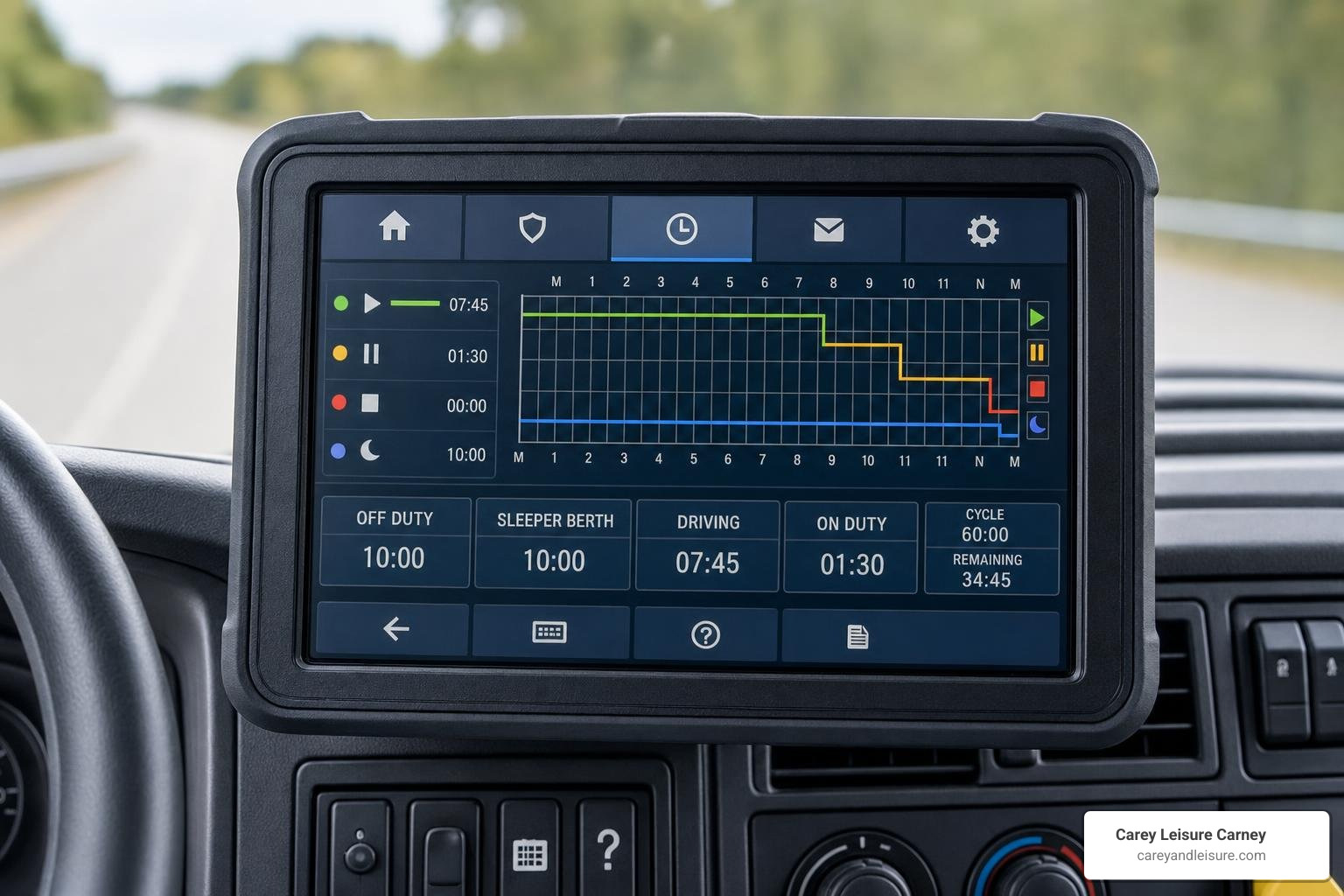
One of the main reasons you need specialized lawyers that sue trucking companies is the complex web of federal and state regulations that govern the trucking industry. If a truck driver or carrier violates these rules, it can serve as powerful evidence of negligence in your lawsuit.
Federal and State Trucking Regulations
The Federal Motor Carrier Safety Administration sets strict safety standards that interstate carriers must follow. Key regulations include:
- Hours of Service (HOS) Rules: To prevent fatigued driving, commercial drivers are limited to a maximum of 14 consecutive hours on duty, with no more than 11 hours of actual driving time, and they must be off-duty for at least 10 consecutive hours before starting a new shift.
- Commercial Driver’s License (CDL) Requirements: Drivers must meet strict physical and educational standards to operate these vehicles.
- Drug and Alcohol Testing: Carriers must conduct pre-employment, random, and post-accident drug and alcohol screenings.
- Weight and Dimension Limits: Florida and federal laws restrict how heavy a truck can be to prevent braking failures and road damage.
When we investigate a crash, we look for any violations of these rules. For example, in 2020, distracted driving alone claimed 3,142 lives nationally. When truck drivers engage in distracted driving or violate HOS limits, the consequences are catastrophic. Learn more about how we use these regulations to build your case in The Road to Recovery: Securing the Best Legal Help After a Truck Accident.
Crucial Evidence Gathered by Attorneys
In a truck accident case, crucial evidence can disappear quickly. Trucking companies are legally allowed to destroy certain records after a set period unless a formal legal hold is placed on them. This is why we immediately send comprehensive spoliation letters (preservation of evidence letters) to the trucking company.
Key evidence we gather and analyze includes:
- Electronic Logging Device (ELD) Data: To verify if the driver was operating within legal hours of service.
- Black Box (ECM) Data: Revealing the truck’s speed, braking patterns, and throttle position in the seconds before the crash.
- Driver Qualification Files: Including medical certificates, training history, and past traffic violations.
- Maintenance Logs: To check if the truck was safe to be on the road.
- Dashcam Footage: Providing a visual record of the collision.
If you are looking for local representation in your area, you need a firm that serves Wesley Chapel, Spring Hill, and New Port Richey, such as our team at Carey Leisure Carney. Ensuring your chosen firm has the resources to immediately secure this high-tech evidence is critical. You can learn more about our local services on our Truck Accident Attorney New Port Richey page, or explore how we handle these complex investigations at our Florida Truck Accident Lawyers practice page.
The Legal Process and Timeline for Suing a Motor Carrier

Filing a lawsuit against a commercial motor carrier is a structured process that requires meticulous preparation at every stage.
Investigating the Crash and Building the Case
We do not rely solely on the police report. We partner with top-tier accident reconstructionists, forensic engineers, and medical experts to build your case.
Our rapid response approach allows us to analyze the crash scene, measure skid marks, inspect the physical damage on all vehicles, and download the electronic data from the truck’s onboard computer. These experts can recreate the crash in a digital format, showing exactly how the trucking company’s negligence caused the collision. To see how these specialists protect your claim, read Beyond the Crash: How Expert Witnesses Can Make or Break Your Truck Accident Case.
Understanding the Statute of Limitations in Florida
Timing is everything. Under Florida Statute §95.11(5)(a), the statute of limitations for filing a negligence-based personal injury lawsuit is two years from the date of the accident.
If you are filing a wrongful death claim on behalf of a loved one, the timeline is also strictly monitored. Missing these legal deadlines means you will permanently lose your right to seek compensation. Because building a solid commercial truck case takes time, it is vital to contact an attorney as soon as possible. For a complete timeline of the legal process, consult our Truck Accident Lawyer Complete Guide and our Truck Accident Injury Attorneys Complete Guide.
Frequently Asked Questions About Trucking Accident Lawsuits
How much does it cost to hire a truck accident lawyer?
At Carey Leisure Carney, we represent truck accident victims on a contingency fee basis. This means there are absolutely no upfront costs or hourly fees. We pay for all the litigation expenses—including hiring expert witnesses, securing black box data, and filing court documents. We only get paid if we successfully recover money for you through a settlement or a jury verdict. For a detailed breakdown of how this works, see How Much Does a Truck Accident Lawyer Cost?.
What if I was partially at fault for the truck accident in Florida?
Florida operates under a modified comparative negligence system. You can still recover damages as long as you are not more than 50% at fault for the crash. If you are found to be partially responsible, your financial recovery will be reduced by your percentage of fault. For example, if you are awarded $1,000,000 but found to be 20% at fault, you will receive $800,000. Our job is to present the evidence clearly to ensure the trucking company is held fully accountable for their share of the blame.
What damages can I recover in a lawsuit against a trucking company?
Victims of truck accidents can pursue several types of compensation:
- Economic Damages: Coverage for tangible financial losses, including past and future medical bills, rehabilitative care, lost wages, and loss of future earning capacity.
- Non-Economic Damages: Compensation for intangible losses, such as physical pain and suffering, mental anguish, loss of enjoyment of life, and loss of consortium.
- Punitive Damages: In rare cases where the trucking company or driver engaged in intentional misconduct or gross negligence (such as driving under the influence or consciously ignoring severe mechanical failures), the court may award punitive damages to punish the wrongdoer and deter others.
Conclusion
When you are facing the devastating aftermath of a commercial truck accident, you should not have to fight corporate legal teams alone. You deserve personalized representation from a firm that has the resources, experience, and dedication to stand up to major motor carriers and their insurers.
At Carey Leisure Carney, our board-certified civil trial lawyers bring over a century of combined legal experience to your side. We serve clients across Clearwater, Largo, New Port Richey, Spring Hill, St. Petersburg, Trinity, and Wesley Chapel. We pride ourselves on offering direct attorney access—meaning you will work directly with your lawyer, not just a case manager.
If you are ready to take the first step toward recovery, we are here to help. Contact us today at our main Clearwater office or any of our convenient Tampa Bay locations for a free, confidential consultation. Let us handle the legal battle so you can focus on healing. Visit our Florida Truck Accident Lawyers page to get started.