

How a Crosswalk Injury Attorney Can Save Your Case
When You Need a Crosswalk Injury Attorney: What Florida Pedestrians Should Know First
If you’re looking for a crosswalk injury attorney, here’s what matters most right now:
Quick answers for injured pedestrians in Florida:
- You likely have a valid claim — drivers who fail to yield in marked crosswalks are generally considered negligent under Florida law.
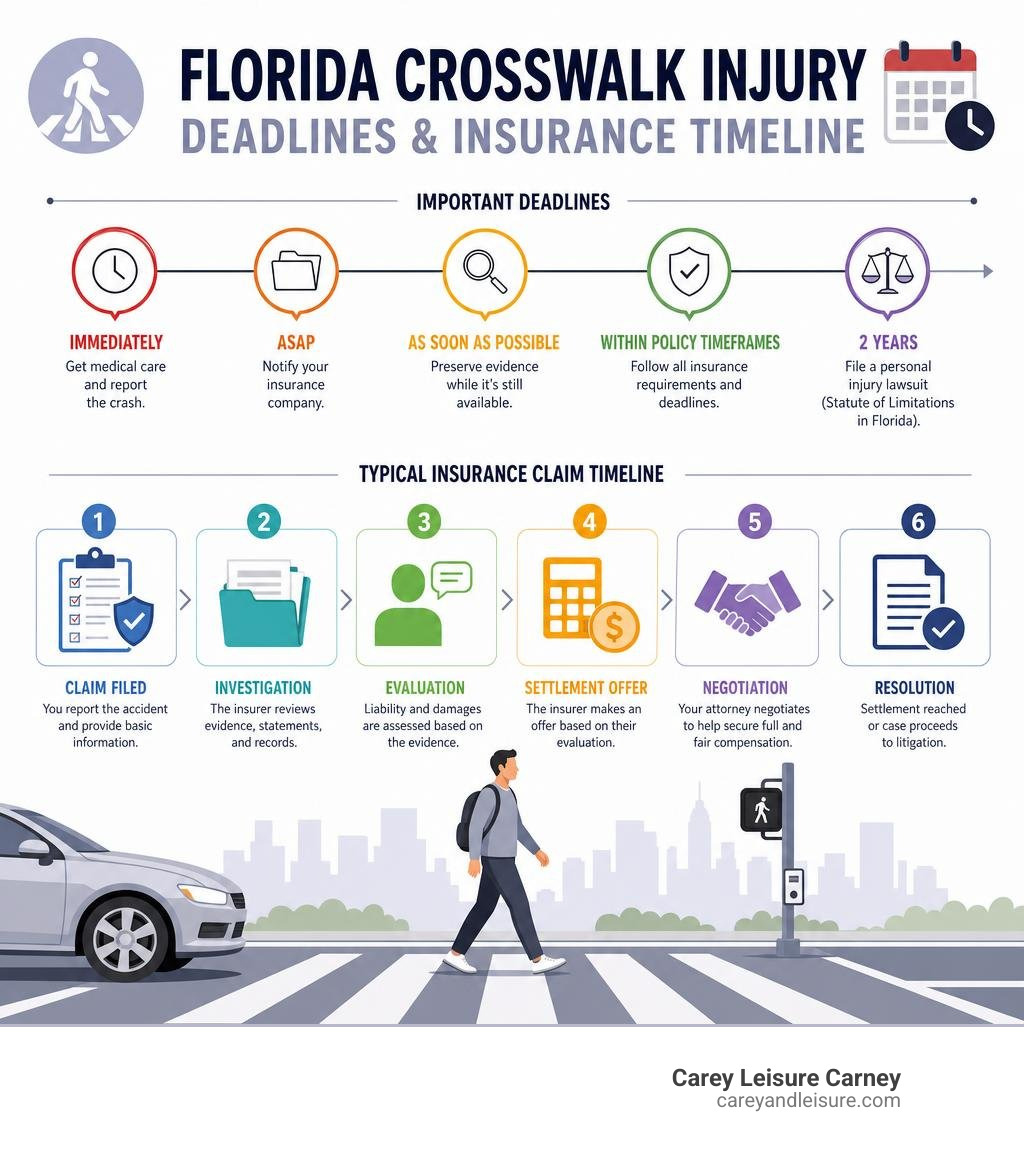
- You have a 2-year deadline — Florida’s statute of limitations for personal injury claims is two years from the date of your accident (for accidents after March 24, 2023).
- You can still recover compensation even if you were partly at fault — as long as you were 50% or less responsible under Florida’s modified comparative negligence rule.
- Insurance companies will move fast — and they are not on your side. An attorney protects you from low offers and recorded statements that can hurt your case.
- Free consultations are standard — most crosswalk injury attorneys, including Carey Leisure Carney, charge nothing unless they win.
Crosswalks are supposed to be the safest place to cross a street. But in Clearwater and across the Tampa Bay area, being in a marked crosswalk offers no guarantee of safety. Tampa Bay has seen nearly 1,300 pedestrian deaths over the past decade. In 2025 alone, Hillsborough County recorded 682 pedestrian crashes — resulting in 611 injuries and 51 fatalities.
When a driver strikes a pedestrian in a crosswalk, the consequences are rarely minor. Without the protection of a vehicle’s frame, airbags, or seatbelt, a pedestrian absorbs the full force of the impact. Medical bills pile up fast. Paychecks stop. And insurance companies begin working immediately to minimize what they pay out.
That pressure — financial, physical, and emotional — is exactly what a crosswalk injury attorney is trained to handle.
I’m Thomas W. Carey, founding partner of Carey Leisure Carney and a board-certified civil trial lawyer with over three decades of experience representing injured pedestrians and crosswalk accident victims across Pinellas County and Florida. As a crosswalk injury attorney, I’ve seen how quickly critical evidence disappears and how aggressively insurers fight these claims — and what it takes to win.
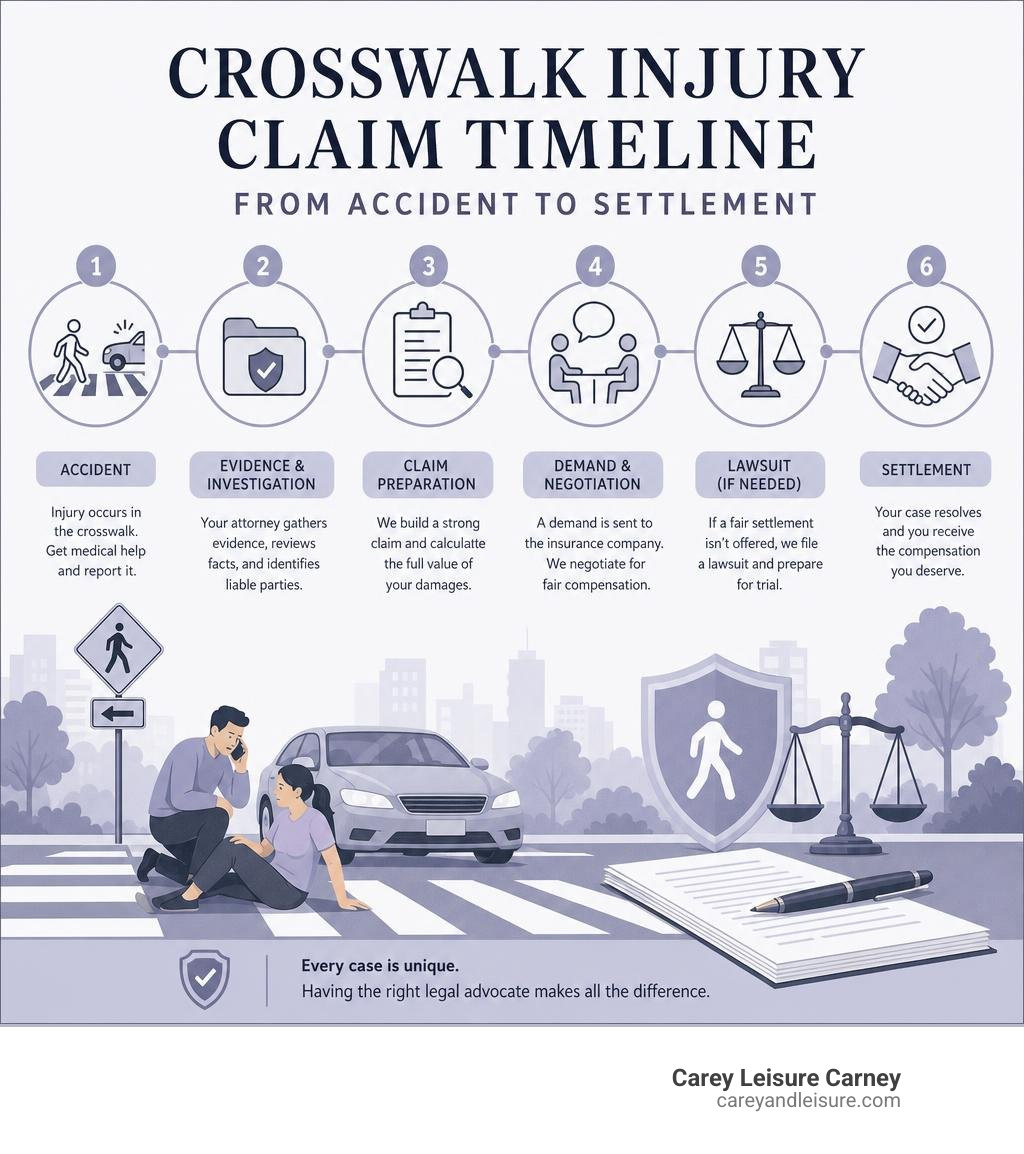
Important crosswalk injury attorney terms:
Why Crosswalk Accidents Happen in Clearwater and Tampa Bay
Crosswalk accidents usually happen because a driver fails to treat the crosswalk like what it is: a safety zone for people on foot.
In Clearwater, Largo, St. Petersburg, New Port Richey, Spring Hill, Trinity, and Wesley Chapel, pedestrian crashes often occur near busy intersections, beach roads, school zones, parking lots, shopping centers, and high-traffic corridors. Add tourists, distracted drivers, heavy seasonal traffic, and Florida sunshine glare, and even a short walk across the street can become risky.
Common causes include:
- Drivers failing to yield to pedestrians in marked crosswalks
- Speeding through intersections
- Left-turn and right-turn crashes
- Running red lights or rolling through stop signs
- Distracted driving, especially texting
- Impaired driving
- Poor lighting at night
- Drivers looking for cars but not pedestrians
- Congested parking lots and beach access roads
- Aggressive driving during rush hour

Common Driver Mistakes That Cause Crosswalk Injuries
The most common driver mistake is simple: the driver does not look carefully enough before entering the crosswalk.
That often happens when a driver is:
- Checking a phone
- Looking left for traffic while turning right
- Rushing through a yellow light
- Rolling through a stop sign
- Turning left across a crosswalk without scanning for pedestrians
- Driving too fast for the area
- Driving under the influence
- Failing to adjust for darkness, rain, or poor visibility
A driver may say, “I never saw them.” That is not always a defense. In many crosswalk cases, “I never saw them” really means “I failed to keep a proper lookout.”
Pedestrian Factors Insurance Companies May Use Against You
Even when a pedestrian is seriously hurt, insurance companies may look for ways to blame the person who was hit. We have seen insurers focus on details such as:
- Whether the pedestrian entered during a countdown signal
- Whether the pedestrian was wearing dark clothing
- Whether headphones were being used
- Whether the pedestrian was looking at a phone
- Whether the person crossed outside the marked lines
- Whether the crash happened mid-block
- Whether witnesses disagree about the traffic signal
- Whether the police report contains unclear or incomplete details
This is where a crosswalk injury attorney can make a major difference. We work to separate speculation from evidence. A driver’s claim that a pedestrian “came out of nowhere” should not be accepted as fact without reviewing video, witness statements, vehicle speed, road design, lighting, and signal timing.
Important tip: do not apologize, guess, or admit fault at the scene. Saying “I’m sorry” may feel polite, but insurance companies have a special talent for turning normal human kindness into a liability argument. They do not need extra help.
What to Do Immediately After a Crosswalk Injury in Florida
What you do in the first hours and days after a crosswalk crash can affect your health and your legal case.
If you are physically able, take these steps:
- Call 911 immediately.
- Ask for police and medical help.
- Accept emergency care if you are hurt.
- Get the driver’s name, phone number, license plate, and insurance information.
- Take photos of the vehicle, crosswalk, traffic signals, skid marks, debris, and your injuries.
- Get witness names and contact information.
- Look for nearby cameras on businesses, homes, buses, dashcams, or traffic poles.
- Save your shoes, clothing, backpack, phone, or other damaged items.
- Get medical treatment the same day if possible.
- Avoid posting about the crash on social media.
- Speak with an attorney before giving recorded statements.
For a deeper checklist, read our guide on what to do after being a pedestrian accident victim.
Medical Care and Documentation Come First
Your health comes first. Always.
Pedestrian injuries can be deceptive because adrenaline can mask pain. A person may feel “shaken up” at the scene and then wake up the next day with severe neck pain, dizziness, numbness, or abdominal pain.
Common hidden injuries include:
- Concussions
- Internal bleeding
- Spinal disc injuries
- Soft tissue injuries
- Ligament tears
- Fractures that are not obvious right away
Medical records also help prove causation. In plain English: they connect the crash to your injuries. If there is a long gap between the accident and treatment, the insurance company may argue that something else caused your pain.
Follow your doctor’s instructions, attend follow-up appointments, take prescribed medications, and keep records of therapy, imaging, specialist visits, and out-of-pocket expenses.
Preserve Evidence Before It Disappears
Crosswalk evidence can disappear fast. Surveillance video may be overwritten in days. Skid marks fade. Vehicles get repaired. Witnesses become harder to find.
Important evidence may include:
- Police crash report
- 911 call records
- Bodycam or dashcam footage
- Traffic camera footage
- Nearby business surveillance video
- Photos of the scene
- Vehicle damage photos
- Pedestrian signal timing
- Weather and lighting conditions
- Driver phone records
- Vehicle black box data
- Witness statements
- Medical records
- Damaged clothing and personal items
An attorney can send preservation letters quickly to prevent key evidence from being destroyed.
How a Crosswalk Injury Attorney Can Save Your Case in Clearwater, Florida
A serious crosswalk injury case is not just about proving you were hurt. It is about proving how the crash happened, who is legally responsible, what insurance applies, and how much your future losses are worth.
At Carey Leisure Carney, we help injured pedestrians across Clearwater, Largo, St. Petersburg, New Port Richey, Spring Hill, Trinity, Wesley Chapel, and surrounding Florida communities. Our firm handles auto accident and personal injury claims, and our Board-Certified attorneys are part of a small percentage of Florida lawyers recognized for civil trial expertise. We also offer direct attorney access and personalized service, because no one wants to explain their fractured femur to a call center.
For a broader overview, see our Pedestrian Accident Attorney Ultimate Guide.
How a Crosswalk Injury Attorney Proves Driver Negligence
To prove negligence, we generally need to show four things:
- The driver owed you a duty of care.
- The driver breached that duty.
- The breach caused the crash.
- You suffered damages.
In a crosswalk case, breach of duty may involve:
- Failing to yield
- Running a red light
- Turning without checking the crosswalk
- Speeding
- Driving distracted
- Driving impaired
- Violating traffic signs or signals
We may use traffic citations, witness statements, surveillance footage, accident reconstruction, vehicle speed analysis, phone records, and signal timing evidence to prove what happened.
Florida drivers must use reasonable care to avoid hitting pedestrians. Pedestrians also have duties, such as obeying traffic signals, but a driver cannot ignore a person in the roadway simply because the situation is inconvenient.
How a Crosswalk Injury Attorney Handles Insurance Companies
Insurance companies often sound friendly at first. That does not mean they are neutral.
Adjusters may ask for recorded statements, push quick settlements, question your medical care, argue you were partly at fault, or claim your injuries are unrelated. A quick settlement may seem tempting when bills are stacking up, but it can be a costly mistake if you need surgery or long-term care later.
We help by:
- Handling insurance calls and letters
- Identifying all available coverage
- Coordinating Florida PIP benefits
- Reviewing uninsured or underinsured motorist coverage
- Calculating medical bills and future care needs
- Negotiating medical liens
- Preparing a detailed demand package
- Filing a lawsuit when needed
- Building the case as if trial may happen
Trial readiness matters. Insurance companies tend to take claims more seriously when they know the law firm is prepared to prove the case in court.
The Most Important Evidence in a Strong Crosswalk Injury Claim
The strongest crosswalk claims usually include a combination of evidence, not just one piece.
Key evidence includes:
- Police report
- Medical records
- Photos and videos
- Witness statements
- Traffic signal data
- Crosswalk and intersection measurements
- Driver statements
- Vehicle damage
- Crash reconstruction reports
- Wage and employment records
- Future medical care plans
- Expert opinions
- Proof of pain, limitations, and daily-life changes
A case is often won in the details. The angle of impact, the timing of a pedestrian signal, the location of debris, or a single camera across the street can change the entire liability picture.
Compensation, Fault, and Florida Deadlines After a Crosswalk Accident
A crosswalk accident claim may include compensation for financial losses, physical pain, emotional trauma, and long-term life changes. The value depends on the severity of the injury, available insurance, fault disputes, and the quality of the evidence.
For more on the claim process, read From Sidewalk to Settlement: Navigating Your Pedestrian Injury Claim.
What Damages Can Injured Pedestrians Recover?
Recoverable damages may include:
- Ambulance and emergency room bills
- Hospitalization
- Surgery
- Physical therapy
- Prescription medication
- Specialist care
- Medical devices, braces, walkers, or wheelchairs
- Future medical care
- Lost wages
- Reduced earning capacity
- Pain and suffering
- Emotional distress
- PTSD, anxiety, or depression
- Scarring or disfigurement
- Permanent disability
- Loss of enjoyment of life
- Household help
- Wrongful death damages for surviving family members
In the most serious cases, damages may include long-term nursing care, home modifications, vocational retraining, and future loss of income.
Can You Recover Compensation If You Were Partially at Fault?
Yes, as long as you were not more than 50% at fault.
Florida now uses a modified comparative negligence system for most negligence cases. If you are 50% or less responsible, your compensation may be reduced by your percentage of fault. If you are more than 50% responsible, you may be barred from recovery.
Example:
| Fault finding | Total damages | Possible recovery |
|---|---|---|
| Driver 100% at fault | $100,000 | $100,000 |
| Pedestrian 20% at fault | $100,000 | $80,000 |
| Pedestrian 50% at fault | $100,000 | $50,000 |
| Pedestrian 51% at fault | $100,000 | $0 |
This is why evidence matters so much. Insurance companies may argue that you crossed too late, wore dark clothing, or were distracted. We work to challenge those arguments with facts.
Florida Statute of Limitations and Claim Deadlines
Florida deadlines can be strict. Missing one can damage or destroy your case.
| Deadline or issue | General Florida rule |
|---|---|
| Personal injury lawsuit for crashes after March 24, 2023 | Generally 2 years from the accident date |
| Personal injury lawsuit for crashes on or before March 23, 2023 | May be subject to prior 4-year deadline |
| Wrongful death claim | Generally 2 years from the date of death |
| PIP medical treatment | Initial medical treatment generally required within 14 days |
| Government-related claims | Special notice rules may apply |
| Insurance reporting | Report promptly under your policy terms |
| Evidence preservation | Immediately, before video is erased or vehicles are repaired |
Because every case is different, it is smart to have an attorney review your deadline early. You can also review our Florida Pedestrian Laws Complete Guide.
Common Crosswalk Injuries and Insurance Coverage Issues
Crosswalk injuries can be severe because pedestrians have no protection from impact. A passenger has steel, airbags, seatbelts, and crumple zones. A pedestrian has sneakers and optimism. Optimism, unfortunately, is not crash-rated.
For more on settlements and the claims process, see What to Expect: A Guide to Pedestrian Accident Claims and Settlements.
The Most Common Injuries in Crosswalk Accidents
Common injuries include:
- Head injuries
- Concussions
- Traumatic brain injuries
- Broken legs
- Hip fractures
- Pelvic fractures
- Spinal cord injuries
- Herniated discs
- Internal bleeding
- Organ damage
- Road rash
- Deep lacerations
- Nerve injuries
- Amputations
- Neck and back injuries
- PTSD and anxiety
Some injuries require months of rehabilitation. Others permanently change how a person works, sleeps, walks, drives, or cares for family.
How Florida No-Fault Insurance Affects Pedestrians
Florida is a no-fault insurance state. That means Personal Injury Protection, or PIP, may help pay some benefits regardless of who caused the crash.
PIP can generally cover:
- Up to 80% of reasonable medical expenses
- A portion of lost wages
- Certain replacement services
- Up to $10,000 in benefits, depending on the circumstances
However, PIP is limited. It often does not come close to covering a serious pedestrian injury. Once benefits are exhausted, or when injuries meet Florida’s serious injury threshold, an injured pedestrian may pursue a claim against the at-fault driver.
A crosswalk injury attorney can help determine which policy applies, including your own auto policy, a household policy, the driver’s policy, health insurance, and any available UM/UIM coverage.
What If the Driver Was Uninsured, Underinsured, or Fled?
If the driver had no insurance, too little insurance, or fled the scene, you may still have options.
Possible sources of recovery include:
- Your uninsured motorist coverage
- Your underinsured motorist coverage
- A household family member’s auto policy
- Stacked UM coverage, if available
- The at-fault driver’s personal assets
- Other liable parties, depending on the facts
Hit-and-run cases require fast action. Police follow-up, camera footage, witness interviews, and insurance notice requirements are all important.
Frequently Asked Questions About Hiring a Crosswalk Injury Attorney
When should I contact a crosswalk injury attorney after being hit in a crosswalk?
As soon as possible after you receive medical attention. Early legal help can preserve video, identify witnesses, protect you from recorded statements, and make sure insurance deadlines are not missed.
You do not need to know whether you have a “big case” before calling. That is what the consultation is for.
Do pedestrians always have the right of way in Florida crosswalks?
Not always. Florida law gives pedestrians important protections in marked crosswalks, but pedestrians must still obey traffic signals and use reasonable care.
Drivers must yield when required and must use due care to avoid colliding with pedestrians. Turning vehicles are a common danger because drivers may focus on other cars instead of people crossing.
If both the driver and pedestrian made mistakes, Florida comparative fault rules may apply.
What makes a Clearwater crosswalk injury case worth more?
Several factors can increase case value, including:
- Severe or permanent injuries
- Clear driver fault
- Strong video or witness evidence
- Surgery or long-term medical care
- Lost income or reduced earning capacity
- Permanent impairment
- Scarring or disability
- Significant pain and daily limitations
- Available insurance coverage
- Expert support
- A law firm prepared to litigate
A case is not just worth what the medical bills say. It is worth the full impact on your life.
Conclusion
A crosswalk injury case can be saved or lost in the early stages. Medical care, evidence preservation, insurance strategy, and deadline management all matter.
At Carey Leisure Carney, we help injured pedestrians in Clearwater, Largo, New Port Richey, Spring Hill, St. Petersburg, Trinity, Wesley Chapel, and nearby Florida communities. Our Board-Certified attorneys bring over 100 years of combined experience, direct attorney access, and personalized service to serious personal injury cases.
If you were hit in a crosswalk, do not let the insurance company control the story. Let us help protect your case from the start.