
How to Stay Informed on Recent Fatal Crashes
How to Stay Informed After a Fatal Car Accident in Florida
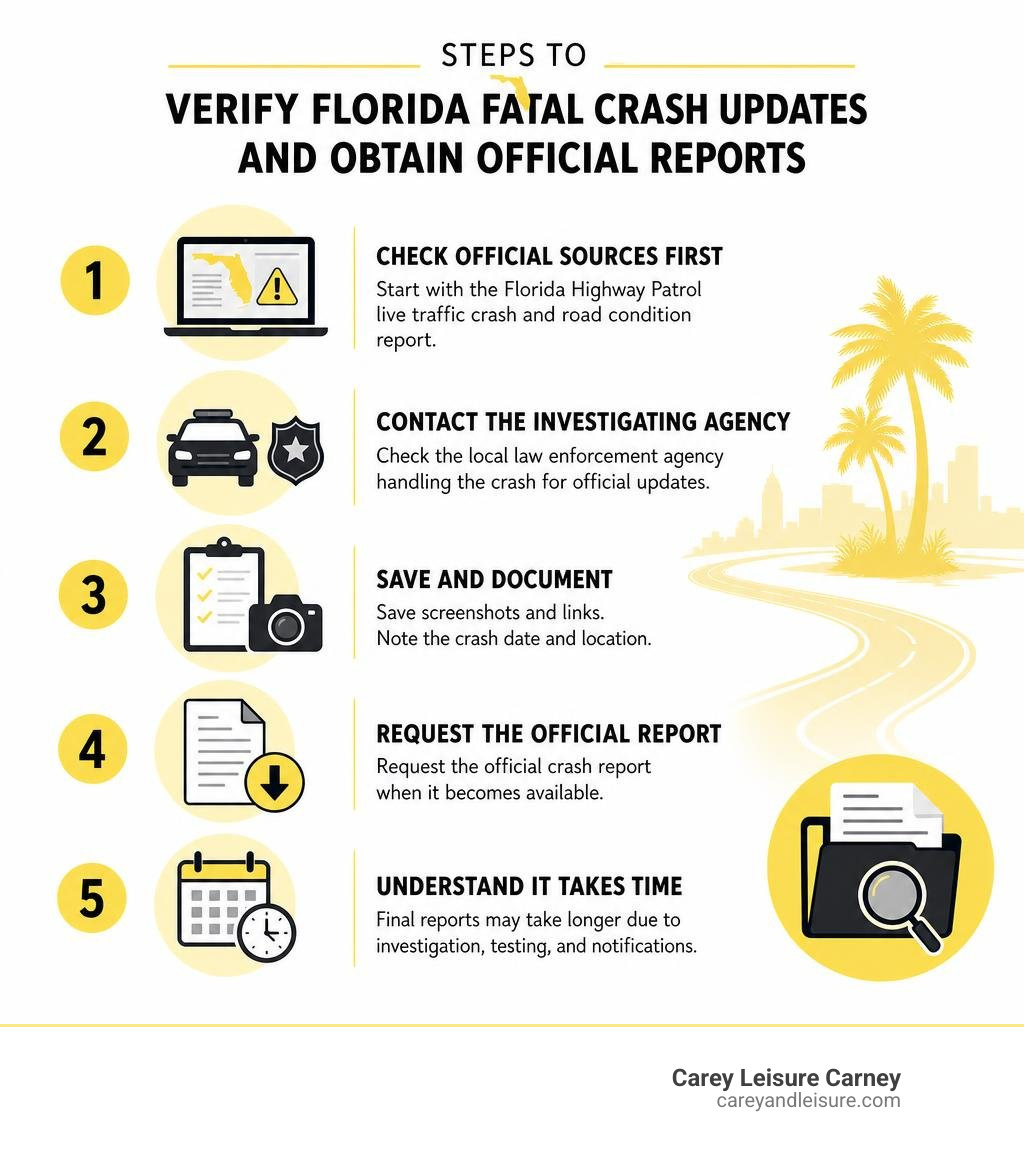
To monitor a recent fatal car accident in Florida, start with the Florida Highway Patrol live traffic crash and road condition report, then check the investigating local law enforcement agency for updates. Save screenshots and links, note the crash date and location, and request the official report when it becomes available.
Early updates can help explain road closures, involved vehicles, and reported injuries. But they are often preliminary. A final report may take longer because investigators may need crash reconstruction, witness interviews, vehicle data, and toxicology results. Victim names may also be withheld until families have been notified.
Thomas W. Carey is a founding partner at Carey Leisure Carney and a board-certified civil trial lawyer who has handled or overseen thousands of injury matters in Florida, including claims arising from a fatal car accident. After losing his wife to a drunk driver, he also became a longtime advocate for safer roads and accountability after preventable crashes.
Fatal car accident terms you need:
Official Channels to Track a Fatal Car Accident in Florida
When a severe collision occurs on our local roadways, finding verified, timely information can be overwhelming. Misinformation spreads quickly across social media, leaving families, commuters, and community members wondering what actually happened. Fortunately, Florida maintains centralized dispatch systems and state-run reporting portals that track major traffic incidents in real time.
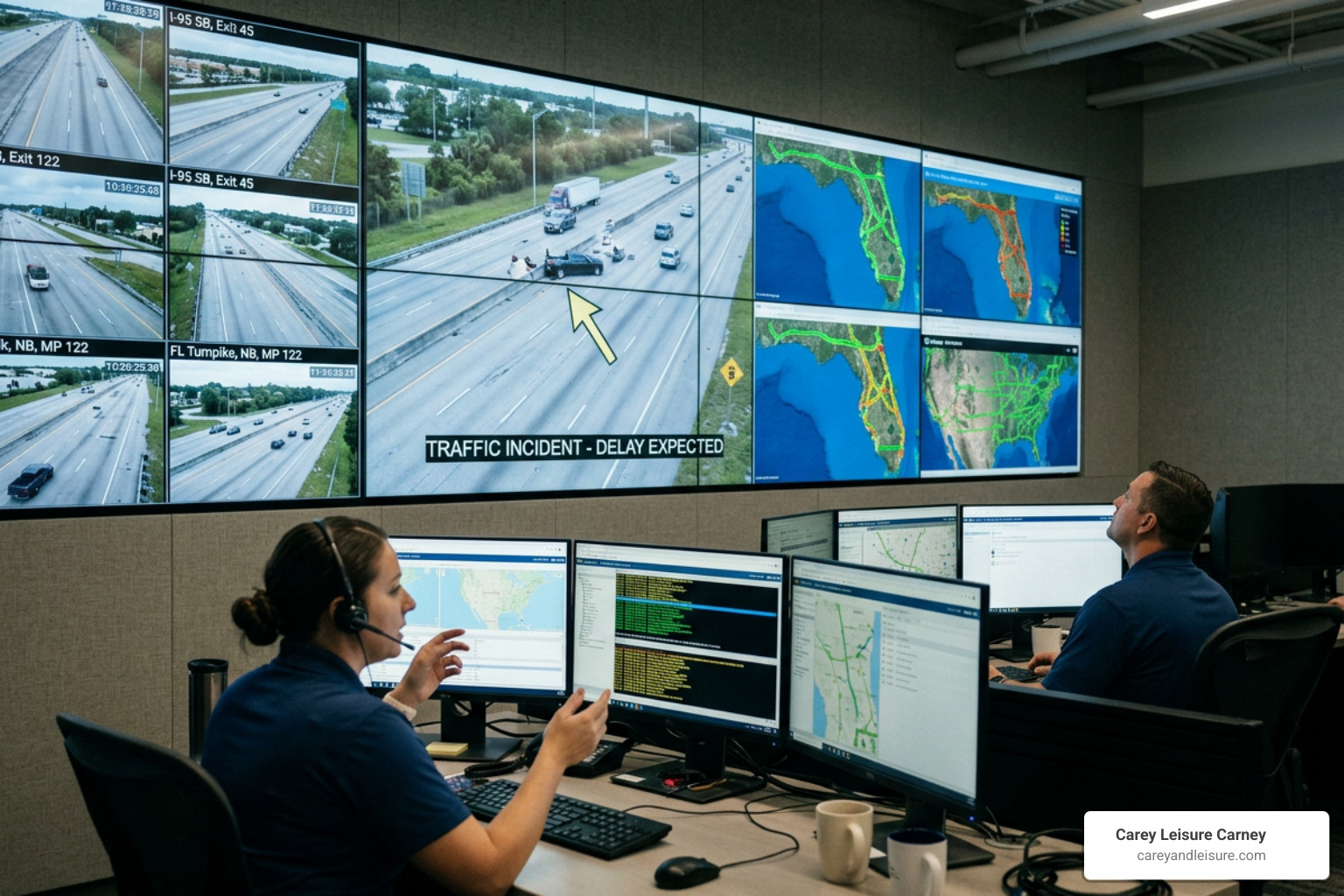
The most reliable starting point for monitoring active crashes across state highways, interstates, and major arterial routes is the Florida Highway Patrol’s live traffic crash and road condition report. This live Computer-Aided Dispatch (CAD) system tracks ongoing calls handled by state troopers. It details the exact time a call was dispatched, the county and highway corridor involved, whether injuries or fatalities are suspected, and current road blockages.
For a deeper look into state documentation and archival systems, reviewing Uncovering the Truth: Where to Find Fatality Reports can help you locate historical and active databases across Florida. Knowing which agency has jurisdiction over a specific crash site is essential:
- Interstates and State Roads: Handled primarily by the Florida Highway Patrol (FHP).
- Unincorporated County Corridors: Managed by local county sheriff’s offices.
- Municipal Roads and City Intersections: Documented by municipal police departments.
Accessing Local Law Enforcement and Major Accident Investigation Team Logs
While state-level CAD logs provide immediate statewide awareness, collisions occurring within our local Tampa Bay and Suncoast communities—such as Clearwater, St Petersburg, Largo, New Port Richey, Spring Hill, Trinity, and Wesley Chapel—are frequently investigated by specialized local divisions.
When a collision involves severe bodily harm or loss of life, local agencies deploy specialized crash reconstruction teams. For instance, the Pinellas County Sheriff’s Office relies on its Major Accident Investigation Team to handle complex, high-impact crash scenes across Pinellas County. Similarly, the Clearwater Police Department and the St. Petersburg Police Department maintain dedicated fatal crash investigation squads equipped with laser scanners, drone photogrammetry, and forensic tools.
Local law enforcement agencies typically post formal press releases, public safety notices, and road closure bulletins to their verified public information portals and media desks within 12 to 24 hours of an incident.
Preliminary Summaries vs. Final Fatal Car Accident Reports
There is a substantial difference between an initial incident dispatch summary and an official traffic homicide investigation report. Recognizing this distinction helps avoid confusion during the days following a collision.

An initial dispatch log represents real-time officer field notes. These entries record basic details such as the number of vehicles, initial lane obstructions, and preliminary injuries. However, as outlined in Unraveling the Truth: A Guide to Fatal Accident Investigations, these early notes are never the final factual word.
A complete official report requires extensive forensic inquiry, including:
- Accident Reconstruction: Measuring skid marks, yaw marks, and road gouges.
- Electronic Control Module (ECM) Analysis: Downloading black-box vehicle telemetry to confirm exact speeds, braking inputs, and throttle positions.
- Toxicology and Subpoenas: Reviewing driver blood alcohol concentrations (BAC) and mobile device usage records.
- Statutory Privacy Compliance: Ensuring that victim identities remain protected under state public records laws until formal next-of-kin notifications are verified.
Understanding Recent Crash Data and High-Risk Contributing Factors
Traffic fatalities remain an urgent public safety challenge throughout our state. In 2024, the United States recorded 39,254 motor vehicle crash deaths, representing a national rate of 11.5 deaths per 100,000 people and 1.19 deaths per 100 million miles traveled.
Florida’s numbers reflect the acute risks of our high-density urban corridors. In 2024, Florida recorded 3,138 total motor vehicle crash deaths—a rate of 13.4 deaths per 100,000 residents and 1.26 deaths per 100 million vehicle miles traveled, both above national averages. Exploring The Grim Reality: A Guide to Fatal Accidents and Their Aftermath underscores the heavy emotional and financial toll these incidents take on local communities.
While nationwide 41% of fatal crashes occurred in rural areas, Florida’s crash landscape is distinctly urban. Approximately 76% of all fatal collisions in Florida (2,386 deaths) occurred in urban areas, with only 21% (651 deaths) in rural zones. Furthermore, multi-vehicle crashes accounted for 51% (1,611 deaths) of Florida fatalities, while single-vehicle collisions accounted for 49% (1,527 deaths).
| Risk Factor / Crash Metric | Florida Statistic (2024) | National Average (2024) | Primary Impact Area |
|---|---|---|---|
| Urban Crash Proportion | 76% of fatal crashes | 59% of fatal crashes | High-density intersections & multi-lane arterials |
| Rural Crash Proportion | 21% of fatal crashes | 41% of fatal crashes | High-speed two-lane highways & bypasses |
| Single-Vehicle Collisions | 49% of fatalities | 52% of fatalities | Run-off-road, rollover, & fixed-object impacts |
| Multi-Vehicle Collisions | 51% of fatalities | 48% of fatalities | Rear-end pileups & angle/intersection crashes |
| Restraint Use Among Fatalities | ~46% restrained | 46% restrained | Front & rear passenger rollover ejections |
| Speeding Contribution | 11% cited factor | 29% cited factor | Loss of control & increased impact force |
Primary Behavioral Causes in Serious Crashes
Severe crashes rarely happen by chance; they are almost always the direct result of preventable, negligent driving behaviors. Across national 2024 safety data, several critical behavioral factors stand out:
- Speeding and Aggressive Driving: Nationally, excessive speed contributed to 29% of all traffic deaths. High velocity narrows a driver’s field of vision, dramatically extends stopping distances, and amplifies the physical energy of impact.
- Alcohol and Drug Impairment: In 2024, 31% of fatally injured passenger vehicle drivers nationwide had a blood alcohol concentration of 0.08% or higher. Examining Tragedy on the Road: Understanding Drunk Driving’s Fatal Toll illustrates how alcohol compromises reaction times and spatial judgment.
- Seatbelt Non-Compliance: While daytime observed seatbelt usage among Florida drivers is consistently high (around 91%), national data shows that only 46% of fatally injured passenger occupants were properly restrained at the moment of impact. Lack of restraint is the single greatest risk factor for catastrophic vehicle ejection during rollover crashes.
- Distracted Driving: Texting, adjusting navigation devices, or interacting with mobile apps takes a driver’s eyes off the road for critical seconds, turning vehicles into unguided hazards on high-speed roadways.
Vulnerable Road Users in the Tampa Bay Area
Our local roads present elevated risks for vulnerable road users. In Florida, non-occupants make up a disproportionate percentage of total road casualties compared to many other states:
- Pedestrians: Accounted for 668 deaths (21% of total Florida fatalities) in 2024.
- Motorcyclists: Accounted for 642 deaths (20% of total state fatalities).
- Bicyclists: Accounted for 201 deaths (6% of total fatalities).
- Vehicle Occupants: Passenger car occupants accounted for 792 deaths (25%), while pickup and SUV occupants accounted for 661 deaths (21%).
High-speed, multi-lane corridors across Clearwater, St. Petersburg, Largo, and New Port Richey feature frequent curb cuts, commercial driveways, and wide intersection crossings that increase danger for pedestrians and cyclists. Our detailed examination in Community Safety: A Look at Fatal Accidents in Your Area highlights the ongoing need for improved infrastructure and heightened driver awareness throughout Pinellas, Pasco, and Hernando counties.
Legal and Practical Steps for Affected Families
The sudden loss of a loved one in a serious collision leaves families dealing with profound grief alongside sudden financial and legal complications. Taking structured, deliberate steps in the days following a crash helps protect your family’s legal rights and ensures vital evidence is preserved.

When navigating the aftermath of a catastrophic crash, keeping a meticulous record of all documents is essential. As discussed in Documenting Evidence in Personal Injury Claims, early record retention prevents crucial details from disappearing.
Families should prioritize:
- Securing the Crash Report Number: Obtain the initial traffic crash report exchange number from the investigating law enforcement officer.
- Preserving Physical Evidence: Ensure the involved vehicle is not destroyed, sold, or altered by an insurance impound lot before its electronic control module (black box) data is downloaded.
- Requesting the Traffic Homicide Investigation (THI) File: Request complete photo logs, 911 audio recordings, dashcam footage, and witness statements once finalized.
- Documenting Financial Impacts: Track medical bills, emergency transport invoices, funeral and burial expenses, and records of lost household earnings.
Legal Next Steps Following a Fatal Car Accident
Under Florida law, surviving family members have distinct civil remedies when a collision is caused by another party’s negligence, recklessness, or intentional misconduct.
The Florida Wrongful Death Act governs how these civil claims are brought. Under this statutory framework, a designated Personal Representative of the deceased person’s estate files the legal action on behalf of the estate and surviving statutory beneficiaries (such as a surviving spouse, children, or dependent parents).
As outlined in A Complete Guide to Florida Wrongful Death Claims, eligible beneficiaries may seek financial compensation for:
- Loss of support and services the deceased provided to the family.
- Loss of companionship, protection, guidance, and parental instruction.
- Mental pain and suffering experienced by surviving family members.
- Medical and funeral expenses paid directly by survivors or the estate.
- Loss of prospective net accumulations to the estate.
Florida has strict statutory deadlines (statutes of limitations) governing wrongful death actions. Failing to file within the legally mandated window can permanently bar your family from seeking financial recovery and accountability. Additionally, Florida operates under a modified comparative negligence system, meaning insurance defense attorneys frequently attempt to shift fault onto the deceased driver to reduce or eliminate payouts. Working with an experienced legal team ensures liability is accurately proven through objective forensic evidence.
Frequently Asked Questions About Florida Crash Records
Why are victim names withheld from initial crash logs?
Under Florida law and standard law enforcement protocol, the names of individuals killed in traffic crashes are temporarily withheld from public incident logs and CAD reports. This policy ensures that officers have sufficient time to locate and formally notify immediate next of kin in a private, compassionate manner before identities are broadcast by media outlets or online forums.
How long does it take for an official crash investigation report to be completed?
While a basic preliminary crash report is often available within 10 days, a comprehensive Traffic Homicide Investigation (THI) report can take anywhere from several weeks to several months. Complex investigations require scene mapping, black box downloads, vehicle component inspections, witness depositions, and toxicology lab processing before the final report is signed and released to the public.
How can surviving family members obtain official crash records?
Surviving relatives, authorized estate representatives, and legal counsel can obtain certified crash reports directly through the Florida Department of Highway Safety and Motor Vehicles (FLHSMV) Crash Portal or by contacting the records division of the investigating law enforcement agency (such as the Pinellas County Sheriff’s Office or Florida Highway Patrol). For additional guidance on managing documentation, review our resource on Fatal Accident Claims.
Conclusion
Staying informed following a serious crash requires patience, reliable sources, and an understanding of Florida’s reporting procedures. While live state CAD logs offer immediate awareness, obtaining a thorough, accurate account of what transpired demands the full completion of forensic accident reconstruction reports.
At Carey Leisure Carney, our board-certified trial attorneys bring over 100 years of combined experience representing injured individuals and grieving families across Clearwater, St. Petersburg, New Port Richey, Largo, Spring Hill, Trinity, and Wesley Chapel. We provide direct attorney access and personalized legal advocacy, handling the complexities of crash investigations, witness interviews, and insurance negotiations so your family can focus on healing.
If your family is seeking answers and legal guidance following a catastrophic collision, contact our dedicated wrongful death attorney team today to schedule a confidential, no-obligation consultation.