
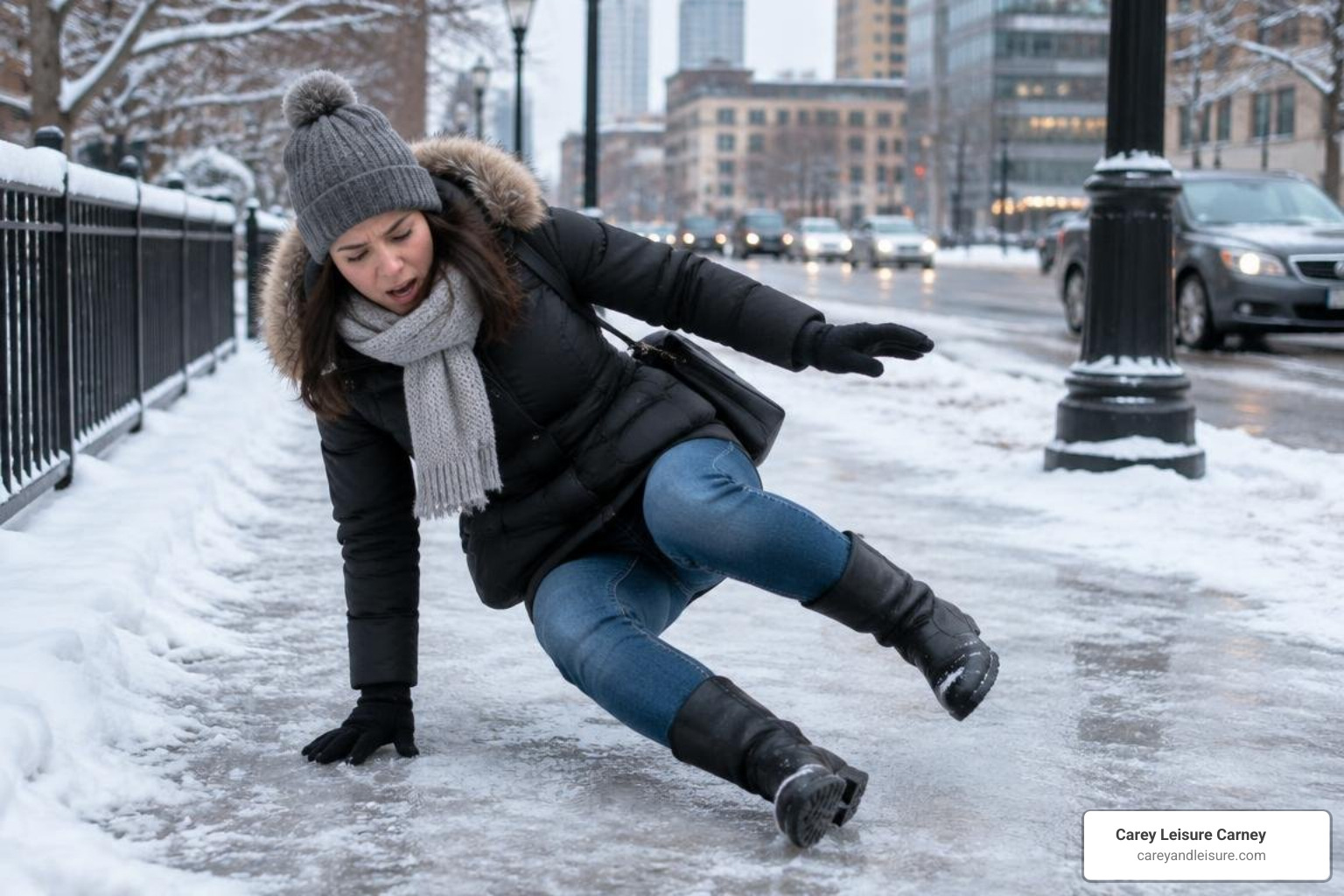
Walking on Thin Ice: Your Legal Rights After a Winter Slip and Fall
What to Do After a Slip and Fall on Ice
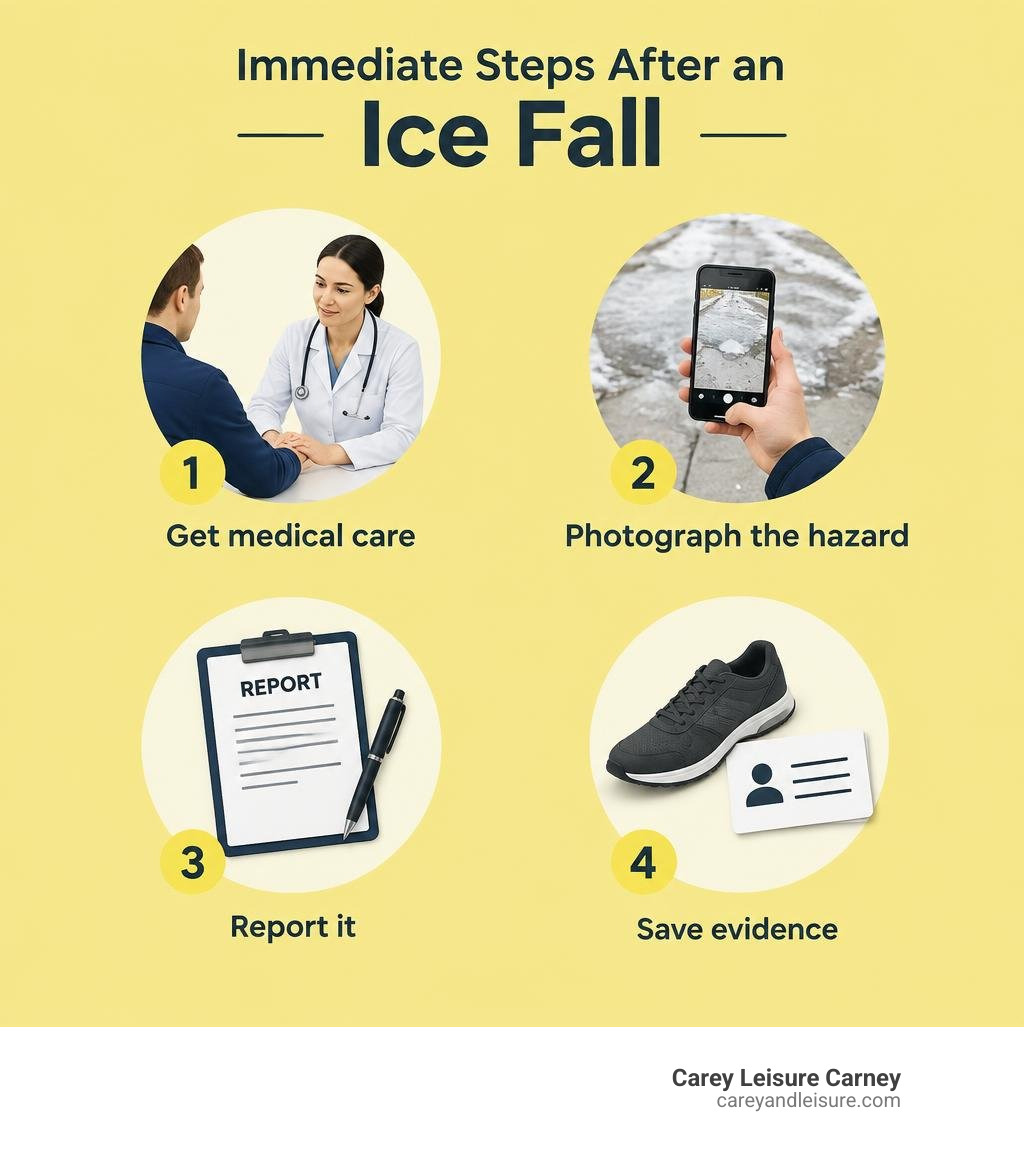
Get medical care, photograph the ice before it changes, report the fall, and save witness contact details and the shoes you wore. A lawyer for slip and fall on ice can help find out who was responsible for the area, whether they had a reasonable chance to address the hazard, and what filing deadlines apply where you fell. An injury alone does not mean the property owner is liable.
I’m Thomas W. Carey, founding partner of Carey Leisure Carney and a board-certified Florida civil trial lawyer with decades of experience in personal injury and premises liability. If you’re looking for a lawyer for slip and fall on ice injuries, this guide will help you understand what to document and what to ask.
Lawyer for slip and fall on ice terms to remember:
- best slip and fall attorneys near me
- lawyers for slip and fall accidents
- wet floor slip and fall accidents
According to the National Safety Council, falls account for nearly 7 million emergency room visits every single year. Whether it is frozen precipitation outside commercial entryways, unaddressed industrial freezer leaks, or slick walk-in coolers, icy walking surfaces create catastrophic hazards in seconds. Understanding your rights begins with knowing who is legally responsible for maintaining safe walkways.
Understanding Premises Liability and Property Owner Duties for Snow and Ice Hazards
When someone sustains an injury on another party’s property, legal responsibility is evaluated under the principles of premises liability. Every property owner, landlord, and commercial tenant owes a legal duty of care to visitors legally on their grounds. This duty requires them to maintain reasonably safe conditions and either correct or clearly warn about dangerous conditions that are known or discoverable through routine maintenance.
In winter weather scenarios, freezing conditions introduce unique hazards. Owners cannot simply ignore frozen entryways, icy stairs, or accumulating slush that melts and refreezes into black ice. Regular inspections and practical remediation measures—such as applying salt, laying down ice melt, shoveling paths, and deploying non-slip mats—are fundamental components of reasonable care.
Commercial vs. Residential Snow and Ice Removal Responsibilities
The exact legal duty of care often depends heavily on the nature of the property and your status as a visitor:
- Commercial Properties and Businesses: Retail stores, grocery outlets, office parks, and restaurants invite the public to conduct business. Because these visitors are business invitees, commercial property owners owe the highest duty of care. They must actively inspect exterior sidewalks, parking lots, entry vestibules, and handicap ramps. If a commercial venue lets snow melt into puddles near entrance doors without mopping or placing warning mats, they can be held liable for resulting falls.
- Residential Properties and Landlords: Apartment complex owners, landlords, and property management companies must keep common areas safe for tenants and guests. This includes clearing shared walkways, exterior stairs, breezeways, and community parking structures. Private single-family homeowners also owe a duty to social guests, but their obligations generally focus on warning guests about hidden dangers rather than conducting continuous commercial-style surface monitoring.
When Is a Property Owner Not Liable for Winter Falls?
A property owner is not automatically at fault simply because an accident happened on their grounds. There are specific legal defenses that property owners and their insurers raise to avoid liability:
- Ongoing Storm Rule: In many jurisdictions, property owners are given a reasonable grace period to address snow and ice during or immediately following active weather events. Property owners are generally not expected to clear falling snow in real time while a blizzard is underway.
- Lack of Notice: If black ice forms suddenly due to a flash freeze minutes before a fall, and the owner had neither actual notice (someone told them) nor constructive notice (the condition existed long enough that regular inspections would have uncovered it), proving negligence is more difficult.
- Open and Obvious Hazards: If a giant mound of clearly visible ice is plain to see and an individual chooses to walk across it rather than using a clearly cleared adjacent walkway, the property owner will argue that the danger was open and obvious.
- Adequate Warning Measures: If the owner placed visible caution cones, blocked off hazardous areas, and applied adequate salt or abrasive sand, they may have fulfilled their standard of reasonable care.
Key Evidence and Proving Fault in an Ice Injury Claim
Winning a personal injury claim requires clear proof of negligence. Successfully proving fault involves showing that a hazardous icy condition existed, the property controller knew or reasonably should have known about it, and their failure to fix it directly caused your injury.
Building a solid case relies heavily on prompt action and documenting evidence in personal injury claims. Key evidence includes:
- Photographs and Video: High-resolution photos and videos showing the exact ice patch, lighting conditions, downspout drainage issues, lack of salt, and absence of warning signs.
- Maintenance Logs and Vendor Contracts: Records showing whether a third-party snow removal company was contracted, how often inspections occurred, and when salt was last applied.
- Weather Reports and Historical Data: Official meteorological records verifying local temperatures, freeze-thaw cycles, and precipitation timelines to prove the ice had been present long enough to be addressed. The National Weather Service provides historical climate data that can help establish when freezing conditions began.
- Surveillance Footage: Security cameras often capture both the fall and the conditions leading up to it, documenting how long the hazard sat unaddressed.
| Claim Element | Private Commercial / Residential Property | Municipal / Government Property |
|---|---|---|
| Responsible Party | Business owner, landlord, private homeowner | City, county, or state government agency |
| Notice Requirement | Proved via routine business logs and witness testimony | Formal written Notice of Claim often required rapidly |
| Filing Timeline | Standard statutory injury timeline | Strict, shortened administrative notice windows |
| Standard of Care | Reasonable care under premises liability laws | Sovereign immunity limits and specific statutory standards |
How Comparative Fault Affects Your Recovery
Insurance companies frequently attempt to shift the blame onto the injured victim. They may claim that you were walking too fast, distracted by your phone, not wearing appropriate winter footwear, or walking in an area clearly not meant for pedestrian traffic.
Under legal systems governed by comparative negligence, your total financial compensation can be reduced in proportion to your percentage of fault. For example, if your total damages equal $100,000, but an adjuster or jury finds you 20% responsible because you were texting while walking on visible ice, your final recovery would be reduced to $80,000. Our attorneys push back against unfair insurer blame tactics to ensure your recovery is not wrongfully diminished.
Essential Steps to Take Immediately After an Ice Slip and Fall
What you do in the minutes and hours following a fall directly impacts your physical health and your injury claim. Following proper protocols for what to do after a slip and fall accident protects your legal rights:
- Seek Medical Care Promptly: Go to an emergency room, urgent care center, or your physician right away. Many severe musculoskeletal and head injuries worsen over time without prompt diagnosis.
- Take Comprehensive Photos: Capture wide shots of the surrounding area as well as close-ups of the ice, melting snow, puddles, overhead gutters, and missing warning cones.
- Report the Incident: Notify the store manager, landlord, or security team. Request a copy of the formal written incident report before you leave or as soon as it becomes available.
- Gather Eyewitness Details: Obtain names, phone numbers, and addresses of anyone who saw you fall or witnessed the hazardous condition earlier in the day.
- Preserve Your Shoes and Clothing: Place the footwear and clothing you were wearing in a secure bag without cleaning them. Your shoes serve as vital physical evidence proving you had proper tread.
- Avoid Making Recorded Statements: Do not provide recorded interviews or accept quick settlement checks from insurance adjusters before consulting an attorney.
Compensation and Severe Injuries in Winter Slip and Fall Cases

When an unsuspecting pedestrian encounters unexpected ice, their feet slip out from underneath them, often causing a hard fall backward or onto concrete stairs. The sudden impact can cause life-altering orthopedic trauma and neurological injuries.
Common injuries suffered in winter slip and fall accidents include:
- Traumatic Brain Injuries (TBIs) and Concussions: Striking the back of the head against frozen pavement can cause brain contusions, hemorrhages, and chronic post-concussion symptoms.
- Spinal Cord and Vertebral Injuries: Fractured vertebrae, herniated discs, and severe nerve compression requiring spinal fusion surgery.
- Complex Bone Fractures: Broken wrists, fractured hips, shattered ankles, and elbow fractures that require open reduction and internal fixation (ORIF) surgery with metal plates and screws.
- Severe Soft Tissue Tears: Torn rotator cuffs, meniscal tears, and anterior cruciate ligament (ACL) ruptures caused by violent twisting during a fall.
Evaluating Full Damages: Medical Costs, Lost Income, and Pain
A comprehensive personal injury claim accounts for both current out-of-pocket expenses and future financial impacts. When calculating the full value of your claim, our legal team pursues:
- Economic Damages:
- Emergency room visits, ambulance transport, and hospitalization fees.
- Surgical operations, specialist consultations, and physical therapy sessions.
- Prescription medications, mobility aids, and home health care.
- Past lost wages from missed work and future diminished earning capacity.
- Non-Economic Damages:
- Physical pain and suffering endured throughout recovery.
- Emotional distress, anxiety, depression, and loss of enjoyment of daily life.
- Permanent physical impairment, visible scarring, and loss of consortium.
Why You Need a Lawyer for Slip and Fall on Ice Claims
Handling a slip and fall claim on your own places you at an immediate disadvantage against well-funded insurance defense teams. An experienced personal injury lawyer handles every aspect of your case, calculating the true value of your losses, handling all communications with aggressive insurance adjusters, and proving every element of negligence.

At Carey Leisure Carney, our board-certified trial attorneys represent the top 2% of lawyers in Florida, bringing over 100 years of combined experience to your corner. We operate on a contingency fee basis—meaning you pay zero upfront costs and no attorney fees unless we successfully recover compensation for you.
How a Lawyer Investigates Complex Liability
Proving liability in an ice fall requires thorough investigation and rapid action before evidence disappears:
- Issuing Spoliation Letters: We immediately send formal legal notices requiring property owners to preserve vital video surveillance, internal shift logs, and safety records.
- Analyzing Contractor Agreements: Commercial properties often hire third-party snow and ice remediation companies. We review these service contracts to determine whether the contractor failed to meet their contractual safety obligations.
- Consulting Expert Witnesses: We work with forensic engineers, professional meteorologists, and medical specialists to reconstruct how the ice formed, prove foreseeability, and document the severity of your injuries.
- Conducting Depositions: Our trial attorneys depose property managers, janitorial staff, and maintenance contractors under oath to expose safety lapses and missed inspection schedules.
When to Hire an Attorney to Meet Strict Deadlines
Time is critical in premises liability claims. In addition to physical evidence melting away within hours, strict statutory windows govern how long you have to take formal action. If you miss these windows, you can permanently forfeit your right to recover damages. Understanding how the clock is running on injury claims helps ensure your rights remain protected.
When government or municipal entities are involved—such as falls occurring on public property, municipal sidewalks, or government facility entryways—special administrative notice deadlines apply. These administrative notices often require formal written notice within months or weeks of the incident. Hiring legal counsel immediately ensures all notices and court filings are handled properly from day one.
Frequently Asked Questions About Winter Slip and Fall Accidents
How long do I have to file a claim after falling on ice?
The time limit to file depends on where the fall took place and who controls the property. For private commercial stores and residential rental properties, standard personal injury statutes of limitation apply. However, if your fall occurred on property owned or maintained by a government agency, you must file formal administrative notices within strict, shortened deadlines. Speaking with an attorney immediately after your fall ensures no critical filing dates are missed.
What if I was partially at fault for slipping on ice?
You can still pursue a claim in many situations even if you were partially at fault. Under comparative fault doctrines, your final financial recovery is adjusted based on your percentage of responsibility. An experienced attorney knows how to counter common insurance defenses—such as claims that your footwear was improper or that you were walking carelessly—to ensure you receive fair compensation for your injuries.
What should I avoid doing after an icy slip and fall accident?
To protect your health and your legal claim, avoid the following common mistakes:
- Never give a recorded statement to the property owner’s insurance company without your attorney present.
- Do not post about your accident or injuries on social media, as adjusters frequently take posts out of context to argue you are not hurt.
- Do not delay medical care or skip prescribed physical therapy appointments.
- Never sign a release or accept a quick settlement check before you know the full scope of your medical treatment and long-term prognosis.
Conclusion
Slipping and falling on ice can derail your health, your career, and your financial stability in an instant. Property owners and commercial businesses have a clear legal obligation to keep their walkways safe and free from hazardous conditions. When they cut corners on property maintenance and someone gets hurt, they must be held accountable.
At Carey Leisure Carney, our board-certified trial lawyers provide direct attorney access, compassionate client guidance, and aggressive courtroom representation backed by over a century of combined legal experience. If you or a loved one suffered injuries due to hazardous property conditions, contact our dedicated slip and fall attorney team today. We proudly represent clients across Clearwater, St. Petersburg, New Port Richey, Largo, Spring Hill, Wesley Chapel, and Trinity, Florida. Schedule your free, no-obligation case evaluation today to protect your rights and pursue the full compensation you deserve.