
Child Safety Guidelines for Every Car Seat Stage
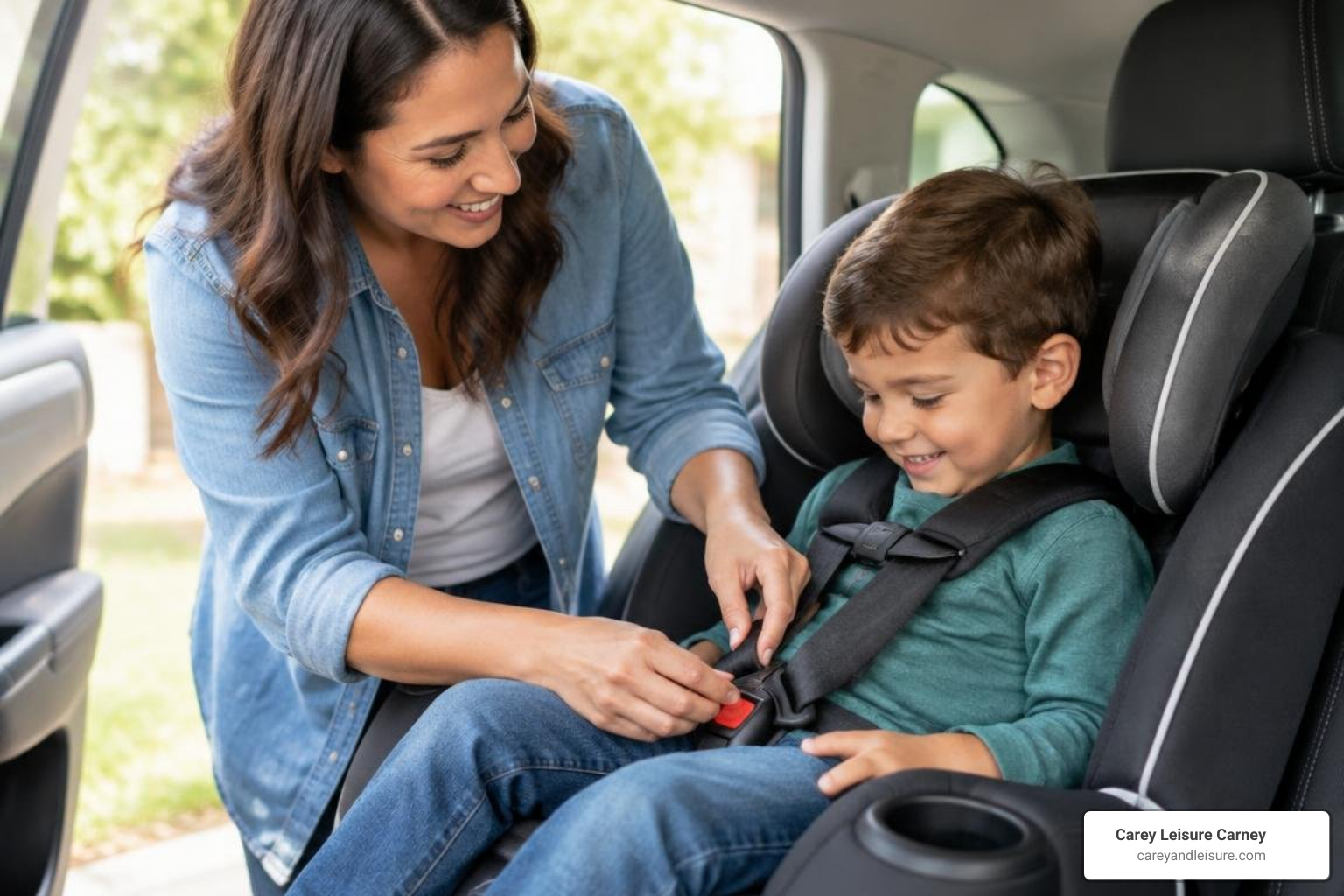
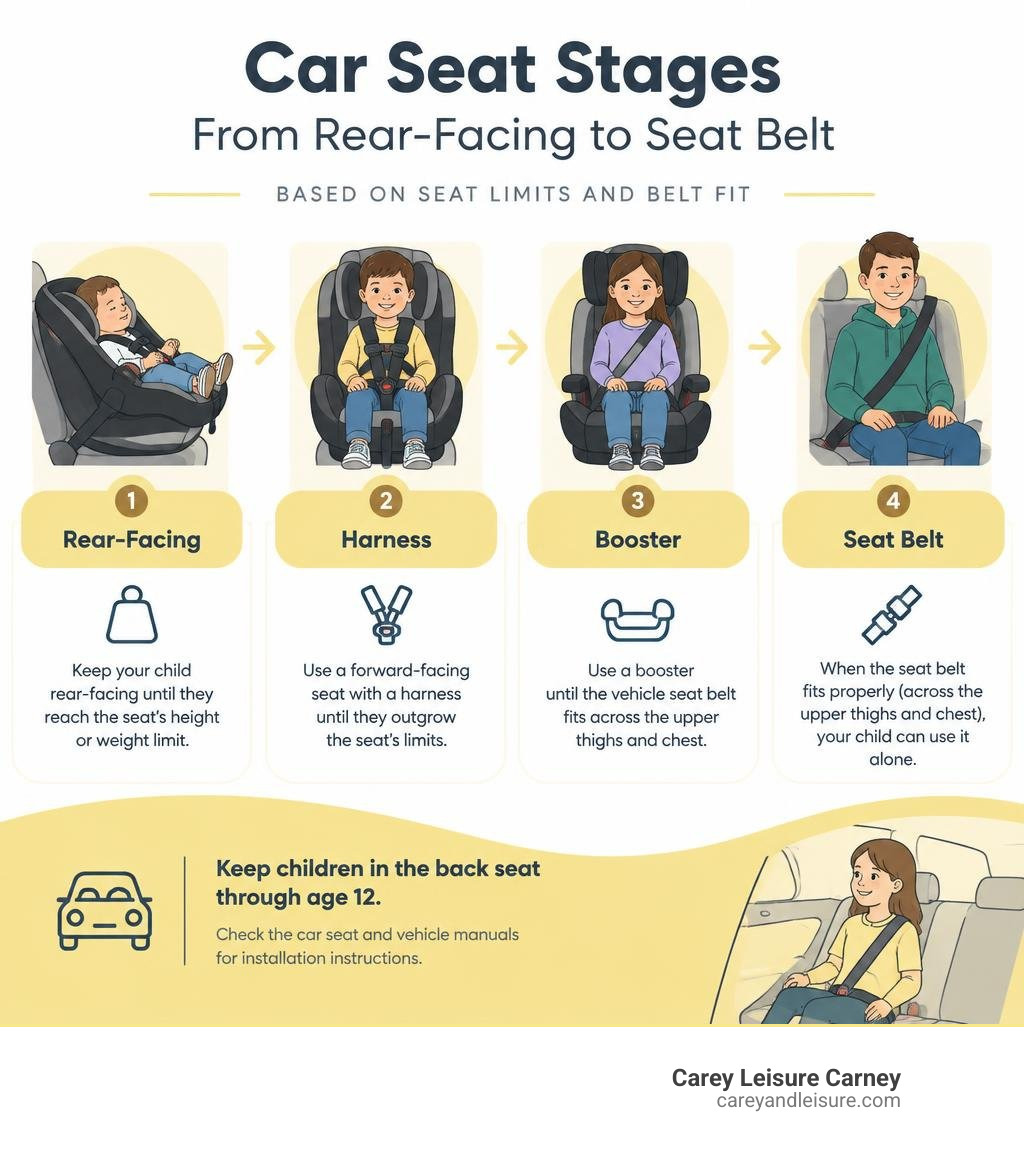
Child safety guidelines for car travel start with the right restraint for your child’s size. Keep your child rear-facing until they reach the seat’s height or weight limit. Then use a forward-facing seat with a harness, followed by a booster until the vehicle seat belt fits across the upper thighs and chest. Check the car seat and vehicle manuals for installation instructions, and keep children in the back seat through age 12.
I’m Thomas W. Carey, founding partner of Carey Leisure Carney in Clearwater. My work on motor-vehicle injury cases and drunk-driving prevention has shown me why clear Child safety guidelines matter before a crash happens.
Child safety guidelines further reading:
Core Child Safety Guidelines for Vehicle Passenger Protection
Motor vehicle collisions remain a leading cause of preventable injury for children across the country. Crash dynamics involve sudden, extreme kinetic forces. When a vehicle traveling at 35 mph stops abruptly, unrestrained occupants continue moving at that same speed until an external surface halts them. For a developing child, those violent forces can cause devastating trauma to fragile neck ligaments, spinal columns, and internal organs.
According to federal traffic safety data, hundreds of children under age 5 are saved every year simply because they are buckled into correctly fitted car seats. Tragically, a significant percentage of young vehicle occupants killed in roadway crashes were completely unrestrained. In Florida, our state laws establish clear baseline requirements for passenger protection under Florida Child Restraint Laws. To ensure you meet and exceed these legal thresholds, review our comprehensive Child Car Seat Laws Guide to protect your family on every trip.
Beyond standard crash mechanics, vehicle passenger safety involves two fundamental rules:
- Back Seat Placement Until Age 13: Front passenger airbags deploy with explosive force (often over 150 mph). This force can cause catastrophic head and neck injuries to children whose skeletal structures are still developing. All children age 12 and younger must ride in the rear seat.
- Preventing Vehicular Heatstroke: Never leave a child unattended in a parked car, even for a quick errand. The greenhouse effect can raise interior vehicle temperatures by 20 degrees within 10 minutes. In Florida’s subtropical climate, a vehicle interior can quickly reach fatal levels, leading to pediatric heatstroke. Always check the back seat before locking your doors.
Essential Child Safety Guidelines for Rear-Facing Infant Seats
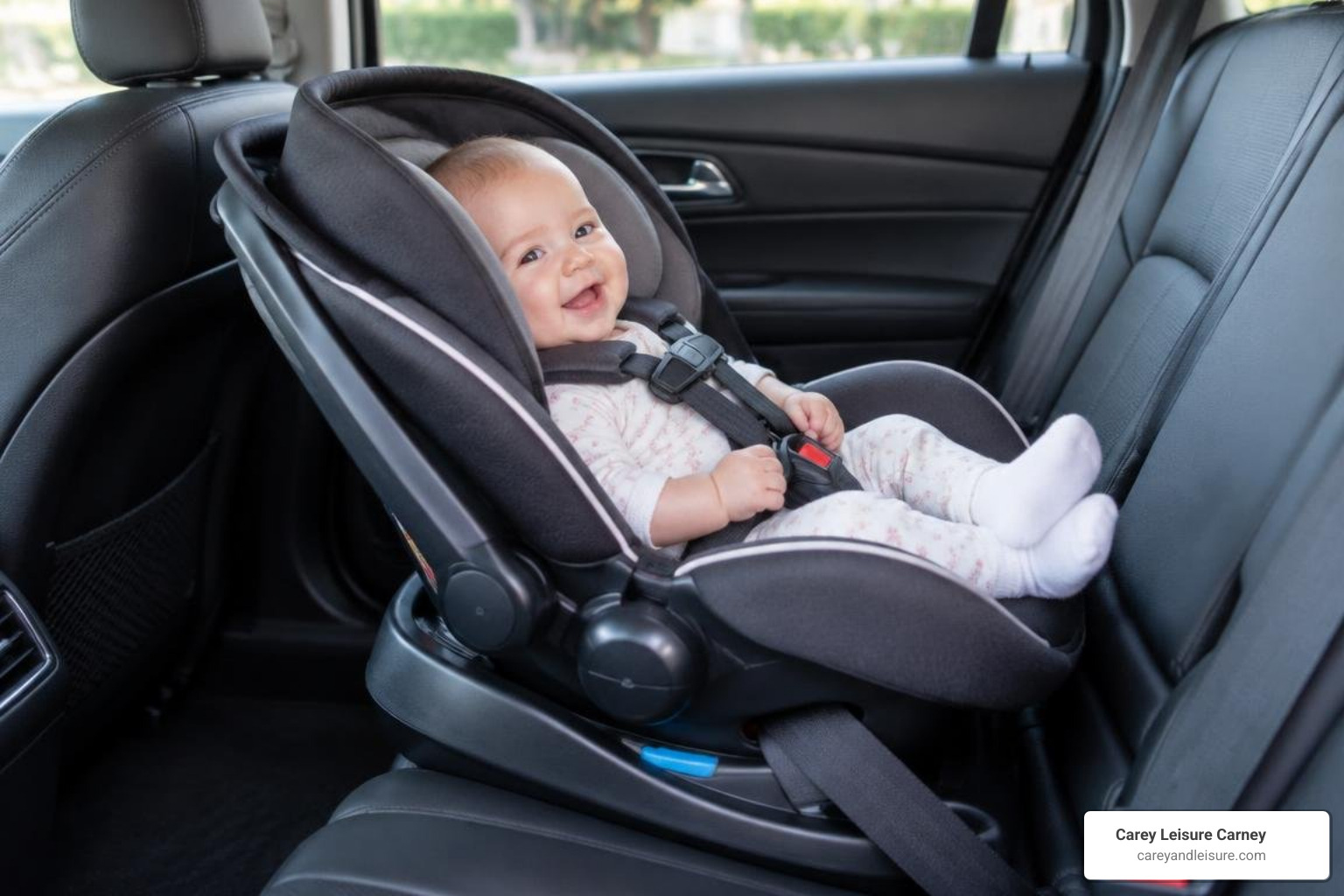
Rear-facing child safety seats provide optimal support for an infant’s disproportionately heavy head, delicate neck, and vulnerable spinal cord. In a frontal collision—the most frequent and violent type of crash—a rear-facing shell cradles the baby’s entire back, distributing impact forces across the strongest parts of their body rather than putting strain on the neck.
When securing an infant or toddler in a rear-facing seat:
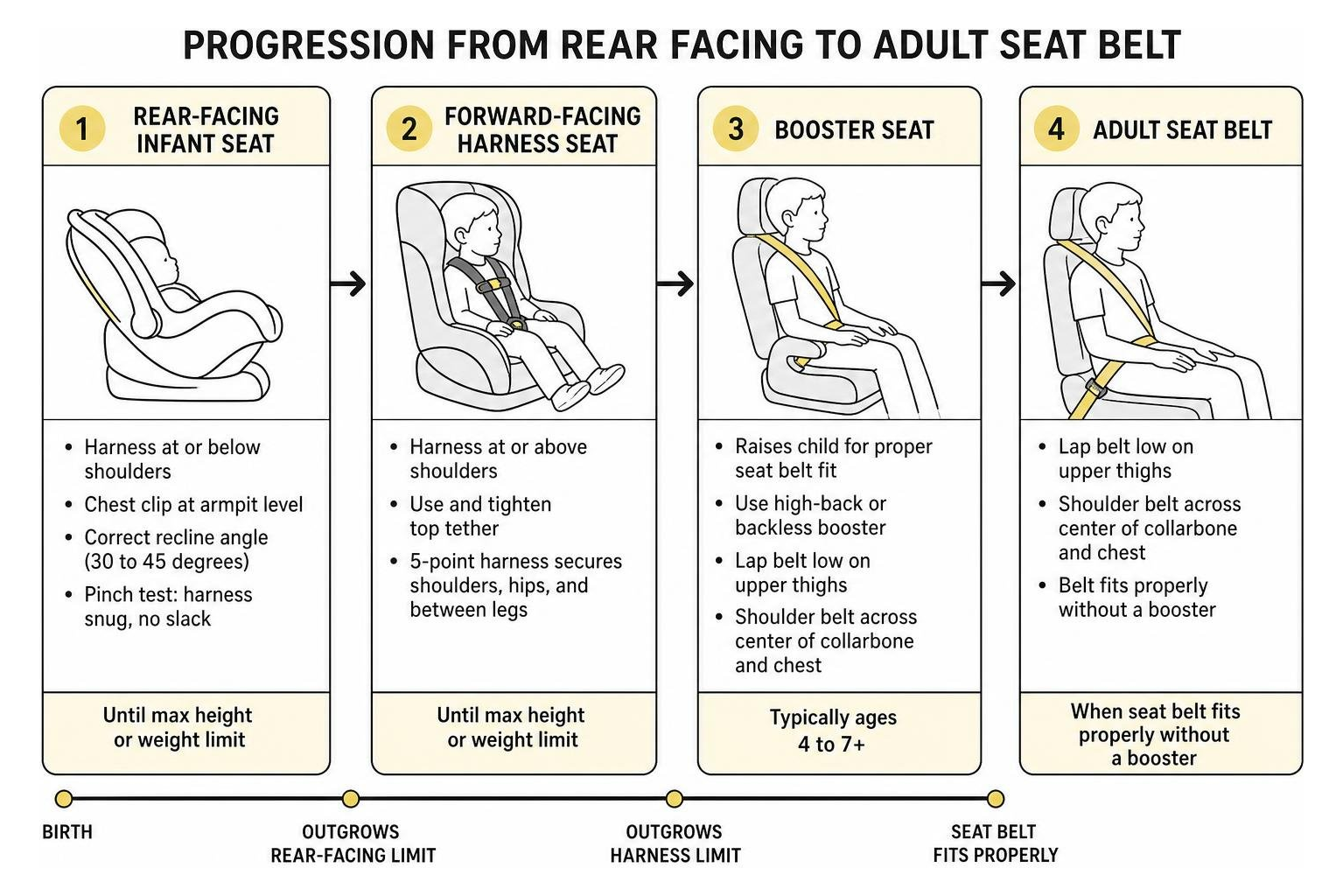
- Harness Slot Positioning: The shoulder straps must thread through the slots located at or below your baby’s shoulders.
- The Pinch Test: After buckling the chest clip and crotch buckle, try to pinch the harness webbing at the child’s collarbone. If you can pinch any excess fabric between your fingers, the harness is too loose and must be tightened.
- Chest Clip Placement: Position the chest clip directly at armpit level to keep the shoulder straps securely over the shoulders.
- Recline Angle Indicator: Check your seat’s built-in bubble or line level. Infants need a precise recline angle (typically 30 to 45 degrees) to keep their airways open and prevent their heads from flopping forward.
Keep your child in a rear-facing convertible car seat until they hit the maximum height or weight limit established by the manufacturer, which often accommodates toddlers up to 40 or 50 pounds.
Transitioning to Forward-Facing Harness Restraints
Once a child outgrows their convertible seat’s rear-facing limits, transition them to a forward-facing seat equipped with a 5-point harness. A 5-point harness secures the child across both shoulders, over the hips, and between the legs, transferring crash energy directly to the sturdy pelvic bone and ribcage.
Key adjustments for forward-facing car seats include:
- Harness Strap Height: Adjust the shoulder straps so they originate at or above the child’s shoulders.
- Top Tether Anchor: Always connect and firmly tighten the top tether strap to your vehicle’s designated tether anchor point. The tether reduces forward head movement by up to six inches during a collision, preventing head and neck trauma.
- Weight and Height Thresholds: Keep your child in a 5-point harness for as long as possible until they hit the maximum standing height or weight limit, which typically ranges from 40 to 65 pounds depending on the model.
Booster Seat Milestones and Seat Belt Fit
A booster seat elevates your child so that standard adult lap and shoulder belts fit properly across strong bony structures rather than soft abdominal organs. Children generally transition to a booster between ages 4 and 7 after maxing out their forward-facing harness, as outlined in our guide to booster seat height and weight milestones.
Choose between two primary booster models based on vehicle setup:
- High-Back Boosters: Provide head, neck, and torso support while properly routing the seat belt; essential for vehicles without tall back seats or adjustable headrests.
- Backless Boosters: Compact and portable, ideal for older children riding in vehicle seats with supportive head restraints.
A correct booster fit requires the lap belt to lie low and snug across the upper thighs (never across the stomach) and the shoulder belt to cross securely over the center of the collarbone and chest (never rubbing against the neck or slipping off the shoulder).
| Restraint Stage | Target Age Range | Weight / Height Guidelines | Key Fitting Requirement |
|---|---|---|---|
| Rear-Facing Seat | Birth to 2–4 years | Birth up to 40–50 lbs (per seat limits) | Straps at or below shoulders; chest clip at armpit level |
| Forward-Facing Harness | 2–7 years | Up to 40–65 lbs; up to 49 inches | Straps at or above shoulders; always secure top tether |
| Booster Seat | 4–12 years | 40+ lbs; until 4’9″ tall | Lap belt over upper thighs; shoulder belt centered on chest |
| Adult Seat Belt | 8–13+ years | Minimum 4’9″ tall; passes 5-step test | Back flat against seat; knees bend comfortably at edge |
Installing Restraints Properly: LATCH vs. Seat Belt Systems
A top-rated car seat cannot protect your child if it is installed incorrectly. You can install car seats using either the vehicle’s Lower Anchors and Tethers for Children (LATCH) system or the vehicle’s adult seat belt paired with the top tether. Both methods are equally safe when performed correctly, but you should never use both lower anchors and a seat belt at the same time unless the manufacturer explicitly allows it.
Follow these critical installation guidelines:
- Lower Anchor Weight Limits: Lower anchors have combined weight limits (child’s weight plus the car seat’s weight), usually capping out at 65 pounds total. Once your child exceeds this limit, switch to a vehicle seat belt installation.
- Locking the Vehicle Belt: When installing with a seat belt, pull the seat belt webbing all the way out to engage the automatic locking retractor (ALR), then guide it back in while applying downward pressure on the seat.
- The 1-Inch Movement Test: Grab the car seat at the belt path (where the seat belt or lower anchor strap passes through) and pull firmly side-to-side and front-to-back. The base should not move more than one inch in any direction.
- Register for Recalls: Complete and mail the registration card that comes with your seat or register it through the National Highway Traffic Safety Administration (NHTSA) SaferCar portal. This ensures you receive immediate alerts regarding safety recalls and replacement parts.
- Professional Inspections: Have your installation evaluated by a Certified Child Passenger Safety Technician (CPST) at a local inspection station.
Protecting Children in the Home and Outdoors

Child safety extends well beyond vehicle travel. For children younger than 5 years old, most unintentional injuries occur in and around the home. Early care and education environments and home living spaces must be proactively childproofed to mitigate hidden hazards before curious toddlers find them.
Applying Child Safety Guidelines to Prevent Common In-Home Injuries
Every room in your home presents specific risks as infants and toddlers gain mobility. Implementing systematic home safety steps prevents severe injuries:
- Furniture and TV Tip-Over Prevention: Children often use open dresser drawers or shelves as ladders. Anchor all heavy dressers, bookcases, and flat-screen televisions to wall studs using heavy-duty brackets and anti-tip straps, as recommended by federal safety agencies and detailed in the CPSC Home Safety Guidelines.
- Poison Prevention and Chemical Storage: Store all medications, cleaning chemicals, and laundry pods in high, locked cabinets in their original packaging. Keep the National Poison Help hotline (1-800-222-1222) saved in your phone.
- Safe Infant Sleep: Reduce SIDS and suffocation risks by adhering to the ABCs of safe sleep: infants should sleep Alone, on their Back, in a Crib with a firm mattress and fitted sheet. Keep pillows, quilts, bumpers, and stuffed animals out of the sleeping area.
- Burn and Scald Avoidance: Set your residential water heater thermostat no higher than 120°F (48°C) to prevent severe tap water burns. Turn pot handles inward on the stove while cooking and keep hot liquids away from counter edges.
- Choking Hazard Elimination: Supervise mealtimes and cut high-risk foods (such as whole grapes, hot dogs, and raw carrots) into small, lengthwise pieces. Keep small items like coins, button batteries, and high-powered magnets completely out of reach.
- Bath and Water Supervision: Never leave a child unattended in a bathtub or near standing water for any reason. Drowning can occur silently in less than two inches of water in under a minute.
Outdoor and Travel Precautions for Active Children
Outdoor play builds physical health, but it also exposes children to risks on playgrounds, roads, and waterways. Protect active kids with these preventive measures:
- Playground Surface Safety: Check that playground equipment features impact-absorbing ground cover (such as engineered wood fiber, rubber mulch, or poured-in-place rubber) rather than concrete or hard-packed dirt.
- Bicycle Helmet Standards: Ensure every child wears a properly fitted, Consumer Product Safety Commission (CPSC)-certified bicycle helmet on bikes, scooters, and skateboards. The helmet should sit level across the forehead, about two finger-widths above the eyebrows.
- Pedestrian and Road Safety: Teach children to stop at the curb, look left-right-left, make eye contact with approaching drivers, and always cross at designated crosswalks. Hold young children by the hand near parking lots and roadways.
- Pool Safety Barriers: Residential pools must be surrounded by a 4-foot isolation fence featuring self-closing, self-latching gates that open outward away from the water.
- Sun Protection: Protect delicate skin by using the standard five-step sun safety rule: Slip on UV-protective clothing, Slop on broad-spectrum SPF 30+ sunscreen, Slap on a wide-brimmed hat, Slide on sunglasses, and seek Shade during peak midday hours.
Frequently Asked Questions About Child Restraints and Safety
What are the legal child restraint requirements in Florida?
Florida law requires children aged 5 and younger to be secured in a crash-tested, federally approved child restraint device. Children aged 0 through 3 must be in a separate carrier or an integrated child seat, while children aged 4 through 5 can use a separate carrier, an integrated child seat, or a booster seat. Failing to secure a child passenger properly can result in moving violation points on your driver’s license and substantial fines.
When is a child ready to use a regular vehicle seat belt?
Children are typically ready for a standard vehicle seat belt once they reach 4 feet 9 inches in height (usually between ages 8 and 12) and pass the simple 5-Step Fit Test:
- Does the child sit all the way back against the vehicle seatback?
- Do the child’s knees bend comfortably over the edge of the seat cushion without slouching?
- Does the lap belt rest low across the upper thighs and hips?
- Does the shoulder belt cross flat over the center of the shoulder and chest?
- Can the child remain comfortably seated like this for the entire duration of the trip?
How can I verify that my car seat is properly installed?
You can verify your car seat installation by scheduling an appointment with a local Certified Child Passenger Safety Technician (CPST) through local fire stations or health departments. You can also consult the NHTSA SaferCar mobile application and compare your setup against both your vehicle owner’s manual and the car seat manufacturer’s instruction booklet.
Conclusion and Legal Protection for Families
Proactive injury prevention is the most effective way to safeguard your child from preventable harm on the road and at home. Taking the time to select the right car seat, double-check lower anchor tensions, and childproof your living spaces creates a secure environment for your family.
When drivers act carelessly on our roads, even the most diligent parents can find their lives upended by a sudden crash. At Carey Leisure Carney, our board-certified personal injury attorneys have over 100 years of combined trial experience fighting for families in Clearwater, Largo, St. Petersburg, New Port Richey, Spring Hill, Trinity, and Wesley Chapel, Florida. If your child has suffered an injury due to a negligent motorist or defective product, take time to review our resources on understanding children’s car seat laws and reach out to our dedicated legal team for direct, personalized support.