A Plain-English Breakdown of Florida County Alcohol Regulations
How Florida County Alcohol Rules Affect Pinellas
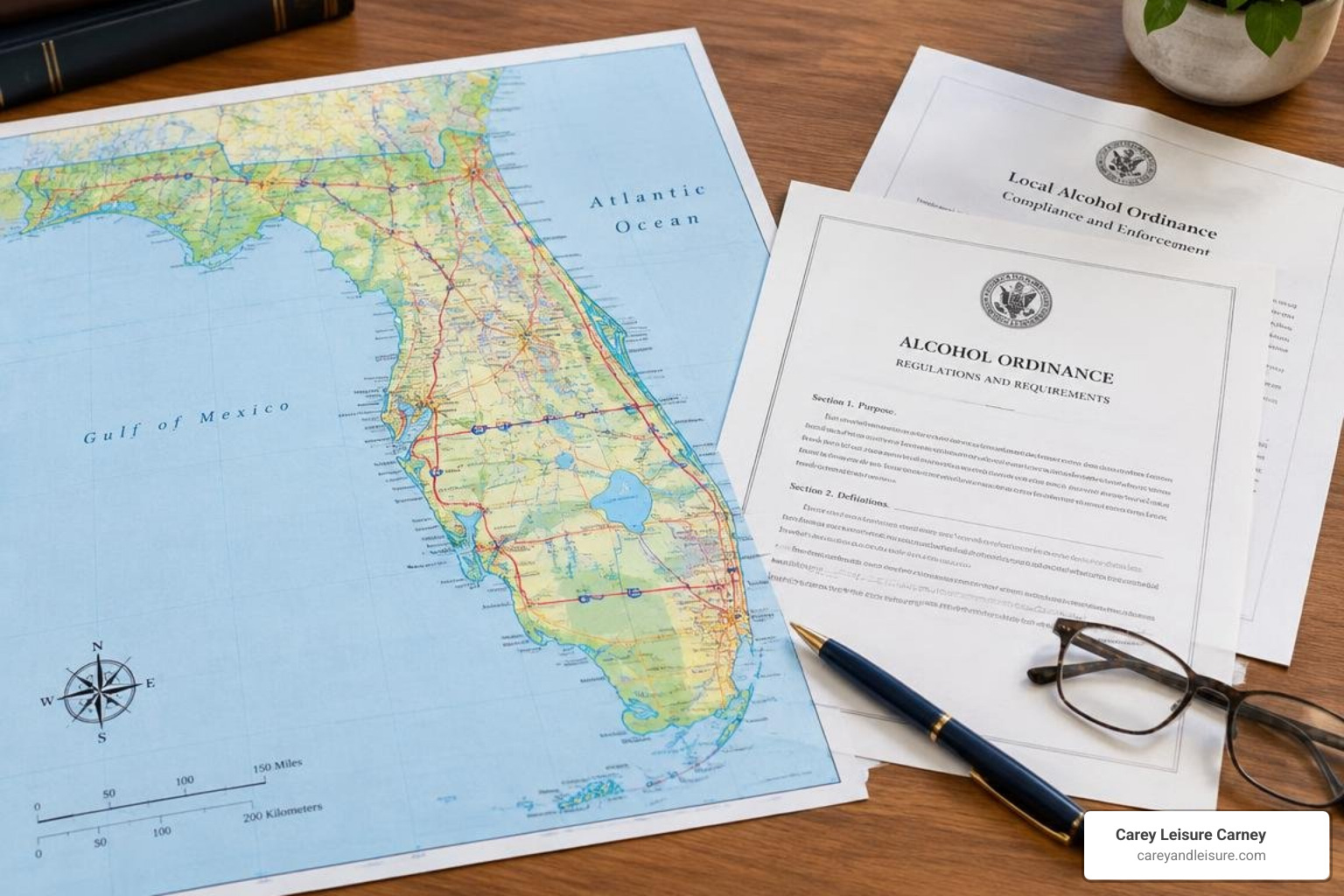
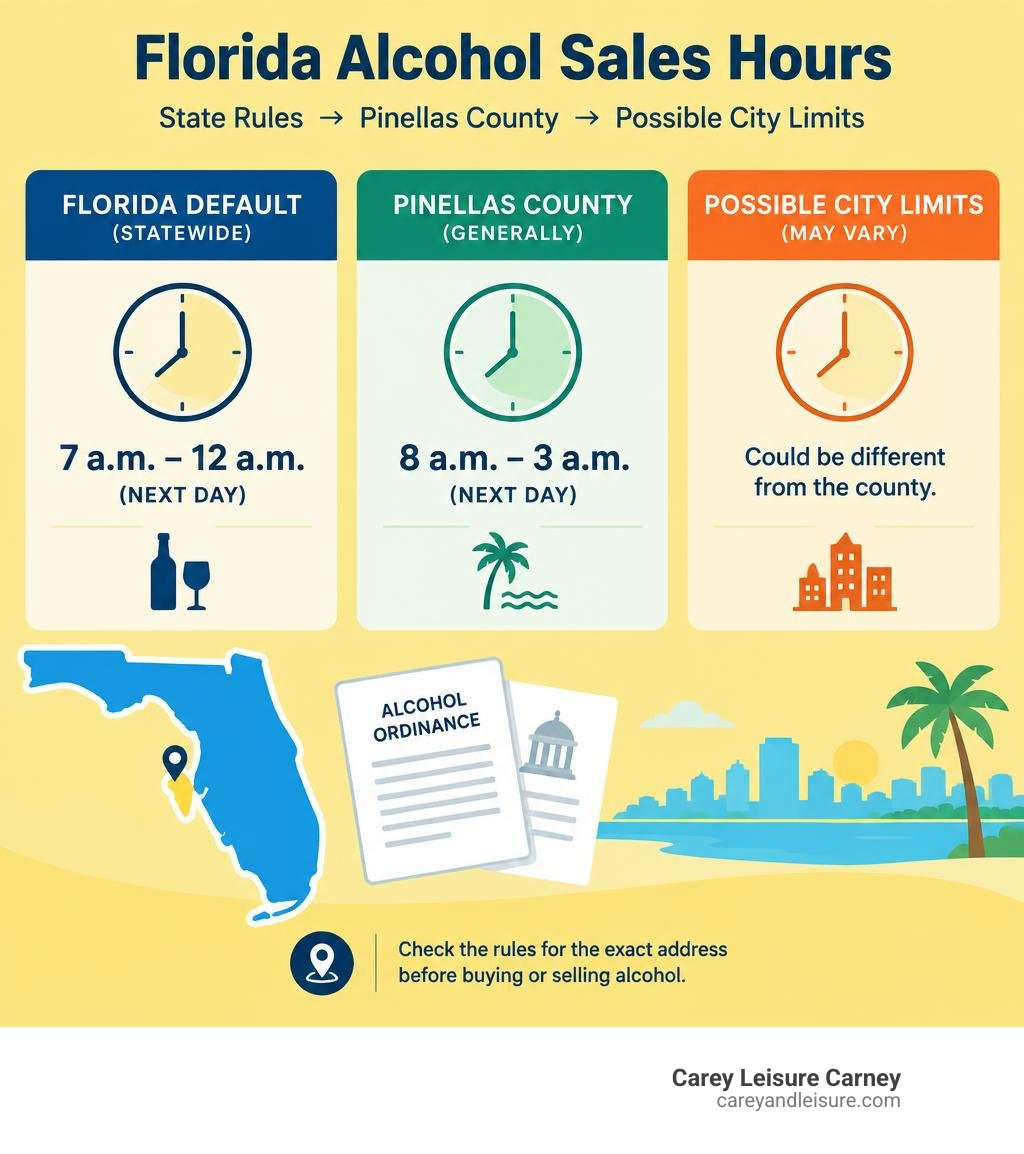
To understand new Florida liquor laws by county, start with the state rule: alcohol sales generally stop at midnight and resume at 7 a.m. Local ordinances can change those hours. Pinellas County generally allows sales from 8 a.m. to 3 a.m. the next day, including Sundays, but a city may set different limits. Check the rules for the exact address before buying or selling alcohol.
I’m Thomas W. Carey, a board-certified civil trial lawyer at Carey Leisure Carney. My work on DUI-related injury cases and anti-drunk-driving efforts shapes how I explain new florida liquor laws by county and their effect on community safety.
Easy new florida liquor laws by county glossary:
Understanding the Patchwork: Florida Liquor Laws in Pinellas County

Florida beverage statutes operate on a dual-tier framework. The state sets baseline licensing categories, tax structures, and criminal penalties under Chapters 561 and 565 of the Florida Statutes. However, the state grants broad regulatory authority to individual county commissions and municipal governments through home-rule powers.
The Division of Alcoholic Beverages and Tobacco (ABT), operating within the Department of Business and Professional Regulation (DBPR), oversees manufacturer, distributor, and vendor licenses. Yet, the exact hour a restaurant in Clearwater or St. Petersburg must issue last call depends entirely on local municipal codes.
State Defaults vs. County Ordinances
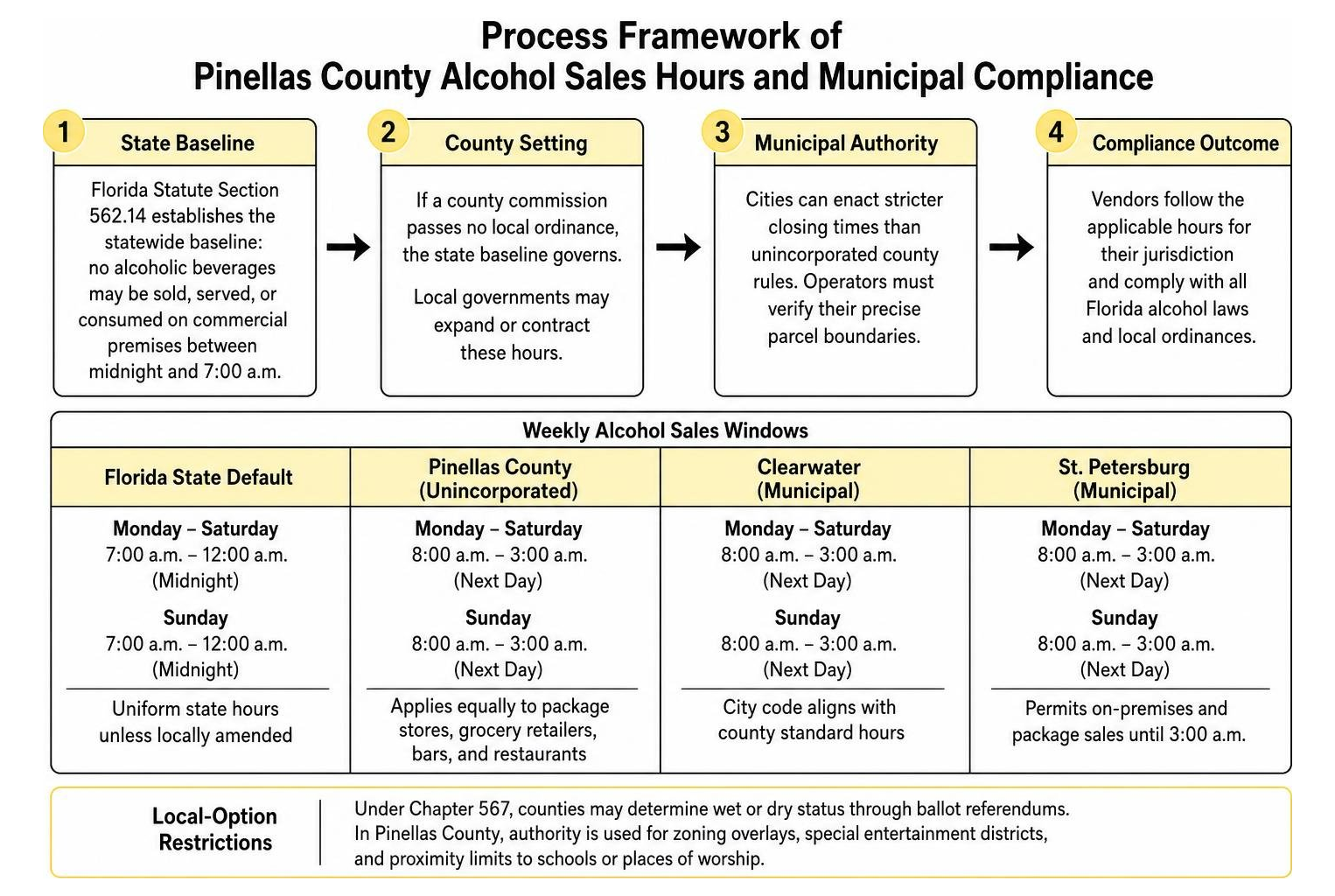
Florida Statute Section 562.14 establishes the statewide baseline: no alcoholic beverages may be sold, served, or consumed on commercial premises between midnight and 7:00 a.m. If a county commission passes no local ordinance, this statutory default governs every vendor within its borders.
Local governments hold statutory authority to expand or contract these hours. In our comprehensive overview of Florida alcohol laws, we explain how these municipal overrides create varying closing times across neighboring jurisdictions. A city code can enact stricter closing times than the unincorporated county rules, requiring business operators to verify their precise parcel boundaries.
Local-Option Restrictions Under Florida Liquor Laws
Under Chapter 567 of the Florida Statutes, counties possess the constitutional authority to determine their wet or dry status through ballot referendums. Historically, several jurisdictions across Florida banned package sales or on-premises liquor service entirely.
While urban areas like Pinellas County operate as fully wet jurisdictions, local option powers remain active across the state. In Pinellas County, this authority manifests primarily as municipal zoning overlays, special entertainment district designations, and specific proximity limits between licensed premises and schools or places of worship.
Pinellas County Alcohol Sales Hours and Sunday Sales
For decades, archaic “blue laws” restricted Sunday alcohol sales across Florida, forcing retail stores and brunch spots to delay alcohol service until late morning or early afternoon. Over the past decade, local commissioners modernized these schedules to support tourism and economic parity.
| Jurisdiction | Monday – Saturday Sales Window | Sunday Sales Window | Package Retail vs. On-Premises |
|---|---|---|---|
| Florida State Default | 7:00 a.m. – 12:00 a.m. (Midnight) | 7:00 a.m. – 12:00 a.m. (Midnight) | Uniform state hours unless locally amended |
| Pinellas County (Unincorporated) | 8:00 a.m. – 3:00 a.m. (Next Day) | 8:00 a.m. – 3:00 a.m. (Next Day) | Applies equally to package stores, grocery retailers, bars, and restaurants |
| Clearwater (Municipal) | 8:00 a.m. – 3:00 a.m. (Next Day) | 8:00 a.m. – 3:00 a.m. (Next Day) | City code aligns with county standard hours |
| St. Petersburg (Municipal) | 8:00 a.m. – 3:00 a.m. (Next Day) | 8:00 a.m. – 3:00 a.m. (Next Day) | Permits on-premises and package sales until 3:00 a.m. |
Pinellas County and Clearwater Rules
The Pinellas County Board of County Commissioners eliminated the historic 11:00 a.m. Sunday restriction. According to official Pinellas County Sunday sales ordinance updates, both package retailers and on-premises venues throughout unincorporated Pinellas County, as well as cooperating municipalities like Clearwater, St. Petersburg, and Largo, can sell alcoholic beverages from 8:00 a.m. until 3:00 a.m. seven days a week.
Legal Age Standards, Underage Penalties, and Vendor Liability
Florida strictly regulates the minimum legal age for purchasing, handling, and serving alcohol. The DBPR enforces zero-tolerance rules for underage service, balancing public safety with commercial hospitality compliance.
Legal Purchasing Age and ID Verification
The legal age to purchase and consume alcoholic beverages in Florida is 21 under Florida Statute Section 562.11. An underage individual who attempts to purchase or possesses alcohol faces criminal misdemeanor penalties, including driver’s license suspension.
To protect commercial vendors, the statute provides a formal affirmative defense: if a patron presents a fraudulent government-issued ID, appears to be of legal age to a prudent person, and the vendor inspects the document in good faith, the licensee can avoid criminal liability. Detailed protocols for staff training are outlined in our guide to Florida alcohol ID laws.
Server, Bartender, and Employment Age Requirements
Florida law establishes distinct age tiers for hospitality employees:
- Package Store and Retail Sales (18+): Employees who are at least 18 years old can sell sealed containers of beer, wine, and spirits in grocery stores and package outlets.
- On-Premises Food and Beverage Servers (18+): Waitstaff aged 18 and older may take orders, serve alcoholic drinks, and clear tables in licensed restaurants.
- Bartenders and Pourers (21+): Anyone actively mixing, pouring, or preparing alcoholic drinks behind a bar must be at least 21 years of age.
- Postsecondary Educational Exemptions: Florida Statute Section 562.111 provides limited waivers for students aged 18 and older who taste (but do not consume) alcoholic beverages as part of an accredited postsecondary culinary or hospitality curriculum under direct instructor supervision.
Vendor Penalties and Commercial Liability
Serving an underage person constitutes a second-degree misdemeanor for a first offense, escalating to a first-degree misdemeanor for repeat violations within a single calendar year. Beyond criminal penalties, commercial establishments face administrative license suspensions, DBPR fines, and substantial civil liability under Florida Statute Section 768.125.
When a commercial establishment willfully sells or furnishes alcohol to a minor who subsequently causes severe harm or death, the injured parties have grounds to establish civil liability when a minor is served alcohol in Florida.
Furthermore, Florida’s dram shop statute exposes bars and restaurants to liability if they knowingly serve an individual who is habitually addicted to alcohol. Our team of dram shop claims attorneys frequently investigates whether commercial vendors breached their legal duties, evaluating bar liability for drunk drivers when catastrophic collisions occur across Tampa Bay roadways.
Public Consumption, Beaches, Delivery, and Permitting
Public consumption laws in Florida involve a balance of state statutes and city-level ordinances. Whether relaxing on the Gulf coast or ordering dinner to your doorstep, specific statutory boundaries apply.
Beach Restrictions and Open Container Rules in Pinellas County
Open container rules are strictly enforced throughout Pinellas County. Under Florida Statute Section 316.1936, possession of an open alcoholic beverage container inside a motor vehicle—whether moving or parked—is illegal for both drivers and passengers.
On public beaches, regulations depend on the governing municipality:
- Clearwater Beach: Public consumption of alcohol on public sandy beach areas is prohibited by city ordinance, except within designated permitted resort zones.
- St. Petersburg Area Beaches: Open containers are banned on public sands in Pinellas County coastal communities; alcohol is permitted only at licensed beachfront hotels and beach bars.
- County Parks & Preserves: Possessing or consuming alcohol in public parks is unlawful without a dedicated county permit.
Understanding Florida open container laws is critical to avoiding civil infractions or criminal citations while enjoying local coastal destinations.
Alcohol Delivery and Off-Premises Distribution
Florida modernized off-premises distribution rules through Senate Bill 148 (Florida Statute Section 561.20). Restaurants holding valid public food service licenses can deliver beer, wine, and spirits alongside prepared meals under strict conditions:
- Food Requirement: Alcoholic beverages must accompany a qualifying order of prepared food.
- Sealed Containers: Drinks must be placed in manufacturer-sealed packaging or tamper-evident containers with secured lids.
- Age Verification: Delivery drivers must verify that the recipient is at least 21 years old and obtain a physical signature upon delivery.
- Passenger Compartment Rules: Delivered drinks must be stored in the vehicle’s trunk or an inaccessible rear compartment during transit to comply with vehicular open container statutes.
Special Event Permits and Licensing Procedures
Organizations hosting festivals, fundraisers, or community gatherings in Pinellas County must navigate DBPR temporary permitting requirements:
- Nonprofit 1–3 Day Permits: Bona fide non-profit civic, charitable, or religious organizations can apply for temporary permits (ODS series) authorizing on-premises beer, wine, or liquor sales for specific events.
- Municipal Zoning Clearance: Event organizers must obtain zoning sign-offs and local law enforcement safety approvals before the DBPR will issue the temporary permit.
- Quota Licenses: Commercial vendors seeking permanent liquor sales must either obtain a special restaurant license (meeting strict square footage and seating thresholds) or secure a standard quota license through the annual DBPR state lottery.
Frequently Asked Questions About Florida County Alcohol Regulations
What are the default hours for alcohol sales in Florida?
The statutory baseline under Florida Statute Section 562.14 prohibits alcohol sales between midnight and 7:00 a.m. However, counties and cities routinely pass local ordinances modifying this default. In Pinellas County, sales are authorized from 8:00 a.m. until 3:00 a.m. the following day.
Do local-option alcohol restrictions apply in Pinellas County?
While Pinellas County is fully “wet” and allows the sale of beer, wine, and liquor across all unincorporated and municipal sectors, local-option regulatory powers exist through zoning codes, distance requirements from schools, and entertainment district rules.
Can you legally drink alcohol on public beaches in Pinellas County?
Generally, no. Municipalities including Clearwater and St. Petersburg prohibit open alcoholic containers on public beach sands. Alcohol consumption is typically restricted to licensed beachfront restaurants, private hotel cabana areas, or private property above the high-tide line.
Conclusion
Understanding local liquor ordinances across Clearwater, St. Petersburg, and unincorporated Pinellas County requires tracking both state statutory minimums and municipal amendments. Whether you are operating a hospitality venue or enjoying our local coastal communities, remaining compliant with sales hours, age limits, and public consumption rules protects public safety.
When bars or commercial vendors violate these statutes by serving underage patrons or over-serving habitually addicted drivers, the resulting collisions cause devastating injuries. At Carey Leisure Carney, our board-certified trial attorneys represent victims injured in preventable drunk driving crashes across Pinellas County. Explore our comprehensive Florida alcohol laws guide to learn more about your rights, or contact our Clearwater office for personalized legal guidance.