
What Florida’s Car Seat Law Requires
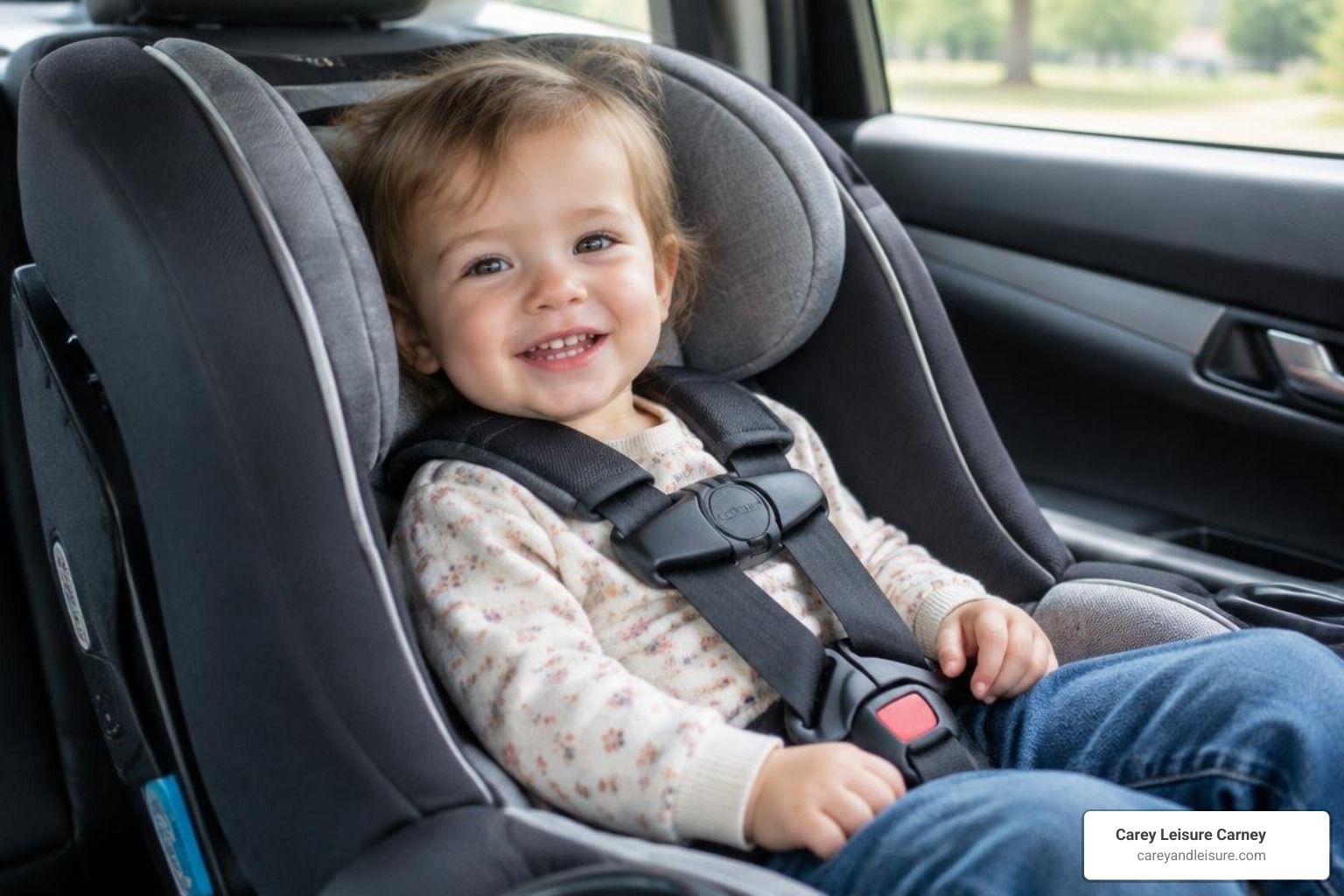
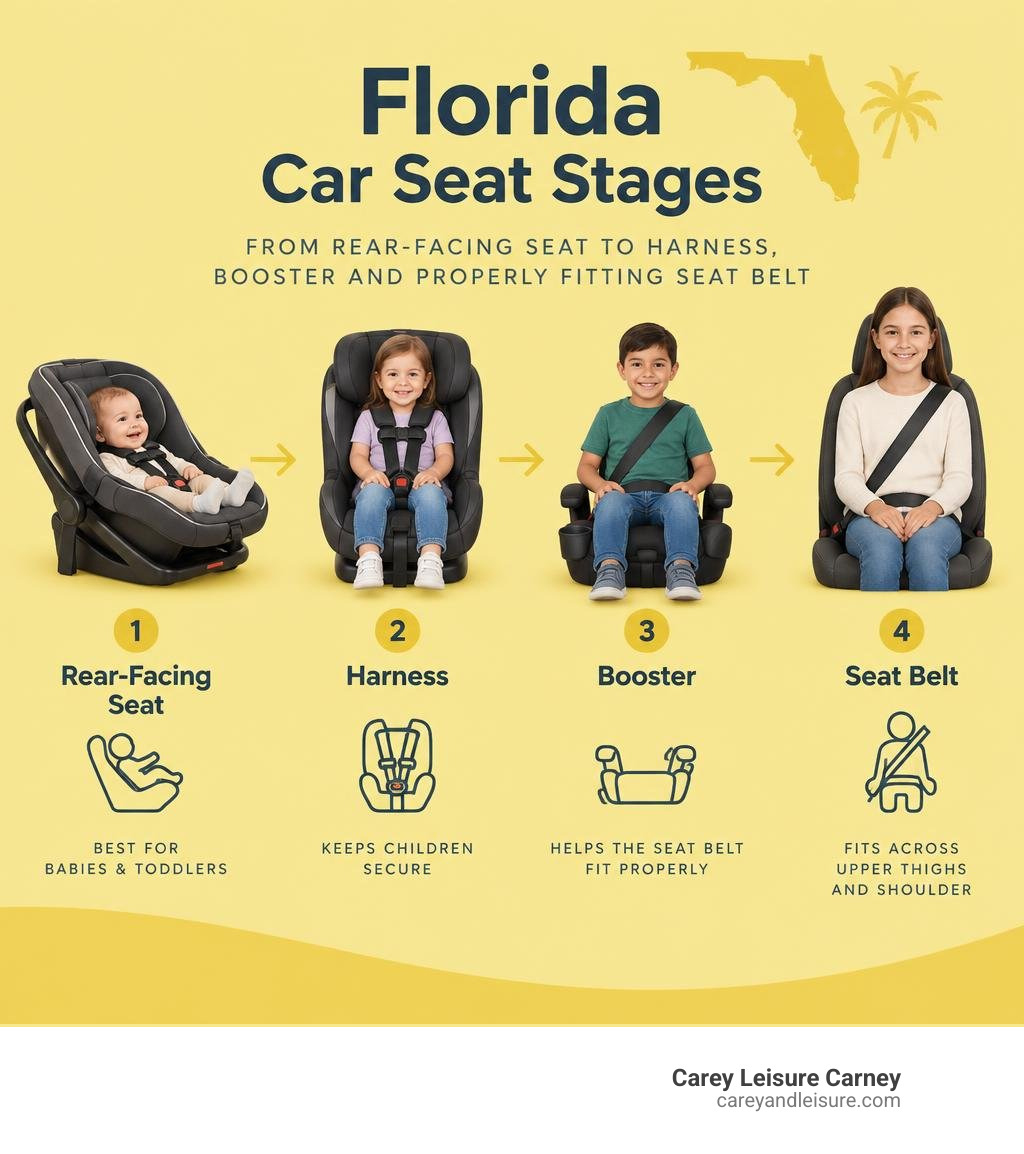
Florida’s laws for car seats depend primarily on a child’s age. Children through age 3 must ride in a child safety seat. At ages 4 and 5, they must use a child safety seat or booster seat. Older children must wear a seat belt, but they should keep using a booster until the belt fits across their upper thighs and shoulder, not their stomach or neck.
The legal minimum is not always the safest choice. Safety experts recommend keeping children rear-facing until they reach their seat’s height or weight limit, then using each next stage for as long as it fits. In 2024, 39% of children killed in passenger-vehicle crashes were unrestrained.
I’m Thomas W. Carey, founding partner of Carey Leisure Carney and a Florida board-certified civil trial lawyer with decades of experience handling motor-vehicle injury claims. In this guide, I’ll explain Florida’s rules and the safety choices that go beyond them.
Helpful safety resources to explore:
Understanding Core Car Seat Laws and Restraint Stages
Every year, an average of 5 children are killed and nearly 600 are injured in traffic crashes across the United States. Federal data shows that 325 children under age 5 are saved by properly utilized car seats in a single year. Using an approved child restraint device reduces the overall risk of fatal injury by up to 70 percent.
Motor vehicle restraint standards progress through distinct developmental phases. Rushing a child through these stages reduces their level of physical protection. Reviewing the principles of mastering car seat safety standards for every age and milestone helps keep your child secure as they grow.
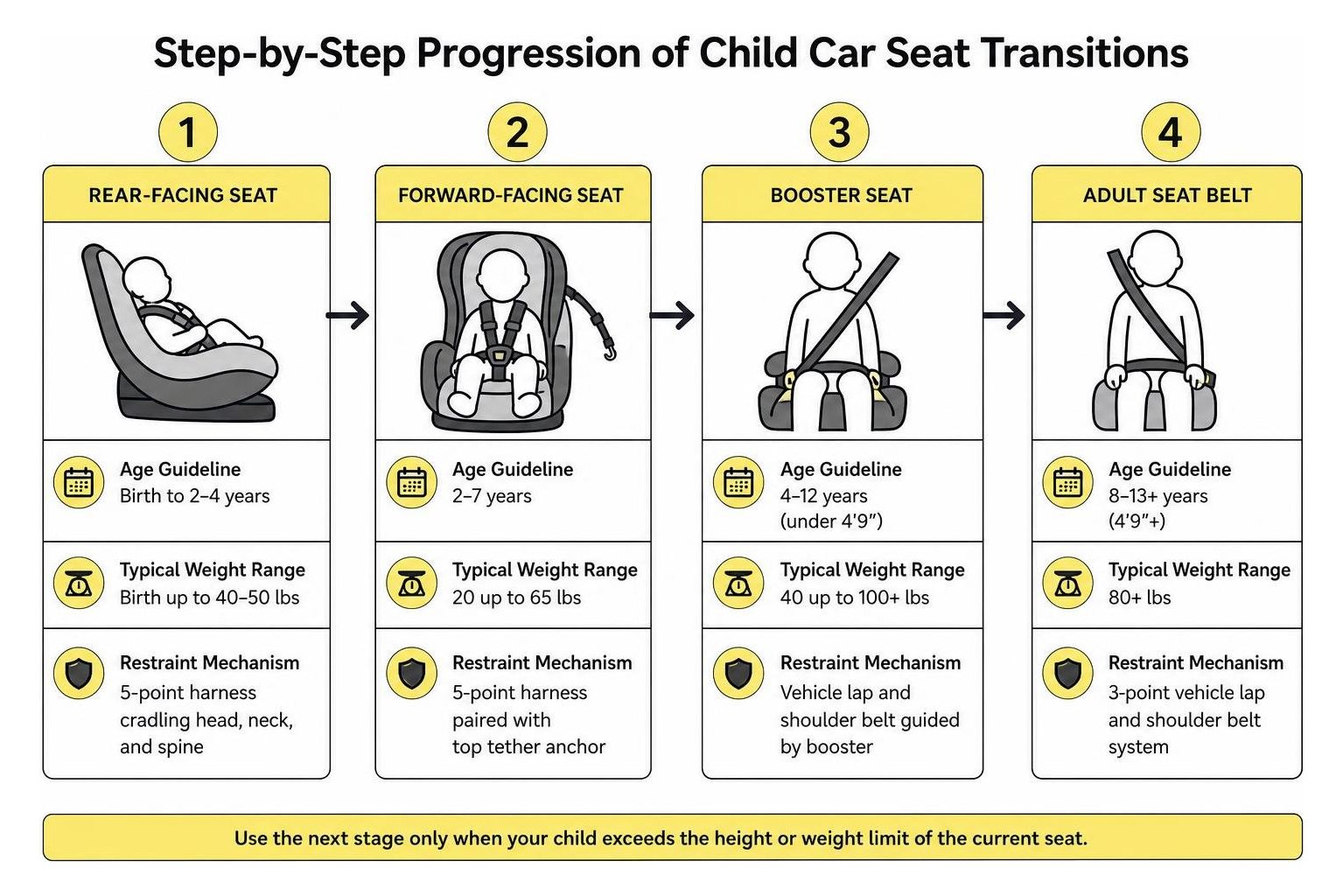
| Car Seat Stage | Age Guideline | Typical Weight Range | Restraint Mechanism |
|---|---|---|---|
| Rear-Facing Seat | Birth to 2–4 years | Birth up to 40–50 lbs | 5-point harness cradling head, neck, and spine |
| Forward-Facing Seat | 2–7 years | 20 up to 65 lbs | 5-point harness paired with top tether anchor |
| Booster Seat | 4–12 years (under 4’9″) | 40 up to 100+ lbs | Vehicle lap and shoulder belt guided by booster |
| Adult Seat Belt | 8–13+ years (4’9″+) | 80+ lbs | 3-point vehicle lap and shoulder belt system |
Rear-Facing Requirements and Safety Guidelines
Rear-facing car seats—whether infant-only carriers or convertible models—provide the highest level of crash protection for infants and toddlers. During a frontal collision, the back of a rear-facing car seat cradles and supports the child’s head, neck, and fragile spinal cord, absorbing impact forces across the entire shell of the seat.
According to Car Seat & Booster Seat Safety, Ratings, Guidelines | NHTSA, caregivers should keep children rear-facing for as long as possible until they exceed the top height or weight limit established by the car seat manufacturer. Modern convertible seats support rear-facing installation up to 40 to 50 pounds, allowing children to ride rear-facing well past their second birthday.
Forward-Facing Harness Thresholds and Guidelines
Once a toddler outgrows their rear-facing limits, they transition into a forward-facing seat equipped with an internal 5-point harness and top tether. The harness distributes crash energy across the strongest structural bones of the body: the shoulders and hips.
Most forward-facing car seats accommodate children up to 40 to 65 pounds. To ensure the harness fits correctly, perform the “pinch test” at the child’s collarbone. If you can pinch excess webbing between your fingers, the harness needs further tightening. Always ensure the plastic chest clip sits level with the child’s armpits to prevent ejection during sudden braking or collisions.
Booster Seat Transitions and Sizing Requirements
When a child reaches the upper weight or height maximum of their forward-facing 5-point harness, they can graduate to a belt-positioning booster seat. Booster seats raise the child so that adult lap-and-shoulder safety belts fit properly over their pelvic bones and chest.
Standard adult seat belts are engineered primarily for a 165-pound adult male. Placing a small child directly into an adult seat belt without a booster causes the lap band to ride up over soft abdominal organs, creating severe internal injury risks during a crash. Referencing a comprehensive parents guide to booster seat height and weight milestones ensures your child reaches the recommended 40-pound minimum before making this transition.
When Can Children Safely Graduate to Adult Seat Belts?
Most children do not fit safely into an adult vehicle seat belt until they reach 4 feet 9 inches in height, which typically occurs between 8 and 12 years of age. A child is ready to graduate from a booster seat only when they can pass the standard 5-step seat belt fit test:
- The child sits with their back and bottom flat against the vehicle seatback.
- The child’s knees bend naturally over the front edge of the seat cushion without slouching.
- The lap belt rests low and flat across the upper thighs and hips, never the stomach.
- The shoulder belt crosses flat across the middle of the chest and collarbone, not resting on the neck or face.
- The child comfortably maintains this seated position throughout the entire trip.
Florida Child Restraint Statutes and Legal Responsibilities
Florida Statute Section 316.613 establishes the mandatory child restraint guidelines for all drivers operating motor vehicles within the state. Caregivers must follow these rules across Pinellas, Pasco, and Hillsborough counties, including Clearwater, St. Petersburg, Largo, New Port Richey, Spring Hill, Trinity, and Wesley Chapel.
Key Requirements Under Florida Law
Under Florida law, drivers must properly secure children through age 5 using a crash-tested, federally approved child restraint device:
- Ages 0 through 3: Children must be secured in a separate carrier or an integrated child seat manufactured specifically for motor vehicle transport.
- Ages 4 through 5: Children must be secured in a separate carrier, an integrated child seat, or a belt-positioning booster seat.
- Ages 6 through 17: All minor passengers must be secured by an adult safety belt or appropriate child restraint.
Reviewing a detailed child car seat laws guide 2025 clarifies how Florida state statutes apply to daily driving routines. Further statutory details are outlined by the Safety Belts and Child Restraints – Florida Department of Highway Safety and Motor Vehicles.
Primary Enforcement and Penalties for Violations
Child passenger safety laws in Florida are enforced under primary enforcement. Law enforcement officers can initiate a traffic stop and issue a citation solely because an infant, toddler, or child is not properly secured in a required safety seat or seat belt.
A violation of Florida Statute Section 316.613 carries a moving violation citation, a base fine of $60 (plus associated court costs and local assessments), and 3 moving violation points assessed against the driver’s license. In lieu of points, the court may allow eligible drivers to complete a child passenger safety instructional course.
Installation Standards, LATCH Limits, and Front-Seat Airbag Rules
Studies show that roughly 48% of child safety seats are installed incorrectly by parents and caregivers. Proper installation requires understanding the mechanical connection points inside your vehicle.
LATCH System vs. Vehicle Seat Belt Installation
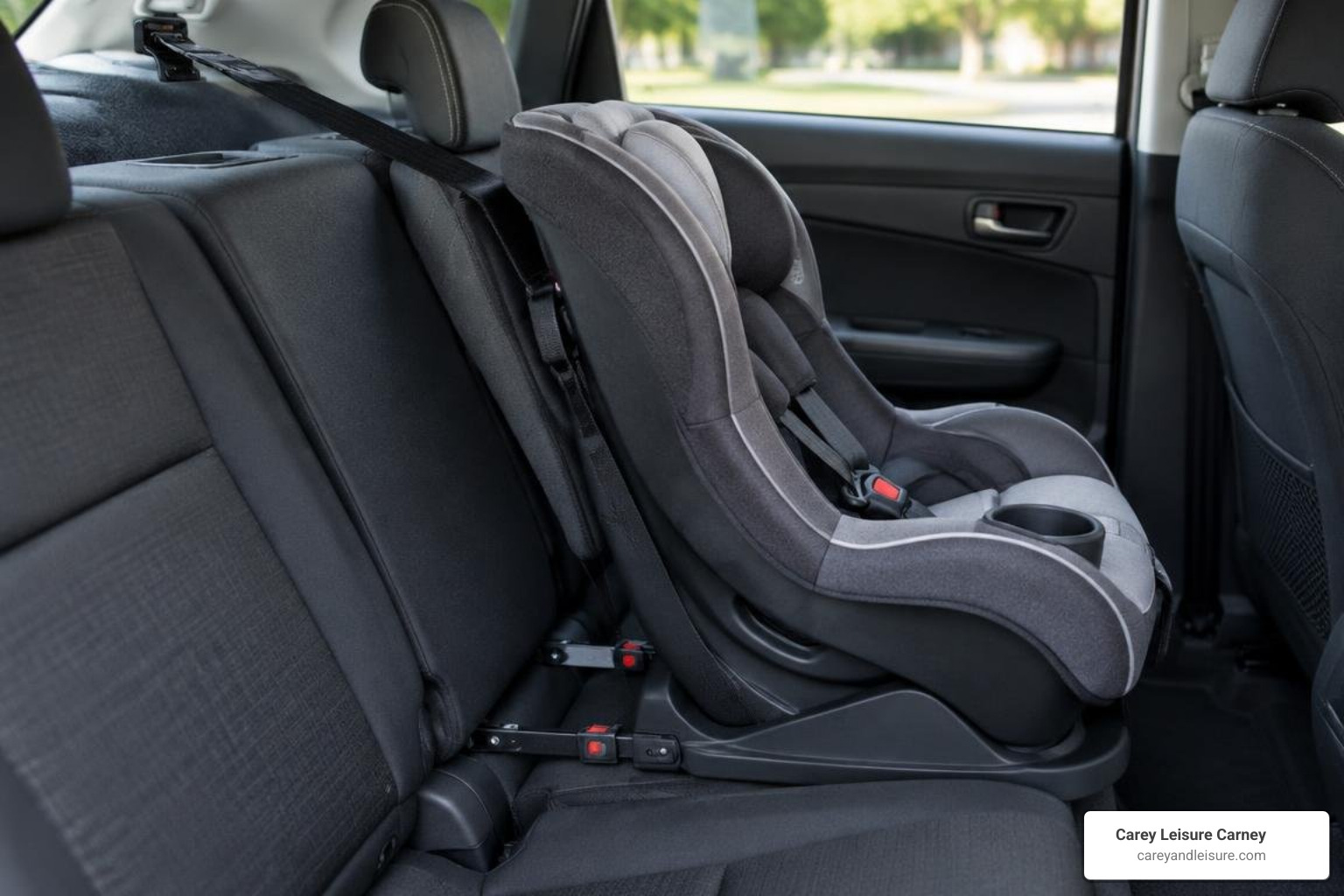
Child safety seats can be installed using either the vehicle’s Lower Anchors and Tethers for Children (LATCH) system or the vehicle seat belt with a locking retractor. Never use both lower anchors and a vehicle seat belt at the same time unless explicitly permitted by both the vehicle and car seat manufacturers.
Federal safety standards specify a combined weight limit for lower anchors. To calculate your lower anchor weight threshold, subtract the weight of the car seat from 65 pounds:
maximum child weight for lower anchors = 65 pounds − car seat weight
Once the child exceeds that calculated weight, the car seat must be secured using the vehicle seat belt. However, the top tether on forward-facing seats should always be anchored to the vehicle tether point regardless of whether lower anchors or seat belts secure the base.
Front Seat Airbag Dangers and Back Seat Safety
Front passenger airbags deploy at speeds exceeding 150 miles per hour. These explosive forces can cause catastrophic head, neck, and chest trauma to small children.
Children under age 13 should always ride in the vehicle’s rear rows. Never place a rear-facing infant seat in the front passenger seat in front of an active airbag. In single-cab pickup trucks without rear seating, you must manually disable the passenger airbag before securing a child safety seat.
Special Scenarios: Rideshares, Taxis, and RVs
- Rideshares (Uber and Lyft): In Florida, Transportation Network Companies are not exempt from child restraint laws. Parents traveling via rideshare in Clearwater, St. Petersburg, or Largo must supply and install their own car seat.
- Taxis: While traditional taxicabs may have narrow statutory exemptions under certain local codes, best safety practices dictate using a child seat on every ride.
- Recreational Vehicles (RVs): Motorized RV rear living areas are built with wood framing that can fail in high-speed impacts. Children should ride restrained in passenger vehicles rather than the rear benches of motorized RVs.
- Medical Exemptions: Children with medical conditions preventing standard restraint usage must carry a signed physician’s certification inside the vehicle at all times.
Frequently Asked Questions About Child Passenger Restraints
At what age can a child legally sit in the front seat?
While Florida law does not set a statutory age minimum for sitting in the front passenger seat, federal safety regulators and vehicle manufacturers universally mandate that children remain in the rear seat until at least age 13. Front passenger airbags deploy with explosive force designed for adult physiques.
What is the 5-step test for transitioning out of a booster seat?
The 5-step test evaluates whether a child can safely use a standard seat belt without a booster: (1) sitting with back flat against the seatback, (2) knees bending naturally over the edge, (3) lap belt resting across upper thighs, (4) shoulder belt crossing the center of the chest, and (5) remaining comfortably seated that way for the whole trip.
Do car seats expire, and should they be replaced after an accident?
Yes. Car seats typically expire 6 to 10 years from the date of manufacture due to plastic degradation and changing safety standards. Check the serial label stamped onto the shell of your seat. Car seats should always be replaced following any moderate or severe collision.
Conclusion
Securing your child in the right car seat on every single trip protects them against catastrophic injuries. Understanding childrens car seat laws is an essential responsibility for every parent and driver.
If you or your child have been injured in an automobile accident caused by a negligent driver in Clearwater, Largo, St. Petersburg, New Port Richey, Spring Hill, Trinity, or Wesley Chapel, Carey Leisure Carney is here to help. Our Board-Certified personal injury attorneys offer direct access and personalized legal advocacy to help your family recover. Contact us today to discuss your case.