
Florida No-Fault Car Accidents Explained Simply
How Does a No Fault Accident Florida Work?
Florida is one of a handful of states operating under a no-fault auto insurance framework. In simple terms, this structure means that when a crash occurs, your initial medical bills and associated financial losses are processed through your own insurance provider first, regardless of who caused the wreck.
Instead of waiting months for insurance adjusters to argue over liability, you can immediately seek treatment and submit those initial medical bills to your insurer. Understanding what is PIP insurance in Florida helps clarify why this system was created: to ease the burden on state civil courts and ensure accident victims receive rapid medical care without delays caused by fault disputes.
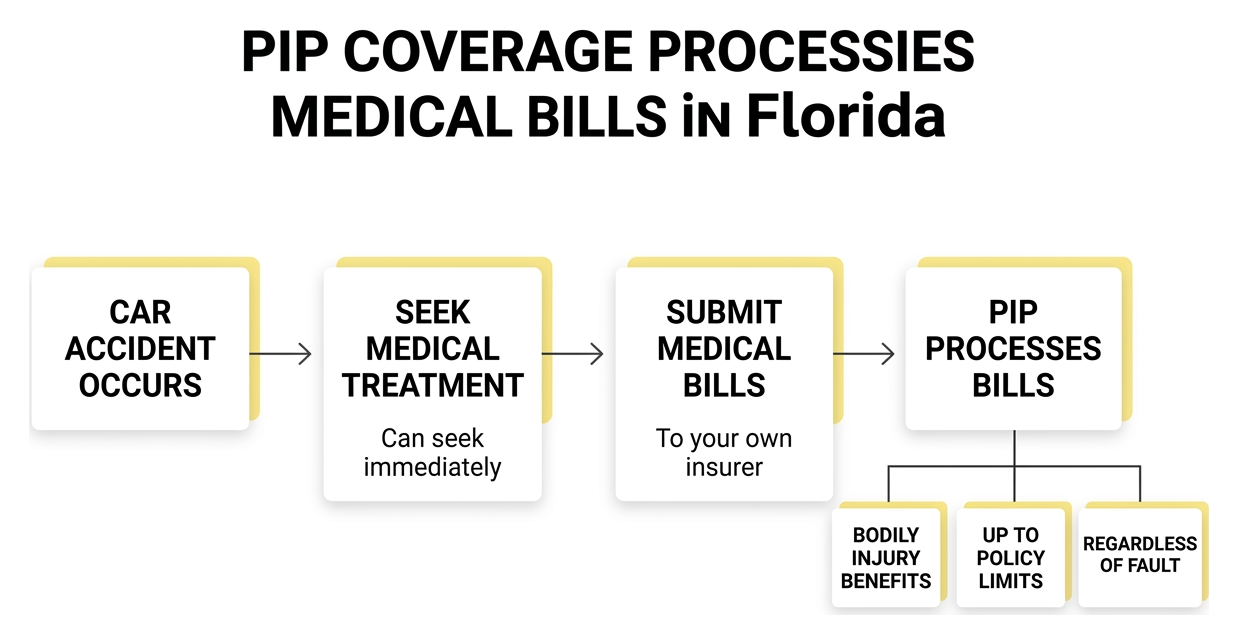
However, “no-fault” applies strictly to bodily injuries up to your policy limits. It does not apply to vehicle damage, and it certainly does not shield a careless driver from personal liability if someone suffers severe, life-altering harm.
Personal Injury Protection (PIP) Coverage and Medical Benefits
Under the Florida Motor Vehicle No-Fault Statute, every standard motor vehicle registered in the state must carry personal injury protection. Knowing what is covered under Personal Injury Protection ensures you do not leave valuable benefits on the table.
In Florida, standard PIP policies provide up to a $10,000 maximum benefit per person, paying:
- 80% of necessary medical expenses: This covers ambulance transport, emergency room visits, surgery, diagnostic imaging (like X-rays and MRIs), physical therapy, and prescription medications.
- 60% of lost wages: If your crash-related injuries prevent you from working, PIP reimburses a portion of your lost income.
- Replacement household services: If you are physically unable to perform essential household duties, such as childcare, cleaning, or yard maintenance, PIP can reimburse 100% of the cost to hire outside assistance.
- $5,000 in death benefits: In the tragic event of a fatal accident, PIP pays a death benefit to the decedent’s estate or surviving family members in addition to medical benefits.
To qualify for these benefits, you must seek medical care from a qualified healthcare provider within 14 days of the crash. If you miss this statutory window, your insurer can legally deny your PIP claim entirely.
Mandatory Coverage Requirements and Penalties for Uninsured Drivers
Florida law mandates two baseline auto insurance coverages for all registered four-wheeled vehicles:
- $10,000 in Personal Injury Protection (PIP)
- $10,000 in Property Damage Liability (PDL)
According to Florida’s financial responsibility statutes, every vehicle owner must maintain continuous coverage. If you let your policy lapse or drive without insurance, the Florida Department of Highway Safety and Motor Vehicles (FLHSMV) can immediately suspend your driver’s license and vehicle registration for up to three years.
To reinstate your driving privileges, you must provide proof of current insurance and pay reinstatement fees ranging from $150 to $500 depending on prior offenses. If you are involved in a car accident with no insurance when you are not at fault in Florida, you lose your PIP safety net, face severe licensing penalties, and may be personally exposed to significant out-of-pocket medical debt.
Coverage Rules for Teen and Young Drivers in the Household
Young and teenage drivers in Florida are automatically covered under their parents’ PIP policy as long as they reside in the same household and are listed on the policy.
Because young drivers face higher statistical crash risks, adding a teen to a family policy will raise premiums. However, attempting to cut costs by omitting a driving-age teen from your policy can backfire. If an unlisted household member gets into a crash, the insurance company may dispute coverage or investigate the policy for material misrepresentation. Maintaining transparent coverage for all resident relatives ensures that everyone in the home has immediate medical protection if an accident happens.
Pros and Cons of Florida’s No-Fault Auto Insurance System
Florida’s no-fault system carries notable benefits alongside real limitations. When asking whose fault is it anyway in a no-fault accident, weighing these trade-offs helps set realistic expectations for your recovery.
| Advantages of Florida No-Fault | Disadvantages of Florida No-Fault |
|---|---|
| Immediate Medical Access: You do not have to wait for insurers to establish who caused the crash before getting initial treatment funded. | Strict $10,000 Limit: The $10,000 cap has not kept pace with modern medical inflation; an ER visit can exhaust it in hours. |
| Reduced Initial Court Disputes: Straightforward minor injuries are resolved quickly without formal lawsuits. | Out-of-Pocket Gaps: PIP only covers 80% of medical bills and 60% of lost income, leaving a 20% to 40% gap. |
| Covers All Household Members: Extends protection to passengers, children, and pedestrians who do not own a vehicle. | Restricted Pain and Suffering: You cannot pursue general non-economic damages unless your injuries meet statutory thresholds. |
| No Fault Barrier to Initial Care: Even if you made an honest driving error, your medical bills are partially paid. | Higher Statewide Premiums: Due to systemic fraud and high claim volumes, Florida drivers often pay elevated baseline rates. |
Can You Sue the At-Fault Driver in Florida?
Yes. While Florida’s no-fault system directs you to your own PIP coverage first, it does not bar you from pursuing legal action against a negligent driver under the right circumstances. Recognizing when to call an accident lawyer after being hit in a no-fault state is essential when your medical costs, lost earning capacity, or property repairs exceed basic coverage limits.
First, property damage is entirely separate from PIP. The at-fault driver’s Property Damage Liability (PDL) policy is responsible for paying to repair or replace your vehicle from dollar one. Second, when personal injuries exceed the scope of PIP, you can step outside the no-fault system and file a personal injury lawsuit against the at-fault motorist.
Meeting the Serious Injury Threshold After a No Fault Accident Florida
To file a third-party claim or lawsuit for non-economic damages—such as physical pain, emotional suffering, mental anguish, and loss of enjoyment of life—your injury must meet Florida’s “serious injury threshold.”
As outlined in Florida law and explored in our guide on navigating injuries and no-fault rules after a car crash, an injury qualifies if it results in:
- Significant and permanent loss of an important bodily function
- Permanent injury within a reasonable degree of medical probability (such as permanent disc herniations, nerve damage, or joint damage)
- Significant and permanent scarring or disfigurement
- Death
If your treating physician establishes that your injuries meet this statutory threshold, you can pursue the at-fault driver’s Bodily Injury Liability (BIL) insurance policy for full economic and non-economic compensation.
Modified Comparative Negligence and the 51% Fault Bar
When taking legal action against an at-fault driver, Florida’s fault-allocation laws govern how much compensation you can collect. Under the Florida modified comparative fault statute, liability is distributed based on each party’s percentage of blame.
Applying these comparative negligence rules means:
- If you suffer $100,000 in damages and are found to be 20% at fault for the crash (e.g., driving slightly over the speed limit), your total recovery is reduced by 20%, leaving you with $80,000.
- The 51% Bar: Under Florida law, if you are determined to be greater than 50% at fault for your own injuries (51% or higher), you are completely barred from recovering any damages from the other party.
Because insurance adjusters frequently attempt to assign disproportionate blame to injured drivers to trigger this 51% bar, securing clear physical evidence, witness statements, and legal counsel is critical.
Critical Steps to Take After an Accident in Florida
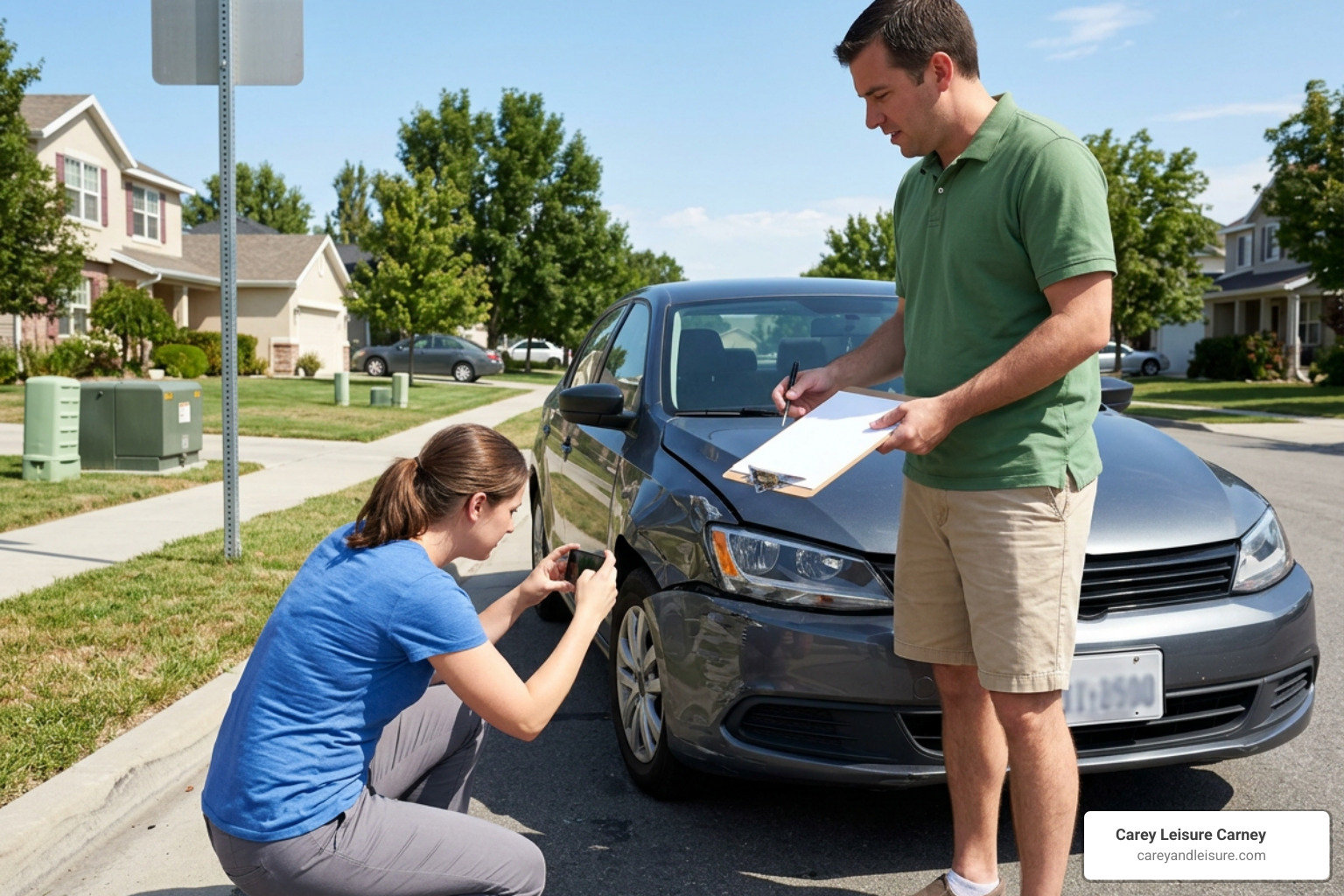
The actions you take immediately following a collision directly affect both your physical recovery and your financial rights. Reviewing our checklist on what to do after a car accident in Florida can help keep you grounded during a stressful moment:
- Check for Injuries and Call 911: Ensure everyone is safe and request law enforcement and emergency medical services.
- Move to Safety: If possible and lawful, move vehicles out of active traffic lanes to prevent secondary collisions.
- Document the Scene Thoroughly: Take clear photographs and video footage of vehicle damage, license plates, road conditions, skid marks, traffic signals, and any visible injuries.
- Exchange Information: Collect names, phone numbers, addresses, driver’s license numbers, and insurance details from all involved motorists.
- Seek Medical Care Within 14 Days: To preserve your PIP benefits, you must be evaluated by an authorized medical provider within 14 calendar days.
Filing a PIP Claim After a No Fault Accident Florida
To start receiving PIP benefits, inform your insurance provider promptly. When contacting your carrier following an accident, stick strictly to the observable facts: the time, date, location, and vehicles involved.
Your insurer will assign a claim number and provide forms for your medical providers and employer to complete. Be mindful of your chosen PIP deductible (which can range from $250 to $1,000), as your insurer will deduct this amount before issuing payments for covered medical care or wage losses.
Legal Duties When Damaging Unattended Vehicles or Property
Minor accidents often involve parked vehicles, mailboxes, or commercial fixtures. Under the Florida unattended property collision statutes, you have clear legal obligations if you hit an unattended car or roadside structure:
- Stop Immediately: You must halt your vehicle at the scene without unnecessarily obstructing traffic.
- Locate the Owner or Leave Written Notice: You must attempt to find the owner. If they cannot be located, you are legally required to securely attach a legible, written notice containing your name, address, and vehicle registration number in a conspicuous spot on the damaged property.
- Notify Law Enforcement: You must contact the local police department, sheriff’s office, or Florida Highway Patrol without delay to report the incident.
Failing to leave notice or report the collision is classified as a second-degree misdemeanor under Florida law, punishable by fines and possible jail time.
Frequently Asked Questions About Florida No-Fault Accidents
Does no-fault insurance mean nobody is held responsible for a crash in Florida?
No. The term “no-fault” simply describes how your initial medical bills are handled by PIP. Police officers still investigate collisions, issue moving violation citations, and establish who violated traffic laws. Learning how to tell who is at fault in a car accident remains vital because the at-fault driver’s insurance is responsible for paying for vehicle damage and any serious injury claims that exceed PIP limits.
What happens if my medical expenses exceed the $10,000 PIP limit?
A severe collision can easily exhaust the $10,000 PIP benefit within a single emergency room visit. When medical bills exceed PIP limits, options include:
- Using private health insurance to cover excess medical costs
- Tapping into your own Uninsured/Underinsured Motorist (UM/UIM) coverage
- Filing a third-party claim or lawsuit against the at-fault driver’s Bodily Injury Liability coverage (if your injuries meet the serious injury threshold)
This is a primary reason why you need more than baseline coverage in Florida, as optional coverages like Medical Payments (MedPay) and UM provide a crucial financial buffer.
Can an uninsured driver recover damages after a crash in Florida?
An uninsured driver cannot claim PIP benefits because they failed to purchase the required policy. However, if the uninsured driver was hit by a negligent motorist and was not primarily at fault, they may still pursue a property damage and third-party personal injury claim against the at-fault driver. Nevertheless, the uninsured driver will face driver’s license suspension, substantial administrative fines, and personal liability for any damages they contributed to causing.
Conclusion: Protecting Your Rights After a Florida Car Crash
Understanding how auto insurance works after a crash helps you make informed choices about your medical care and financial recovery. Florida’s no-fault laws provide prompt initial medical coverage through PIP, but they do not prevent you from holding a reckless driver accountable when severe injuries disrupt your life.
At Carey Leisure Carney, our personal injury lawyers serve injured individuals and families across Clearwater, Largo, New Port Richey, Spring Hill, St. Petersburg, Trinity, and Wesley Chapel, Florida. Our team features Board-Certified Civil Trial Lawyers—a distinction held by fewer than 2% of Florida attorneys—bringing over a century of combined legal experience to every case we handle. We provide direct attorney access, clear guidance, and dedicated representation from start to finish.
If you have questions about your coverage or need assistance navigating a serious injury claim, explore our comprehensive Florida no-fault insurance guide or contact our team today for a free case evaluation.