
Size Matters: Why You Need Specialized 18 Wheeler Wreck Lawyers
Why Specialized 18 Wheeler Wreck Lawyers Matter
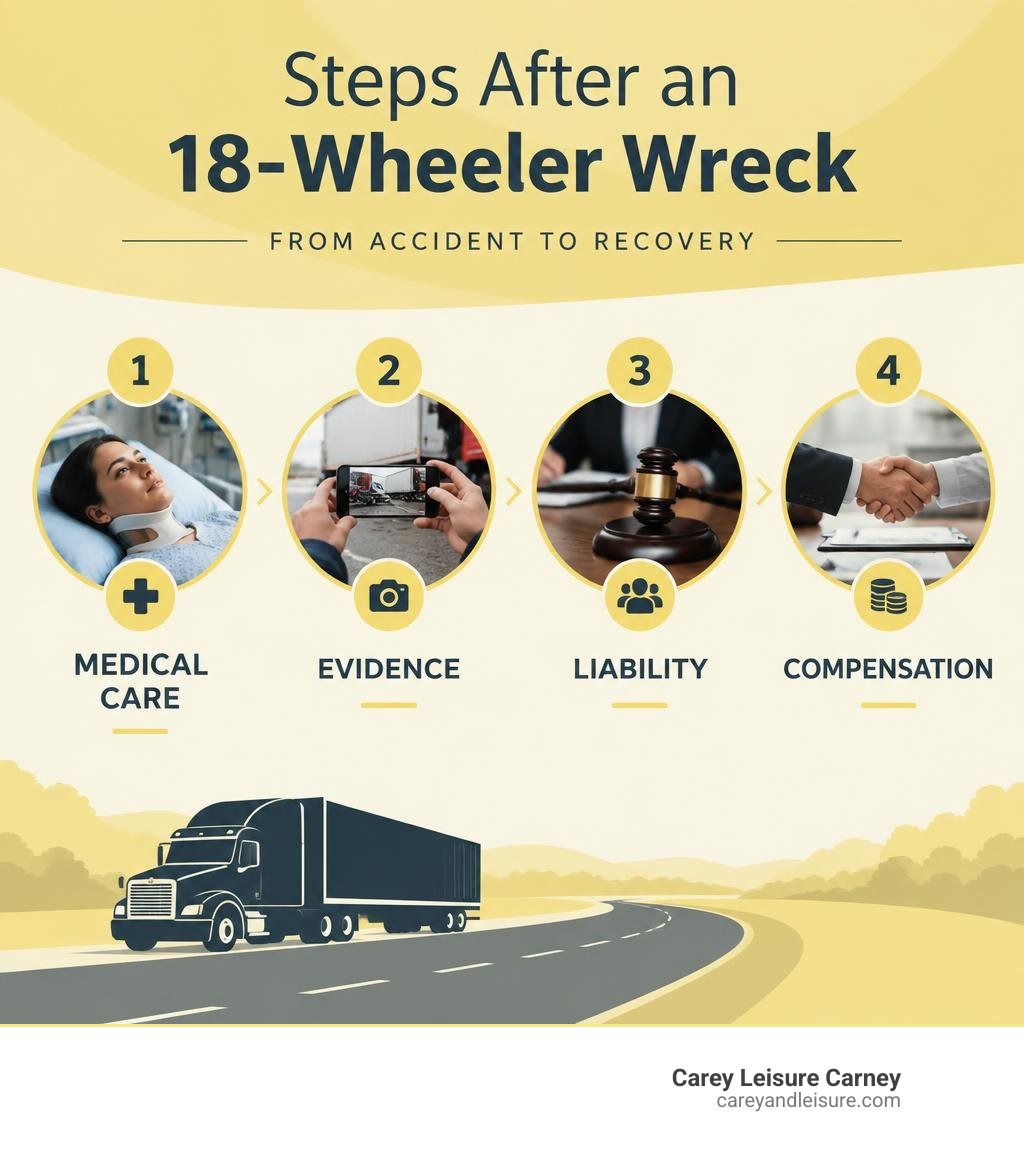
After a crash with a commercial truck, 18 wheeler wreck lawyers can help protect evidence, identify every responsible party, and pursue the full value of your claim. Get medical care, call 911, photograph the scene if it is safe, keep all records, and avoid giving a recorded statement to the trucking insurer before you understand your rights.
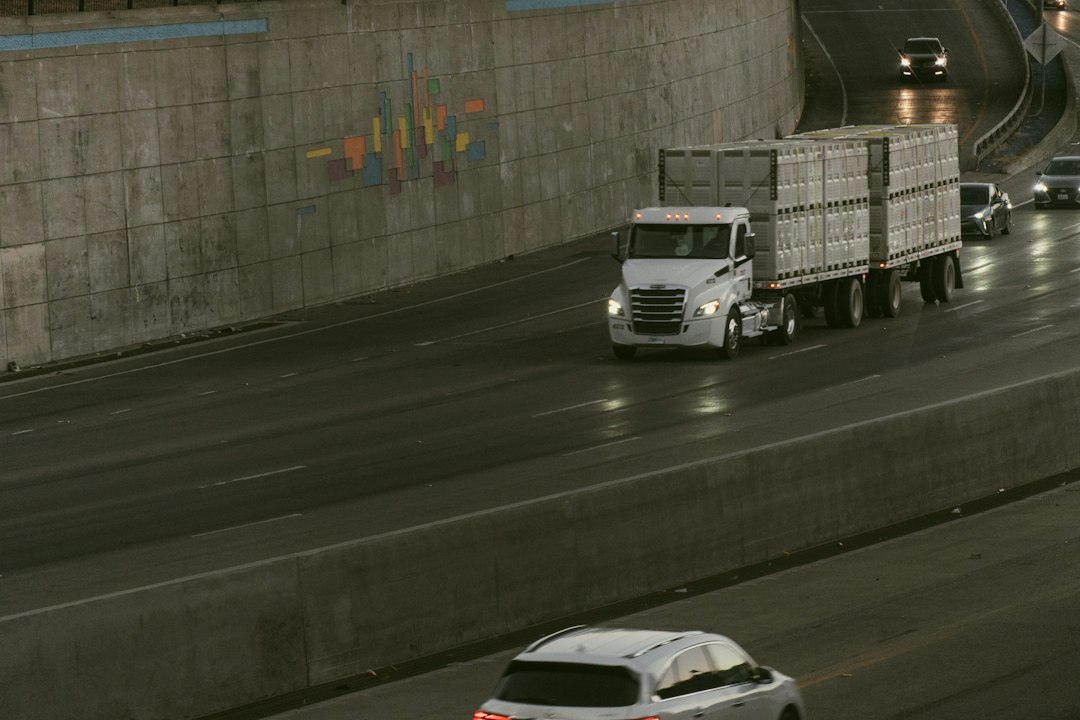
An 18-wheeler can legally weigh up to 80,000 pounds. Its size, blind spots, and long stopping distance can turn one mistake into a catastrophic collision. These cases are not just larger car-accident claims. They may involve the driver, trucking company, cargo loader, maintenance provider, and multiple insurance policies, along with federal safety rules and electronic data that can disappear quickly.
I am Thomas W. Carey, a board-certified civil trial lawyer and founding partner at Carey Leisure Carney. Since 1988, I have handled and overseen thousands of Florida injury matters, including serious vehicle and trucking cases, and I understand why people need experienced 18 wheeler wreck lawyers when their health, income, and family are at risk.
18 wheeler wreck lawyers basics:
The Legal and Physical Complexities of Big Rig Crashes
When an 80,000-pound tractor-trailer collides with a standard four-door sedan weighing roughly 4,000 pounds, basic laws of physics dictate the devastating outcome. The immense mass of a commercial vehicle generates immense momentum. At highway cruising speeds, a fully loaded tractor-trailer requires up to 525 feet to come to a complete stop—nearly the length of two entire football fields. Even under optimal conditions, federal safety standards note that commercial rigs need substantial clearance to decelerate safely compared to regular motor vehicles.
These physical realities create distinct legal battlegrounds. The differences between standard passenger vehicle claims and commercial truck crashes are substantial. While passenger vehicle collisions typically center around a single negligent driver and standard consumer auto policies, commercial vehicle litigation involves complex corporate structures, multi-layered commercial insurance policies, strict federal regulatory compliance, and rapid corporate defense intervention.
| Case Factor | Passenger Car Accident | 18-Wheeler Commercial Crash |
|---|---|---|
| Maximum Weight | 3,000 to 5,000 lbs | Up to 80,000 lbs |
| Stopping Distance (65 mph) | ~300 feet | Up to 525 feet |
| Governing Regulations | State traffic statutes | FMCSA federal regulations & state rules |
| Potential Liable Parties | Negligent driver, vehicle owner | Driver, carrier, loader, mechanic, manufacturer |
| Insurance Policy Limits | Often state minimums ($10k-$50k) | $750,000 to $5,000,000+ commercial tiers |
| Critical Evidence | Police report, basic photos | ECM/Black box, ELD logs, telematics, inspection files |
Commercial Carrier Regulations and FMCSA Oversight
Interstate commercial transportation is heavily regulated by the Federal Motor Carrier Safety Administration (FMCSA). These federal rules govern virtually every aspect of commercial trucking operations:
- Hours-of-Service (HOS): Strict limitations dictate how many consecutive hours a commercial trucker may drive and mandate mandatory rest breaks and sleeper berth periods to prevent driver exhaustion.
- Electronic Logging Devices (ELD): Motor carriers must utilize certified ELDs synchronized with the vehicle’s engine to automatically record driving time, duty status, and operational movement.
- Strict Sobriety Standards: Commercial driver’s license (CDL) holders are held to a nationwide legal limit of 0.04% blood alcohol concentration (BAC)—half the legal limit for standard motorists—alongside mandatory pre-employment and post-accident drug and alcohol screening.
- Vehicle Maintenance Audits: Fleet operators must enforce systematic inspection, repair, and maintenance schedules under Title 49 of the Code of Federal Regulations, keeping detailed vehicle inspection reports (DVIRs).
Uncovering breaches in these federal standards allows our legal team to establish statutory negligence against reckless carriers.
High-Risk Corridors and Driving Conditions
Throughout Florida, commercial freight traffic moves heavily along key interstate arteries, including I-4, I-75, and I-275, as well as heavily congested local bypasses. In busy regional hubs spanning Clearwater, St Petersburg, Largo, Wesley Chapel, New Port Richey, Trinity, and Spring Hill, passenger vehicles share tightly packed lanes with massive semi-trucks daily.
These crowded corridors feature dangerous blind spots—frequently called “No-Zones”—extending directly behind the trailer, alongside the cab doors, and immediately in front of the elevated truck hood. When heavy afternoon downpours strike local highways, braking distances multiply, increasing the risk of deadly jackknifes, lane-encroachment crashes, and severe pileups during unexpected slowdowns.
Common Causes and Devastating Injuries in Commercial Collisions
Behind nearly every trucking disaster lies a preventable safety breakdown. Trucking corporations often impose tight delivery deadlines, leading drivers and logistics managers to cut corners.

Leading contributing factors to commercial truck wrecks include:
- Driver Exhaustion: Commercial drivers battling unrealistic delivery windows suffer cognitive decline; fatigue factors in commercial carrier crashes remain a primary catalyst for devastating roadway wrecks.
- Distracted Driving: Texting, navigating complex dispatch GPS units, or using mobile devices while maneuvering an 80,000-pound vehicle.
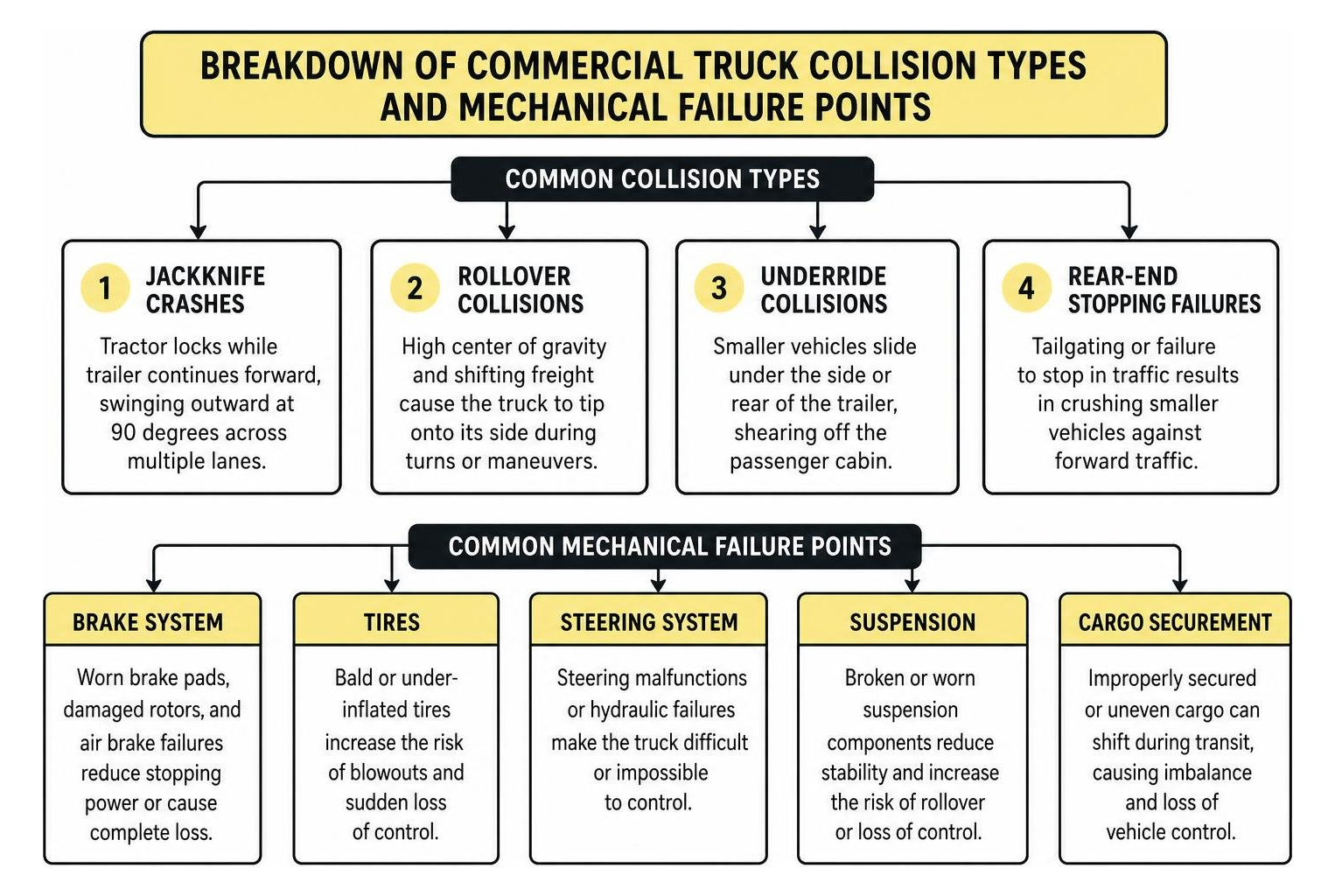
- Deferred Fleet Maintenance: Worn brake pads, bald tires prone to blowouts, steering malfunctions, and broken suspension components.
- Improper Cargo Distribution: Unsecured or uneven freight that shifts during transit, pulling the center of gravity off balance and causing sudden loss of vehicle control.
Catastrophic Physical and Financial Repercussions
Because passenger vehicles lack the protective mass to absorb the kinetic energy unleashed by an 18-wheeler, occupants frequently suffer life-altering trauma. Our attorneys routinely manage cases involving severe physical injuries resulting from semi-truck crashes, such as:
- Traumatic Brain Injuries (TBI): Severe concussions, diffuse axonal injuries, and intracranial hemorrhages resulting in lasting cognitive deficits.
- Spinal Cord Trauma: Vertebral fractures, herniations, and complete severed-cord injuries leading to partial or total paralysis (paraplegia and quadriplegia).
- Traumatic Amputations & Crush Injuries: Severe limb loss requiring emergency surgical intervention, functional prosthetics, and long-term vocational retraining.
- Internal Organ Damage & Severe Burns: Ruptured spleens, punctured lungs, and high-degree burns caused by ruptured diesel fuel tanks.
Treating these catastrophic traumas requires comprehensive medical resources. Understanding all available medical bill compensation options after a collision is vital to ensure long-term care, rehabilitative therapies, and home modifications are completely funded by the at-fault parties.
Dangerous Crash Configurations
The mechanical structure of tractor-trailers exposes motorists to unique, deadly accident configurations:
- Jackknife Crashes: Occur when the drive wheels of the tractor lock while the trailer continues forward, swinging outward at a 90-degree angle and sweeping across multiple traffic lanes. Understanding jackknife accident mechanics and liability is critical when untangling who caused the loss of control.
- Rollover Collisions: High-center-of-gravity freight shifts can pull an entire semi onto its side during aggressive turns or abrupt avoidance maneuvers.
- Underride Collisions: Horrific crashes where a passenger car slides beneath the side or rear trailer frame, shearing off the passenger cabin’s roof pillars.
- Rear-End Stopping Failures: Tailgating big rigs that fail to stop in traffic, crushing smaller vehicles against forward traffic.
Identifying Multi-Party Liability in Trucking Wrecks
Unlike standard car accidents where fault rests solely between individual drivers, trucking collisions frequently involve layered corporate entities. Unraveling the complex trucking company liability structures requires an exhaustive forensic analysis of the commercial freight supply chain.
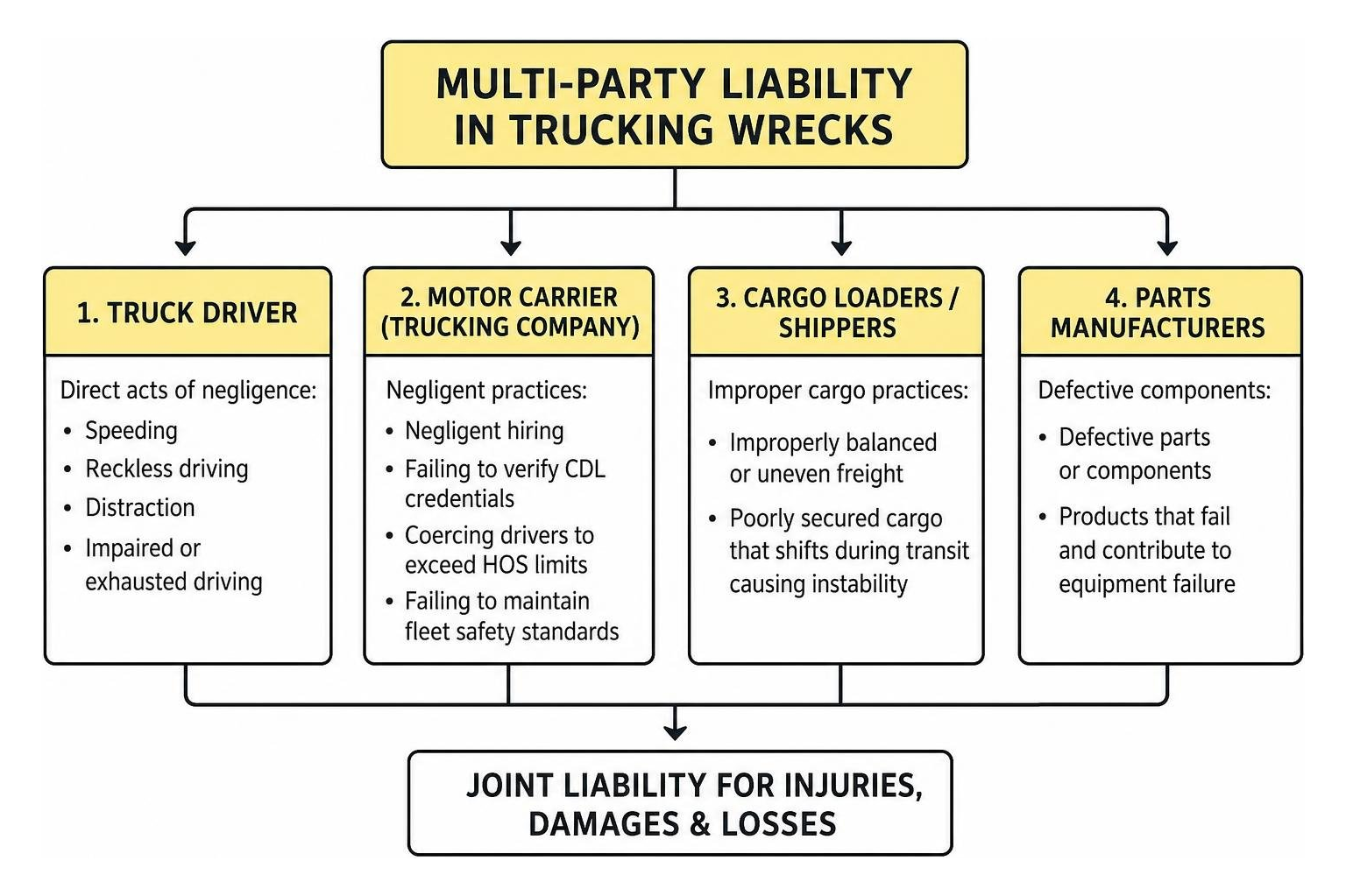
Potential defendants in an 18-wheeler wreck claim include:
- The Commercial Driver: For direct acts of negligence, including speeding, reckless driving, distraction, or operating while impaired or exhausted.
- The Motor Carrier (Trucking Company): For negligent hiring, failing to verify CDL credentials, coercing drivers to exceed HOS limits, or failing to maintain fleet safety standards.
- Third-Party Cargo Shippers and Loaders: When improperly balanced or poorly secured freight shifts within the trailer, causing sudden vehicle instability.
- Maintenance and Repair Contractors: Third-party mechanical shops that performed substandard brake repairs, tire replacements, or safety inspections.
- Equipment and Component Manufacturers: When mechanical failures stem from defective braking systems, tire blowouts, or faulty trailer coupling hitches.
Commercial Insurance Policies and Coverage Minimums
Due to the extreme risk commercial vehicles pose to the traveling public, federal laws mandate significantly higher insurance limits than consumer auto requirements:
- Freight Motor Carriers (Non-Hazardous): Minimum $750,000 public liability coverage for vehicles weighing 10,001 pounds or more ($300,000 for lighter freight commercial trucks under 10,001 lbs).
- Hazardous Materials Carriers: Mandatory $5,000,000 in liability coverage for tankers transporting flammable fuels, explosives, or hazardous chemicals.
Trucking operations typically utilize layered coverage structures, including primary policies, commercial umbrella tiers, and excess liability policies. Successfully negotiating commercial vehicle settlements demands an understanding of corporate risk management and multi-carrier policies.
Why Experienced 18 Wheeler Wreck Lawyers Are Vital for FMCSA Violations
Proving regulatory non-compliance requires seasoned legal advocacy. Trucking firms often present sanitized inspection logs. Our firm thoroughly audits digital driver records, time-stamped toll transponder records, fuel receipts, and satellite GPS coordinates to identify falsified logbooks and hidden HOS violations. When corporate policies prioritize delivery speed over safety, filing lawsuits against negligent motor carriers holds the corporate hierarchy directly accountable for systemic safety violations.
Critical Evidence and Steps After an 18-Wheeler Collision
The steps taken in the minutes, days, and weeks following an 18-wheeler crash significantly impact the strength of your legal claim. If you are involved in a collision:
- Call 911 Immediately: Ensure local law enforcement and emergency medical rescue units arrive at the scene to document the crash and generate an official Florida Traffic Crash Report.
- Seek Comprehensive Medical Attention: Even if adrenaline masks your symptoms, internal injuries and spinal trauma require immediate clinical diagnostic evaluation.
- Capture Scene Evidence: If you can safely do so, photograph vehicle damage positions, skid marks, road conditions, debris fields, trailer identification numbers, and DOT registration markings on the truck cab.
- Collect Driver and Witness Information: Obtain the commercial driver’s name, CDL number, carrier name, USDOT number, and contact details from neutral eyewitnesses.
- Never Give Recorded Statements to Commercial Insurers: Adjusters and risk management investigators represent the trucking company’s bottom line. Consult with legal counsel before signing releases or providing recorded interviews.
Preserving Essential Electronic and Physical Evidence
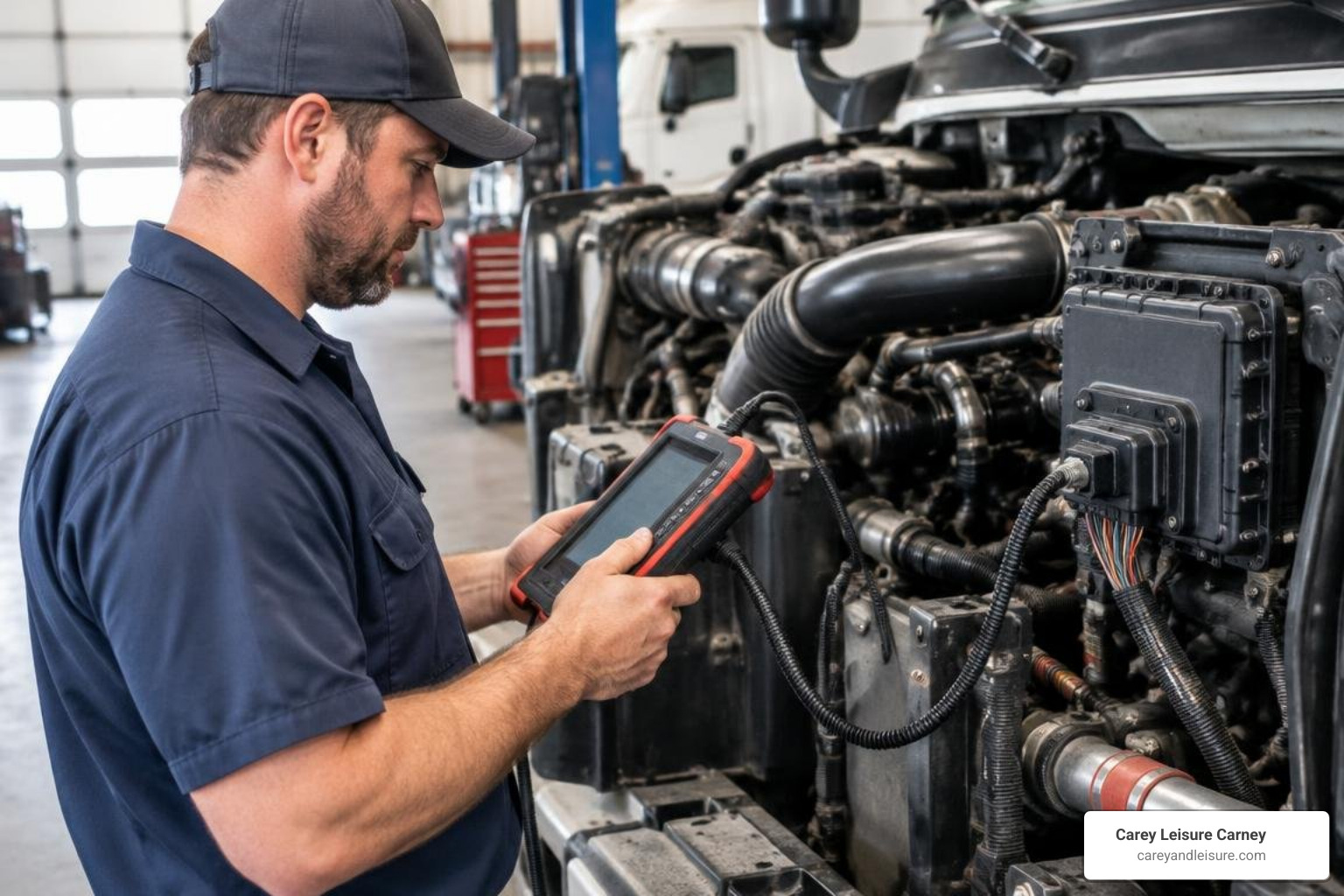
Modern commercial trucks are equipped with advanced electronic components that record critical vehicle metrics leading up to and during a crash. This includes the Engine Control Module (ECM), electronic logging devices (ELDs), telematics systems, and forward-facing dashcam units.
These digital “black boxes” record:
- Vehicle traveling speed prior to impact
- Throttle percentage and brake pedal application
- Steering input and sudden lane changes
- Engine RPM and cruise control settings
- Hours of continuous engine operation
Critical electronic logging data can be automatically overwritten within 30 days during ordinary fleet operations. Trucking companies often deploy rapid-response defense teams to the accident site within hours. Our firm immediately issues formal, comprehensive spoliation letters to compel the carrier, driver, and their insurer to preserve every piece of electronic, digital, and physical evidence intact.
Utilizing Accident Reconstruction and Industry Specialists
Proving fault against well-funded trucking defense teams requires objective scientific evidence. In complex cases, we leverage accident reconstruction experts in commercial vehicle litigation who utilize laser mapping, ECM data downloads, and physics modeling to recreate the crash sequence with absolute precision. We also work alongside fleet maintenance auditors, human factors specialists, and vocational economic consultants to project your lifetime financial losses and ongoing care requirements.
When to Hire 18 Wheeler Wreck Lawyers for Commercial Crash Claims
Navigating an adversarial corporate claim while recovering from serious physical trauma is overwhelming. Retaining experienced legal counsel immediately ensures your rights remain fully protected from day one. At Carey Leisure Carney, our attorneys operate on a strict contingency fee basis—meaning you pay absolutely zero upfront fees or out-of-pocket legal expenses. We fund the comprehensive investigation, expert witness retention, and case litigation; we only receive compensation if we secure a financial recovery on your behalf.
Having specialized counsel levels the playing field against billion-dollar motor carriers. Our team is well-versed in navigating complex semi-truck claims processes, allowing you to focus completely on your medical recovery while we manage the legal battle.
Key Qualities to Look for in 18 Wheeler Wreck Lawyers
Not all personal injury attorneys possess the experience, financial resources, or trial background required to litigate complex trucking disputes. When choosing legal representation, look for:
- Board Certification in Civil Trial Law: Fewer than 2% of Florida attorneys achieve Florida Bar Board Certification, a credential reflecting rigorous peer review, ethics standards, and extensive courtroom trial performance.
- Substantial Trucking Litigation Experience: A demonstrable history of litigating against interstate motor carriers and mastering FMCSA regulations.
- Direct Attorney Access: You deserve to speak directly with the attorney handling your case, not just administrative staff.
- Proven Investigative Resources: The ability to retain leading accident reconstruction engineers, trucking safety auditors, and medical experts.
Reviewing the essential qualifications for semi-truck litigation counsel ensures you choose a firm capable of taking your case to verdict. Our deep roots throughout the Tampa Bay area provide victims with dedicated regional commercial trucking legal support when fighting for fair justice.
Comprehensive Compensation Recoverable in Truck Wreck Claims
Victims injured by negligent trucking companies are legally entitled to pursue economic and non-economic damages, including:
- Past and Future Medical Expenses: Emergency transportation, surgical procedures, hospital stays, prescription medications, specialized physical therapy, and home medical equipment.
- Lost Income and Diminished Earning Capacity: Compensation for missed paychecks and permanent physical limitations that prevent you from returning to your prior trade.
- Pain and Suffering: Compensation for intense physical agony, emotional distress, PTSD, and loss of life enjoyment.
- Disfigurement and Permanent Impairment: Damages for permanent scarring, limb loss, or functional disability.
- Wrongful Death Damages: In fatal crashes, surviving family members can recover funeral expenses, lost financial support, and compensation for the loss of parental guidance and companionship.
Frequently Asked Questions About Commercial Truck Wreck Claims
How much does it cost to hire an attorney after an 18-wheeler crash?
Hiring our firm costs nothing out of pocket. We represent commercial truck accident victims on a contingency fee agreement. We cover all upfront case expenses, including accident reconstructionists, expert witnesses, and court filing fees. Our legal fee is a set percentage collected only if we successfully settle your claim or secure a verdict in court. If we do not recover money for you, you owe us nothing in attorney fees.
How long do I have to file a lawsuit after an 18-wheeler accident in Florida?
In Florida, personal injury lawsuits resulting from commercial vehicle negligence generally must be filed within two years from the exact date of the collision under the revised state statute of limitations. Wrongful death claims also carry a strict two-year filing window from the date of the victim’s passing. Because critical black box ECM data and driver logs can be routinely purged by trucking companies within weeks, retaining legal representation immediately is essential to protect vital evidence before it disappears.
Who can be sued in a commercial semi-truck wreck?
Multiple corporate entities may share legal responsibility for a single commercial crash. Depending on the facts, liability can extend to the truck driver for reckless operation, the motor carrier company for negligent hiring and safety violations, third-party freight loaders for improperly distributed cargo, maintenance contractors for faulty equipment servicing, and parts manufacturers for defective mechanical components. Understanding interstate trucking litigation defense strategies ensures every negligent entity is held accountable.
Conclusion
A collision with an 80,000-pound 18-wheeler is a life-altering event. Trucking corporations and their commercial insurance carriers mobilize quickly to minimize payouts and shield themselves from liability. You do not have to fight these multi-layered corporate entities alone.
At Carey Leisure Carney, our board-certified trial attorneys bring over 100 years of combined legal experience to the courtroom. We pride ourselves on providing direct, personal attorney access, pairing compassionate client communication with aggressive courtroom advocacy. We maintain the financial resources, technical knowledge, and trial experience needed to uncover FMCSA violations, secure critical black box data, and demand the full compensation you deserve.
If you or a loved one has suffered injuries in an 18-wheeler wreck across Clearwater, St Petersburg, Largo, Wesley Chapel, New Port Richey, Trinity, or Spring Hill, reach out to our team today. Connect with our dedicated Florida truck accident attorneys fighting for your recovery to schedule a free, confidential case consultation.