
Secure Mild Traumatic Brain Injury Settlements 2024
The “Mild” Injury with Major Consequences
Mild traumatic brain injury settlements typically range from $20,000 to over $300,000, depending on the severity and duration of symptoms, medical expenses, lost wages, and impact on daily life. Cases involving post-concussion syndrome or long-term impairment often settle for significantly more—sometimes reaching into the millions—because they require extensive future medical care and reflect permanent changes to quality of life.
Key factors that determine settlement value:
- Severity and duration of symptoms – Short-term recovery vs. chronic post-concussion syndrome
- Medical expenses – Emergency care, ongoing treatment, therapy, and future needs
- Lost income and earning capacity – Time off work and reduced ability to perform job duties
- Impact on daily life – Cognitive difficulties, mood changes, loss of enjoyment of activities
- Strength of evidence – Medical records, expert testimony, witness statements
- Liability and insurance limits – Who was at fault and available coverage
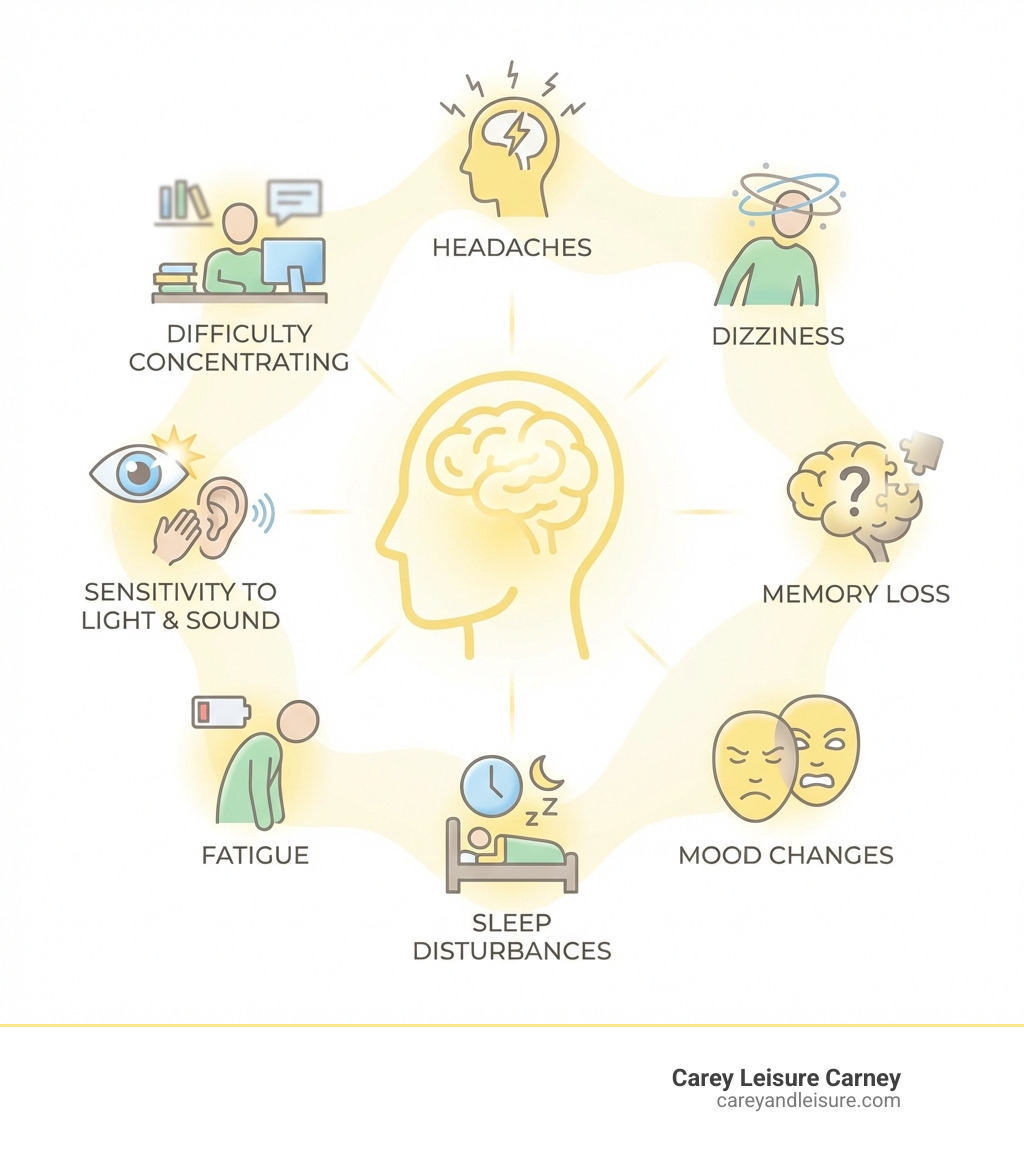
A traumatic brain injury can be a life-altering event, even when doctors label it “mild.” Despite the medical classification, these so-called mild injuries often cause devastating, long-lasting effects—persistent headaches, memory problems, difficulty concentrating, mood swings, and sensitivity to light or noise. The term “mild” refers only to the initial diagnostic criteria (brief loss of consciousness, short-term confusion), not to the impact on your life.
These injuries are often called “invisible” because they don’t show up on standard MRI or CT scans, and victims may look perfectly fine on the outside. Yet inside, the brain is struggling. Common causes include car accidents, slip and falls, sports collisions, workplace incidents, and assaults—any situation where the head experiences a sudden jolt, blow, or violent movement.
Because mild traumatic brain injuries are hard to see and harder to prove, insurance companies frequently minimize or deny these claims. They rely on the fact that juries and adjusters are skeptical of injuries that aren’t visible. That’s why building a strong case—with the right medical evidence, expert testimony, and legal strategy—is critical to securing fair compensation.
As Thomas W. Carey, founding partner of Carey Leisure Carney and a Board-Certified civil trial lawyer with over 35 years of experience, I have guided thousands of injury cases, including complex mild traumatic brain injury settlements, to multi-million-dollar results. My firm’s mission is to ensure victims receive personalized, accessible legal representation that holds negligent parties accountable.
How Mild Traumatic Brain Injury Settlements Are Calculated

When you or a loved one sustains a mild traumatic brain injury (mTBI) due to someone else’s negligence, the path to recovery can be long and challenging, both physically and financially. Understanding how mild traumatic brain injury settlements are calculated is crucial for ensuring you receive fair compensation. There is no single “average” settlement amount, as each case is unique, influenced by a multitude of factors specific to the injured individual and the circumstances of the accident. It’s not like buying a car where there’s a set price; your brain injury settlement is a deeply personal calculation.
We typically categorize damages in a TBI case into two main types: economic and non-economic.
Understanding the Types of Damages in a TBI Case
Economic Damages are the quantifiable financial losses you’ve incurred or will incur as a direct result of your mTBI. Think of these as the bills and lost income that hit your wallet.
- Medical Expenses (Current and Future): This is often the largest component of economic damages. It includes everything from emergency room visits, diagnostic tests (like those tricky MRIs and CT scans), doctor consultations, medications, physical therapy, occupational therapy, and cognitive rehabilitation. For long-term injuries, it can also encompass future medical care, specialized equipment, and even in-home care. We work with medical experts to project these costs accurately, ensuring all future needs are accounted for.
- Lost Wages: If your injury prevented you from working, you deserve compensation for the income you’ve already lost.
- Diminished Earning Capacity: This is where things get a bit more complex. If your mTBI impacts your ability to perform your job at the same level, reduces your potential for promotions, or forces you into a lower-paying role, you can claim for future lost earning potential. This often requires vocational experts to assess your pre-injury earning capacity versus your post-injury capacity.
Non-Economic Damages are designed to compensate you for the intangible losses that don’t come with a price tag but significantly impact your quality of life. These are often the hardest to quantify but are critically important.
- Pain and Suffering: This covers the physical pain you endure from headaches, dizziness, and other mTBI symptoms.
- Emotional Distress: The psychological toll of an mTBI can be profound, leading to anxiety, depression, mood swings, irritability, and even PTSD. This compensation acknowledges the mental anguish you’ve experienced.
- Loss of Enjoyment of Life: If your mTBI prevents you from engaging in hobbies, sports, social activities, or daily routines you once enjoyed, this damage compensates for that lost pleasure.
- Loss of Consortium: This applies to the negative impact your injury has had on your relationships with your spouse or family members.
Understanding these damages is vital. We often help clients develop Life Care Plans in Personal Injury Cases to comprehensively outline future medical and care needs, which are critical for maximizing your settlement.
Here’s a simple comparison:
| Economic Damages | Non-Economic Damages |
|---|---|
| Quantifiable costs (bills, lost income) | Subjective losses (pain, emotional impact) |
| Medical bills | Physical pain |
| Lost wages | Emotional distress |
| Future medical care | Loss of enjoyment of life |
| Diminished earning capacity | Loss of companionship |
Key Factors That Influence Mild Traumatic Brain Injury Settlements
The value of your mild traumatic brain injury settlement is not just about the medical bills; it’s a holistic assessment of how the injury has altered your life. Several key factors play a pivotal role:
- Severity and Duration of Symptoms: A “mild” TBI might sound minor, but its effects can be anything but. We’ve seen cases where initial symptoms resolve quickly, leading to lower settlements ($5,000 – $50,000). However, if symptoms persist for weeks, months, or even years, leading to what’s known as post-concussion syndrome, the settlement value can climb significantly, often ranging from $50,000 to $300,000 or more. The longer and more debilitating your symptoms, the higher your potential compensation.
- Total Medical Costs: This includes all past and projected future medical expenses. Intensive rehabilitation, specialized therapies, and long-term care needs will naturally drive up the settlement amount.
- Impact on Daily Life and Relationships: How has your mTBI affected your ability to perform daily tasks, care for your family, or participate in social activities? Has it strained your relationships or changed your personality? These impacts are crucial for non-economic damages.
- Strength of Evidence: Clear, consistent medical documentation, expert testimony, and corroborating witness statements are invaluable. The more compelling the evidence, the stronger your case.
- Liability (Who Was at Fault): Florida operates under a comparative negligence rule. If you are found partially at fault for the accident, your compensation may be reduced by your percentage of fault. Proving the other party’s negligence is paramount.
- Insurance Policy Limits: Unfortunately, the at-fault party’s insurance policy limits can cap the maximum compensation available. Our attorneys will explore all potential avenues, including your own uninsured/underinsured motorist (UM/UIM) coverage, to maximize your recovery.
Understanding these factors helps us determine What is My Personal Injury Case Worth? and ensures we fight for every dollar you deserve.
What is the Average Range for Mild Traumatic Brain Injury Settlements?
It’s tempting to look for an “average” number, but as we’ve discussed, there’s truly no one-size-fits-all answer for mild traumatic brain injury settlements. Online calculators are often misleading and should be approached with caution. However, based on our experience and industry data, we can provide some general ranges to give you an idea of what to expect:
- Mild Cases with Quick Recovery: For those with transient symptoms that resolve within a few weeks or months, settlements might range from $5,000 to $50,000. These cases typically involve lower medical bills and minimal impact on daily life.
- Moderate Cases with Lingering Symptoms: If your mTBI symptoms persist for several months, requiring ongoing treatment and impacting your daily activities, settlements typically fall between $50,000 and $150,000.
- Severe or Long-Term Cases (including Post-Concussion Syndrome): When a mild TBI leads to persistent or severe symptoms lasting a year or more (post-concussion syndrome), impacting your ability to work or enjoy life, settlements can range from $150,000 to $300,000 or even into the millions.
While some sources suggest a broader average for all TBI claims could be around $136,000, or even $100,000 to $5 million, these figures often include moderate and severe TBIs. For strictly “mild” cases, the ranges above are more indicative. We have successfully secured significant compensation for our clients, as showcased in our Personal Injury Settlement Examples. The word “mild” is a medical classification, not a descriptor of the injury’s impact on your life.
Building Your Case: The Crucial Role of Evidence and Legal Strategy

One of the biggest problems in mild traumatic brain injury settlements is proving an “invisible” injury. Unlike a broken bone or a visible laceration, mTBI symptoms often aren’t apparent to the naked eye, nor do they always show up on standard imaging. This makes it challenging to convince insurance companies, and sometimes even juries, of the injury’s severity. Insurance companies are experts at exploiting this ambiguity, often trying to minimize or deny claims. That’s why strong documentation and a shrewd legal strategy are not just helpful—they’re absolutely vital.
The Power of Medical Documentation and Expert Testimony
The foundation of any successful mTBI claim rests on comprehensive medical documentation. Here’s what we emphasize with our clients:
- Seek Immediate Medical Care: Even if you feel “fine” after an accident, get checked out. Symptoms of an mTBI can be delayed by hours or even days. Early diagnosis creates a clear link between the incident and your injury.
- Follow All Treatment Plans: Adhere strictly to your doctor’s recommendations. Missed appointments or inconsistent treatment can be used by the defense to argue your injuries aren’t serious.
- Challenges with Standard Imaging (MRI/CT): This is a critical point. Insurance companies often argue that if your MRI or CT scan is “normal,” you don’t have a brain injury. This is a common tactic, and it’s largely false. These scans primarily show the structure of your brain, not its function. Most concussions and many mild TBIs do not cause visible structural damage.
- Advanced Functional Scans (PET/SPECT): While not always necessary, in some complex cases, functional brain scans like PET (positron emission tomography) and SPECT (single-photon emission computed tomography) can be invaluable. These scans reveal how your brain is functioning, highlighting areas of abnormal activity that standard scans miss. An
experienced brain injury attorneycan leverage these to corroborate the existence of an mTBI. - The Role of Neurologists and Neuropsychologists: These specialists are crucial. Neurologists diagnose and treat brain injuries, while neuropsychologists assess cognitive functions like memory, attention, and executive function. Their expert testimony can powerfully articulate the nature and extent of your invisible injury to a jury or insurance adjuster.
We guide our clients in Documenting Evidence in Personal Injury Claims and work with top medical professionals to provide compelling Use of Expert Witnesses when needed.
Why an Experienced TBI Attorney is Essential
Navigating the complexities of a mild traumatic brain injury settlement without expert legal guidance can be like trying to perform brain surgery on yourself – possible, but highly inadvisable! Here’s why our Board-Certified attorneys are indispensable:
- Calculating the Full Value of Your Claim: We go beyond immediate medical bills. We carefully calculate all economic damages, including future medical care, lost wages, and diminished earning capacity. More importantly, we quantify non-economic damages like pain, suffering, and emotional distress, often using multipliers to ensure fair compensation. We consider every aspect of your life that has been impacted.
- Negotiating with Insurance Adjusters: Insurance companies are not your friends. Their primary goal is to pay as little as possible. They will often offer a low initial settlement, hoping you’ll accept it out of desperation. We know their tactics, and we won’t let them undervalue your suffering. We handle all communications and negotiations, protecting you from their pressure.
- Proving the Link Between the Accident and Your Injury: This can be challenging with invisible injuries like mTBI. We gather all necessary evidence, from accident reports and witness statements to detailed medical records and expert testimony, to establish a clear causal link.
- Handling Legal Complexities and Deadlines: Personal injury law is intricate. There are strict statutes of limitations (in Florida, generally four years for most personal injury claims, but it can vary). Missing a deadline can forfeit your right to compensation. We manage all legal procedures, filings, and deadlines, allowing you to focus on your recovery.
At Carey Leisure Carney, our Board-Certified attorneys have over 100 years of combined experience. We offer direct attorney access and personalized service, ensuring you’re never left in the dark. We know that Why You Need a Personal Injury Lawyer is not just about legal expertise, but about having a dedicated advocate in your corner. For more general Information on traumatic brain injury from the Mayo Clinic, you can also refer to external resources.
Steps to Take After an mTBI to Protect Your Claim
If you’ve experienced a head injury, even a seemingly minor one, due to someone else’s negligence in Florida, taking the right steps immediately can significantly impact the success of your mild traumatic brain injury settlement claim.
- Seek Immediate Medical Attention: This is the most crucial step. Even if you don’t feel seriously injured or your symptoms are delayed, get checked by a doctor. A medical record linking your injury to the accident from day one is invaluable. Follow all medical advice and treatment plans diligently.
- Report the Accident and Get a Police Report: If your injury resulted from a car accident, call the police to file an official report. For slip-and-falls or other incidents, ensure the property owner or manager creates an incident report. This documentation helps establish the circumstances of the event.
- Document Everything (Symptoms, Expenses, Daily Struggles): Keep a detailed journal. Note every symptom you experience, no matter how minor. Document how these symptoms affect your daily life, work, hobbies, and relationships. Keep receipts for all medical expenses, transportation to appointments, and any other costs related to your injury.
- Preserve Evidence (Photos, Witness Info): Take photos or videos of the accident scene, your injuries, and any property damage. Collect contact information from any witnesses who saw the incident or who can attest to changes in your behavior or abilities after the injury (“before and after witnesses”).
- Be Cautious with Insurance Companies: The at-fault party’s insurance company may contact you quickly with a settlement offer. Do not accept it or give a recorded statement without consulting a lawyer. Their offers are often significantly lower than what your case is truly worth.
- Consult a TBI Lawyer Before Settling: The complexities of mTBI claims, especially in Florida, require specialized legal knowledge. An experienced attorney can assess the full value of your claim, negotiate with insurers, and protect your rights.
For more general guidance on what to do after an incident, you can refer to our What to Do After a Car Accident Florida guide.
Frequently Asked Questions about TBI Settlements
We often hear similar questions from clients facing the challenges of a mild traumatic brain injury. Here are some of the most common, along with our insights:
How long does it take to settle a mild TBI case?
The timeline for a mild traumatic brain injury settlement can vary significantly, ranging from a few months to over a year, or even several years in complex cases. Several factors influence this duration:
- Reaching Maximum Medical Improvement (MMI): We generally advise against settling until you’ve reached MMI. This means your condition has stabilized, and further treatment won’t significantly improve your health. Settling before MMI can mean you don’t account for all future medical needs.
- Case Complexity: Simple cases with clear liability and minor, quickly resolving symptoms might settle faster. Cases with disputed liability, extensive medical treatment, or long-term symptoms take longer.
- Disputed Liability: If there’s a disagreement about who caused the accident, the investigation and negotiation process will be extended.
- Negotiation Process: Back-and-forth negotiations with insurance companies can be lengthy. If a fair settlement isn’t reached, the case might proceed to litigation, which naturally extends the timeline.
Can I get a settlement if my MRI or CT scan was normal?
Absolutely, yes! This is one of the most misunderstood aspects of mild traumatic brain injury settlements.
- Scans Show Structure, Not Function: Standard imaging like MRIs and CT scans are excellent for detecting structural damage to the brain, such as bleeding, swelling, or fractures. However, mTBIs are primarily functional injuries. They disrupt the brain’s normal processes without necessarily causing visible structural changes. Think of it like a computer with software glitches—the hardware looks fine, but it’s not working correctly.
- Diagnosis Based on Symptoms and Neuropsychological Testing: The diagnosis of an mTBI often relies heavily on your reported symptoms, clinical observations, and specialized neuropsychological testing. These tests can reveal deficits in memory, attention, processing speed, and other cognitive functions that are characteristic of brain injury.
- Insurance Company Tactics: Insurance companies frequently try to dismiss mTBI claims based on normal scans. Our attorneys are well-versed in countering this argument, educating adjusters and juries on the scientific reality of brain injuries. For more detailed information on concussions, you can visit More on concussions from AANS.
What is post-concussion syndrome and how does it affect my settlement?
Post-concussion syndrome (PCS) is a condition where concussion symptoms persist for weeks, months, or even years after the initial injury. While most people recover from a concussion within a few weeks, some develop PCS, experiencing a range of debilitating symptoms such as:
- Chronic headaches
- Dizziness and balance problems
- Memory and concentration difficulties
- Fatigue
- Irritability and mood changes
- Sensitivity to light and noise
- Sleep disturbances
If your mTBI progresses to PCS, it significantly increases the value of your mild traumatic brain injury settlement. This is because PCS reflects:
- Long-Term Disability: The prolonged symptoms often lead to an extended period of inability to work, engage in hobbies, or perform daily activities, resulting in substantial lost wages and loss of enjoyment of life.
- Increased Medical Needs: PCS requires ongoing medical treatment, therapies, and potentially medication, leading to higher medical expenses.
- Greater Pain and Suffering: Living with persistent, debilitating symptoms for an extended period causes significant physical and emotional distress.
Cases involving PCS are often considered more severe and can result in settlements ranging from $150,000 to $300,000 or even into the millions, depending on the severity of the long-term impact. We have a dedicated resource for More info on Post Concussion Syndrome that you might find helpful.
Securing the Compensation and Justice You Deserve
A “mild” traumatic brain injury is anything but mild when it turns your life upside down. From persistent headaches and memory lapses to profound emotional changes, the impact can be devastating and long-lasting. Proving these “invisible” injuries and securing fair compensation is a complex journey, often complicated by skeptical insurance companies and the inherent challenges of demonstrating an injury that doesn’t always show up on standard diagnostic tests.
At Carey Leisure Carney, we understand the profound impact an mTBI can have on your life and your family. Our Board-Certified attorneys, recognized as the top 2% in Florida, bring over 100 years of combined experience to every case. We provide direct attorney access and personalized strategies, carefully building your claim with comprehensive medical evidence, expert testimony, and unwavering advocacy. Our mission is to ensure that negligent parties are held accountable, and you receive the full compensation you deserve for your physical, emotional, and financial losses.
If you or a loved one has suffered an mTBI in Clearwater, Largo, New Port Richey, Spring Hill, St. Petersburg, Trinity, Wesley Chapel, or anywhere in Florida, don’t steer this challenging process alone. Contact an experienced Traumatic Brain Injury Attorney for a free, no-obligation consultation today. We are here to help you secure the compensation and justice you deserve.